As Vietnam prepares to debut its first domestic carbon trading exchange, a new collaborative academic work has emerged to unpack and compare carbon market frameworks in both China and Vietnam, offering targeted insights to support the Southeast Asian nation’s emerging climate market buildout. Titled *China-Vietnam Carbon Market*, the new book is the product of a cross-border research partnership between Vietnamese scholar Duong Thi Thanh — a long-time specialist in forest carbon sinks — and her doctoral advisor, Professor Zhang Ying from Beijing Forestry University (BFU). More than just an academic analysis, the publication stands as a tangible example of joint Sino-Vietnamese collaboration between research institutions and industry stakeholders, designed to deliver evidence-based academic backing for cross-border climate governance under the Belt and Road Initiative. Long before she enrolled in the doctoral program at BFU’s School of Economics and Management, Duong identified a critical gap in existing research: Vietnam’s forest carbon sink market had remained largely unexamined and understudied by the academic community. With a national forest coverage rate of 42 percent, spanning 14.7 million hectares of forest land that sequester an estimated 69.8 million metric tons of carbon dioxide each year, Vietnam holds enormous untapped potential in forest-based carbon mitigation. “This vast green asset gives Vietnam a strong foundation to develop a thriving forest carbon sink market,” Duong explained. She emphasized that establishing a standardized, scientific carbon accounting methodology is an essential first step to attract greater private and public investment into forest conservation and sustainable forest management. Through her doctoral research at BFU, Duong found that China’s decades-long journey building forestry carbon sink markets — from launching early regional pilot projects to rolling out a unified national carbon market — has generated a wealth of actionable expertise. Lessons from China’s work on carbon credit development, trading rule design, and market regulation carry direct, practical reference value for Vietnam, which is currently navigating the early stages of constructing its own national carbon market. The collaborative study not only addresses a key knowledge gap in regional climate governance research but also strengthens academic and environmental ties between the two neighboring countries, laying groundwork for future cross-border carbon cooperation under the BRI.
作者: admin
-

Trump invokes Defense Production Act to boost energy supply amid Iran war
Amid escalating armed conflict between the U.S.-Israel coalition and Iran that has roiled global energy markets, former U.S. President Donald Trump has enacted sweeping emergency energy measures, drawing on wartime federal authority to ramp up domestic energy production and stabilize volatile consumer energy costs. On Monday, Trump signed five separate presidential memorandums activating the 1950 Defense Production Act, a decades-old law that grants the executive branch expanded powers to compel and support domestic industrial output to meet national security needs.
The five executive actions target five core pillars of U.S. energy security: domestic petroleum production, coal development, liquefied natural gas (LNG) expansion, general energy infrastructure upgrades, and modernization of the national power grid. As outlined in the official directives, the law will be used to allocate federal funding to a broad portfolio of domestic energy projects that are deemed critical to shoring up supply amid the Middle East crisis.
Enacted at the start of the Korean War, the Defense Production Act has long been a standby tool for U.S. presidents responding to national security and public emergencies, granting expansive authority to align domestic industrial capacity with pressing defense and public stability requirements. This latest activation comes as the Trump administration faces growing political pressure from voters and industry stakeholders to rein in skyrocketing prices for oil, gasoline, and electricity, all of which have spiked in recent weeks amid conflict-related supply chain disruptions in the global energy market.
Media reports confirm that a wide range of projects will qualify for federal support under the new memorandums. Eligible infrastructure includes existing and new coal-fired power plants, domestic oil refining facilities, and manufacturing sites that produce critical electrical grid components including gas turbines and transformers – a category of equipment that has already faced widespread national shortages in recent years, exacerbating grid reliability challenges across multiple U.S. regions.
-

Oil and stocks steady as US-Iran truce expiry looms
Global financial markets traded in a narrow range on Tuesday, with crude oil prices dipping slightly and most equities posting modest gains, as investors clung to cautious optimism that Washington and Tehran would reach a breakthrough to de-escalate tensions and reopen the strategically critical Strait of Hormuz, even as a two-week truce is set to expire on Wednesday. As of Tuesday, Iran had not yet deployed a negotiating delegation to Pakistan, the venue for the new round of US-Iran peace talks, while the US side has confirmed it is ready to proceed with discussions, leaving Tehran’s participation in the negotiations unclear.
The international benchmark Brent North Sea crude held largely steady after a sharp rally the previous session triggered by Iran’s temporary closure of the Strait of Hormuz, falling just 0.3 percent to $95.22 per barrel by 1330 GMT. US West Texas Intermediate crude similarly edged down 0.2 percent to $87.23 per barrel, with both benchmarks holding below the psychologically important $100 per barrel threshold that has historically stoked broad inflation fears.
Equity markets painted a mixed but broadly upbeat picture across major global hubs. On Wall Street, all three main indices opened higher, with the Dow Jones Industrial Average rising 0.5 percent to 49,706.29 points, the S&P 500 gaining 0.2 percent to 7,125.89, and the Nasdaq Composite adding 0.3 percent to 24,467.29. The gains were supported by stronger-than-expected March retail sales data, which showed a 0.6 percent month-on-month rise even when stripping out volatile gasoline purchases, defying concerns that spiking energy costs would drag down consumer spending. In Europe, London’s FTSE 100 dipped 0.4 percent and Paris’ CAC 40 fell 0.5 percent, while Frankfurt’s DAX closed flat. Most major Asian markets finished the trading day higher: Japan’s Nikkei 225 gained 0.9 percent to close at 59,349.17, Hong Kong’s Hang Seng Index added 0.5 percent, and Shanghai’s Composite Index edged up 0.1 percent.
Market analysts note that investors have so far refused to price in a worst-case scenario of intensified conflict, with widespread expectations that the current ceasefire will be extended beyond its Wednesday expiry. “There is a reluctance for investors to price in the worst-case scenario for the conflict in the Middle East, and there is optimism within the market that the US/Iran ceasefire will be extended,” explained Kathleen Brooks, research director at global trading group XTB.
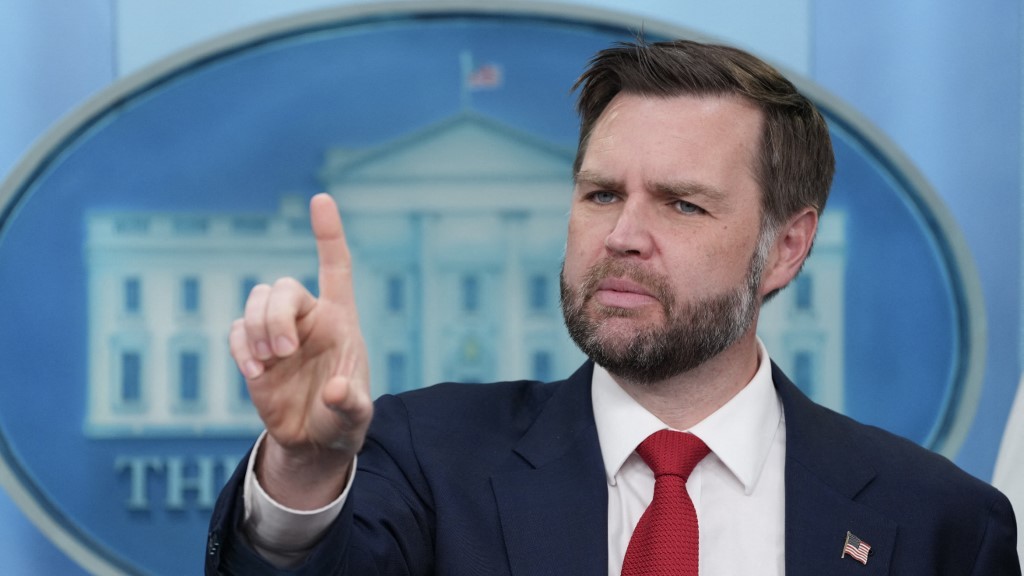
US President Donald Trump expressed confidence in the US’ negotiating position during a Tuesday interview with CNBC, as his administration prepared envoys for the Pakistan-hosted talks. The White House confirmed that Vice President JD Vance is prepared to return to Pakistan for the new round of negotiations aimed at ending the standoff, which has already driven crude prices higher and reignited global inflation concerns.
Despite the market optimism, significant uncertainty remains over the outcome of the talks. Iran has already accused Washington of violating the fragile truce through its blockade of Iranian ports and seizure of an Iranian vessel, while Trump has similarly accused Tehran of truce violations over the harassment of commercial vessels transiting the Strait of Hormuz, the chokepoint that carries roughly one-fifth of all globally traded oil.
Russ Mould, investment director at UK-based asset management firm AJ Bell, noted that while sub-$100 oil prices signal market optimism that conflict will not escalate, prolonged elevated prices carry significant economic risks. “However, the longer oil remains in the 90s (dollar per barrel) range… the higher the chance of an inflationary shock and a wobble to global economic activity,” Mould said.
The solid March retail sales data has reinforced views of a resilient US consumer, a key pillar of American economic growth. “The data echoes what we heard from the big banks last week, with management teams largely pointing to a resilient consumer despite soaring gas prices and a barrage of geopolitically charged headlines,” said Bret Kenwell, US investment analyst at fintech platform eToro. Kenwell added that US stocks, which have already recovered all pre-conflict losses and are trading near record highs, reflect not just hopes for de-escalation in the Middle East but also growing optimism around upcoming corporate earnings. If US companies deliver solid first-quarter results, he said, it could reinforce investor confidence that the current market rally still has room to run.
Beyond geopolitics, investors are also closely watching the confirmation hearings for Kevin Warsh, former Federal Reserve governor and US President Donald Trump’s nominee to lead the central bank. Warsh’s testimony is expected to offer clear signals about the future path of US interest rates, at a time when the world’s largest economy is navigating persistent inflation risks and slowing growth headwinds.
-

Midtjylland’s Djabi seriously injured in stabbing
A 19-year-old rising football talent, Alamara Djabi, who plies his trade as a midfielder for Danish top-flight side FC Midtjylland, is now in stable condition following a life-threatening stabbing attack in central Denmark, law enforcement and club officials have confirmed.
The violent incident unfolded in the early hours of Sunday on the streets of Herning, the small central Danish city that serves as home base for Midtjylland, one of the most successful clubs in Danish domestic football in recent years. Local police have launched a full investigation into the attack, and have named a 20-year-old suspect who remains at large as of the latest updates.
Djabi, a young prospect from Guinea-Bissau, joined Midtjylland in 2023 after rising through the youth ranks at Portuguese powerhouse Benfica. The teenager spent the 2024-2025 season on loan at Portuguese second division club CD Mafra, where he earned seven first-team appearances to build his professional experience. He returned to Midtjylland ahead of the current campaign, and has already featured once in Europa League qualifying for the side, adding to his two total senior appearances for the Danish club.
Immediately after the attack, Djabi was rushed to hospital in critical condition and underwent urgent emergency surgery to treat his injuries. Club officials released an official statement updating the public on his status, revealing that the young midfielder has since undergone a second procedure. “Thanks to the incredible professional work of first responders and the hospital care team that has treated him, his condition is now classified as stable,” the statement read. “He has woken from an induced coma, and is progressing as well as can be expected given the circumstances.”
Police investigators have yet to determine a clear motive for the attack, but preliminary assessments point to a personal dispute between Djabi and the suspect as the likely trigger. “It is still unclear what the motive for the stabbing is, but the police’s immediate assumption is that there was a disagreement between the 19-year-old and the perpetrator,” a police spokesperson said in an update to reporters.
The attack comes as Midtjylland, a four-time winner of the Danish Superliga that most recently claimed the league title in 2024, competes for the top spot in this season’s championship. The club currently sits second in the table, just two points behind league leaders AGF with multiple matches still to play this campaign.
-

Woman gets death sentence with reprieve for abusing boyfriend’s 3-year-old son
A local court in Shanghai announced Tuesday that a woman has received a death sentence with a two-year reprieve for the fatal abuse and intentional injury of her boyfriend’s three-year-old son. The Shanghai No. 1 Intermediate People’s Court found defendant Zhao Yudie guilty on two counts of abuse and intentional injury, additionally ordering that Zhao’s political rights be stripped for life.
Court documents detail that the abuse began shortly after Zhao moved in with her boyfriend surnamed Huang and his young son in July 2024. Using the toddler’s occasional mischief as a flawed justification, Zhao subjected the child to repeated physical abuse over the course of weeks, including beatings to the boy’s back, buttocks and legs, as well as biting attacks on his limbs.
The fatal incident unfolded on the evening of August 24, 2024, at a park in Shanghai’s Pudong New Area. Irritated by the child running around the park grounds, Zhao launched a brutal attack: she slapped the boy’s head and face repeatedly, beat him with a tree branch, and kicked his body multiple times. In the course of the attack, Zhao threw the toddler down a riverbank slope, causing him to fall and suffer a severe blunt force head injury on the ground.
After returning home later that evening, the young boy lost consciousness. Zhao eventually brought him to a local hospital for emergency care, but medical teams were unable to reverse the damage. The victim passed away on September 4, 2024, from central nervous system failure triggered by the blunt force brain trauma he sustained in the attack. Post-mortem examinations also confirmed widespread injuries across the child’s body: multiple bruises covered his back, face and chest, with distinct bite marks found on his left calf.
In its official ruling, the court clarified that while Zhao’s actions showed clear intent to cause bodily harm, there was no premeditation to kill the child. The court also moved to debunk widespread unsubstantiated rumors that circulated online following the boy’s death, including false claims that Zhao had stabbed the child with toothpicks, that he had been forced to scavenge for food due to starvation, and that only small stones were found in his stomach during the autopsy. The court confirmed all of these viral claims are completely unfounded.
Officials also emphasized that no evidence has emerged to indicate that the boy’s father, Huang, participated in, concealed, or tolerated Zhao’s abuse of his son, ending widespread online speculation about his potential involvement.
-

US, Iran ceasefire nears expiry as Hormuz tensions cloud talks
The fragile 14-day ceasefire between the United States and Iran is rapidly approaching its expiration deadline of Wednesday evening, leaving the future of diplomatic talks and security in the strategic Strait of Hormuz hanging in the balance. In recent public comments, former US President Donald Trump has cast severe doubt on the possibility of extending the truce, telling reporters that a prolonged ceasefire is “highly unlikely” and that military strikes would almost certainly resume if no new agreement is reached before the deadline.
Despite Trump’s tough public stance, US officials have signaled that Washington remains willing to keep diplomatic pathways open. According to a report from Axios, which cited unnamed US government sources, Vice President JD Vance—who led the first round of direct face-to-face negotiations between the two delegations—will depart for Islamabad by Tuesday to continue exploratory discussions. Trump has also offered a conditional opening to high-level engagement: in an interview with The Washington Post, he confirmed he would be willing to meet with top Iranian leaders if negotiators manage to secure a preliminary breakthrough on core issues, though he later noted to Bloomberg that his personal presence at working-level talks is not a necessary step at this stage.
Signals coming out of Tehran, however, remain deeply divided. Axios reported that Iran’s negotiating team received preliminary approval from the country’s supreme leadership on Monday night to continue talks with US representatives, but official government spokespeople have stopped short of publicly confirming Iran’s participation in a second round of negotiations.
Earlier on Monday, Iranian Foreign Ministry spokesperson Esmaeil Baghaei stated explicitly that Tehran currently has no scheduled plans for a second round of talks, arguing that recent US actions do nothing to demonstrate Washington’s commitment to a genuine diplomatic resolution. Iranian Foreign Minister Seyed Abbas Araghchi doubled down on this criticism on Monday, framing ongoing US “provocative actions” and repeated ceasefire violations as the single largest barrier to advancing peace talks between the two nations.
Speaking to The Washington Post on condition of anonymity, a senior Iranian official identified two core issues threatening the future of negotiations: the uncompromising tone of Trump’s public statements and the continuation of the US economic blockade on Iran. The official added that while negotiating teams from both sides have already reached broad agreement on the general outline of a potential deal, Trump’s public push for maximalist concessions risks derailing all progress that has been made so far.
Tensions have spiked sharply in the Strait of Hormuz, the narrow strategic waterway that carries roughly one-fifth of all global oil trade, in the days leading up to the ceasefire expiration. Iran briefly reopened the strait to international shipping after the initial truce took effect, but reinstated new transit restrictions over the weekend after the US Navy seized an Iranian-flagged cargo ship that attempted to break the US-imposed blockade.
Trump doubled down on his hardline position on the strait in a recent phone interview, confirming that the waterway will remain blocked to commercial traffic until a comprehensive peace deal is finalized. “They want me to open it. The Iranians desperately want it opened. I’m not opening it until a deal is signed,” he said.
Even amid the escalating maritime standoff, small signs of domestic normalization are beginning to emerge in Iran. According to the semi-official Fars News Agency, Iran’s Civil Aviation Authority announced on Monday that the country’s two primary commercial airports—Tehran’s Imam Khomeini International Airport and Mehrabad International Airport—have resumed full passenger operations after weeks of closure due to open conflict. The original ceasefire was widely welcomed as a rare de-escalation of hostilities after more than seven weeks of active conflict between the two nations. The first round of talks, held in Islamabad earlier this month, failed to produce any substantive breakthrough, and both sides have exchanged sharp public criticism in the weeks since.
-

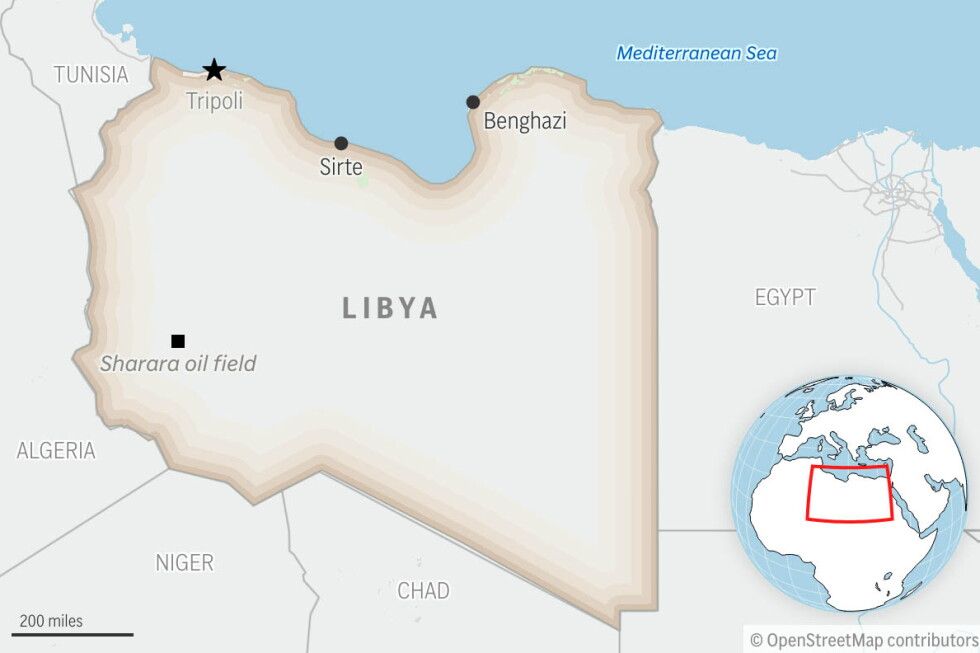
Libya fueled war in Sudan with Colombian mercenaries and equipment, UN report finds
Three years after Sudan’s brutal civil conflict first erupted, a newly released United Nations investigation has uncovered a cross-border network that funnels foreign fighters, weaponry, and critical supplies to the Rapid Support Forces (RSF), the paramilitary group fighting Sudan’s official government military, with an armed faction in Libya acting as a key facilitator.
The findings, published Sunday by the UN Panel of Experts on Libya, cover the monitoring period from October 2024 to February 2026, and detail how Libya’s Subul al-Salam Battalion has coordinated the movement of recruits—including a contingent of former Colombian military personnel turned mercenaries—along with weapons and fuel across the Libya-Sudan border to bolster RSF operations. The battalion is an integrated component of the self-declared Libyan National Army (LNA), led by influential commander Gen. Khalifa Hifter, who holds de facto control over eastern and southern territories of war-battered Libya.
UN experts confirm the battalion’s operations are concentrated in the southern Libyan border town of Kufra, a strategic hub that shares boundaries with Sudan, Chad, and Egypt. Kufra’s key infrastructure, including a local airport that falls under the battalion’s full control, has allowed the group to smoothly transfer fighters and military cargo from Libya into RSF-held territory in Sudan. The investigation further mapped out the tangible benefits the RSF has gained from this Libyan support network: the paramilitary now operates a permanent rear base approximately 75 kilometers, or 46.6 miles, southwest of Kufra, and leverages the town’s existing airbase as a transit hub for incoming Colombian fighters and a modification site for military vehicles imported into Sudan via Libyan smuggling routes.
According to the report’s documentation, the battalion’s direct operational support extended to RSF battlefield advances in June 2025. Facilitation included deploying local ground units, providing armed escorts for foreign fighters traversing Libyan territory, and securing steady supplies of fuel and vehicle spare parts. This backing directly enabled the RSF’s seizure of the Uwaynat border region, a strategically critical tri-point where the territories of Sudan, Egypt, and Libya converge. At the same time, the UN notes that the cross-border activity has severely eroded what remains of border security in southern Libya, creating new instability in an already fragile region.
As of publication, neither the Subul al-Salam Battalion nor RSF spokespersons have responded to requests for comment on the report’s findings. The RSF previously announced it had taken full control of the Uwaynat triangle in June, shortly after Sudan’s national military confirmed it had evacuated the area as part of what it described as defensive restructuring to repel ongoing RSF offensives. Sudan’s military has long leveled accusations that Hifter’s LNA is directly complicit in aiding RSF attacks—a claim Hifter has repeatedly denied.
International human rights organizations have previously documented that both Hifter’s Libyan forces and the RSF receive covert military and financial support from the United Arab Emirates, an allegation Abu Dhabi has continuously rejected. In recent months, Sudan’s national military has moved to disrupt the Libya-based RSF supply line, launching targeted airstrikes in November against convoys of vehicles and groups of foreign fighters assembled inside Libyan territory ahead of deployment to Sudan, the UN report confirms.
The cross-border mercenary network is the latest development in a Sudanese conflict that has already spiraled into one of the world’s worst humanitarian catastrophes. The war erupted on April 15, 2023, when long-simmering power tensions between Sudan’s military leadership and the RSF boiled over into open combat, first breaking out in the capital Khartoum before spreading across the vast country. The conflict has pushed millions of Sudanese into famine, displaced millions more, and created the largest single humanitarian crisis on the globe. According to data from the Armed Conflict Location & Event Data Project, a U.S.-based independent conflict monitoring organization, the war has killed no fewer than 59,000 people to date. The organization stresses that this official toll is almost certainly a significant undercount, given widespread reporting restrictions and access constraints across war zones.
Already, the United States has imposed targeted economic sanctions on Colombian companies and private individuals linked to the scheme of recruiting and deploying former Colombian military officers to fight alongside the RSF in Sudan.
-

Nigeria charges six people with treason over Independence Day coup plot
A high-stakes treason case has taken shape in Nigeria, where six individuals—including a retired senior military officer and an active-duty law enforcement official—have been formally charged with plotting to overthrow democratically elected President Bola Tinubu in a 2025 attempted coup. The charges were brought by Nigeria’s Attorney General before the Federal High Court in Abuja, the nation’s capital, with all six defendants scheduled to make their first appearance before Justice Joyce Abdulmalik this Wednesday.
A seventh prominent figure named in the court documents, Timipre Sylva—a former state governor and one-time Nigerian oil minister—remains at large and has not yet been taken into custody in connection with the plot.
Rumors of an impending coup against Tinubu’s administration first emerged publicly in October 2025, when the Nigerian government unexpectedly called off a large-scale military parade planned to mark the country’s 65th Independence Anniversary. Officials initially cited unspecified security threats to justify the abrupt cancellation, but public speculation almost immediately connected the move to a brewing insurrection against the sitting government. At the time, Nigeria’s military leadership issued a public denial of any coup plot threat, but just three months later in January 2026, the armed forces announced that 16 officers would face trial before a military tribunal for their alleged roles in the attempt to oust the president. To date, it remains unclear whether the new charges filed in the Federal High Court— which include additional counts of terrorism and money laundering alongside the core treason charges—are supplementary to the ongoing military prosecutions or represent a separate legal proceeding.
The full roster of defendants named in the Attorney General’s case is as follows: retired Major General Mohammed Ibrahim Gana; retired Navy Captain Erasmus Ochegobia Victor; Ahmed Ibrahim, a serving police inspector; Zekeri Umoru, an electrician employed at the Presidential Villa in Abuja; civilian Bukar Kashim Goni; and Abdulkadir Sani, an Islamic cleric. None of the six defendants have yet issued any public comment in response to the allegations against them.
According to official court documents, the six accused “conspired with one another to levy war against the state to overawe” President Tinubu and his administration. Court papers identify the alleged overall leader of the coup plot as Colonel Mohammed Alhassan Ma’aji, who was already taken into custody along with other undisclosed accomplices earlier this year. Prosecutors further allege that all six defendants had advance knowledge of Colonel Ma’aji’s “treasonable act” but deliberately concealed this information from Nigerian law enforcement and security authorities. Additional charges include the deliberate suppression of critical intelligence, with prosecutors arguing the defendants acted with the explicit intent of destabilizing the Nigerian state by withholding information that could have prevented planned terrorist activity tied to the coup.
Financial allegations also form a core pillar of the prosecution’s case: prosecutors claim that illicit funds were exchanged among the co-conspirators to finance terrorist operations connected to the overthrow attempt.
Under Nigerian criminal law, treason is classified as one of the most severe criminal offenses, carrying harsh maximum penalties that include life imprisonment. This high-stakes case unfolds against a backdrop of Nigerian democratic stability: the country has maintained unbroken civilian rule since 1999, when military rule formally ended. In public statements repeatedly issued over the years, Nigeria’s armed forces have consistently emphasized their unwavering loyalty to civilian-led governance and reaffirmed their institutional commitment to upholding the country’s democratic framework.
-

Macao university hosts intl conference on regenerative medicine
The 5th International Conference on Regenerative Medicine for the Guangdong-Hong Kong-Macao Greater Bay Area has concluded its 2026 iteration, co-hosted across Macao and the neighboring Guangdong province’s Hengqin New Area by the University of Macau (UM), the institution confirmed in an official media briefing this Monday, April 21. Drawing close to 400 attendees spanning the global scientific and healthcare community, the gathering brought together top-tier academic researchers, practicing clinical specialists, biotech industry leaders, early-career scientists and graduate students from dozens of countries to exchange cutting-edge insights in the fast-growing field.
Centered around the core theme “Decoding Pluripotency and Reshaping Therapy,” this year’s conference centered its discussions and collaborative workshops on three key focus areas: advances in pluripotent stem cell research, breakthrough innovations in regenerative medicine, and the growing importance of cross-sector interdisciplinary collaboration to move the field forward. Unlike many single-venue academic events, the dual-site format across Macao and Hengqin was designed to reflect the integrated development agenda of the Greater Bay Area, facilitating cross-jurisdictional exchange of knowledge, talent and innovative resources.
In his opening remarks at the event, UM Vice-Rector Ge Wei emphasized that the annual conference has evolved into a foundational regional platform for driving research progress and innovation in regenerative medicine across the Greater Bay Area. He noted that the successful organization of the cross-border conference serves as a tangible example of how the Greater Bay Area is advancing deep integration, enabling the free dynamic flow of talented researchers, groundbreaking ideas, and innovative development resources across its constituent regions.
Xu Renhe, Associate Dean of UM’s Faculty of Health Sciences and co-chair of the 2026 conference, highlighted the event’s unique strategic focus: closing the long-standing gap between foundational laboratory research and real-world clinical use. By creating dedicated spaces for conversation between basic scientists and clinical practitioners, the conference aims to speed up the translation of promising early-stage research outcomes into life-changing clinical therapies and accessible medical applications that can benefit patients globally.
-

Soccer fan Orbán’s election loss could prompt rethink of Hungary’s sports ambitions
For years, Hungarian authoritarian populist leader Viktor Orbán—an avid lifelong soccer fan and a self-identified sports enthusiast who built a large part of his national legacy around hosting elite global sporting events—has been sidelined by a stunning heavy defeat in the country’s recent general election. His unexpected exit from power hands the spotlight to incoming Prime Minister Péter Magyar ahead of next month’s UEFA Champions League final, the crown jewel of European club soccer, set to take place in Budapest’s state-of-the-art Puskás Aréna on May 31. This political transition has sparked new uncertainty around the future of Orbán’s ambitious pipeline of elite sports initiatives, from upcoming track and swimming championships to a long-planned 2036 Olympic bid, and forces international sports governing bodies to adapt to a new government with sharply different priorities.
Orbán, a former lower-league Hungarian soccer player who has held a permanent spot in the VIP boxes at Champions League finals and FIFA World Cups for decades, poured billions in public funds into constructing a network of new, world-class stadiums across Hungary over his 12 years in power. The Puskás Aréna, which will host this year’s Champions League final, was always meant to be the crowning glory of his sports-focused statecraft. “That was supposed to be the icing on the cake for Orbán and his regime. He’s been working very hard to get that final to Budapest and to Hungary,” explained Győző Molnár, a professor of sport sociology at the University of Worcester. If Magyar, leader of the victorious Tisza party, takes the high-profile official spot at the final originally reserved for Orbán, Molnár added, it will serve as a clear public signal of a full regime change in the country.
For Orbán, elite international sporting events were never just about athletics: they served as a strategic counter to widespread criticism from the European Union over his government’s democratic backsliding, anti-LGBTQ+ policies, and opposition to EU support for war-torn Ukraine. By hosting major global tournaments, Orbán could frame international sports bodies’ willingness to partner with Hungary as a quiet endorsement of his rule, regardless of EU pushback. “These aren’t just sporting events for him. They were Orbán’s answer to, for instance, EU criticisms” that allowed him to argue “UEFA still trusts us with the biggest match,” Molnár noted. Still, not all of Orbán’s soccer ambitions panned out: despite tax breaks that encouraged allies to invest heavily in domestic Hungarian soccer clubs, the country’s national team has not qualified for a FIFA World Cup since 1986, a far cry from the legendary “Mighty Magyars” sides that finished as World Cup runners-up in 1938 and 1954.
Beyond the Champions League final, Orbán’s administration locked in a full slate of upcoming elite events: the inaugural track and field Ultimate Championships, which boasts the sport’s richest ever prize purse, is set for September in Budapest, with the 2025 World Swimming Championships—Hungary’s third in a decade—following the next year. Budapest has also been preparing a bid for the 2036 Summer Olympics, and over the past decade, multiple global sports governing bodies, including World Aquatics, have relocated their headquarters from Switzerland to Budapest, incentivized by generous packages including 15 years of free office space, legal immunity for official acts, and full tax benefits.
Since the election upset, however, questions have grown over whether the new Hungarian government will maintain Orbán’s focus on large-scale prestige sports projects. While Magyar has rejected opposition claims that he will cut overall sports funding, his Tisza party’s election platform marked a clear break from past policy, criticizing the Orbán administration for pouring public funds into overpriced stadiums and vanity projects while grassroots school and local sports programs have declined. Magyar has also pledged to end what he calls the systemic politicization of sports that flourished under Orbán, noting that “politics has become entrenched in the sports associations and the soccer clubs to a degree that we didn’t even see during socialism.”
So far, no scheduled events have been canceled, but long-term policy priorities are expected to shift. The new government will likely be focused heavily on addressing ongoing cost of living crises, a pressing concern across much of Europe in the current volatile global economic climate. Complicating the 2036 Olympic bid further is the political landscape in Budapest: the city’s mayor is a liberal opponent of Orbán who has no close alignment with Magyar’s party, and plans to revisit the bid next year after an earlier Orbán-backed 2024 bid was withdrawn. The International Olympic Committee has declined to comment on domestic political developments or the status of the bid.
International sports governing bodies have begun navigating the transition, with most reaffirming their commitment to upcoming events. World Athletics, which is preparing for September’s Ultimate Championships, stated that it continues to work closely with Hungarian partners to deliver a successful tournament. World Aquatics, which is scheduled to complete its relocation to Budapest by 2028, said it has a longstanding positive relationship with Hungary and “has no doubt that this relationship will continue to thrive under the new leadership of Péter Magyar, whom we congratulate on his recent victory as Prime Minister of Hungary.” UEFA, for its part, has said that planning for the Champions League final continues as scheduled, and declined to comment on whether it will extend invitations to both Orbán and Magyar for the match.