作者: admin

  • EU leaders squabble over outreach to Moscow as Ukraine war rages on

    EU leaders squabble over outreach to Moscow as Ukraine war rages on

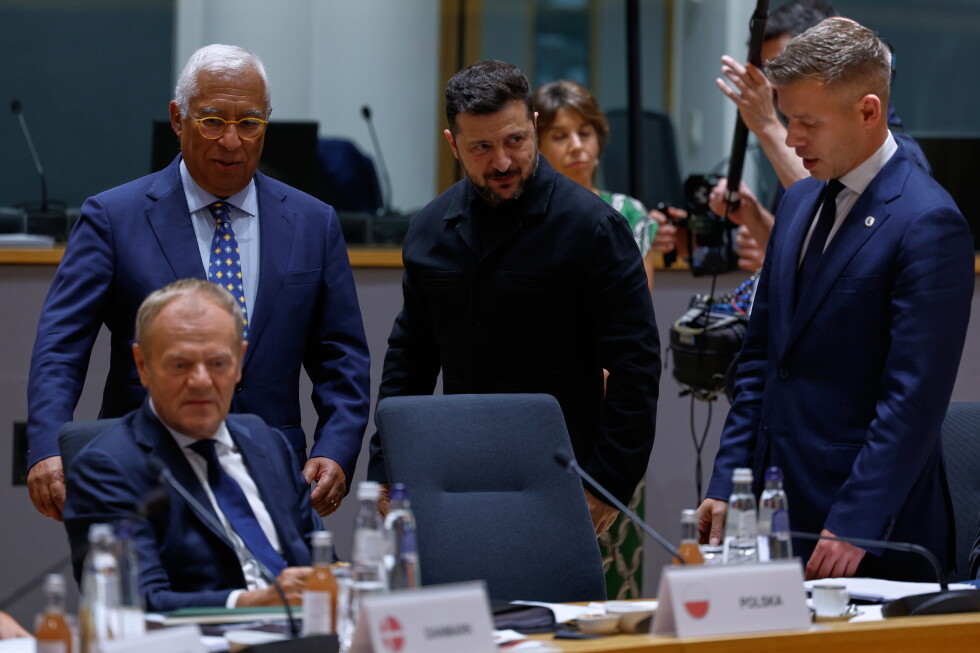
    BRUSSELS – Deep internal divisions among European Union leaders have derailed a plan to open a discreet backchannel of communication with the Kremlin, a proposal designed to protect the bloc’s interests if any breakthrough emerges in ongoing talks aimed at ending Russia’s full-scale invasion of Ukraine, multiple senior leaders confirmed Friday.

    The initiative was spearheaded by newly appointed European Council President António Costa, who chaired the bloc’s two-day flagship summit in Brussels. Costa had already instructed his personal office to initiate outreach to Moscow and put forward a senior EU official to lead the contact, framing the effort as an complementary step, not an attempt to replace or compete with the stalled U.S.-led negotiation track that has yielded little tangible progress in recent months.

    For months, European capitals have debated the merits of appointing a dedicated EU mediator to reanimate talks between Moscow and Kyiv, but the idea has gained little traction among the 27 member states. A large bloc of countries argues that Russian President Vladimir Putin has shown no genuine willingness to negotiate a sustainable peace, making any overture premature at best and dangerous at worst. Instead, the EU’s unified position to date has centered on demanding key concessions from Russia as a precondition for any meaningful peace process.

    Czech Prime Minister Andrej Babiš told reporters Friday that overnight discussions failed to bridge the gap between competing camps. “Europe is unable to agree even on whether there will be negotiations or who will lead them,” Babiš said, laying bare the depth of the bloc’s disunity on the critical foreign policy issue.

    Not all leaders rejected the backchannel proposal, however. Irish Prime Minister Micheál Martin voiced support for Costa’s approach, noting that “opening up a channel is not a mistake in our view, and I trust António Costa.” He added that core principles remain intact: any final peace negotiations must be led directly by Ukraine and Russia, and right now there is no sign Russia is prepared to come to the negotiating table in good faith.

    The Kremlin, for its part, signaled openness to restarting dialogue with the EU Friday, on the condition that Brussels abandons what it calls a “position of force” toward Moscow. “We are ready for contact, we were not the ones who initiated cutting such contacts, terminating them completely,” Kremlin spokesperson Dmitry Peskov told reporters. “If forces emerge that realize the need to resume dialogue with Russia, not to lecturing it or, worse, to issue ultimatums … then President Putin and the Russian side would certainly be open to it.”

    Currently, Putin has prioritized direct negotiations with Washington over Ukraine’s future, intentionally sidelining both the EU and Kyiv from those discussions.

    As leaders wrapped up their summit late Thursday, Belgian Prime Minister Bart De Wever lightened the tense mood with a tongue-in-cheek joke nominating Costa himself as the EU’s envoy to Moscow. Laughing as he shook Costa’s hand, De Wever said, “I was just talking about you, António. I was full of praise, saying you are the only one who can represent us and that we will send you to Moscow.”

    Hardline opposition to the backchannel plan came from Estonia, one of the EU’s most hawkish eastern member states that shares a long border with Russia, has a history of Soviet occupation, and has repeatedly reported cross-border drone incursions linked to the war. Estonian Foreign Minister Margus Tsahkna said, “Europe must not assume the role of a neutral mediator” and instead should continue strengthening Ukraine’s negotiating position to “force the Kremlin into serious negotiations.”

    The Associated Press contributed reporting from Prague, Czech Republic, with contributions from correspondents Karel Janicek and Stanislav Hodin.


  • Nicholls and Ravindra steady New Zealand and extend lead over England to 194 at The Oval

    Nicholls and Ravindra steady New Zealand and extend lead over England to 194 at The Oval

    On the third day of the second Test match between England and New Zealand at London’s iconic Oval ground, the Black Caps moved firmly into a commanding position against the host nation, thanks to a resilient, match-defining stand between batters Henry Nicholls and Rachin Ravindra on Friday.

    England entered the day’s play with a glimmer of momentum, sparked by a gritty 53-run last-wicket partnership between tailenders Matthew Fisher and Sonny Baker that carried the hosts to their first innings total before the lunch break. Buoyed by that late-run lift to team morale, England quickly got off to a promising start with the ball, dismissing both of New Zealand’s opening batters within the first seven overs.

    New Zealand captain Tom Latham fell for just 4 runs, edging a 140 kph (87 mph) delivery from pace bowler Jofra Archer behind to the wicketkeeper. That same over brought close calls for Henry Nicholls: Archer’s 147 kph delivery popped up into the outfield but fell safely between fielders, before a 145 kph fast yorker beat Nicholls’ inside edge and just missed the stumps.

    Devon Conway, New Zealand’s second opening batter, survived six more overs before he drove at a delivery from Josh Tongue and nicked a thick edge to second slip, out for 11 runs that left the Black Caps at 28 for 2. A dropped chance soon after could have turned the tide further in England’s favor: when Ravindra was on just 7, Tongue produced a good edge that wicketkeeper James Rew failed to hold on to a tough low chance diving to his left.

    After that missed opportunity, England failed to convert any further chances before the tea interval. Nicholls and Ravindra dug in, deflating England’s bowling attack and quieting the sun-bathed home crowd as they built a steady unbroken partnership. While the Oval pitch still offered purchase for bowlers—one Tongue delivery skidded along the ground barely above Ravindra’s shoelaces and slipped under his bat—the two batters kept their discipline and picked off scoring opportunities when they arose.

    Ravindra, an aggressive batter by nature who often takes risks to score, showed controlled aggression, clipping Baker off his toes for a boundary, one of seven boundaries he hit on his way to an unbeaten 35. As tea approached, Nicholls—who had been carefully building his innings across 64 deliveries—struck consecutive driven fours off part-time spinner Joe Root, England’s current leading wicket-taker with 73 career Test wickets, in a rare attacking outburst.

    By the tea break on day three, New Zealand had reached 94 for 2 after 25 overs, a cumulative lead of 194 runs that extended the Black Caps’ already substantial first innings advantage of 100 runs over England. The steady partnership restored New Zealand’s momentum after England’s morning recovery, which saw the hosts bat through the entire final session of day two after being 9 wickets down for 238 to close their first innings at 222.

  • Italy’s top diplomat cancels US trip as Meloni slams Trump’s claim she ‘begged’ for a photo with him

    Italy’s top diplomat cancels US trip as Meloni slams Trump’s claim she ‘begged’ for a photo with him

    Diplomatic tensions between long-standing allies Italy and the United States erupted into public view this Friday, after former (current, 2026 second term) U.S. President Donald Trump made a false and inflammatory claim that Italian Prime Minister Giorgia Meloni had begged him for a photo during last week’s G7 summit in the French Alpine resort of Evian-les-Bains.

    The false allegation first emerged Friday morning during an interview with Trump broadcast by Italian television network La7. While the conversation initially centered on the ongoing conflict in Ukraine, Trump shifted topics to bring up his one-on-one encounter with Meloni on the sidelines of the G7 gathering, an interaction that was captured on camera by summit photographers. According to La7, which has published a dubbed version of the interview (the original English audio has not been released), Trump claimed Meloni “begged” him for a photo opportunity, saying he agreed only out of pity despite having no obligation to do so.

    The Italian government responded with swift, unprecedented pushback, signaling that years of behind-the-scenes friction with the Trump administration had reached a breaking point. In the most dramatic show of disapproval, Italian Foreign Minister Antonio Tajani called off a planned working trip to the United States scheduled for this coming weekend, labeling Trump’s remarks “serious and offensive” to both Prime Minister Meloni and the entire Italian nation.

    Meloni personally addressed the controversy in a public video address released hours after the interview aired, rejecting the claim in unflinching terms. “Certain things deserve an immediate response,” she opened. “Donald Trump’s statements are completely fabricated. I am frankly stunned. I don’t know why the president of the United States behaves this way toward his own allies. After all, this isn’t the first time this has happened.”

    Her reference pointed to a previous incident in April, when Trump used an interview with Italian daily newspaper Corriere della Sera to publicly criticize Meloni’s refusal to back the U.S.-led military campaign in Iran. Meloni declined to issue a public response at that time, but on Friday she made clear she would not back down this time, adding a sharp rebuke of Trump’s approach to global diplomacy: “I can only say that it’s a shame he doesn’t show the same resolve toward the enemies of the West, toward the enemies of the United States — toward leaders with whom he, on the other hand, is much more accommodating. But there’s one thing he must remember: Italy and I do not beg.”

    The latest public row has laid bare the growing rift between Rome and Washington, despite Meloni’s early efforts to cement warm ties with the Trump administration after he won a second presidential term in 2024. Meloni, a right-wing leader who positioned herself as a key bridge between the U.S. and the European Union, was the only head of state from the EU to attend Trump’s inauguration. But relations have steadily frayed over a string of policy disagreements: Meloni has publicly labeled the U.S. military action in Iran illegal, Italy remains a staunch supporter of Ukraine’s territorial integrity in contrast to Trump’s softer stance toward Russia, and Trump’s trade tariffs on European goods and unwavering support for Israel’s campaign in Gaza have further strained bilateral ties.

    Other senior Italian officials joined the condemnation of Trump’s claim this Friday, underscoring the unified front from Rome. Defense Minister Guido Crosetto took to social media platform X to reject the allegation outright, saying he could not imagine Meloni begging anyone for a photo “not even under threat.” He added: “I can, however, imagine how much it cost her to set aside what Trump had said weeks ago, to serve the interests of Italy, of Europe, and of the West. Jokes of this kind do no good to anyone: neither to the USA, nor to Italy, nor to the alliance.”

    As of Friday evening, the White House had not issued an official response to Italy’s public rebuke, leaving the diplomatic rift unresolved ahead of any planned future bilateral talks.

  • The US World Cup star who couldn’t be an American under Trump’s plan

    The US World Cup star who couldn’t be an American under Trump’s plan

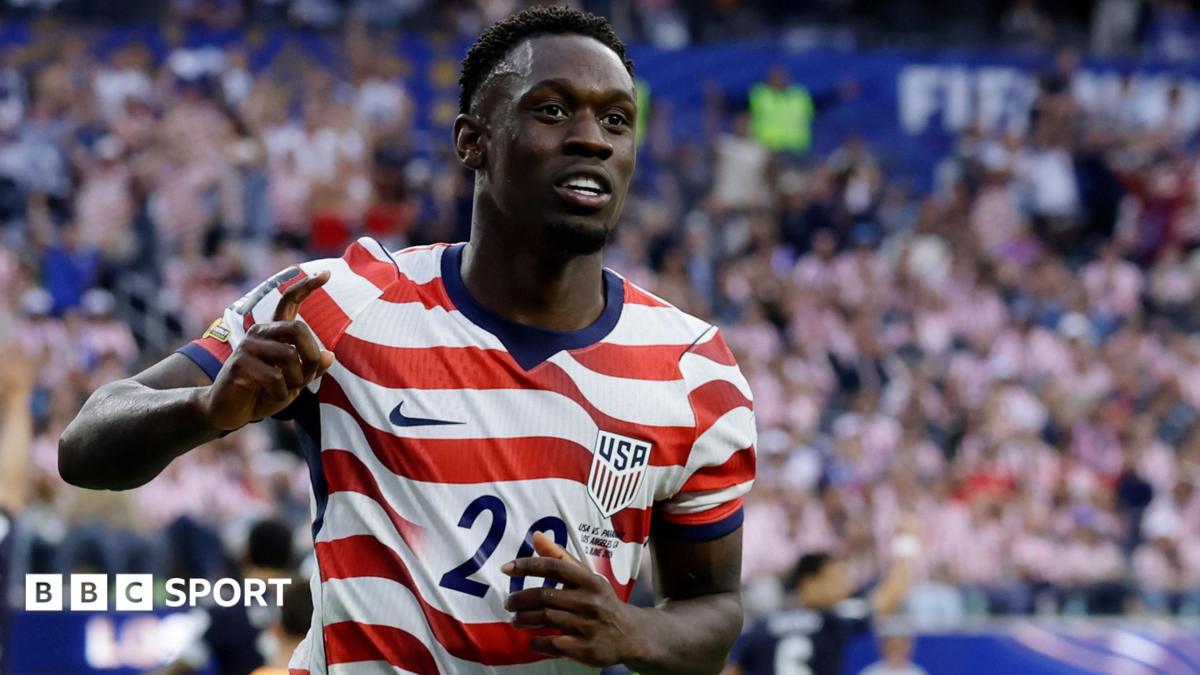
    As the co-host United States men’s national soccer team kicked off their 2026 FIFA World Cup campaign with a win over Paraguay, the name on every fan’s lips was Folarin Balogun. The 24-year-old striker announced his arrival on the world’s biggest football stage with two stunning opening-game goals, instantly cementing his status as the team’s most dangerous attacking weapon. But beyond the highlight-reel finishes, Balogun’s place on the roster shines a stark spotlight on one of America’s most divisive political fights: the battle over birthright citizenship, a clash that will soon be decided by the U.S. Supreme Court just weeks from now.

    Balogun’s path to representing the United States is one of unexpected chance. Born to Nigerian parents living in London, his birth came down to a random fateful twist: during a 2001 summer trip to New York, airline staff refused to let his heavily pregnant mother board the return flight to the U.K. On July 3, 2001, Balogun was born in Brooklyn, New York. Under the 14th Amendment of the U.S. Constitution, that automatic birth on U.S. soil granted him full U.S. citizenship at birth. It is a status he would not be guaranteed under former President Donald Trump’s hardline immigration executive order, which seeks to strip automatic citizenship from children born in the U.S. to parents who are in the country illegally or holding temporary visas such as tourist visas.

    The irony of Balogun’s situation is not lost on observers: the U.S. national team’s breakout World Cup star is exactly the type of person Trump’s policy would bar from citizenship. As the team prepares for their second group stage match against Australia in Seattle on Friday at 20:00 BST, the ongoing national debate over immigration and citizenship hangs over this World Cup co-host’s campaign.

    A product of Arsenal’s famed youth academy, Balogun had his pick of senior national teams: he could have committed to England, where he grew up and represented the nation at youth level, or Nigeria, his parents’ home country. Until three years ago, a move to the U.S. senior side was far from guaranteed. Balogun was a key part of England’s Under-21 setup, notching seven goals in 13 appearances ahead of the 2023 UEFA Under-21 European Championship. But a breakout 2022-23 season on loan at French side Reims, which earned him a £35 million permanent transfer to Ligue 1’s Monaco, caught the attention of U.S. Soccer officials. With a path to the England senior side unclear, and a groundswell of public support from U.S. fans pushing for him to switch allegiances, U.S. Soccer launched a full court press to recruit him: a reported secret meeting that leaked on social media, invitations to NBA games and New York Yankees training sessions, a trip to Florida, and outreach from senior U.S. internationals who wined and dined him to convince him to make the switch.

    Balogun has made clear that fan support was the deciding factor in his choice to represent the Stars and Stripes. “When I committed, and throughout the whole cycle, and the whole journey to me being at this point, I’ve always said the fans gave me so much motivation and showed me so much support,” he said ahead of the Australia match. “For me, the most important thing has always been to ability to repay that. I just want to continue to show the fans I made the right decision.”

    Teammates and former players have already been quick to praise Balogun’s impact. AC Milan star Christian Pulisic summed up the general sentiment after the Paraguay win, saying the U.S. was “really lucky” to have the striker. “The kid’s insane,” Pulisic said. “He’s lethal right now in front of goal. Let’s just hope it keeps going like this.” Former U.S. international Kenny Cooper, now a club ambassador at FC Dallas, believes Balogun can help lead the team on a historic deep run at this home World Cup. “He’s obviously a really special talent and he showed that with two exceptional goals,” Cooper told the BBC. “He has been so impressive. I think there’s just so much confidence that I’m sure the players have in him playing with them, and us, his fans, have in him.”

    Fans echo that excitement. Tommy Marcos, president of the New York chapter of the American Outlaws — the largest U.S. national team supporters group — who attended a 2,000-strong watch party for the Paraguay match in Frisco, Texas, said supporters have waited decades for a striker of Balogun’s caliber. “We haven’t had that type of player — a top-five league striker that you can just put in there and know he’s going to score,” he said. “That’s pretty hard to do in the current football environment and we’re lucky to have him.”

    To date, Balogun has scored 11 goals in 28 appearances for the U.S. national team, putting him on a rapid pace to become one of the program’s all-time top goalscorers. After just one World Cup game, he already has two goals — one-third of the total that won the Golden Boot in 10 of the last 12 World Cup tournaments. While he is still not a household name across much of the U.S., he is well on his way to becoming a new talisman for American soccer.

    While the U.S. team has sought to keep politics separate from on-pitch performance, the connection between Balogun’s citizenship and the ongoing Supreme Court case is unavoidable. If the court upholds Trump’s executive order, legal experts say it would throw the citizenship status of hundreds of thousands of people like Balogun into uncertainty, even if the administration has promised not to retroactively revoke citizenship. “Trump’s promises and guarantees often are not worth very much, but even if he were to stick to that resolution, a future administration might not,” explained Ilya Somin, a George Mason University law professor and constitutional studies chair at the Cato Institute. Somin noted that even without retroactive action, the legal argument behind the order would leave citizenship status for many people hanging over their heads indefinitely.

    Still, Somin predicts the Supreme Court — which holds a 6-3 conservative majority — will not rule in favor of the Trump administration, pointing to skeptical questioning from justices during oral arguments in April. When administration lawyers argued that modern international travel requires a reinterpretation of the Constitution’s citizenship clause, Chief Justice John Roberts famously quiped: “It’s a new world. It’s the same constitution.”

    The timing of the 2026 World Cup, the upcoming Supreme Court ruling, and the United States’ 250th anniversary celebration has created a unique confluence of events that holds a mirror up to modern American division on immigration. An April Reuters poll found that a majority of Americans support retaining automatic birthright citizenship for all children born in the U.S., but opinion is deeply split along party lines: just 9% of Democrats support ending birthright citizenship, compared to 62% of Republicans.

    Balogun is far from the only player on the current U.S. roster with a mixed transnational identity. Marcos notes that this diversity is nothing new for U.S. soccer, and the team’s varied backgrounds are exactly what make it a reflection of America’s identity as a melting pot. “I think that’s what makes the team really unique in terms of the football landscape,” he said. “But it’s also what makes it special and it makes it very American.”

  • How Burnham’s resounding victory could lead to Starmer’s downfall

    How Burnham’s resounding victory could lead to Starmer’s downfall

    LONDON – A decisive landslide win for Andy Burnham in a UK House of Commons by-election has thrown the future of Prime Minister Keir Starmer’s premiership into grave doubt, triggering immediate speculation of an internal Labour Party leadership challenge that could end Starmer’s tenure less than two years after he swept the party back into power. The 56-year-old Burnham, a widely popular former mayor of Greater Manchester who held a seat in Makerfield, northwest England, delivered a stunning political upset that defied Labour’s months of plummeting national poll numbers and bruising local election losses.

    Against all expectations, Burnham not only fended off a fierce challenge from the right-wing anti-immigration Reform UK, which had won nearly every local seat within the Makerfield constituency last month, but also grew Labour’s vote share to almost 55% – a result that political analysts describe as a clear public mandate for a change in party leadership. After nearly a decade serving outside Parliament as Greater Manchester’s mayor, Burnham’s return to the Commons puts him directly in position to mount a challenge to Starmer, who has seen his approval ratings sink to historic lows amid a string of high-profile policy failures and damaging controversies.

    While Burnham has not yet formally declared a leadership bid, his public comments following the win leave little question of his ambitions for 10 Downing Street. Framing his victory as a watershed moment for British politics, Burnham said: “I think we need in this country right now for people to feel a sense of hope that there is something better to work towards on the horizon,” adding that his team aims to “lay out a new path” for the nation. Long nicknamed the “King of the North” for his regional popularity, Burnham is widely viewed as the frontrunner to replace Starmer should a leadership contest be called.

    Under UK political rules, a sitting prime minister can be removed by their party mid-term without requiring an early general election, which is not scheduled to take place until 2029. Starmer, who led Labour to a landslide general election victory in July 2024 after 14 years in opposition, has become one of the most unpopular prime ministers in modern British history. His political standing collapsed most recently after the controversial and widely criticized appointment of Peter Mandelson as UK ambassador to Washington, over Mandelson’s longstanding personal links to convicted sex offender Jeffrey Epstein.

    Political insiders are now predicting that senior figures within Starmer’s own Cabinet will approach him in the coming days to urge him to step down voluntarily, arguing that his resignation would be in the best interest of both Starmer and the Labour Party. Should Starmer choose to leave office immediately, Labour’s governing body and the Cabinet would install an interim prime minister from the party’s ranks, a role widely tipped to go to current Deputy Prime Minister David Lammy, who is not expected to run for the permanent leadership. Another possible outcome is that Starmer would announce his intention to resign ahead of Labour’s annual party conference scheduled for September.

    If a leadership contest is called, Burnham has already made clear he will enter the race. Other potential challengers include former Health Secretary Wes Streeting, who resigned from the Cabinet last month and has already signaled he will run; former deputy leader Angela Rayner, who stepped down last year over an unpaid property tax scandal; and former Armed Forces Minister Al Carns, who resigned last week in protest of Starmer’s defense funding cuts. Many Labour lawmakers are already pushing for a unanimous coronation of Burnham, arguing that a unified party could install him in Downing Street as early as this summer before the annual conference.

    In an awkward, paradoxical moment on Friday, Starmer was forced to publicly congratulate Burnham on his win even as the result amplifies growing pressure on his own leadership. When asked whether he would fight a challenge to his position, Starmer insisted he would not step down voluntarily. “Yes, I will run, I will stand. I’ve said repeatedly I’m not going to walk away from that,” he told reporters, confirming he would automatically appear on the ballot if a formal challenge is mounted.

    Under Labour Party rules, any candidate seeking to challenge the incumbent leader must secure the backing of at least one-fifth of the party’s sitting Members of Parliament – that’s 81 lawmakers. Candidates that clear that parliamentary threshold must then win support from either 5% of local constituency Labour parties, or at least three affiliated groups such as trade unions and cooperative societies. After eligibility is confirmed, party members and affiliate representatives vote via a ranked-choice system, with the first candidate to win a majority of votes declared the new leader. The winner would then be formally invited by King Charles III to form a government and take office as prime minister. A full leadership contest would take between three and four months to complete, including a series of public town hall events for candidates before member voting opens.

  • Pentagon chief’s review appears out of step with what NATO allies are already doing

    Pentagon chief’s review appears out of step with what NATO allies are already doing

    BRUSSELS – Just hours after U.S. Defense Secretary Pete Hegseth delivered a scathing rebuke of NATO’s European members and unveiled a Pentagon-led performance review of the alliance, regional leaders were deep in discussions mapping out ongoing advances toward their core security goals at a recent Brussels summit.

    Analysts and alliance insiders note that Hegseth’s criticism centered on long-acknowledged priorities that European leaders have been advancing since Russia’s full-scale 2022 invasion of Ukraine. The agreed-upon agenda items already guiding European defense planning include sustained increases in defense spending, industrial investments to ramp up military hardware production, integration of battlefield lessons from the Ukraine war, and accelerated acquisition or domestic development of drones, air defense systems and long-range strike weapons.

    During the two-day summit concluding Friday, leaders also debated strategies to maximize joint European Union funding for defense, streamline bureaucratic red tape to speed up military procurement, enhance cross-border “military mobility” for faster troop and equipment deployment, and upgrade critical port and airport infrastructure across the continent. Participants reaffirmed their binding target of decisively strengthening European defense readiness by 2030, a goal that predates Hegseth’s latest intervention.

    Intelligence assessments across Western capitals have long warned that Russian President Vladimir Putin could launch offensive military action against other European states before 2030, particularly if his forces achieve a decisive victory in Ukraine. European governments have already documented multiple instances of Russian sabotage and disinformation campaigns targeting the continent, adding urgency to defense modernization efforts.

    With roughly two-thirds of EU member states also holding NATO membership, the growing unpredictability of U.S. policy under the second Trump administration has pushed European leaders to accelerate independent defense integration efforts. Hegseth’s surprise announcement of the Pentagon review is just the latest in a series of shifts that have altered transatlantic defense dynamics.

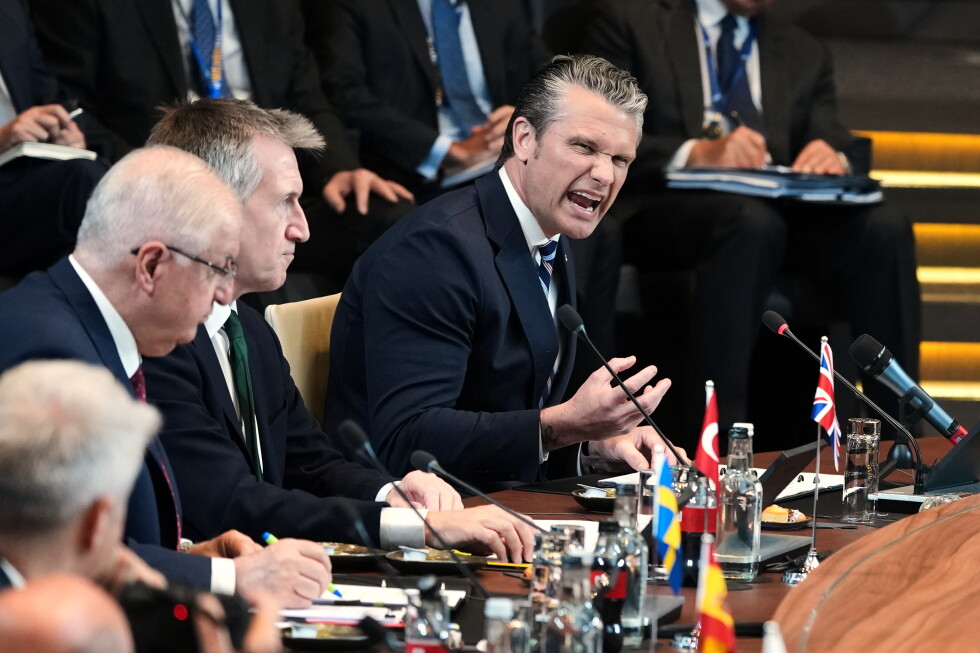
    Hegseth, who rarely participates in regular NATO defense ministerial gatherings, departed Thursday’s ministerial meeting early, but his public comments have already left a lasting mark on alliance discussions. In his high-profile address to allies this week, following a major February 2025 speech, he labeled NATO a “paper tiger”, accused European members of “shameful” underperformance, and claimed too many allies failed a Trump administration test by refusing access to their European bases for U.S. strikes targeting Iran. He also criticized alliance focus on gender equity and climate action, and slammed European migration policies.

    Following his broadside, Hegseth gave allies a six-month deadline to implement reforms ahead of the performance review, which will tie the continued forward deployment of U.S. troops in Europe and American defense investment in NATO to whether the U.S. deems allies are contributing their fair share. He also announced that U.S. contributions to NATO’s joint operating budget, which funds alliance headquarters and core facilities, will be reduced for members that do not accelerate defense spending.

    “It is a protection racket framing that undermines NATO solidarity, erodes trust in U.S. commitment to the alliance, and ultimately harms U.S. own security interests,” explained Rachel Ellehuus, Director-General of the Royal United Services Institute and a former senior U.S. advisor to NATO. Ellehuus added that decisions on U.S. force positioning “should be driven by detailed threat assessments, operational requirements, and military planning – not used as a form of reward, punishment or revenge.” Such an approach, she noted, undermines allies already working to address defense gaps and signals to adversaries that U.S. security commitments come with conditional, negotiable terms.

    Notably, the full scope and specific terms of Hegseth’s review remain undisclosed. Hegseth framed the review as a mechanism to push NATO toward an irreversible shift to European-led primary responsibility for the continent’s defense, saying “Some countries will fail and others will pass with flying colors.” The review is expected to take up to six months, with participation from U.S. military commanders, members of Congress and allied representatives. Speaking to reporters at Brussels Airport before departing, Hegseth added that the review will also evaluate U.S. basing arrangements across Europe to ensure Washington has guaranteed access and overflight rights when needed for its military operations.

    NATO Secretary-General Mark Rutte acknowledged that alliance leadership has no clear insight into the review’s expected outcomes, telling reporters “There’s still no clarity on exactly what the outcome will be, because that will depend on the review. So, we’ll see what happens. Wherever we can be helpful, we will be helpful.” Rutte is scheduled to travel to Washington next week for further discussions, where he expects to gain more clarity on the U.S. plan.

    Rutte pushed back on the harshest of Hegseth’s criticism, noting that European allies and Canada have already made substantial progress on defense spending. “What we are seeing is staggering amounts of money coming in,” he said, adding that “Europe and Canada are spending in 2025 more than $90 billion extra compared to 2024, which is almost a 20% increase in defense spending.” Rutte acknowledged that allies still need to convert this increased spending into operational military equipment, weapons and ammunition, but emphasized that progress is already well underway.

    At the 2024 NATO summit, allies agreed to raise their defense budget targets to align with U.S. spending as a share of GDP, an outcome that left then-President Trump satisfied after the meeting. Even so, Hegseth’s new performance review has cast uncertainty over the upcoming NATO summit scheduled for July 7-8 in Turkey.

    In recent months, senior European military officers have taken on more command roles within NATO’s command structure, and U.S. allies have taken lead responsibility for coordinating arms and funding transfers to Ukraine after the Trump administration drew back from its leading role in the campaign. Many European countries and Canada have also spent billions of dollars to purchase U.S.-made air defense systems that they have subsequently donated to Ukraine, which European leaders view as fighting an existential war for European security.

    Many alliance analysts argue that European allies have already moved as quickly as possible to address defense gaps, with the only unmet demand from the Trump administration being full, unrestricted access to European airspace and bases for U.S. military operations in other regions such as the Middle East.

  • Morocco captain Hakimi to stand trial for rape

    Morocco captain Hakimi to stand trial for rape

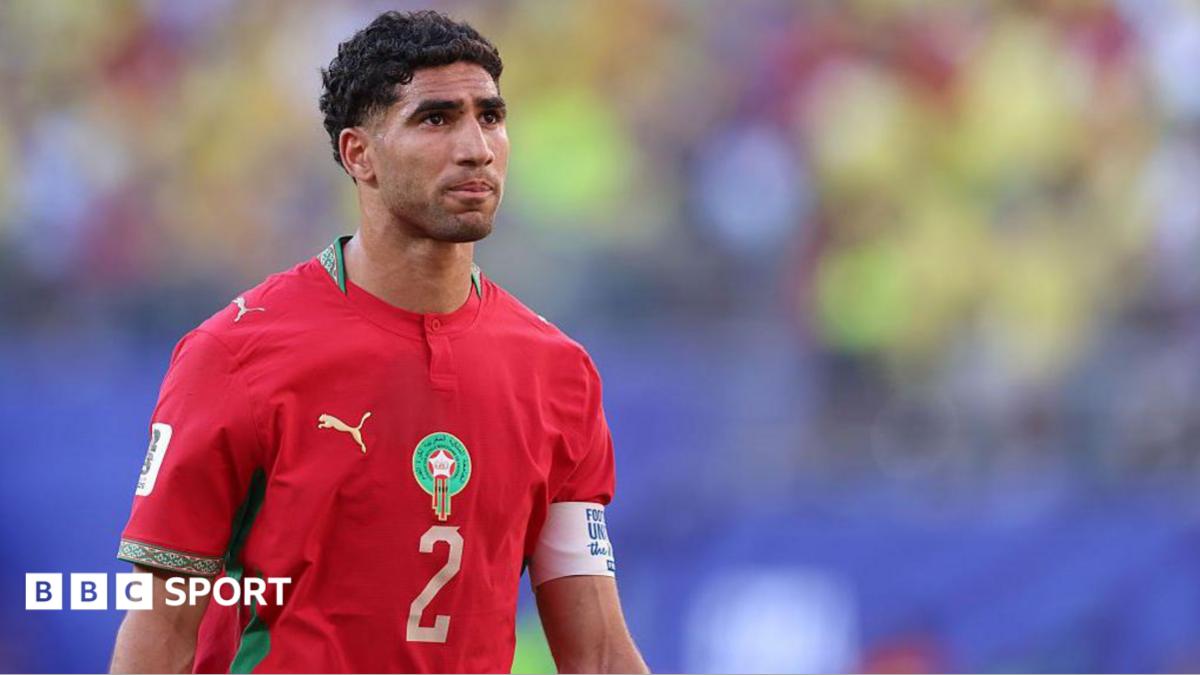
    French prosecutors have officially confirmed that Paris Saint-Germain and Morocco national team captain Achraf Hakimi will face trial on rape charges, a development that has thrown the 27-year-old fullback’s 2026 FIFA World Cup campaign into uncertainty ahead of his side’s second group stage fixture against Scotland this Friday.

    The allegations date back to 2023, when a 24-year-old woman accused the star defender of assaulting her at Hakimi’s private residence in Paris. Authorities in Nanterre, the western Paris suburb overseeing the case, launched an initial preliminary investigation in March 2023. After more than three years of procedural review, an investigating judge ordered the case proceed to trial in February 2026. Multiple French media outlets have reported that Hakimi’s recent appeal to have the charges dismissed was rejected.

    Hakimi has vehemently denied all allegations against him from the beginning, and broke his years-long public silence on the case in a social media post published Friday. “The justice system looked me in the eye and said, ‘If you weren’t famous, there would never have been a case,’” he wrote.

    The World Cup star explained that he chose to stay out of public discourse for years out of a commitment to preserving his dignity and confidence in France’s judicial process. “Today, a story that isn’t mine is being told at the expense of my family, my life, and above all, the truth. I sometimes feel like I’ve become an easy target,” Hakimi added. “I’ve been waiting for this trial since day one. And now I’m eagerly awaiting it. Finally, I’ll be able to speak.”

    Rachel-Flore Pardo, the legal representative for the accuser, said the judge’s ruling to proceed to trial brings her client both relief and hope, after more than three years of navigating the legal process. Pardo noted that her client believes she has been defamed and publicly maligned by Hakimi’s defense team. “Relief that she has been heard by the justice system and will have the right to a trial,” Pardo said. “Hope that this trial will help other women and further weaken the wall of denial and impunity surrounding sexual violence, including in the world of men’s football.”

    As of this reporting, no official start date has been scheduled for the trial. All three of Morocco’s group stage matches at the 2026 co-hosted World Cup are set to take place in the United States, where the Moroccan squad is currently based, leaving Hakimi able to play for the time being. However, if Morocco advances to the knockout round, the team could be forced to play matches in co-host nations Canada or Mexico, where Hakimi may face entry restrictions.

    This scenario is not unprecedented at this tournament: last week, Ghana midfielder Thomas Partey was denied entry to Canada and forced to miss his country’s opening group stage match against Panama. Partey, 32, has pleaded not guilty to seven rape charges and one count of sexual assault leveled by four separate accuser for alleged incidents between 2020 and 2022, and he is scheduled to go to trial in 2027. Canadian immigration rules explicitly allow officials to deny entry to any person who has been alleged or convicted of a criminal offense.

    The 2026 FIFA World Cup splits matches across all three North American co-hosts through the quarter-final round, after which all remaining fixtures will be hosted exclusively in the United States.

    One of the most decorated active African footballers, Hakimi made his senior international debut for Morocco in 2016 at just 17 years old, and has since earned 97 caps for his country. He was a foundational player for the 2022 Moroccan World Cup squad that made history as the first African nation to reach the tournament’s semi-final. Since transferring from Inter Milan to Paris Saint-Germain in 2021, Hakimi has won 13 club trophies, including consecutive UEFA Champions League titles in the 2023-24 and 2024-25 seasons.

  • Boy, 12, wins hearts after trying to check sick chicken into Ethiopian hospital

    Boy, 12, wins hearts after trying to check sick chicken into Ethiopian hospital

    For 12-year-old Markos Abaye, a displaced child growing up in rural Ethiopia, one small feathered companion has become his whole world. So when his beloved pet chicken fell ill earlier this month, unresponsive to every home remedy his young mind could devise, he did what felt like the only logical step: he laced up his shoes, tucked the ailing bird close to his chest, and rushed her straight to the nearest local hospital.

    Markos’ desperate act of kindness has since captured global attention after a nurse on duty at Denbecha Primary Hospital, located in Ethiopia’s Amhara region, filmed the unlikely patient and her worried young owner and shared the clip on TikTok. To date, the video has amassed more than 770,000 views, leaving thousands of viewers across Ethiopia and beyond moved by the preteen’s profound compassion for his animal companion.

    In the viral footage, Markos can be seen cradling the sick hen tightly, his face etched with worry as he explains to the nurse, “She is wheezing.” Nurse Umer Chane, who recorded the interaction, gently responded: “Listen, there are doctors who treat animals. You have to take her there. This is a hospital for humans. Okay, dear?”

    What many viewers do not know from the 15-second viral clip is the deeper backstory that binds Markos to this chicken. Markos moved in with his uncle and guardian Kelemework Amogne in August 2023, when violent conflict broke out between the Ethiopian national army and local Fano militias in Amhara. Fearing for the boy’s safety, his grandparents sent him away to live with his uncle, and gave him the chicken as a cherished parting gift.

    Since then, Markos has formed an unbreakable bond with the hen. His uncle shared that the boy watches the bird’s every move, even mapping her footpaths and building tiny earthen bridges over small holes in the ground to keep her from falling. When the chicken fell ill, Markos was so distraught that he stopped eating and attending to his schoolwork. Kelemework had suggested the boy seek out professional help for the hen, but Markos had no idea that specialized veterinary clinics existed in his town of Denbecha – to him, a hospital was simply a place where any sick living thing could get care.

    Even as onlookers in the hospital teased the boy for bringing a chicken to a human medical facility, Umer the nurse said he could see nothing but pure, earnest kindness in Markos’ face. “He hugged the chicken tightly, worried about her condition, even as others tried to make fun of him,” Umer told the BBC. Struck by the moment, Umer posted the video to TikTok, never expecting it to blow up across the country.

    When Markos returned home after his hospital trip, he only told his uncle that people had laughed at him. It was not until days later, when the family stumbled on the viral video online, that they realized the boy’s act of love had captured national attention. “He thought of a hospital as one that could treat both people and animals,” Kelemework explained, adding that he has been stunned by the outpouring of support for his nephew. “It seemed like a dream!”

    Thankfully, Markos’ beloved chicken has already made a full recovery. The 12-year-old told reporters he is now planning to let the hen hatch the 12 eggs he has saved up for her.

    Following the viral spread of Markos’ story, a local Ethiopian poultry company has stepped forward to honor his love of animals: the firm announced it will donate 100 chickens to Markos, as well as provide him with formal training in poultry farming to help him turn his passion into a skill for the future.

  • Dragon Boat Festival links modern China to traditions more than 2,000 years old

    Dragon Boat Festival links modern China to traditions more than 2,000 years old

    Across mainland China, Hong Kong, and Taiwan, millions of people gathered Friday to mark the annual Dragon Boat Festival, a millennia-old cultural celebration that blends historic legend, ancient philosophical beliefs, and lively communal competition. What began more than 2,000 years ago as a festival tied to summer solstice rhythms and traditional concepts of health and cosmic balance has grown into one of China’s most vibrant and widely observed cultural holidays, centered on its iconic signature event: competitive dragon boat racing.

    Unlike many modern holidays that have shed much of their original cultural context, the Dragon Boat Festival retains deep roots in Chinese history and folk tradition. Historians note the celebration’s origins stretch back to ancient beliefs surrounding the summer solstice, when shifting seasonal energy created imbalance between yin and yang. Communities developed rituals aimed at restoring harmony, protecting public health, and aligning human activity with the natural world.

    “Of all traditional Chinese festivals, the Dragon Boat Festival stands out as the richest and most diverse in its customs,” explained Liu Xiaofeng, a history professor at Tsinghua University. “Across China’s different regions, local communities built out a wide range of unique traditions, all rooted in core ideas connected to the summer solstice and balancing yin and yang energies.”

    For most around the world, the festival is most closely linked to the legendary story of Qu Yuan, an ancient Chinese poet and scholar who, according to centuries-old lore, drowned himself in a river over political injustice more than 2,000 years ago. Out of respect and grief, local residents rushed out onto the water in long boats to search for his body, and threw packets of rice into the river to prevent fish from feeding on his remains. These acts of mourning eventually evolved into the two most iconic Dragon Boat traditions: dragon boat racing and zongzi, the savory sticky rice dumplings still enjoyed by families across the country today.

    This year’s celebrations kicked off with a three-day competitive racing event hosted in Beijing, running through June 21 along the capital’s historic Grand Canal. The tournament features separate men’s, women’s, and mixed-team divisions, with races contested over 100-meter, 200-meter, and 500-meter courses. Dozens of teams from five regions across China — including Beijing, Tianjin, Hebei, Shanxi, and Guangdong — have traveled to the capital to compete over the holiday weekend.

    On the opening day of the competition, rowers kept perfectly synchronized strokes to the thunderous rhythm of on-board drummers, each long, colorful dragon boat surging forward through the water as crowds of spectators along the banks cheered for their favorite teams. For those who could not attend in person, many gathered at home with family, eating zongzi and watching broadcast coverage of the races.

    “The competition didn’t just help our team build stronger teamwork and spirit,” said Li Maoshan, a competitor who took part in Friday’s opening races. “It also gave all of us a chance to show the values of perseverance and dedication that this tradition has carried for centuries.”

    In Hong Kong, Friday’s races added an extra touch of playful creativity, with some competitors dressing in themed costumes, including a playful cartoon iteration of Ne Zha, a beloved deity from Chinese Taoist tradition.

    This report included contributions from AP video producer Liu Zheng in Beijing and AP reporter Kanis Leung in Hong Kong. Associated Press religion and cultural coverage receives support through a collaboration with The Conversation US, with funding from Lilly Endowment Inc. The Associated Press is solely responsible for all content in this report.

  • Billionaire Ambani’s Jio announces what could be India’s biggest share sale

    Billionaire Ambani’s Jio announces what could be India’s biggest share sale

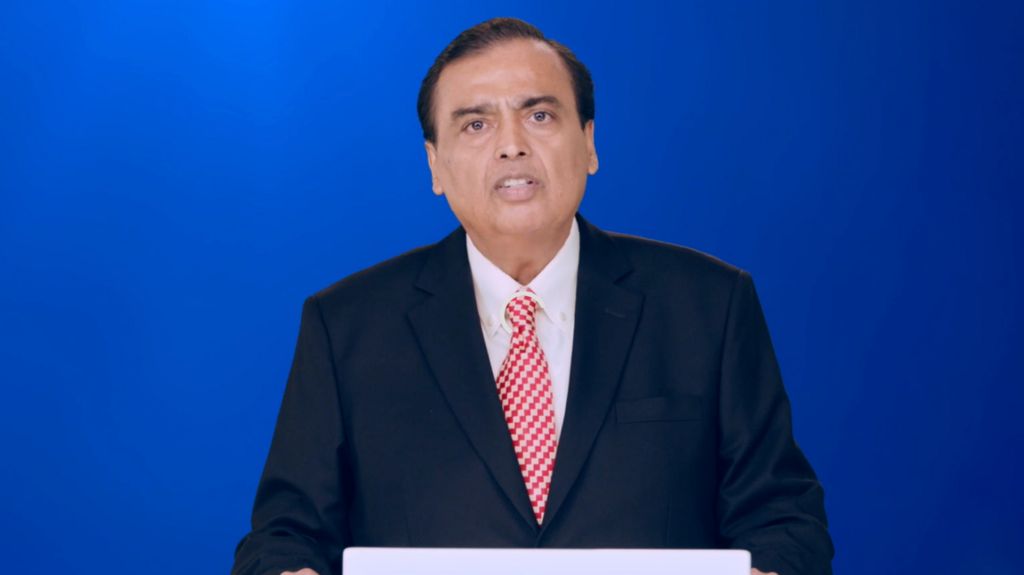
    One of India’s most transformative technology and telecom ventures is finally set to hit public markets, in a move that analysts are hailing as one of the most significant initial public offerings in the nation’s modern history. Jio Platforms, the digital telecommunications subsidiary of Reliance Industries helmed by Indian billionaire Mukesh Ambani — ranked among the world’s wealthiest people with an estimated net worth of $90.6 billion by Forbes — has received board approval for its IPO draft prospectus. Ambani made the official announcement during Reliance’s annual general shareholder meeting held Friday.

    As India’s largest mobile network operator, Jio currently boasts a user base of more than 500 million subscribers across the country. Multiple media reports project the offering will raise approximately $4 billion, making it one of the biggest share sales India has seen in recent years. The listing is being closely watched by global and domestic investors alike, as it will serve as a key barometer of market appetite for new offerings after months of heightened volatility in India’s equity markets.

    In his address to shareholders, Ambani framed the IPO as a watershed moment for India’s technology ecosystem, stating: “The proposed listing of Jio will demonstrate to the world that India can build technology companies of global scale, global capability, and global value.”

    Since its launch in 2016, Jio has reshaped India’s digital landscape. The firm upended the country’s stagnant telecom sector by introducing ultra-low-cost mobile data plans, attracting hundreds of millions of subscribers in just a few years and pushing outdated, high-priced competitors out of the market. In the years following its disruptive entry, Jio has expanded its footprint far beyond consumer mobile services, branching into fast-growing new verticals including cloud computing, enterprise digital solutions, and artificial intelligence.

    Just last year, Jio solidified its global partnerships by signing a deal with Elon Musk’s SpaceX to bring the company’s low-orbit Starlink satellite internet service to India, matching a similar agreement struck by rival Bharti Airtel. The upcoming IPO marks the end of a year-long planning process for the public listing; Ambani first announced plans for Jio to go public by the first half of 2025, pushing the launch to 2026 to align with market conditions.

    The Jio announcement comes just 24 hours after India’s National Stock Exchange (NSE) filed its own draft prospectus for its long-awaited IPO, creating a wave of momentum for India’s slowing IPO market. Media estimates project the NSE offering will raise more than $3 billion. Combined, the two back-to-back listings would rank among the largest IPOs in India in the last five years, matching the size of Hyundai Motor India’s $3.3 billion blockbuster offering two years ago.

    Market analysts and investors are particularly focused on Jio’s IPO as a potential catalyst for wider market sentiment. India’s new issuance market has seen a marked slowdown in activity over the past 18 months, and a successful, oversubscribed Jio offering is widely expected to revive confidence and encourage other high-quality private firms to pursue public listings.

    Jio’s expansion into AI and digital infrastructure has already attracted major global tech investment. Earlier this month, Meta Platforms announced it would lease capacity at a 168-megawatt AI-optimized data center that Reliance is constructing in the western Indian state of Gujarat. The deal builds on a longstanding partnership between the two firms that began in 2020, when Meta invested $5.7 billion in Jio. Since that initial investment, the two companies have expanded their collaboration to include initiatives that open up Meta’s open-source AI models to millions of Indian businesses and local developers.

    Investment banking firm Jefferies estimated in a November 2025 note that Jio carries an implied valuation of roughly $180 billion, which would position it as one of the most valuable telecommunications companies on the globe. For the Reliance Group, the Jio IPO represents a historic milestone: it is the first major public offering from one of the conglomerate’s core business units since Reliance Petroleum listed on Indian markets in 2006.