作者: admin

  • Trump’s Fed chair pick vows to safeguard independence at confirmation hearing

    Trump’s Fed chair pick vows to safeguard independence at confirmation hearing

    As U.S. President Donald Trump’s nominee to head the Federal Reserve, Kevin Warsh opened his Senate confirmation hearing Tuesday with a public pledge to safeguard the critical independence of America’s central bank, even as he faces intense political pressure from the commander-in-chief to push for aggressive interest rate cuts.

    “I’m committed to ensuring that the conduct of monetary policy remains strictly independent,” Warsh stated in his opening remarks delivered before the Senate Banking Committee. Beyond his promise to protect institutional autonomy, he also reaffirmed the Fed’s core commitment to taming persistent inflation.

    The hearing represents a major milestone for Warsh, who has been tapped to replace outgoing Chair Jerome Powell when his current term expires on May 15. Every step of the confirmation process is being closely scrutinized by policymakers, economists, and global markets, as the outcome will shape U.S. monetary policy for years to come.

    Tensions have been running high around the nomination well before the hearing gavel fell. Trump has ramped up repeated public criticism of the Fed in recent weeks, attacking the central bank for refusing to implement deeper, faster interest rate cuts. Early Tuesday, the president told CNBC he would be disappointed if his nominee did not move quickly to lower borrowing costs, and renewed his baseless attacks on Powell over minor renovation costs at the Fed’s Washington D.C. headquarters. “We should have the lowest interest rate in the world,” Trump insisted.

    Partisan friction has further complicated Warsh’s path to confirmation. All 11 Democratic members of the Banking Committee called last week for a full delay of the nomination vote until two separate ongoing investigations into outgoing Chair Jerome Powell and Fed Governor Lisa Cook are concluded. Even a fellow Republican has broken ranks to oppose moving forward: Senator Thom Tillis, a member of the GOP-led panel, has pledged to block all Fed nominees — including Warsh — until the Justice Department probe involving Powell is fully resolved.

    With Republicans holding a narrow 13-seat majority on the 25-member committee, Tillis’ defection could create a dangerous deadlock that derails Warsh’s confirmation entirely. Beyond the procedural fights, the nominee also faces the prospect of sharp, targeted questioning on a range of controversial issues, from his extensive personal wealth and past professional ties to the late convicted sex offender Jeffrey Epstein, to his core policy stances on U.S. economic growth and inflation.

    For Warsh, the hearing is his first major opportunity to prove he can serve as a credible, independent steward of the nation’s monetary policy, according to analysts. “It will be his first chance since he was nominated by the president to demonstrate that he intends to be a credible, independent central banker,” David Wessel, senior fellow at the Brookings Institution, told AFP. Wessel noted the delicate balancing act Warsh must pull off: “He has to be really careful to not anger Trump, but he also has to avoid the impression that he’s weak or subject to political pressure.”

    In his opening remarks, Warsh pushed back against concerns that political interference would skew Fed decision-making, arguing that elected officials sharing their views on interest rates does not inherently threaten institutional independence. “I do not believe that independence of monetary policy is threatened when elected officials state their views on rates,” he said. He emphasized that addressing inflation is ultimately the Fed’s responsibility, adding that the central bank must “stay in its lane” when it comes to setting economic policy. The committee’s chairman, Republican Tim Scott, framed the hearing as an “opportunity to refocus” the Fed on its statutory dual mandate: delivering price stability and keeping unemployment low.

    But the top Democrat on the panel, Senator Elizabeth Warren, raised urgent alarms that the ongoing investigations into Powell and Cook are a deliberate political tactic designed to pressure Fed policymakers into falling in line with Trump’s policy demands. She warned that the nomination risks putting “a sock puppet” of the president in charge of the world’s most powerful central bank.

    Economists say the biggest policy question hanging over the hearing is just how closely aligned Warsh is with Trump’s push for steep rate cuts. During Warsh’s previous tenure as a Fed governor from 2006 to 2011, he was widely viewed as a hawk, a policymaker who prioritized controlling inflation by keeping interest rates relatively high. But ING chief economist James Knightley told AFP that Warsh appears to have shifted his policy stance in recent years. Knightley pointed out that Warsh has emerged as a vocal advocate for expanded tech investment and artificial intelligence innovation, which many economists argue could boost U.S. potential growth without spurring the same level of inflation seen in past economic expansions.

    Still, immediate headwinds stand in the way of aggressive rate cuts: rising gasoline prices driven by ongoing conflict in the Middle East have created new near-term inflation pressures that the Fed cannot ignore. If Warsh pushes for overly rapid rate cuts in the near term, it could erode the Fed’s hard-won credibility on inflation, Knightley warned. For the nominee, the path forward requires acknowledging the immediate impact of near-term price shocks while making the case that these temporary disruptions are unlikely to turn into long-term persistent inflation.

  • China-Laos mega power project put into operation

    China-Laos mega power project put into operation

    A landmark cross-border energy infrastructure partnership between China and Laos has reached a major milestone, with the 500-kilovolt China-Laos power interconnection project officially entering commercial operation on Monday, April 21, 2026. Developed to deepen bilateral energy cooperation, this new facility stands as the largest and highest-voltage cross-border power grid project ever constructed between the two neighboring nations.

    According to data released by China Southern Power Grid Lancang-Mekong International, the project delivers a transformative upgrade to bilateral energy exchange capacity. Prior to the launch of this new infrastructure, the maximum power transmission capacity between China and Laos stood at just 50,000 kilowatts. The newly commissioned project pushes this capacity to 1.5 million kilowatts — a 30-fold increase over the previous interconnection line.

    Beyond expanding capacity, the project is designed to facilitate large-scale cross-border exchange of clean energy. Project operators project that the interconnection will support the annual transmission of approximately 3 billion kilowatt-hours of low-carbon electricity between the two countries, helping to balance energy supply and demand while supporting decarbonization goals on both sides of the border.

    The project’s completion comes amid growing regional cooperation on energy infrastructure across the Lancang-Mekong region, where cross-border interconnection projects are increasingly seen as a tool to improve energy security, expand access to affordable clean power, and strengthen economic ties between participating nations.

  • Stories behind the ‘Beijing Highway’ in Jamaica

    Stories behind the ‘Beijing Highway’ in Jamaica

    For years, Jamaica’s ambitious North-South connectivity project languished in bureaucratic and logistical limbo, mired in repeated delays that blocked much-needed economic and social progress for the island nation. That all changed after a high-profile official visit to China, a diplomatic and cooperation exchange that unlocked new momentum to move the long-stalled infrastructure initiative forward. Today, that transformative project—widely known to locals as the “Beijing Highway,” built with substantial development support from China—has reshaped daily travel across Jamaica.
    Before the highway opened, the cross-island journey from the northern coast to the southern capital region took a grueling two hours along winding, congested local roads. The new modern thoroughfare has cut that travel time to less than 30 minutes, slashing logistics costs for local businesses, boosting tourism access to Jamaica’s iconic northern beach resorts, and opening new development opportunities for inland communities that had long been cut off from key economic hubs.
    The project has not been without external scrutiny, however. As China’s infrastructure investment and diplomatic footprint expand across the Caribbean, the United States has raised public concerns over what it frames as growing Chinese influence in the region. But for Jamaica’s former prime minister Bruce Golding, those worries are unfounded. In a clear defense of Jamaica’s independent foreign policy and bilateral partnership with Beijing, Golding emphasized that all negotiations and cooperation between Jamaica and China have been rooted in the core principles of mutual respect and deep mutual understanding. “There is no danger in it,” Golding said of the bilateral relationship. He added that he hopes Jamaican leaders will maintain the courage and fortitude to safeguard the mutually beneficial partnership between the two nations.
    The “Beijing Highway” stands as a tangible example of how South-South development cooperation can deliver immediate, tangible benefits to participating nations, while highlighting the growing push among smaller developing countries to preserve their policy independence amid great power competition.

  • Ukraine family get cancer and bomb news on same day

    Ukraine family get cancer and bomb news on same day

    For a Ukrainian refugee family rebuilding their lives in Penrith, Cumbria, February 13 will forever stand as a day marked by unthinkable dual tragedy. On that same Friday, Stepan and Alina Kozariichuk received two shattering pieces of news: their 11-month-old infant son Bohdan was diagnosed with advanced bilateral retinoblastoma, a rare form of eye cancer, and Alina’s father’s home back in Ukraine’s Odesa region had been reduced to rubble by a Russian drone strike.

    The couple, who fled the ongoing war in Ukraine to build a safer life in northern England, first noticed troubling symptoms in their son when he was around six months old. Bohdan began squinting frequently and struggled to grasp the toys placed in front of him, prompting the pair to seek urgent medical assessment. After a series of tests, clinicians confirmed the devastating diagnosis: cancer had already affected both of the baby’s eyes, reaching an advanced stage that would demand months of intensive, complex care. The treatment plan includes multiple rounds of chemotherapy, alongside targeted cryotherapy and laser therapy, requiring the young family to travel regularly between Penrith, Newcastle for chemotherapy sessions, and Birmingham for specialized ongoing care.

    Compounding this already devastating health crisis was the second blow delivered the same day. Word reached the Kozariichuks from contacts back in Odesa that two Russian drones had directly struck Alina’s father’s property. While the grandfather and his wife escaped the attack without physical injury, their home and personal vehicle were completely destroyed, leaving them with little of what they had built over decades. Alina described the 13th of February as the worst single day of the couple’s lives, telling BBC Radio Cumbria through a translator that “it was very hard” to process overlapping losses on that scale.

    For the Kozariichuks, the journey to this point has already been marked by profound grief and longing for the child they now fight for. Alina shared that the couple endured two heartbreaking miscarriages before welcoming Bohdan, making their baby a deeply wanted and cherished member of the family. In the wake of their dual crisis, the couple says they have grieved together, but Bohdan’s unshakable joy has given them the strength to keep going. Despite the exhaustion of constant chemotherapy and endless hospital appointments, the 11-month-old still smiles freely, plays with his favorite toy drum, watches cartoons, and reaches for his toys just as any other baby his age would.

    Calling Bohdan their “little hero”, the couple said in a public statement that “his strength gives us strength.” Even when the weight of their challenges leaves them overwhelmed, a single smile from their son is enough to lift their spirits. “We have cried together, but when we see a smile on our baby’s face we smile and joke together, hoping there will be better times,” Alina said. Like many Ukrainian refugees who have built new lives abroad, the family holds onto one core hope: that when the war in Ukraine finally comes to an end, they will be able to return to their home country and rebuild together.

  • China-Vietnam carbon markets explored in new academic work

    China-Vietnam carbon markets explored in new academic work

    As Vietnam prepares to debut its first domestic carbon trading exchange, a new collaborative academic work has emerged to unpack and compare carbon market frameworks in both China and Vietnam, offering targeted insights to support the Southeast Asian nation’s emerging climate market buildout. Titled *China-Vietnam Carbon Market*, the new book is the product of a cross-border research partnership between Vietnamese scholar Duong Thi Thanh — a long-time specialist in forest carbon sinks — and her doctoral advisor, Professor Zhang Ying from Beijing Forestry University (BFU). More than just an academic analysis, the publication stands as a tangible example of joint Sino-Vietnamese collaboration between research institutions and industry stakeholders, designed to deliver evidence-based academic backing for cross-border climate governance under the Belt and Road Initiative. Long before she enrolled in the doctoral program at BFU’s School of Economics and Management, Duong identified a critical gap in existing research: Vietnam’s forest carbon sink market had remained largely unexamined and understudied by the academic community. With a national forest coverage rate of 42 percent, spanning 14.7 million hectares of forest land that sequester an estimated 69.8 million metric tons of carbon dioxide each year, Vietnam holds enormous untapped potential in forest-based carbon mitigation. “This vast green asset gives Vietnam a strong foundation to develop a thriving forest carbon sink market,” Duong explained. She emphasized that establishing a standardized, scientific carbon accounting methodology is an essential first step to attract greater private and public investment into forest conservation and sustainable forest management. Through her doctoral research at BFU, Duong found that China’s decades-long journey building forestry carbon sink markets — from launching early regional pilot projects to rolling out a unified national carbon market — has generated a wealth of actionable expertise. Lessons from China’s work on carbon credit development, trading rule design, and market regulation carry direct, practical reference value for Vietnam, which is currently navigating the early stages of constructing its own national carbon market. The collaborative study not only addresses a key knowledge gap in regional climate governance research but also strengthens academic and environmental ties between the two neighboring countries, laying groundwork for future cross-border carbon cooperation under the BRI.

  • Trump invokes Defense Production Act to boost energy supply amid Iran war

    Trump invokes Defense Production Act to boost energy supply amid Iran war

    Amid escalating armed conflict between the U.S.-Israel coalition and Iran that has roiled global energy markets, former U.S. President Donald Trump has enacted sweeping emergency energy measures, drawing on wartime federal authority to ramp up domestic energy production and stabilize volatile consumer energy costs. On Monday, Trump signed five separate presidential memorandums activating the 1950 Defense Production Act, a decades-old law that grants the executive branch expanded powers to compel and support domestic industrial output to meet national security needs.

    The five executive actions target five core pillars of U.S. energy security: domestic petroleum production, coal development, liquefied natural gas (LNG) expansion, general energy infrastructure upgrades, and modernization of the national power grid. As outlined in the official directives, the law will be used to allocate federal funding to a broad portfolio of domestic energy projects that are deemed critical to shoring up supply amid the Middle East crisis.

    Enacted at the start of the Korean War, the Defense Production Act has long been a standby tool for U.S. presidents responding to national security and public emergencies, granting expansive authority to align domestic industrial capacity with pressing defense and public stability requirements. This latest activation comes as the Trump administration faces growing political pressure from voters and industry stakeholders to rein in skyrocketing prices for oil, gasoline, and electricity, all of which have spiked in recent weeks amid conflict-related supply chain disruptions in the global energy market.

    Media reports confirm that a wide range of projects will qualify for federal support under the new memorandums. Eligible infrastructure includes existing and new coal-fired power plants, domestic oil refining facilities, and manufacturing sites that produce critical electrical grid components including gas turbines and transformers – a category of equipment that has already faced widespread national shortages in recent years, exacerbating grid reliability challenges across multiple U.S. regions.

  • Oil and stocks steady as US-Iran truce expiry looms

    Oil and stocks steady as US-Iran truce expiry looms

    Global financial markets traded in a narrow range on Tuesday, with crude oil prices dipping slightly and most equities posting modest gains, as investors clung to cautious optimism that Washington and Tehran would reach a breakthrough to de-escalate tensions and reopen the strategically critical Strait of Hormuz, even as a two-week truce is set to expire on Wednesday. As of Tuesday, Iran had not yet deployed a negotiating delegation to Pakistan, the venue for the new round of US-Iran peace talks, while the US side has confirmed it is ready to proceed with discussions, leaving Tehran’s participation in the negotiations unclear.

    The international benchmark Brent North Sea crude held largely steady after a sharp rally the previous session triggered by Iran’s temporary closure of the Strait of Hormuz, falling just 0.3 percent to $95.22 per barrel by 1330 GMT. US West Texas Intermediate crude similarly edged down 0.2 percent to $87.23 per barrel, with both benchmarks holding below the psychologically important $100 per barrel threshold that has historically stoked broad inflation fears.

    Equity markets painted a mixed but broadly upbeat picture across major global hubs. On Wall Street, all three main indices opened higher, with the Dow Jones Industrial Average rising 0.5 percent to 49,706.29 points, the S&P 500 gaining 0.2 percent to 7,125.89, and the Nasdaq Composite adding 0.3 percent to 24,467.29. The gains were supported by stronger-than-expected March retail sales data, which showed a 0.6 percent month-on-month rise even when stripping out volatile gasoline purchases, defying concerns that spiking energy costs would drag down consumer spending. In Europe, London’s FTSE 100 dipped 0.4 percent and Paris’ CAC 40 fell 0.5 percent, while Frankfurt’s DAX closed flat. Most major Asian markets finished the trading day higher: Japan’s Nikkei 225 gained 0.9 percent to close at 59,349.17, Hong Kong’s Hang Seng Index added 0.5 percent, and Shanghai’s Composite Index edged up 0.1 percent.

    Market analysts note that investors have so far refused to price in a worst-case scenario of intensified conflict, with widespread expectations that the current ceasefire will be extended beyond its Wednesday expiry. “There is a reluctance for investors to price in the worst-case scenario for the conflict in the Middle East, and there is optimism within the market that the US/Iran ceasefire will be extended,” explained Kathleen Brooks, research director at global trading group XTB.

    US President Donald Trump expressed confidence in the US’ negotiating position during a Tuesday interview with CNBC, as his administration prepared envoys for the Pakistan-hosted talks. The White House confirmed that Vice President JD Vance is prepared to return to Pakistan for the new round of negotiations aimed at ending the standoff, which has already driven crude prices higher and reignited global inflation concerns.

    Despite the market optimism, significant uncertainty remains over the outcome of the talks. Iran has already accused Washington of violating the fragile truce through its blockade of Iranian ports and seizure of an Iranian vessel, while Trump has similarly accused Tehran of truce violations over the harassment of commercial vessels transiting the Strait of Hormuz, the chokepoint that carries roughly one-fifth of all globally traded oil.

    Russ Mould, investment director at UK-based asset management firm AJ Bell, noted that while sub-$100 oil prices signal market optimism that conflict will not escalate, prolonged elevated prices carry significant economic risks. “However, the longer oil remains in the 90s (dollar per barrel) range… the higher the chance of an inflationary shock and a wobble to global economic activity,” Mould said.

    The solid March retail sales data has reinforced views of a resilient US consumer, a key pillar of American economic growth. “The data echoes what we heard from the big banks last week, with management teams largely pointing to a resilient consumer despite soaring gas prices and a barrage of geopolitically charged headlines,” said Bret Kenwell, US investment analyst at fintech platform eToro. Kenwell added that US stocks, which have already recovered all pre-conflict losses and are trading near record highs, reflect not just hopes for de-escalation in the Middle East but also growing optimism around upcoming corporate earnings. If US companies deliver solid first-quarter results, he said, it could reinforce investor confidence that the current market rally still has room to run.

    Beyond geopolitics, investors are also closely watching the confirmation hearings for Kevin Warsh, former Federal Reserve governor and US President Donald Trump’s nominee to lead the central bank. Warsh’s testimony is expected to offer clear signals about the future path of US interest rates, at a time when the world’s largest economy is navigating persistent inflation risks and slowing growth headwinds.

  • Midtjylland’s Djabi seriously injured in stabbing

    Midtjylland’s Djabi seriously injured in stabbing

    A 19-year-old rising football talent, Alamara Djabi, who plies his trade as a midfielder for Danish top-flight side FC Midtjylland, is now in stable condition following a life-threatening stabbing attack in central Denmark, law enforcement and club officials have confirmed.

    The violent incident unfolded in the early hours of Sunday on the streets of Herning, the small central Danish city that serves as home base for Midtjylland, one of the most successful clubs in Danish domestic football in recent years. Local police have launched a full investigation into the attack, and have named a 20-year-old suspect who remains at large as of the latest updates.

    Djabi, a young prospect from Guinea-Bissau, joined Midtjylland in 2023 after rising through the youth ranks at Portuguese powerhouse Benfica. The teenager spent the 2024-2025 season on loan at Portuguese second division club CD Mafra, where he earned seven first-team appearances to build his professional experience. He returned to Midtjylland ahead of the current campaign, and has already featured once in Europa League qualifying for the side, adding to his two total senior appearances for the Danish club.

    Immediately after the attack, Djabi was rushed to hospital in critical condition and underwent urgent emergency surgery to treat his injuries. Club officials released an official statement updating the public on his status, revealing that the young midfielder has since undergone a second procedure. “Thanks to the incredible professional work of first responders and the hospital care team that has treated him, his condition is now classified as stable,” the statement read. “He has woken from an induced coma, and is progressing as well as can be expected given the circumstances.”

    Police investigators have yet to determine a clear motive for the attack, but preliminary assessments point to a personal dispute between Djabi and the suspect as the likely trigger. “It is still unclear what the motive for the stabbing is, but the police’s immediate assumption is that there was a disagreement between the 19-year-old and the perpetrator,” a police spokesperson said in an update to reporters.

    The attack comes as Midtjylland, a four-time winner of the Danish Superliga that most recently claimed the league title in 2024, competes for the top spot in this season’s championship. The club currently sits second in the table, just two points behind league leaders AGF with multiple matches still to play this campaign.

  • Woman gets death sentence with reprieve for abusing boyfriend’s 3-year-old son

    Woman gets death sentence with reprieve for abusing boyfriend’s 3-year-old son

    A local court in Shanghai announced Tuesday that a woman has received a death sentence with a two-year reprieve for the fatal abuse and intentional injury of her boyfriend’s three-year-old son. The Shanghai No. 1 Intermediate People’s Court found defendant Zhao Yudie guilty on two counts of abuse and intentional injury, additionally ordering that Zhao’s political rights be stripped for life.

    Court documents detail that the abuse began shortly after Zhao moved in with her boyfriend surnamed Huang and his young son in July 2024. Using the toddler’s occasional mischief as a flawed justification, Zhao subjected the child to repeated physical abuse over the course of weeks, including beatings to the boy’s back, buttocks and legs, as well as biting attacks on his limbs.

    The fatal incident unfolded on the evening of August 24, 2024, at a park in Shanghai’s Pudong New Area. Irritated by the child running around the park grounds, Zhao launched a brutal attack: she slapped the boy’s head and face repeatedly, beat him with a tree branch, and kicked his body multiple times. In the course of the attack, Zhao threw the toddler down a riverbank slope, causing him to fall and suffer a severe blunt force head injury on the ground.

    After returning home later that evening, the young boy lost consciousness. Zhao eventually brought him to a local hospital for emergency care, but medical teams were unable to reverse the damage. The victim passed away on September 4, 2024, from central nervous system failure triggered by the blunt force brain trauma he sustained in the attack. Post-mortem examinations also confirmed widespread injuries across the child’s body: multiple bruises covered his back, face and chest, with distinct bite marks found on his left calf.

    In its official ruling, the court clarified that while Zhao’s actions showed clear intent to cause bodily harm, there was no premeditation to kill the child. The court also moved to debunk widespread unsubstantiated rumors that circulated online following the boy’s death, including false claims that Zhao had stabbed the child with toothpicks, that he had been forced to scavenge for food due to starvation, and that only small stones were found in his stomach during the autopsy. The court confirmed all of these viral claims are completely unfounded.

    Officials also emphasized that no evidence has emerged to indicate that the boy’s father, Huang, participated in, concealed, or tolerated Zhao’s abuse of his son, ending widespread online speculation about his potential involvement.

  • US, Iran ceasefire nears expiry as Hormuz tensions cloud talks

    US, Iran ceasefire nears expiry as Hormuz tensions cloud talks

    The fragile 14-day ceasefire between the United States and Iran is rapidly approaching its expiration deadline of Wednesday evening, leaving the future of diplomatic talks and security in the strategic Strait of Hormuz hanging in the balance. In recent public comments, former US President Donald Trump has cast severe doubt on the possibility of extending the truce, telling reporters that a prolonged ceasefire is “highly unlikely” and that military strikes would almost certainly resume if no new agreement is reached before the deadline.

    Despite Trump’s tough public stance, US officials have signaled that Washington remains willing to keep diplomatic pathways open. According to a report from Axios, which cited unnamed US government sources, Vice President JD Vance—who led the first round of direct face-to-face negotiations between the two delegations—will depart for Islamabad by Tuesday to continue exploratory discussions. Trump has also offered a conditional opening to high-level engagement: in an interview with The Washington Post, he confirmed he would be willing to meet with top Iranian leaders if negotiators manage to secure a preliminary breakthrough on core issues, though he later noted to Bloomberg that his personal presence at working-level talks is not a necessary step at this stage.

    Signals coming out of Tehran, however, remain deeply divided. Axios reported that Iran’s negotiating team received preliminary approval from the country’s supreme leadership on Monday night to continue talks with US representatives, but official government spokespeople have stopped short of publicly confirming Iran’s participation in a second round of negotiations.

    Earlier on Monday, Iranian Foreign Ministry spokesperson Esmaeil Baghaei stated explicitly that Tehran currently has no scheduled plans for a second round of talks, arguing that recent US actions do nothing to demonstrate Washington’s commitment to a genuine diplomatic resolution. Iranian Foreign Minister Seyed Abbas Araghchi doubled down on this criticism on Monday, framing ongoing US “provocative actions” and repeated ceasefire violations as the single largest barrier to advancing peace talks between the two nations.

    Speaking to The Washington Post on condition of anonymity, a senior Iranian official identified two core issues threatening the future of negotiations: the uncompromising tone of Trump’s public statements and the continuation of the US economic blockade on Iran. The official added that while negotiating teams from both sides have already reached broad agreement on the general outline of a potential deal, Trump’s public push for maximalist concessions risks derailing all progress that has been made so far.

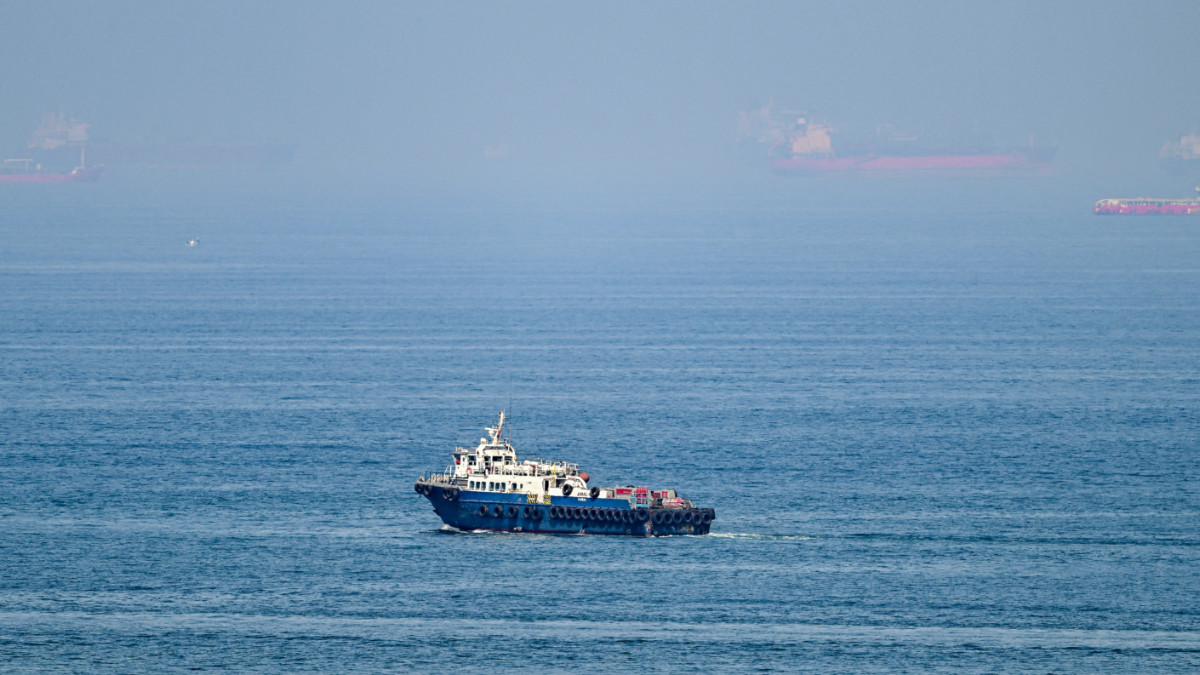
    Tensions have spiked sharply in the Strait of Hormuz, the narrow strategic waterway that carries roughly one-fifth of all global oil trade, in the days leading up to the ceasefire expiration. Iran briefly reopened the strait to international shipping after the initial truce took effect, but reinstated new transit restrictions over the weekend after the US Navy seized an Iranian-flagged cargo ship that attempted to break the US-imposed blockade.

    Trump doubled down on his hardline position on the strait in a recent phone interview, confirming that the waterway will remain blocked to commercial traffic until a comprehensive peace deal is finalized. “They want me to open it. The Iranians desperately want it opened. I’m not opening it until a deal is signed,” he said.

    Even amid the escalating maritime standoff, small signs of domestic normalization are beginning to emerge in Iran. According to the semi-official Fars News Agency, Iran’s Civil Aviation Authority announced on Monday that the country’s two primary commercial airports—Tehran’s Imam Khomeini International Airport and Mehrabad International Airport—have resumed full passenger operations after weeks of closure due to open conflict. The original ceasefire was widely welcomed as a rare de-escalation of hostilities after more than seven weeks of active conflict between the two nations. The first round of talks, held in Islamabad earlier this month, failed to produce any substantive breakthrough, and both sides have exchanged sharp public criticism in the weeks since.