作者: admin

  • The Super Bowl winner’s son stepping into spotlight with USA

    The Super Bowl winner’s son stepping into spotlight with USA

    Almost 30 years ago, in September 1996, NFL star Antonio Freeman delivered a career-defining performance in Seattle, scoring two touchdowns to lead the Green Bay Packers to a statement win over the Seattle Seahawks. Just months later, he claimed the ultimate prize in American football: a Super Bowl ring, cementing his name in Seattle sports history.

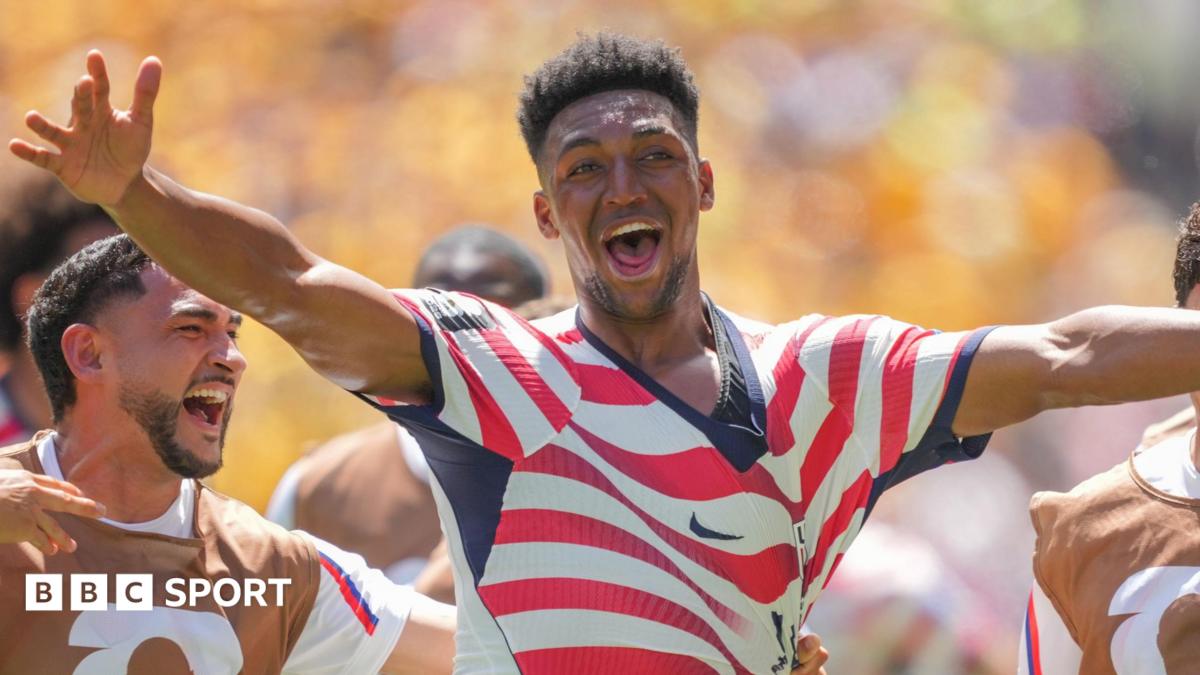
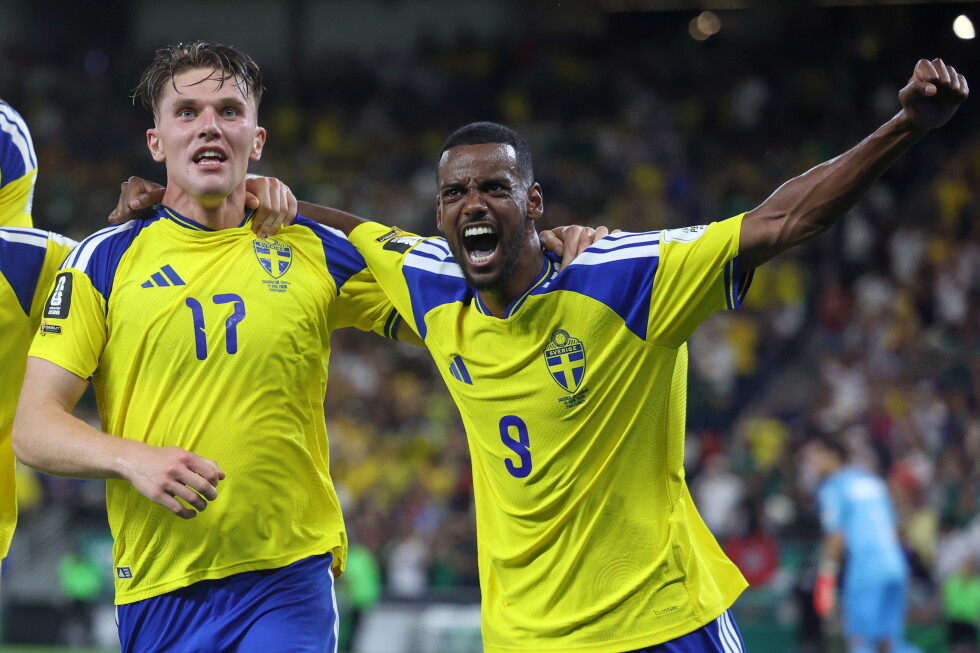
    Now, three decades on, the Freeman name is back in Seattle headlines — but this time, it is for association football, the global game that has long lived in the shadow of the NFL in the United States. On Friday, 21-year-old defender Alex Freeman, Antonio’s son, scored his first ever World Cup goal to help the USA secure a comfortable 2-0 win over Australia, punching his nation’s ticket to the tournament’s round of 16 at the 2026 home World Cup.

    For Alex, the moment felt like a poignant full-circle moment for his family. “It shows how great the family tree is,” he reflected after the match. “It shows he can be great but I can be great in my own way, and how amazing it is to have a dad that is successful and can mentor me to be ready for moments like these.” The elder Freeman has been front and center for his son’s World Cup run, spotted beaming with pride from the stands at every USA match, watching his son carve out his own sporting legacy.

    But Alex’s path to the World Cup was never straightforward. Growing up in a country where American football dominates the cultural and athletic landscape, the young athlete hid his love of soccer early on, uncertain how his NFL star father would react to his choice of sport. It was his mother and stepfather who first encouraged him to pursue his passion, even stepping in as his first coach when he began playing. As a child, he split his time between both American football and soccer, but ultimately chose to follow his heart for the global game — a decision he says has paid off beyond his wildest dreams.

    “It just shows how quick stuff can change and to not doubt yourself,” he said. “Now I’m here, it shows you can never give up. Keep pushing and you never know what chance you’re going to get and how you can go and make stuff happen. You don’t know when this chance will come again.”

    Indeed, just four years ago, a World Cup appearance for Alex Freeman seemed like an impossible fantasy. At the 2022 Qatar World Cup, he was still playing reserve soccer for Major League Soccer’s Orlando City, and as recently as 18 months ago, he was barely considered a prospect for the senior US national team. That all changed when iconic manager Mauricio Pochettino took over as USMNT head coach in 2024, a turning point that reshaped Alex’s career.

    Pochettino, the former Tottenham Hotspur manager, set out to build a youthful, dynamic squad for the 2026 home World Cup, and he quickly identified Alex as a core talent. The defender earned his first senior international call-up last year, and his rise since has been nothing short of meteoric. He was a key starter for the US at last year’s Gold Cup, and now he is one of the first names on Pochettino’s teamsheet at the World Cup.

    Pochettino was quick to praise Alex’s work ethic and potential, crediting both the player and his MLS club for his rapid development. “If you don’t have the support of the coaches at Orlando and you can’t build that relationship and trust, it is difficult based on just some clips,” the manager said. “This is one example of how the people deserve the credit and of course so does the player. He has an amazing profile, he wants to learn, he always listens. He is a player you really enjoy being with, not just coaching but is a lovely guy also. He has the potential to be one of the best players in his position in the world.”

    Off the pitch, Alex has also won over a new generation of soccer fans across social media, after a TikTok post from his stepsister Diamond Spaulding went viral ahead of the USA’s opening group stage match against Paraguay. Ahead of the game, as Spaulding traveled to a fan festival in Houston, she responded to a viral post from a user who was unaware the World Cup was even starting by writing: “My lil brother playing for the US so cheer for #16.”

    After Alex notched an assist in the USA’s 4-1 opening win over Paraguay, the post blew up, and fans quickly adopted the affectionate nickname “Diamond’s Little Brother” for the young defender. After his goal against Australia, the nickname went viral again, with many fans updating it to “America’s Little Brother” as he cemented his status as a breakout star of the tournament.

    For a player who once questioned whether he could ever build a sustainable career in soccer in the US, the moment is more than just a personal victory. Alex is not only forging his own path separate from his father’s NFL legacy, but also helping draw a wave of new fans to the sport in a country where American football has long reigned supreme. Standing on the pitch in Seattle after securing his nation’s knockout stage spot, Alex said the moment still feels like a dream come true.

    “It shows how I have made it in my way,” he said. “I’ve worked my whole life to be able to get to this moment, to sing the national anthem in front of a home crowd. It just makes me so happy.”
  • ‘All of Lebanon must burn,’ Israeli minister Ben Gvir declares

    ‘All of Lebanon must burn,’ Israeli minister Ben Gvir declares

    A wave of fierce international condemnation has been triggered by inflammatory remarks from top far-right members of Israel’s cabinet, who openly called for widespread destruction across Lebanon just as a fragile ceasefire between Israeli forces and Hezbollah was set to take hold.

    The controversy erupted Friday following the deadly deaths of four Israeli soldiers — including a senior battalion commander — in clashes along the southern Lebanon border. In a public post on the social platform X, Israeli National Security Minister Itamar Ben Gvir declared that all of Lebanon must be set ablaze in retaliation. “For every tear shed by an Israeli mother, a thousand Lebanese mothers should cry,” Ben Gvir wrote. He doubled down on his aggressive stance, saying that Israel must reject the restrained, incremental military approach advocated by global powers, including the United States. “Enough with the back-and-forth ping-pong,” he stated. “In the Middle East, you do not win with measured responses and containment — you have to go all out. Erase the threat. Defeat terrorism entirely.” Ben Gvir also confirmed he has repeatedly pressured Israeli Prime Minister Benjamin Netanyahu to abandon the government’s current cautious military strategy in the border region.

    Ben Gvir’s extreme rhetoric was quickly echoed by his far-right cabinet colleague, Finance Minister Bezalel Smotrich, who published his own social media statement the same day calling on Israel to “open the gates of hell” against Lebanon. Multiple senior Israeli officials have also publicly confirmed that Israeli troops will maintain an indefinite presence in southern Lebanon, despite ongoing international ceasefire negotiations.

    Iran’s top diplomat issued an immediate and scathing rebuke of the remarks, framing them as official state policy that exposes the true nature of Israel’s leadership. Iranian Foreign Minister Abbas Araghchi wrote on X that the comments are not the unhinged rant of an isolated extremist, but a public declaration from a sitting cabinet minister of the Israeli regime. Araghchi characterized Israeli leadership as “a genocidal death cult headquartered in Tel Aviv” and “a threat to all of humanity,” adding that the regime’s only core interest is permanent, unending war across the region.

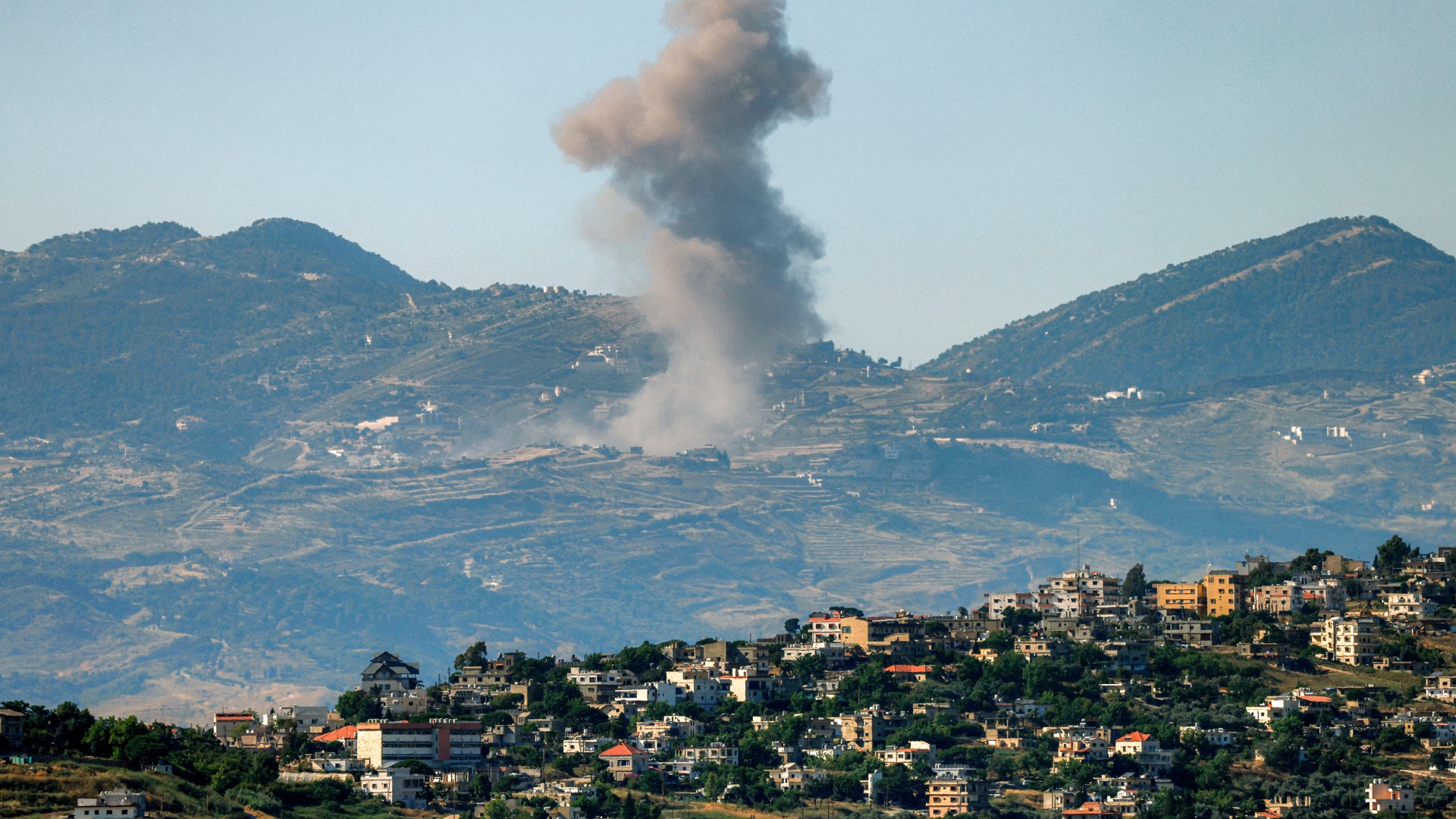
    The explosive social media exchange unfolded mere hours before a newly brokered ceasefire between Israel and Hezbollah was scheduled to go into effect, a deal that aimed to de-escalate some of the deadliest violence the border region has seen since the broader regional conflict began. Even before the verbal escalation, violence had continued uninterrupted: a ceasefire memorandum signed Thursday that was meant to halt hostilities across all fronts, including Lebanon, failed to stop exchanges of fire between Israeli forces and Hezbollah overnight. By Friday morning, Lebanese health authorities confirmed that 47 people had been killed in Israeli airstrikes since midnight.

    According to on-ground reporting from Al Jazeera, Israel carried out no fewer than 12 separate airstrikes across southern Lebanon in the hours after the ceasefire was first announced. This escalating military activity and expanding Israeli troop presence in southern Lebanon has emerged as a major stumbling block for ongoing indirect negotiations between Iran and the United States, talks that are being mediated by Qatar and Pakistan.

    The tensions along the Lebanon frontier have also created a rare public rift between the U.S. administration and the Israeli government. U.S. President Donald Trump has publicly criticized the rising civilian death toll in Israeli strikes on Lebanon — strikes that Israel claims only target Hezbollah infrastructure. Trump has warned that unrelenting Israeli attacks threaten to derail the finalized ceasefire agreement, a deal he acknowledged has been “not easy” to negotiate. Throughout months of ceasefire mediation, Israel has repeatedly rejected calls from the U.S. and other G7 member states to withdraw all troops from southern Lebanon.

    For its part, Hezbollah has continued to pressure the Lebanese government to refuse any direct bilateral negotiations with Israel as long as Israeli attacks on Lebanese territory continue. Despite this, Lebanon’s national government has expressed open optimism that the U.S.-Iran brokered agreement can finally bring an end to the devastating hostilities that have ravaged the country’s southern regions.

    According to the latest official data from Lebanon’s Ministry of Health, Israeli attacks across the country since March 2 have killed at least 3,696 people and left another 11,413 people injured.

  • World Cup what to know: Netherlands, Sweden face off as group stage reaches halfway point

    World Cup what to know: Netherlands, Sweden face off as group stage reaches halfway point

    The 2025 expanded 48-team men’s FIFA World Cup, the first iteration of the tournament’s new supersized format, is poised to hit the midpoint of its group stage this weekend. By the close of Saturday, 36 of the total 72 group stage contests will have been completed, with another 36 matches remaining before the 32-team knockout round kicks off on June 28. The tournament will crown its first expanded-format champion on July 19.

    Four high-profile matches highlight Saturday’s packed fixture list, each carrying massive implications for knockout round qualification across multiple groups. The day’s action opens at 1 p.m. EDT in Houston, where world No. 8 Netherlands faces a do-or-die Group F clash with Sweden, followed by a Group E top-of-the-table battle between Germany and Ivory Coast at 4 p.m. EDT in Toronto. The evening session kicks off at 8 p.m. EDT in Kansas City, Missouri, with Ecuador taking on underdog Curaçao, before the day closes with Tunisia versus Japan at midnight EDT in Monterrey, Mexico. All matches will be broadcast across Fox Sports networks, Telemundo, and Peacock.

    The three co-host nations of the 2025 World Cup have entered the second round of group stage play riding high after strong opening results. On Friday, the United States secured a second consecutive 2-0 victory over Australia, booking an early spot in the knockout round. The U.S. will claim the Group B top seed if Paraguay and Turkey play to a draw, or Paraguay claims a win in their late Friday fixture. Host Canada sits in an excellent qualifying position after a dominant 6-0 rout of debutante Qatar on Thursday, while Mexico has already sealed the Group A title following a 1-0 win over South Korea.

    One of Saturday’s most anticipated matchups pits a pressure-plagued Dutch side against a confident Sweden team in Group F. Long labeled the most talented men’s soccer nation never to lift the World Cup trophy, Netherlands enters the contest on the back of a disappointing 2-2 draw with Japan, where it squandered two separate match leads. Dutch head coach Ronald Koeman faced intense scrutiny over his tactical choices after the opening game, giving only cryptic, defensive replies to reporters’ questions. In contrast, 34th-ranked Sweden turned heads with a dominant 5-1 opening win over Tunisia, marking a triumphant return to the World Cup after failing to qualify for the 2022 tournament. “We know we are a work in progress and we’re improving,” Sweden manager Graham Potter said Friday. “We have to play better against a better opponent and I think we’re ready to do that.”

    In Group E, four-time World Cup champions Germany look to build on their blistering 7-1 opening win over Curaçao as they face a far stiffer test in Ivory Coast, which also notched a three points from its opening fixture with a late 1-0 win over Ecuador. The Elephants received a major boost earlier this week when star striker Elye Wahi, who was under investigation for alleged betting-related offenses, was cleared to enter Canada for the tournament. “He hasn’t really shown any signs of being annoyed or being discouraged,” Ivory Coast head coach Emerse Fae said of Wahi. “He’s happy. He had a good trip over here. He’s going to do everything he can to help out the team.”

    For Ecuador, Saturday’s matchup with Curaçao is nothing short of a must-win. La Tricolor carried a 19-match unbeaten streak into the tournament, but saw that run snapped by a 90th-minute Amad Diallo winner for Ivory Coast in their opener. With a final group stage matchup against powerhouse Germany awaiting next week, three points against Curaçao are critical to keep their knockout round hopes alive. “What follows,” Ecuador manager Sebastián Beccacece said, “must be faced with the same way we have faced it so far: with great strength, with great integrity, with great intensity and with a clear idea of the game.” For Curaçao, the tournament has already been a fairytale: the smallest nation by both land area and population ever to qualify for the World Cup, the side’s opening 7-1 loss to Germany brought the feel-good underdog story back to reality. Rounding out Saturday’s fixtures, Japan looks to carry the momentum of its opening comeback draw with Netherlands into a matchup with a reshuffled Tunisia side. Tunisia parted ways with manager Sabri Lamouchi following its 5-1 opening loss to Sweden, appointing veteran French coach Hervé Renard – a two-time Africa Cup of Nations winner with Zambia and Ivory Coast, renowned for his success leading African and Arab national sides.

    Off the pitch, the tournament has continued to generate breaking news around the competing squads. Canadian star Ismaël Koné underwent surgery for two broken leg bones sustained in the Qatar win, while Mexico goalkeeper Raúl Rangel has emerged as a breakout star after recording two consecutive shutouts to open the tournament. Young Spanish phenom Lamine Yamal confirmed he is not fully fit and is unlikely to start his side’s second group stage match, while 21-year-old Alex Freeman, son of former NFL standout Antonio Freeman, notched a goal for the U.S. in their opening round win to earn viral acclaim. One statistical note headlined Saturday’s tournament roundup: the U.S. became the first team in World Cup history to benefit from opposing own goals in consecutive matches, and marks the first time the Americans have opened a World Cup with two straight wins since the inaugural 1930 tournament.

  • US-Iran talks delayed as Israeli bombs in Lebanon kill 18 or more

    US-Iran talks delayed as Israeli bombs in Lebanon kill 18 or more

    A fresh wave of Israeli military bombardment across southern Lebanon has thrown a critical new set of Iran-US peace negotiations into disarray, forcing both delegations to delay their planned departure for opening talks in Switzerland. The violence, which left at least 18 Lebanese civilians dead, comes just weeks after the Trump administration and Iranian leadership signed a preliminary memorandum of understanding (MOU) to outline a path toward ending the ongoing Iran war, which began when the U.S. and Israel launched joint military operations in late February.

    The incident also sparked open friction between senior U.S. officials and Israeli leadership. U.S. Vice President JD Vance, who was originally set to join the American delegation to Switzerland, publicly criticized Israeli leaders for a pattern of launching large-scale bombing attacks during key moments of diplomatic progress. Vance’s remarks echoed a similar disruption that unfolded just last weekend: shortly after U.S. President Donald Trump announced plans to sign the MOU, Israeli forces carried out a deadly strike on central Beirut.

    “We seem to be right on the cusp of a major breakthrough in the agreement, and then all of a sudden, there’s a major explosion that goes off in a civilian population center in Beirut, and a lot of people who have nothing to do with Hezbollah lose their lives,” Vance told reporters on Thursday. “That’s not acceptable.”

    Friday’s bombardment targeted heavily populated residential areas across southern Lebanon’s Nabatieh district, according to on-the-ground reporting from Roqayah Chamseddine, a writer based in the region. Chamseddine documented mass civilian casualties in the towns of Dweir Harouf, Al-Sharqiya, and Kfar Sir, with additional strikes hitting Kfar Roumman, Haboush, Jebchit, Toul, and Deir al-Zahrani. Many of the residents in these areas had only just begun returning to their homes after previous ceasefire efforts, before the new offensive expanded into the Western Bekaa Valley, with warplanes targeting Abu Rashed Heights and launching strikes along the Litani River valley near Zalaya.

    Hours after the initial Israeli strikes, Hezbollah carried out an anti-tank attack that killed four Israeli soldiers in southern Lebanon, according to official statements from the Israel Defense Forces. The attack triggered harsh rhetoric from Israel’s far-right National Security Minister Itamar Ben-Gvir, who called for widespread retaliation. “All of Lebanon must burn,” Ben-Gvir declared, adding, “With all due respect to the Americans, Israel must make it clear to the entire world that the blood of our sons and the security of our citizens are not forfeited.”

    Officially, the Trump White House only cited unspecified logistical challenges to explain the delay of the U.S. delegation’s departure, making no public mention of the Lebanese bombardment. But Lebanese outlet Al Mayadeen, citing an anonymous Iranian government source, confirmed that the latest Israeli assault was the direct cause of Tehran’s decision to postpone its delegation’s trip.

    The 60-day opening round of technical talks was meant to work out detailed implementation of the MOU, which calls for “the immediate and permanent termination of military operations on all fronts, including in Lebanon.” Iranian leadership has repeatedly made clear that a full end to Israeli attacks on Lebanese territory is a non-negotiable precondition for advancing a final peace deal. Mediators have now shifted focus to rescheduling the talks, as escalating violence in Lebanon threatens to erase what little diplomatic momentum had been built to end the months-long conflict.

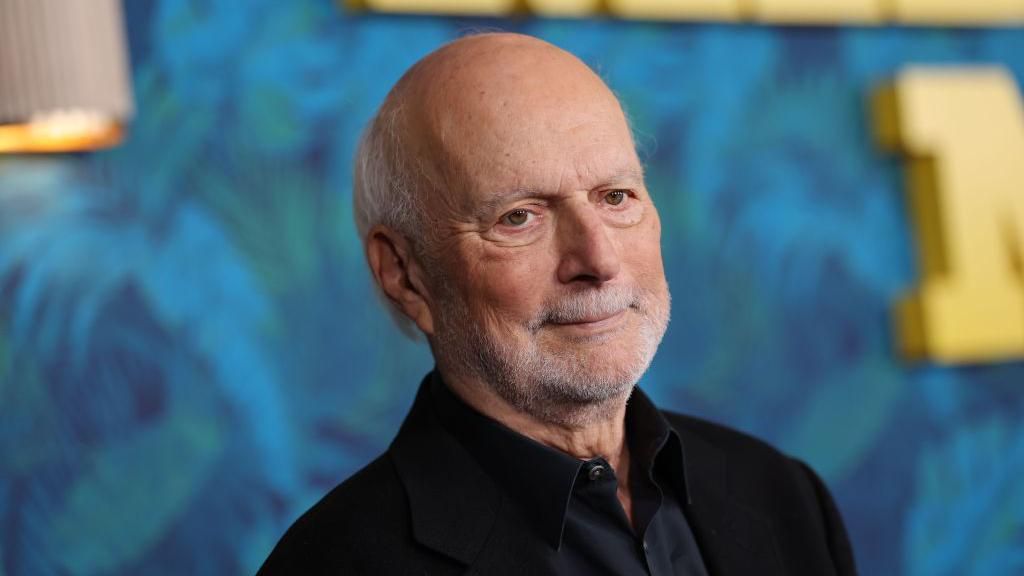
  • James Burrows, legendary director of sitcoms, dies aged 85 – US media

    James Burrows, legendary director of sitcoms, dies aged 85 – US media

    The entertainment world is mourning the loss of one of television comedy’s most transformative figures: James Burrows, the visionary director and co-creator whose work shaped some of the most iconic American sitcoms of all time, has passed away at the age of 85. Multiple U.S. media outlets confirmed the news, with his attorney Tom Hoberman sharing the announcement of Burrows’ death “with great sadness” to CBS News, a domestic partner of the BBC.

    Burrows’ 50-plus year career in television left an indelible mark on the comedy genre. He is most widely celebrated as the co-creator of the hit NBC sitcom *Cheers*, the beloved Boston bar-set comedy that remains a cultural touchstone decades after its original run. Beyond his work on *Cheers*, Burrows amassed an unprecedented professional resume, directing more than 1,000 episodes of dozens of television classics that defined generations of comedy viewing. These credits include legendary series such as *Friends*, *The Big Bang Theory*, and *Will & Grace*, with each production benefiting from his sharp eye for comedic timing and character-driven storytelling.

    A trailblazer in the industry, Burrows’ contributions earned him some of the highest honors in television. He took home 11 Emmy Awards over the course of his career, in addition to five Directors Guild of America Awards, recognizing his consistent excellence and innovation behind the camera.

    In an official statement shared with the U.S. celebrity outlet *People*, Burrows’ family opened up about his life and legacy: “We celebrate the extraordinary life and enduring legacy of James ‘Jimmy’ Burrows, who passed away peacefully today surrounded by his loving family. For more than five decades, Burrows was one of the most influential and beloved directors in television history. As a legendary director, mentor, and creative force, he helped shape generations of comedy and brought immeasurable joy to audiences around the world.”

    Tributes from across the entertainment industry are expected to pour in in the coming days, as colleagues, protégés, and fans honor the career of a man who redefined what television comedy could be.

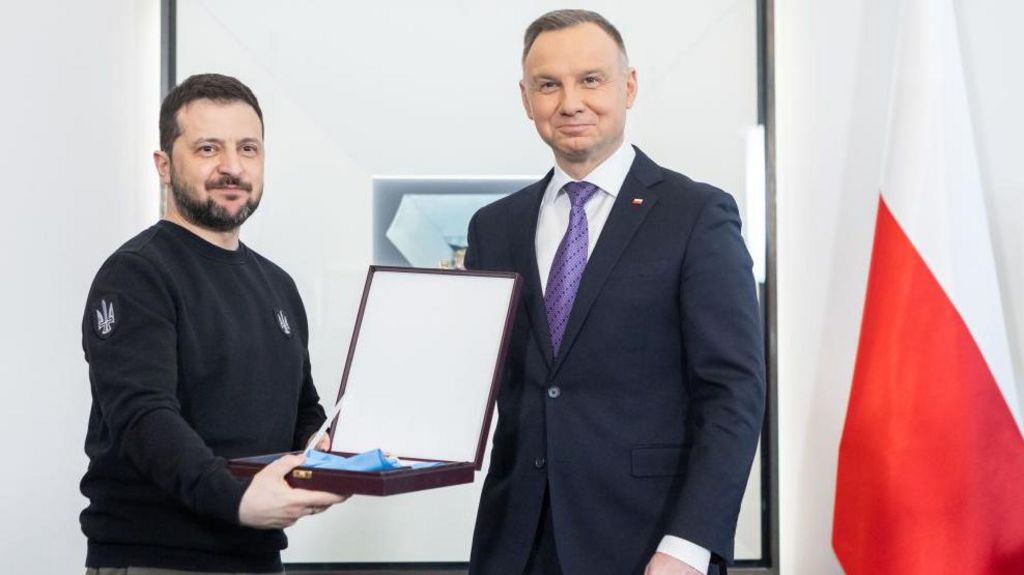
  • Zelensky stripped of highest Polish honour over WW2 name of army unit

    Zelensky stripped of highest Polish honour over WW2 name of army unit

    A bitter diplomatic dispute has erupted between Poland and Ukraine, two long-time aligned partners in Kyiv’s defense against Russian full-scale invasion, after Poland stripped Ukrainian President Volodymyr Zelensky of the Order of the White Eagle, Poland’s highest civilian and military state honor. The revocation comes in response to Kyiv’s late-May decision to name a new Ukrainian military unit after the World War II-era Ukrainian Insurgent Army (UPA), a move that has reignited decades of tension over conflicting historical memories of the group.

    Polish President Karol Nawrocki publicly condemned Ukraine’s naming decision in an official video address posted to his presidency’s website, calling the choice “outrageous, incomprehensible and deeply disappointing.” For Poland and the overwhelming majority of its population, the UPA is inextricably linked to the 1943-1945 Volhynia massacres, where Warsaw documents that roughly 100,000 ethnic Polish civilians were killed in atrocities the country classifies as genocide. Nawrocki emphasized that the Ukrainian government’s choice to glorify the UPA wounds Polish collective historical memory and erodes years of carefully built mutual trust between the two nations.

    Despite the sharp rebuke and honor revocation, Nawrocki was quick to clarify that the diplomatic dispute would not alter Poland’s unwavering support for Ukraine against Russia’s invasion. He reminded the public that Poland has stood with Kyiv since day one of the 2022 full-scale invasion, opening its borders, homes, and communities to more than a million Ukrainian refugees fleeing the war. Nawrocki also tied the dispute to Ukraine’s ongoing European Union accession process, noting that a path to EU membership requires all candidate states to honestly confront and address dark, divisive chapters of their shared history. “A united Europe was built on the rejection of totalitarianism and the cult of violence,” he said. “These principles must apply to everyone. For those who do not understand this, there can be no place in the European Union, and Poland will certainly not allow it.” Ukraine is currently advancing its accession bid, holding the first round of membership negotiations in Luxembourg just this week.

    Ukrainian officials have pushed back hard against Warsaw’s decision, denouncing the revocation as a politically motivated move that only serves Moscow’s interests. Ukrainian Foreign Minister Andrii Sybiha called the revocation a “strategic mistake” and an act of “disrespect” toward Ukraine. In a reciprocal move, Sybiha announced he would return a state honor he received from Poland in 2022, stressing that no foreign leader has the right to dictate how Ukraine remembers its own history. For many Ukrainians, the UPA is a revered symbol of national independence: the 1940s-1950s insurgent group fought against multiple occupying forces, including Nazi Germany, the Soviet Red Army, and pre-war Polish authorities, making the group a core part of modern Ukrainian national identity. That legacy remains visible today, with the UPA’s signature red-and-black flag carried regularly by frontline Ukrainian troops fighting Russian forces; Zelensky justified the unit naming as an effort to “restore the historical traditions of the national army.”

    The dispute has already drawn intervention from senior Polish leadership seeking to de-escalate tensions. Polish Prime Minister Donald Tusk, a former European Council president, took to social media Friday to urge both sides to lower tensions, noting that the feud only delights Russian President Vladimir Putin and advances Moscow’s goals to divide European support for Ukraine. Tusk called on both Zelensky and Nawrocki to “calm emotions, not to stoke tensions.” As of now, Zelensky has not issued a direct public response to the honor revocation. The Order of the White Eagle was originally awarded to Zelensky in 2023 by then-Polish President Andrzej Duda, at a time when bilateral relations between the two neighbors were largely unified in opposing Russian aggression.

  • Migrants deported by US to Sierra Leone risk return to countries where they fear persecution

    Migrants deported by US to Sierra Leone risk return to countries where they fear persecution

    A controversial U.S. immigration policy that sends asylum seekers to third-party African nations is facing fresh scrutiny after a new group of deportees arrived in Sierra Leone this week, with legal advocates warning the practice directly undermines existing court-ordered protections and puts vulnerable migrants at grave risk of persecution.

    Erica Reilly, an attorney representing one of the migrants who arrived Thursday, confirmed to the Associated Press that the flight marked the second such deportation to Sierra Leone in as many months. Last month, nine West African asylum seekers landed in the country under the same policy, and approximately 12 more joined them this week.

    Sierra Leone is just one of at least nine African nations that have struck formal third-country deportation agreements with the U.S., alongside a number of Latin American and Caribbean states that have reached similar arrangements. Under the terms of Sierra Leone’s agreement, which is backed by a $1.5 million U.S. government grant, the West African nation only accepts citizens of other West African countries, serving strictly as a temporary transit point rather than a place of permanent resettlement. A monthly cap of 25 deportees and an annual limit of 300 have been placed on the program, though Sierra Leonean authorities have not disclosed how long the agreement will remain in effect.

    Upon arrival in Freetown, Sierra Leone’s capital, deportees receive a briefing pamphlet from Kenvah Solutions, a private contractor hired by the Sierra Leonean government to manage deportees’ accommodations, food, healthcare, and transfers to their home countries. The document explicitly labels Sierra Leone a “temporary transit location” and confirms that “no long-term settlement is provided for or permitted,” adding that local authorities and contractors are working to “return you home as quickly and safely as possible.” Neither Kenvah Solutions nor Sierra Leonean government officials responded to requests for comment from the AP.

    Immigration advocates and legal representatives say the policy is a deliberate legacy of the Trump administration’s broad crackdown on irregular migration, which relies on often-unpublicized third-country deportation agreements to create a legal loophole. U.S. courts have issued formal orders barring the deportation of many of these asylum seekers directly back to their home countries, where judges have confirmed they face credible threats of persecution. By routing them through third-party nations like Sierra Leone, the U.S. effectively bypasses these protections.

    Reilly, who is representing a Nigerian asylum seeker among the most recent group of deportees, explained that once migrants arrive in Sierra Leone, they have almost no power to block their forced transfer to the countries where they face danger. “They’re put in a position where they just don’t have a say at all,” Reilly said. She added that U.S. authorities are fully aware of the risk facing most deportees sent through this program, choosing instead to disavow responsibility for their fates once they leave U.S. soil. “Our government is just saying, ‘What happens to them after they leave the United States is not our problem,’” she said.

    This is not the first challenge to the controversial policy. Earlier this month, human rights lawyers filed a legal case against Equatorial Guinea with the African Commission on Human and Peoples’ Rights, Africa’s top regional human rights body, accusing the central African nation of violating international human rights law by forcing U.S.-deported asylum seekers back to their unsafe home countries.

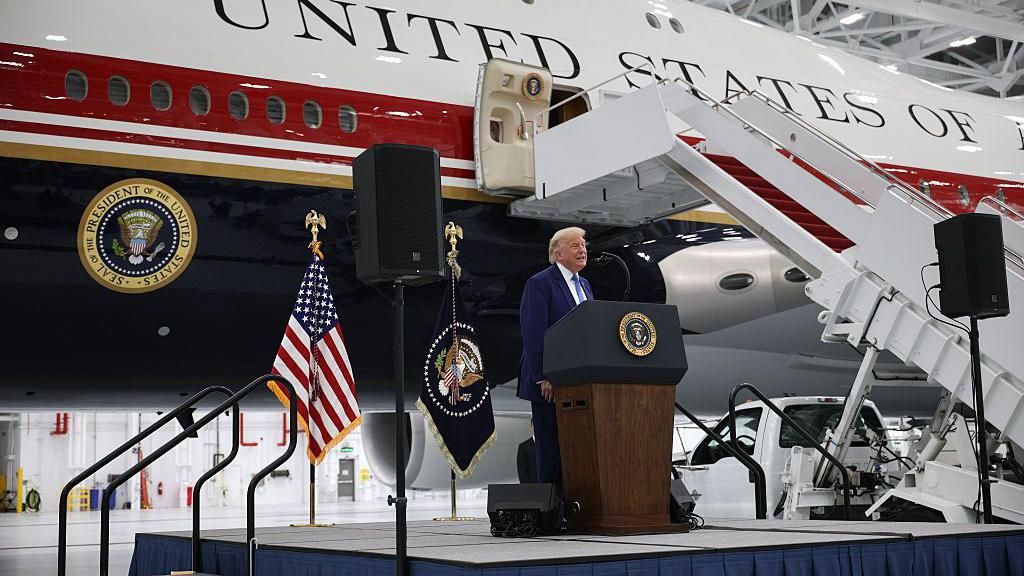
  • Trump unveils Qatari  luxury jet for Air Force One fleet

    Trump unveils Qatari luxury jet for Air Force One fleet

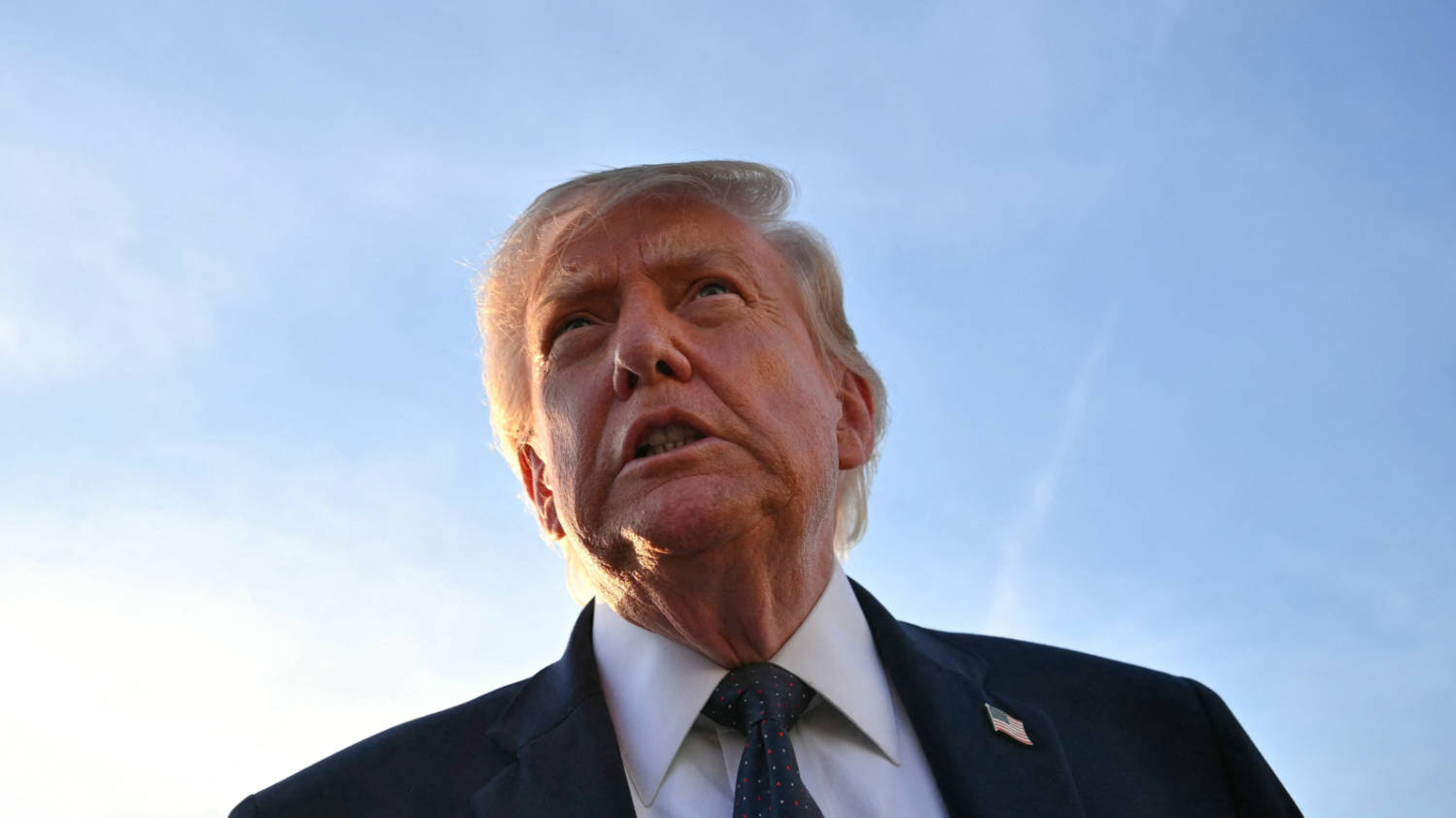
    At a ceremony held Friday at Joint Base Andrews, former President Donald Trump presented the newly modified Boeing 747-8 jumbo jet that will serve as an interim addition to the Air Force One fleet, a $400 million asset donated as an unconditional gift by the Qatari government one year prior. After months of structural and security adjustments, the U.S. Department of Defense has completed all custom work to convert the luxury commercial jet into a functional flying White House, bringing the aircraft to a level of opulence unmatched by any previous presidential transport, Trump emphasized in his address to attendees.

    In his remarks, Trump lavished praise on the jet’s construction quality, noting that every component from the fine wood finishes to the powerful state-of-the-art engines meets an unparalleled standard of excellence. “When you see the workmanship of this plane up close, you simply won’t believe it,” Trump stated. “These engines are the finest in the world, there’s nothing like them anywhere. It’s really an honour, and I want to thank the Emir of Qatar for this incredible gift.”

    The origin of the jet dates back to May 2025, when the Qatari royal family formally transferred ownership of the aircraft to the U.S. Department of Defense for presidential transport use. From the moment the donation was announced, it ignited fierce cross-partisan backlash, with criticism even coming from a number of Trump’s own political allies. Detractors argue that accepting a high-value gift of this size from a foreign government creates a clear conflict of interest and may violate the U.S. Constitution’s emoluments clause, which bars federal officials from accepting benefits from foreign states without congressional approval. Current federal law also restricts U.S. officials from accepting personal gifts worth more than $480 from foreign entities. The White House has pushed back against these claims, maintaining that the acceptance of the aircraft is fully legal under existing frameworks, and has confirmed that once Trump leaves office, the jet will be transferred to his presidential library for permanent preservation.

    According to U.S. Air Force announcements, the new jet is now set to enter a phase of initial operational test flights, which officials describe as a “final exam” to validate all modifications and ensure the aircraft meets all security and operational requirements for presidential travel before it enters active service. Before the arrival of the Qatari-donated jet, the Air Force One fleet consisted of two 747-200B models that have been in continuous presidential service since 1990. White House Communications Director Steven Cheung confirmed on social media platform X that one of these aging aircraft has now been retired from service, posting a photo of the jet alongside the caption: “‘Well done, good and faithful servant. The Last Ride.’”

    This interim addition to the fleet addresses a long-running delay in Boeing’s long-planned Air Force One replacement program. The aerospace giant was contracted to deliver two new custom-built VC-25B jets for permanent long-term Air Force One use, but the project has faced substantial production and delivery delays that have pushed back the expected handover by years. The Qatari-donated 747-8 will serve as a stopgap aircraft to meet presidential travel needs until the new VC-25B models are finally completed and delivered to the Air Force.

  • US-Iran peace deal: Six things we learned from the Islamabad Memorandum of Understanding

    US-Iran peace deal: Six things we learned from the Islamabad Memorandum of Understanding

    A landmark preliminary peace agreement between the United States and Iran that halted a months-long devastating conflict across the Middle East hit an immediate snag this week, after Washington confirmed that high-level final talks scheduled in Switzerland have been postponed due to unresolvable logistical challenges. The delay came just one day after the leaders of both nations signed the Islamabad Memorandum of Understanding (MoU), a 14-point framework that pauses hostilities and lays the groundwork for a permanent end to the war that broke out in late February 2026.

    US Vice President JD Vance, who was set to lead the American negotiating delegation to Switzerland, will not travel as planned, the White House announced late Thursday, noting that logistics for the summit had proven far from “simple or predictable” amid the complex, fast-moving diplomatic process.

    The preliminary deal, signed separately by US President Donald Trump and Iranian President Masoud Pezeshkian on Wednesday, marks the official end to open military conflict that has upended regional stability, crippled energy markets, and caused widespread humanitarian damage across the Middle East. The framework establishes a path to restore open commercial shipping through the Strait of Hormuz, the critical Persian Gulf chokepoint that handles roughly 20% of global oil supplies, which had been effectively blocked by Iran since the outbreak of hostilities. That blockade triggered a sharp surge in global crude prices in the months following the war’s start.

    Within hours of the MoU’s signing, the first wave of commercial shipping resumed: three Saudi-flagged supertankers completed transits through the strait by Thursday morning. Under the terms of the memorandum, Iran will guarantee toll-free safe passage for all commercial vessels through the waterway for the 60-day negotiating window, but the long-term status of shipping fees remains a major unresolved point of disagreement. Trump told The New York Times over the weekend that the final agreement would lock in a permanent toll-free arrangement, but Iranian officials announced Thursday that they plan to introduce transit fees for long-term operations. The MoU itself offers only vague guidance, requiring Iran to negotiate future regulatory frameworks with Oman and other Gulf littoral states in line with international law and the sovereign rights of coastal nations.

    The deal also outlines a series of economic concessions to Iran, whose economy has been crippled by decades of US sanctions compounded by a US naval blockade on exports imposed after the war began. Per the MoU’s terms, the US began dismantling its naval blockade on Friday morning, with full withdrawal of blockading forces scheduled for 30 days after the preliminary deal was signed. The framework also commits the US to lift all existing sanctions on Iran — including multilateral UN and IAEA sanctions, as well as Washington’s unilateral primary and secondary sanctions — as part of a final agreement, and to unlock billions of dollars in Iranian assets frozen by the US, some dating back to the 1979 Islamic Revolution.

    One of the most contentious sticking points surrounding economic relief is the proposed $300 billion reconstruction and development fund for Iran outlined in the MoU. Initial statements from Vice President Vance suggested the US would lead the funding effort, but senior administration officials have since walked that pledge back. Vance clarified Monday that the US would instead invite third countries to contribute to the fund, and Trump doubled down on that position Tuesday, telling reporters the US would not invest “ten cents” in Iranian reconstruction.

    On the regional security front, the MoU requires an immediate and permanent end to all military operations across all fronts, including Lebanon, where Israel has expanded its invasion of southern Lebanon to disarm the Iran-aligned Hezbollah movement since March. The agreement commits both the US and Iran to upholding Lebanon’s territorial integrity and sovereignty, but it makes no mention of Israel, which currently occupies roughly one-fifth of southern Lebanon and has continued airstrikes that have killed more than 3,000 people since March, even after the MoU was signed. A senior US official confirmed Friday that Israel and Hezbollah had agreed to a new ceasefire, but top Israeli officials have repeatedly rejected the US-Iran deal, saying it does not bind their government and that they will not withdraw from occupied Lebanese territory until Hezbollah is fully disarmed. Far-right Israeli National Security Minister Itamar Ben-Gvir said Monday that the agreement does not meet Israel’s security requirements, and Defense Minister Israel Katz confirmed this week that Israeli forces would remain indefinitely in self-declared “security zones” across Lebanon, Syria, and Gaza. Trump publicly criticized Israel’s conduct in Lebanon during a G7 summit Tuesday, marking a clear rift with Israeli Prime Minister Benjamin Netanyahu, saying that Israel had fought in Lebanon for “too long” and that unnecessary civilian casualties from widespread bombing were unacceptable.

    The most consequential unresolved security issues, including the status of Iran’s nuclear program and its ballistic missile arsenal, have been deliberately deferred to the 60-day negotiating period outlined in the MoU, with the window extendable by mutual consent of both parties. The US has long alleged that Iran’s enriched uranium stockpile is evidence of a covert nuclear weapons program, a claim Iran has consistently denied — a denial explicitly reaffirmed in the preliminary agreement. Currently, Iran holds uranium enriched to roughly 70%, a level far higher than the 5% needed for civilian energy production, but still below the 90% enrichment required for nuclear weapons. The MoU only requires that the two sides negotiate a mutually acceptable framework for managing the stockpile as part of a final deal. US officials have proposed exporting the stockpile to a third country, a step Iranian Supreme Leader Mojtaba Khamenei has reportedly already ruled out.

    Notably, the MoU makes no mention of limiting Iran’s ballistic missile program — a core stated war objective for the US when hostilities began. At the war’s start, Trump justified US intervention by warning that Iran’s arsenal of more than 3,000 ballistic missiles, the largest in the Middle East, could soon reach the US mainland. But this week, Trump shifted his stance, telling reporters that if other regional powers possess ballistic missiles, it is unfair to deny Iran the same capability, adding that “missiles are not the problem” in terms of global catastrophic risk.

    The agreement also formally abandons the long-rumored US and Israeli goal of regime change in Tehran. The MoU explicitly requires both nations to respect each other’s sovereignty and refrain from interference in internal affairs. At the G7 summit this week, Trump claimed he “never cared about regime change” in Iran, praising the current Iranian leadership, which took power after a US-Israeli airstrike killed longtime Supreme Leader Ali Khamenei in February. “I think they’re very smart, I think they’re far less radicalised; I think they’re good,” Trump said, adding “Frankly, I think that’s regime change.” The statement marked a sharp reversal from Trump’s address on the first day of the war, when he called on the Iranian people to overthrow the clerical government and declared “the hour of your freedom is at hand.”

    All remaining outstanding issues will be negotiated over the next 60 days, and any final peace agreement will be codified in a binding United Nations Security Council resolution, per the MoU’s terms.

  • New Zealand edge Ireland by 4 runs to keep Women’s T20 World Cup hopes alive

    New Zealand edge Ireland by 4 runs to keep Women’s T20 World Cup hopes alive

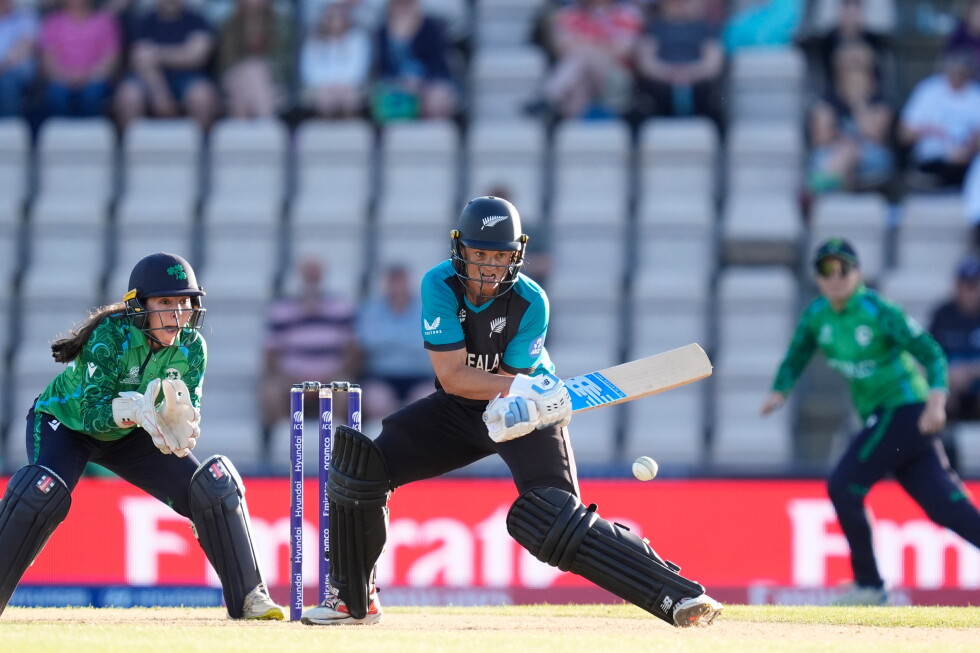
    SOUTHAMPTON, England – A dramatic, last-ball finish at the Women’s Twenty20 World Cup kept New Zealand’s faint hopes of defending their crown alive on Friday, as the defending champions squeezed out a four-run victory over a valiant Ireland side that came agonizingly close to a historic win.

    The tournament had gotten off to a disastrous start for New Zealand, which stumbled to back-to-back defeats against the West Indies and Sri Lanka, undone by 10 dropped catches across both opening matches. Heading into Friday’s group stage clash, elimination was staring the side in the face: with only two group matches remaining, a loss would end their campaign before the knockout rounds, against an Ireland side that had also failed to pick up a win in their opening fixtures.

    Ireland got off to a dream start after winning the toss and opting to bowl first, reducing New Zealand to a shaky 10 for three wickets inside just four overs, with tight early work from bowlers Orla Prendergast and Aimee Maguire. But the defending champions clawed their way back into the innings, with captain Melie Kerr grounding out a valuable 30 runs, before a 62-run fifth-wicket stand between Brooke Halliday and Izzy Sharp off just 50 balls steadied the New Zealand innings.

    The turning point of the entire match came in the final over of New Zealand’s batting, when veteran all-rounder Suzie Bates – who only made her first tournament appearance after fellow soon-to-retire star Sophie Devine fell ill – stepped in at number seven, an uncharacteristic spot for Bates in T20 career. The veteran delivered a stunning cameo of 19 runs off 12 balls, capping her innings with a six off the final ball that cleared the long leg boundary, pushing New Zealand to a final total of 140 for six wickets.

    In the chase, Ireland’s batting lineup got a late boost from a massive 110-run partnership between captain Gaby Lewis and Prendergast that stretched into the 18th over, weathering strong early bowling from New Zealand pacer Bree Illing, who finished with impressive figures of one wicket for just 18 runs off her allocation. The stand put Ireland on the cusp of breaking a 19-match World Cup losing streak to claim their first ever win at the tournament.

    But New Zealand struck back when Prendergast was caught near the boundary for 59 runs, followed just one over later by Lewis, who was caught at cover by Bates for a polished 58. The wickets left Ireland requiring 15 runs from the final over to pull off the upset. Bates, who stepped up to bowl the final over, restricted Ireland to just 10 runs off the six balls, finishing the match with Ireland all out for 136 runs, four runs short of the target.

    Captain Melie Kerr, who was named player of the match, said after the game that the win marked a critical mental shift for her side after their poor start. “It has been a disappointing start to the tournament so today was just about body language and turning up,” Kerr said. “We need to turn and believe we can still win games of cricket.”

    The group stage of the Women’s T20 World Cup continues Saturday with three fixtures: Australia faces Netherlands, Pakistan takes on Bangladesh, and hosts England play Scotland.