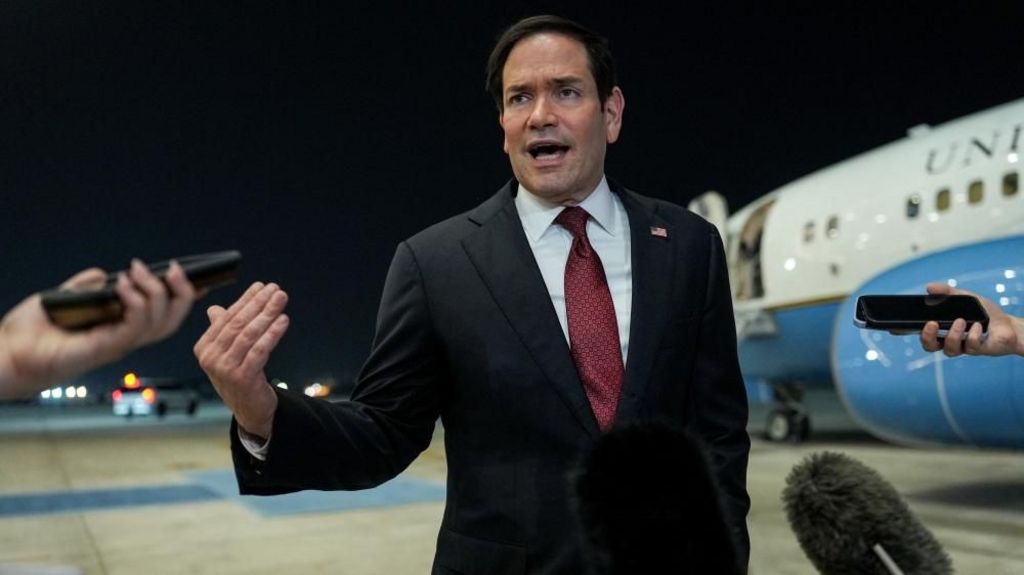
As the Biden administration pushes forward with a new diplomatic agreement designed to end years of open conflict with Iran, Secretary of State Marco Rubio has embarked on a high-stakes regional tour of Gulf Arab allies, with the BBC’s senior state department correspondent Daniel Bush embedded with the traveling delegation. Longstanding partners in the Gulf Cooperation Council have emerged as some of the most vocal skeptics of a U.S.-brokered peace deal with Iran, raising urgent concerns about provisions that could ease economic sanctions on Tehran and allow it to resume limited nuclear enrichment activities. These allies fear the deal would strengthen Iran’s regional influence, enable its support for proxy armed groups across the Middle East, and leave them at a strategic disadvantage against a resurgent Iranian state. The core goal of Rubio’s trip is to address these fears head-on, offering security guarantees and diplomatic concessions to shore up confidence among U.S. partners, while making the case that ending the long-running standoff with Iran serves the long-term interests of the entire region. Many diplomatic analysts are closely watching the outcome of the tour, as Rubio’s ability to unify U.S. allies around the proposed deal will play a critical role in determining whether the agreement can be finalized and implemented successfully. The tour comes at a moment of heightened regional tension, with recent exchanges of fire between Iranian proxies and Israeli forces adding new urgency to diplomatic efforts to de-escalate the broader conflict.
作者: admin
-

Vatican begins 5-year restoration of Raphael Loggia, used by popes and presidents
Nestled in the most restricted inner corridors of the Vatican’s Apostolic Palace, a Renaissance masterpiece unseen by nearly all the visiting public is set to receive its first comprehensive conservation effort in more than five centuries. The Raphael Loggia, a 65-meter-long, 4-meter-wide corridor walked exclusively by popes, heads of state, and privileged invited guests, was designed by the iconic Renaissance master Raphael, and Vatican Museums officially launched the five-year, $5.5 million restoration project at a press conference Wednesday.
Widely regarded as one of the pinnacles of Renaissance figurative art, the loggia occupies a sunlit second-floor space overlooking the Apostolic Palace’s San Damaso courtyard. Closed to general tourists, the corridor treats only the lucky few granted audiences with the pope or the Secretariat of State to its sprawling decorative scheme: vivid scenes from both the Old and New Testaments, intricate botanical motifs rendered in vibrant paint and textured stucco, spread across 12 distinct arched bays. Its artistic influence extended far beyond Vatican walls, with full-scale replicas produced by cultural institutions around the world, including a prominent full-scale copy at St. Petersburg’s State Hermitage Museum.
Completed between 1517 and 1519, the loggia stands as one of Raphael’s final commissions for Pope Leo X, a companion project to his better-known, publicly accessible works that draw millions of visitors to the Vatican Museums each year — the Raphael Rooms and his celebrated tapestry series, both of which have been the subject of previous major restoration work. Today, current Pope Leo XIV, who returned to full-time residence in the Apostolic Palace after his predecessor Pope Francis chose to stay elsewhere, traverses the loggia regularly on his way to public and private audiences, with his private apartments located just upstairs from the corridor.
Centuries of neglect and environmental damage have left the masterpiece in a fragile state, restoration leaders explained. Until 1813, the corridor remained open to the elements, leaving the paintings and stucco exposed to rain, wind, and extreme temperature shifts that caused gradual but irreversible decay. Even after windows were installed to close off the space, the enclosed structure trapped heat and humidity, creating conditions that accelerated degradation of the water-soluble pigments Raphael used.
To avoid damaging the fragile artwork, restorers will abandon traditional wet cleaning and chemical solvent methods in favor of a precision-based approach: hand-held lasers will gently clean grime from the stucco and painted surfaces without compromising the original pigments. The project is a collaboration between the Vatican Museums and the New York-based World Monuments Fund, with full financing coming from the Stephen A. Schwarzman Foundation. In total, the foundation is committing more than $14 million to the broader initiative: $5.5 million for the core restoration work, with the remaining funds allocated to digitizing high-resolution images of the loggia to make the hidden masterpiece accessible to the global public, producing a feature documentary following the restoration process, and endowing a permanent art restoration training program at a Swiss university.
In addition to conserving the existing artwork, the Vatican will also replace the loggia’s current arched windows with specialized protective glass that filters out harmful ultraviolet solar radiation, preventing future fading and environmental damage. The Associated Press’ religion coverage, which produced this report, receives support through a collaboration with The Conversation U.S. via funding from the Lilly Endowment Inc., with the AP retaining full editorial responsibility for all content.
-
UK, Germany and France express concern over Chinese actions east of Taiwan
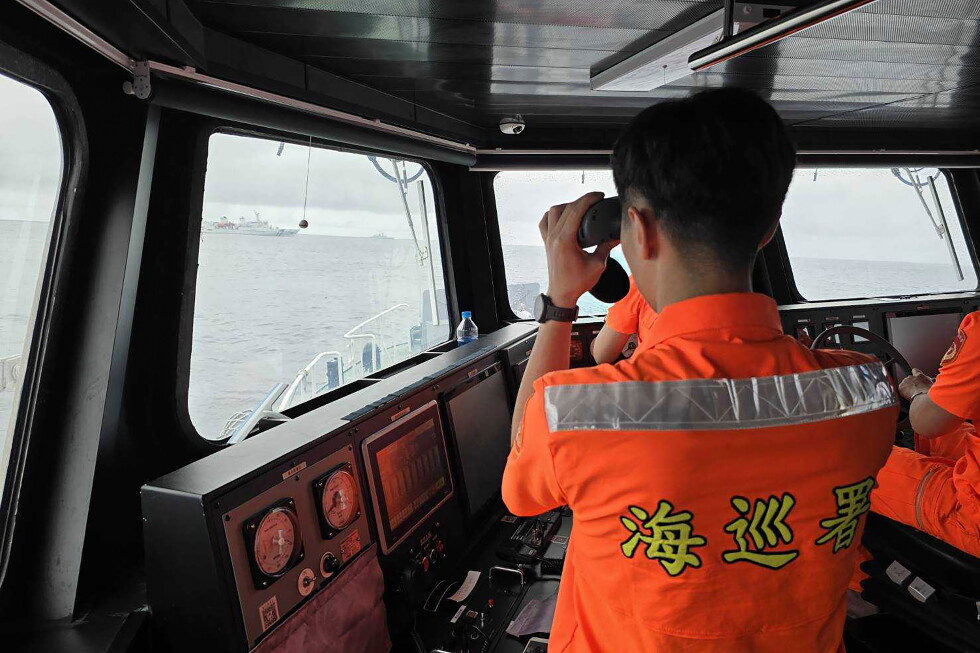
In an uncommon show of unified diplomatic concern, Great Britain, France, and Germany released a joint public statement on Wednesday sounding the alarm over recent Chinese maritime operations east of Taiwan, the self-governed island that has long been a flashpoint for cross-strait and global geopolitical tension.
The joint statement was released through the three European powers’ de facto diplomatic missions based in Taipei, Taiwan’s capital. While the statement did not outline specific details of what it labeled “novel Chinese activity”, it emphasized that the unorthodox deployments posed a clear threat to long-standing stability across the Indo-Pacific region.
China, which claims the democratically governed Taiwan as an inalienable part of its territory that it has pledged to reunify, even by force if necessary, framed its early-month coast guard deployments as routine “maritime traffic enforcement and hydrographic survey operations”. According to Chinese state media reports, the deployments also carried an explicit messaging purpose: they were crafted to send a sharp warning to Japan and the Philippines, after the two nations announced plans to hold negotiations over their shared maritime boundaries in waters Beijing claims as its sovereign territory.
The joint statement from the three European nations noted: “These actions threaten regional stability and the freedom of navigation and safety of international shipping. We reiterate our opposition to any unilateral change to the status quo, particularly by threat or use of force or coercion.” The missions also called for universal upholding of navigational rights and freedoms, and unwavering respect for the personal safety of all seafarers operating in the region. As of Wednesday evening, China’s Ministry of Foreign Affairs had not issued any immediate response to media requests for comment on the joint statement.
Tensions in the region have spiked sharply in recent days, following a sequence of consecutive military moves by both Beijing and Taipei. On Tuesday, just hours after Taiwan launched a five-day nationwide military exercise designed to test its defensive readiness against potential Chinese incursion, China sailed its newest and most technologically advanced aircraft carrier through the Taiwan Strait, the narrow body of water that separates mainland China from the island.
Taiwan’s Ministry of National Defense clarified that the ongoing drills are intended to strengthen the island’s ability to respond to a full-scale Chinese attack, with a specific focus on testing rapid deployment capabilities for military units. This preparation is targeted specifically at countering potential sudden escalations of Chinese grey-zone tactics — a broad category of coercive aggressive actions that range from routine naval patrols to unannounced drone flights, all of which stop short of open, full-scale combat. Earlier this month, Taipei also confirmed that Chinese coast guard vessels had been harassing commercial shipping near the island, ordering transiting civilian ships to disclose their intended routes before passing through the area.
Cross-strait pressure has grown steadily in recent years, with Beijing ramping up its coercive campaign against Taiwan: Chinese military aircraft and naval vessels now conduct near-daily patrols around the island, with large-scale live-fire drills held periodically to demonstrate Beijing’s military capabilities. Regional tensions have also grown between China and Japan over the Taiwan issue, after Japanese Prime Minister Sanae Takaichi suggested last year that the Japanese Self-Defense Forces could intervene militarily if Beijing launched an attack on Taiwan.
-
Sinner set for exhibition match in London heat wave ahead of Wimbledon
As southern England grapples with a record-breaking extreme heat wave that has triggered the UK Met Office’s highest-level red warning, top-ranked men’s tennis star Jannik Sinner is pushing forward with plans to compete in an exhibition match Wednesday, just four weeks removed from a shocking collapse at the French Open tied to heat-related health struggles.
The Italian, who enters the 2025 Wimbledon championships as the defending champion, is scheduled to face British home favorite Cameron Norrie at the Giorgio Armani Tennis Classic, held in Fulham, southwest London. Forecasts call for an early afternoon temperature of 33 degrees Celsius (91.4 degrees Fahrenheit) at the event venue, well within the window when the national weather service has urged the public to avoid strenuous outdoor activity and direct sun exposure.
Sinner’s history of heat-related issues dates back well before his Paris meltdown, where a stunning second-round exit left tennis audiences stunned. Leading Argentine underdog Juan Manuel Cerundolo two sets to one and holding a 5-1 advantage in the third set on Court Philippe-Chatrier, Sinner faltered dramatically as on-court temperatures hit 32 degrees Celsius (90 degrees Fahrenheit). Visibly struggling to regulate his body temperature, he repeatedly reached for ice bags to cool down before collapsing, losing the final three sets 7-5, 6-1, 6-1. After the defeat, Sinner did not place all blame on the extreme conditions, noting only that “many things together caused this problem. I just need my time now to process what went wrong here.”
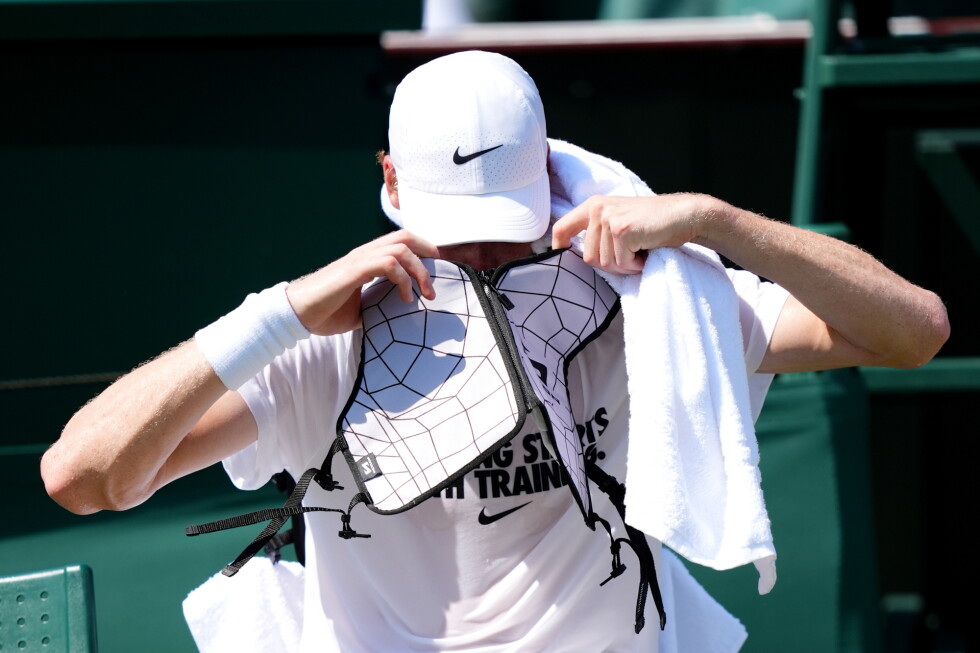
On Wednesday, ahead of his exhibition clash, Sinner took precautions during a practice session at the All England Club, wearing a specialized cooling vest to manage his core temperature.
The current heat wave hitting the UK is far more severe than the conditions Sinner faced in Paris. The Met Office’s red warning, which covers southern England through the heat peak, warns that shaded maximum temperatures could exceed 37 degrees Celsius, with some pockets of the region hitting 38 to 40 degrees Celsius. Compounding the risk is high humidity, which amplifies discomfort and the chance of heat-related illness, while overnight temperatures remain unseasonably warm, leaving people with little opportunity to cool down and recover between days.
The official warning guidance urges residents and visitors to “keep out of the sun and avoid any exercise between 11 am and 3 pm when the sun is strongest” — the same window when Sinner’s exhibition match is scheduled to take place.
For Sinner, the exhibition comes as a critical test just days before the start of Wimbledon, which kicks off next Monday. Forecasts for opening day are far more mild, with an expected high of 24 degrees Celsius (75 degrees Fahrenheit), a far more manageable condition for top competitors.
Sinner enters this year’s tournament as the defending champion, having claimed his first Wimbledon title in 2024 after a four-set victory over then-world No.1 Carlos Alcaraz in the final. Alcaraz will not defend his runner-up position this year, after announcing he would miss the tournament to recover from a lingering wrist injury.
-
Chinese ambassador refutes Panama accusations
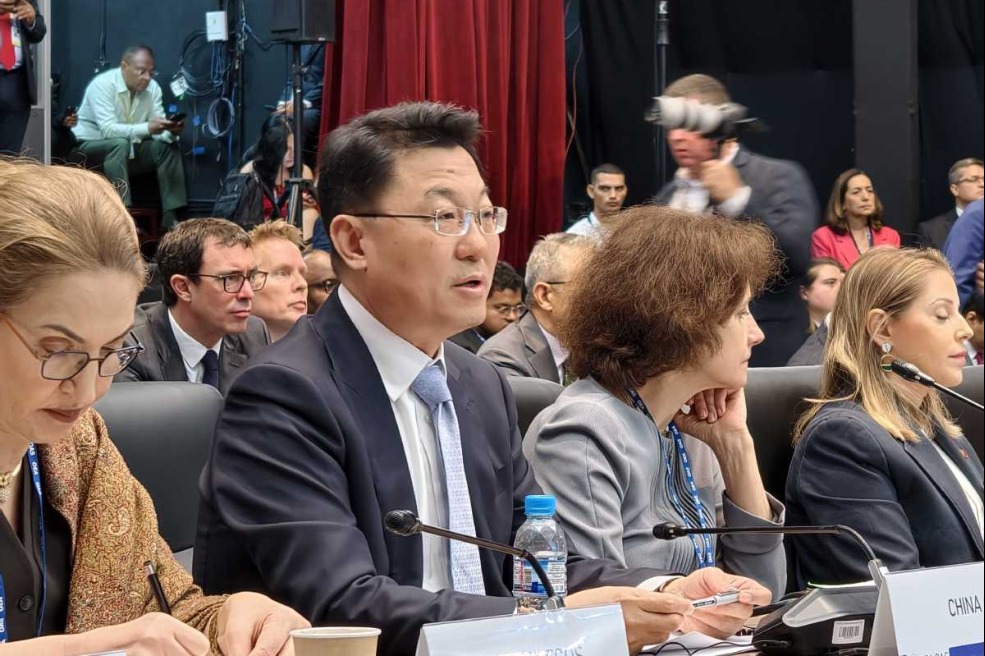
In a high-stakes address at the Organization of American States Dialogue with Permanent Observers held in Panama on Tuesday, China’s Ambassador and permanent OAS observer Xie Feng has pushed back against recent unsubstantiated accusations from Panama over increased port inspections of Panama-flagged vessels calling at Chinese ports.
According to an official statement released by the Chinese Embassy, Xie clarified the context behind the inspection measures, noting that since the beginning of 2026, multiple collisions involving Panama-flagged commercial and fishing vessels have occurred in Chinese territorial waters, leaving several people dead or unaccounted for. Out of a commitment to upholding global maritime safety standards, Xie emphasized that China’s port state control inspections are carried out strictly in line with domestic maritime laws and binding international conventions, not arbitrary political action as Panama has claimed.
Panama’s recent complaints centered on claims that the uptick in inspections and vessel detentions was retaliation for a bitter dispute over port operations at the Panama Canal. The decades-long smooth cooperation between the two countries on the canal hit a breaking point in January, when Panama’s Supreme Court issued a controversial ruling that deemed Chinese control of the two canal end ports unconstitutional, and invalidated the operating license held by Hong Kong-based conglomerate CK Hutchison. The court immediately transferred interim management of the strategic ports to two global shipping giants, Denmark’s A.P. Moller-Maersk and Switzerland-based Mediterranean Shipping Co.
CK Hutchison has publicly rejected the court’s ruling, stating it “strongly disagrees with the determination” and has already initiated international arbitration proceedings to defend its legal rights.
Xie told the OAS dialogue that the political motivation behind the ruling is obvious to any impartial observer. “If contracts could be disregarded, market principles ignored, assets taken over and operators forced out at any time, who would have the confidence to invest and seek cooperation?” Xie asked, per the embassy statement.
The Panama Canal stands as one of the world’s most critical maritime chokepoints, carrying roughly 5% of total global maritime trade and 40% of all U.S. container traffic. Long-standing U.S. political pressure over Chinese involvement in the canal preceded the recent court ruling: last year, under explicit threats from the U.S. government that Washington would seize control of the canal if CK Hutchison retained its operations, the company agreed to sell its non-port assets in the region to a BlackRock-led consortium for $2.3 billion.
Scott Kennedy, senior advisor at the U.S.-based Center for Strategic and International Studies, told CNBC the unfolding dispute is a clear power play for regional influence. “It appears to be a simple contest for dominance in Latin America, with the US trying to push against Chinese trade interests,” Kennedy explained. He added that the most probable outcome is a prolonged legal battle spanning multiple international jurisdictions, paired with sustained political and economic pressure from both Beijing and Washington.
In closing his remarks, Xie called on Panamanian authorities to reverse their unconstitutional decision, uphold the rule of law in international commerce, and protect the lawful rights and interests of Chinese enterprises operating in the country.
-

GTA 6 will cost $80 – and physical edition will not contain a disc
One of the gaming industry’s most anticipated releases in history, Grand Theft Auto 6 from developer Rockstar Games, has finally seen its pricing, pre-order schedule, and distribution details confirmed, drawing mixed reactions from fans and industry experts alike.
The studio announced this week that the standard edition of the hotly awaited title will carry a price tag of $79.99, while the premium-tier Ultimate Edition will retail for $99.99. Regional pricing for markets including the UK has not yet been released, and the BBC has requested full regional pricing details from Rockstar. Scheduled for a November 19 launch exclusively on PlayStation 5 and Xbox Series X/S consoles, pre-orders for the game will open at local midnight on June 25. The blockbuster title is widely tipped by industry analysts to be the most expensive video game ever produced.
A controversial detail that has dominated early fan discussion is Rockstar’s distribution model for physical copies: all boxed retail versions will include only a digital download code, rather than a game disc inside the packaging. Pre-loading for both digital pre-orders and physical version buyers will go live on November 12, allowing users to have the game ready to play immediately at launch. The higher-priced Ultimate Edition will come with exclusive in-game bonuses including additional vehicles, weapons, and character outfits.
Reactions to the announcement have split across two key points: pricing and the disc-free physical model. Fan reaction to the $10 increase from the standard $70 price point for most modern AAA blockbusters has been relatively muted, with many players noting that the incremental jump is not a prohibitive burden. That said, some have expressed concern that this price point could set a new industry-wide standard that pushes game costs higher across the board. When GTA 5 launched in 2013, its standard edition retailed for $59.99, highlighting the gradual upward shift in game pricing over the past 13 years.
The decision to omit physical discs from boxed copies has drawn sharper criticism, particularly from game collectors. Freelance gaming journalist Vic Hood notes that the change is likely to frustrate enthusiasts who build physical game libraries, but added that the choice is a logical one for Rockstar. By requiring a unique download code tied to a user’s account, the studio cuts down on secondary market resales and reduces the risk of early game content leaks ahead of launch. Fans have raised questions about whether the disc-free physical copies can be resold or shared like traditional disc-based games, with no official answer from Rockstar yet.
Industry analysts frame the pricing model as a shrewd business move for Rockstar and its parent company Take-Two Interactive. Joost van Dreunen, a professor of gaming business at NYU Stern, explained that the two-tier pricing structure allows the publisher to serve a broad general audience with the standard edition while offering premium content to dedicated franchise fans willing to pay extra. Hood added that if GTA 6 succeeds at the $80 price point, it is likely to trigger a wave of similar price increases from other major AAA studios, as production costs for large-scale games continue to climb.
The road to GTA 6’s launch has been anything but smooth for Rockstar. Following the record-breaking success of GTA 5, which has sold nearly 230 million copies and generated billions in revenue since 2013, fans waited nearly a decade for confirmation of a sequel. Rockstar officially announced development on GTA 6 in February 2022, after the COVID-19 pandemic disrupted early production timelines. The project suffered a major setback in 2022 when a high-profile hack leaked thousands of in-development assets online, forcing the studio to push back its initial release window. The launch was delayed a second time in late 2025, with the current November 2026 release date confirmed earlier this year. Beyond production challenges, Rockstar has also faced internal controversy in recent years, with workers at its Rockstar North headquarters in Edinburgh claiming the studio illegally fired staff to prevent union organizing efforts.
When GTA 6 finally launches, it will bring a historic first for the long-running Grand Theft Auto franchise: it will feature Lucia, the franchise’s first playable female protagonist in a 3D open-world setting, who partners with co-lead character Jason for the game’s crime-focused narrative.
-
Germany carries out raids in sabotage investigation related to former Gazprom unit
BERLIN — German federal law enforcement authorities have launched a new wave of targeted raids this week as part of an ongoing investigation into an alleged plot to disrupt the country’s critical natural gas infrastructure, a scheme prosecutors link to a murky 2022 corporate transaction involving the former German subsidiary of Russian energy giant Gazprom.
On Wednesday, police carried out coordinated search operations across two major German cities: they examined a Berlin property tied to the primary suspect, a second site belonging to an individual not facing any allegations in the case, and the office of an unnamed commercial entity based in Frankfurt. Officials confirmed that no arrests were made during the execution of the search warrants.
In an official statement released following the operations, prosecutors outlined the charges under investigation: the unnamed suspect, a Russian national, faces accusations of acting as an accessory to two offenses — violation of foreign trade investment regulations, and attempted anti-constitutional sabotage against the German state.
The controversy dates back to 2022, just weeks after Russia launched its full-scale military invasion of Ukraine. At that time, Gazprom’s Moscow headquarters announced it would divest from its German subsidiary, Gazprom Germania. The unapproved buyer immediately moved to liquidate the subsidiary, a step that violates German law, which prohibits liquidation before a cross-border business purchase receives official regulatory approval.
Acting quickly to protect national energy security, German authorities placed Gazprom Germania under the control of a state-run oversight agency, blocking the attempted liquidation. The federal government emphasized at the time that the subsidiary played a critical role in Germany’s natural gas trade, transmission, and storage networks. Shortly after the intervention, Berlin fully nationalized the entity, which now operates under the name Securing Energy for Europe.
Prosecutors now lay out a clear allegation: the sale of Gazprom Germania to a little-known Moscow-based firm with no prior experience in the energy sector, followed by the immediate push for liquidation, was a deliberate attempt to destabilize Germany’s natural gas supply. Germany has been one of the most prominent international backers of Ukraine amid the ongoing invasion, making its energy infrastructure a potential target. The suspect is accused of intentionally facilitating the liquidation effort to advance this disruptive goal.
This investigation unfolds against a backdrop of sweeping shifts in Germany’s energy policy in the wake of the Ukraine war. In the months following the invasion, Berlin rushed to cut its longstanding reliance on Russian natural gas imports. By late 2022, Russia had completely halted all remaining gas shipments to Germany. Just weeks after that cut-off, mysterious undersea explosions caused massive damage to the Nord Stream dual pipelines, the undersea infrastructure built explicitly to carry Russian natural gas to Germany under the Baltic Sea.
-
Iranian agents lived in Australia before directing attacks on Sydney and Melbourne, spy chief says
In an annual national security threat briefing on Wednesday, the top official of Australia’s primary domestic intelligence agency has publicly laid out detailed allegations that Iran’s Islamic Revolutionary Guard Corps (IRGC) orchestrated two separate arson attacks against Jewish community sites in Australia’s largest cities, Sydney and Melbourne, using agents with past ties to the country.
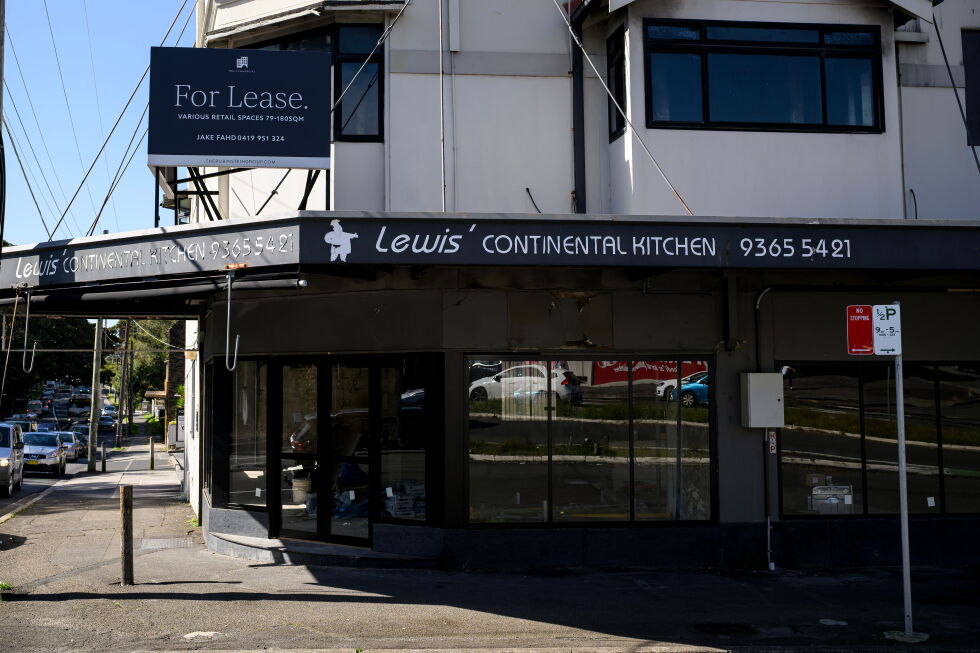
Mike Burgess, director-general of the Australian Security Intelligence Organisation (ASIO), confirmed that Iran has long regarded Australia as a valid target for covert, state-sponsored violent operations. The two attacks, which took place two months apart in early 2024, targeted a kosher restaurant, Lewis’ Continental Kitchen, in Sydney, and Melbourne’s Adass Israel Synagogue, leaving both properties damaged by fire. Last year, Australian authorities formally held Iran responsible for the incidents, triggering a major diplomatic rupture that saw Tehran’s ambassador to Australia expelled. Iranian officials have repeatedly denied all involvement in the attacks.
Burgess outlined the structure of the IRGC’s plot in the briefing: the firebombing of the Sydney kosher eatery was directed by an Australian citizen who is currently based in Iran and holds a senior position as an IRGC agent, overseeing the force’s global covert networks. The second attack, on the Melbourne synagogue, was directed by a former Australian resident who now lives in Iraq, recruited to the IRGC’s cause via Iraqi militia groups. Burgess noted the IRGC specifically sought out this operative for his established local criminal connections, and even provided backing for his other ongoing illegal activities before the attacks were exposed.
To protect the integrity of ongoing investigations and upcoming criminal prosecutions, Burgess declined to release the names of any of the suspects involved. He did, however, share new details about shifts in the case after ASIO publicly named Iran as the party responsible for the arsons. Once the operation was exposed, the operative’s Iranian backers withdrew their support, and following coordinated pressure from Australian law enforcement and local security officials in the region where the operative was based, the IRGC itself detained and imprisoned the former Australian resident.
Burgess characterized the sprawling investigation into the two coordinated attacks as one of the most complex and extensive probes conducted by ASIO in recent decades. He also reiterated earlier warnings that the IRGC is suspected of involvement in multiple other antisemitic attacks targeting Australian Jewish communities, a trend that emerged after the start of the Israel-Hamas war in October 2023.
To date, multiple individuals have already been charged with criminal offenses linked to the arson plots, though authorities have not yet confirmed whether these low-level actors knew they were acting on behalf of Iranian state actors when they carried out the attacks.
-
US Senate passes War Powers Resolution rebuking Trump’s Iran war
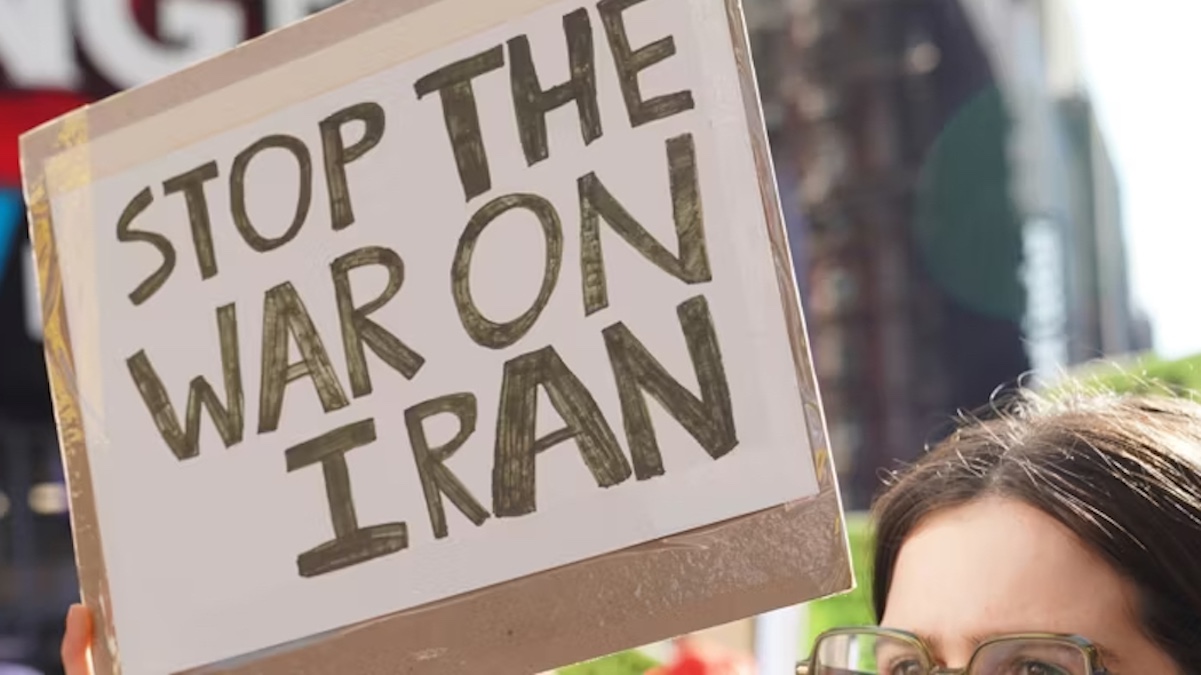
In a historic bipartisan rebuke of former President Donald Trump’s unauthorized military campaign against Iran, the United States Senate voted 50-48 on Tuesday to approve a war powers resolution ordering the immediate withdrawal of all American forces from hostilities against the Middle Eastern nation.
The outcome marked a rare moment of cross-party opposition to the administration’s foreign policy, with four Senate Republicans breaking ranks to side with the overwhelming majority of Democrats in backing the measure. The resolution had already secured approval from the U.S. House of Representatives earlier this month, clearing both chambers of Congress for the first time since the 1973 War Powers Resolution was enacted to check presidential war-making authority.
Democratic Representative Pramila Jayapal of Washington celebrated the vote in a social media post immediately after the results were finalized, writing, “The House and the Senate have both stood up. It’s time to stop this deadly and costly conflict.”
Breaking down the final vote count, the four Republicans who supported the resolution were Rand Paul of Kentucky, Susan Collins of Maine, Lisa Murkowski of Alaska, and Bill Cassidy of Louisiana. The only Democrat to break with his party was Pennsylvania Senator John Fetterman, who voted against the measure.
Attorney Aaron Parnas framed the outcome as a definitive rejection of the White House’s approach to the region, writing on social media: “This is a major bipartisan rebuke of Trump’s foreign policy chaos.”
Anti-war advocacy group CodePink echoed that sentiment, emphasizing broad public support for ending the conflict. “The will of the people is undeniable: It’s time to permanently end this war of aggression,” the organization wrote in a public statement confirming the vote results.
Senate Minority Leader Chuck Schumer noted that the successful vote marked 10 years of Democratic efforts to rein in Trump’s authority to wage undeclared war, which began when the president unilaterally drew the U.S. into a joint military attack on Iran alongside Israel on February 28. Schumer slammed the majority of Senate Republicans for repeatedly blocking prior attempts to limit the conflict, telling reporters the Iran campaign “will go down in the history books as one of the worst foreign policy forays America has ever made,” according to reporting from The Associated Press.
Maryland Democratic Senator Chris Van Hollen echoed that criticism in his own social media remarks, writing: “Congress finally passed a war powers resolution to stop Trump’s illegal war in Iran. It has been a disaster from the start. End it now.”
As The New York Times reported, the vote makes history as the first time since the 1973 War Powers Resolution was passed that both chambers of Congress have approved a concurrent resolution calling for a full end to an ongoing military conflict. While concurrent resolutions do not require presidential signature and rarely carry the full force of law, Democratic lawmakers and foreign policy experts argue that the Constitution’s grant of war-declaring authority to Congress means the resolution still carries binding weight to restrict the president’s military actions.
New York Democratic Representative Gregory Meeks, who sponsored the original House version of the resolution, reaffirmed that commitment to enforcing Congress’s will after the Senate vote. “With the Senate passage of my Iran War Powers Resolution, both chambers have now made clear that the president cannot continue this war of choice and must cease all hostilities against Iran,” Meeks said in a statement. “Regardless of what President Trump says, this measure is binding under the War Powers Resolution, and I will explore all legal avenues to ensure the executive complies with the will of Congress. Congress never authorized this failed war, and the president certainly has no authority to continue it indefinitely without our consent as the Constitution demands.”
The Senate vote comes roughly one week after U.S. and Iranian negotiators signed a memorandum of understanding outlining a path toward ending the conflict, which has killed at least 3,400 people in Iran and thousands more across the broader region. However, recent ceasefire efforts and ongoing negotiations have remained unstable, rocked by continued Israeli attacks on Lebanon and repeated threats from the Trump administration to escalate military operations.
-
French health ministry confirms Ebola virus in patient who worked in Congo
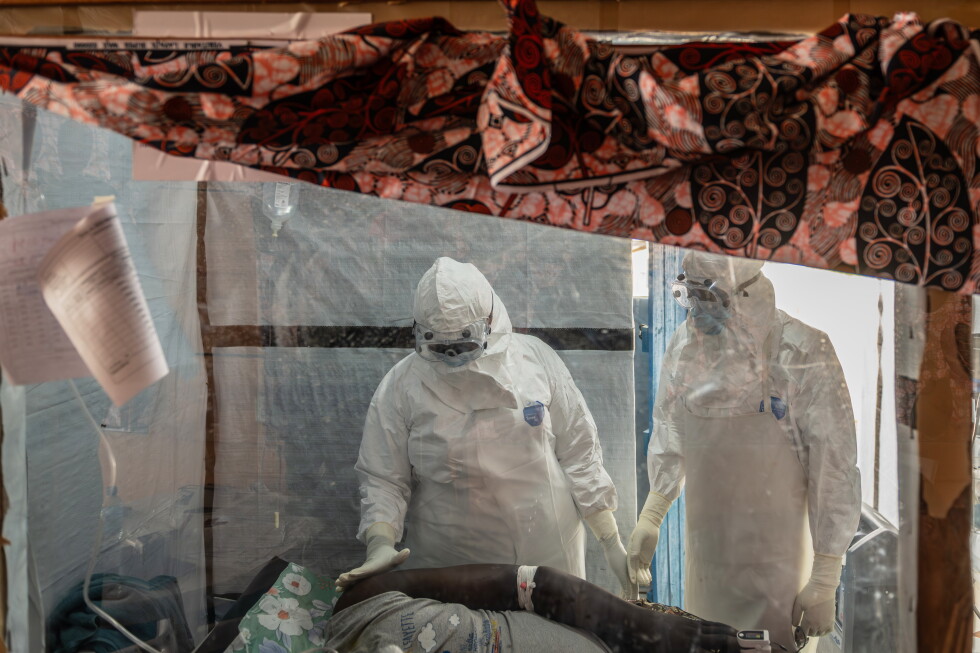
On Wednesday, French health authorities announced the country’s first confirmed Ebola case linked to the ongoing outbreak in the Democratic Republic of Congo, marking a worrying cross-border spread of the currently untreatable virus. The unnamed patient, who had just completed a humanitarian deployment in one of Congo’s active Ebola transmission zones, was quickly taken into specialized medical care immediately after entering French territory.
According to the French Ministry of Health, the patient is currently in stable condition, and all required infection control protocols were activated from the moment the case was flagged. Strict isolation protocols were implemented, and the patient was transported to a specialized treatment facility via secure pathways designed to eliminate any risk of community contamination. Public health teams have also launched a full epidemiological investigation to track down every person who may have had close contact with the infected individual. All identified contacts will be placed under 21-day at-home isolation, a period matching the virus’s maximum incubation window, and monitored closely for any early symptoms of infection.
The case comes as Congo grapples with a growing public health crisis that has so far recorded 1,094 confirmed Ebola infections and 277 confirmed deaths, according to Congolese health ministry data. What makes this outbreak particularly dangerous is that it is caused by the rare Bundibugyo Ebola strain, for which no approved vaccines or specific antiviral treatments currently exist.
Outbreak officials have warned that the true caseload is likely much higher than official counts, as many infections in remote affected areas remain undetected. Since the outbreak was first officially declared on May 15, transmission has continued to accelerate, and experts caution that the worst of the crisis is still ahead. This imported case in France underscores the ongoing global risk posed by unmanaged Ebola outbreaks in central Africa, even as wealthy nations maintain robust systems to contain the virus after it crosses their borders.