作者: admin

  • For a moment, only the story matters

    For a moment, only the story matters

    Every April 23, readers around the globe mark World Book Day — a celebration that carries unique, layered meaning in China, where the practice of reading has long transcended a simple pastime to become a foundational part of cultural heritage.

    For countless generations of Chinese people, reading is not merely a leisure activity or a task tied to academic or professional advancement. Instead, it is a tradition rooted in the ancient wisdom of Chinese philosophers and embedded in the nation’s long-held noble ideals, woven tightly into the fabric of ordinary daily life across every region of the country. From hand-copied scrolls passed down through imperial dynasties to modern printed paperbacks and digital reading platforms accessible to millions today, this enduring tradition has nurtured generation after generation, shaping worldviews, fostering critical thinking, and strengthening cultural bonds between communities.

    As the nation marks this year’s World Book Day, the occasion invites readers of all ages and backgrounds to pause and reflect on their own personal journeys with literature. Whether the memory is a childhood picture book read by a grandparent by lamplight, a worn classic novel carried through years of schooling, or a quiet 10 minutes of reading snatched from a busy workday on a commuter train, these small, intimate moments with stories connect individual experiences to thousands of years of Chinese literary and cultural tradition. In those quiet moments when the page opens, nothing matters except the story itself — a universal experience that continues to bind readers across China together today.

    This year’s World Book Day observance also aligns with broader national cultural efforts centered on storytelling and cultural identity, framed as a key priority for public cultural engagement in recent special coverage from Chinese media outlets.

  • BBC visits migrant camp in northern France as new deal announced

    BBC visits migrant camp in northern France as new deal announced

    In a recent on-the-ground reporting trip, a BBC reporting team has gained access to a migrant camp located in northern France, a visit that comes as British and French authorities formally unveil a new proposed three-year bilateral agreement focused on curbing dangerous small-boat crossings of the English Channel.

    The migration crisis along this busy shipping lane has persisted for years, with thousands of migrants attempting the perilous 21-mile crossing from northern French ports each year, seeking to reach the United Kingdom. Many of these migrants gather in informal camps dotted along the French coastline near Calais and Dunkirk, waiting for opportunities to board small, overcrowded vessels that are often unseaworthy, leading to frequent fatalities.

    The newly outlined deal, negotiated between London and Paris, marks a fresh attempt to address the root causes of the unauthorized crossings. Over the proposed three-year term, the agreement is expected to expand joint patrol operations, increase information sharing between British and French law enforcement, and boost support for migrant processing and camp management on the French side of the border. It represents the latest iteration of cross-border cooperation on a file that has strained bilateral relations repeatedly in recent years, with successive British governments pushing for stronger French action to stop departures before they begin.

    During the visit to the camp, BBC journalists documented the living conditions for the hundreds of migrants currently staying in the facility, many of whom have fled conflict, persecution, and poverty in their home countries across the Middle East, Africa, and South Asia. The on-site reporting offers a rare firsthand look at the daily realities facing migrants as they wait, even as policymakers on both sides of the Channel work to implement new measures to stem the flow of crossings. The deal still requires final formal approval from both British and French legislative bodies before it can go into full effect, with negotiations expected to wrap up in the coming weeks.

  • Mutual gains via Five-Year Plan welcomed

    Mutual gains via Five-Year Plan welcomed

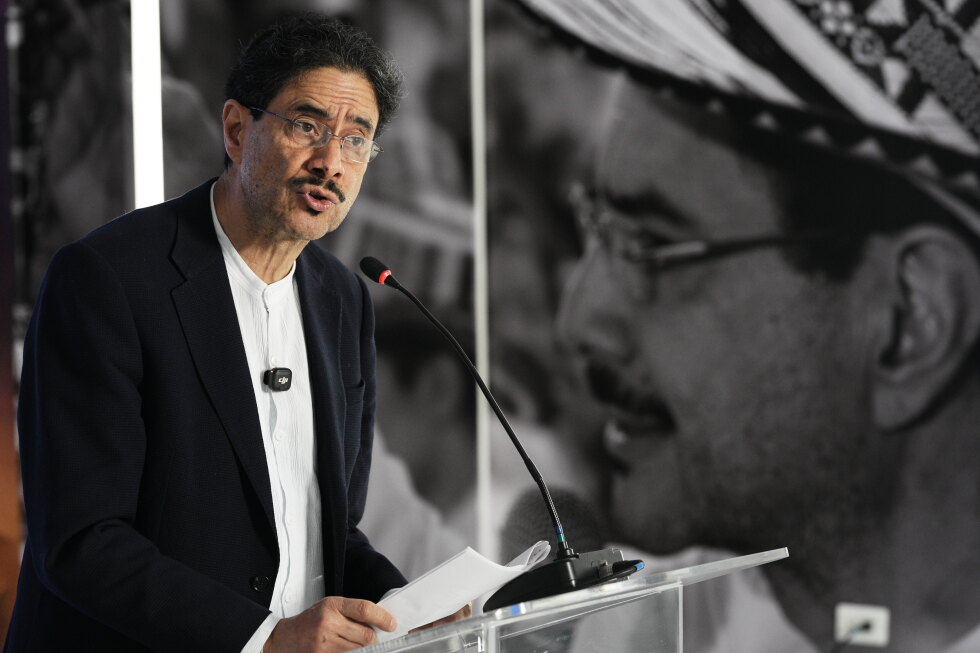
    On a Monday gathering of nearly 500 global business leaders from China, the United States and dozens of other nations, Chinese Ambassador to the U.S. Xie Feng delivered a keynote address at the 56th Annual World Trade Centers Association (WTCA) Global Business Forum, framing China’s 15th Five-Year Plan (2026–2030) as both a domestic development roadmap and an open invitation for the international community to tap into new mutually beneficial growth opportunities.

    Xie laid out four core pillars of the new five-year plan to illustrate its direction and global impact. First, the blueprint centers people-centered development: more than one-third of the plan’s 20 key national indicators are dedicated to improving lifelong public well-being, marking a shift from expanding basic access to boosting the quality of social services across all age groups. Second, innovation is positioned as the primary engine of growth, with a strong focus on integrating technological breakthroughs with industrial upgrading to cultivate new quality productive forces. Third, the plan prioritizes accelerated expansion across green technology, green energy and green finance to advance China’s low-carbon transition. Fourth, openness remains a core feature of China’s modernization path, with the country set to align its regulatory frameworks with high-standard international rules in key sectors including finance and healthcare services.

    Throughout his speech, Xie emphasized that over the coming five years, the world will encounter a China brimming with economic vitality and untapped potential. He highlighted the enormous opportunity presented by China’s rapidly growing consumer market, which is on track to become the world’s largest and most dynamic consumer market in the near term. Xie specifically welcomed foreign investment in high-value sectors including value-added telecommunications, biotechnology, and wholly foreign-owned medical institutions.

    He also pointed to China’s globally leading innovation ecosystem, which enables rapid scaling of laboratory innovations to mass production, and framed China as both a global testbed and deployment platform for cutting-edge green technologies backed by the world’s largest clean energy infrastructure system, inviting global partners to join the ongoing global new energy revolution.

    Turning to China-U.S. bilateral relations, Xie stressed that a stable China-U.S. relationship is foundational to global stability. Comparing the relationship to the first button on a shirt, he noted that getting this first button right is critical, calling on both nations to adopt a correct strategic perception that frames the two countries as partners rather than strategic rivals. Citing the healthy competitive dynamic between U.S. automaker Tesla and Chinese electric vehicle manufacturers as a model, Xie advocated for fair, mutually beneficial competition over zero-sum, win-lose confrontation. He called on both sides to clarify reasonable boundaries for national security policy, restore common sense and rationality to bilateral economic cooperation, and break free from the harmful chilling effect that has constrained cross-border exchange in recent years.

    Xie also shared his expectation for expanded high-level bilateral engagement in 2026, including confirming hopes for a planned visit to China by U.S. President Donald Trump later this year.

    Other key speakers at the forum echoed Xie’s call for open trade and constructive bilateral engagement. Thomas Young, president and CEO of the World Trade Center of Greater Philadelphia, the event’s host, noted that global markets are rapidly shifting and supply chains are continuing to evolve, meaning regions that position themselves strategically for cross-border collaboration will shape the next decade of global economic growth. He described the WTCA forum as a critical space to build professional relationships, exchange open and honest ideas, and facilitate tangible cross-border business deals.

    David L. Cohen, former U.S. Ambassador to Canada, observed that international trade does not develop in a vacuum—it grows from face-to-face connections between stakeholders in forums like this one. He emphasized that few bilateral relationships carry as much global economic weight and opportunity as the partnership between China and the United States, adding that sustained dialogue and mutual understanding are absolutely essential to expanding both global economic growth and shared prosperity for both nations.

    John E. Drew, chairman of the WTCA, centered his remarks on the foundational role of trust in global trade. “Trade is something that is in our genes as human beings,” Drew said, arguing that the single most important ingredient for successful cross-border trade is trust. When trading partners can rely on each other’s words and commitments, he explained, they can create unique, long-term value that benefits all sides.

    During panel discussions, Kellie Meiman Hock, senior counselor at global advisory firm McLarty Associates, echoed a common sentiment among business attendees, noting that global companies crave policy certainty around trade rules of the road and tariff schedules to plan long-term investments.

    As the global governing body for the World Trade Center brand, the WTCA supports more than one million enterprises across the world. Its annual Global Business Forum is the association’s flagship event, hosted each year by a different local World Trade Center to foster cross-border economic cooperation and connection.

  • China issues guideline to boost energy conservation, carbon reduction

    China issues guideline to boost energy conservation, carbon reduction

    BEIJING – In a major step forward for the country’s long-term climate and sustainable development strategy, Chinese authorities released a comprehensive policy guideline on Wednesday to scale up nationwide energy conservation and carbon reduction initiatives. The new policy document was jointly issued by two top administrative bodies: the General Office of the Communist Party of China Central Committee and the General Office of the State Council.

    The framework emphasizes that decarbonization and energy efficiency efforts must proceed in tandem with systematic industrial upgrading, calling for coordinated cross-sector action to balance economic growth and environmental progress. A core focus of the guideline is accelerating the adoption of energy-efficient, low-carbon and clean production technologies, specialized equipment and end products across key industrial sectors. It also outlines explicit support for integrating digital, intelligent and green technological innovations to modernize China’s traditional industrial base, bringing legacy sectors into line with national low-carbon development goals.

    To lay the foundation for a cleaner energy future, the guideline lays out clear strategic priorities: capping total national consumption of both coal and oil to peak their emissions output, aggressively expanding the share of non-fossil energy in the national energy mix, scaling up emerging utility-scale energy storage systems, and speeding up construction of a flexible, renewable-centered new power system.

    Beyond broad strategic direction, the policy sets out targeted implementation plans for energy conservation and carbon reduction across seven key high-impact sectors: manufacturing, construction, transportation, digital infrastructure, and public institutions operated by the government. It also confirms that strengthened regulatory oversight and performance management will be enforced to ensure all targets are met on schedule.

    The policy rollout comes as China continues to advance its stated “double carbon” strategic goals, which aim to peak carbon dioxide emissions before 2030 and achieve carbon neutrality before 2060. This new guideline provides a clear, actionable policy framework to translate long-term climate commitments into concrete, sector-specific action across the country’s economy.

  • UN Chinese Language Day 2026: showcasing the charm of the Chinese language from multiple dimensions

    UN Chinese Language Day 2026: showcasing the charm of the Chinese language from multiple dimensions

    The 2026 iteration of UN Chinese Language Day was officially celebrated with a grand gala held at the United Nations Headquarters in New York this Monday, gathering attendees to highlight the profound cultural and historical value of one of the world’s most widely spoken languages.

    During the event, Sun Lei, Deputy Permanent Representative of China to the United Nations, delivered remarks that centered on the unique role the Chinese language has played across human history. He emphasized that the language carries the accumulated wisdom of more than 5,000 years of Chinese civilization, and has stood as a silent witness to the sweeping changes and evolution of global human society over millennia.

    First established by the United Nations Department of Public Information in 2010, UN Language Days were created to celebrate linguistic diversity, promote multilingualism, and raise awareness of the six official UN languages—Chinese, English, French, Russian, Spanish, and Arabic—across the global community. UN Chinese Language Day is annually held around April 20, to tie in with the traditional Chinese festival of Guyu, the Grain Rain, which honors Cang Jie, the legendary figure credited with the creation of Chinese characters.

    This year’s event continues the UN’s long-running commitment to honoring cultural exchange through language, creating a platform for delegates and attendees from around the world to engage with the depth and richness of Chinese language and culture.

  • China unveils measures to build youth-friendly cities with career opportunities, better life

    China unveils measures to build youth-friendly cities with career opportunities, better life

    BEIJING – In a landmark push to center young people’s needs in national urban development strategy, 15 Chinese government agencies including the Communist Youth League of China (CYLC), the Cyberspace Administration of China, the National Development and Reform Commission, and the Ministry of Education have jointly released a comprehensive policy package designed to cultivate youth-friendly cities across the country. The initiative forms a core part of China’s broader goal to build people-centered modern cities and inject new vitality into social and economic development, with clear long-term targets set for 2030 and 2035.

    Outlined in the newly published guidance are 18 targeted measures that aim to reshape Chinese cities into dynamic hubs where young people can access high-quality career opportunities, enjoy improved living standards, and actively participate in urban governance. Framed as a practical implementation of China’s “people’s city” development philosophy, the policy requires that youth-centric development priorities be integrated into every stage of urban planning, infrastructure construction, and public governance. Local authorities are mandated to systematically improve conditions to help young people relocate to urban areas, settle smoothly, live comfortably, and build fulfilling careers.

    To address young people’s top priority of employment and entrepreneurship, the policy lays out multiple supporting initiatives. At the industrial level, China will strengthen coordination between technological progress and industrial innovation, advance the transformation and upgrading of traditional sectors, nurture fast-growing emerging industries, and lay the groundwork for future-focused industries, all with the goal of creating more high-quality jobs that support youth innovation. Young entrepreneurs will receive expanded support through specialized platforms such as youth entrepreneur associations and targeted training programs for private sector professionals, to boost the participation of young talent in the private economy. The guidance also calls for optimized mechanisms to identify, train and deploy young innovative talent, encourages young researchers to take leading roles in national major scientific and technological projects, and provides enhanced support for youth-led startups in funding, technological resources, and workspaces.

    Beyond economic opportunities, the policy addresses key quality of life challenges facing young urban residents. In urban planning, local governments are required to add youth development indicators to official city evaluation systems, allocate more public space tailored to young people’s needs during urban renewal projects, and explore flexible planning standards to support youth-focused public services. To ease rising housing and commuting pressures, cities are encouraged to construct more dormitory-style housing and small, affordable apartments in areas with high youth employment concentrations, near education and medical facilities, and along major public transit routes. The package also includes provisions to expand public services that support young families: it calls for rolling out childcare subsidies, implementing coordinated support policies covering housing, transportation and consumption to encourage childbirth, increasing the number of mother-and-child facilities in public spaces, and expanding the availability of maternity and child-friendly hospitals to improve maternal and child healthcare.

    The policy sets out clear phased goals for the initiative: by 2030, the development concept of building youth-centered cities will be broadly accepted and implemented across the country; by 2035, China aims to establish a relatively complete and mature institutional system for youth-oriented urban development. Officials note that the initiative will not only improve well-being for young people, but also drive long-term sustainable social and economic growth by leveraging young people’s creativity and dynamism.

  • Canada ‘limits’ US defense ties

    Canada ‘limits’ US defense ties

    Canada’s decision to curtail its decades-long dependence on the United States for defense procurement represents a quiet but meaningful shift in the bilateral alliance, with experts noting the move stems from eroding trust in Washington — even as structural ties between the two neighboring nations remain deeply entrenched.

    Earlier in April 2026, Prime Minister Mark Carney used the stage of the Liberal Party national convention to announce the policy reorientation. Carney framed the change as a long-overdue step toward sovereign defense strategy, declaring that the era when 70 cents of every Canadian defense dollar flowed to U.S. suppliers has come to an end. His administration has laid out two core priorities to advance this goal: expanding Canada’s domestic defense manufacturing base, and forging deeper security partnerships with a broader range of global actors.

    Alistair Edgar, an associate professor of political science at Ontario’s Wilfrid Laurier University, called Carney’s announcement a pivotal shift that carries weight both for the North American alliance and practical military operations. For Edgar, the policy change is not merely a reaction to the current U.S. administration, but part of a broader, cross-national reassessment of Washington’s reliability as an ally. He argues that this shift amounts to a fundamental rupture in the longstanding dynamic between the two nations, one that will reshape political, economic and security ties far beyond the defense sector.

    “The United States can no longer be counted on as a reliable, trusted partner,” Edgar stated. He acknowledged that geographic realities will continue to anchor Canada’s security cooperation with the U.S., particularly through long-standing integrated defense frameworks such as the North American Aerospace Defense Command (NORAD). Even so, the nature of that cooperation is already changing, he explained: Deep bilateral integration is being replaced by looser coordination, as Canada invests in independent, sovereign defense capabilities, and in some cases, may even take steps to protect its own interests that diverge from Washington’s.

    While Carney has pledged to expand defense collaboration with European allies and other global partners, Edgar noted that these new ties will never fully replace the U.S. as a security partner. Instead, Canada is pursuing a deliberately diversified procurement strategy that includes mixed fighter jet fleets sourced from multiple suppliers and ramping up domestic defense production. Already, the country has directed new investments into domestic small arms manufacturing, munitions production, drone development and cyber defense capabilities to strengthen its homegrown defense industrial base.

    The pivot away from heavy reliance on the U.S. does not come without risks, Edgar cautioned. Ottawa could face significant political and economic backlash from Washington, including the imposition of retaliatory tariffs on Canadian goods. Even so, he argued that these very risks reinforce the case for diversification: “In the end, that is more of a reason to take these necessary measures.”

    Edgar also connected Canada’s policy shift to growing unease among U.S. allies worldwide about Washington’s approach to global diplomacy. A growing number of allies, from Canada to European capitals, now view the U.S.-led international order as defined by bullying, transactional deal-making and unpredictable, untrustworthy behavior, he said.

    Not all experts frame the shift as a fundamental rupture, however. Erika Simpson, an associate professor of international relations at Western University in Ontario, argues that Canada’s plan is best understood as a cautious strategic recalibration rather than a clean break from its long-standing alliance with the U.S.

    Simpson explained that the shift serves both strategic and symbolic purposes: it addresses long-standing domestic and policy concerns about overreliance on a single major power, while also sending a clear signal that Ottawa wants to claim greater sovereignty over its defense purchasing decisions. At the same time, she warned against overstating the scale of the change, emphasizing that “this should be understood as recalibration rather than rupture.”

    Canada remains deeply embedded in U.S.-led defense architecture, Simpson noted, and any meaningful reduction in reliance on Washington will necessarily be a gradual, multi-year process constrained by long-standing structural ties. A rapid shift could also introduce unforeseen operational risks if not managed carefully, she added.

    In Simpson’s framing, Canada’s new defense strategy is a pragmatic hedging approach. “Canada is maintaining its core alliance with the United States while cautiously expanding its range of partners,” she said, noting that the strategy improves Canada’s strategic flexibility and long-term security resilience.

  • Price guidelines set for novel therapies

    Price guidelines set for novel therapies

    China’s National Healthcare Security Administration (NHSA) has launched a comprehensive framework of national pricing guidelines that aims to streamline access to innovative medical treatments and standardize essential care services for elderly and pediatric populations, marking a major step forward in balancing technological innovation, industry development and public affordability.

    As of the latest update, the administration has rolled out 39 batches of these guidelines, covering approximately 180 categories of emerging medical technologies, products and care services. The new framework establishes unified national standards for service nomenclature, clinical definitions, and overarching pricing structures across all public healthcare institutions, while leaving authority for local governments to set final, context-specific fee levels aligned with regional economic conditions.

    Speaking at a press conference held on Monday, Dong Zhaohui, deputy director of the NHSA’s price bidding and purchasing department, outlined that the guidelines encompass a wide range of groundbreaking novel therapies. These include high-tech interventions such as surgical robotics, remote surgical procedures, brain-computer interface (BCI) implants, artificial heart devices, cochlear implants, artificial larynx devices, and high-intensity focused ultrasound treatment. When China granted the world’s first commercial approval for a BCI implant in March this year, the corresponding pricing guideline was released immediately to support rapid clinical rollout.

    Beyond neurological and device-based innovations, the framework also covers cutting-edge cancer treatments, including proton radiotherapy, heavy ion radiotherapy, and boron neutron capture therapy — interventions that have long been out of reach for many patients due to unclear pricing and limited infrastructure. Dong explained that when drafting the guidelines, regulators factored in multiple key priorities: fair returns for medical innovators, cost burdens for healthcare institutions, equitable patient access to new treatments, and practical implementation data from pilot regions such as Shanghai. The guidelines explicitly set reasonable payment caps per full treatment course, with a core goal of expanding affordable access for patients across the country.

    To further accelerate the adoption of life-saving new technologies, Dong added that the NHSA is exploring a proactive pre-approval pricing model, which would release guidance during the clinical trial stage of novel therapies, rather than waiting for full commercial approval. This early clarity is expected to cut development timelines and help bring new treatments to patients faster.

    Industry analysts and healthcare experts say the standardized pricing framework is already unlocking growth across China’s medical innovation ecosystem. Jiang Changsong, a professor at the National Institute of Healthcare Security at Capital Medical University, noted that under the new guidelines, government-referenced prices for invasive BCI implantation sit at around 7,000 yuan ($873) per procedure in Beijing, Hubei and Zhejiang, while non-invasive BCI implantation is priced at roughly 1,000 yuan.

    “With a clear pricing benchmark in place, medical enterprises can accurately calculate the return cycle for their R&D investments, which makes investors far more willing to commit capital to innovation. Hospitals also gain a transparent, official basis for service charging, and as a result, the entire industry chain is put into smooth motion,” Jiang explained. He added that the guidelines have already had a tangible impact on advanced cancer radiotherapy infrastructure: with a clear price anchor in place, more regional governments are confident in planning and constructing new proton therapy centers, which will eventually eliminate the need for patients to travel long distances across the country and wait in lengthy queues for life-saving treatment.

    For domestic medical device manufacturers, the standardized pricing framework is leveling the playing field in previously unregulated segments. Xing Yuzhu, executive deputy general manager of Beijing Surgerii Robotics Co, noted that before the new guidelines were introduced, surgical robot services lacked uniform national pricing standards, with fragmented pricing structures largely controlled by a small number of leading international companies. Under the new rules, fee structures for both primary surgical and auxiliary robotic procedures are clearly defined, with tiered pricing set based on the level of robotic involvement in each procedure. This structure enables domestic manufacturers to compete on a more equal footing with global brands while still ensuring they can earn reasonable returns on their innovation investments.

    In addition to supporting cutting-edge medical innovation, the new pricing guidelines also address pressing public welfare priorities aligned with China’s policy goals. To support the development of a birth-friendly society, the NHSA has added standardized pricing for a range of childbirth-related services, including fetal color ultrasound examinations, labor pain relief, family companionship during delivery, neonatal inpatient beds, general newborn nursing, and specialized care for premature infants.

    To improve access to high-quality, affordable care for China’s aging population, the administration has also introduced standardized pricing items for a full spectrum of elderly care services. These include 24/7 “companion-free” non-medical inpatient care, home care visits, end-of-life hospice care, home-based hospital beds, online follow-up consultations, and remote health monitoring, all designed to bring essential care services closer to elderly populations.

    Dong noted that under the guidelines, one-to-several “companion-free” care services are priced between 100 and 180 yuan per day across different regions, far lower than the 300 to 500 yuan typically charged by independent private caregivers. “This framework not only eases the financial burden on families caring for elderly relatives, but also helps attract more skilled talent to the professional nursing industry,” Dong said.

  • Nations’ commitment to one-China principle lauded

    Nations’ commitment to one-China principle lauded

    In a series of official statements released on Wednesday, Chinese authorities issued high praise for the international community’s unwavering commitment to the one-China principle, reaffirming that this global consensus aligns fully with international law and the foundational norms that govern cross-border relations.

    The comments followed the abrupt cancellation of a planned trip to southern Africa by Lai Ching-te, the self-styled leader of Taiwan’s ruling Democratic Progressive Party (DPP). Lai had been scheduled to visit Eswatini, the only African country that maintains unofficial diplomatic relations with Taiwan, from April 23 to 27. The trip fell apart after three Indian Ocean island nations — Seychelles, Mauritius and Madagascar — withdrew prior approval for Lai’s aircraft to fly through their airspace.

    Both the Chinese Foreign Ministry and the State Council Taiwan Affairs Office used their regular weekly press briefings to underscore the breadth of global support for the one-China principle, pushing back against separatist claims for “Taiwan independence” and false accusations from DPP authorities.

    Speaking at the briefing, Foreign Ministry spokesman Guo Jiakun noted that of the 54 recognized nations on the African continent, 53 have established formal diplomatic relations with the People’s Republic of China (PRC) in adherence to the one-China principle. These nations, alongside the African Union, formally adopted the Beijing Declaration during the 2024 Forum on China-Africa Cooperation Summit, a document that codifies their shared commitment to the principle, he added.

    Guo restated the core tenets of the one-China principle widely recognized by the international community: there exists only one sovereign China in the world, Taiwan is an inalienable part of Chinese territory, and the Government of the People’s Republic of China is the sole legitimate government representing the entire Chinese nation. He emphasized that African nations have repeatedly reaffirmed this stance and expressed firm backing for all efforts by the Chinese government to advance peaceful national reunification.

    “It is an undeniable fact that there is no so-called ‘president of the Republic of China’ recognized by the international community today,” Guo said. “Any individual who claims this false title is acting in opposition to the course of history, and will only end in humiliation.”

    Guo stressed that China’s full national reunification is an irreversible historical trend, and the global endorsement of the one-China principle reflects the overwhelming arc of history and the will of the global public. “No force can block the eventual reunification of China,” he said. “Separatist schemes for ‘Taiwan independence’ are completely futile and doomed to failure.”

    Zhang Han, spokeswoman for the State Council Taiwan Affairs Office, echoed these remarks, noting that the cancellation of Lai’s trip once again proves that the one-China principle is the overwhelming prevailing trend in global affairs, represents the greater good of the international order, and aligns with the shared will of the world’s people.

    Zhang addressed false claims circulated by DPP authorities that the Chinese mainland had exerted “intense pressure” on the African nations that revoked Lai’s overflight permits. She dismissed these allegations as slander, self-deception and malicious defamation, noting the claims are little more than a desperate attempt to distract from the growing isolation of “Taiwan independence” separatists in the international arena.

  • Ex-Philippine president Duterte to face trial on crimes against humanity charges

    Ex-Philippine president Duterte to face trial on crimes against humanity charges

    THE HAGUE, Netherlands – In a landmark ruling that marks a major turning point in global accountability for grave human rights violations, a three-judge panel at the International Criminal Court announced Thursday it has unanimously confirmed charges of crimes against humanity against former Philippine President Rodrigo Duterte, stemming from the thousands of deaths linked to his infamous anti-drug crackdowns that spanned more than a decade.

    The panel concluded there are substantial, credible grounds to hold the 81-year-old former leader responsible for dozens of extrajudicial murders, a killing campaign that first took shape during his decades-long tenure as mayor of Davao City in the southern Philippines and expanded nationwide after he won the Philippine presidency in 2016, holding office until 2022.

    Duterte, who was arrested in the Philippines last year, has repeatedly and vehemently denied all allegations against him. He has opted to forgo personal appearance in all ICC hearings to date, and a preliminary ruling last month confirmed he is medically fit to proceed to trial, after an earlier hearing was delayed over concerns about his health. A firm start date for the full trial has not yet been finalized by the court.

    In their 50-page written ruling, judges laid out that accumulated evidence demonstrates Duterte personally developed, publicly promoted and systematically implemented a deliberate policy to “neutralize” people suspected of involvement in the drug trade. Prosecutors argue that beginning in 2011, national police operatives and unofficial hit squads carried out dozens of targeted killings at Duterte’s direction, with participants incentivized by cash payouts and coerced by the threat of being marked as targets themselves if they refused to comply. During pretrial hearings held this past February, deputy prosecutor Mame Mandiaye Niang told the court that participation in the killings eventually devolved into a twisted, perverse competition among those involved.

    Estimates of the total death toll from the crackdown during Duterte’s presidential term vary widely: official Philippine police figures count just over 6,000 unintended killings, while independent human rights organizations place the actual death toll as high as 30,000.

    Prosecutors framed Thursday’s confirmation of charges as a critical milestone in their years-long push to deliver accountability for the widespread killings. “This decision represents a significant milestone” in our work to deliver justice for victims, the prosecution office said in a statement released Wednesday ahead of the public announcement.

    But Duterte’s defense team has rejected the ruling as fundamentally flawed. Lead defense counsel Nick Kaufman told the Associated Press the panel’s decision relies entirely on uncorroborated testimony from self-admitted killers who agreed to testify in exchange for leniency, arguing the evidence used to confirm charges lacks any credible corroboration.

    The ruling has already sparked sharply contrasting reactions, with families of people killed during the crackdown celebrating the decision in the Philippines. For survivors, the confirmation of charges brings long-awaited hope of justice and closure after years of official obstruction. Randy delos Santos, whose 17-year-old nephew Kian delos Santos was gunned down by police in a Manila alley in 2017 in a killing that sparked nationwide outrage, said the decision gives a voice to victims who were long reduced to nameless statistics. “This is for all the victims, who were not even given the chance to be recognized as victims because their stories were twisted in police reports, investigations and findings,” delos Santos told reporters. “Unlike Kian, most other victims were nameless, voiceless and were just numbers and statistics whose horrific stories were never heard. Now the ICC will give their stories a chance to be told.”

    Global and local human rights groups have also praised the ruling as a watershed moment for international justice. Maria Elena Vignoli, senior international justice counsel at Human Rights Watch, noted that the progression to trial sends an unambiguous message to current and former leaders around the world: no individual, even a former head of state, is above the law for the most serious international crimes. “Duterte’s trial will send a powerful message that no one responsible for grave crimes is above the law, whether in the Philippines or elsewhere, and that justice will eventually catch up with them,” Vignoli said.

    The path to Thursday’s ruling has been marked by repeated legal and procedural hurdles stretching back more than six years. ICC prosecutors first launched a preliminary investigation into the drug crackdown in 2018. Just one month after the investigation was announced, then-President Duterte announced the Philippines would withdraw from the ICC, a move widely criticized by human rights activists as an attempt to evade accountability for the killings. Earlier this week, appeals judges rejected a bid by Duterte’s legal team to dismiss the entire case on the grounds that the court lacks jurisdiction following the Philippine withdrawal.

    In another procedural development earlier this year, ICC judges disqualified the court’s former chief prosecutor Karim Khan from leading the case, citing a reasonable appearance of bias stemming from Khan’s prior legal work representing victims of Duterte’s alleged crimes before he took up his role at the ICC. Khan had already stepped back from his official duties at the court pending the outcome of an independent investigation into unrelated allegations of sexual misconduct.

    Associated Press journalist Jim Gomez contributed reporting from Manila, Philippines.