作者: admin

  • South African civil groups warn of dire impact as US phases out HIV program funding

    South African civil groups warn of dire impact as US phases out HIV program funding

    JOHANNESBURG – A sweeping rollback of U.S. foreign assistance spearheaded by the second Trump administration is pushing South Africa’s long-running fight against HIV/AIDS into uncharted crisis, with civil society groups warning that adolescent girls and women — already among the nation’s most at-risk populations for HIV infection — are bearing the earliest and most severe brunt of the cuts.

    The program facing elimination is the President’s Emergency Plan for AIDS Relief, better known globally as PEPFAR, a landmark U.S. initiative that has backed South Africa’s HIV response for two decades. PEPFAR is widely celebrated by global public health experts for saving more than 20 million lives across the world since its launch, with South Africa — home to the world’s largest HIV-positive population — as one of its core beneficiaries. The program delivers more than $400 million in annual support to the country’s public health infrastructure for HIV care and prevention.

    The U.S. State Department confirmed it is implementing a phased drawdown of most PEPFAR activities in South Africa, with full wind-down of core programming scheduled for completion by the end of September 2025. Only limited critical personnel support will extend through March 2026, officials confirmed.

    The aid cut comes as part of broader global foreign aid reductions outlined in a January 2025 executive order from President Donald Trump, who issued a full halt on all U.S. financial assistance to South Africa the following month. The Trump administration has justified the freeze by citing a slate of political disagreements with the South African government: the country’s Black Economic Empowerment policies, its controversial land expropriation legislation, and South Africa’s prominent legal case against Israel at the International Court of Justice, where Pretoria has accused Israel of committing genocide in Gaza. The administration also amplified widely disputed claims that white Afrikaner minority communities face systemic genocide in South Africa.

    Israel has forcefully denied South Africa’s genocide allegations, countering that the October 7, 2023, cross-border attack by Hamas-led militants that killed approximately 1,200 people in southern Israel itself constitutes an act of genocide. A State Department spokesperson confirmed to the Associated Press this week that PEPFAR withdrawal was conditional: South African leaders were told the funding would be pulled unless they addressed U.S. demands, including a requirement that senior government officials more frequently and unequivocally condemn what the U.S. frames as race-based incitement to violence, specifically the anti-apartheid struggle song “Kill the Boer,” which some critics interpret as a call for violence against white Afrikaner farmers.

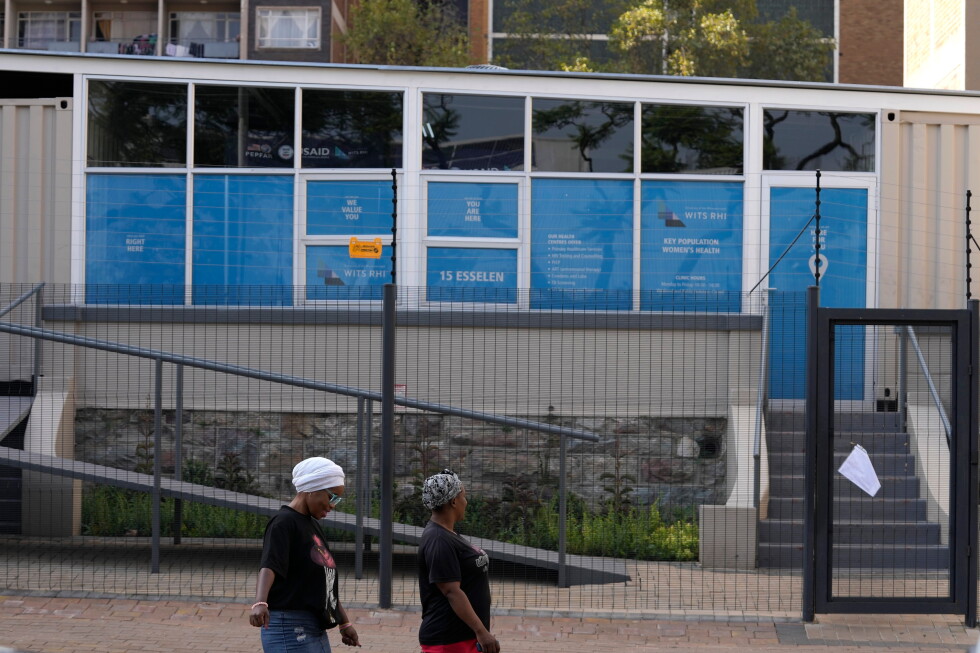
    Official data from South Africa puts the nation’s HIV-positive population at roughly 8 million people — 12.7% of its total 63-million population. PEPFAR funding accounts for approximately 17% of the South African government’s overall budget for HIV programming. Importantly, the funding does not cover the bulk of antiretroviral drug purchases: 90% of the country’s ARV supply is self-funded, with the remaining 10% covered by the Global Fund to Fight AIDS, Tuberculosis and Malaria. Even so, the withdrawal has already inflicted tangible damage across 27 South African districts, where community HIV support facilities have shuttered and hundreds of frontline workers and outreach volunteers have been laid off.

    South Africa’s national health department has been preparing for the aid cut since the initial January 2025 freeze on U.S. foreign assistance and cancellation of USAID grants, spokesperson Foster Mohale told reporters. The government launched a self-reliance plan to mitigate the impact of the withdrawal, and allocated $45 million in emergency funding last year to fill gaps left by the lost PEPFAR support. But civil society groups that have conducted on-the-ground impact assessments in high-prevalence districts say emergency funding has not been enough to offset the loss, especially for prevention services.

    Section27, a leading South African civil society organization focused on health rights, recently assessed the cuts in three high-burden districts and found prevention programming has been hit hardest. As public health systems face strained resources, authorities have shifted priorities to maintaining existing treatment access for people already living with HIV — a necessary shift that comes at the cost of stopping new infections, explained Tendai Mafuma, senior legal researcher at Section27.

    The Anova Health Institute, one of the largest organizations that delivered PEPFAR-funded programming in the country, has already wound down all PEPFAR-supported activities and laid off approximately 3,000 health workers since 2024. Dr. Kate Rees, a public health medicine specialist at Anova, said community-based delivery of pre-exposure prophylaxis (PrEP) — a critical medication that prevents HIV transmission — and other prevention services have been gutted by the cuts.

    “Community delivery of prevention is important to reach the people that need it most,” Rees said. Along with adolescent girls and young women, Rees added, the groups most impacted include children, young people, and key at-risk populations such as men who have sex with men and people who use drugs — groups that rely heavily on outreach services to access life-saving care.
  • Israeli police detain Palestinian community leader over 2022 speech

    Israeli police detain Palestinian community leader over 2022 speech

    On Tuesday, Israeli police detained and interrogated a long-serving prominent Palestinian community leader, a move that has drawn widespread condemnation as the latest escalation in a sweeping crackdown on political organizing among Palestinian citizens of Israel.

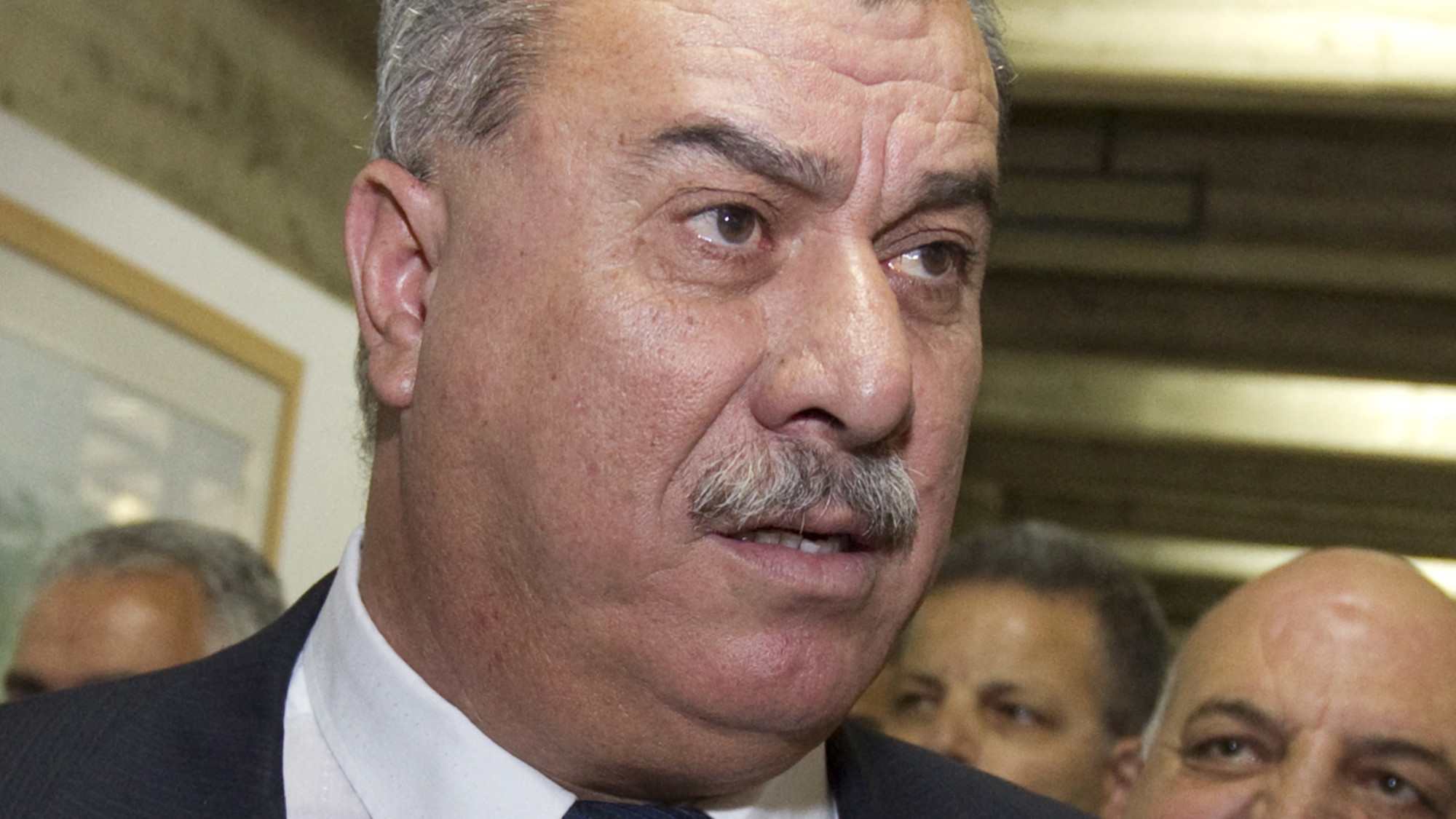
    Mohammad Barakeh, who previously led the High Follow-Up Committee for Arab Citizens of Israel — the leading umbrella group representing Palestinian citizens of Israel operating outside of formal parliamentary structures — was taken into custody from his residential home in the northern Israeli town of Shefa-Amr, the committee confirmed. Despite Barakeh’s formal objections, Israeli authorities forced him to attend the interrogation at a police station located in Ariel, an Israeli settlement built on illegally occupied land in the West Bank. The committee has labeled the choice of this interrogation location as a deliberate and calculated provocation.

    Barakeh, who represented Palestinian interests as a member of the Israeli Knesset from 1999 to 2015, spent roughly four hours in questioning over a public speech he delivered in Ramallah, the administrative capital of the Palestinian territories, in 2022. As of Tuesday, Israeli authorities had not publicly specified what portion or claim of the speech they are investigating. During processing, Barakeh was fingerprinted and photographed before being released by a court, which attached a series of restrictive bail conditions to his release.

    In an official statement following the detention, the High Follow-Up Committee framed the action as an attempt to intimidate the entire Palestinian community within Israel. The organization called the case “another dangerous episode in a series of political persecutions aimed at intimidating our Arab community and deterring it from its political activity and legitimate struggle against occupation, racism and political repression.”

    After the interrogation concluded, Barakeh appeared before the Petah Tikva Magistrates’ Court, which issued a set of binding restrictions: a ban on all domestic and international travel through the end of October, an order to surrender his passport, and a 30-day ban on any entry to the occupied West Bank. Israeli law enforcement also seized two of Barakeh’s personal mobile phones, with investigators claiming the devices are required for ongoing case work.

    Barakeh’s legal counsel, Khaled Zabarqa, confirmed that his client rejects the legitimacy of the majority of the court-imposed restrictions. Adalah, the leading Israeli rights organization focused on protecting minority rights for Palestinian citizens of Israel, is currently preparing a legal appeal to challenge both the bail conditions and the unlawful seizure of Barakeh’s personal devices. Adalah representatives also noted that Barakeh previously declined to attend interrogation at the Ariel location, and police have yet to provide a clear legal justification for holding the questioning inside the occupied West Bank settlement.

    Multiple Palestinian political parties inside Israel have issued formal condemnations of the detention. Hadash, a long-standing Palestinian-led political party, called the interrogation a deliberate “political and security interrogation” that forms part of a broader coordinated campaign targeting Palestinian citizens of Israel and their elected political leadership. The party warned of “a fascist push to tighten the grip on the Arab public in the country and on its representative institutions, foremost among them the High Follow-Up Committee, to silence the national democratic voice opposing occupation, settlement expansion and racism.”

    Balad, another prominent Palestinian-led political party in Israel, also joined in condemnation, noting that the detention reflects sustained and ongoing efforts to suppress all forms of legitimate Palestinian political activity within Israel’s borders. In a statement, the party said: “The targeting of Muhammad Barakeh is a targeting of the Arab public and its right to organise, engage in political activity and pursue democratic struggle. These policies will not succeed in silencing our people or deterring them from continuing to defend their national and civil rights in the face of occupation policies, racism, and the escalating incitement from the mouthpieces of the fascist right in Israel.”

  • Hong Kong police arrest booksellers on suspicion of selling seditious publications

    Hong Kong police arrest booksellers on suspicion of selling seditious publications

    HONG KONG – Less than one week ahead of the 29th anniversary of Hong Kong’s handover from British to Chinese rule, local authorities have arrested two people on charges tied to the city’s national security legislation, with a well-known pro-democracy activist and independent bookstore owner linked to the detention. The operation marks the latest enforcement action targeting dissident voices in the Asian global financial center, escalating long-running international scrutiny of Beijing’s commitments to civil liberties in the semi-autonomous region.

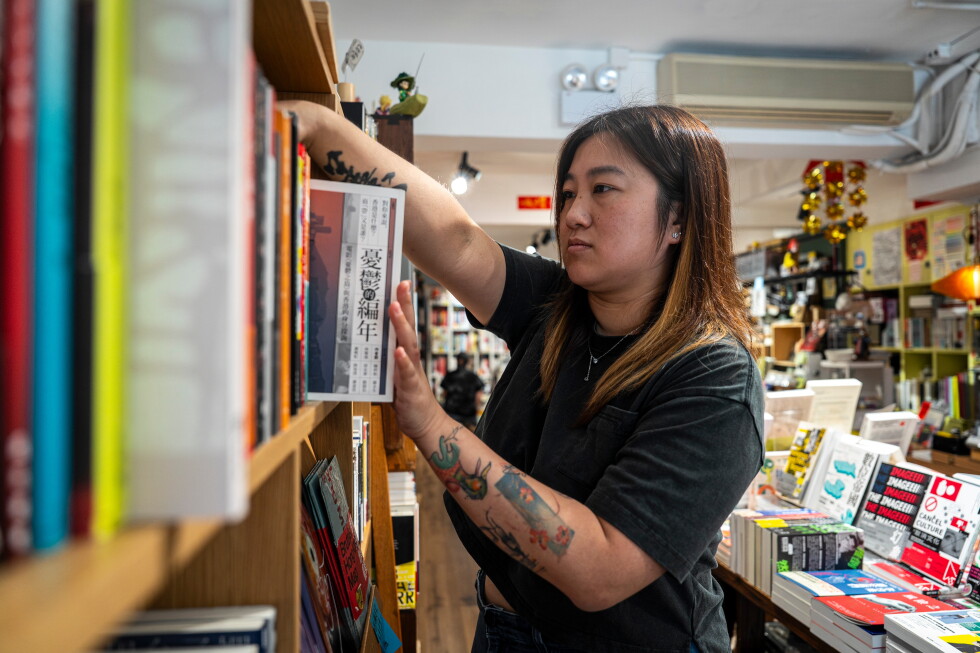
    Hong Kong police launched the operation Wednesday, with the city’s government releasing an official statement early Thursday confirming the arrests but withholding the identities of the two detainees. Multiple local media outlets, including prominent Chinese-language newspaper Ming Pao, have cited unnamed police and government sources identifying one of the arrested as Leticia Wong, owner of Hunter Bookstore and a former pro-democracy district councilor. The Associated Press has not been able to independently confirm this identification, and police have not responded to requests for comment; attempts to reach Wong directly by phone have also been unsuccessful.

    The government statement confirms the detained pair operate a retail outlet in Sham Shui Po, the same district where Wong’s Hunter Bookstore is located. They face two core allegations: engaging in seditious activity under the 2024 Hong Kong National Security Law, and handling assets linked to the proceeds of indictable offenses under separate local legislation. Per official investigative findings released by the government, the pair are accused of displaying and selling publications with seditious content that incites public hatred toward the Hong Kong government, the city’s judiciary, and local law enforcement agencies. They also stand accused of accepting financial remittances from foreign political organizations, though authorities have not publicly named the specific publications or external groups involved in the case.

    Wong has long been a high-profile dissident voice in Hong Kong, remaining publicly active even after dozens of leading pro-democracy activists were imprisoned in a widespread crackdown that followed the large-scale 2019 anti-government protests. Her bookstore has been a focal point of official scrutiny for more than two years. In 2024, a pro-Beijing Hong Kong newspaper accused the independent book fair hosted at Hunter Bookstore of promoting so-called “soft resistance” against authorities, specifically calling out the store’s plan to sell a biography of Jimmy Lai, the jailed founder of the pro-democracy outlet Apple Daily.

    In a 2024 interview with the Associated Press, Wong detailed the sustained pressure her business has faced from government authorities. She told AP that between July 2022 and June 2024, Hong Kong officials took more than 90 separate enforcement actions against her store, ranging from routine in-person inspections and high-visibility external patrols to formal warning letters citing potential regulatory violations. She also added that an anonymous threatening letter sent to a group that planned to host an event at her bookstore ultimately forced the organization to cancel its booking.

    This latest arrest is not the first targeting independent booksellers in Hong Kong in 2025. Just three months ago, Hong Kong police detained the owner and multiple staff members of another independent bookstore on nearly identical allegations of selling seditious publications, including the same biography of Jimmy Lai. All of those detained were subsequently released on bail following their arrest.

    Critics of the national security enforcement argue that these repeated arrests of dissident figures and independent booksellers represent the erosion of the civil liberties and autonomy Beijing promised to preserve in Hong Kong for 50 years following the 1997 handover. They call Wednesday’s arrests the latest step in a systematic campaign to suppress all remaining dissent in the city. Hong Kong government officials, however, maintain that the existing national security laws are an essential pillar of the city’s social and political stability, and have repeatedly emphasized that all legally protected rights, including freedom of speech, remain firmly guaranteed under the city’s current legal framework.

  • Nigeria’s Senate passes bill to allow creation of state police to tackle insecurity

    Nigeria’s Senate passes bill to allow creation of state police to tackle insecurity

    LAGOS, Nigeria — In a historic step toward restructuring Nigeria’s national security architecture, the Nigerian Senate voted Wednesday to approve a constitutional amendment bill that would permit each of the country’s 36 states to establish and operate their own independent police forces. The bipartisan, president-backed legislation marks the end of decades of heated debate over police decentralization, a policy long proposed as a solution to the West African nation’s spiraling insecurity crisis.

    For decades, Nigeria has relied on a fully centralized policing system, with all law enforcement authority held exclusively by the federal government. As insurgencies, intercommunal violence, kidnapping, and organized crime have spread across the country over the past 15 years, this centralized structure has grown increasingly overstretched. Analysts have repeatedly pointed out that the lack of sustained, local police presence in vast rural and marginalized areas has allowed armed militant groups, criminal networks, and jihadist factions to operate with near-impunity. U.N. data estimates that these security threats have claimed the lives of tens of thousands of Nigerians since the early 2010s.

    Under the terms of the approved bill, the new state police forces will operate in parallel with the existing federal police force, with a clear division of responsibilities. State units will be required to meet uniform national operational standards to maintain public accountability, while the federal police will retain exclusive jurisdiction over high-stakes national security matters including counterterrorism operations, border security, and transnational organized crime investigations.

    The push for reform has gained new urgency since President Bola Ahmed Tinubu took office, as insecurity has expanded beyond Nigeria’s traditional conflict zones in the northeast. Armed militants have now launched regular operations in the country’s southern regions, a shift that has brought new waves of violence and abduction. As of the Senate vote, at least 80 schoolchildren remained in captivity after separate mass kidnappings by militants in both northern and southern states.

    Ikemesit Effiong, partner at Lagos-based risk advisory firm SBM Intelligence, noted that the recent wave of high-profile abductions amplified public and political pressure for change. “The sluggish federal response to these mass kidnappings is partially rooted in deep structural flaws of Nigeria’s centralized policing framework,” Effiong explained. “That failure has made the call for decentralized policing impossible to ignore any longer.” Currently, state governors are legally designated as the top security officials for their jurisdictions, but hold no operational command over law enforcement assets within their borders.

    Despite broad bipartisan support for the bill, the reform has drawn meaningful criticism from opponents. Critics warn that granting states control over their own police forces creates significant risk of institutional abuse, arguing that sitting governors could weaponize local law enforcement to advance personal political interests, suppress opposition voices, and intimidate critics.

    Before the amendment can take effect, it must complete the national constitutional change process: two-thirds of Nigeria’s 36 state assemblies must vote to approve the bill. For now, the Senate’s vote represents the most significant step forward for police reform in Nigeria in modern history, opening a new chapter in the country’s efforts to address its deepening security crisis.

  • Colombia’s vote may reshape the Amazon’s future as political winds shift across Latin America

    Colombia’s vote may reshape the Amazon’s future as political winds shift across Latin America

    Across Latin America, a series of unfolding 2026 election results have triggered urgent global debate over the future of the Amazon rainforest, the world’s largest tropical carbon sink and a critical bulwark against accelerating climate change. The most recent shift came in Colombia, where businessman and lawyer Abelardo de la Espriella — a Trump-endorsed populist from the opposition Defenders of the Motherland movement — has secured a narrow victory in the country’s presidential runoff, defeating progressive candidate Iván Cepeda by just 1 percentage point, or roughly 251,000 votes. Cepeda formally conceded the race last Wednesday, confirming de la Espriella’s status as Colombia’s next head of state.

    The Colombian election outcome follows a broader regional political swing that puts new pressure on Amazon conservation. Just to the south, Peru appears on track to elect Keiko Fujimori to the presidency, while Brazil prepares for a critical upcoming presidential contest that could oust incumbent progressive leader Luiz Inácio Lula da Silva in favor of Flávio Bolsonaro, son of former right-wing President Jair Bolsonaro. Combined, Colombia, Peru, and Brazil hold more than 90% of the world’s Amazon rainforest, meaning policy shifts across these three nations could reshape the entire biome’s fate.

    For decades, scientists have warned that continued deforestation driven by extractive industries could push large swathes of the Amazon past an irreversible tipping point, where damaged ecosystems can no longer regenerate as functioning rainforest. Under outgoing Colombian President Gustavo Petro, the country emerged as a global leader in Amazon protection, championing ambitious climate action and moving away from new fossil fuel development. De la Espriella’s policy platform marks a stark departure from this agenda: the president-elect, nicknamed “The Tiger,” has pledged to revitalize Colombia’s oil sector, approve hydraulic fracking, and prioritize expanded natural resource extraction to drive national economic growth. Environmental advocates warn that this shift could undermine global emissions reduction efforts and open up environmentally sensitive Amazon lands to irreversible damage.

    The pattern of pro-extractive policy priorities repeats across the region. Like de la Espriella, Fujimori has signaled she will expand mining development to boost Peru’s economy, a move that has sparked alarm among environmental groups and Indigenous communities who face displacement and ecosystem destruction. In Brazil, the upcoming election follows a clear example of how political leadership directly impacts deforestation rates: during Jair Bolsonaro’s presidency, Amazon deforestation spiked dramatically as environmental enforcement was gutted, while Lula’s current administration has cut forest loss through stricter regulation. Cristiane Mazzetti, zero deforestation lead at Greenpeace Brazil, noted that presidential priorities directly shape regulatory outcomes for the rainforest.

    “The elected administration sets budgetary priorities, fills government positions and shapes regulations to either facilitate or hinder predatory exploitation and environmental crimes,” Mazzetti explained. “The result of this is measurable, as evidenced by the rate of deforestation in the Brazilian Amazon.”

    U.S. President Donald Trump’s endorsement of de la Espriella aligns with the incoming Colombian leader’s pro-fossil fuel agenda; the current U.S. administration has already rolled back domestic climate policies, expanded domestic oil and gas production, and withdrawn the U.S. from the 2015 Paris Agreement, the global pact designed to limit dangerous global warming.

    Sergio Guzmán, director of Colombia Risk Analysis, noted that economic priorities are increasingly outcompeting environmental concerns across the region. “Many of the concerns from environmentalists on emissions and fracking are going to take a second place to some of the economic concerns about energy self-sufficiency, investment and foreign direct investment in oil, gas and mining,” Guzmán said.

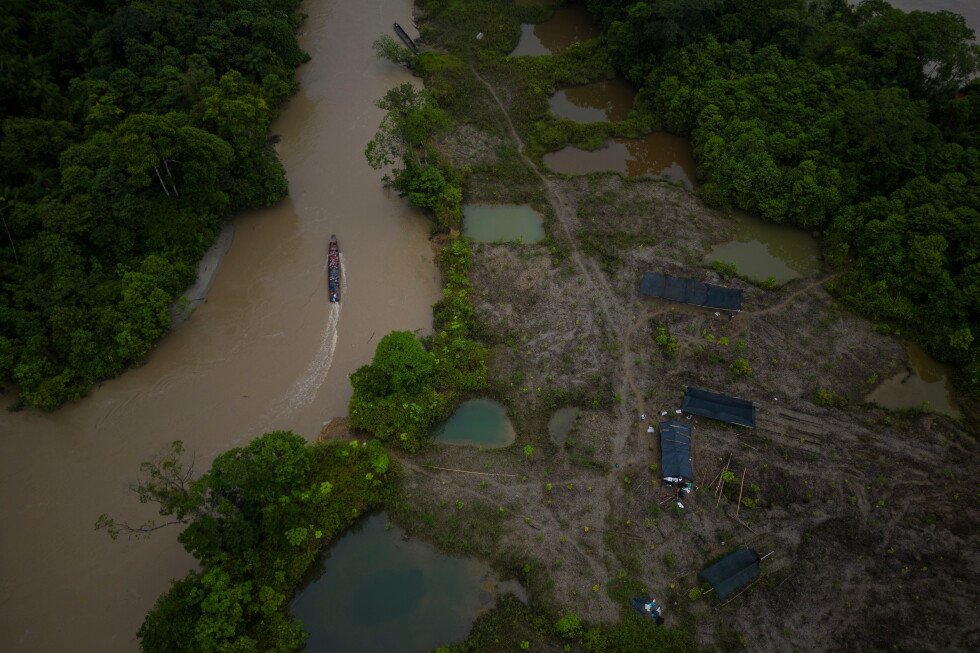
    Beyond legal extractive projects, the rise of right-leaning governments across the region has also placed a renewed focus on cracking down on illegal gold mining, one of the single largest drivers of Amazon deforestation. Illegal mining clears old-growth forest, contaminates critical river systems with toxic mercury, and generates billions of dollars in annual revenue for transnational criminal networks. While nearly all regional governments agree that illegal mining must be addressed, experts say current policy approaches have failed to target the root of the problem.

    “There’s an interesting alignment, particularly across the Andes region and the broader Amazon basin,” said Elizabeth Dickinson, deputy director for Latin America at the International Crisis Group. “It’s very hard to disagree with the idea of going after illegal mining, one of the most detrimental industries for the Amazon basin. What we really haven’t reached is an ability to tackle the intellectual authors of these operations,” she added, noting that most current efforts focus on seizing equipment and clearing mining camps rather than dismantling the criminal and financial networks that enable the activity.

    Indigenous communities, who govern large swathes of intact Amazon territory, are already preparing for increased pressure on their lands. Across the basin, Indigenous territories overlap with most areas targeted for new mining, oil, and infrastructure development, and Indigenous leaders have long criticized governments for failing to consult communities before approving high-impact projects. Julio Cusurichi, a prominent Indigenous leader from Peru’s Amazon region, said Indigenous communities will continue to organize to secure a seat at the decision-making table.

    “Our biodiversity, our territories, our knowledge and our wisdom can contribute greatly to addressing climate change,” Cusurichi said. “In our territories, we have shown that we can provide governance not only for our peoples, but for the planet.”

    Analysts point to Indigenous policy as one clear early indicator of the new Colombian administration’s environmental approach: how de la Espriella handles required consultation processes, environmental licensing, and approval for new extractive projects in sensitive ecosystems will set the tone for his presidency’s impact on the rainforest. De la Espriella’s plans to increase military pressure on criminal groups and resume aerial fumigation of coca crops, a policy long controversial in Colombia, could also bring unintended harm to Amazon communities and ecosystems. Critics note that fumigation damages native vegetation, contaminates drinking water, and pushes coca growers to clear new forest areas deeper in the Amazon to continue production.

    Still, some analysts caution against assuming widespread weakening of environmental protections is inevitable. In Colombia, independent courts, Congress, well-established environmental institutions, and powerful Indigenous advocacy groups remain influential. In addition, modern satellite monitoring technology has made it far easier to track and expose illegal deforestation, making it harder for bad actors to hide environmental damage.

    Even so, many residents of Amazon communities remain deeply concerned about the coming policy shifts. Arnaldo Rufino, an Indigenous Ticuna resident in the Colombian Amazon city of Leticia, said political leaders should prioritize the rainforest’s long-term health over short-term economic gains from extraction. “It means cutting down the trees that allow humanity to breathe,” Rufino said.

    This coverage of climate and environmental issues is supported by private philanthropic funding, with The Associated Press retaining full editorial control over all content.

  • ‘Constant targeting’: Pro-Israel legal group slammed for reporting Oxford Union president to police

    ‘Constant targeting’: Pro-Israel legal group slammed for reporting Oxford Union president to police

    A heated free speech and political controversy has erupted at the University of Oxford, where the president of the world-famous Oxford Union debating society, Arwa Elrayess, has publicly condemned pro-Israel advocacy group UK Lawyers for Israel (UKLFI) after the organization reported her to British police over comments she made about Palestinian resistance that Elrayess says were deliberately taken out of context.

    The 20-year-old president, who has Palestinian heritage and spent part of her childhood in the Gaza Strip, has only held the leadership role of the prestigious student society for two months when the controversy unfolded. The incident traces back to private messages Elrayess exchanged in a WhatsApp group chat last September, which were leaked to mainstream media and published widely earlier this month.

    Following the leak, Elrayess faced widespread public accusations that she had voiced support for Hamas, which is listed as a proscribed terrorist organization under United Kingdom law. A close reading of the full conversation, however, shows Elrayess never endorsed Hamas’ actions. In her messages, she explicitly pushed back against claims that she was justifying the group’s violence, offering a broader historical analysis of how resistance movements are framed by Western powers. She noted that “any resistance group will inevitably be deemed a ‘terrorist’ organisation by the West until they achieve their liberation (by which time, they’ll be lauded as heroes, as history has repeatedly proven),” pointing to the example of Nelson Mandela and the African National Congress, which was labeled a terrorist group by Britain during the apartheid era before being embraced as a legitimate liberation movement after apartheid’s collapse.

    When another group chat member argued that Hamas’ actions were too excessive to qualify as a liberation struggle, Elrayess responded that “the severity of resistance is often proportional to the severity of oppression.” She observed that numerous nonviolent Palestinian resistance efforts over decades had resulted only in massacres and no political progress, clarifying, “This is not to justify anything but just to point out that it’s quite rich to allow for decades of oppression and massacres, only to be shocked when the resistance movement responds with proportional severity.” After being challenged on the use of “proportional” to describe the group’s actions, she added that “some would argue it’s less than proportional. Have you seen what Israel has put Palestinians through for decades?” before stressing, “Proportional does not mean right by the way.”

    Elrayess has repeatedly issued a clear public condemnation of violence against all civilians: “I condemn Hamas’ targeting of innocent civilians, just as I condemn the targeting of innocent civilians by the IDF or any other actor,” she stated earlier this month, emphasizing this has been her consistent position. Under UK law, supporting or glorifying a proscribed terrorist organization is a criminal offense, and a full review of Elrayess’ comments confirms she never advocated for or glorified Hamas.

    Despite this, UKLFI filed a police complaint against Elrayess, claiming her remarks could radicalize other students and amounted to normalizing and legitimizing a banned terrorist group. A spokesperson for Thames Valley Police confirmed the force is aware of the complaint and is currently assessing the allegation in coordination with Counter Terrorism Policing South East. As of her latest statement, Elrayess says she has not been contacted by any law enforcement officials.

    The leak of Elrayess’ private messages coincided with another recent free speech controversy at the Oxford Union, after the 20-year-old invited progressive American political commentators Cenk Uygur and Hasan Piker to address the society. The UK government blocked the pair from entering the country, widely reported to be over their public criticism of Israeli policy. In response, Elrayess upheld her commitment to open debate by allowing the pair to speak to the union via live stream. Just last week, she again defended the principle of free speech by agreeing to debate far-right activist Tommy Robinson on the motion “Should the West be suspicious of Islam?” despite large protests from left-wing student groups; Elrayess won the debate, defeating Robinson’s position.

    In an interview with Middle East Eye, Elrayess accused UKLFI and allied pro-Israel voices of coordinating with sympathetic UK media outlets to run sensationalized, false stories that paint her as an extremist, terrorist sympathizer, and antisemite. “These are slurs, directed at a young politically active Palestinian woman who chooses to use her platform to spotlight issues that matter to my family and my community, and that I believe should matter to the public at large,” she said. “In my opinion, this is nothing more than an attempt to suppress voices like mine and to deny me the right to express my views – a strategy that groups like UK Lawyers for Israel have deployed for some time because they know they cannot successfully challenge the facts of the matter.”

    Data from the European Legal Support Centre backs up Elrayess’ claims about UKLFI’s long-standing strategy targeting Palestine solidarity activists. Founded in 2011, UKLFI has led efforts to discredit and pressure individuals and organizations that criticize Israeli policy or express support for Palestinian rights. The group is listed 128 times in the center’s Britain Index of Repression database, which tracks the systematic suppression of Palestine solidarity activism across the UK. The center finds that UKLFI has helped create a “chilling environment” where activists and organizations scale back or abandon entirely lawful pro-Palestine work out of fear of legal retaliation. In most cases, UKLFI acts as an initiating or escalating actor against Palestine solidarity activity, using complaint letters, legal threats, and public pressure to push universities, schools, employers, and public bodies to launch disciplinary investigations or cancel planned events.

    Earlier this month, Elrayess defeated a motion of no confidence tabled against her presidency of the Oxford Union. Speaking from the union’s debating chamber, she pushed back against what she described as constant, unfair targeting of Palestinian voices: “it was disappointing that at every stage of my existence as a Palestinian there seems to always be this post-mortem vilification of Palestinians in any way shape or form,” she said. “Our very existence is something that is scary and something that needs to be criticised and something that needs to be vilified. They attribute things to us that are false and defamatory. And it is non-stop, it is never ending and I am sick of it. I have had to grow up with this idea in the back of my mind that I have to be so careful about every single little thing I say… because God forbid someone takes something out of context and puts it in the Telegraph.”

    Middle East Eye has reached out to UKLFI to request comment on the complaint against Elrayess.

  • Cape Verde goalkeeper Vozinha seeks new club after World Cup stardom, doesn’t rule out Brazil move

    Cape Verde goalkeeper Vozinha seeks new club after World Cup stardom, doesn’t rule out Brazil move

    The 2025 men’s FIFA World Cup co-hosted by the U.S., Mexico and Canada has produced no shortage of underdog stories, and 40-year-old Cape Verde goalkeeper Vozinha stands out as one of the tournament’s most unexpected breakout sensations. Now, fresh off his standout performances on soccer’s biggest global stage, the veteran shot-stopper finds himself a free agent after his contract with Portuguese second-tier side Chaves expired — and he has not ruled out continuing his playing career in Brazil, where local fans turned him into a social media sensation overnight.

    In an exclusive interview with Brazilian journalist and digital influencer Daniel Braune, Vozinha confirmed that his deal with Deportivo Chaves has reached its end, and he is actively searching for a new club to extend his professional career. The goalkeeper catapulted to international attention immediately after his heroic performance in Cape Verde’s opening group stage match against reigning European champion Spain on June 15, where he kept a clean sheet to secure a historic 0-0 draw for the first-time World Cup qualifiers. He followed that iconic showing with another solid performance in a 2-2 draw against South American powerhouse Uruguay, cementing his reputation as one of the tournament’s biggest surprise standouts.

    “I ended my contract with my previous club, Deportivo Chaves, and at the moment I still don’t have anything lined up,” Vozinha told Braune in the interview published on Braune’s YouTube channel. “I’m open to everything. Let’s see what comes up.”

    Brazilian internet communities have embraced Vozinna as a fan favorite, with prominent Brazilian influencer Casimiro Miguel, widely known as Cazé, driving a massive surge in his online following. Before the World Cup, Vozinha had roughly 50,000 followers on Instagram; that number has now exploded to nearly 16 million, all thanks to organic viral promotion from Brazilian fans. Speaking about the possibility of playing in Brazil, Vozinna expressed open enthusiasm. “It would be good,” he said with a smile. “We’ll see.”

    The goalkeeper already has experience with the country, having previously held a preseason training camp there when he played for Angolan side Progresso do Sambizanga. Beyond a potential playing move, he says he is eager to return to Brazil even for a visit to thank the fans that lifted him to global fame. “If I have the opportunity, I’d like to go, also to thank everyone for all of their support,” he said. “And I think that many of my teammates want to go as well.”

    Growing up, Vozinha cited three legendary goalkeepers as his career idols: Belgium’s Michel Preud’homme, Dutch great Edwin van der Sar, and Italy’s iconic Gianluigi Buffon. Right now, however, all of his focus is fixed on one goal: leading first-time World Cup entrant Cape Verde out of the group stage and into the knockout round. A victory over Saudi Arabia this Friday in Houston will be enough to secure the small island nation — home to just over 500,000 people — a spot in the round of 32.

    “My dream, and the dream of all Cape Verdeans, is to reach the next round,” he said. “It’s huge just to be in the World Cup, and to advance when no one thought that we could even get a point, would be extraordinary.”

  • Meet the fans being paid $50,000 to watch every single World Cup match

    Meet the fans being paid $50,000 to watch every single World Cup match

    The 2026 FIFA World Cup group stage is in full swing, with six matches packed into every single matchday, turning following the tournament into a full-time commitment for even the most dedicated football fans. For two American men, that commitment is not just a passion project—it is a paid job that comes with a $50,000 salary.

    Kevin Akoto, a line cook from Florida, and Austin Franklin, a Philadelphia-based influencer, beat out thousands of applicants to land the unique role of Fox One “Chief World Cup Watchers”. Their core task: watch every single one of the tournament’s 104 matches live, while creating social content for global football fans. Over a week into their assignment, the BBC caught up with the pair to hear about their once-in-a-lifetime experience in one of the busiest public spaces on Earth.

    Perched directly in the center of New York City’s iconic Times Square, the duo’s workspace is a purpose-built, fully transparent glass cubicle that passersby can peer into at any time. Far from a sparse, uncomfortable viewing space, the cubicle is decked out to be a football fan’s dream: plush recliners, a matching brown leather sofa, two large 4K televisions for simultaneous match viewing, a foosball table for downtime between games, stacks of official team merchandise, and an endless supply of game-day snacks. “It’s exactly what any 20-year-old football fan would build if they could design their perfect viewing space,” Akoto told the BBC.

    With the tournament stretching on for several more weeks, the pair have had to carefully pace themselves to avoid burnout. Both have already spoken openly about the mental and physical fatigue that comes with hours of continuous viewing. “I’ve gotten worn down, Austin’s gotten a bit worn down, so we’re just learning how to keep up with everything that’s going on,” Akoto explained. Franklin compared the experience to a weeks-long summer camp, where days start to blur together after the first week. “This is a total marathon. It’s an easy job on paper—I’m just sitting on a couch watching football—but it’s still incredibly tiring. I make sure to get a full eight hours of sleep whenever I can,” he added. Fortunately, the job does not require the pair to sleep in the glass cubicle; they wrap up their shifts each day, head to private accommodation to recharge, and return refreshed the next morning.

    Alongside the long hours, the role comes with a string of exciting perks. The pair have already witnessed multiple historic tournament moments from their front-row seats: they watched Lionel Messi break the all-time World Cup scoring record while enjoying a catered meal of traditional Argentinian barbecue, a part of the role’s unique catering program that serves native cuisine from each competing nation throughout the tournament.

    Between matches, the pair get frequent opportunities to interact with the thousands of World Cup fans that flood Times Square daily, from large groups of Brazilian supporters celebrating wins to Norwegian fans who brought their viral Viking rowing celebration to the iconic tourist hub. Franklin says these interactions are his favorite part of the job. “Getting to meet fans from all over the world, talk about football, culture, and their experience visiting the U.S.—that’s what makes this special,” he said. “The craziest part is how often I forget I’m right in the middle of Times Square with people watching me. I’ll get sucked into a match for 10 or 15 minutes, and when I look up, I’m suddenly reminded hundreds of people are walking past watching right back.”

    When it comes to picking a tournament winner, the pair have differing predictions. Akoto is backing Spain to lift the World Cup trophy, though he says he will be cheering on the U.S. and Ghana throughout the rest of the tournament, due to his personal roots. Franklin, meanwhile, wears a Norway national team jersey and is backing the Scandinavian side to pull off an upset win. “Everyone is picking Spain or France as the easy favorite, but Norway is right on the cusp of greatness. If things fall their way, I fully believe they can bring the trophy home,” he explained.

    Both Akoto and Franklin say they have zero regrets about taking the role, but public opinion on the unique job is split among the spectators who stop by the cubicle. Norwegian fan Eimund Liland, 52, who visited Times Square with his 15-year-old daughter Camille, called watching all 104 matches with no privacy “a total overdose” of football. Eighteen-year-old Matthew Mendez told the BBC he would rather experience the World Cup watching matches with friends and family than sit alone in a public cubicle for weeks. But for 20-year-old Miguel Sanchez, the opportunity is a dream come true. “What? This is even better than going to the World Cup in person—getting paid $50,000 just to watch football? That’s crazy, that’s really crazy,” he said.

  • Yemeni women marry abroad for a better life, but many are left disappointed

    Yemeni women marry abroad for a better life, but many are left disappointed

    Eleven years of ongoing conflict have shattered economic stability and basic quality of life across Yemen, creating a stark gender divide in how people seek a way forward. While thousands of Yemeni men have migrated to Gulf Cooperation Council nations in search of stable work, Yemeni women face steep barriers to mobility: rigid patriarchal social norms and longstanding legal requirements mandate that a woman be accompanied by a male guardian (known locally as a mahram) for international travel, cutting off most independent migration options. For a growing number of young Yemeni women trapped in cycles of poverty and insecurity, marriage to a wealthy foreign man has emerged as one of the only viable paths to escape hardship and build a stable life outside the country – but the outcomes of these risky unions vary dramatically, from hard-won security to devastating exploitation.

    Mona, a 29-year-old woman from Taiz governorate whose name has been changed to protect her safety, first experienced the crushing weight of Yemen’s crisis during her five-year marriage to a local shopkeeper. “Every single day I worried about how to put food, water, and basic services on the table,” she explained in an interview with Middle East Eye. After the birth of her child, the couple’s poverty deepened so severely that even affording infant formula became nearly impossible. “I couldn’t stay with a man who couldn’t even provide milk for his own child,” Mona said. She divorced her husband three years ago, vowing to never again marry into poverty.

    Mona spent a year working casual jobs with a local humanitarian organization supporting vulnerable Yemeni families, but never met the wealthy partner she sought. It was only when a friend introduced her to a wealthy Emirati suitor that her path shifted – a match arranged by a hidden marriage broker who specialized in connecting Yemeni women to foreign grooms. Though Mona hesitated at learning the man already had a family in the UAE and the marriage would be a secret arrangement based in Egypt, she ultimately accepted the offer, convincing her traditionally-minded brothers (who had initially opposed any marriage outside the local tribe) by framing the union as a chance to lift the entire family out of poverty. “We all deserve a better life,” she said. “I couldn’t find that in Yemen, so this let me chase two dreams at once: a secure provider and a life outside the country.”

    After negotiating terms online, Mona received a $10,000 dowry – three times the average dowry for a local Yemeni groom in her community – and traveled to Egypt with her father to formalize the marriage. Today, she resides in Egypt full-time, with her husband traveling regularly for work between global destinations. For Mona, the gamble has paid off: her husband provides generously, covering her living expenses and allowing her to send regular financial support back to her family in Yemen. “I truly feel I’ve achieved my dream,” she said.

    But for 22-year-old Noha, the same path led only to heartbreak. Noha was a first-year university student when she began hearing classmates share stories of Yemeni women who found prosperity through marriage to foreign men. Raised by a single mother after her parents’ divorce, Noha had watched her mother struggle daily to provide for the family, and the promise of financial security and a new life abroad felt like an answer to her prayers. She and her mother reached out to a marriage broker, who connected her to a man in his 40s holding U.S. citizenship. Though the suitor was more than 20 years her senior, the promise of escape from Yemen’s war zone was too tempting to ignore. Noha’s father, who initially opposed the match, quickly agreed after receiving a financial incentive, and traveled with her to Egypt to finalize the wedding.

    Within days of her father returning to Yemen, Noha realized she had been manipulated. “From the first week, he treated me like a commodity, not a wife,” she recalled. She soon discovered he was a serial marriage swindler, marrying multiple young Yemeni women each year for temporary relationships, with no intention of building a permanent life together. Trapped alone in a foreign country with no friends or relatives to turn to, Noha begged her father to rescue her. He returned to Egypt within a month and brought her back to Yemen, where she now lives again with her mother. Noha says the success stories she heard from classmates were entirely fabricated by profit-driven marriage brokers. “These foreign men don’t see Yemeni girls as people – they see us as products to use for a short time and then throw away,” she said. “I curse the day I ever thought this was a way to a better life.”

    The desire to escape Yemen’s collapsing living conditions is widely shared among young Yemeni women, even for those who have not yet pursued a cross-border marriage. Twenty-year-old Mariam, a social media active young woman who also requested anonymity, says years of conflict have made it impossible to build a stable future in Yemen. “Every day all I hear from people in my community is complaints about how bad things are,” she said. “We only live once – we deserve the chance to enjoy it.” Like most Yemeni women, Mariam knows she cannot travel abroad without a male guardian, so marriage to a man who can relocate her outside the country is her primary goal. She has already rejected multiple local suitors who could not offer her that chance. “Life outside Yemen is like heaven, and I don’t want to raise my children here,” she said. “I’d marry a wealthy Yemeni or a foreign man – it doesn’t matter, as long as he can get me out.”

    Sociologist Naif Nouraddin, who has studied the rise of cross-border marriages among young Yemeni women, says the trend is rooted in Yemen’s deepening economic and social collapse, driven by more than a decade of war. He notes that most women who pursue these unions come from households already fractured by crisis, often growing up in single-parent homes with little financial or emotional security. “These young women are chasing stability they can’t find at home, but more often than not, this path leads to another breakdown,” Nouraddin explained. “The vast majority of these foreign grooms are only seeking temporary marriages, and they end in divorce after just a few months.”

    Nouraddin added that while widespread poverty is the main driving force, not all low-income Yemeni families accept these arrangements. Many hold fast to traditional norms that discourage cross-border marriage, so the practice is concentrated among families that are either deeply desperate for escape or seeking the social status that comes with a foreign union. He also points to a clear indicator of the temporary nature of most of these marriages: very few of the women have children with their foreign grooms, a sharp contrast to permanent Yemeni marriages. “A real marriage builds a family, but that rarely happens here,” he said. “We’ve seen dozens of women come back to Yemen with deep emotional trauma after these failed arrangements.”

    Even Mona, who found success with her foreign marriage, warns young Yemeni women that this path is not a solution. “Marrying a foreign man isn’t the best choice for a Yemeni girl – it’s a last resort for those who can’t find a Yemeni man who can provide for a family,” she said. “Living far from your home and family with a stranger isn’t easy. I had no other choice, but my advice is to look for a Yemeni husband first.”

  • Alibaba sues the US Defense Department in a bid to remove ‘Chinese military company’ designation

    Alibaba sues the US Defense Department in a bid to remove ‘Chinese military company’ designation

    A growing legal standoff between major Chinese technology firms and the U.S. Department of Defense has escalated this week, with Chinese e-commerce and cloud computing giant Alibaba filing a federal lawsuit to force its removal from a controversial Pentagon blacklist of companies labeled as tied to the Chinese military.

    The designation, formally announced by the Pentagon on June 8, bars listed entities from accessing U.S. defense contracts and inflicts severe reputational harm that undermines global investor and partner confidence. In its petition filed Monday with the U.S. District Court Northern District of California, San Jose Division, the New York Stock Exchange-listed Alibaba argues the classification lacks any legitimate foundation in either fact or American law, and that the Pentagon failed to follow fair procedural standards when reaching its decision.

    The blacklisting initiative was first mandated by U.S. Congress in 2021, amid rising political tensions in Washington over China’s expanding military influence globally. The law required the Defense Department to compile a registry of Chinese firms that officials claim are directly controlled by China’s military and security apparatus, or that contribute to China’s national defense industrial base. Today, the list includes 188 Chinese entities spanning state-owned defense contractors and private sector technology companies, including Alibaba, robotics developer Unitree, and biotech research firm WuXi AppTec, which was also added in the latest round of designations.

    The Pentagon’s justification for adding WuXi AppTec claims the firm is indirectly owned by China’s State-owned Assets Supervision and Administration Commission (SASAC), and maintains indirect affiliations with China’s State Administration of Science, Technology and Industry for National Defense and the People’s Liberation Army. WuXi AppTec, which provides research and manufacturing services to hundreds of U.S. pharmaceutical and life sciences companies, has already filed its own legal challenge in the U.S. District Court for the District of Columbia. In its June 11 filing, the firm calls the designation the result of political pressure and unsupported factual claims, noting the labeling has already caused severe and irreversible harm that will continue without judicial intervention.

    For its part, the Pentagon defends Alibaba’s inclusion by claiming the firm is affiliated with SASAC and contributes to China’s defense industrial complex through ties to China’s Ministry of Industry and Information Technology (MIIT). Alibaba pushes back strongly against these assertions in its lawsuit, noting it operates under an independent board of directors, holds no military certifications or licenses, and has no formal or operational connection to SASAC. Alibaba further argues that routine regulatory compliance with MIIT requirements — a mandate for all companies operating in China, including U.S.-owned firms — does not make the ministry an affiliate of the company. “A regulator is not an affiliate,” the company’s petition plainly states.

    Alibaba also emphasizes the tangible damage the designation has already inflicted: the firm reports it has already lost U.S.-based backers, and that ongoing harm will grow as its business relies heavily on the trust of U.S. commercial partners.

    This lawsuit marks the latest in a string of legal challenges from Chinese technology firms targeted by the blacklist. Last year, a U.S. judge ruled against Chinese drone manufacturer DJI Technology’s bid to be removed from the registry, and DJI has since appealed the ruling. Both the Chinese government and multiple targeted companies have repeatedly protested the designations as politically motivated and factually unfounded.

    The legal clash comes amid already heightened bilateral tensions, after Beijing announced sanctions against 10 U.S. military-related companies earlier this week. The measures come at a time when both Beijing and Washington have publicly stated they are working to stabilize tense bilateral relations, making the escalation a point of growing concern for global market and diplomatic observers.