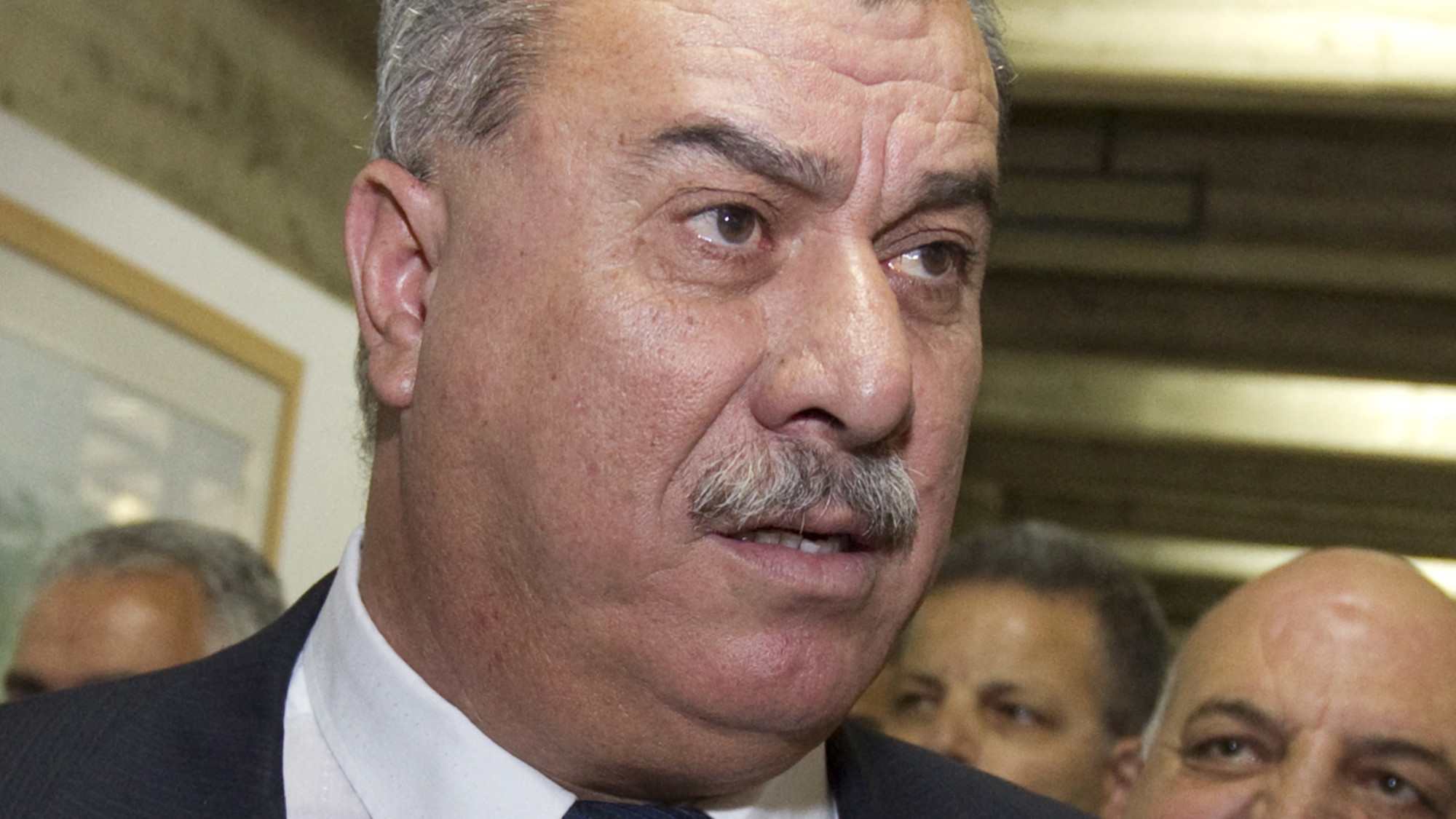
On Tuesday, Israeli police detained and interrogated a long-serving prominent Palestinian community leader, a move that has drawn widespread condemnation as the latest escalation in a sweeping crackdown on political organizing among Palestinian citizens of Israel.
Mohammad Barakeh, who previously led the High Follow-Up Committee for Arab Citizens of Israel — the leading umbrella group representing Palestinian citizens of Israel operating outside of formal parliamentary structures — was taken into custody from his residential home in the northern Israeli town of Shefa-Amr, the committee confirmed. Despite Barakeh’s formal objections, Israeli authorities forced him to attend the interrogation at a police station located in Ariel, an Israeli settlement built on illegally occupied land in the West Bank. The committee has labeled the choice of this interrogation location as a deliberate and calculated provocation.
Barakeh, who represented Palestinian interests as a member of the Israeli Knesset from 1999 to 2015, spent roughly four hours in questioning over a public speech he delivered in Ramallah, the administrative capital of the Palestinian territories, in 2022. As of Tuesday, Israeli authorities had not publicly specified what portion or claim of the speech they are investigating. During processing, Barakeh was fingerprinted and photographed before being released by a court, which attached a series of restrictive bail conditions to his release.
In an official statement following the detention, the High Follow-Up Committee framed the action as an attempt to intimidate the entire Palestinian community within Israel. The organization called the case “another dangerous episode in a series of political persecutions aimed at intimidating our Arab community and deterring it from its political activity and legitimate struggle against occupation, racism and political repression.”
After the interrogation concluded, Barakeh appeared before the Petah Tikva Magistrates’ Court, which issued a set of binding restrictions: a ban on all domestic and international travel through the end of October, an order to surrender his passport, and a 30-day ban on any entry to the occupied West Bank. Israeli law enforcement also seized two of Barakeh’s personal mobile phones, with investigators claiming the devices are required for ongoing case work.
Barakeh’s legal counsel, Khaled Zabarqa, confirmed that his client rejects the legitimacy of the majority of the court-imposed restrictions. Adalah, the leading Israeli rights organization focused on protecting minority rights for Palestinian citizens of Israel, is currently preparing a legal appeal to challenge both the bail conditions and the unlawful seizure of Barakeh’s personal devices. Adalah representatives also noted that Barakeh previously declined to attend interrogation at the Ariel location, and police have yet to provide a clear legal justification for holding the questioning inside the occupied West Bank settlement.
Multiple Palestinian political parties inside Israel have issued formal condemnations of the detention. Hadash, a long-standing Palestinian-led political party, called the interrogation a deliberate “political and security interrogation” that forms part of a broader coordinated campaign targeting Palestinian citizens of Israel and their elected political leadership. The party warned of “a fascist push to tighten the grip on the Arab public in the country and on its representative institutions, foremost among them the High Follow-Up Committee, to silence the national democratic voice opposing occupation, settlement expansion and racism.”
Balad, another prominent Palestinian-led political party in Israel, also joined in condemnation, noting that the detention reflects sustained and ongoing efforts to suppress all forms of legitimate Palestinian political activity within Israel’s borders. In a statement, the party said: “The targeting of Muhammad Barakeh is a targeting of the Arab public and its right to organise, engage in political activity and pursue democratic struggle. These policies will not succeed in silencing our people or deterring them from continuing to defend their national and civil rights in the face of occupation policies, racism, and the escalating incitement from the mouthpieces of the fascist right in Israel.”