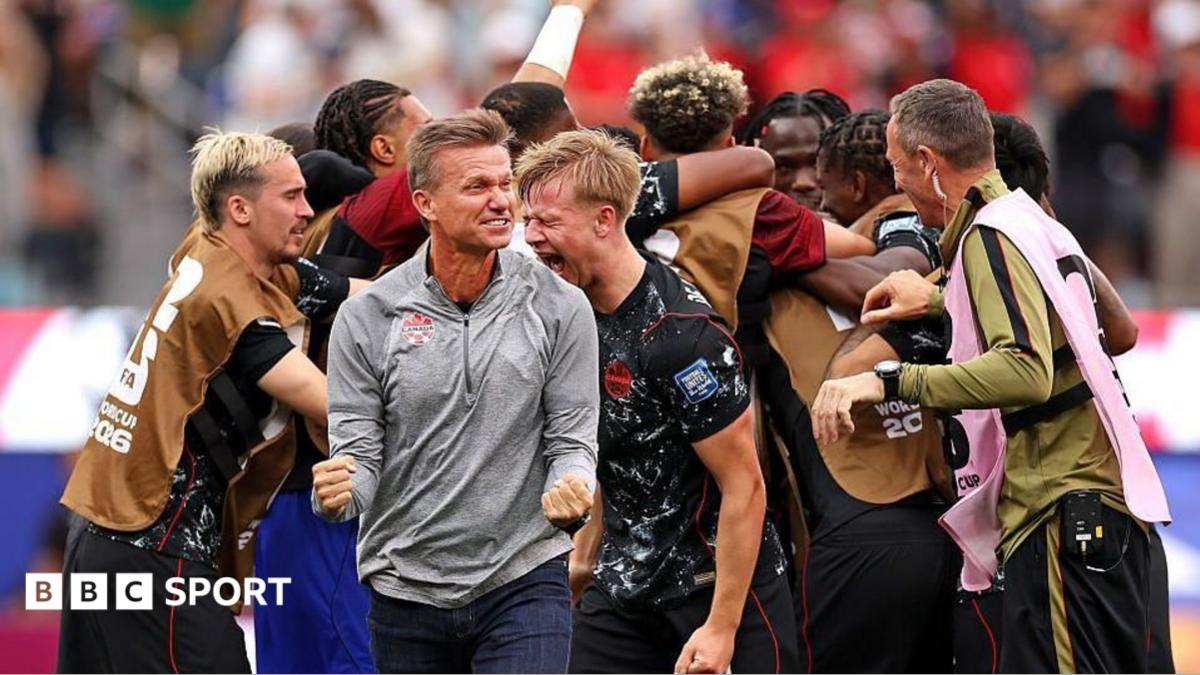
As the final whistle echoed across Los Angeles Stadium on Sunday, a new chapter of Canadian football was officially written. A last-gasp winner from midfielder Stephen Eustaquio secured a 1-0 knockout victory over South Africa, sending the co-host nation through to the Round of 16 at the 2026 FIFA World Cup for the first time in its history. Immediately after the full-time whistle, head coach Jesse Marsch pulled his entire squad and coaching staff into a tight, jubilant huddle, addressing his players as nothing less than “Canadian heroes.” \n\n”The future of the sport in this country is huge because of you,” Marsch told the group, words that carried far more weight than the coach’s famously impassioned rhetoric. For a nation long defined by ice hockey as its national sporting obsession, this breakthrough run has already shifted the cultural conversation around the game. Long referred to as “soccer” in Canadian public life, fans now openly embrace the global term “football” — a small linguistic shift that signals a far larger cultural change. \n\nWhen Marsch took charge of the Canadian national team two years ago, his goal of turning Canada into a recognized football nation sounded like a distant dream. As one of three North American co-hosts for this 2026 tournament, Canada spent much of the pre-World Cup buildup overshadowed: Mexico took the spotlight for the opening match, the United States claimed attention for hosting the final, and Canada was widely dismissed as the forgotten co-host. But the squad and its growing fanbase built momentum steadily, quietly cultivating domestic passion ahead of the tournament. \n\nThat growing enthusiasm has not gone unnoticed by the team’s star captain, Alphonso Davies, a veteran of packed stadiums playing for European giants Bayern Munich in the Champions League. Even Davies was overwhelmed by the shift in domestic support ahead of the tournament. Ahead of Sunday’s knockout clash, he recalled crying after watching thousands of Canadian fans pack viewing events in Toronto, clad in the national red and white, for the team’s opening draw against Bosnia-Herzegovina. \n\n”It was surreal because I’ve never seen so many Canadians at a football match before,” Davies said. “It brought tears to my eyes.” \n\nCanada’s historic run has already defied every pre-tournament expectation. Before this 2026 World Cup, the nation held a winless record across six previous World Cup matches, never picking up so much as a single point or victory. That drought ended in their opening fixture, with a hard-fought draw against Bosnia-Herzegovina that secured Canada’s first ever World Cup point. The team followed that breakthrough with a stunning 6-0 rout of Qatar, the tournament’s defending champions, to lock in their knockout stage spot — the first ever for Canada. \n\nA final group stage defeat to Switzerland forced the knockout match against South Africa to be played on American soil, marking the first time in World Cup history that a host nation has played a knockout match outside its own borders. That did nothing to dampen Canadian support, however: thousands of fans crossed the border to pack the stands, turning Los Angeles into a de facto home ground with chants and cheers that drowned out South Africa’s supporters. \n\nFor most of the 90 minutes, South Africa set out to grind out a result and force the game to penalties, putting Canada under persistent pressure to find a breakthrough. The Canadian side stayed composed, though, and it was Eustaquio who delivered the moment of magic in stoppage time, slotting home the winner to spark wild celebrations. \n\nMarsch later defended his decision to gather the entire squad for a full-time huddle on the pitch, a move some critics dismissed as performative. For Marsch, the moment was about pausing to celebrate the historic milestone together, amid the chaos of post-match media requests that pull players and staff in dozens of directions. \n\n”All I care about is our team and what we do together,” Marsch said. “I wanted to be able to voice to them how important a moment this will prove to be for the sport in the country. It is a shame we couldn’t do it in Vancouver, in front of our fans, but nevertheless I think you saw the character of the team, the quality of the team, the mentality of the team and the togetherness of the team.” \n\nUp next, Canada faces a stiff test in the Round of 16, with a clash against either Morocco — ranked 6th in the world — or the Netherlands, ranked 7th. But fans and players alike agree that regardless of the result of that upcoming match, the landscape of Canadian football has already changed forever. \n\nLong-time fan Harry, who attended matches in the 1990s when Canadian fans were often the minority at even home fixtures, marvelled at the turnout of supporters for the South Africa match. “It is incredible to see how many fans have come down into the USA to watch us, hopefully that energy can help improve us back home,” he said. \n\nFellow supporter Sean added that while large urban centers like Toronto have long held a dedicated soccer following, the hope now is that this World Cup run will expand interest across smaller cities and provinces, where ice hockey has long reigned supreme. \n\nWhile advancing past the Round of 16 will be no easy feat for Canada, the team has already surpassed every expectation placed on it heading into the tournament, making a upset far from unthinkable. Marsch echoed that confident mindset ahead of the next clash, framing the match as a free opportunity to test the team against global giants. \n\n”Given Morocco’s last six years they are a modern giant and given the success of the Dutch team for what feels like centuries that is a traditional giant,” Marsch said. “I feel like it is a free hit and we will go after it and do whatever we can to get a win.”
作者: admin
-
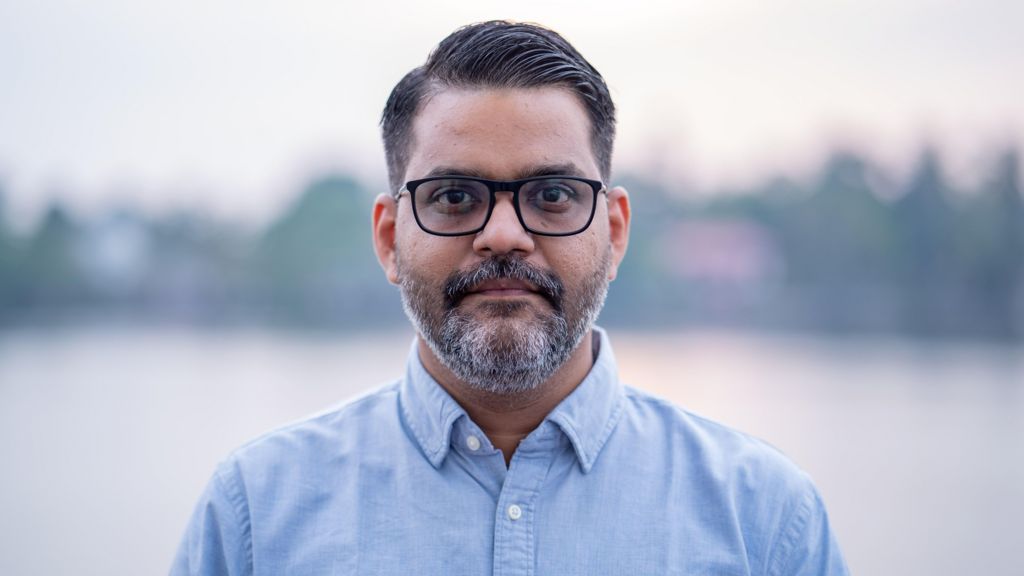
Loved and loathed: The making of India’s viral liver doctor
In the sun-dappled waiting room of Rajagiri Hospital’s hepatology clinic in Kochi, southern India, the air hangs thick with unspoken tension. Here, families grip tattered stacks of medical reports, their hopes pinned on the specialist inside, while patients weakened by end-stage liver disease wait quietly for a path forward. Few who enter this space would guess that the soft-spoken clinician greeting them is the same man who has upended India’s massive traditional medicine industry, sparked federal government inquiries, and become one of the most polarizing public figures in Indian healthcare.
Dr. Cyriac Abby Philips, known to over 300,000 followers on X as the outspoken “Liver Doc”, has built a reputation as a lightning rod for controversy since he began publicly challenging the safety and scientific validity of alternative and traditional Indian medicine. To his loyal supporters, he is a fearless defender of evidence-based care, shining a light on unregulated products that harm vulnerable patients. To his critics — which include thousands of alternative medicine practitioners, high-profile celebrities, and even India’s federal Ayush Ministry, which oversees traditional medicine — he is an abrasive, attention-seeking provocateur who disrespects India’s centuries-old cultural medical heritage.
Over the past six years, the backlash against Philips has been severe: he has faced 16 ongoing legal cases, been interrogated by police who traveled two days by train to question him over a social media post, and been the subject of two formal federal committee meetings convened solely to discuss his public criticism. Yet the man who confronts opponents with blunt, often uncompromising language online presents a far different face in person: calm, gentle, and deeply focused on the patients sitting across from his desk.
This combative online persona, Philips explains, is a deliberate choice, not a reflection of his true character. “They hate me. But they cannot invalidate the information I give,” he says without apology. “Sometimes you must make loud noises to be heard. I specially go after trolls, so they cannot deviate the attention from the message I am trying to give. If people think I’m rude or ill-tempered, even though it isn’t true, I’m willing to pay that price.”
Philips’ journey to this high-stakes public role was not one he ever planned for. Born into a medical family in Kerala — his father is one of the state’s most celebrated gastroenterologists — Philips initially dreamed of a career in writing and film, not medicine. He failed his first medical entrance exam, spent nine miserable months in a cramped residential coaching center, and only entered the field after a second attempt. It was not until his residency at a under-resourced 3,500-bed public hospital in Kolkata that he found his calling: watching overworked, under-resourced clinicians deliver compassionate care to desperate patients, he saw the profound human impact of medicine that he had never recognized before.
After training in hepatology in Delhi and returning to Kerala to help rebuild his family’s medical practice following a corporate takeover, Philips began to encounter a pattern of preventable harm that would shape the rest of his career. Time and again, he treated patients with severe liver damage caused by unregulated herbal remedies and homemade alternative treatments, marketed as safe and natural to millions of trusting Indians. One case that haunts him still: a six-year-old child brought to his clinic with acute liver failure after her family gave her a homemade herbal concoction to treat a common cold and fever.
That tragedy pushed Philips to formalize his research into the harms of unregulated traditional medicine. He immersed himself in the scientific and historical background of Indian alternative systems, published dozens of peer-reviewed studies documenting the link between traditional remedies and liver injury, and began sharing his clinical findings and research on social media to educate the public. When the Ayush Ministry disputed one of his published studies, he responded with a detailed, evidence-based rebuttal and continued his work. He has also led crowdfunded independent investigations into contaminated protein powders and low-quality generic drugs sold across India, and recently published a book documenting his experiences as a clinician.
Today, Philips limits his practice to just 25 patients a day — a fraction of the volume most of his peers see, a choice he made after the emotional toll of constantly caring for terminally ill liver patients and a near-fatal car crash while taking an urgent work call. Four years ago, he gave up drinking entirely, explaining that he could not ask his patients with alcohol-related liver disease to stop drinking if he continued the habit himself. Away from the clinic and social media, he is an avid gamer who prioritizes time with his wife and children, a far cry from his combative online image. His wife Teena, who has been with him since his residency in Kolkata, puts the difference simply: “He’s very patient… He’s not like that on social media. As a person, no.”
The personal and professional cost of Philips’ activism has been steep. He has spent millions of rupees on legal defense, despite some pro bono representation from sympathetic lawyers. A close colleague left India after being detained for questioning over a co-authored paper, and many researchers now refuse to be named on studies he publishes. He has received threats against his family, a burden that brings the fierce advocate to tears when he speaks of it, and he now takes constant safety precautions to protect his loved ones.
Still, Philips refuses to step back. For him, the work of informing the public about the risks of unregulated alternative medicine is worth any personal sacrifice. “Even before I started paying for legal expenses, I was already paying from my own pocket to analyse these medications,” he says. “The whole aspect of somebody being there for the public, letting them know the truth they would never know about — I think this is much more important than looking at your own safety and comfort.” “I want my children to remember me as somebody who stood for what he believed was right,” he adds.
-
From the rubble in Venezuela, an unexpected story of survival cuts through days of tragedy
Four days after a pair of powerful back-to-back earthquakes left northern Venezuela’s coastline in ruins, an international team of rescuers pulled off a devastatingly hoped-for miracle on June 28, 2026: a father and his young son were recovered alive from a collapsed concrete structure, reigniting hope across a region shattered by the worst natural disaster to hit the South American nation in decades.
The 7.2 and 7.5 magnitude quakes that struck on Wednesday carved widespread destruction across swathes of La Guaira state, the hardest-hit area along Venezuela’s northern coast. By Sunday, search efforts had dragged on long past the critical 72-hour window for survivor recovery, and teams had all but abandoned any expectation of finding life under the mountains of rubble that dotted the landscape. The site where the pair was found was little more than an unrecognizable mass of crumbled concrete, indistinguishable from the ruins lining miles of devastated shoreline.
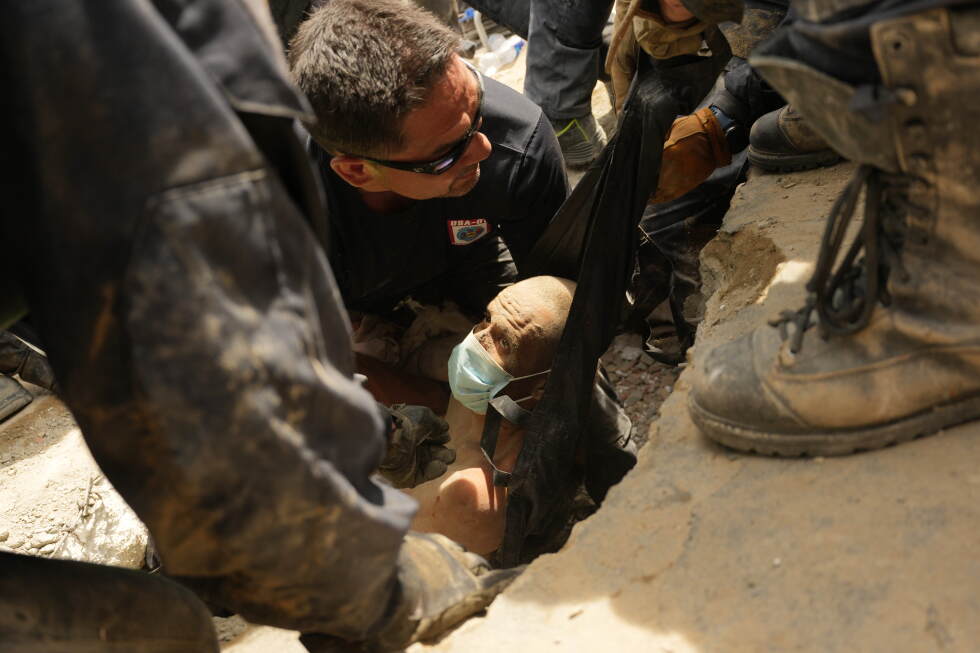
That bleak outlook shifted suddenly when rescuers from Venezuela, the French Civil Security Training and Intervention Regiment (UIISC 7), and the Fairfax County Urban Search & Rescue team from Virginia, the United States spotted faint signs of movement. First, they pulled a dust-caked man, who had been trapped for four full days, from a narrow opening in the rubble. Even after his long entrapment, he was still clinging to his mobile phone; teams loaded him gently onto a black tarp, administered an intravenous drip to rehydrate him, and began moving him toward emergency care. Minutes later, the boy, the man’s young son, was pulled free, shirtless and barely responsive as rescuers passed him carefully over their heads.
“Slow, slow, gentle, gentle,” rescue members chanted in a mix of Spanish and English, as they passed the two survivors through a crowd of onlookers and into a waiting ambulance. When the pair was safely loaded, the assembled team burst into heartfelt applause, a rare moment of joy amid days of grim recovery work.
Associated Press journalists Juan Pablo Arraez and Matías Delacroix, who documented the rescue from the scene, told reporters they had traveled the La Guaira region that morning to watch search efforts, still holding out hope for small miracles. “At this stage many begin to lose hope. You see that in their faces,” Arraez said, as search helicopters circled overhead. “When somebody makes it out alive, this father and son. It’s more than a glimpse, it’s real hope for people.”
Officials confirmed Sunday that the death toll from the earthquakes had reached 1,450, with thousands more injured and dozens still unaccounted for. While the first 48 to 72 hours after a major seismic event are widely considered the most critical for finding living survivors, access to limited water and shelter can allow people to survive far longer. The miracle rescue of the father and son was not the only small bright spot cutting through the overwhelming grief gripping the region: Venezuelan rescue workers also shared a moment of humanity when they poured water into the mouth of a dust-covered dog trapped in concrete cracks, and a woman pulled free after 70 hours of entrapment grinned and waved at cheering crowds as she was loaded into an ambulance.
International rescue teams have deployed to the region to support local search and recovery efforts, with cross-border collaboration turning the tide of hope for communities reeling from the disaster.
-
Conspiracy or chaos? Algeria & Austria defend ‘unexpected’ draw
Forty-four years after the infamous 1982 ‘Disgrace of Gijon’ left Algeria eliminated from the World Cup amid accusations of a pre-arranged result between West Germany and Austria, history looked set to repeat itself for the two nations on the 2026 global stage. When Algeria and Austria entered their final Group J matchup on a June Sunday, a single point apiece from a draw would see both progress to the knockout round, eliminating Iran in the process—an eerie parallel to the 1982 incident that has hung over both teams for decades. What followed was a chaotic, high-drama 96 minutes of football that ended in a 3-3 draw, but the chaotic finish featuring two last-minute injury-time goals has left conspiracy theorists and angry Iranian fans questioning whether the result was carefully scripted.
The match opened at a surprisingly sedate pace, with Austria’s veteran striker Marko Arnautovic notching the first shot on target to open the scoring in the 28th minute. Just before halftime, Rafik Belghali equalized for Algeria with a powerful finish, setting the stage for a frantic second half. Marcel Sabitzer restored Austria’s lead in the 55th minute, only for Algeria captain Riyad Mahrez to level the score again just five minutes later. For a stretch after the match went to 2-2, circulated clips appeared to show both sides easing off the pace rather than pushing for a decisive winning goal, feeding early speculation of a quiet arrangement.
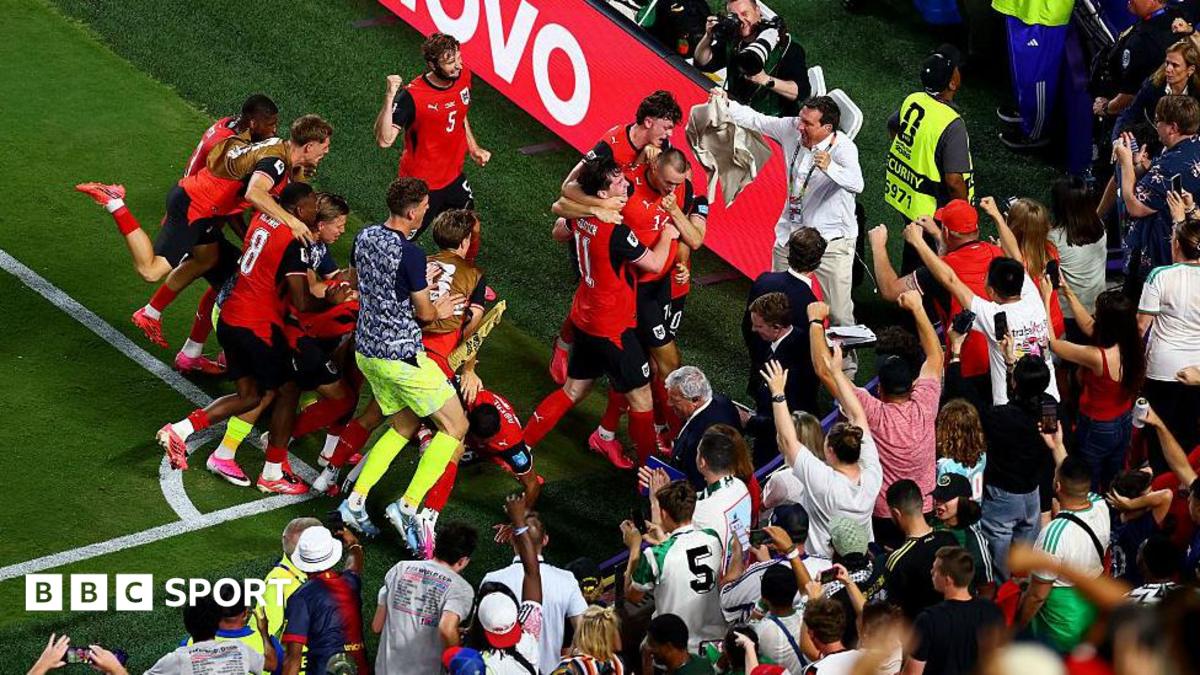
In the third minute of stoppage time, Mahrez slid home what appeared to be a match-winning goal for Algeria. The result would have sent Iran through to the knockout stage at Austria’s expense, upsetting the projected outcome that saw both Algeria and Austria progress. With just seconds left on the clock in the sixth minute of stoppage time, Austrian striker Sasa Kalajdzic powered a header into the back of the net, locking the score at 3-3 and securing progress for both teams.
Circulated social media clips have added fuel to conspiracy claims: one clip shows an apparent confrontation between the two teams’ benches after Mahrez’s go-ahead goal, with some observers claiming it stemmed from frustration that the pre-planned draw had been disrupted. Another shows Algerian defender Aissa Mandi leaning toward Mahrez, speaking while covering his mouth, with one fan claiming Mandi warned Mahrez that a win would pit Algeria against Spain in the Round of 32 rather than the more favorable matchup against Switzerland.
Iranian fans have been among the loudest critics, taking to social media to call on FIFA to launch a formal investigation, claiming the result was rigged against their national side. Football fans around the world have also echoed the accusations, with some describing the match as a second ‘Disgrace of Gijon’ and calling it the most obviously scripted game in recent World Cup history. Some accusers claimed Austrian players eased off attacking pressure for large stretches of the match before forcing the late equalizer when the pre-planned result was at risk.
Both national team managers have forcefully rejected all claims of a pre-arranged result, describing the dramatic finish as a natural example of football’s unpredictable nature. Austrian head coach Ralf Rangnick argued that the chaotic final 90 seconds of the match, played in Kansas City, clearly disproved any conspiracy theories. “In this match, when you have a 3-3, nobody can assume that it was an agreement, especially after what we saw during the last 90 seconds,” Rangnick said. “If, with three minutes to play, somebody had said this would happen, you would have told them they were mad. I’ve been a coach for about 40 years and I don’t even remember a match that had such a dramatic course and such an unexpected trajectory. Most people anticipated a 0-0 or 1-1, and now it’s 3-3. It’s incredible—the dressing room is madness. If Alfred Hitchcock had written such a drama, I probably would have said he was completely mad.”
Algeria manager Vladimir Petkovic also dismissed all talk of a fixed arrangement, noting that the high-scoring, unpredictable result spoke for itself. “I’m extremely happy that, at the end, it was football that won, that prevailed—3-3 as a score says it all,” he said.
Now, both sides advance to the knockout round of the 2026 World Cup. Austria is set to face Spain in Los Angeles on July 2, while Algeria will take on Switzerland in Vancouver early on July 3.
-
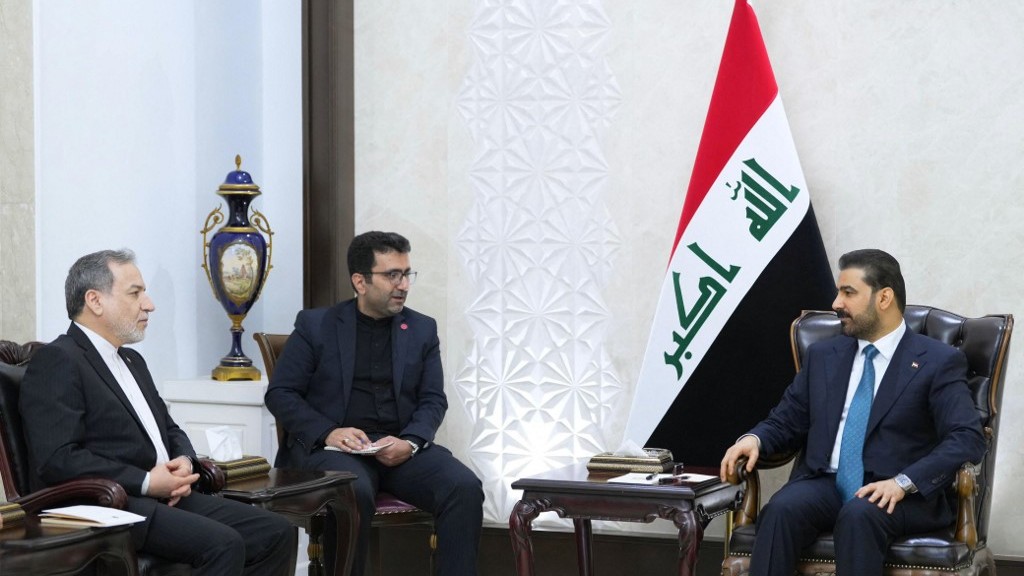
Iraq arrests 47 officials in anti-corruption crackdown
In a landmark first major crackdown on deep-rooted graft, Iraqi security forces have detained 47 current and former officials – including sitting lawmakers and senior oil ministry leaders – in a nationwide overnight anti-corruption operation spearheaded by newly appointed Prime Minister Ali al-Zaidi, Iraq’s official state news agency INA confirmed Sunday.
Senior Iraqi officials confirmed to INA that all suspects are being held on formal corruption charges, following months of coordinated, rigorous monitoring by the country’s Commission of Integrity. The operation stretched across multiple Iraqi provinces, with the most high-profile raids carried out in central Baghdad. Security teams also executed search and arrest warrants in Baghdad’s heavily fortified Green Zone, the secure diplomatic and government compound that hosts Iraq’s national ministries, foreign embassies and luxury commercial hotels, according to regional broadcaster Rudaw.
Beyond current public servants, the sweep also targeted former government officials, sitting members of parliament and private sector business leaders allegedly tied to corrupt public contracting and graft schemes, the Commission of Integrity confirmed in a statement released after the operation.
Zaidi, a private sector entrepreneur with limited prior formal political experience, was tapped by Iraq’s majority Coordination Framework to form a new national governing administration back in April. From the launch of his premiership, cracking down on systemic corruption has been framed as his administration’s top domestic priority. Systemic graft has plagued Iraqi public institutions for decades, with every successive Iraqi prime minister since the 2003 political transition vowing to eliminate the practice, though none have succeeded in enacting meaningful, lasting reform.
Global anti-corruption watchdog Transparency International consistently ranks Iraq among the world’s most corrupt nations. On the organization’s most recent Corruption Perceptions Index, Iraq placed 136th out of 180 evaluated countries, reflecting deep, pervasive institutional graft that has drained public resources, eroded public trust in government and stunted the country’s economic development despite its vast oil reserves.
-
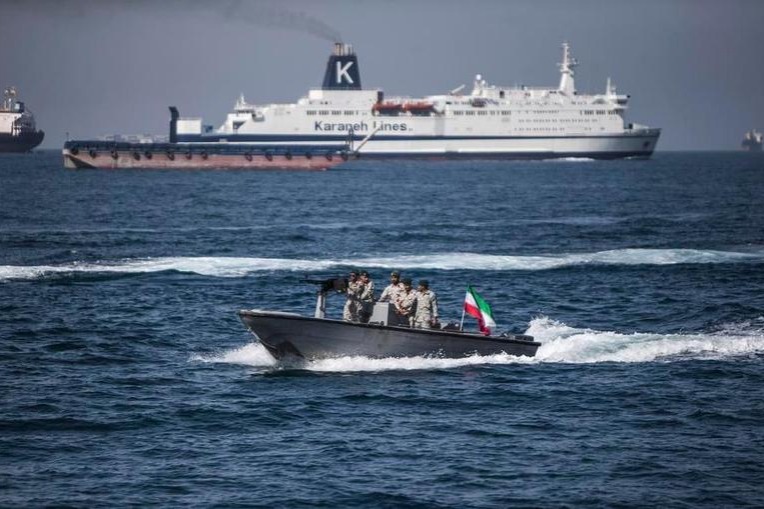
Iran’s IRGC claims strikes on US targets in Kuwait, Bahrain in retaliation
Fresh tensions have erupted across the Persian Gulf region after Iran’s Islamic Revolution Guard Corps (IRGC) launched coordinated retaliatory strikes targeting US military facilities in Kuwait and Bahrain on Sunday morning, shattering a fragile ceasefire reached between Washington and Tehran just over a week prior.
In an official statement carried by its affiliated media outlet Sepah News, the IRGC confirmed that its naval and aerospace divisions jointly launched the attack, deploying a combination of ballistic missiles and drones against eight key US infrastructure sites. These targets included the Ali Al Salem Air Base in Kuwait and positions belonging to the US Fifth Fleet based in Bahrain. The strike, the IRGC emphasized, came in direct response to earlier US airstrikes that hit five Iranian coastal outposts on the same morning.
The IRGC noted that the US carried out its initial strikes under the false pretense of responding to the IRGC Navy’s enforcement action against a vessel that violated Iranian maritime rules. The statement issued a stark warning going forward: any ships attempting unauthorized passage through the strategically critical Strait of Hormuz will face far more forceful responses than in the past, and any act of aggression carried out under any pretext will be met with a crushing counterattack.
Crucially, the IRGC pointed out that the US’s earlier strikes constituted a clear violation of the recent peace memorandum of understanding (MoU) signed by Iran and the United States to end cross-regional hostilities. Any further breaches, the statement added, will result in the full termination of all ongoing diplomatic negotiations between the two countries. Per the terms of the existing MoU, Iran holds formal responsibility for managing all maritime traffic transiting the Strait of Hormuz, a chokepoint through which roughly 20% of the world’s global oil supply passes daily.
Sunday’s strikes drew immediate condemnation from Kuwait, whose foreign ministry decried the attack as a repeated violation of the country’s sovereign territory that undermines regional efforts to de-escalate long-running tensions. In a public statement posted to the social platform X, the ministry called the incident a “flagrant violation” of Kuwaiti sovereignty, adding that it poses a direct threat to the country’s security, stability, and the safety of all citizens and residents living within its borders.
Bahrain also reported tangible damage from the attack: the country’s interior ministry confirmed that a residential building in Muharraq Governorate suffered structural damage, though no casualties were recorded in the incident. Authorities have already launched on-site response and inspection measures, the ministry added in its own X post.
Local Iranian media also reported multiple explosions across southern Iran’s Hormozgan province and Qeshm Island early Sunday, matching reports of follow-up US strikes. US Central Command (CENTCOM) confirmed in a Sunday X post that it had carried out “additional strikes against multiple targets in Iran”, framing the action as a response to an earlier IRGC drone attack targeting a Panama-flagged commercial tanker transiting near the Strait of Hormuz.
CENTCOM clarified that its latest strikes were a direct response to “continued Iranian aggression against commercial shipping”, adding that US military aircraft specifically targeted Iranian military surveillance infrastructure, communication networks, air defense positions, drone storage sites, and naval minelaying capabilities.
The exchange of fire is the second major escalation in as many days. On Saturday, CENTCOM launched airstrikes along Iran’s southern coast, to which the IRGC responded with its own retaliatory strike against US military positions across West Asia.
The current upsurge in violence comes just 10 days after Iran and the United States signed the initial peace MoU to end cross-regional hostilities, including an end to clashes in Lebanon. Both parties have been engaged in ongoing diplomatic negotiations to work toward a binding final peace agreement ahead of Sunday’s escalation.
-
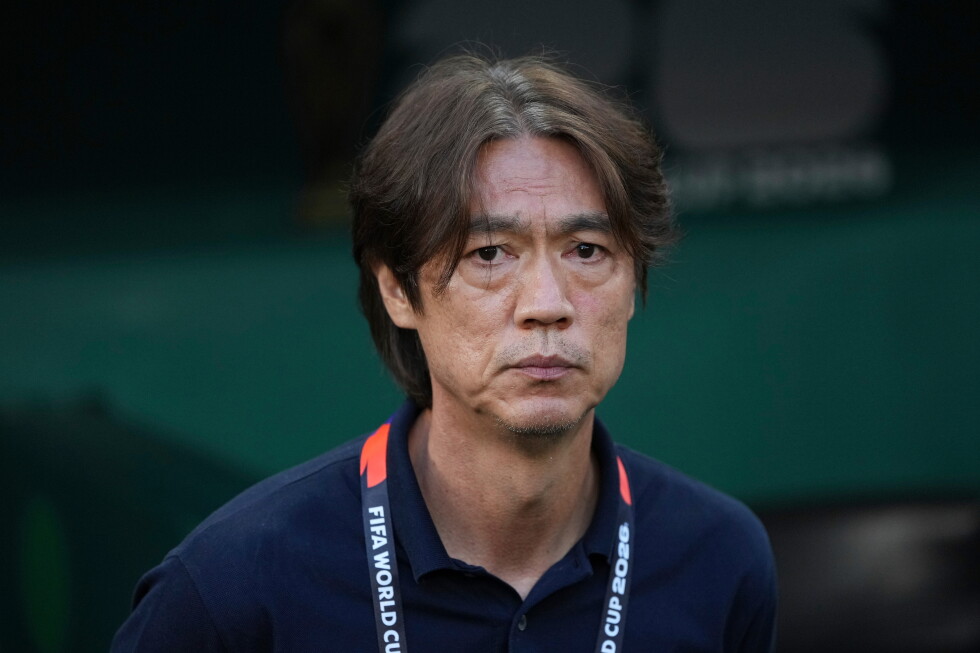
South Korea leaves World Cup in turmoil as early exit prompts fierce criticism from president
South Korea’s 2024 expanded World Cup campaign has ended in early turmoil, with the national side crashing out of the group stage, triggering fierce public and political backlash that culminated in head coach Hong Myung-bo’s resignation. The Korean side got off to a promising start, securing a victory over Czech Republic in their opening Group A fixture. But successive losses to South Africa and Mexico derailed their hopes of progressing, leaving their fate dependent on other results going their way. That last glimmer of hope was extinguished on Saturday when Congo claimed a 3-1 win over Uzbekistan, eliminating South Korea from contention for one of the expanded tournament’s third-place knockout spots.
For a nation with such a storied World Cup pedigree, the early exit has come as a profound shock. South Korea has qualified for 11 consecutive World Cup tournaments, and reached the historic semi-final when it co-hosted the competition back in 2002. This marks the second time Hong, 57, has overseen a group-stage exit for South Korea — he also led the team at the 2014 Brazil World Cup, where they failed to advance past the opening round.
The fallout has drawn direct criticism from South Korea’s President Lee Jae Myung, who did not hold back in his scathing assessment of the national team’s failure in a detailed public statement. A self-identified long-time football fan and honorary former chairman of a professional club, and a supporter of the Korean national supporters’ group the Red Devils, Lee said he felt far more than simple surprise at the underperformance. “I feel not just surprise but deep bewilderment at this unexpected result,” he stated, targeting the broader structural flaws in the national team’s governance, oversight, and the initial decision to appoint Hong to the role.
“Once again, it has been proven that personnel decisions determine everything. If loyalty and factionalism are valued over competence and an incapable person is appointed as a leader, the outcome is as predictable as fire,” Lee added, leveling sharp accusations that inappropriate selection criteria led directly to the team’s failure. The president called on South Korea’s Ministry of Culture, Sports and Tourism to launch a full review of the national team program and address the systemic failures that led to the early exit. He also issued a public apology to Korean football fans for the widespread disappointment caused by the result. “I sincerely apologize to the public for the deep disappointment caused by this absurd situation. We will move swiftly to reform sports administration to ensure this does not happen again,” he said.
-
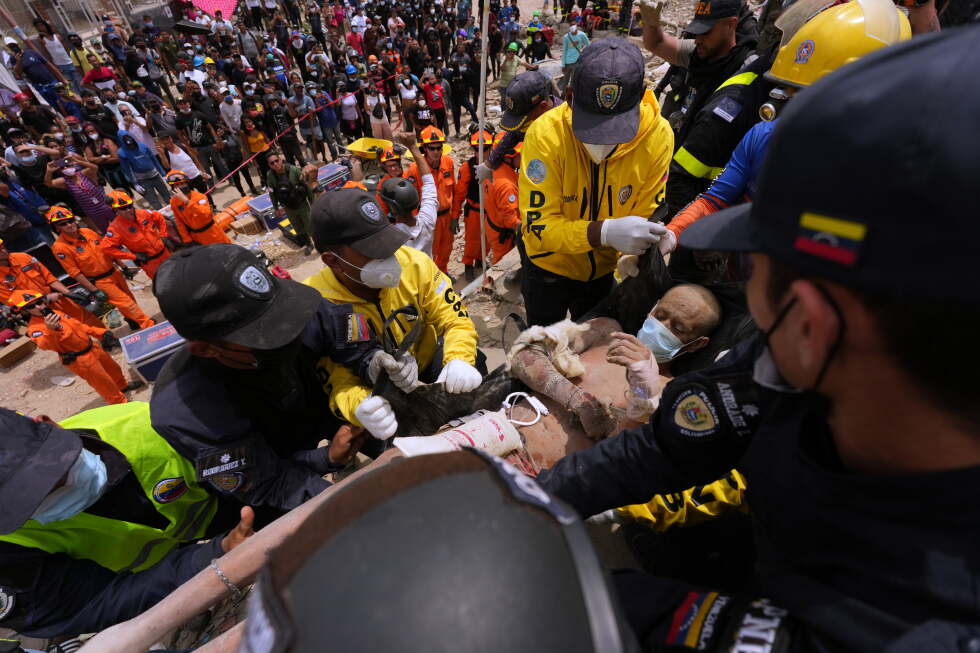
Teams scramble to locate survivors four days after Venezuela earthquakes
Four days after two powerful shallow earthquakes rocked Venezuela’s northern coastal state of La Guaira, local civilian volunteers and international rescue teams are locked in a desperate race against time to pull any remaining survivors from crumpled building rubble, even as the window for life-saving extraction narrows and public anger grows over the government’s slow, inadequate response.
As of Saturday, the Venezuelan government had confirmed more than 1,400 deaths from the disaster, but crowdsourced digital databases maintained by families searching for missing loved ones indicate thousands more remain unaccounted for. Acting President Delcy Rodriguez announced Saturday that 33 survivors had been pulled from debris on Friday, but declined to release an updated casualty count when she spoke publicly again Sunday.
The disaster has emerged as one of the first major tests for Rodriguez, who took office in January following the U.S. capture and removal of former President Nicolás Maduro. For more than a decade, Venezuela has grappled with crippling economic instability, and large swathes of the public already reject the legitimacy of the political movement Rodriguez leads. That public distrust has boiled over in the aftermath of the quakes, with many residents in affected areas saying they have seen almost no presence from government emergency services even as civilian-led search efforts have outpaced official action.
On Sunday morning, a U.S. rescue team deployed from Virginia pulled an adult man and his son alive from collapsed ruins. A crowd gathered to watch as the dust-covered survivors, given IV hydration, were carefully carried on a black tarp to a waiting ambulance. Moments like this have provided rare glimmers of hope for grieving families who have spent days searching for any sign of missing relatives. But for most, the reality is grim: aid groups universally mark the first 48 to 72 hours after a natural disaster as the critical window for rescuing people alive, a window that closed late Saturday. While survival can be extended for those with access to food and water, temperatures in La Guaira have been punishing, and the stench of decomposing bodies already hangs over devastated coastal communities.
Rodríguez stated Saturday on state television that more than 14,000 military and police personnel have been deployed to patrol La Guaira, where entry is now restricted to those with special government permits. But on the ground, accounts contradict that official claim. Civilians have been forced to conduct searches without proper safety gear, many wearing only motorcycle helmets in place of required hard hats. Frustration boiled over recently when a group of residents blocked a state-owned excavator from leaving a collapse site and pulled the operator out of the cabin, after government workers took selfies in front of the flattened structures and left without assisting in the search.
In parts of the state where bodies have been recovered, workers load stacks of remains—some wrapped in white body bags, others unclothed—onto white trucks from an improvised staging area in the dirt parking lot of a local hospital, where identification efforts are ongoing. Family members like Yonahí Regalado have spent day and night climbing over broken concrete, calling out the names of missing relatives: Regalado has been searching for her sister, 1-year-old nephew and godson since 1 a.m. the day after the quakes, only stopping when international search teams arrived to take over systematic searches. “It doesn’t matter who it is, whoever, whether it’s family or somebody else. If there is anyone alive, let’s get them out,” she told reporters, as rescue helicopters circled overhead.
Experts note the scale of destruction was amplified by two key factors: the quakes were shallow, and they struck in quick succession. In the days since the initial tremors, dozens of aftershocks have continued to rattle Caracas and La Guaira, including a 4.8-magnitude tremor recorded Saturday, forcing rescuers to pause operations repeatedly for safety.
By Saturday, the United Nations confirmed that more than 2,200 rescue workers from nations across the globe had arrived in Venezuela to assist with search and recovery efforts, with additional teams still en route. Mexican military rescuers were among the first foreign groups on the ground, climbing over pancaked concrete and shouting into voids for any signs of life: “We’re rescuers from the Mexican military, if there’s anyone down there still alive, make noise or scream. Now!” one rescuer called Saturday. Small acts of humanity play out alongside the grief: one widely shared video captured a Venezuelan rescuer calming an elderly woman trapped beneath rubble, who feared shifting her body would cause the remaining structure to collapse. “The roof won’t cave in. If it falls, I’ll be here with you,” the rescuer told her.
U.S. officials have outlined the scope of American assistance: Jeremy Lewin, a senior State Department official leading foreign disaster response efforts, told reporters that Simón Bolívar International Airport, the main air hub serving Caracas that was heavily damaged in the quakes, now has one operational runway, with U.S. crews working to fully repair the critical infrastructure. A U.S. Navy transport ship is also docked off the Venezuelan coast, ready to receive airlifted survivors requiring urgent advanced medical care. “This is a race against the clock,” Lewin said of the ongoing operation.
Messages of solidarity have poured in from world leaders and global figures, with Pope Leo offering public prayers for the victims. “I pray for the eternal rest of the deceased,” he said. “Likewise, I express my gratitude and encouragement to all those who are generously working in the search and rescue efforts.”
The International Organization for Migration estimates more than 6 million people across Venezuela have been affected by the disaster, with roughly 2 million of those living in the capital, Caracas.
-
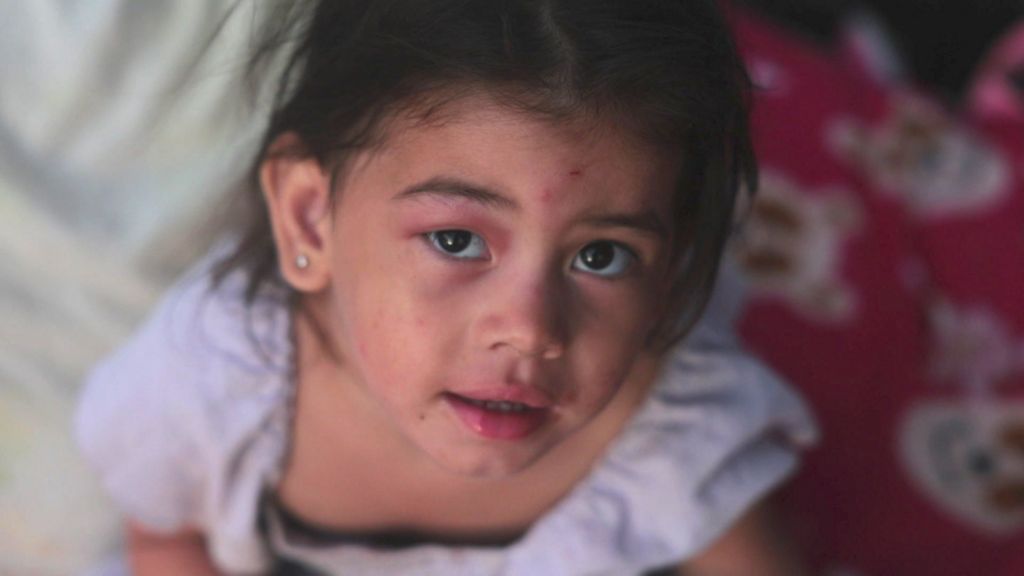
Watch: Inside the Venezuela country club now a makeshift hospital
In the wake of catastrophic earthquakes that ripped through Venezuela, leaving a trail of destruction and displaced communities, an unlikely space has been repurposed to serve the urgent needs of injured survivors: a local country club. What was once a recreational gathering spot for leisure and social events has been quickly reimagined as a provisional medical facility, where rescue teams and healthcare workers are tending to those affected by the natural disaster.
The conversion of the country club underscores the desperate shortage of formal healthcare infrastructure in the disaster-hit region, as widespread damage from the seismic events left many permanent hospitals damaged, destroyed, or overwhelmed by a surge of patients. First responders and volunteer medical crews worked around the clock to clear event spaces and lounges, convert open courtyards into patient wards, and set up temporary medical equipment to deliver critical care to survivors.
Witness footage from the site captures the stark contrast between the facility’s original purpose and its new life as a lifeline for vulnerable communities. Survivors with a range of injuries, from minor fractures to critical trauma, are receiving treatment in the converted spaces, while aid organizations coordinate to bring in additional supplies, medication, and medical personnel to support the ongoing response effort. This ad-hoc adaptation has become a critical lifeline at a moment when Venezuela’s disaster response system is stretched to its limit, highlighting how communities are leveraging any available space to meet the most urgent needs of those affected.
-
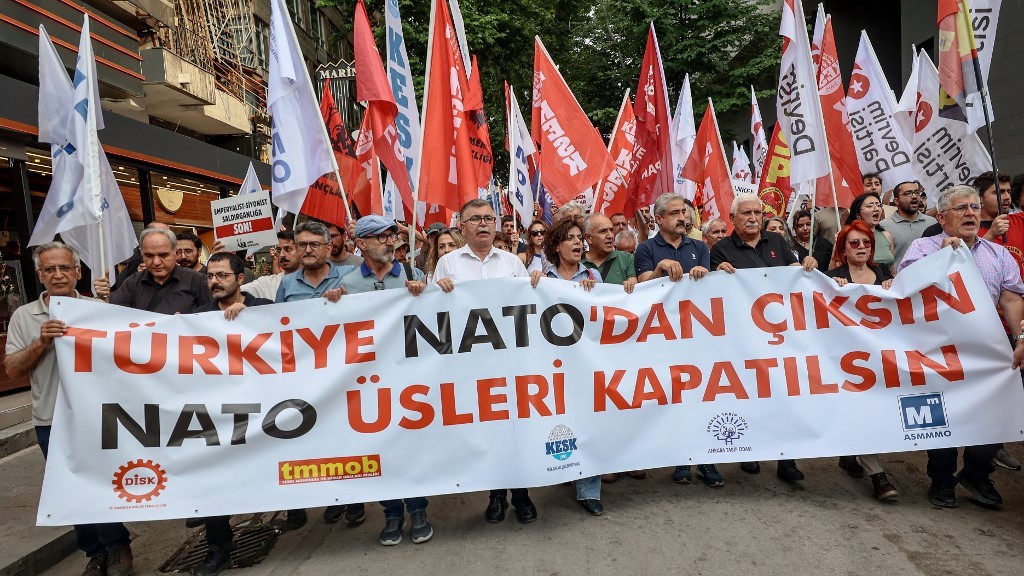
Rights groups criticise Turkey protest ban ahead of Nato summit
As the 32-nation NATO alliance prepares to convene its upcoming summit in Ankara this July 7–8, sweeping pre-event security measures implemented by Turkish authorities have drawn fierce international condemnation from human rights and press freedom advocates.
Last week, the Ankara Governorate unveiled a 13-day province-wide prohibition on all public gatherings, set to begin Sunday. Officials justified the broad restriction by citing the need for enhanced national security and protective measures surrounding the high-stakes leadership conference. The ban has been accompanied by a large-scale law enforcement crackdown that has resulted in the detention of hundreds of people across Turkey.
Turkish authorities confirm that 225 individuals have been taken into custody, with the government identifying many detainees as alleged affiliates of two groups: the leftist Revolutionary People’s Liberation Party/Front (DHKP/C) and the Islamic State. However, the detainee pool also includes a number of prominent Turkish civil society figures unaffiliated with any militant organization. Among those held are academic Emel Memis, LGBTQ rights activist and journalist Yildiz Tar, Nevzat Ozer, a representative from leading environmental NGO the Tema Foundation, Burcu Arikan, spokesperson for the independent labor union Umut-Sen, and Semra Demir and Kursat Bafra, two attorneys with the Progressive Lawyers Association. State-run Anadolu Agency confirmed that 178 of the detained suspects have been formally arrested, while the remaining 34 have been released conditional to judicial supervision.
Global human rights watchdog Amnesty International has issued a scathing rebuke of the measures, framing the protest ban and mass arrests as an unjustifiable assault on foundational rights to peaceful assembly and free expression. “All the excessively broad and disproportionate restrictions that prevent the exercise of the right to peaceful assembly must be lifted,” stated Esther Major, Amnesty International’s deputy research director for Europe. Major also called out a separate, parallel restriction on press freedom: NATO’s decision to deny press accreditation to dozens of Turkish journalists, including reporters from leading independent Turkish outlets such as Cumhuriyet, Sozcu, Anka, T24 and Medyascope. Major described the accreditation denial as a direct blow to media freedom, urging the alliance to reverse its decision and allow excluded journalists to cover the summit.
The upcoming summit marks a landmark gathering for the alliance, bringing together heads of state from all 32 member states, including U.S. President Donald Trump. Turkey has held NATO membership since 1952, and currently boasts the alliance’s second-largest standing land army. For decades, the country’s NATO membership has faced criticism from Turkish leftist groups and some Islamist factions, who argue the alliance has locked Turkey into U.S. geopolitical dominance and suppressed domestic socialist and anti-imperialist movements. Public anger over the summit has intensified in recent months, fueled by widespread opposition to U.S. support for Israel’s military campaign in Gaza and recent U.S. strikes on Iran, leaving the Turkish government eager to prevent large-scale public demonstrations during the leaders’ meeting.
Following the accreditation denial, a coalition of global and Turkish press freedom organizations released a joint statement last Friday condemning NATO’s decision. The statement highlighted a striking contradiction at the heart of the rejection: NATO’s own accreditation criteria list editorial independence as a core eligibility requirement, making it deeply inconsistent that the alliance would reject applications from outlets that are explicitly defined by that standard of independence. “Should a governmental institution with a documented track record of restricting press access have played any role in this process, NATO risks allowing domestic media pressures to influence what should be an independent credentialing framework,” the joint statement added.
Outlets that do not meet accreditation requirements in the upcoming NATO Summit. Middle East Eye, which first reported on the unfolding controversy, reached out to NATO press officials for comment on the accusations, but received no response by the time of this publication.
This report has been prepared for independent news dissemination from the original reporting by Middle East Eye, which provides unrivaled independent coverage and analysis of the Middle East, North Africa and broader global affairs.