作者: admin

  • Hungary’s PM-elect Magyar offers to meet Ukraine’s Zelensky in June

    Hungary’s PM-elect Magyar offers to meet Ukraine’s Zelensky in June

    Fresh off his landmark election victory that ousted 16-year incumbent nationalist leader Viktor Orbán, Hungary’s incoming prime minister Peter Magyar has extended an formal proposal to meet Ukrainian President Volodymyr Zelenskyy in early June, in a bid to reset fractious bilateral ties between the two neighboring nations. In a public Facebook announcement made following a meeting with the mayor of the Ukrainian city of Berehove in Budapest, Magyar outlined his plan to host the talks in Berehove, a western Ukrainian city where ethnic Hungarians make up the majority of the population.

    Tensions between Hungary and Ukraine have simmered for more than a decade, hitting a new low in the months leading up to Hungary’s April 12 general election. At the core of the long-running dispute are questions over the rights of the sizeable ethnic Hungarian community based in Ukraine’s western Transcarpathia region, an area that was part of the Kingdom of Hungary until the conclusion of World War I.

    The diplomatic rift first emerged in 2017, when Kyiv passed legislation requiring Ukrainian to be the primary language of instruction in secondary education. Hungarian officials have argued for years that this policy disenfranchises the estimated tens of thousands of ethnic Hungarians who call Transcarpathia home. During Orbán’s final term in office, tensions escalated dramatically: the former nationalist prime minister repeatedly leveraged Hungary’s European Union veto power to block Brussels’ planned financial aid packages for Kyiv and new sanctions against Russia over its full-scale invasion of Ukraine.

    Magyar framed the proposed meeting as an opportunity to address both the long-standing ethnic rights dispute and launch a new era of cooperation between the two countries. “The purpose of the meeting is to help improve the situation of Hungarians in Transcarpathia and enable them to remain in their homeland,” he wrote. Magyar called on Ukraine to roll back the restrictive language rules that have been in place for more than 10 years, saying that the ethnic Hungarian community in Transcarpathia deserves full restoration of their cultural, linguistic, administrative, and higher education rights to guarantee their status as equal and respected citizens of Ukraine.

    “If we can resolve these issues, we can certainly open a new chapter in Ukrainian-Hungarian bilateral relations,” Magyar added. The proposed meeting, if it goes forward, would mark a major shift in Hungary’s approach to Ukraine after 16 years of Orbán’s Euroskeptic, Russia-friendly leadership that repeatedly frustrated Western efforts to present a unified front against Moscow’s invasion.

  • Iraq: Businessman Ali al-Zaidi nominated to become new prime minister

    Iraq: Businessman Ali al-Zaidi nominated to become new prime minister

    Five months after Iraq held its national parliamentary elections, the largest legislative bloc, the Shia-led Coordination Framework, has tapped Ali al-Zaidi, a little-known low-profile businessman with no prior elected office experience, to step into the role of prime minister-designate and lead efforts to form a new national government. Following the bloc’s formal selection, Iraq’s presidential office issued an official statement confirming that President Nizar Amede had officially assigned Zaidi the mandate to assemble a new cabinet, giving him a 30-day window to complete the negotiations and finalize his government.

    A native of southern Iraq’s Dhi Qar province, Zaidi brings a deep private sector background to the political role. Until 2019, he served as chairman of Al-Janoob Islamic Bank, one of Iraq’s largest private financial institutions; he currently leads Al-Watania Holding Group, a sprawling multinational conglomerate with diverse business interests across the region. Notably, in 2024, the United States imposed sanctions on Al-Janoob Islamic Bank over allegations of money laundering, financial fraud, and unauthorized use of U.S. currency, and Iraq’s own Central Bank subsequently moved to ban the institution’s operations.

    Zaidi’s nomination marks an unexpected outcome that sidelines two high-profile Shia political figures who were widely tipped as the Coordination Framework’s leading candidates: incumbent Prime Minister Mohammed Shia al-Sudani and former Prime Minister Nouri al-Maliki. In a public statement, the coalition praised both Sudani and Maliki for what it called their “historic and responsible stance” in stepping aside to clear the way for Zaidi’s selection.

    Maliki’s withdrawal from contention came against clear external pressure: in January, former U.S. President Donald Trump threatened that Washington would “no longer help” Iraq if Maliki secured the nomination. Once counted as a close U.S. ally, Maliki has shifted sharply toward alignment with Iran in recent years, and has faced longstanding criticism over his tenure, including accusations of stoking deadly sectarian tensions across Iraq and presiding over systemic government corruption that contributed to the collapse of the Iraqi military and the loss of large swathes of Iraqi territory to the Islamic State group in 2014.

    The nomination process unfolds against a backdrop of heightened regional tensions that have repeatedly threatened to drag Iraq into open conflict. In recent weeks, a fragile ceasefire has held between the United States and Iran, with intermittent diplomatic talks underway to de-escalate a two-month cross-regional conflict that began amid the Israel-Gaza war. Since the outbreak of hostilities in Gaza in 2023, Iran-aligned armed groups operating in Iraq have launched frequent sporadic attacks on U.S., Israeli, and Gulf state interests within Iraqi territory. The United States has long demanded that these armed groups be disarmed, while Iraqi political factions aligned with Iran have pushed for the full withdrawal of all remaining U.S. military forces from Iraqi territory.

    International reaction to Zaidi’s nomination has been measured so far. The United Kingdom’s ambassador to Iraq, Irfan Siddiq, issued a public post on X welcoming the development. “The United Kingdom welcomes the nomination of a new Prime Minister in Iraq,” Siddiq wrote. “We wish Mr. Ali al-Zaydi success in swiftly forming a new government and look forward to working with the new government on the urgent challenges facing Iraq – particularly on security and the economy.”

  • Netanyahu helped ‘create a genocide in Gaza’, top Biden official says

    Netanyahu helped ‘create a genocide in Gaza’, top Biden official says

    In a bombshell revelation that adds to mounting internal U.S. criticism of American policy toward the Israel-Gaza conflict, a top-ranking former Biden administration State Department leader has publicly stated that Israeli Prime Minister Benjamin Netanyahu bears responsibility for creating what she describes as a genocide in the Gaza Strip.

    Wendy Sherman, who served as U.S. Deputy Secretary of State from 2021 through 2023, made the remarks during a recent interview with Bloomberg’s *The Mishal Husain Show*, published Friday. While she clarified that she is not in a position to issue a formal legal ruling on whether the crime of genocide has been committed in the blockaded Palestinian enclave, she left no room for ambiguity about the scale of human and physical destruction there, stating: “there was no doubt that Gaza was demolished.”

    Sherman, a veteran diplomat who has held senior roles across multiple U.S. presidential administrations, reaffirmed her longstanding commitment to the U.S.-Israel alliance and support for the right of a Jewish state to exist. But she drew a clear line between that backing and her condemnation of the current Israeli campaign, arguing that “Netanyahu ‘led us down a road – and we have been part of it – that has, in essence, created a genocide in Gaza that has destabilised the Middle East.’”

    Her comments align with findings from the United Nations’ top investigative body focused on the Israeli-Palestinian conflict, which ruled in September that Israel has committed the crime of genocide in Gaza.

    The ongoing conflict erupted after the October 2023 Hamas-led attack on southern Israel that killed more than 1,100 Israelis. Since that date, Israeli military operations in Gaza have killed at least 72,500 Palestinians, with thousands more still missing and presumed dead under the rubble of destroyed buildings. Over the course of the campaign, Israeli forces have reduced roughly 80 percent of Gaza’s civilian infrastructure – including residential homes, hospitals, and schools – to ruins.

    In her interview, Sherman balanced her remarks by affirming the rights of both peoples to peace and security. “Palestinians deserve a home, dignity and peace,” she said, adding that “Israel also has the right to achieve security and peace.” A self-described strong supporter of Israel, Sherman emphasized that her criticism does not extend to the Jewish state’s right to exist, but rather to the wholesale destruction unfolding in Gaza. “I am not a supporter of destroying any civilization, or any people – that goes for the Palestinians or the Iranian people, as much as I might find the regime odious,” she added.

    Sherman is far from alone among former senior U.S. officials in condemning Washington’s role in the conflict. Back in July 2024, a group of 12 former U.S. government officials who resigned in protest over U.S. support for Israel publicly accused the Biden administration of “undeniable complicity” in the deaths of Palestinian civilians in Gaza. The group, which included former staffers from the State Department, Education Department, Interior Department, White House, and U.S. military, said in a joint statement that the administration was violating U.S. law by continuing to ship weapons to Israel, exploiting loopholes to bypass oversight.

    “America’s diplomatic cover for, and continuous flow of arms to, Israel has ensured our undeniable complicity in the killings and forced starvation of a besieged Palestinian population in Gaza,” the former officials wrote.

    Similar conclusions have been drawn by sitting U.S. lawmakers. In September, Democratic Senators Chris Van Hollen and Jeff Merkley released a bipartisan report concluding that the United States is complicit in Israel’s “ethnic cleansing” of Palestinians, and found that Netanyahu’s longstanding policies in the occupied West Bank amount to “slow motion” ethnic cleansing.

  • Trump hails British as ‘friends’ as king visits amid Iran tensions

    Trump hails British as ‘friends’ as king visits amid Iran tensions

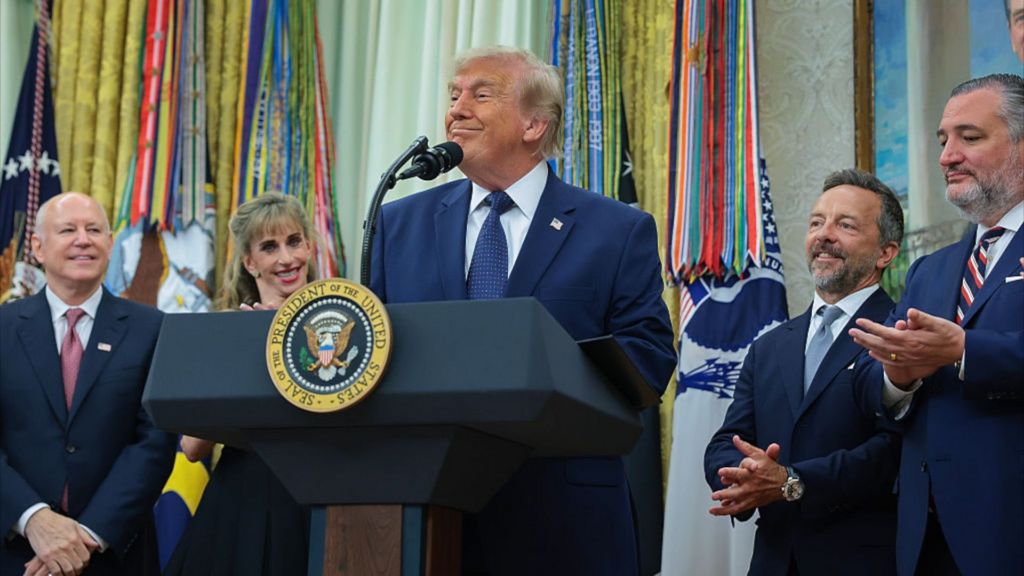
    On a rainy spring morning in Washington D.C., U.S. President Donald Trump formally welcomed Britain’s King Charles III to the White House on April 28, 2026, opening a four-day state visit framed by long-standing transatlantic friendship and simmering tensions over the ongoing war with Iran. The event, held on the White House South Lawn, unfolded against the backdrop of the 250th anniversary of the United States’ Declaration of Independence from British rule, offering a striking historical counterpoint to the warm diplomatic pageantry on display.

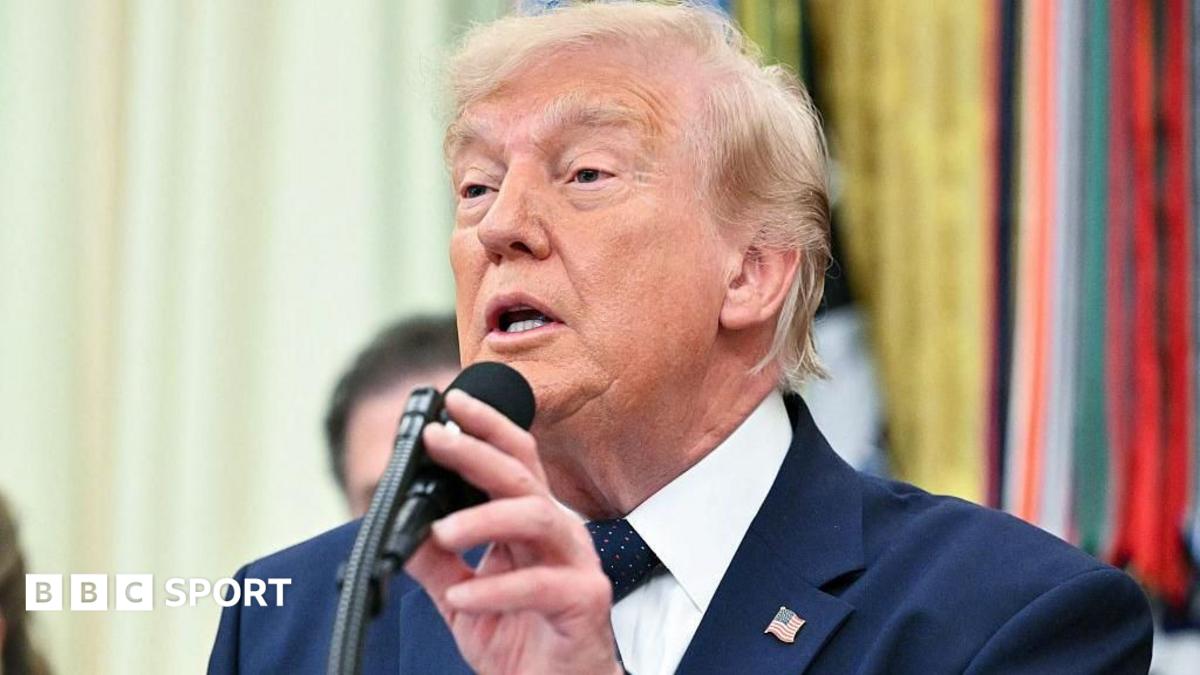
    In his opening remarks, Trump struck a conciliatory tone, a sharp shift from his recent public criticism of the British government over its refusal to join the U.S.-led military campaign against Tehran. “In the centuries since we won our independence, Americans have had no closer friends than the British,” Trump told the assembled crowd, reaffirming the decades-old mantra of the “special relationship” between the two nations, a phrase first popularized by Winston Churchill in the aftermath of World War II. “Nobody fought better together” than the U.S. and British militaries, the president added, a comment that came despite his earlier dismissal of Britain’s two aircraft carriers as worthless “toys.”

    The full ceremonial welcome included a traditional 21-gun salute, performances of both the British national anthem *God Save the King* and the U.S. *Star-Spangled Banner*, and a flyover of four U.S. military jets that roared overhead as Trump, King Charles, Queen Camilla, and First Lady Melania Trump watched from the dais. A contingent of reenactors in Revolutionary War-era uniforms, marking the 250th anniversary of U.S. independence, marched past playing fifes and drums, while faint construction noise from the $400 million presidential ballroom currently being added to the White House complex drifted across the lawn.

    Trump, a self-described long-time admirer of the British royal family, appeared in jovial spirits throughout the ceremony. He joked about the rainy weather, quipping “What a beautiful British day this is,” and lightheartedly recalled that his late mother “had a crush on Charles,” who is now 77 years old, two years younger than the 79-year-old U.S. president. Following the address, King Charles shook hands with senior members of the Trump administration, including Vice President JD Vance and Secretary of State Marco Rubio, before the two heads of state inspected a joint honor guard of all branches of the U.S. armed forces.

    The state visit comes at a particularly delicate moment in U.S.-UK relations. Trump has repeatedly launched public attacks against British Prime Minister Keir Starmer, not only over his government’s refusal to join the Iran conflict but also over London’s immigration and energy policies. Just days before the royal arrival, a shooting occurred at the White House Correspondents Dinner that Trump attended, prompting heavily tightened security across Washington for the duration of the visit.

    The first day of the visit featured low-key informal engagements, with the Trumps hosting Charles and Camilla for tea and pastries before touring the beehives on the South Lawn. On the second day of the visit, the centerpiece public event will see King Charles become the first British monarch to address a joint session of the U.S. Congress since his mother, Queen Elizabeth II, did so in 1991. Palace insiders indicate the king will use the 20-minute address to call for “reconciliation and renewal” to mend recent rifts between the two allies, while gently urging continued commitment to shared democratic values of liberty and equality. “Time and again, our two countries have always found ways to come together,” Charles is expected to say. Analysts note, however, that placating the mercurial U.S. president will be a significant long-term diplomatic challenge for the British monarchy and government. After closed-door talks in the Oval Office between the king and president on Tuesday, the day will conclude with a lavish state dinner hosted by the Trumps in honor of the royal visitors.

  • Why Sam Altman and his former hero Elon Musk are taking their toxic feud to court

    Why Sam Altman and his former hero Elon Musk are taking their toxic feud to court

    A years-long public feud between two of the technology sector’s most powerful figures, Elon Musk and OpenAI chief executive Sam Altman, is set to move from social media exchanges to a California federal courtroom this week, opening a month-long trial that could reshape the trajectory of the global race for advanced artificial intelligence.

    What began as a collaborative vision for ethical AI development in 2015 has devolved into a bitter legal battle, with Musk accusing his former co-founder of betraying the project’s core non-profit mission to build artificial general intelligence (AGI) — AI that outperforms human-level capability — for the benefit of all humanity. In his lawsuit, which also names OpenAI president Greg Brockman and Microsoft as co-defendants, Musk alleges Altman defrauded him out of millions in early donations, orchestrated an illegal shift to a profit-driven structure, and reneged on the founding promises that drew him into the project in the first place.

    The roots of the rift stretch back more than a decade. The pair were first introduced by a Silicon Valley investor in 2012, when Altman, then in his 20s and head of influential startup incubator Y Combinator, viewed Musk as a personal hero. By 2015, they launched OpenAI together as a non-profit, with Musk, already a household name as CEO of Tesla and SpaceX, backing the project with roughly $40 million in early funding. For a time, the pair aligned on the need to develop AI cautiously, warning the technology carried existential risks even as it promised to reshape humanity.

    Tensions emerged by 2017, however, when OpenAI leadership began pushing for a transition to a for-profit structure to scale up development. OpenAI counters that Musk agreed to the shift but walked away after his demand for full, absolute control of the company was rejected. A 2018 email from Musk ahead of his departure made his frustration clear: he threatened to cut off funding unless the group committed to remaining a non-profit, before ultimately exiting the project entirely that year.

    The rift erupted into open conflict after OpenAI’s 2022 launch of ChatGPT, which ignited a global consumer AI boom and amassed 100 million monthly active users in just months. By 2024, Musk launched his own competing AI firm, xAI, which has trailed market leaders with its chatbot Grok, before filing the lawsuit against OpenAI. OpenAI has hit back, arguing Musk’s legal action is driven by jealousy and regret over leaving the company, and that he is seeking to sabotage a leading competitor in the race to AGI.

    Public animosity has spilled into viral social media exchanges repeatedly since the suit was filed. Last year, Musk led a consortium offering $97.4 billion to buy OpenAI’s assets, an offer the company rejected, with Altman quipping on X (formerly Twitter) that OpenAI would buy Musk’s platform for a tenth of that price if he was interested. Musk responded by calling Altman “Swindler”, and most recently rebranded him “Scam Altman” in a Monday post on the platform. Legal observers have noted that Musk’s repeated failed attempts to acquire OpenAI have cast doubt on his stated motives for the lawsuit.

    A nine-person jury was sworn in on Monday ahead of the trial, overseen by Judge Yvonne Gonzalez Rogers, who has already made clear that the pair’s celebrity, wealth and influence will earn them no special treatment in her Oakland courtroom. Both Musk and Altman are expected to testify, along with Microsoft CEO Satya Nadella, former OpenAI leaders Ilya Sutskever and Mira Murati, and even former OpenAI board member Shivon Zilis, who is mother to four of Musk’s children. Pre-trial procedural wrangling has already produced colorful headlines: the judge barred discussion of Musk’s use of the stimulant colloquially called “rhino ket” in Silicon Valley, and one of Musk’s attorneys has drawn attention for moonlighting as a clown in his spare time.

    Microsoft, which has pumped billions into OpenAI as part of a strategic partnership, denies any wrongdoing, and Musk is demanding the return of billions in alleged “wrongful gains” to be redirected to OpenAI’s non-profit division, as well as the removal of Altman from his leadership role.

    The stakes of the trial extend far beyond the two billionaires, experts say, as the outcome could reshape the competitive landscape for AGI, a technology that is projected to carry enormous global economic and social power. If Musk prevails, he would effectively eliminate one of his biggest rivals in the global AI race, notes Rose Chan Loui, executive director of the Lowell Milken Center for Philanthropy and Nonprofits at UCLA. While Musk has positioned himself as a defender of OpenAI’s original non-profit mission, many observers worry his motives are not neutral, given his own significant stake in xAI.

    Sarah Federman, a conflict resolution professor at the University of San Diego, compared the clash to a heavyweight title fight, or a battle between King Kong and Godzilla: two larger-than-life giants whose fight leaves bystanders to navigate the damage they leave behind. “Musk and Altman are so big, so larger than life, and so unrelatable,” she said. “That’s what makes them so delicious to watch as they clash.”

    As the public continues to grapple with AI’s rapid integration into daily life, experts say the trial will pull back the curtain on the ambitions and intentions of the two men who have done more than almost any others to bring consumer AI to the global public. Whatever the verdict, the outcome will set a path that the rest of the world will have to live with for decades to come.

  • Ex-actor Nathan Chasing Horse jailed for at least 37 years for sexual assault

    Ex-actor Nathan Chasing Horse jailed for at least 37 years for sexual assault

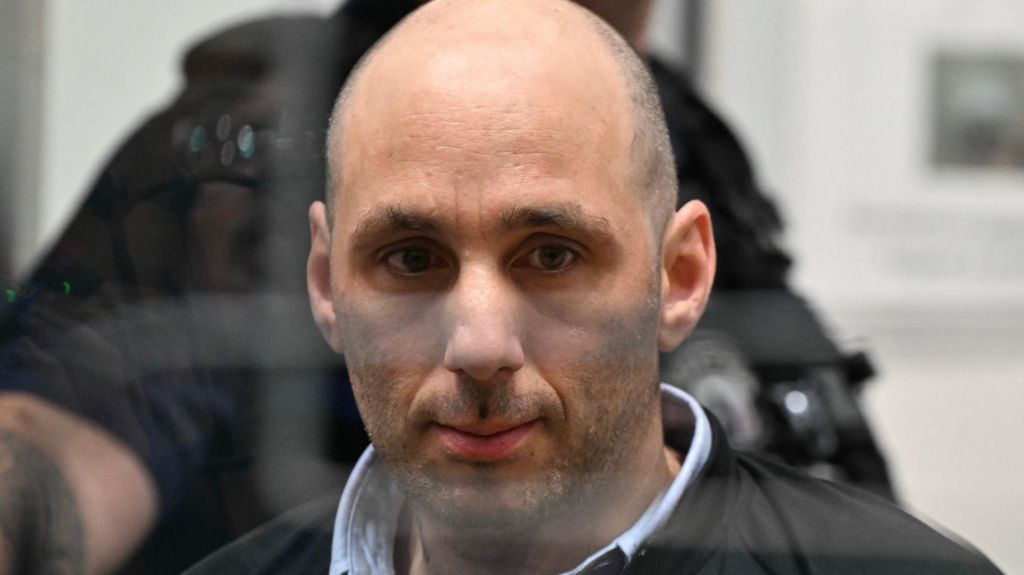
    A once-recognizable face from Oscar-winning cinema who positioned himself as a respected spiritual leader across Indigenous communities in North America has been handed a mandatory minimum 37-year prison term following his conviction on a litany of sexual assault charges. Nathan Chasing Horse, 49, who earned public recognition for his 1990 role as a young Sioux tribe member in *Dances With Wolves*, was found guilty of 13 out of 21 total charges brought against him, with the majority of convictions tied to repeated assaults of three victims—one of whom was just 14 years old when the abuse began.

    Beyond his small but notable Hollywood career, Chasing Horse built a widespread reputation as a medicine man among Indigenous tribes spanning both the United States and Canada. Prosecutors and survivors revealed during the trial that he deliberately exploited the trust and vulnerability of community members who turned to him for spiritual guidance and healing, weaving a pattern of abuse that stretched across nearly two decades.

    In a harrowing public statement following the verdict, victim Corena Leone-LaCroix—who was 14 when Chasing Horse first targeted her—spoke of the irreversible damage inflicted by the abuse. “There is no way to get back the youth, the childhood loss, my first time, my first kiss, the graduation I never got to have,” she told the court. “The life that little girl could have lived has been taken from me forever,” she added, per reporting from the Associated Press, which confirmed she chose to go public with her allegations to encourage other survivors to come forward.

    Prior to issuing the sentence, District Court Judge Jessica Peterson directly addressed Chasing Horse, condemning his calculated exploitation of vulnerable people seeking spiritual support. “You preyed on women’s spirituality,” Peterson said, adding that he “manipulated them for your own personal gratification.”

    Prosecutors laid out disturbing details of Chasing Horse’s manipulative tactics during the trial. Deputy District Attorney Bianca Pucci told the jury that the former actor had built an elaborate “web of abuse” over 20 years. In one particularly chilling example, Pucci explained that Chasing Horse told the underage Leone-LaCroix that spirits demanded she surrender her virginity to him in order to save her mother, who was suffering from cancer at the time.

    Chasing Horse has consistently denied all allegations against him. Under the terms of his sentence, he will not be eligible for parole consideration until he has completed the full 37-year prison term. For anyone affected by the sexual abuse issues raised in this case, support and resources are available through the BBC ActionLine service.

  • Exclusive: ICC Chief Prosecutor Karim Khan to address Oxford Union next week

    Exclusive: ICC Chief Prosecutor Karim Khan to address Oxford Union next week

    In a significant development that intersects international justice, political pressure, and institutional debate, International Criminal Court (ICC) chief prosecutor Karim Khan is scheduled to deliver his first public address next week at the world-famous Oxford Union, exclusive reporting from Middle East Eye can confirm. This appearance comes nearly a year after Khan stepped away for extended leave, amid a United Nations-led probe into unsubstantiated sexual misconduct claims that Khan has forcefully denied from the start.

    Late last month, MEE first broke the news that an independent panel of three veteran international judges — handpicked by the Bureau of the Assembly of States Parties (ASP), the ICC’s governing oversight body — had completed its review of the UN investigation and reached a unanimous, clear conclusion: no evidence supported any finding of misconduct or breach of professional duty on Khan’s part. Despite this formal clearing by the panel the ASP itself appointed, Khan has not yet resumed his full official responsibilities. Subsequent MEE reporting revealed that a bloc of predominantly Western and European member states voted at a recent ASP bureau meeting to set aside the judges’ independent findings and launch their own separate assessment, drawing directly from the original UN inquiry.

    Khan’s legal team has repeatedly called on the ASP bureau to honor the independent panel’s conclusions, and has raised urgent alarms that political motivations, rather than transparent, rule-based legal process, are driving the body’s ongoing deliberations. In an official statement released earlier this month, Khan’s legal representatives emphasized: “That Panel, comprising three highly distinguished international judges and appointed by the Bureau itself, reviewed the entirety of the evidential record over a period of three months and reached a unanimous and unequivocal conclusion: that the material does not establish any misconduct or breach of duty of any kind.” The ASP bureau has scheduled a final ruling on the allegations for early June.

    The Oxford Union, an independent student debating society that bills itself as the most prestigious forum of its kind globally, will host Khan at 7:30 p.m. on Tuesday, May 5. The event is open to all current Union members, as well as public attendees who purchase entry, MEE has confirmed. While the Union draws its membership primarily from Oxford University students, it operates as an independent private organization separate from the university itself.

    Arwa Hanin Elrayess, the Union’s current president, confirmed the invitation to MEE, noting: “We are deeply honoured to host Mr Khan KC at the Oxford Union. At a time when regimes persecute and sanction those who exercise their right to free speech, institutions like ours have a duty to stand firm and ensure those voices are heard. Mr Khan’s commitment to international law in the face of sustained political pressure is a story that speaks directly to the state of international justice today, and ought to be heard.”

    Elrayess, a Palestinian-Algerian student originally from Gaza, made history last December when she became the first Palestinian, the first Arab woman, and the first Algerian elected to lead the 200-year-old society. She will serve in the role through the end of the current academic year in July.

    The entire misconduct investigation has unfolded against a backdrop of relentless, coordinated pressure targeting both Khan and the ICC as an institution, sparked by the office’s pursuit of war crime charges against Israeli leaders over actions in Gaza. Starting in early 2024, as Khan prepared to file applications for arrest warrants for Israeli Prime Minister Benjamin Netanyahu and former Defense Minister Yoav Gallant, a widespread intimidation campaign was launched against the prosecutor. The threats included a public warning from then-UK Foreign Secretary David Cameron that the United Kingdom would cut all funding and withdraw its membership from the court if the warrants were issued. When the ICC judges approved the warrants in November 2024, pressure increased, and it escalated again in early 2025 as Khan moved to secure warrants for additional Israeli cabinet members. That surge in pressure coincided with new media leaks of the unproven sexual misconduct allegations, and the Trump administration imposed formal sanctions on Khan in February 2025. Prior to that, U.S. sanctions had already been levied against Khan’s two deputy prosecutors and multiple ICC judges.

    MEE reporting from August 2025 detailed the full scope of the intimidation campaign: direct threats to Khan from high-profile global politicians, coordinated briefings damaging Khan’s reputation from close colleagues and family associates, credible safety concerns sparked by intelligence confirming a Mossad surveillance team was operating near the ICC’s headquarters in The Hague, and the steady drip of leaked misconduct claims to international media. Khan took his extended leave in mid-May 2025, shortly after an attempt to suspend him from within his own office failed, and as the UN investigation got underway.

    The UN investigation was conducted by the Office of Internal Oversight Services (OIOS), which collected testimony and evidence from both the complainants and Khan. When the independent judicial panel reviewed the OIOS report, however, it found the document “either did not reach conclusive factual determinations or concluded that such determinations were impossible based on the evidence collected.” The panel further noted that the OIOS report relied heavily on hearsay, with no direct evidence of misconduct ever presented. Ultimately, the judges ruled that “there is insufficient evidence to support a finding of misconduct measured against the standard of proof of beyond reasonable doubt.”

    Middle East Eye, which first broke and has continuously reported on this story, provides independent, on-the-ground coverage of the Middle East, North Africa, and global affairs related to the region.

  • Peace efforts stall as US examines latest Iran proposal

    Peace efforts stall as US examines latest Iran proposal

    Diplomatic efforts to reach a permanent end to the ongoing Middle East conflict reached a deadlock this Tuesday, as the United States continues to review Iran’s latest proposal to reopen the strategically critical Strait of Hormuz, while Tehran rejects Washington’s claims to dictate the terms of any final agreement.

    Two months since the launch of the US-Israeli military offensive, Iran has maintained a blockade on the strait – a global chokepoint that carries roughly a fifth of the world’s daily oil and natural gas shipments. The closure has sent severe disruptions rippling through global energy markets, driving commodity prices sharply higher and stoking economic uncertainty worldwide.

    According to multiple reports, Iran’s offer would see Tehran gradually ease its restrictions on Hormuz shipping in exchange for the US lifting its own retaliatory blockade on Iranian commercial ports, while wider negotiations on more divisive issues – most notably Iran’s nuclear program – would continue in parallel. The proposal was delivered to Washington via written communications relayed through mediator Pakistan, which also outlined Iran’s non-negotiable red lines on both nuclear policy and control of the strait, Iran’s state-affiliated Fars News Agency confirmed.

    US President Donald Trump convened a meeting with his top national security advisors on Monday to assess the plan, but multiple anonymous sources familiar with the closed-door discussion told CNN that Trump has signaled reluctance to accept the framework. The President has insisted that the status of the strait remain on the negotiating table until a full resolution of the nuclear question is reached, leaving the next steps of the process unclear.

    Iran hit back at Washington’s positioning on Tuesday, with Defense Ministry spokesperson Reza Talaei-Nik stating that the US must abandon what he called its “illegal and irrational demands.” “The United States is no longer in a position to dictate its policy to independent nations,” he told Iranian state television.

    US Secretary of State Marco Rubio offered a mixed assessment of the proposal during an interview with Fox News, acknowledging that it was “better than what we thought they were going to submit” but questioning the sincerity of Iran’s commitments. “They’re very good negotiators,” Rubio said, adding that any final agreement must “definitively prevents them from sprinting towards a nuclear weapon.”

    Regional mediators have also stepped up warnings about the risks of an unresolved standoff. Qatar’s Foreign Ministry spokesperson Majed al-Ansari told reporters Tuesday that the international community must avoid the creation of a “frozen conflict” that could reignite at any moment over political disagreements. “We do not want to see a return to hostilities in the region anytime soon. We do not want to see a frozen conflict that ends up being thawed every time there is a political reason,” al-Ansari said, calling for negotiators to prioritize a “sustainable” long-term peace deal.

    Thus far, a temporary ceasefire between US and Iranian forces has held, but talks to lock in a permanent end to hostilities have failed to produce tangible progress. Pakistan, which has served as the primary mediator for the talks, hosted an initial round of negotiations that ended without breakthrough, and plans for a second round of talks over the weekend collapsed entirely. When asked about the path forward last week, Trump simply stated that “if Iran wants talks, they can call us.”

    Tehran has made clear that it will not offer new security guarantees for Gulf waterways without ironclad commitments from Washington and Tel Aviv that they will not launch new military attacks, Iran’s UN envoy said this week. An Iranian army spokesperson doubled down on that position Tuesday, telling state media that Tehran “does not consider the war to be over” and holds “no trust in America.”

    “We have many cards that we have not yet used… new tools and methods of fighting based on the experiences of the past two months of conflict, which will definitely allow us to respond to the enemy more decisively” if hostilities resume, said spokesperson Amir Akraminia.

    Speaking during a visit to Moscow this week, Iranian Foreign Minister Abbas Araghchi claimed the conflict had demonstrated Iran’s “true power” and regional stability, but the mood inside Iran remains far grimmer. Small business owner Farshad, speaking to AFP journalists in Tehran, described widespread economic disruption from the ongoing standoff. “Everything in the country is up in the air right now. I have not worked for a long time,” he said. “The country is in complete economic collapse.”

    Beyond the bilateral US-Iran standoff, violence continues to simmer on the conflict’s Lebanese front, where a recently extended ceasefire between Israel and Iran-backed Hezbollah has failed to stop all clashes. Hezbollah drew Lebanon into the broader conflict when it launched rocket attacks on Israel, prompting Israel to launch retaliatory airstrikes and a limited ground incursion into southern Lebanon.

    On Tuesday, the Israeli military issued evacuation orders for more than a dozen villages and towns in southern Lebanon, saying repeated “violations of the ceasefire” by Hezbollah left it no choice but to resume military action. Israeli Foreign Minister Gideon Saar emphasized that his country “has no territorial ambitions in Lebanon” and will withdraw its forces from border areas once Hezbollah and its armed factions are fully dismantled. The comment came a day after Hezbollah leader Naim Qassem reaffirmed the group’s commitment to the fight, vowing that it would “not back down” from its positions.

  • Mali faces advancing rebels in ‘difficult’ situation

    Mali faces advancing rebels in ‘difficult’ situation

    Three days after launching the largest coordinated assault in nearly 15 years against Mali’s ruling military junta, a unified force of Tuareg separatists and al-Qaeda-linked jihadists continues advancing across northern Mali, with Russia’s defense ministry acknowledging Tuesday that the security situation “remains difficult”.

    The broad, dawn attacks launched Saturday targeted multiple strategic positions across the West African nation, including military sites near the capital Bamako. In a stunning development that has shaken junta leadership, Defense Minister Sadio Camara — widely regarded as the architect of the junta’s decision to pivot away from Western partners and align with Russia — was killed in fierce fighting against the joint force of the Azawad Liberation Front (FLA) Tuareg rebels and the jihadist Group for the Support of Islam and Muslims (JNIM).

    Junta chief Assimi Goita, who seized power in a 2020 coup on a promise to defeat Islamist insurgency, has not made any public appearance or statement since the attacks began. A Malian security source told Agence France-Presse that Goita is staying out of public view “for security reasons”, while an anonymous elected official in Bamako confirmed that military leadership is currently reassessing its strategy in the wake of the assault. This unexpected absence has fueled widespread uncertainty over the future of the country’s ruling military council.

    On Tuesday, Russian defense officials confirmed that fighters from the Moscow-controlled Africa Corps — the paramilitary force deployed to support the Malian junta — have withdrawn from the key northern town of Kidal, which is now fully under the control of the allied armed groups. The ministry also confirmed that rebel fighters launched attempts to seize high-priority targets in Bamako, most notably the presidential palace. Russia, which has been the junta’s primary foreign backer since 2022, stated that regrouping rebel forces remain active across the north, while the Kremlin separately said Moscow is urgently seeking a return to peace and stability for the Sahel nation.

    Local sources confirm that Malian government forces have already abandoned multiple outposts in the northern Gao region, the country’s second-largest military stronghold. One anonymous local politician reported that troops withdrew from the border town of Labbezanga near Niger and pulled back to the more defensible position of Ansogo. Late Monday, two large explosions were recorded near Bamako’s international airport by an AFP journalist on the ground, though the source of the blasts has not yet been confirmed. Local residents reported the blasts originated from the military Base 101 located at the airport, with no exchange of small arms fire reported before or after the detonations.

    Analysts note that this coordinated offensive marks an unprecedented milestone: two historic foes — Islamist insurgents seeking to establish religious rule and Tuareg separatists fighting for an independent state of Azawad — have set aside their differences to fight a common enemy in the junta and its Russian backers. This new alliance was formalized one year ago, echoing the 2012 crisis that first plunged Mali into ongoing conflict, when the same two groups briefly allied to seize control of northern Mali before turning on one another. At that time, former colonial power France intervened to repel the offensive, but French forces fully withdrew from Mali in 2022 after relations with the junta collapsed.

    Some analysts have framed the attacks near Bamako’s centers of power as a strategic diversion to draw junta forces away from Kidal, a longstanding stronghold of Tuareg pro-independence movements. Kidal was retaken by junta forces backed by Russian mercenaries from the Wagner Group — the predecessor to the current Africa Corps — in a 2023 offensive, but it fell back to rebel control in the recent assault. As of Tuesday, the security situation across central Mali’s Mopti region, which was also targeted in Saturday’s attacks, remains unclear and fluid.

    Mali has now faced more than a decade of persistent jihadist violence and overlapping insurgencies, which has displaced hundreds of thousands of people across the country and into neighboring nations including Mauritania, Niger and Burkina Faso. The large-scale offensive has raised serious new questions about the junta’s ability to contain the insurgency, despite repeated claims that its military strategy, partnership with Russia and increased troop deployments have successfully rolled back the jihadist threat.

  • France murder victim identified after 20 years and suspect arrested

    France murder victim identified after 20 years and suspect arrested

    More than two decades after her mutilated body was found hidden in a rural French village, an unidentified murder victim has finally been named, and a suspect has been taken into custody — marking a historic milestone for Interpol’s global cold case initiative.

    The victim, now confirmed as 34-year-old Algerian-born Hakima Boukerouis, was the fifth unidentified woman to be identified through Operation Identify Me, an international effort launched in 2023 by the global law enforcement agency Interpol to name hundreds of unclaimed female bodies found across six European countries. Until this breakthrough, investigators had only referred to Boukerouis by the chilling nickname “the woman with the Richmond dental crown”, after a distinct, high-cost dental procedure she had undergone shortly before her death that authorities previously suspected was performed in Germany.

    Boukerouis’ remains were first discovered in January 2005, tied, wrapped in black garbage bags, and concealed inside a covered water butt in the small northeastern French village of Saint-Quirin. For nearly 20 years, no matches to missing person reports could be found, leaving the case stuck in the growing backlog of cross-border cold cases. That changed when French law enforcement used familial DNA searching to connect Boukerouis to her relatives, unlocking the long-awaited identification.

    The arrest of a suspect in Boukerouis’ murder is the first made since Operation Identify Me launched, a win that Interpol leaders say highlights the value of persistent, cross-border collaboration on unsolved cases. “This identification underscores how important it is to keep investigating unresolved cold cases,” Interpol Secretary General Valdecy Urquiza said in an official statement released Tuesday. “As part of the Identify Me campaign, the efforts of the French authorities have helped identify a murder victim whose case had remained open for many years.”

    Due to ongoing investigations and active judicial proceedings, neither French police nor Interpol have released the identity of the arrested suspect, and only limited details about the case have been made public.

    Operation Identify Me was created to address a growing challenge for European law enforcement: rising global migration and transnational human trafficking have left an increasing number of people reported missing outside their home countries, making it far harder to match unidentified bodies to missing person reports. The campaign pulls 47 unsolved cases of women found dead under suspicious or violent circumstances in France, Belgium, the Netherlands, Germany, Italy and Spain into a single public, cross-border effort. For the first time, Interpol has issued public black notices — its official requests for information on unidentified deceased persons — for these cases, shared critical records including fingerprints with law enforcement agencies worldwide, and reignited public and investigative attention to these long-forgotten cases.

    Before Boukerouis’ identification, four other women have been named through the initiative: 31-year-old British citizen Rita Roberts, murdered in Belgium in 1992 and identified after her family spotted a photo of her tattoo in a BBC report; 33-year-old Paraguayan national Ainoha Izaga Ibieta Lima, found dead in a Spanish poultry shed in 2018; 31-year-old Russian national Liudmila Zavada, found on a Spanish roadside in 2005 and identified in September 2024; and 35-year-old German citizen Eva Maria Pommer, found on a Dutch beach in 2004 and identified the following month.

    With five identifications complete, investigators still working through the campaign are pushing to name the remaining 42 women. Most of the remaining unidentified victims are confirmed murder victims, most believed to have been between 15 and 30 years old at the time of their death, with some cases dating back decades.