作者: admin

  • Madagascar detains French national over alleged plot to stir unrest

    Madagascar detains French national over alleged plot to stir unrest

    Madagascar’s national authorities have uncovered an alleged plot to destabilize the country’s new administration, leading to the arrest of a retired French service member and the expulsion of a senior French diplomat, according to official announcements from the island nation. The case comes just six months after a military-backed leadership change ousted the former president, deepening political friction between Madagascar and its former colonial ruler France.

    Madagascar’s chief prosecutor Nomenarinera Mihamintsoa Ramanantsoa confirmed the charges in an official video address to the public Tuesday evening. The French national, a former military personnel, faces a raft of criminal accusations including organized criminal conspiracy, sabotage of critical national infrastructure, and inciting rebellion against the sitting government. Prosecutors say the plot targeted core energy infrastructure—specifically national power grids and thermal energy facilities—with planned actions scheduled for April 18.

    Ramanantsoa added that the conspiracy network extends beyond the French detainee: a serving Malagasy army officer has also been charged in connection with the scheme, alongside multiple young Malagasy citizens who were taken into custody this week. Evidence presented by authorities includes communications from a WhatsApp chat group titled “Revolution of the Brave Citizens,” where prosecutors say conspirators mapped out plans to orchestrate widespread power outages, coax active-duty security personnel to mutiny against the current government, and mobilize youth groups to spark widespread civil unrest.

    In a parallel move, Madagascar’s Ministry of Foreign Affairs has expelled a French diplomat accused of covert involvement in the destabilization plot. France has swiftly rejected all allegations of involvement, and launched a formal diplomatic response Wednesday: the French foreign ministry summoned Madagascar’s chargé d’affaires in Paris to issue a strong protest over the expulsion, dismissing all claims of French interference as baseless. In an official statement, the ministry emphasized that France has a long record of consistent, tangible support for Madagascar, calling the accusations “not only unfounded, but also incomprehensible.”

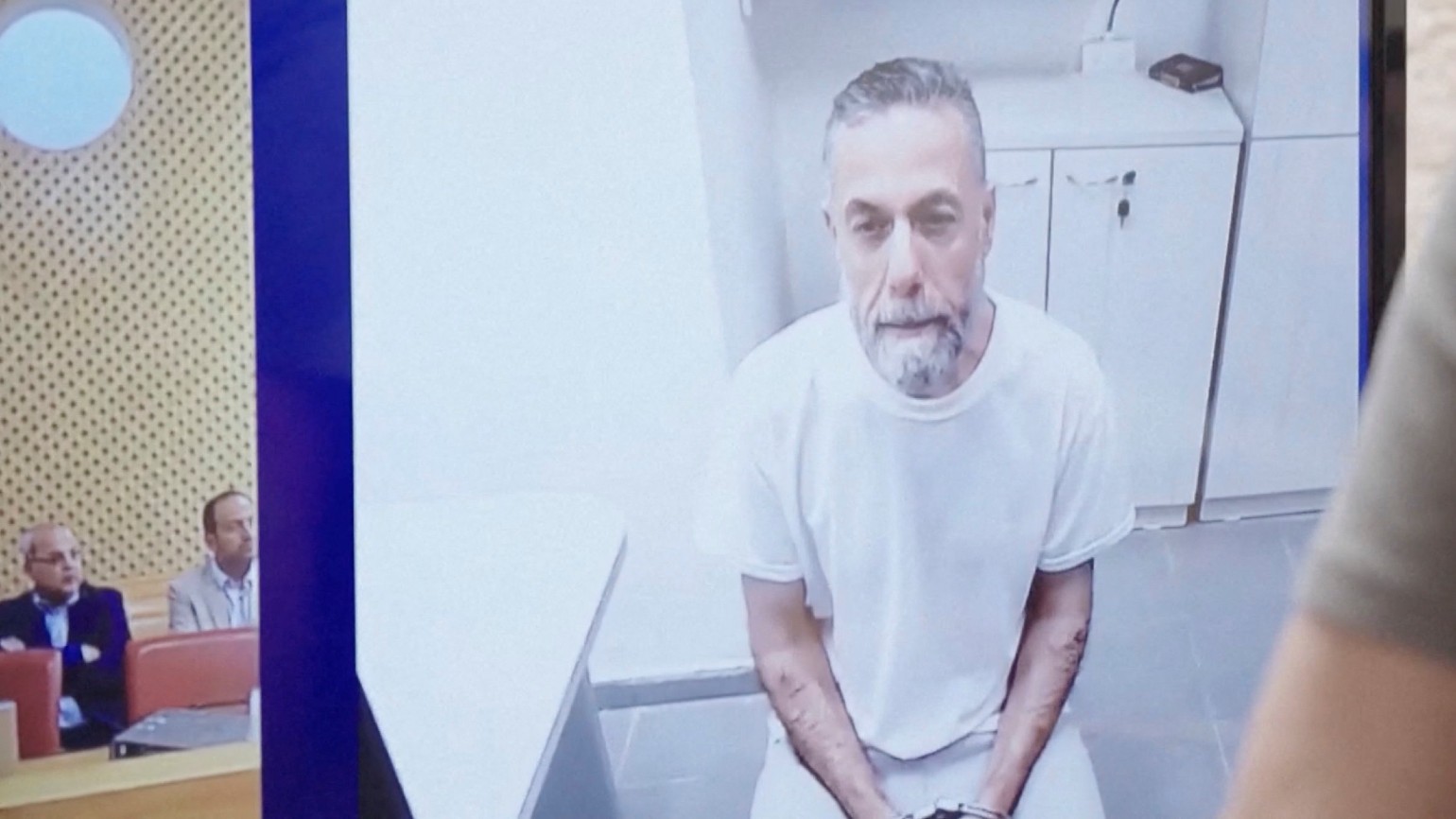
    Additional charges against the accused include distribution of misinformation to disrupt public order and concealment of individuals wanted by Malagasy law enforcement. As of Wednesday, the French former serviceman remains in custody at a high-security penitentiary, while the young Malagasy suspects have been placed under court-ordered supervision pending trial.

    The uncovered plot unfolds against a volatile political backdrop in Madagascar. Last September, the Indian Ocean island nation saw weeks of mass youth-led protests that ultimately toppled long-serving president Andry Rajoelina. The coup was led by Colonel Michael Randrianirina, who was formally sworn in as the country’s new head of state in October 2025. Since the leadership transition, however, a rift has emerged between Randrianirina and many of the young activists who spearheaded the original protests, with the youth organizers accusing Randrianirina of hijacking their popular rebellion for personal power.

    A former French colony that gained independence in 1960, Madagascar has long maintained close political and economic ties with France, but has also faced repeated cycles of political instability and leadership turnover over the decades of post-independence rule. The current confrontation marks the most significant diplomatic rift between the two nations in recent years, as Randrianirina’s new administration works to consolidate its control amid lingering domestic opposition.

  • African athletes need support and protection – Kebinatshipi

    African athletes need support and protection – Kebinatshipi

    Reigning men’s 400m world champion Collen Kebinatshipi, the first man from Botswana to claim global gold at the World Athletics Championships, is sounding the alarm over growing talent drain from African athletics, urging continental governing bodies to step up and support homegrown athletes to stop them from seeking citizenship transfers abroad.

    The conversation around athlete nationality switches has intensified this month after global governing body World Athletics blocked six African runners from moving their athletic allegiance to Turkey, following reports of what the organization described as “lucrative” unauthorized contract offers. Among the athletes affected are five Kenyan runners, including former women’s marathon world record holder Brigid Kosgei, and top Nigerian sprinter Favour Ofili. Ofili’s case drew particular public scrutiny after the 23-year-old was incorrectly omitted from the 2024 Paris Olympic 100m entry list due to an administrative mistake by Nigeria’s athletics federation, a misstep that many observers link to the athlete’s subsequent interest in moving abroad.

    Kebinatshipi, 22, says he understands why so many African athletes opt to switch nationalities. In an interview with BBC Sport Africa, the champion noted that many elite athletes on the continent face crippling financial and logistical barriers when preparing for major international competitions. “Spending sometimes can be a bit challenging,” he explained. “I think they are doing that because they want to go where they can cut costs and be properly supported.” His solution? Kebinatshipi says African federations must invest in better support structures that match international standards, arguing that consistent, high-quality backing is the most effective way to retain top talent at home.

    Unlike some other African nations, Botswana has so far avoided widespread talent outflow, in large part due to a historic run of global success that has built confidence among the country’s next generation of runners. Last year, Kebinatshipi claimed individual 400m gold at the World Athletics Championships in Tokyo, and alongside star sprinter Letsile Tebogo, Lee Bhekimpilo Eppie and Bayapo Ndori, also won 4x400m relay gold at the same event – making Botswana the first African nation ever to claim that world title. Tebogo followed that achievement with a stunning 200m gold at the 2024 Paris Olympics, cementing the country’s status as a new global sprint powerhouse.

    This weekend, Botswana will make more history as the first African country ever to host a senior World Athletics track event, the World Relays, on home soil. For Kebinatshipi, Botswana’s rapid ascent in sprinting didn’t happen by accident: he credits much of the sport’s transformation in the country to the legacy of compatriot Isaac Makwala, a decorated Commonwealth and Olympic medallist who has mentored a generation of young Botswana runners. “My role model from a young age has been Isaac,” Kebinatshipi said. “He has also been close to me and guiding me. That’s why I had that motivation and belief that I can also do this and be like him. He has always been assisting me with training, nutrition. I really appreciate the role he played on my career up until now.”

    Raised in a small village in southwestern Botswana, Kebinatshipi first discovered his love for running during his school years. After graduating high school, he made the tough decision to pause his academic studies to focus fully on training – a gamble that paid off when he crossed the finish line in 43.53 seconds to claim world gold in Tokyo seven months ago. The historic win earned Botswana a national public holiday declared by President Duma Boko, and turned the young champion into a national icon. “I don’t really like to over-celebrate my achievements,” he said modestly. “My life has changed a lot when it comes to me going shopping. Everyone will come to me taking pictures. For me to get in the shop and spend 10 minutes I have to allow an extra 30 minutes for pictures.”

    Kebinatshipi concedes that his world title came earlier than he ever planned: he narrowly missed out on the 400m Olympic final in Paris just months before his Tokyo win, and had originally targeted breaking national records and claiming global gold by the 2028 Los Angeles Olympics. “When it comes to the national record and winning gold on global stages, those were chats that were planned for the 2028 Olympics,” he explained. “We knew that it winning in Tokyo was just a bonus and we should go back to the drawing board and work for what we are aiming for, which is the 2028 Olympics.”

    He has already made a strong start to the 2026 season, clocking 44.55s in his opening 400m race and turning in an impressive performance over 100m at the Botswana national championships. Right now, all his focus is on delivering a strong result at the World Relays in front of a home crowd. “We want to make our people here proud. We are aiming to deliver our best,” he said. “We can’t get much into aiming for world records or producing fastest times early this season because we have a long season ahead. We want to come and produce, and that’s the only thing that we are aiming for now.”

    Beyond Botswana’s success, Kebinatshipi is celebrating a broader shift across African athletics: for decades, the continent has been synonymous with middle and long-distance dominance, but a new wave of sprinters from across the continent is changing global perceptions. Names like Tebogo, South Africa’s Akani Simbine, Kenya’s Ferdinand Omanyala and Ivory Coast’s Marie-Josee Ta Lou-Smith are leading the charge, and Kebinatshipi says this evolution is a huge win for African sport. “Africans have been known for long distance events, but now we challenge ourselves in everything,” he said. “That’s why we have a big pool of sprinters in Africa.”

  • Australia duo O’Connor and Perese to leave Tigers

    Australia duo O’Connor and Perese to leave Tigers

    English Premiership rugby union side Leicester Tigers has made a major roster announcement this week, confirming that experienced Australian international fly-half James O’Connor and fellow Wallabies back Izaia Perese will leave the club when the current 2025-26 season concludes.

    O’Connor, 35, returned to top-flight English rugby for his third stint in the league when he joined the Tigers last September, moving to the Welford Road-based side from New Zealand’s legendary Super Rugby franchise the Crusaders. Since his arrival, the veteran playmaker has featured in 10 matches across all competitions. His only try for the club to date came in the side’s dominant 66-14 Premiership Rugby Cup final victory over Exeter Chiefs last month, and he has added 18 points from the kicking tee across his six Premiership outings.

    Reflecting on his tenure with Leicester, O’Connor described his time at the club as an overwhelmingly positive experience. “This has been an awesome experience for me, and right now I’m keeping my focus firmly on the business end of this season, we still have important work to do before the campaign wraps up,” he said.

    Leicester interim head coach Geoff Parling paid tribute to O’Connor’s impact on the squad, highlighting the veteran’s intangible leadership qualities that have strengthened the team’s backline group. “James has been brilliant during his time with us, bringing a wealth of experience and a calming presence that has really benefited our younger backs,” Parling said. “He will continue to contribute massively as we push through the final stretch of the season, and his ideas and diligence in everything he does have been a real asset to our program.”

    For 28-year-old center Perese, the departure comes 18 months after he joined the club from Australia’s Super Rugby side the New South Wales Waratahs ahead of the 2024-25 campaign, having signed a multi-year contract upon his arrival. Perese has been a consistent scoring threat during his time at Leicester, crossing for 11 tries in 28 total appearances for the side. This season alone, he has notched five tries, three of which came in Premiership play.

    Like O’Connor, Perese stressed that he remains fully committed to helping the club achieve its remaining goals this season, before his exit. “I’ll miss this group of lads, and I’m really proud to have been able to call myself a Leicester Tigers player,” Perese said. “There’s still a job to be done though, and I’m fully committed to giving everything I have for what’s ahead. I’d also like to say a big thank you to all my coaches and the club’s support staff for everything they’ve done to help me develop during my time here.”

    Both players are set to feature for the Tigers in the remaining weeks of the current domestic season as the side competes for silverware and league position.

  • ‘Numbskull, moron and too stupid’: Trump and Powell’s biggest clashes

    ‘Numbskull, moron and too stupid’: Trump and Powell’s biggest clashes

    The fractious public feud between former and current U.S. President Donald Trump and departing Federal Reserve Chair Jerome Powell stands as one of the most bitter confrontations between a sitting American president and a central bank leader in modern history. Since Trump reclaimed the White House following the 2024 election, he has launched nonstop attacks on Powell, driven entirely by his frustration that the Federal Reserve has not cut interest rates at the speed the president has demanded. As Powell prepares to exit his post to make way for Trump’s nominee Kevin Warsh, a look back at the series of high-profile clashes that shaped this unprecedented relationship reveals deep threats to the central bank’s long-guarded independence.

    Ironically, it was Trump himself who first appointed Powell to the role of Fed chair during his first presidential term. Back in November 2017, Trump argued the nation’s central bank needed “strong, sound and steady leadership,” and publicly praised Powell as a “strong, committed, smart” candidate perfectly suited for the position. But after President Joe Biden reappointed Powell to a second term, Trump soured on the Fed chair dramatically once he returned to the Oval Office, even claiming he was shocked Biden extended Powell’s tenure. “He’s a terrible Fed chair,” Trump told reporters last July, ignoring his own role in bringing Powell to the job in the first place.

    Trump’s criticism has not been limited to policy disagreements; he has repeatedly resorted to personal insults and derogatory nicknames for the nation’s top central banker. After the Fed cut rates three times in 2025, central bank officials opted to hold rates steady to assess how Trump’s new trade tariffs would impact persistent inflation. For every decision to hold rates that ran counter to Trump’s demands, the president lashed out. In April of last year, he dubbed Powell “Too Late”, and declared that Powell’s “termination cannot come fast enough.” That set the tone for months of attacks that followed: Trump has called Powell a “numbskull”, “moron”, and “a real dummy” in media interviews, and doubled down on these insults on social media. In one typical viral social media post, Trump wrote: “Jerome ‘Too Late’ Powell has done it again!!! He is TOO LATE, and actually, TOO ANGRY, TOO STUPID, & TOO POLITICAL, to have the job of Fed Chair. He is costing our Country TRILLIONS OF DOLLARS, in addition to one of the most incompetent, or corrupt, renovations of a building(s) in the history of construction! Put another way, ‘Too Late’ is a TOTAL LOSER, and our Country is paying the price!”

    The conflict spilled beyond interest rate policy into a public disagreement over the ballooning cost of a planned renovation of Federal Reserve office buildings. During a joint on-site visit where both men wore hard hats, Trump claimed the total cost of the project had ballooned to $3.1 billion, well above the original $2.7 billion estimate. Standing directly beside the president, Powell immediately disputed the claim, telling Trump he was not aware of any such cost overrun. When Trump pulled out a document he claimed proved the higher total, Powell countered that Trump had incorrectly added the cost of a separate completed building constructed five years earlier to the renovation project’s total. When asked how he would handle a project manager who went over budget as a former real estate developer, Trump did not mince words: “Generally speaking, I’d fire him.”

    Tensions escalated to a new level in early January, when Powell released a Sunday evening video revealing that federal prosecutors had opened a criminal investigation that could lead to an indictment over testimony he gave to a Senate committee about the renovation project. Powell, who had largely stayed silent about Trump’s attacks for months, framed the Department of Justice’s move as part of the administration’s sustained campaign to pressure the Fed. He argued that the investigation raised existential questions about the central bank’s core mission: “This is about whether the Fed will be able to continue to set interest rates based on evidence and economic conditions, or whether instead monetary policy will be directed by political pressure or intimidation,” Powell said in the video. The development immediately created political headwinds for Warsh’s nomination: Republican Senator Thom Tillis announced he would not support confirming Warsh while the investigation remained open, calling the probe a “serious threat” to the central bank’s independence. Earlier this month, the Department of Justice dropped the criminal investigation, clearing the way for Tillis to announce he would now support Warsh’s confirmation ahead of a full Senate vote.

  • New images show suspect taking selfies before Washington press dinner shooting

    New images show suspect taking selfies before Washington press dinner shooting

    Fresh evidence submitted by U.S. prosecutors has laid bare detailed pre-attack planning by the man accused of storming last weekend’s White House Correspondents’ Dinner in a bid to assassinate former President Donald Trump, according to court documents filed this week. The 31-year-old suspect, Cole Tomas Allen, has entered a not guilty plea to all charges against him, including the attempted assassination of the sitting former president. Prosecutors argue he should be held without bond ahead of his trial, citing what they call a meticulously planned, violent plot that targeted senior U.S. government leadership.

    The newly unsealed memorandum from the U.S. Department of Justice includes never-before-seen photographs that prosecutors say Allen took of himself inside his Washington, D.C. hotel room roughly 90 minutes before the attack. The images show Allen wearing formal dinner attire underneath loaded weapons strapped to his body: a shoulder holster holding a semi-automatic handgun, a sheathed fixed-blade knife, and a separate bag stuffed with ammunition. Tools recovered from Allen after the incident, including pliers and wire cutters, are also visible on his person in the self-portraits. The photos were timestamped at approximately 8:03 p.m. EST, court records show.

    Prosecutors’ timeline lays out the 30-minute window of activity after Allen took the pre-attack photos. During that period, they allege, Allen repeatedly browsed online media outlets to confirm live coverage of the annual dinner and verify that Trump was in attendance at the event. Once he confirmed the former president’s presence, he left his hotel room and walked toward the Washington Hilton ballroom where hundreds of journalists, political figures, and administration officials had gathered. Before approaching the venue’s security checkpoint, prosecutors say Allen discarded a long black overcoat he had used to conceal his pump-action shotgun.

    “Shortly thereafter, the defendant rushed the screening checkpoint on the Terrace Level of the Washington Hilton with a raised shotgun,” the memorandum states. Official accounts confirm Allen sprinted through a activated metal detector, holding the shotgun in a two-handed raised firing position as he advanced into the secured event space. A U.S. Secret Service agent assigned to the detail was shot during the subsequent confrontation, though their wound was not life-threatening and they have since been reported to be in stable condition.

    The court filing also sheds new light on the weeks-long lead-up to the alleged attack. Investigators confirm Allen left his home in Torrance, a Los Angeles suburb, on April 21, traveling cross-country by train via Chicago before arriving in the nation’s capital. During his journey, Allen kept a handwritten note on his cell phone documenting his observations of the landscape, including a line describing “the southwest desert in spring [with] Distant wind turbines looming like snowy mountains across the hazy NM desert”.

    In a chilling pre-attack communication sent to his own family shortly before he stormed the dinner, Allen allegedly spelled out his targeting priorities, writing that “Administration officials… are targets, prioritized from highest-ranking to lowest”. He added that he “would still go through most everyone here to get to the targets if it were absolutely necessary”, according to an earlier affidavit filed in the case.

    If convicted on the top charge of attempted assassination of the U.S. president, Allen faces a potential life sentence. Two additional charges—transporting a firearm across state lines to commit a felony, and discharging a firearm during a violent crime—each carry a maximum 10-year prison sentence. In their motion to deny bail, prosecutors emphasized that Allen’s alleged actions were “premeditated, violent, and calculated to cause death”. They added that no set of release conditions could reasonably guarantee the safety of the public or other community members if Allen were freed from custody ahead of his trial. At the time of reporting, Allen remains in federal custody, with no trial date yet set.

  • Shot fired after child picks up discarded gun

    Shot fired after child picks up discarded gun

    On a Tuesday afternoon in Dublin’s Ballymun neighborhood, a near-tragedy unfolded just steps away from the local Ballymun Garda Station, highlighting the growing danger of unresolved gang violence plaguing the community. What began as a routine police response to a reported firearm incident turned into a scare that has left local residents and public officials demanding greater safety measures.

    According to official statements from An Garda Síochána, Ireland’s national police service, uniformed unarmed officers responded to emergency calls around 15:00 local time. During their response, officers launched a foot pursuit of two male suspects: one teenage boy and one man in his 20s, with one suspect traveling on an e-scooter. As the chase unfolded near the residential area of Sillogue Gardens, one suspect discarded a loaded firearm in a dense bush before both suspects were taken into custody.

    Shortly after the arrests were completed, an 11-year-old child exploring the area stumbled across the hidden weapon. When the child picked up the gun, the loaded weapon discharged a round. Miraculously, no bystanders or the child were injured in the shooting, but the incident has sent shockwaves through the tight-knit community.

    Local councillor Conor Reddy, representing the People Before Profit party, confirmed that the incident is tied to an ongoing, bitter drugs feud that has sparked an escalating cycle of violence across Ballymun in recent months. He warned that repeated firearm incidents in residential areas are normalizing violent behavior for young people growing up in the neighborhood, a trend he called deeply alarming.

    This event is not an isolated occurrence. Just three days prior, on Sunday, Gardaí from the Drug Unit conducting a routine foot patrol discovered a second loaded handgun hidden in a bush near Coultry Park’s public playground. That weapon was found with a round already in the firing chamber, and it has been sent for ballistic and forensic testing. As of the latest updates, no arrests have been made in that case, though investigators confirm they are following a clear line of inquiry.

    Following Tuesday’s shooting, Gardaí confirmed that the 20s-aged suspect remains in police custody, while the teenage suspect has been released pending a full report to Ireland’s Director of Public Prosecutions. Law enforcement officials also noted they are providing support services to the family of the 11-year-old child who found the weapon, to help them process the incident.

    Local public officials have united to call for urgent action to address the growing safety crisis. Independent councillor Gavin Pepper has submitted an emergency motion to Dublin City Council, demanding that new closed-circuit CCTV cameras be installed in all local public parks and that full-time park rangers be assigned to conduct regular patrols to deter illegal activity. Fianna Fáil councillor Keith Connolly added that the gun involved in Tuesday’s discharge has not yet been recovered by police, with early reports indicating two young people on bicycles removed the weapon from the scene after it fired. Connolly is calling for high-visibility policing in Ballymun matched to the resource levels already deployed in central Dublin, arguing that residents of suburban neighborhoods deserve the same level of protection as those in the city core.

    Cllr Reddy emphasized that the most disturbing detail of the incident is the young age of people both involved in the feud and affected by it. “For an 11-year-old child to stumble across a loaded gun in their neighborhood is every parent’s worst nightmare,” he said, echoing the concerns of residents across Ballymun who now fear for their children’s safety as the drugs feud continues to escalate.

  • Trump warns Iran better ‘get smart soon’ and accept nuclear deal

    Trump warns Iran better ‘get smart soon’ and accept nuclear deal

    Escalating tensions between the United States and Iran have reached a new critical juncture this week, after former President Donald Trump issued a blunt public warning demanding Tehran capitulate to Washington’s strict nuclear oversight demands, while stalled peace negotiations have sent energy markets soaring and raised alarm over a global humanitarian catastrophe.

    For two months, Iran has held the Strait of Hormuz—one of the world’s most critical chokepoints for global oil and natural gas shipments, through which roughly a fifth of global daily oil consumption passes—under blockade, a retaliatory move after the United States and Israel launched a regional war two months ago. The U.S. has responded with its own naval blockade of Iran, putting massive pressure on the Islamic Republic’s already fragile economy while working to minimize fallout for American consumers.

    In a dramatic post to his social media platform Wednesday, Trump doubled down on his administration’s hardline stance, writing that “Iran can’t get their act together… They better get smart soon.” The post was paired with a viral doctored image showing Trump carrying a rifle against a backdrop of a destroyed desert fortress, emblazoned with the slogan “No more Mr. Nice Guy!”

    A senior U.S. administration official, speaking on condition of anonymity, confirmed that Trump recently met with oil industry executives to discuss extending the American naval blockade for months if negotiations remain deadlocked, while outlining steps to limit price increases for U.S. gasoline consumers. The official’s comments came after multiple press outlets reported Trump had already rejected a recent Iranian proposal brokered by Pakistan to reopen the Strait of Hormuz as broader talks proceed.

    The breakdown in talks immediately rippled through global energy markets Wednesday. By 13:35 GMT, Brent crude futures for June delivery jumped 5.16% to settle at $117 per barrel, marking the highest price point since a fragile bilateral ceasefire between the U.S. and Iran took effect on April 8.

    Beyond market volatility, the United Nations Development Programme has warned the conflict’s ripple effects—including skyrocketing energy and fertilizer prices—could push more than 30 million people across 160 countries into extreme poverty this year. UNDP chief Alexander De Croo described the crisis as “development in reverse” in comments to AFP.

    For Iran, the ongoing standoff is already taking a severe domestic toll. The Iranian rial hit an all-time historic low against the U.S. dollar this week, and ordinary Iranians expressed widespread despair and disillusionment with the endless cycle of negotiations and escalating sanctions. “Every time in recent years that negotiations have taken place, the economic situation of the people has only gotten worse. Sanctions have either started or intensified,” a 52-year-old Iranian architect told AFP, speaking on condition of anonymity. “They go to negotiate and come back with even more sanctions, and the issue is always nuclear. There’s no talk about people, the economy or freedom. People have the right to not even want to hear the word ‘negotiation.’”

    Speaking at a White House state dinner for Britain’s King Charles III Tuesday, Trump reiterated his non-negotiable position on Iran’s nuclear program, claiming Tehran had been “militarily defeated” and adding “we’re never going to let that opponent have a nuclear weapon.” Trump also claimed King Charles shared his stance on the issue.

    Iranian officials have rejected Trump’s demands and pushed back against claims of military defeat, with a senior army spokesman telling state TV Tuesday that Tehran “do not consider the war to be over” and hold “no trust in America.” “We have many cards that we have not yet used… new tools and methods of fighting based on the experiences of the past two wars, which will definitely allow us to respond to the enemy more decisively” should hostilities resume, said spokesman Amir Akraminia.

    The latest Iranian peace proposal, which was relayed to Washington via Pakistani mediators and reviewed by Trump administration officials at a Monday meeting, set clear Iranian red lines on both nuclear policy and the Strait of Hormuz, according to Iran’s semi-official Fars News Agency. Under the draft plan, Tehran would ease its blockade of the strait in exchange for Washington lifting its retaliatory naval blockade, while broader negotiations over the future of Iran’s nuclear program continue. But Iranian defense ministry spokesman Reza Talaei-Nik said Wednesday that Washington “must abandon its illegal and irrational demands,” adding that “the United States is no longer in a position to dictate its policy to independent nations.”

    Qatar, a U.S. ally that has served as a mediator in the conflict but still suffered Iranian strikes on its territory, warned this week that the standoff could devolve into a long-term “frozen conflict” if negotiators fail to reach a definitive breakthrough soon.

    Tensions have also spilled over onto the Lebanese front of the conflict, even after a recently extended ceasefire between Israel and Iran-backed Hezbollah, the armed group that drew Lebanon into the war after launching rocket attacks on Israel two months ago. Israel responded with widespread air strikes and a ground incursion into southern Lebanon.

    Lebanese officials confirmed Wednesday that an Israeli air strike killed one Lebanese soldier, marking the first deadly attack on Lebanese army forces since the ceasefire went into effect. A separate strike a day earlier wounded two additional soldiers. Lebanese President Joseph Aoun called for an end to the ongoing attacks Wednesday, saying “Israel must finally realise that the only path to security is through negotiations, but it must first fully implement the ceasefire in order to move on to negotiations. Israeli attacks cannot continue as they are. We are now waiting for the United States to set a date to begin direct negotiations.”

    A new UN-backed report released Wednesday warned that more than 1.2 million people in Lebanon are expected to face acute food insecurity in the coming months as a result of the conflict.

  • Israel accused of using ‘water as a weapon’ against Palestinians in Gaza

    Israel accused of using ‘water as a weapon’ against Palestinians in Gaza

    On April 29, 2026, global medical humanitarian organization Doctors Without Borders (MSF) released a damning new report that levels serious accusations against Israel, charging that the country has deliberately weaponized access to clean water against Palestinian civilians trapped in the besieged Gaza Strip as part of what MSF calls an ongoing campaign of genocide.

    The 36-page report, titled *Water as a Weapon: Israel’s Destruction and Deprivation of Water and Sanitation in Gaza*, draws its conclusions from on-the-ground field interviews, firsthand witness testimonies, and verified medical data collected by MSF teams operating in Gaza. The investigation confirms that Israel has systematically cut off Gaza’s population from adequate water supplies, a policy MSF frames as a deliberate act of collective punishment that is central to broader atrocities against Palestinians.

    “Deliberately denying Palestinians access to water is an integral part of Israel’s genocide,” the report states. MSF documents that the forced water shortage has been imposed in tandem with mass forced displacement of Palestinian communities, widespread destruction of civilian infrastructure, and ongoing targeted killings—including attacks on civilians who leave their shelters to collect water for their families.

    One harrowing account included in the report comes from Hanan, a grandmother living in Gaza City, who described the killing of her 10-year-old grandson in July. The child had been standing in a line waiting to collect drinking water when Israeli forces opened fire, killing him instantly. “Getting water is not supposed to be dangerous,” Hanan told MSF investigators, a line that underscores the daily mortal risk Gaza residents face to meet a basic human need.

    Claire San Filippo, MSF’s emergency manager for the Gaza response, emphasized that Israeli authorities are fully aware of the catastrophic consequences of their water policy. “They know that without water life ends, yet they have deliberately and systematically obliterated water infrastructure in Gaza – while consistently blocking water-related supplies from entering,” San Filippo explained.

    Official data from the report confirms that since the start of Israel’s military campaign in October 2023, nearly 90 percent of all water and sanitation infrastructure across Gaza has been damaged or completely destroyed by Israeli attacks. Beyond the collapsed infrastructure, Gaza residents face a litany of daily barriers to accessing even small amounts of safe water: collection points are often located miles from overcrowded displacement camps, supplies are irregular, the physical labor of carrying heavy water containers puts vulnerable people at risk, prices for smuggled water are out of reach for most families who have lost their incomes, and Israeli authorities continue to restrict the entry of materials needed to repair damaged water systems.

    MSF also documented direct, intentional attacks on clearly marked water infrastructure and delivery vehicles, including targeted strikes on water trucks and functional boreholes that serve entire displacement communities.

    San Filippo warned that the combination of widespread water deprivation, catastrophic overcrowding in emergency shelters, collapsing sewage systems, and a completely non-functional health system has created ideal conditions for deadly infectious disease outbreaks to spread across the enclave. “This is a deliberate public health disaster that Israel has created to harm as many Palestinian civilians as possible,” she added.

    The release of the MSF report comes as violence across Gaza surges, in what Palestinian officials describe as widespread violations of the temporary ceasefire agreement reached in October. On the same day MSF published its investigation, Israeli forces carried out multiple air strikes and ground operations across Gaza that killed at least nine Palestinians, including four children. Among the victims was 9-year-old Adel Lafi al-Najjar, who was killed in an air strike on central Khan Younis near the Abu Hamid roundabout—an area that was meant to be outside Israeli military deployment zones, according to local residents.

    Two separate strikes targeting civilian vehicles in Gaza City killed another four Palestinians on Tuesday. Updated data from the Palestinian Ministry of Health confirms that more than 820 Palestinians have been killed by Israeli forces since the ceasefire went into effect, a death toll that continues to climb daily. Since the start of the Israeli campaign, nearly 72,600 Palestinians have been confirmed killed, with thousands more still missing and presumed dead under the rubble of destroyed residential and commercial buildings across Gaza.

  • US Supreme Court curbs race-based voting maps in landmark ruling

    US Supreme Court curbs race-based voting maps in landmark ruling

    In a ideologically divided 6-3 decision released Wednesday, the U.S. Supreme Court delivered a landmark judgment that imposes sharp new limits on the consideration of race when drawing congressional electoral districts, a ruling that carries the potential to reshape legislative maps across the country and alter partisan odds ahead of November’s midterm elections.

    The case originated from Louisiana’s post-2020 census redistricting process. After courts ruled the state’s original map illegally diluted Black voting power, state legislators drew a revised plan that created a second majority-Black congressional district, a change intended to align with requirements of the 1965 Voting Rights Act. A group of white voters challenged the revised map, arguing it prioritized racial classification to an unconstitutional degree, setting up a high-stakes clash between voting rights protections and constitutional equal protection guarantees.

    Writing for the court’s conservative majority, Justice Samuel Alito ruled that the Louisiana map crossed into unconstitutional racial gerrymandering. Alito emphasized that Section 2 of the Voting Rights Act does not require states to draw electoral districts primarily along racial lines, noting that “compliance with the law could not justify” the state’s race-centered approach in this instance. “Because the Voting Rights Act did not require Louisiana to create an additional majority-minority district, no compelling interest justified the state’s use of race in creating SB8,” Alito wrote. “That map is an unconstitutional gerrymander, and its use would violate the plaintiffs’ constitutional rights.”

    The ruling leaves the core text of the Voting Rights Act intact but narrows the scope of how the law can be applied to enforce minority representation. For civil rights advocates, the decision represents another major blow to the landmark civil rights legislation, which has already been significantly weakened by a series of Supreme Court rulings over the past decade, most notably a 2013 decision that struck down a key provision mandating federal pre-approval for election law changes in states with histories of systemic discrimination.

    In a fiery dissent read from the Supreme Court bench — a rare step reserved for cases of exceptional national importance — Justice Elena Kagan warned of the decision’s far-reaching consequences. Kagan argued the ruling creates a pathway for states to systematically dilute minority voting power without facing legal pushback, a outcome that undermines decades of progress toward fair representation.

    Legal analysts broadly agree the ruling will raise the legal bar for justifying race-conscious redistricting intended to remedy minority vote dilution, making it far harder to create or preserve majority-minority districts nationwide. These districts, which have been a core tool for advancing minority representation for more than 50 years, have consistently tended to elect Democratic candidates, meaning the ruling is expected to give Republicans a tangible advantage in competitive House races this November.

    The decision marks a major shift in the Supreme Court’s interpretation of the balance between anti-discrimination protections and constitutional equal protection rules, aligned with the conservative majority’s long-stated commitment to what Justice Clarence Thomas — the court’s only Black justice — has framed as a “color-blind” interpretation of the Constitution. While the immediate impact of the ruling on November’s congressional control remains unclear, it has escalated the already fierce national battle over redistricting that has pitted political parties against one another in state legislatures and courts across the U.S.

  • France investigates reappearance of website linked to Pelicot crimes

    France investigates reappearance of website linked to Pelicot crimes

    France’s justice system has launched a formal probe into the unexpected resurgence of a controversial platform tied to one of the country’s most high-profile violent sexual crime cases, renewing urgent calls for stronger regulation of unmoderated anonymous online spaces. The original platform, Coco.gg, first gained infamy during the 2024 trial of Dominique Pelicot, a man convicted of drugging his wife Gisèle Pelicot for more than 10 years, raping her repeatedly, and recruiting more than 50 random strangers via the platform’s chatrooms to join in the attacks. Forty-nine additional men were also convicted of rape, attempted rape, or sexual assault against Gisèle Pelicot in the December 2024 ruling, all of whom had connected with Pelicot on the platform.

    Long before the Pelicot case brought national attention to the platform, French law enforcement had linked Coco.gg to a litany of other serious crimes, including widespread child sexual abuse, drug trafficking, and even murder. The site operated with no content moderation whatsoever and required no user registration, allowing anonymous users to access open chatrooms with zero vetting. By the time authorities took the original platform offline in 2024, it had been cited in more than 23,000 official criminal activity reports, according to the Paris prosecutor’s office. The platform’s founder, Isaac Steidl, was arrested and charged with multiple offenses including possession and distribution of child pornography in January 2025, and he has formally denied all charges against him.

    But in early April 2025, internet users spotted at least two new platforms with nearly identical design layouts and similar names to the original Coco site operating publicly online. One of the new platforms, Cocoland.cc, released a public statement denying any connection to the original Coco.gg and its founder. As of April 29, Cocoland.cc had been taken offline, but a second Cocoland-branded site remained accessible to users that morning.

    Investigators have now opened an official investigation into the new sites on charges of “disseminating violent, pornographic, or offensive messages accessible to minors”, the Paris prosecutor’s office confirmed to the BBC. Steidl’s legal representative, attorney Julien Zanatta, told Agence France-Presse that his client has “nothing to do” with the newly emerged platforms.

    Local French news outlet BFM TV conducted an on-the-record test of the accessible new platform, finding that journalists could create a pseudonymous profile and access chatrooms in seconds, with no registration requirements or identity verification checks. When a reporter posed as a 13-year-old girl, they were immediately contacted by multiple platform users who continued to send lewd photos and explicit sexual messages even after being told the account holder was underage.

    Sarah El Haïry, France’s High Commissioner for Childhood, condemned the resurgence of the platform, calling it a “collective failure” in the fight against child sexual abuse, one of the most severe forms of violence against minors. “Websites like this exploit every legal and regulatory loophole, they actively seek out prey, and that prey is children,” El Haïry said in a public statement. She added that predators routinely target and approach children via these unmoderated platforms, holding both the site creators and hosting services accountable for enabling the harm. El Haïry also confirmed she has filed separate official complaints against two additional unregulated open chatroom platforms that pose similar risks to minors.