作者: admin

  • New petition seeks ‘accountability’ from UK over role in Israel-Palestine

    New petition seeks ‘accountability’ from UK over role in Israel-Palestine

    A groundbreaking 400-page legal petition has been launched by the Britain Owes Palestine campaign, demanding that the United Kingdom acknowledge its historical responsibility for decades of conflict and human suffering in the Israel-Palestine region and open sealed archival records documenting alleged ethnic cleansing and genocide against Palestinian people.

    The petition, formally titled “Regarding Britain’s responsibility for wrongs and reparations in Palestine”, traces the UK’s actions across a critical 31-year period, starting with the 1917 Balfour Declaration — the UK’s controversial pledge to establish a Jewish homeland in Palestine for the Zionist movement — and concluding with the end of the British Mandate for Palestine in 1948, which paved the way for the creation of the State of Israel.

    The document argues that when the UK seized control of the territory from the Ottoman Empire during World War I, its colonial administration systematically denied self-determination to the Palestinian Arab majority, laying the structural groundwork for a discriminatory political order that eventually devolved into apartheid and mass displacement of Palestinians.

    Specifically highlighted in the petition is the UK’s use of sweeping emergency powers to crush the 1936 Arab Rebellion against British rule, a policy that codified violence and collective punishment as state-sanctioned practice while stripping Palestinian activists of access to judicial recourse.

    The 14 lead petitioners are all people directly or indirectly harmed by these historical events. Many are descendants of Palestinians who experienced the 1948 displacement, whose own lives and family trajectories have been permanently reshaped by the outcomes of British colonial policy. The petition emphasizes that while the 14 petitioners represent themselves and their extended families, every Palestinian community around the globe continues to bear the consequences of the UK’s historical actions, making the group a reflection of broader Palestinian civil society.

    Beyond a formal official apology delivered before the UK Parliament, the petition demands three core actions: the declassification of all previously undisclosed British government archives related to the mandate period, a full public government response to the documented allegations, formal acknowledgement of the UK’s wrongdoing, and formal consideration of reparations for harms done.

    For Palestinians and Arab communities globally, the 1948 events that accompanied Israel’s creation are known as the Nakba, or “catastrophe”. During this period, more than 700,000 Palestinians were forcibly expelled from their ancestral homeland, and hundreds of Palestinian villages, residential properties, and community institutions were systematically destroyed by Zionist militias. Palestinians who remained in the territory that became the State of Israel were placed under strict military rule that lasted until 1966.

    Decades later, the 1967 Middle East war left Israel in control of the West Bank and Gaza Strip, an occupation that continues today. Millions of Palestinians living in these occupied territories are currently governed under conditions that multiple leading international human rights organizations have formally classified as apartheid.

    The petition comes amid the current UK government’s unwavering public support for Israel’s ongoing military campaign in the Gaza Strip, a conflict that has killed more than 70,500 Palestinians as of recent counts and reduced the majority of the densely-populated enclave to rubble, with many critics describing the military action as genocidal.

  • Comey surrenders over charge of threatening Trump’s life in Instagram post

    Comey surrenders over charge of threatening Trump’s life in Instagram post

    In a high-profile development echoing deep political divisions in the second Trump administration, former FBI Director James Comey turned himself in to law enforcement authorities Wednesday to face a criminal charge alleging his viral 2025 Instagram post amounted to a death threat against sitting U.S. President Donald Trump.

    The case traces back to a May 2025 social media post from Comey, who shared a photograph of beachcombed seashells arranged on sand to spell out the phrase “86 47”. Federal prosecutors argue the coded message is a clear call for violence against Trump, the 47th U.S. president: the slang term “86” is widely understood to mean “eliminate” or “get rid of”, they claim.

    Comey, a longstanding public critic of Trump, has repeatedly denied any intentional wrongdoing. He maintains he had no knowledge of the phrase’s alleged violent connotations when he posted the image, and has leveled counterclaims that the prosecution is driven entirely by political retribution. During a brief initial hearing at a federal court in Virginia, Comey declined to speak on the record, but his legal team has signaled they will frame the prosecution as a vindictive effort to punish Comey for his public criticism of the president.

    This indictment marks the second time the Department of Justice has brought criminal charges against Comey under the second Trump administration. Since returning to office in 2025, Trump has openly suggested that DOJ officials should pursue investigations against his political opponents. Comey is not the only high-profile foe of the president to face indictment; New York Attorney General Tish James, who brought civil fraud charges against Trump before his second term, has also been targeted by federal prosecutors.

    Attorney General Todd Blanche pushed back hard against claims of political motivation during comments to CBS News, a partner outlet of the BBC. “Of course, it’s serious when you threaten the President of the United States,” Blanche said. “Anybody that tries to put forward some narrative that this is just about seashells, or something to the contrary is missing the point. You cannot threaten the President of the United States.” Blanche also drew a connection between the Comey case and a recent security incident at the White House Correspondents Association Dinner, where an intruder attempted to rush the ballroom where Trump was speaking before being stopped by U.S. Secret Service agents.

    After the original post sparked widespread public backlash, Comey deleted the image and issued a follow-up statement on Instagram. “I posted earlier a picture of some shells I saw today on a beach walk, which I assume were a political message,” he wrote. “I didn’t realize some folks associate those numbers with violence. It never occurred to me, but I oppose violence of any kind so I took the post down.”

    In the official indictment, prosecutors argued that any reasonable person familiar with the current political context would interpret the seashell image as a serious threat against the president’s life. The single charge carries a maximum penalty of five years in federal prison, a fine, or both, if Comey is convicted.

    Even among some Republican allies of the president, the strength of the government’s case has drawn skepticism. North Carolina Republican Senator Thom Tillis told reporters Wednesday that he hoped prosecutors have more evidence beyond the photograph itself. “Otherwise, I just think it’s another example where we’re going to regret this because we’re setting a fairly low bar,” Tillis said. Multiple legal experts have also publicly questioned whether the charge meets the standard for a criminal threat, given Comey’s immediate removal of the post and disavowal of any violent intent.

    This is not Comey’s first brush with criminal prosecution under the second Trump administration. He was originally indicted by a federal grand jury last September on charges of making false statements to Congress and obstructing a congressional investigation. Comey entered a not guilty plea in October, but the entire case was dismissed by a federal judge in November. U.S. District Judge Cameron Currie tossed the original indictment on the grounds that lead prosecutor Lindsey Halligan had not received a valid appointment to serve as U.S. Attorney for Eastern Virginia, and therefore lacked authority to bring charges before the grand jury. Halligan is also the lead prosecutor on the new threat charge against Comey.

  • Tuareg rebels vow Mali junta ‘will fall’, north will be captured

    Tuareg rebels vow Mali junta ‘will fall’, north will be captured

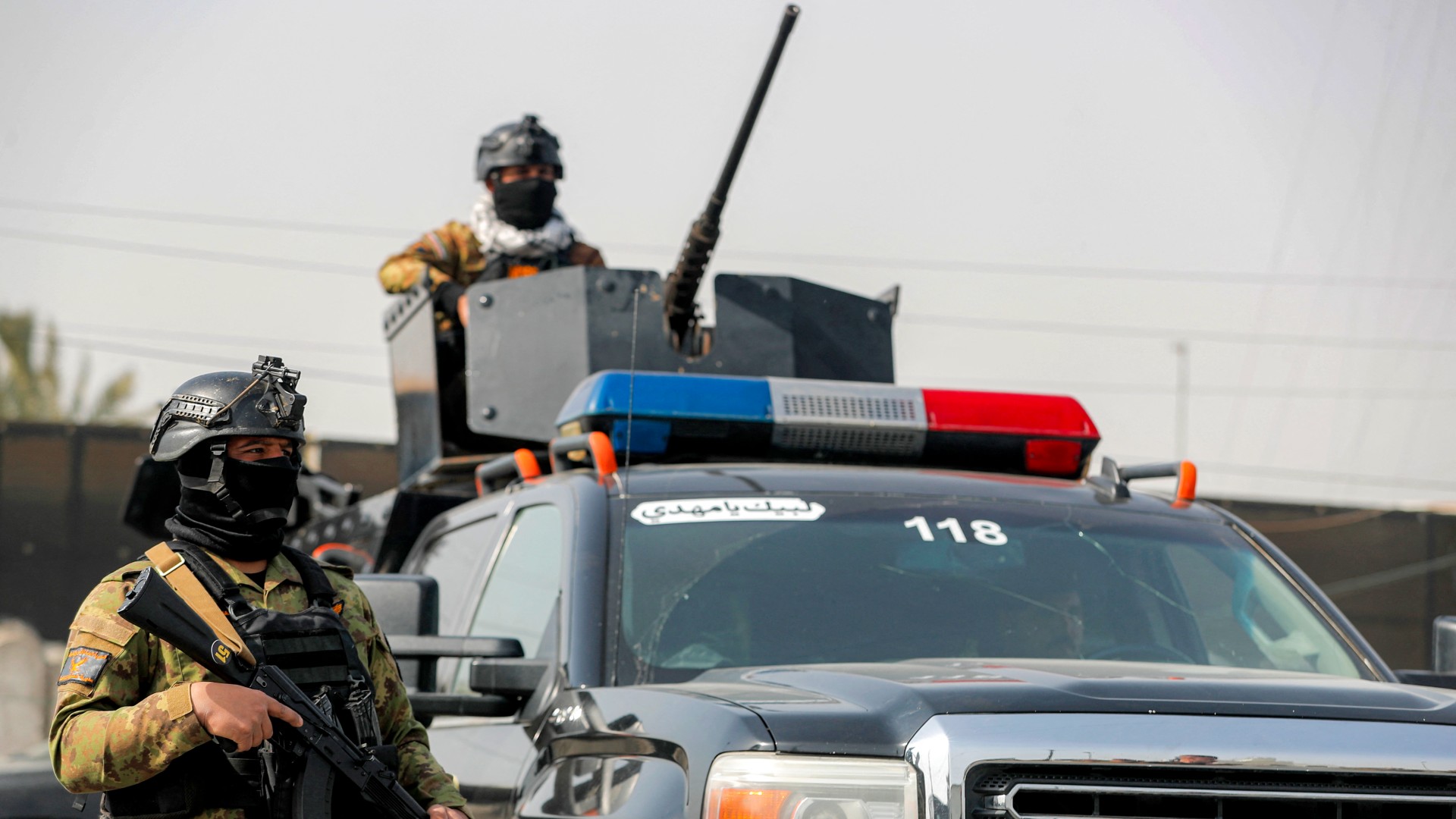
    Just days after launching the largest coordinated attacks against Mali’s ruling military government in nearly 15 years, Tuareg separatist rebels have publicly pledged to bring down the country’s junta and seize full control of northern Mali, a senior spokesperson confirmed in an interview with Agence France-Presse this Wednesday. The weekend offensive, a joint operation between the Tuareg-dominated separatist coalition Azawad Liberation Front (FLA) and the Al-Qaeda-affiliated jihadist group Group for the Support of Islam and Muslims (JNIM), marked a dramatic escalation of the West African nation’s 13-year security crisis. The insurgents launched a coordinated dawn assault on multiple strategic junta positions, including sites near the capital Bamako, leaving at least 23 people dead, with the death toll projected to rise as casualty counts are finalized. Among those killed in the two days of fierce fighting was Malian Defence Minister Sadio Camara, widely recognized as the architect of the junta’s decision to pivot away from Western partners and align with Russia. Camara’s funeral is scheduled to take place on Thursday. The combined insurgent forces successfully captured Kidal, a critical northern trade and administrative hub, earlier this week. Tuareg rebels have maintained visible patrols across the town’s streets since the takeover. In response, the Malian military launched a series of retaliatory airstrikes against insurgent positions in Kidal on Wednesday, targeting a key military camp and fighters stationed at the regional government building. A senior Malian security source told AFP that the armed forces “intend to give these enemies no respite”, a claim later confirmed by an official FLA spokesperson. The insurgent campaign did not end with Kidal’s capture: rebels also attacked a small military outpost in Gourma Rharous, a town located in Mali’s Timbuktu region, over the past week, and targeted multiple other major population centers during the weekend offensive, including the northern hub Gao and the central Malian cities of Mopti and Sevare. FLA spokesperson Mohamed Elmaouloud Ramadane, speaking to AFP during a visit to Paris, confirmed that the insurgent coalition’s next objectives are to seize full control of Gao, Timbuktu and Menaka, building on their recent victory in Kidal. Local sources in the Gao region have already reported that Malian army units have withdrawn from multiple forward positions in the area amid the insurgent advance. After three days out of the public eye, junta leader Assimi Goita addressed the nation on national television late Tuesday, acknowledging the security situation was “of extreme gravity” but insisting that the government had the crisis “under control”. Ramadane rejected that claim, stating bluntly that “the regime will fall, sooner or later”. The Sahel region has been grappling with widespread jihadist insurgency since 2012, when a combination of Tuareg separatists and jihadist fighters first seized large swathes of northern Mali. That original 2012 alliance ultimately collapsed, with jihadists driving separatist forces out of most captured territory before a French military intervention pushed the insurgents back. France has since fully withdrawn from Mali, following the junta’s decision to sever diplomatic and security ties with former colonial power Paris and other Western nations, a shift mirrored by military-led governments in neighboring Niger and Burkina Faso. The Malian junta has since aligned itself closely with Moscow. The Russian paramilitary Wagner Group, which had fought alongside Malian forces against insurgents since 2021, reorganized into the Africa Corps, a unit under direct control of the Russian defense ministry, in June 2025 following the group’s mutiny against the Russian government. Analysts note that while the FLA and JNIM hold vastly different end goals—separatists seek an independent state of Azawad for northern Mali’s Tuareg, Fulani and Arab communities, while jihadists aim to establish an Islamic emirate—the two groups have united over their shared opposition to the 2020 junta and Russian military presence in the country. Ramadane clarified that the FLA’s core demand is the permanent withdrawal of all Russian forces from Azawad and the entirety of Mali, stating: “We have no particular problem with Russia, nor with any other country. Our problem is with the regime that governs Bamako.” The latest large-scale offensive has cast serious doubt on the junta’s repeated claims that its counterinsurgency strategy, security partnerships and expanded military operations have successfully stemmed the growing jihadist and separatist threat across the country.

  • Stranded whale ferried out of German waters in barge

    Stranded whale ferried out of German waters in barge

    After more than five weeks of being stuck in the shallow coastal waters of Germany’s Baltic Sea coast, a young humpback whale nicknamed both “Timmy” and “Hope” has finally begun its journey to the deeper, open waters of the North Sea, carried in a custom water-filled barge towed through international waters. The unprecedented rescue operation has captured the attention of the entire German public, splitting marine experts and conservation groups over the wisdom and potential outcome of the risky mission.

    The whale’s ordeal began in early March, when it likely became tangled in fishing netting before stranding on Timmendorfer Beach in Lübeck Bay on March 23. After initial efforts to dig a channel to coax the animal out to open water failed, the whale slowly moved east along the German coast, eventually settling in a shallow, low-salinity area off the coast of Poel Island, where it remained for 29 days. Over that period, the stranded whale became a national cause célèbre in Germany, with regular updates on its condition dominating local and national news cycles.

    Multiple early attempts to lure the humpback away from the coast ended in failure, leaving rescuers to pursue a controversial, privately funded plan: coax the whale into a specially adapted water-filled barge, then transport it hundreds of kilometers around the Danish coast to the North Sea. The operation is funded by two German entrepreneurs, Karin Walter-Mommert and Walter Gunz, who have poured their resources into giving the whale a second chance. On Tuesday, the team achieved a major milestone when the whale voluntarily swam into the prepared barge, a moment that brought rescue workers to tears.

    “I can’t even say how happy I am,” Walter-Mommert told reporters after the successful boarding, while Gunz added that he had never prayed as intensely as he had during the weeks of the rescue effort. Till Backhaus, environment minister for Germany’s northern Mecklenburg-Vorpommern state, who has become the public face of the mission, hailed the operation as a landmark example of collective action. “If everything goes well, it will be in the North Sea in two days,” he told reporters, adding that early monitoring suggested the whale was in stable condition, and even reportedly sang overnight after being secured in the barge. After the barge and its tow vessel Fortuna B exited German territorial waters, it traveled through the Baltic Sea into Danish waters, on a route that will take it around the northern tip of Jutland and through the Skagerrak Strait to its final destination.

    Felix Bohnsack, the mission’s technical and rescue director, praised every partner involved in the operation, from state environmental agencies to the German lifeguard association DLRG, but cautioned that the hardest part of the journey is still ahead. “We are not yet out of the woods,” he warned Wednesday, reflecting on the 24 hours since the whale entered the barge. “The moment Hope swam into the barge was inconceivable; we had tears in our eyes; these are images I will never forget.”

    The operation has faced widespread skepticism from mainstream marine experts and conservation organizations, however. An expert panel from the International Whaling Commission has already distanced itself from the plan, noting that while the effort was well intentioned, the whale appears severely compromised and is unlikely to survive even after being moved to deeper water. The Whale and Dolphin Conservation (WDC) group has echoed that assessment, warning that the whale has already sustained permanent skin damage from the low-salinity waters of the German Baltic coast. For the rescue to be successful, WDC officials note, the whale’s skin must fully heal and it must quickly learn to hunt for food independently in its new habitat. The German Oceanographic Museum has added that the weakened animal faces a constant risk of drowning during the transport due to its compromised condition.

    A small number of experts have offered a more cautious optimistic take. Marine biologist Fabian Ritter told German press agency DPA that the whale has demonstrated a clear “will to live,” though he cautioned that this type of long-distance barge rescue is completely unprecedented, so no one can accurately predict what long-term effects the process will have on the animal. As the barge continues its northbound journey toward the North Sea, the entire nation of Germany remains closely watching for updates on the whale’s fate.

  • Madagascar detains French national over alleged plot to stir unrest

    Madagascar detains French national over alleged plot to stir unrest

    Madagascar’s national authorities have uncovered an alleged plot to destabilize the country’s new administration, leading to the arrest of a retired French service member and the expulsion of a senior French diplomat, according to official announcements from the island nation. The case comes just six months after a military-backed leadership change ousted the former president, deepening political friction between Madagascar and its former colonial ruler France.

    Madagascar’s chief prosecutor Nomenarinera Mihamintsoa Ramanantsoa confirmed the charges in an official video address to the public Tuesday evening. The French national, a former military personnel, faces a raft of criminal accusations including organized criminal conspiracy, sabotage of critical national infrastructure, and inciting rebellion against the sitting government. Prosecutors say the plot targeted core energy infrastructure—specifically national power grids and thermal energy facilities—with planned actions scheduled for April 18.

    Ramanantsoa added that the conspiracy network extends beyond the French detainee: a serving Malagasy army officer has also been charged in connection with the scheme, alongside multiple young Malagasy citizens who were taken into custody this week. Evidence presented by authorities includes communications from a WhatsApp chat group titled “Revolution of the Brave Citizens,” where prosecutors say conspirators mapped out plans to orchestrate widespread power outages, coax active-duty security personnel to mutiny against the current government, and mobilize youth groups to spark widespread civil unrest.

    In a parallel move, Madagascar’s Ministry of Foreign Affairs has expelled a French diplomat accused of covert involvement in the destabilization plot. France has swiftly rejected all allegations of involvement, and launched a formal diplomatic response Wednesday: the French foreign ministry summoned Madagascar’s chargé d’affaires in Paris to issue a strong protest over the expulsion, dismissing all claims of French interference as baseless. In an official statement, the ministry emphasized that France has a long record of consistent, tangible support for Madagascar, calling the accusations “not only unfounded, but also incomprehensible.”

    Additional charges against the accused include distribution of misinformation to disrupt public order and concealment of individuals wanted by Malagasy law enforcement. As of Wednesday, the French former serviceman remains in custody at a high-security penitentiary, while the young Malagasy suspects have been placed under court-ordered supervision pending trial.

    The uncovered plot unfolds against a volatile political backdrop in Madagascar. Last September, the Indian Ocean island nation saw weeks of mass youth-led protests that ultimately toppled long-serving president Andry Rajoelina. The coup was led by Colonel Michael Randrianirina, who was formally sworn in as the country’s new head of state in October 2025. Since the leadership transition, however, a rift has emerged between Randrianirina and many of the young activists who spearheaded the original protests, with the youth organizers accusing Randrianirina of hijacking their popular rebellion for personal power.

    A former French colony that gained independence in 1960, Madagascar has long maintained close political and economic ties with France, but has also faced repeated cycles of political instability and leadership turnover over the decades of post-independence rule. The current confrontation marks the most significant diplomatic rift between the two nations in recent years, as Randrianirina’s new administration works to consolidate its control amid lingering domestic opposition.

  • African athletes need support and protection – Kebinatshipi

    African athletes need support and protection – Kebinatshipi

    Reigning men’s 400m world champion Collen Kebinatshipi, the first man from Botswana to claim global gold at the World Athletics Championships, is sounding the alarm over growing talent drain from African athletics, urging continental governing bodies to step up and support homegrown athletes to stop them from seeking citizenship transfers abroad.

    The conversation around athlete nationality switches has intensified this month after global governing body World Athletics blocked six African runners from moving their athletic allegiance to Turkey, following reports of what the organization described as “lucrative” unauthorized contract offers. Among the athletes affected are five Kenyan runners, including former women’s marathon world record holder Brigid Kosgei, and top Nigerian sprinter Favour Ofili. Ofili’s case drew particular public scrutiny after the 23-year-old was incorrectly omitted from the 2024 Paris Olympic 100m entry list due to an administrative mistake by Nigeria’s athletics federation, a misstep that many observers link to the athlete’s subsequent interest in moving abroad.

    Kebinatshipi, 22, says he understands why so many African athletes opt to switch nationalities. In an interview with BBC Sport Africa, the champion noted that many elite athletes on the continent face crippling financial and logistical barriers when preparing for major international competitions. “Spending sometimes can be a bit challenging,” he explained. “I think they are doing that because they want to go where they can cut costs and be properly supported.” His solution? Kebinatshipi says African federations must invest in better support structures that match international standards, arguing that consistent, high-quality backing is the most effective way to retain top talent at home.

    Unlike some other African nations, Botswana has so far avoided widespread talent outflow, in large part due to a historic run of global success that has built confidence among the country’s next generation of runners. Last year, Kebinatshipi claimed individual 400m gold at the World Athletics Championships in Tokyo, and alongside star sprinter Letsile Tebogo, Lee Bhekimpilo Eppie and Bayapo Ndori, also won 4x400m relay gold at the same event – making Botswana the first African nation ever to claim that world title. Tebogo followed that achievement with a stunning 200m gold at the 2024 Paris Olympics, cementing the country’s status as a new global sprint powerhouse.

    This weekend, Botswana will make more history as the first African country ever to host a senior World Athletics track event, the World Relays, on home soil. For Kebinatshipi, Botswana’s rapid ascent in sprinting didn’t happen by accident: he credits much of the sport’s transformation in the country to the legacy of compatriot Isaac Makwala, a decorated Commonwealth and Olympic medallist who has mentored a generation of young Botswana runners. “My role model from a young age has been Isaac,” Kebinatshipi said. “He has also been close to me and guiding me. That’s why I had that motivation and belief that I can also do this and be like him. He has always been assisting me with training, nutrition. I really appreciate the role he played on my career up until now.”

    Raised in a small village in southwestern Botswana, Kebinatshipi first discovered his love for running during his school years. After graduating high school, he made the tough decision to pause his academic studies to focus fully on training – a gamble that paid off when he crossed the finish line in 43.53 seconds to claim world gold in Tokyo seven months ago. The historic win earned Botswana a national public holiday declared by President Duma Boko, and turned the young champion into a national icon. “I don’t really like to over-celebrate my achievements,” he said modestly. “My life has changed a lot when it comes to me going shopping. Everyone will come to me taking pictures. For me to get in the shop and spend 10 minutes I have to allow an extra 30 minutes for pictures.”

    Kebinatshipi concedes that his world title came earlier than he ever planned: he narrowly missed out on the 400m Olympic final in Paris just months before his Tokyo win, and had originally targeted breaking national records and claiming global gold by the 2028 Los Angeles Olympics. “When it comes to the national record and winning gold on global stages, those were chats that were planned for the 2028 Olympics,” he explained. “We knew that it winning in Tokyo was just a bonus and we should go back to the drawing board and work for what we are aiming for, which is the 2028 Olympics.”

    He has already made a strong start to the 2026 season, clocking 44.55s in his opening 400m race and turning in an impressive performance over 100m at the Botswana national championships. Right now, all his focus is on delivering a strong result at the World Relays in front of a home crowd. “We want to make our people here proud. We are aiming to deliver our best,” he said. “We can’t get much into aiming for world records or producing fastest times early this season because we have a long season ahead. We want to come and produce, and that’s the only thing that we are aiming for now.”

    Beyond Botswana’s success, Kebinatshipi is celebrating a broader shift across African athletics: for decades, the continent has been synonymous with middle and long-distance dominance, but a new wave of sprinters from across the continent is changing global perceptions. Names like Tebogo, South Africa’s Akani Simbine, Kenya’s Ferdinand Omanyala and Ivory Coast’s Marie-Josee Ta Lou-Smith are leading the charge, and Kebinatshipi says this evolution is a huge win for African sport. “Africans have been known for long distance events, but now we challenge ourselves in everything,” he said. “That’s why we have a big pool of sprinters in Africa.”

  • Australia duo O’Connor and Perese to leave Tigers

    Australia duo O’Connor and Perese to leave Tigers

    English Premiership rugby union side Leicester Tigers has made a major roster announcement this week, confirming that experienced Australian international fly-half James O’Connor and fellow Wallabies back Izaia Perese will leave the club when the current 2025-26 season concludes.

    O’Connor, 35, returned to top-flight English rugby for his third stint in the league when he joined the Tigers last September, moving to the Welford Road-based side from New Zealand’s legendary Super Rugby franchise the Crusaders. Since his arrival, the veteran playmaker has featured in 10 matches across all competitions. His only try for the club to date came in the side’s dominant 66-14 Premiership Rugby Cup final victory over Exeter Chiefs last month, and he has added 18 points from the kicking tee across his six Premiership outings.

    Reflecting on his tenure with Leicester, O’Connor described his time at the club as an overwhelmingly positive experience. “This has been an awesome experience for me, and right now I’m keeping my focus firmly on the business end of this season, we still have important work to do before the campaign wraps up,” he said.

    Leicester interim head coach Geoff Parling paid tribute to O’Connor’s impact on the squad, highlighting the veteran’s intangible leadership qualities that have strengthened the team’s backline group. “James has been brilliant during his time with us, bringing a wealth of experience and a calming presence that has really benefited our younger backs,” Parling said. “He will continue to contribute massively as we push through the final stretch of the season, and his ideas and diligence in everything he does have been a real asset to our program.”

    For 28-year-old center Perese, the departure comes 18 months after he joined the club from Australia’s Super Rugby side the New South Wales Waratahs ahead of the 2024-25 campaign, having signed a multi-year contract upon his arrival. Perese has been a consistent scoring threat during his time at Leicester, crossing for 11 tries in 28 total appearances for the side. This season alone, he has notched five tries, three of which came in Premiership play.

    Like O’Connor, Perese stressed that he remains fully committed to helping the club achieve its remaining goals this season, before his exit. “I’ll miss this group of lads, and I’m really proud to have been able to call myself a Leicester Tigers player,” Perese said. “There’s still a job to be done though, and I’m fully committed to giving everything I have for what’s ahead. I’d also like to say a big thank you to all my coaches and the club’s support staff for everything they’ve done to help me develop during my time here.”

    Both players are set to feature for the Tigers in the remaining weeks of the current domestic season as the side competes for silverware and league position.

  • ‘Numbskull, moron and too stupid’: Trump and Powell’s biggest clashes

    ‘Numbskull, moron and too stupid’: Trump and Powell’s biggest clashes

    The fractious public feud between former and current U.S. President Donald Trump and departing Federal Reserve Chair Jerome Powell stands as one of the most bitter confrontations between a sitting American president and a central bank leader in modern history. Since Trump reclaimed the White House following the 2024 election, he has launched nonstop attacks on Powell, driven entirely by his frustration that the Federal Reserve has not cut interest rates at the speed the president has demanded. As Powell prepares to exit his post to make way for Trump’s nominee Kevin Warsh, a look back at the series of high-profile clashes that shaped this unprecedented relationship reveals deep threats to the central bank’s long-guarded independence.

    Ironically, it was Trump himself who first appointed Powell to the role of Fed chair during his first presidential term. Back in November 2017, Trump argued the nation’s central bank needed “strong, sound and steady leadership,” and publicly praised Powell as a “strong, committed, smart” candidate perfectly suited for the position. But after President Joe Biden reappointed Powell to a second term, Trump soured on the Fed chair dramatically once he returned to the Oval Office, even claiming he was shocked Biden extended Powell’s tenure. “He’s a terrible Fed chair,” Trump told reporters last July, ignoring his own role in bringing Powell to the job in the first place.

    Trump’s criticism has not been limited to policy disagreements; he has repeatedly resorted to personal insults and derogatory nicknames for the nation’s top central banker. After the Fed cut rates three times in 2025, central bank officials opted to hold rates steady to assess how Trump’s new trade tariffs would impact persistent inflation. For every decision to hold rates that ran counter to Trump’s demands, the president lashed out. In April of last year, he dubbed Powell “Too Late”, and declared that Powell’s “termination cannot come fast enough.” That set the tone for months of attacks that followed: Trump has called Powell a “numbskull”, “moron”, and “a real dummy” in media interviews, and doubled down on these insults on social media. In one typical viral social media post, Trump wrote: “Jerome ‘Too Late’ Powell has done it again!!! He is TOO LATE, and actually, TOO ANGRY, TOO STUPID, & TOO POLITICAL, to have the job of Fed Chair. He is costing our Country TRILLIONS OF DOLLARS, in addition to one of the most incompetent, or corrupt, renovations of a building(s) in the history of construction! Put another way, ‘Too Late’ is a TOTAL LOSER, and our Country is paying the price!”

    The conflict spilled beyond interest rate policy into a public disagreement over the ballooning cost of a planned renovation of Federal Reserve office buildings. During a joint on-site visit where both men wore hard hats, Trump claimed the total cost of the project had ballooned to $3.1 billion, well above the original $2.7 billion estimate. Standing directly beside the president, Powell immediately disputed the claim, telling Trump he was not aware of any such cost overrun. When Trump pulled out a document he claimed proved the higher total, Powell countered that Trump had incorrectly added the cost of a separate completed building constructed five years earlier to the renovation project’s total. When asked how he would handle a project manager who went over budget as a former real estate developer, Trump did not mince words: “Generally speaking, I’d fire him.”

    Tensions escalated to a new level in early January, when Powell released a Sunday evening video revealing that federal prosecutors had opened a criminal investigation that could lead to an indictment over testimony he gave to a Senate committee about the renovation project. Powell, who had largely stayed silent about Trump’s attacks for months, framed the Department of Justice’s move as part of the administration’s sustained campaign to pressure the Fed. He argued that the investigation raised existential questions about the central bank’s core mission: “This is about whether the Fed will be able to continue to set interest rates based on evidence and economic conditions, or whether instead monetary policy will be directed by political pressure or intimidation,” Powell said in the video. The development immediately created political headwinds for Warsh’s nomination: Republican Senator Thom Tillis announced he would not support confirming Warsh while the investigation remained open, calling the probe a “serious threat” to the central bank’s independence. Earlier this month, the Department of Justice dropped the criminal investigation, clearing the way for Tillis to announce he would now support Warsh’s confirmation ahead of a full Senate vote.

  • New images show suspect taking selfies before Washington press dinner shooting

    New images show suspect taking selfies before Washington press dinner shooting

    Fresh evidence submitted by U.S. prosecutors has laid bare detailed pre-attack planning by the man accused of storming last weekend’s White House Correspondents’ Dinner in a bid to assassinate former President Donald Trump, according to court documents filed this week. The 31-year-old suspect, Cole Tomas Allen, has entered a not guilty plea to all charges against him, including the attempted assassination of the sitting former president. Prosecutors argue he should be held without bond ahead of his trial, citing what they call a meticulously planned, violent plot that targeted senior U.S. government leadership.

    The newly unsealed memorandum from the U.S. Department of Justice includes never-before-seen photographs that prosecutors say Allen took of himself inside his Washington, D.C. hotel room roughly 90 minutes before the attack. The images show Allen wearing formal dinner attire underneath loaded weapons strapped to his body: a shoulder holster holding a semi-automatic handgun, a sheathed fixed-blade knife, and a separate bag stuffed with ammunition. Tools recovered from Allen after the incident, including pliers and wire cutters, are also visible on his person in the self-portraits. The photos were timestamped at approximately 8:03 p.m. EST, court records show.

    Prosecutors’ timeline lays out the 30-minute window of activity after Allen took the pre-attack photos. During that period, they allege, Allen repeatedly browsed online media outlets to confirm live coverage of the annual dinner and verify that Trump was in attendance at the event. Once he confirmed the former president’s presence, he left his hotel room and walked toward the Washington Hilton ballroom where hundreds of journalists, political figures, and administration officials had gathered. Before approaching the venue’s security checkpoint, prosecutors say Allen discarded a long black overcoat he had used to conceal his pump-action shotgun.

    “Shortly thereafter, the defendant rushed the screening checkpoint on the Terrace Level of the Washington Hilton with a raised shotgun,” the memorandum states. Official accounts confirm Allen sprinted through a activated metal detector, holding the shotgun in a two-handed raised firing position as he advanced into the secured event space. A U.S. Secret Service agent assigned to the detail was shot during the subsequent confrontation, though their wound was not life-threatening and they have since been reported to be in stable condition.

    The court filing also sheds new light on the weeks-long lead-up to the alleged attack. Investigators confirm Allen left his home in Torrance, a Los Angeles suburb, on April 21, traveling cross-country by train via Chicago before arriving in the nation’s capital. During his journey, Allen kept a handwritten note on his cell phone documenting his observations of the landscape, including a line describing “the southwest desert in spring [with] Distant wind turbines looming like snowy mountains across the hazy NM desert”.

    In a chilling pre-attack communication sent to his own family shortly before he stormed the dinner, Allen allegedly spelled out his targeting priorities, writing that “Administration officials… are targets, prioritized from highest-ranking to lowest”. He added that he “would still go through most everyone here to get to the targets if it were absolutely necessary”, according to an earlier affidavit filed in the case.

    If convicted on the top charge of attempted assassination of the U.S. president, Allen faces a potential life sentence. Two additional charges—transporting a firearm across state lines to commit a felony, and discharging a firearm during a violent crime—each carry a maximum 10-year prison sentence. In their motion to deny bail, prosecutors emphasized that Allen’s alleged actions were “premeditated, violent, and calculated to cause death”. They added that no set of release conditions could reasonably guarantee the safety of the public or other community members if Allen were freed from custody ahead of his trial. At the time of reporting, Allen remains in federal custody, with no trial date yet set.

  • Shot fired after child picks up discarded gun

    Shot fired after child picks up discarded gun

    On a Tuesday afternoon in Dublin’s Ballymun neighborhood, a near-tragedy unfolded just steps away from the local Ballymun Garda Station, highlighting the growing danger of unresolved gang violence plaguing the community. What began as a routine police response to a reported firearm incident turned into a scare that has left local residents and public officials demanding greater safety measures.

    According to official statements from An Garda Síochána, Ireland’s national police service, uniformed unarmed officers responded to emergency calls around 15:00 local time. During their response, officers launched a foot pursuit of two male suspects: one teenage boy and one man in his 20s, with one suspect traveling on an e-scooter. As the chase unfolded near the residential area of Sillogue Gardens, one suspect discarded a loaded firearm in a dense bush before both suspects were taken into custody.

    Shortly after the arrests were completed, an 11-year-old child exploring the area stumbled across the hidden weapon. When the child picked up the gun, the loaded weapon discharged a round. Miraculously, no bystanders or the child were injured in the shooting, but the incident has sent shockwaves through the tight-knit community.

    Local councillor Conor Reddy, representing the People Before Profit party, confirmed that the incident is tied to an ongoing, bitter drugs feud that has sparked an escalating cycle of violence across Ballymun in recent months. He warned that repeated firearm incidents in residential areas are normalizing violent behavior for young people growing up in the neighborhood, a trend he called deeply alarming.

    This event is not an isolated occurrence. Just three days prior, on Sunday, Gardaí from the Drug Unit conducting a routine foot patrol discovered a second loaded handgun hidden in a bush near Coultry Park’s public playground. That weapon was found with a round already in the firing chamber, and it has been sent for ballistic and forensic testing. As of the latest updates, no arrests have been made in that case, though investigators confirm they are following a clear line of inquiry.

    Following Tuesday’s shooting, Gardaí confirmed that the 20s-aged suspect remains in police custody, while the teenage suspect has been released pending a full report to Ireland’s Director of Public Prosecutions. Law enforcement officials also noted they are providing support services to the family of the 11-year-old child who found the weapon, to help them process the incident.

    Local public officials have united to call for urgent action to address the growing safety crisis. Independent councillor Gavin Pepper has submitted an emergency motion to Dublin City Council, demanding that new closed-circuit CCTV cameras be installed in all local public parks and that full-time park rangers be assigned to conduct regular patrols to deter illegal activity. Fianna Fáil councillor Keith Connolly added that the gun involved in Tuesday’s discharge has not yet been recovered by police, with early reports indicating two young people on bicycles removed the weapon from the scene after it fired. Connolly is calling for high-visibility policing in Ballymun matched to the resource levels already deployed in central Dublin, arguing that residents of suburban neighborhoods deserve the same level of protection as those in the city core.

    Cllr Reddy emphasized that the most disturbing detail of the incident is the young age of people both involved in the feud and affected by it. “For an 11-year-old child to stumble across a loaded gun in their neighborhood is every parent’s worst nightmare,” he said, echoing the concerns of residents across Ballymun who now fear for their children’s safety as the drugs feud continues to escalate.