作者: admin

  • UAE says missile and drone strikes launched from Iran

    UAE says missile and drone strikes launched from Iran

    Just one month after agreeing to a fragile ceasefire with the United States, Iran has dramatically escalated tensions across the Persian Gulf by launching a coordinated barrage of missiles and drones against the United Arab Emirates, marking the first major assault on a Gulf Cooperation Council state in the post-ceasefire era. The large-scale attack has triggered immediate warnings from Abu Dhabi that it reserves the right to launch retaliatory action, stoking fears of a wider regional conflict.

    In an official statement released following the assault, the UAE’s foreign ministry condemned the operation as a reckless and unacceptable escalation that directly undermines the sovereignty, security and territorial stability of the country. “These attacks represent a dangerous escalation and an unacceptable transgression, posing a direct threat to the state’s security, stability, and the safety of its territories,” the statement read, confirming that the Emirates would exercise its full legitimate right to respond to the unprovoked aggression.

    The assault unfolded shortly after the United States unveiled a new maritime security plan to escort commercial vessels transiting the Strait of Hormuz, the critical chokepoint through which roughly a fifth of the world’s global oil supplies pass daily. Iranian state-run Fars News Agency initially claimed that Iranian military forces had struck a U.S. warship with two anti-ship missiles while the vessel was traversing the strategic waterway. That claim was swiftly rejected by then-U.S. President Donald Trump, who clarified Monday that only a South Korean-flagged vessel had been damaged in the incident. Trump added that U.S. forces had destroyed seven Iranian fast-attack craft operating in the area, a statement that Tehran quickly denied. U.S. Central Command also issued a formal rebuttal of Fars News’ report of a struck American warship.

    According to the UAE’s defense ministry, at least four cruise missiles were launched toward Emirati territory from Iranian soil. The country’s integrated air defense systems intercepted and destroyed three of the incoming projectiles, while the fourth missile impacted harmlessly in the open waters of the Gulf. A separate drone attack, however, ignited a blaze at an energy facility located in Fujairah, the UAE’s critical Indian Ocean port that serves as a key export hub for Emirati oil that avoids passing through the Strait of Hormuz.

    Local civil defense teams were deployed to the site within minutes of the attack. “Fujairah Civil Defence teams immediately responded to the incident and are continuing their efforts to control it,” the Fujairah media office confirmed in an update. Three Indian nationals working at the facility sustained moderate injuries in the strike, the Emirati federal government confirmed.

    The spillover from the attack extended to neighboring Oman, where local authorities reported two people were injured after a strike targeted a residential building in Bukha. The town of Bukha, which lends its name to the surrounding Omani province, sits in an Omani exclave along the Gulf coast, just northwest of the Emirate of Fujairah, putting it in the direct path of projectiles launched toward the UAE.

    Monday’s coordinated strikes have upended the tentative de-escalation that followed last month’s U.S.-Iran ceasefire, with regional powers already moving to reinforce military positions and issue diplomatic condemnations. The incident also underscores the persistent volatility of the Gulf region, even amid diplomatic efforts to reduce the risk of open conflict between Iran and Western-aligned Gulf states.

  • Rescuers among three dead after yacht sinks off Australian coast

    Rescuers among three dead after yacht sinks off Australian coast

    A devastating maritime tragedy has unfolded off the coast of New South Wales, Australia, leaving three people dead — including two volunteer marine rescuers who lost their lives answering a distress call from a sinking yacht. The incident unfolded Monday evening near the popular coastal town of South Ballina, located just kilometers from the border between New South Wales and Queensland, when rough, treacherous conditions turned a routine rescue mission into a disaster.

    Local emergency dispatchers received the first alert at 18:15 local time, when a member of the public spotted the recreational yacht struggling against high seas near the South Ballina breakwall. A volunteer crew from Marine Rescue NSW immediately launched to reach the stranded vessel, but disaster struck as their rescue craft crossed the notoriously choppy Ballina Bar: the small boat capsized amid powerful, unstable swells, throwing the crew into the frigid water. The two deceased rescuers were aged 62 and 78 respectively.

    Four other people aboard the yacht ultimately managed to swim to shore with only minor injuries, and search operations were scaled back Tuesday morning after all people connected to the distressed yacht were accounted for. By early Tuesday, search crews recovered the body of a third victim, a man believed to be in his 50s, washed up on a nearby sandbank. Formal identification of the third victim is still pending.

    In the wake of the disaster, Marine Rescue NSW confirmed the devastating loss in an official statement Tuesday. “It has been a terrible night for Marine Rescue NSW and our focus right now is supporting the families of those affected and our volunteers,” the organization’s spokesperson said. Commissioner Todd Andrews and Deputy Commissioner Dan Duemmer traveled to Ballina Tuesday morning to meet with local crews and coordinate support for the impacted community.

    Superintendent Joe McNulty, of the NSW Police Marine Area Command, described the sea conditions during the rescue as extremely dangerous in comments to the Australian Broadcasting Corporation. He paid solemn tribute to the volunteer crew, emphasizing the extraordinary risk rescuers take every day to protect members of the public. “We need to remember and reflect on the heroic actions of this crew overnight,” McNulty said. “These people do a fantastic job, volunteers in the community and putting their life at risk to go and save another vessel that was stricken and in danger.”

    Local residents in Ballina, a small close-knit coastal community, say the tragedy has left the entire town in mourning. “It affects the community when something like that happens, especially when a rescuer is lost and those people risk their lives to go and help other people in difficulty,” local resident Margie Fitzgerald told Nine’s Today programme. The stricken yacht has since fully sunk in waters off the coast, and a full investigation into the incident is expected to get underway in the coming days.

  • Criminal complaint filed against Norwegian politicians over complicity in Gaza genocide

    Criminal complaint filed against Norwegian politicians over complicity in Gaza genocide

    A landmark legal development has put four of Norway’s most senior current and former political leaders under formal criminal investigation over allegations they aided and abetted genocide in Gaza through their oversight of the country’s $2.2 trillion sovereign wealth fund. The complaint, filed by Norwegian activist groups, alleges the officials violated domestic Norwegian laws that integrate provisions of the Rome Statute banning genocide by allowing the Government Pension Fund of Norway (GPFG)—the world’s largest single sovereign investor—to maintain holdings in firms linked to Israeli war crimes in Gaza.

    Named in the primary complaint brought by Grandmothers Against Genocide (Grag) are sitting Prime Minister Jonas Gahr Store, current Foreign Minister Espen Barth Eide, former Finance Minister Trygve Slagsvold Vedum, and former NATO Secretary General Jens Stoltenberg, who also previously served as Norway’s finance minister. A complementary complaint submitted by the Palestine Committee of Norway adds two more senior figures: GPFG Chief Executive Nicolai Tangen and Ida Wolden Bache, governor of Norway’s central bank, which manages the fund.

    In a reversal of an earlier dismissal, documents obtained exclusively by Middle East Eye confirm that Norway’s Prosecuting Authority has formally ordered the country’s national criminal investigation unit, Kripos, to open a full probe into the allegations. Prosecutors have also instructed Kripos to formally notify all respondents named in the complaint of the pending investigation.

    The case centers on the GPFG’s controversial investment strategy related to firms operating in or linked to Israel. In 2025, the fund divested from 23 Israeli companies over documented violations of its internal ethical investment guidelines, a decision that drew fierce public backlash from the United States, with State Department officials stating they were “very troubled” by the move. Despite that divestment, the fund retained stakes in 29 other Israeli firms, and continues to hold shares in major multinational arms manufacturers including Leonardo and ThyssenKrupp—both of which supply military equipment directly to the Israel Defense Forces, which has killed more than 72,000 Palestinians in Gaza since the outbreak of hostilities in October 2023, according to Gazan health authorities.

    A parliamentary push for full, blanket divestment from all companies linked to Israeli war crimes was defeated in the Norwegian Storting (parliament) in June of last year, after the governing Labour Party joined conservative opposition parties to reject the proposal. Months earlier, United Nations Special Rapporteur for the Occupied Palestinian Territories Francesca Albanese had written directly to Stoltenberg warning that the fund’s ongoing holdings put Norway at risk of violating binding international law.

    Activists behind the complaint say the investigation is long overdue and would set a critical precedent for holding elected officials accountable for mass atrocities abroad. Kirsti Maehle, co-founder of Grag, argued that prosecuting responsible officials would establish a clear guiding principle for Norwegian representatives who have thus far ignored the suffering of Palestinian civilians. “They sit in our parliament, the Storting, and vote in favour of the investments. That amounts to voting to contribute to crimes against humanity, which is absolutely outrageous,” Maehle stated.

    Legal analysis backing the complaint, prepared in a personal capacity by Terje Einarsen, a law professor at the University of Bergen, notes that explicit intent to enable atrocities is not required to establish legal liability under Norwegian law. Einarsen told Middle East Eye that senior Norwegian government leaders have almost certainly been aware of the core crimes committed in Gaza and the role that fund-invested companies play in enabling those abuses. “They may thus be legally responsible for aiding and abetting one or more crimes,” Einarsen explained.

    Complaints have also been bolstered by a 118-page independent academic report from the group Historians for Palestine, published in June 2024, which documents the GPFG’s holdings in firms linked to human rights violations and war crimes. The report was submitted alongside the criminal complaint as key evidence. Co-author Pal Nygaard, a professor of economic history at the Norwegian Business School, emphasized that continuing these investments directly reinforces impunity for Israel. “It is important that the fund follows its own ethical guidelines and acts as a truly responsible investor, and that means divesting from all companies that contribute to Israel’s illegal occupation of Palestine, their apartheid system, and their genocide,” Nygaard said. He added, “The continued investments in companies that actively contribute to Israel’s violation of international law equals accepting these mass atrocities. In the end, it is the politicians who designed this system for responsible investments, and they are then also ultimately responsible for ensuring that the fund and its Council on Ethics manage the fund’s investments accordingly.”

    Earlier this week, Grag submitted updated evidence regarding the fund’s investments to Norway’s Standing Committee on Finance and Economic Affairs. Middle East Eye has reached out to the Norwegian Prime Minister’s Office, GPFG, Kripos, and the Norwegian Prosecuting Authority for comment on the investigation, and had not received a response as of publication.

  • Alberta separatists submit petition for independence referendum

    Alberta separatists submit petition for independence referendum

    A years-long movement pushing for Alberta’s separation from Canada reached a pivotal milestone this week, as organizers of the citizen-led initiative formally submitted a petition calling for a fall independence referendum — only to see their progress halted by a court challenge from Indigenous First Nations groups.

    Led by the grassroots group Stay Free Alberta, the petition drive required a minimum of 178,000 signatures, equal to 10% of the province’s eligible voters, to qualify for a public vote. In a press conference outside Edmonton’s election office Monday, group leader Mitch Sylvestre announced organizers had collected more than 300,000 signatures, far exceeding the threshold. Calling the moment a historic turning point for the separatist cause, Sylvestre framed the campaign’s progress as advancing to the final stage of a high-stakes political process, comparing it to reaching the championship round of the Stanley Cup hockey tournament.

    The separatist movement in Alberta draws its core support from long-held grievances of western alienation, a sentiment shared by many residents who argue the province’s economic and political interests are consistently sidelined by federal decision-makers in Ottawa. Frustration has boiled over in recent years particularly over federal climate policy, which many Albertans blame for restricting growth of the province’s lucrative oil and gas industry, especially under the current Liberal federal government. Once relegated to the political fringe, the movement has gained traction over the past 12 months, pushing the once-remote possibility of a national unity crisis into the mainstream of Canadian political discourse.

    Despite the milestone for pro-separation organizers, their path forward is now blocked by a legal challenge launched by multiple First Nations communities, including the Athabasca Chipewyan First Nation, who argue that an independent Alberta would violate the constitutionally protected treaty rights their communities signed with the British Crown more than a century before the formation of modern Canada. According to Kevin Hille, legal counsel for the First Nation group, an international border created by separation would fundamentally alter treaty access and the community’s traditional way of life, and full independence would effectively sever the binding treaty agreements between Indigenous communities and the Canadian state.

    Hille pointed to a December 2025 ruling by an Alberta court that already found an independence referendum would be unlawful because it infringes on First Nations constitutional rights. Since that ruling, the provincial government has amended local laws to remove the requirement that citizen-initiated referendums align with the Canadian constitution, and allowed the petition process to move forward. The current court case will decide whether the original December ruling still stands despite the legislative change. A final decision on the challenge is expected by the end of May. If the First Nations challenge succeeds, only a referendum proposed directly by the provincial government could move forward, effectively ending the current citizen-led initiative. A court has already paused the official signature verification process while it considers the case.

    If the petition is ultimately approved and signatures verified, Albertans will head to the polls as early as October 19 to vote on the question: “Do you agree that the Province of Alberta should cease to be part of Canada to become an independent state?”

    Public opinion polling suggests separation still lacks majority support among Albertans. A February 2026 survey by Canadian polling firm Abacus Data found that roughly 25% of residents support independence, while a majority remain opposed to splitting from Canada. A counter-petition organized by anti-separation activists calling “Forever Canadian” has already collected more than 450,000 signatures, and is currently under review by a provincial legislative committee to qualify for a separate public vote.

    Proponents of separation argue that independence would allow Alberta to unlock the full economic potential of its vast natural resource reserves and keep all revenue generated by the province’s energy sector. The movement has also drawn international attention: organizers confirmed earlier this year that they held meetings with officials from the U.S. Trump administration to discuss a feasibility study for a potential $500 billion line of credit in the event of separation, though they stressed they have not requested direct funding from the U.S. government.

  • The looks turning heads on the Met Gala carpet

    The looks turning heads on the Met Gala carpet

    The most anticipated evening on the global fashion calendar has officially kicked off in New York City, as A-list celebrities, industry icons, and boundary-breaking creators gather for the 2026 Met Gala, the annual fundraising gala for the Metropolitan Museum of Art’s Costume Institute. This year’s event centers on the creative theme ‘Costume Art’, which challenges attendees to lean into lavish, whimsical design that blurs the line between clothing and fine art — a framework that has turned the iconic red carpet into a moving gallery of one-of-a-kind sartorial works.

    Helmed by an exceptionally high-profile group of co-chairs, the 2026 gala counts global music superstar Beyoncé, award-winning screen actor Nicole Kidman, five-time Wimbledon champion Venus Williams, and Vogue Global Editorial Director Anna Wintour among its leadership, with Lauren Sánchez Bezos, wife of Amazon founder Jeff Bezos, serving as an honorary chair. The evening opened with a showstopping performance from Broadway favorite Joshua Henry, who brought the iconic steps of the Met to life with a rendition of Whitney Houston’s *I Wanna Dance With Somebody*, backed by a full band and ensemble of dancers. The steps themselves were transformed for the night, decked out to resemble weathered moss-covered bricks set within a sprawling, lush garden to match the evening’s artistic tone.

    As guests began arriving, a steady stream of imaginative, theme-aligned looks emerged from the red carpet. Longtime Met Gala staple Anna Wintour led the way in a custom, feather-adorned Chanel creation that leaned into the event’s whimsical mandate. Co-chair Nicole Kidman stepped out alongside her daughter Sunday Rose in a striking floor-length red beaded column gown also from Chanel, while fellow co-chair Venus Williams turned heads in a glittering black gown paired with an opulent silver neckpiece encrusted with fine jewels.

    Lauren Sánchez Bezos made a particularly art-historical statement in her Schiaparelli gown, which directly references one of the most famous (and once controversial) portraits in art history: John Singer Sargent’s *Madame X*. Content creator Emma Chamberlain leaned fully into the theme in a multicolored Mugler gown by Miguel Castro Freitas designed to mimic the texture and composition of a fine art painting. Actor Cara Delevingne opted for a clever deceptive design from Ralph Lauren: a deceptively simple silhouette from the front that revealed dramatic sheer detailing when she turned, creating a striking visual effect on the garden-themed steps.

    This year’s gala also marks a groundbreaking milestone for disability representation: for the first time in the event’s history, a wheelchair user named Philip has attended the invitation-only gathering. Speaking to Vogue ahead of his arrival, Philip reflected on the historic moment, noting that for decades, disabled people were entirely shut out of representation at major fashion events. “For so long, disabled people were not represented anywhere. The thought of even being able to exist at an event like this… nobody even went there. To go from that to now, somehow finding myself there – I can’t say how blessed and honored I feel attending,” he shared.

    Disability advocate and writer Sinéad Burke also returned to the gala, stepping out in a structured black corseted gown with flowing dramatic sleeve embellishments. Other standout looks included actress Chase Sui Wonders’ diamond-encrusted pale lavender gown, *Girls* creator Lena Dunham’s vivid red Valentino gown made from feathers and sequins — a piece directly inspired by Artemisia Gentileschi’s Renaissance masterpiece *Judith Slaying Holofernes*, with details meant to evoke the painting’s dramatic depiction of blood from the Assyrian general’s neck. Pop musician Charli XCX deviated from her signature bright pink aesthetic to wear a sleek sophisticated black Saint Laurent gown with floral front detailing, while boundary-pushing artist Doja Cat wore a classically Grecian-inspired Saint Laurent silhouette crafted from an unexpected unconventional material: silicone. Four-time Grand Slam champion Naomi Osaka brought two distinct looks from designer Robert Wun, arriving in a white outer layer that she removed to reveal a deep maroon open-back lace-up gown underneath.

    As the evening unfolds, new red carpet arrivals and unexpected fashion moments continue to emerge, with updates rolling out across fashion and entertainment platforms throughout the night.

  • US strikes Iranian fast boats as Iran attacks UAE oil facility

    US strikes Iranian fast boats as Iran attacks UAE oil facility

    Tensions in the strategically critical Strait of Hormuz reignited dramatically on Monday, as conflicting claims of military strikes, ship attacks and port damage plunged the already volatile Persian Gulf region into a fresh crisis, just weeks after a fragile US-Iran ceasefire took hold.

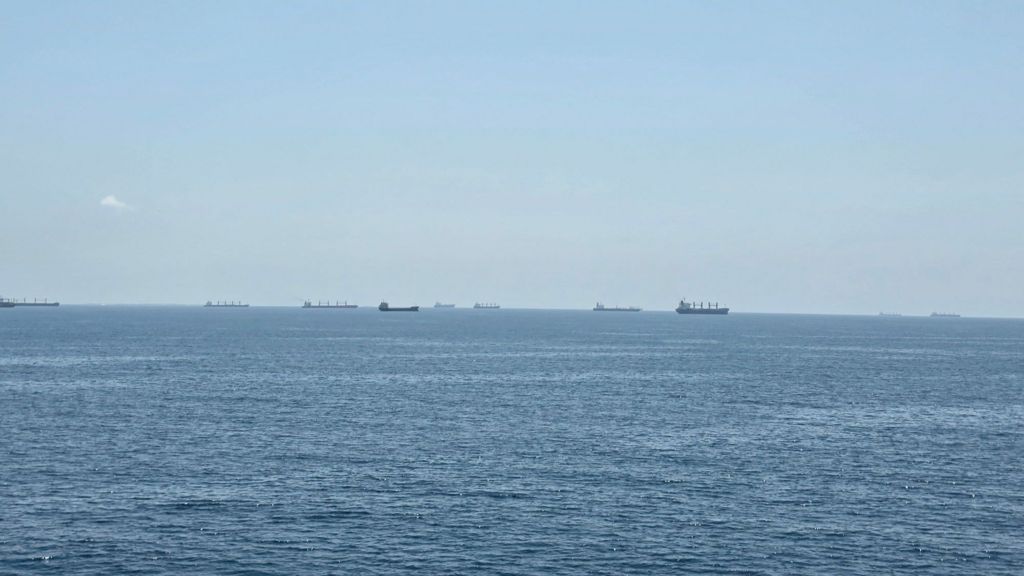
    The waterway, which carries roughly 20% of global oil and liquefied natural gas supplies, has remained effectively closed to commercial traffic since February, when joint US-Israeli airstrikes on Iran prompted Tehran to block all transit. A ceasefire agreed in early April paused Iranian drone and missile attacks on Gulf states including the United Arab Emirates, but the waterway stayed largely blocked amid a separate US blockade on Iranian ports, leaving an estimated 2,000 vessels and 20,000 seafarers stranded in the Gulf.

    On Sunday, US President Donald Trump launched what he dubbed ‘Project Freedom’, an initiative to escort stranded neutral ships out of the blocked strait. He announced on Monday that US military forces had destroyed seven Iranian fast-attack boats in the waterway, using helicopter strikes to clear a path for transiting vessels. ‘It’s all they have left,’ the president stated of the small craft. The US military later confirmed that Navy destroyers had already escorted US-flagged commercial ships through the channel earlier that day.

    Iran has issued outright denials of all US claims, rejecting that any of its fast boats were targeted or sunk. Iranian officials also dismissed Washington’s assertion that it had escorted ships through the strait as ‘entirely false’, and countered that its own military had fired warning shots at a passing US warship – a claim the US military immediately denied. Iranian Foreign Minister Abbas Araghchi dismissed the US initiative, arguing that ‘events in the strait make clear that there’s no military solution to a political crisis,’ adding that ‘Project Freedom is Project Deadlock.’

    The first major breakthrough for the US operation came when global shipping giant Maersk confirmed that one of its US-flagged vessels, the Alliance Fairfax, which had been stranded in the Gulf since late February, had successfully exited the strait under US military escort. The company noted that the transit was completed without any harm to the 20+ crew on board, and all personnel remain safe. Maersk said the US government had reached out to offer the military escort, which the firm accepted.

    Even as the first US-escorted ship exited the waterway, multiple attacks on vessels and infrastructure were reported across the region, raising fears of a full resumption of open conflict. The UAE’s foreign ministry confirmed that a tanker owned by its state-run energy giant Adnoc was struck in the strait. South Korean officials also reported an explosion on one of its vessels anchored off the UAE coast.

    UAE air defense forces also intercepted a large barrage of incoming fire, shooting down 12 ballistic missiles, three cruise missiles, and four drones. One unblocked projectile impacted near the Fujairah Oil Port – the UAE’s largest oil storage and shipping facility, located on the country’s east coast outside the Strait of Hormuz. The strike sparked a large blaze at the terminal and left three people injured. The UAE condemned the assault as a ‘dangerous escalation’ and said it reserved the right to take retaliatory action. An unnamed Iranian military official, quoted by Iranian state television, denied that Iran had any plans to target the UAE.

    The unrest sent global energy markets spiking on Monday: benchmark Brent crude prices jumped more than 5% in intraday trading to push past $115 per barrel, as traders reacted to fears of disrupted supplies. Fujairah has emerged as a critical alternative export route since the strait closed, with a pipeline from Abu Dhabi’s inland oil fields delivering crude to the port for loading onto tankers, allowing limited exports to continue despite the blockade.

    Additional unrest was reported elsewhere along the strait: Omani state media reported that two people were injured when a residential building in the coastal town of Bukha was targeted in an attack. Neighboring Qatar, a key regional Gulf state, issued a statement condemning the attack on the Adnoc tanker and calling for the ‘unconditional reopening’ of the Strait of Hormuz to resume global commercial shipping.

    The escalation comes amid growing international pressure to resolve the months-long blockade, which has created a growing humanitarian crisis for stranded seafarers. International shipping groups have raised urgent concerns about dwindling food and medical supplies on board stuck vessels, as well as deteriorating physical and mental health for thousands of crew members trapped at sea. Trump has framed Project Freedom as a humanitarian mission, saying the US was responding to requests from nations around the world to free ‘merely neutral and innocent bystander’ ships locked in the Gulf. He has threatened to use additional force if any actor interferes with the evacuation operation, but has not laid out a clear long-term plan to reopen the strait to full commercial traffic.

  • She was an award-winning Broadway star – but still struggled to land roles

    She was an award-winning Broadway star – but still struggled to land roles

    Thirty-five years ago, a young Filipina performer named Lea Salonga stepped onto the Broadway stage and made history, winning a Tony Award for her breathtaking lead performance in *Miss Saigon*. What many do not know, however, is that even after this career-defining win, systemic barriers kept her from chasing the next opportunity. In a candid interview with the BBC, Salonga opened up about the rampant anti-Asian bias that defined her early years in Western theater: agents would submit her for auditions, only for casting teams to reject her out of hand, citing her ethnicity as the reason. “They were unable to imagine someone like me playing those roles,” she recalled.

    Today, that kind of outright exclusion feels almost unthinkable. We live in an era where K-pop powerhouses BTS and Blackpink top global music charts, Asian-led hits like *Shōgun* and *Squid Game* dominate major awards ceremonies, and Asian-led projects draw sold-out crowds on Broadway. For Salonga, who has since cemented her status as a global Broadway icon and national treasure in the Philippines, this sea change has been decades in the making.

    Even as a Tony-winning performer, Salonga’s path to the next landmark role of her career was only possible through the support of insider advocates. The opportunity to play Eponine in the long-running hit *Les Misérables* came to her without an audition, thanks to the producers of *Miss Saigon*, who also backed the iconic musical. Salonga made history as the first Asian actor to land a principal role in the production, but she remembers the casting being framed internally as little more than a low-stakes experiment.

    “When I was cast, the show had already run for five years, and January is usually a slow ticket season, so producers felt there was minimal risk,” she explained. At the time, she was the only person of color in the entire company, and the production openly questioned whether casting an Asian actor in a traditionally white role was just a publicity stunt. “Is this going to work? If it works, the reward would be great,” was the general attitude, she said.

    Stepping into that role was an experience Salonga describes as “incredibly stressful” — far more nerve-wracking than *Miss Saigon*, where she played an Asian character that fit casting expectations. “With *Les Mis*, it’s like, we’re going to cast this Asian chick in this show — and there’s never been an Asian in this show,” she said. Yet even amid the pressure, she understood the magnitude of what that breakthrough meant for future generations: “It meant that anyone who had their sights on Eponine could play it. Because if I could do it — then anyone else could, regardless of ethnic background.”

    More than 30 years later, that breakthrough has come full circle during the 2026 Singapore run of *Les Misérables The Arena Spectacular*, where Salonga now performs alongside 28-year-old Nathania Ong — the current actress playing Eponine, and the first Singaporean to ever take on the role on London’s West End. Watching Ong from backstage as she prepares for her own performance, Salonga says it’s clear the experiment she joined all those years ago worked. “It makes me think that the experiment worked. And it’s something I’m very proud to have participated in. And now it’s time for the next generation of actors to step up,” she joked.

    Ong grew up watching trailblazers like Salonga break barriers, but says she did not immediately grasp the historic weight of her own casting. “I didn’t even realize what a big deal it was to have gotten the part,” she shared. “It took a few months before I was like… I’ve made it. I’ve actually done something with this.” While she credits Salonga for opening doors for all BIPOC performers, she notes that the fight for equal representation has evolved — but is far from over. Today, the struggle is no longer just about getting a foot in the audition room: it’s about being recognized for your talent, not just hired to check a diversity box. “The thing with going for parts as an East Asian is that sometimes we struggle with the idea of: ‘Have we been hired to meet a diversity quota, or are we actually being hired because we’re good at our jobs?’” she said.

    For Salonga, the biggest and most exciting shift extends beyond casting of traditional Western roles: Asian creators are now writing and headlining their own stories, rather than just fitting into narratives crafted by others. She points to the recent Tony-winning success of *Maybe Happy Ending*, the South Korean musical that earned the country its first ever Tony Award, as a perfect example of this new era. “Seeing a show like that…winning so many awards… tells me that if something is just so good that it cannot be ignored, it will be seen,” she said. When she was a young performer, she never could have imagined a story so inherently Asian earning such widespread acclaim on Broadway, and she notes how transformative that representation is for young Asian artists growing up today. “I think for a lot of young people to be able to see somebody that looks like them up on that stage… is incredible. I think there was a generation of Asians who wanted to do this but didn’t have that representation upon which they could reflect themselves,” she said. “I’m so glad that I am now getting to see it because now my son gets to see it.”

    Salonga is also a self-described huge fan of BTS, whose global dominance she calls a landmark moment for Asian artists. She sees a familiar weight in the pressure the band carries, recalling the expectation she felt as a young performer breaking out on the global stage: “When you head to the West End and you have to be excellent or you will let 75 million people down [the population of the Philippines], that’s a lot to put on your shoulders. The responsibility is heavy,” she said. “That’s also why I appreciate BTS so much because it’s like, here you go, the weight of all of Asia is now on your shoulders.”

    The momentum for authentic Asian storytelling extends far beyond Broadway, Salonga adds, pointing to her own upcoming project: a DreamWorks animated film entirely rooted in Philippine folklore, a project she never thought possible earlier in her career. “An animated film that is based on my culture… I’d never thought I’d see something like that in my lifetime,” she said.

    When asked what her 18-year-old self would make of how far the industry has come, Salonga says the younger version of herself would be incredulous — but also inspired to know there is a space for Asian talent. “Incredibly shocked, but I think also inspired to know… that there is a space for me,” she said. “You know, you can push us to the margins – but we’re just going to centre ourselves.”

  • Blake Lively and Justin Baldoni settle lawsuit over It Ends With Us film

    Blake Lively and Justin Baldoni settle lawsuit over It Ends With Us film

    One of Hollywood’s most closely watched entertainment industry legal disputes has reached an 11th-hour resolution, with actors Blake Lively and Justin Baldoni announcing a settlement in their opposing lawsuits tied to the 2024 hit film *It Ends With Us* just two weeks before their scheduled civil trial was set to begin in New York.

    The legal conflict first erupted in December 2024, when Lively — who led the cast of the Colleen Hoover book adaptation as protagonist Lily Bloom — filed suit against Baldoni, her co-star and the film’s director, and his production company Wayfarer Studios. Lively’s original legal filing alleged sexual harassment on set, coordinated retaliation after she raised complaints about unsafe working conditions, and a targeted smear campaign that used social media manipulation and friendly media outlets to undermine her public reputation.
    Baldoni immediately denied all claims against him and launched a multi-party countersuit, naming Lively, her husband actor Ryan Reynolds, her publicist, and even *The New York Times* for reporting Lively’s accusations. He claimed Lively had fabricated the harassment narrative to “steal” the film from his production company and threatened to scrap promotional work to force contractual changes.

    Last month, a New York judge significantly narrowed the scope of the legal battle, dismissing 10 of the 13 claims in Lively’s original suit — including the core allegations of harassment and defamation — leaving only three active claims: breach of contract, retaliation, and aiding and abetting retaliation. The same judge threw out all of Baldoni’s countersuit, ruling that his legal team had failed to prove Lively’s contractual negotiations amounted to wrongful extortion rather than protected labor renegotiation.

    Both parties confirmed the settlement in a joint statement issued to media on Monday, ending months of public drama that pulled in A-list celebrities including Taylor Swift (whose private text exchanges with Lively about the on-set conflict were entered as evidence) and forced both Lively and Reynolds to prepare for trial testimony.

    “Their film *It Ends With Us* is a source of pride to all of us who worked to bring it to life,” the statement read. “Raising awareness, and making a meaningful impact in the lives of domestic violence survivors – and all survivors – is a goal that we stand behind.”
    The joint statement acknowledged the strain of the litigation process, adding: “We acknowledge the process presented challenges and recognize concerns raised by Ms Lively deserved to be heard. We remain firmly committed to workplaces free of improprieties and unproductive environments.”
    The statement concluded by noting that both parties “hope that this brings closure and allows all involved to move forward constructively and in peace.”

    In the weeks after the judge’s ruling on dismissed claims, Lively had framed her legal action as a stand for safer workplaces in Hollywood. “The last thing I wanted in my life was a lawsuit, but I brought this case because of the pervasive RETALIATION I faced, and continue to, for privately and professionally asking for a safe working environment for myself and others,” she wrote in an Instagram post. “I hope the Court’s decision shows others that, as unfathomably painful as it is, you can speak up.” Her attorney added at the time that Lively had already succeeded in exposing Hollywood’s coordinated “smear machine,” noting that other women targeted by the same tactics had already begun holding those responsible accountable.

    *It Ends With Us*, based on Hoover’s bestselling novel, centers on a young woman who survived childhood domestic abuse and finds herself trapped in an abusive relationship as an adult, aligning the film’s core theme with Lively’s public focus on safe work environments throughout the litigation.

  • Trump’s Hormuz ‘protection’ seeks ‘pretext for escalation’: Iran

    Trump’s Hormuz ‘protection’ seeks ‘pretext for escalation’: Iran

    Tensions have escalated sharply in the Persian Gulf after former U.S. President Donald Trump unveiled a new U.S. military-led initiative to escort stranded commercial vessels through the closed Strait of Hormuz, a move Iranian officials have decried as a deliberate provocation designed to trigger conflict and justify expanded military aggression against the Islamic Republic.

    The plan, branded “Project Freedom” and scheduled to launch Monday, was first announced by Trump on his social media platform Truth Social, and later confirmed by U.S. Central Command (CENTCOM). In his announcement, Trump framed the operation as a humanitarian gesture, stating his administration had notified nations with ships trapped in the key waterway that U.S. forces would safely guide vessels out of Iranian restricted areas so they could resume commercial activity. CENTCOM later released detailed force deployments for the mission: it will include guided-missile destroyers, more than 100 land and sea-based aircraft, multi-domain unmanned surveillance and combat systems, and a contingent of 15,000 active-duty service members. The command also noted the operation will be backed by a new cross-agency international coordination framework called the Maritime Freedom Construct, which pairs diplomatic outreach with military coordination to bolster maritime security in the strait.

    Iran, which closed the strategically critical strait in response to the U.S.-Israeli war and the Trump administration’s naval blockade of the country, has issued a firm, unified rejection of the plan. An anonymous senior Iranian official told independent outlet Drop Site that Trump’s proposal is engineered to goad Iran into firing the first shot, creating a false pretext for military escalation. The official stressed that any commercial vessel attempting to traverse restricted transit routes without prior coordination with Iranian authorities will be intercepted immediately by Iranian security forces. Should U.S. military vessels intervene to disrupt these interceptions, the official added, Iran will respond with immediate, proportional force. The official also noted that U.S. warships are currently positioned far from the restricted transit corridor, meaning Iran would engage non-compliant commercial vessels long before they could reach American assets, accusing Trump of leveraging civilian ships as political pawns in his domestic and geopolitical agenda.

    Ebrahim Azizi, chair of the Iranian Parliament’s national security commission, echoed the criticism, warning that any U.S. interference in Iran’s new maritime regulatory framework for the Strait of Hormuz constitutes a direct violation of the ceasefire brokered earlier this April. He dismissed Trump’s initiative outright, stating that the strategically vital waterway cannot be governed by “delusional posts” on social media.

    The escalation over the strait comes as both sides navigate fragile, indirect negotiations to end the three-month-long war. Iranian Foreign Ministry spokesperson Esmaeil Baghaei confirmed Sunday that Tehran is currently reviewing the U.S. government’s response to Iran’s 14-point peace proposal, which was shared via Pakistani intermediation. Baghaei clarified that the proposal is exclusively focused on ending immediate hostilities, and that no nuclear-related negotiations are currently underway, despite repeated claims from Trump and U.S. Defense Secretary Pete Hegseth that halting Iran’s purported nuclear weapons program is a core U.S. war aim. Iran has long denied pursuing nuclear weapons, and U.S. intelligence assessments have repeatedly concluded Iran does not maintain an active nuclear weapons program as described by U.S. officials. Trump has already cast doubt on the proposal’s viability, writing on social media Saturday that he cannot imagine the plan being acceptable, claiming Iran has not paid a sufficient price for its actions over the past 47 years.

    The exact details of the 14-point proposal remain publicly unconfirmed, but foreign policy analysts have offered preliminary assessments. Trita Parsi, executive vice president of the Quincy Institute for Responsible Statecraft, argued Sunday that the proposal represents an unstated push for a broad grand bargain to resolve the 47-year history of U.S.-Iran hostility, rather than just a temporary ceasefire. Parsi noted the plan implicitly calls for both sides to restrain their regional proxies, including Israel and Hezbollah, an approach that could align with Trump’s known negotiating instincts.

    Domestically, the war has become a growing political liability for Trump. A new ABC News/Washington Post/Ipsos poll released Friday found that 61% of U.S. voters view Trump’s decision to launch the war as a mistake, while 66% disapprove of his handling of the conflict. The poll also recorded Trump’s lowest presidential approval rating to date.

    Analysts have noted that Iran’s current strategy, which includes closing the Strait of Hormuz to disrupt global energy and commodity trade, aligns directly with a long-documented asymmetric warfare doctrine developed by Iran’s military leadership. Archival footage from the 1990s, recently shared online by journalist Séamus Malekafzali, featured late Iranian Revolutionary Guard Corps commander Hossein Salami — who was killed in a U.S.-Israeli strike last year — outlining the doctrine for IRGC staff. Salami argued that while direct conflict with the U.S. is possible, victory is achievable if Iran can shift fighting to terrain that neutralizes U.S. military advantages and exploits U.S. weaknesses. Geopolitical analysts paraphrase the doctrine as focusing on drawing out conflict to raise economic costs and fuel domestic political turmoil in the U.S., eroding its political will to sustain military engagement.

    This approach is already visible in the closure of the Strait of Hormuz, a waterway that carries roughly 25% of global seaborne oil trade and one-third of the world’s seaborne fertilizer trade annually. Harrison Mann, a fellow with the advocacy group Win Without War, explained the dynamic during a Sunday CNN appearance, noting that Iran is able to inflict meaningful economic pain on the U.S. and its allies through this form of economic warfare, a pressure campaign that will be unsustainable for Trump over the long term.

    Project Freedom has drawn immediate backing from hardline U.S. Iran war supporters, including South Carolina Senator Lindsey Graham, a leading Republican advocate for military action against Tehran. Graham said he fully endorses Trump’s decision, stating that while he supports a diplomatic end to the conflict, it is past time to reestablish freedom of navigation in the strait and respond forcefully to Iran if it continues what Graham described as “terrorizing the world.”

  • Dolly Parton cancels Las Vegas residency over health issues

    Dolly Parton cancels Las Vegas residency over health issues

    Beloved 80-year-old country music legend Dolly Parton has announced the full cancellation of her upcoming Las Vegas residency, as she continues to receive medical treatment for a long-standing battle with kidney stones. The news marks a second shift to Parton’s performance plans, after she initially pushed back the six-show run originally scheduled for December 2025 at Caesars Palace’s iconic Colosseum Theatre to September 2026, citing unaddressed health challenges at that time.

    In an upbeat, candid announcement shared across her official social media channels on Monday, Parton assured fans that she is making steady progress in her recovery. “I’ve been responding really well to meds and treatments and improving every day,” she wrote in a written statement. “I’ve still got some healing to do, but I am on my way!”

    In a accompanying video message, the Grammy-winning star leaned into her signature warm humor to frame the decision, noting that she could not reasonably prepare for the physical demands of a high-energy live show in her current condition. “I can’t be dizzy carrying around banjos, guitars and such on 5-inch heels – and you know that I’m going to be wearing them,” Parton joked. “Not to mention, all those heavy rhinestone outfits, the big hair, my big… uh, personality.”

    Parton emphasized that she needs additional time to regain the full physical stamina required for a major stage residency, and expressed sincere regret to fans who had already purchased tickets for the run. “I am truly sorry that I’m going to miss all of you that had tickets to see me in Las Vegas. Well, you get on to Vegas, and you have a big time… And I’ll see you somewhere down the line,” she said.

    Despite the cancellation of the Las Vegas shows, Parton remains actively engaged in a range of professional projects. She confirmed that she is still recording new music, producing music videos, making regular visits to her popular Dollywood theme park, developing a original Broadway musical, and moving forward with plans to open a new museum and hotel in Nashville by the end of 2026.

    One of the most decorated and recognizable figures in modern music, Parton has built a decades-long career spanning country, pop, and rock, earning 10 Grammy Awards and a 2022 induction into the Rock & Roll Hall of Fame. She is globally known for timeless crossover hits including *Coat of Many Colors*, *I Will Always Love You*, *9 to 5*, and *Jolene*. The canceled Las Vegas residency was set to be her first extended performance run on the Las Vegas Strip since the 1990s, when she shared the stage with her *Islands In The Stream* duet partner and longtime collaborator Kenny Rogers.