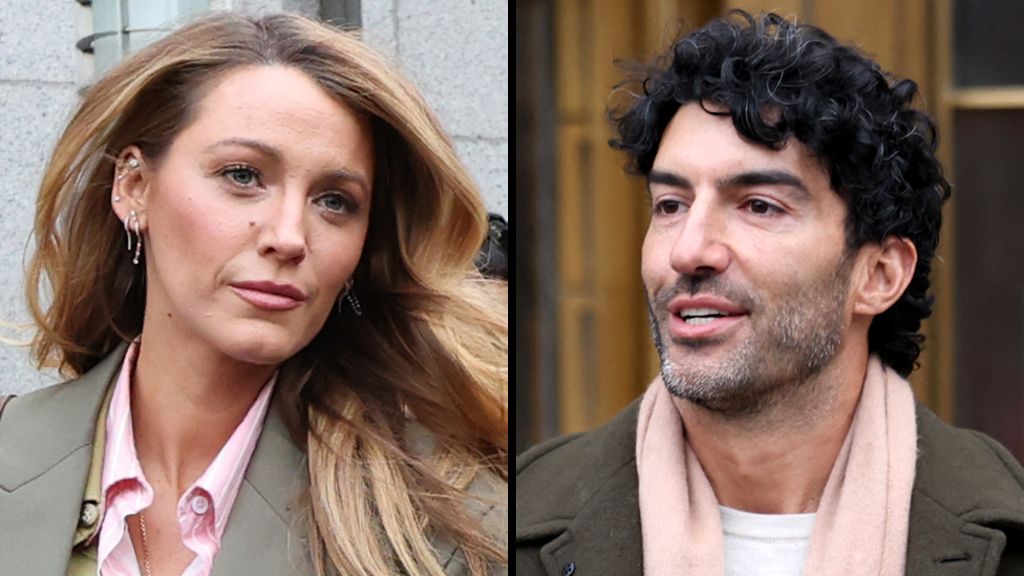
One of Hollywood’s most closely watched entertainment industry legal disputes has reached an 11th-hour resolution, with actors Blake Lively and Justin Baldoni announcing a settlement in their opposing lawsuits tied to the 2024 hit film *It Ends With Us* just two weeks before their scheduled civil trial was set to begin in New York.
The legal conflict first erupted in December 2024, when Lively — who led the cast of the Colleen Hoover book adaptation as protagonist Lily Bloom — filed suit against Baldoni, her co-star and the film’s director, and his production company Wayfarer Studios. Lively’s original legal filing alleged sexual harassment on set, coordinated retaliation after she raised complaints about unsafe working conditions, and a targeted smear campaign that used social media manipulation and friendly media outlets to undermine her public reputation.
Baldoni immediately denied all claims against him and launched a multi-party countersuit, naming Lively, her husband actor Ryan Reynolds, her publicist, and even *The New York Times* for reporting Lively’s accusations. He claimed Lively had fabricated the harassment narrative to “steal” the film from his production company and threatened to scrap promotional work to force contractual changes.
Last month, a New York judge significantly narrowed the scope of the legal battle, dismissing 10 of the 13 claims in Lively’s original suit — including the core allegations of harassment and defamation — leaving only three active claims: breach of contract, retaliation, and aiding and abetting retaliation. The same judge threw out all of Baldoni’s countersuit, ruling that his legal team had failed to prove Lively’s contractual negotiations amounted to wrongful extortion rather than protected labor renegotiation.
Both parties confirmed the settlement in a joint statement issued to media on Monday, ending months of public drama that pulled in A-list celebrities including Taylor Swift (whose private text exchanges with Lively about the on-set conflict were entered as evidence) and forced both Lively and Reynolds to prepare for trial testimony.
“Their film *It Ends With Us* is a source of pride to all of us who worked to bring it to life,” the statement read. “Raising awareness, and making a meaningful impact in the lives of domestic violence survivors – and all survivors – is a goal that we stand behind.”
The joint statement acknowledged the strain of the litigation process, adding: “We acknowledge the process presented challenges and recognize concerns raised by Ms Lively deserved to be heard. We remain firmly committed to workplaces free of improprieties and unproductive environments.”
The statement concluded by noting that both parties “hope that this brings closure and allows all involved to move forward constructively and in peace.”
In the weeks after the judge’s ruling on dismissed claims, Lively had framed her legal action as a stand for safer workplaces in Hollywood. “The last thing I wanted in my life was a lawsuit, but I brought this case because of the pervasive RETALIATION I faced, and continue to, for privately and professionally asking for a safe working environment for myself and others,” she wrote in an Instagram post. “I hope the Court’s decision shows others that, as unfathomably painful as it is, you can speak up.” Her attorney added at the time that Lively had already succeeded in exposing Hollywood’s coordinated “smear machine,” noting that other women targeted by the same tactics had already begun holding those responsible accountable.
*It Ends With Us*, based on Hoover’s bestselling novel, centers on a young woman who survived childhood domestic abuse and finds herself trapped in an abusive relationship as an adult, aligning the film’s core theme with Lively’s public focus on safe work environments throughout the litigation.