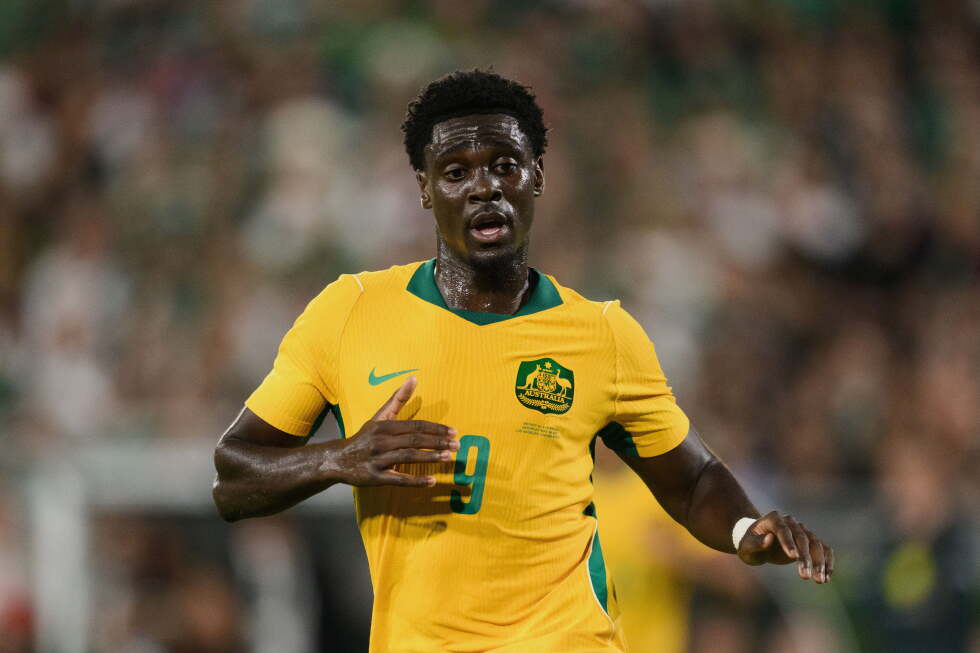
As Australia’s men’s national football team, the Socceroos, prepares to kick off its 2026 FIFA World Cup Group D campaign against Turkey in Vancouver, British Columbia this Saturday, the squad is using the global tournament spotlight to deliver a unifying message: soccer belongs to everyone, regardless of where you come from. This intentional stance comes as anti-immigrant rhetoric and hostility surges across Australia and much of the globe, creating a fraught backdrop for the team’s statement of inclusion.
Central to the message is the team’s own diverse makeup, which is showcased in a new video released by Professional Footballers Australia (PFA). Multiple current squad members arrived in Australia as refugees, each carrying a unique journey to the world’s biggest football stage. For attacking player Awer Mabil, who is set to make his second World Cup appearance after growing up in a Kenyan refugee camp born to South Sudanese parents, representing Australia carries layered meaning. “There’s a lot of journeys behind the jersey, so to be a Socceroo has many different meanings, but with one purpose, and that is to do the country proud,” Mabil shared in the video.
Mabil is not alone in his refugee background. Two of his teammates, both making their World Cup debuts this year, share similar origin stories. Mohamed Touré, a forward who currently plays club football for Norwich, was born to Liberian parents in a Guinean refugee camp before his family resettled in Adelaide. Nestory Irankunda, an attacker plying his trade at Watford, was born in a Tanzanian camp after his parents fled conflict in Burundi; his family first moved to Perth before ultimately putting down roots in Adelaide, where he and Touré became close friends. Even defender Milos Degenek’s story is shaped by refugee experience: his family fled Croatia when he was an infant, sought asylum in Serbia, and later resettled in Sydney to build a new life.
The timing of the Socceroos’ celebration of immigrant team members is anything but accidental. Across the world, recent weeks have seen growing tensions stoked by anti-immigrant rhetoric. Earlier this month, a knife attack in Northern Ireland, fueled by anti-migrant speech, sparked two consecutive nights of violent rioting. In the United States, where the team has been training in Oakland, California, the Trump administration’s sweeping immigration crackdown has even spilled over into the World Cup: Somali referee Omar Artan was denied a visa to enter the country for the tournament, barring him from his officiating assignment. Within Australia itself, a series of anti-immigrant “March for Australia” rallies have been held across the country, with events resulting in multiple arrests on hate speech charges and violent clashes with counter-protesters who support inclusive immigration policy.
PFA Chief Executive Beau Busch explained that the team’s public embrace of its multicultural roots is a deliberate rebuke to divisive rhetoric. “At a time when some seek to divide us and question who belongs, the Socceroos stand as a powerful reminder of who we truly are as a nation and as Australians,” Busch said. “The Socceroos highlight the profound impact of multiculturalism on our country. People who have come from all corners of the world have shaped football, our community and our sense of self in the world.”
Off the pitch, the team’s final preparations hit a small bump earlier this week when Touré—one of 17 first-time squad members selected for the tournament—was absent from a Wednesday training session, causing minor concern among coaching staff. Teammates confirmed Thursday that Touré had returned to practice, clearing the way for him to be available for Saturday’s opener. This will mark Australia’s sixth consecutive World Cup appearance; the Socceroos have advanced to the knockout round of 16 twice in their tournament history, including during the 2022 World Cup in Qatar.