作者: admin

  • Starmer urges tougher action against Gaza protests in UK following antisemitic attacks

    Starmer urges tougher action against Gaza protests in UK following antisemitic attacks

    LONDON – In the wake of a terror-linked stabbing attack that injured two Jewish men in a London neighborhood with a large Jewish population, United Kingdom Prime Minister Keir Starmer has called for stricter enforcement against inflammatory rhetoric at pro-Palestinian demonstrations, acknowledging that the rise in antisemitic violence across the country has put British Jewish communities on high alert. The incident, which took place on Wednesday in Golders Green – a longstanding hub of British Jewish life – left two men hospitalized, and a 45-year-old suspect has already been charged with attempted murder. London’s Metropolitan Police have formally classified the attack as an act of terrorism, marking the latest in a growing string of antisemitic incidents targeting Jewish people and sites across the capital, including recent arson attempts at local synagogues.

    Speaking to the BBC on Saturday, Starmer emphasized that while the UK upholds the fundamental right to peaceful protest, authorities must not tolerate language that incites violence and hatred. He specifically called out the chant “globalize the intifada” – a phrase that translates to “globalize the uprising” – as an example of rhetoric that demands far tougher legal action. Starmer also noted that repeated large-scale pro-Palestinian marches have created a cumulative effect that has contributed to the sharp spike in antisemitic incidents recorded across the nation. When pressed on whether future protests could be restricted, the prime minister did not rule out formal bans for demonstrations that cross the line from peaceful protest to hate speech and intimidation.

    The severity of the current threat to British Jews was underscored by the UK’s most senior law enforcement official, Metropolitan Police Commissioner Mark Rowley, who warned Friday that Jewish communities are now facing the most sustained and widespread security challenge in modern British history. Rowley blamed the proliferation of antisemitic content on social media platforms for normalizing anti-Jewish hatred in mainstream public discourse, noting that Jewish people have become a shared target for almost every extremist faction operating in the UK today. “The ghastly fact is that Jews are on everybody’s list, all of those hateful groups – whether you’re extreme right, whether you’re extreme left, whether you’re Islamist terrorist, whether you’re right-wing terrorist, and some hostile states as well now with some sort of Iranian-related threats,” Rowley told The Times. “There’s a ghastly Venn diagram that they’re at the middle of.”

    Following Wednesday’s stabbing attack, UK authorities raised the country’s official terror threat level from “substantial” to “severe” – the second-highest ranking on the government’s five-point threat scale. A “severe” classification indicates that intelligence agencies assess a terrorist attack to be highly likely within the next six months. Government officials clarified that the adjustment was not triggered solely by the Golders Green incident, but reflects a broader increase in risk from both Islamist and far-right extremist actors, most of whom are individuals or small independent groups based within the UK.

    Data from the Community Security Trust, a charity that monitors antisemitism and protects Jewish communities across the UK, confirms that hate incidents have skyrocketed since the October 7, 2023, Hamas attack on southern Israel and the subsequent outbreak of war in Gaza. The organization recorded 3,700 antisemitic incidents nationwide in 2025, a more than 120% increase from the 1,662 incidents recorded in 2022 before the current conflict began.

  • Drone kills 2 in Kherson minibus strike, as Russia claims front-line progress

    Drone kills 2 in Kherson minibus strike, as Russia claims front-line progress

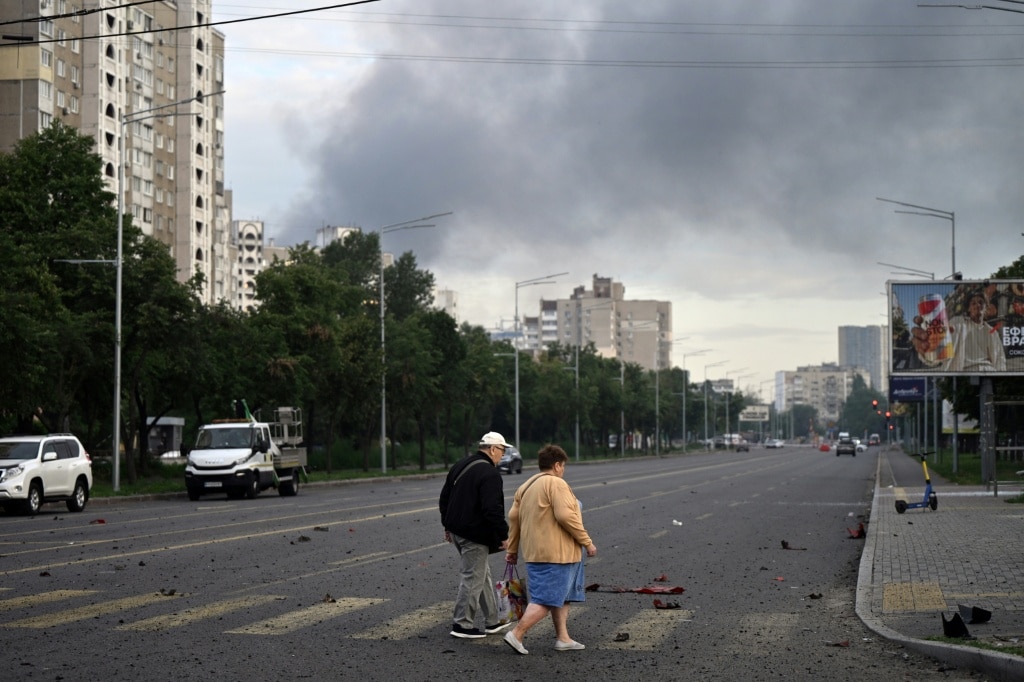
    On a Saturday marked by fresh violence across Ukraine, Russian drone attacks left two civilians dead and multiple others injured in the southern city of Kherson, continuing a pattern of targeted strikes on populated civilian areas that has defined Moscow’s full-scale invasion, regional authorities confirmed.

    Oleksandr Prokudin, the head of Kherson’s regional military administration, announced that the first attack on a civilian minibus claimed two lives and left seven people with wounds ranging from minor to severe. Just hours later, a second Russian strike targeted another minibus in the same region, leaving the vehicle’s driver injured. Further along Ukraine’s strategic Black Sea coastline, a separate Russian bombardment damaged critical port infrastructure in the major city of Odesa, though no casualties were reported in that incident.

    More than two years into Russia’s full-scale invasion, Ukrainian civilians continue to face unrelenting waves of aerial attacks across multiple frontline and rear areas. Diplomatic efforts brokered by the United States over the past 12 months have failed to deliver any de-escalation, as Moscow has repeatedly rejected Kyiv’s calls for a bilateral ceasefire. In recent weeks, the outbreak of conflict in Iran has shifted global media and diplomatic focus away from Ukraine’s ongoing humanitarian crisis, leaving many Ukrainian civilians facing heightened vulnerability with less international scrutiny.

    On the extended 1,000-mile front line stretching across eastern and northeastern Ukraine, Russian defense officials announced Saturday that their forces had seized full control of the village of Myropillia, located in Ukraine’s northeastern Sumy region. This battlefield claim could not be independently verified by independent open-source observers or international media, and Kyiv’s military command did not issue an immediate comment confirming or denying the territorial shift.

    Across the border in southern Russia, local authorities in the Krasnodar region confirmed Saturday that firefighters had fully extinguished a large blaze that broke out Friday at the Tuapse Black Sea oil terminal following a Ukrainian drone strike. This marked the fourth Ukrainian attack on the Tuapse refinery and export terminal in just over a fortnight, with previous strikes triggering large-scale fires, forcing temporary civilian evacuations, and sending thick plumes of black smoke visible for dozens of kilometers.

    Kyiv has steadily ramped up long-range drone strikes targeting Russian energy infrastructure in recent months, part of a deliberate strategy to disrupt Moscow’s oil export operations—one of the Kremlin’s largest single sources of revenue for its war campaign. To date, however, the broader economic impact of these strikes remains uncertain. Global oil price increases tied to the Iran conflict, paired with a concurrent easing of some U.S. secondary sanctions on Russian crude, have offset losses and helped replenish Russian government war coffers.

    Related recent developments include Ukrainian strikes on oil facilities deep inside Russian territory, which analysts warn could push domestic fuel prices higher inside Russia and blunt the impact of Kyiv’s energy targeting campaign. Ukrainian officials have confirmed the Tuapse terminal strike, and Ukrainian President Volodymyr Zelenskyy has stated that his administration is still gathering detailed information on a purported ceasefire proposal from Russian President Vladimir Putin tied to Russia’s annual May 9 Victory Day holiday. Coverage of the ongoing Russia-Ukraine conflict is updated continuously via the Associated Press’s dedicated conflict hub.

  • Stranded whale ‘Timmy’ released into North Sea in dramatic rescue

    Stranded whale ‘Timmy’ released into North Sea in dramatic rescue

    After weeks of a high-stakes, publicly followed ordeal that captured widespread public attention across Germany, a stranded humpback whale affectionately named Timmy has been successfully released into the North Sea off Denmark’s coast, capping a dramatic privately funded rescue operation that defied early skepticism. The massive marine mammal, which first got trapped on a sandbank near Germany’s Baltic coastal city of Luebeck on March 23, was transported to its release site aboard a specially adapted barge. Once the gates of the vessel opened, Timmy pushed out a burst of air through its blowhole before slipping into open water and swimming away under its own power — and early observations confirm the whale is heading in the correct direction toward its natural migratory route. “It has some small injuries, probably from being transported in rough seas, but they are superficial,” explained Karin Walter-Mommert, the horse racing millionaire who co-funded the project alongside another wealthy entrepreneur. “It should now swim up the Norwegian coast toward the Arctic.” The rescue effort was not originally planned as a private initiative: after multiple official attempts to free the whale failed repeatedly, German authorities announced they would abandon the mission, citing low chances of success. That decision prompted Walter-Mommert and her partner to step forward with an ambitious, widely dismissed long-shot plan: guide the exhausted whale into a water-filled hold on a custom-fitted barge, then tow it to deep open waters aligned with the species’ natural migration path. The plan did not go off without controversy, however. A number of marine wildlife experts publicly criticized the privately funded operation, arguing that the stress of capture and transport would do more harm than good, potentially worsening the whale’s already fragile condition. Still, organizers obtained official approval after veterinary specialists confirmed Timmy was healthy enough to survive the journey. Getting the massive whale onto the barge required an extraordinary on-shore engineering effort: rescuers dug a custom channel through the sand to the vessel, then used heavy straps to carefully pull the animal toward the hold, with teams of swimmers guiding it alongside as it moved. The moment Timmy slid into the barge’s water-filled hold drew loud cheers from hundreds of onlookers who had gathered on the shore to follow the days-long operation. This successful release marks the second attempt by the two entrepreneurs to save Timmy — an earlier effort using inflatable cushions and pontoons failed to move the whale, forcing the team to pivot to the barge strategy. For weeks, Timmy’s struggle dominated headlines across Germany, earning non-stop coverage from national television networks, online news outlets and social media creators, turning the stranded whale into a national viral sensation. But the high-profile saga has also been marked by division: it has sparked heated public spats over rescue strategy and spawned a wave of unsubstantiated conspiracy theories about how the young humpback ended up off course in the Baltic Sea in the first place. As of Saturday afternoon, the rescue team reported Timmy was continuing to swim steadily north, in what is being widely celebrated as an unexpected success for the risky, volunteer-led effort.

  • Ex-F1 driver turned Paralympic champion Zanardi dies

    Ex-F1 driver turned Paralympic champion Zanardi dies

    Italian sporting icon Alex Zanardi, whose remarkable career transitioned from Formula One racing to Paralympic gold-medal success after a life-altering accident, has passed away at the age of 59, his family confirmed in an official statement Saturday.

    Widely regarded as one of Italy’s most beloved and influential athletes, Zanardi died on Friday evening. In the announcement shared via Obiettivo3, the non-profit organization he founded, his family shared that he died suddenly, yet peacefully, while surrounded by loved ones.

    Zanardi’s extraordinary life was marked by repeated battles against adversity. His first catastrophic crash came in 2001 during a CART race at Germany’s Lausitzring circuit. After a spin left his car stalled on the track, another vehicle traveling at over 300 kilometers per hour collided with him, resulting in the amputation of both of his legs. Rather than ending his athletic career, the accident paved the way for a second chapter that would inspire millions around the globe.

    Prior to that 2001 incident, Zanardi had already built an impressive motorsports resume. He competed in Formula One for teams including Jordan, Minardi and Lotus in the early 1990s before moving to the United States to race in the CART championship, where he claimed back-to-back series titles in 1997 and 1998. He returned to F1 with Williams in 1999 before going back to North America to continue his CART career.

    Following his amputation, Zanardi rebuilt his life as a Paralympic athlete, earning four Paralympic gold medals: two in cycling at the 2012 London Games, and two more at the 2016 Rio de Janeiro Games. Beyond his competitive success, he was widely credited with shifting public perception of disability across Italy, breaking down stigma and showing what disabled athletes could achieve.

    Six years before his death, in June 2020, Zanardi suffered a second devastating crash when his handbike collided with an oncoming truck during a road race in Tuscany. He sustained severe traumatic brain injuries in the accident and spent 18 months in care before returning to his home.

    Tributes have poured in from across the global sporting and political community following news of his death. Italian Prime Minister Giorgia Meloni praised Zanardi as a great champion and an extraordinary human being, noting he turned every life challenge into a lesson in courage, strength and human dignity. Cordiano Dagnoni, president of the Italian Cycling Federation, added that Zanardi transformed the country’s cultural understanding of disability, bringing joy to those who met him and hope to countless people across Italy and the world. A minute of silence will be held at all Italian cycling races this weekend to honor his legacy.

    Born in Bologna in October 1966, Zanardi is survived by his wife Daniela and his son Niccolo.

  • Humpback whale stranded in Germany released into North Sea: media

    Humpback whale stranded in Germany released into North Sea: media

    A humpback whale that captured public attention after repeated strandings near Germany’s northern coast has been successfully released into the North Sea off the Danish coastline following a last-ditch, privately funded rescue mission, a member of the operation has confirmed to AFP.

    Named ‘Timmy’ by German media outlets, the large marine mammal first drew rescuers’ eyes on March 23, when it was found trapped on a shallow sandbank close to the Baltic coastal city of Luebeck. After briefly freeing itself from the sandbar, the whale became stranded again multiple times in the following weeks, leaving rescue teams scrambling to find a viable solution.

    By early April, German government wildlife officials had formally abandoned official rescue efforts, concluding that the whale’s condition made survival impossible and that intervention would do more harm than good. That decision, however, sparked immediate public outcry across the country, putting pressure on authorities to reverse course. Ultimately, officials granted approval for an unconventional rescue plan put forward by two wealthy German entrepreneurs, who agreed to cover all costs of the operation themselves.

    The team’s first attempt to re-float Timmy, which relied on inflatable cushions and floating pontoons to lift the whale off the sandbank, failed to produce the desired result. That setback led rescuers to pivot to a new strategy: transporting the animal on a specialized covered barge from its stranding site near Wismar Bay on Germany’s Baltic coast to open waters in the North Sea.

    According to Karin Walter-Mommert, a spokesperson for the rescue initiative, Timmy exited the barge at approximately 8:45 a.m. local time (0645 GMT) on Saturday. In an update after the release, she confirmed the whale is now swimming independently in open water, and is heading in the correct direction toward deeper migratory routes, at least in the immediate aftermath of the release.

    The high-stakes rescue effort was controversial from its inception. Many marine biologists and wildlife experts criticized the plan, arguing that the long transport and intervention would only subject the already weakened animal to additional unnecessary stress, and called the effort a low-probability long shot.

    Timmy’s weeks-long ordeal has turned the stranded whale into a national media sensation in Germany and across much of Northern Europe. Major television networks have run non-stop live coverage of the stranding and rescue efforts, digital news outlets have published constant updates, and social media influencers have shared content tracking the whale’s status with millions of followers. The intense public interest has also come with conflict: it has sparked heated public arguments between supporters of the rescue and critical experts, and given rise to a wave of unfounded conspiracy theories about the incident and the motivations behind the private operation.

  • Jacobs powers New Zealand to 6-wicket win over Bangladesh to level T20 series

    Jacobs powers New Zealand to 6-wicket win over Bangladesh to level T20 series

    On a rain-disrupted match day in Mirpur, Bangladesh, debutant batter Bevon Jacobs delivered a career-defining innings to drag New Zealand back from the brink of defeat, securing a six-wicket victory over Bangladesh in the third and final T20 of their three-match series on Saturday. The result left the all-square series tied at 1-1, after the hosts claimed a six-wicket win in the opening fixture and the second match was washed out entirely by bad weather.

    Bangladesh, sent into bat first by New Zealand, got off to a rocky start that foreshadowed their eventual collapse. The hosts lost their first three wickets in just 14 deliveries, slumping to 50-3 after 6.4 overs before a heavy rainstorm halted play for more than two hours. The match was cut to a 15-over-per-side contest when play resumed, and Bangladesh’s aggressive all-out attacking strategy backfired spectacularly. The hosts lost their final seven wickets for only 39 runs off 35 balls, being bowled out for 102 in 14.2 overs.

    Towhid Hridoy top-scored for Bangladesh with 33 runs, while captain Litton Das contributed 26 and opener Saif Hassan added 16. No other Bangladesh batter reached double figures, capping off a dismal batting performance. For New Zealand, pacer Josh Clarkson put in a career-best display, claiming 3 wickets for just 9 runs in his two overs. Fast bowlers Ben Sears and Nathan Smith supported Clarkson with two wickets each, tearing through Bangladesh’s lower order. Leg-spinner Ish Sodhi also made history, picking up 1 wicket for 22 runs to overtake Tim Southee as New Zealand’s leading T20 wicket-taker with 165 career wickets, one more than Southee’s 164.

    New Zealand’s chase got off to a disastrous start, putting the tourists firmly on track for a series defeat. Pacer Shoriful Islam gave Bangladesh a massive early advantage, claiming three wickets for only four runs in his opening two overs, leaving New Zealand reeling at 25-3 after just four overs. Off-spinner Mahedi Hasan extended the hosts’ momentum by dismissing stand-in captain Nick Kelly soon after, dropping New Zealand to 33-4 and leaving the side in a precarious position.

    But Jacobs, playing in the early stages of his international career, turned the tide of the match single-handedly. Captain Das kept Shoriful in the attack, and Jacobs responded by hammering consecutive boundaries off the pacer to ease mounting pressure on New Zealand. The young batter brought up his maiden international half-century off 29 balls, finishing the innings unbeaten on 62 runs off just 31 deliveries, a knock that included five fours and three towering sixes. Jacobs sealed the victory in style with back-to-back boundaries, hitting a boundary followed by a six to push New Zealand to 104-4 after 11.4 overs, completing the required chase with more than three overs to spare. Shoriful Islam finished as Bangladesh’s leading wicket-taker with 3 wickets for 19 runs, denied a match-winning performance by Jacobs’ sensational knock.

  • Injury crisis: Adam Reynolds headlines huge list of injuries as the Roosters survive epic Broncos comeback

    Injury crisis: Adam Reynolds headlines huge list of injuries as the Roosters survive epic Broncos comeback

    On a chaotic Saturday night in Sydney, the Sydney Roosters held off a late, breathtaking comeback attempt from the Brisbane Broncos to secure a 38-24 NRL victory, but the match will be remembered far more for its devastating injury toll, historic individual milestones, and high-stakes State of Origin audition between two of the game’s biggest stars. The fixture got off to a one-sided start, with the Roosters racing out to a dominant 30-0 lead early in the second half, leaving the Broncos on the brink of a blowout defeat. That narrative shifted completely when Broncos fullback Reece Walsh, playing his first match back after recovering from a facial fracture, pulled off a miraculous try-saving tackle that stopped Roosters winger Hugo Savala from scoring a guaranteed try. The momentum swung wildly in Brisbane’s favor after that play, with the Broncos crossing for four tries in just 15 minutes to slash the 30-point deficit to just six points, putting the club on the cusp of pulling off the greatest comeback in NRL history.

    That dream comeback was derailed with 10 minutes left to play, however, when Brisbane centre Kotoni Staggs was sent to the sin bin for 10 minutes after elbowing Savala in the back of the head while Savala was on the ground. The Roosters capitalized on the numerical advantage almost immediately, slotting a penalty goal to extend their lead, and held on for the final whistle to claim the win.

    The result will prove costly for both franchises, however, as the bruising physical contest left a trail of key sidelined players that will impact upcoming round matches. Brisbane’s injury crisis deepened dramatically, with star captain and halfback Adam Reynolds forced off the field just three minutes into the second half after his head slammed into the turf while attempting to tackle Roosters forward Naufahu Whyte. The head knock rules Reynolds out of Brisbane’s next match against Manly, with rookie Tom Duffy lined up to replace him in the starting side. Reynolds’ injury adds to an already long list of sidelined Brisbane stars: key forward Payne Haas and playmaker Ben Hunt were already out of action before Saturday’s match, winger Josiah Karapani left the game with a foot injury, and replacement Deine Mariner was forced off in the first half with a corked muscle.

    The Roosters also face significant absences for their next clash against the Titans. Prop Lindsay Collins was forced off early in the first half after a head clash, and failed the mandatory head injury assessment, ruling him out of next week’s fixture. Outside back Mark Nawaqanitawase is unlikely to feature after leaving the match with an ankle injury, while experienced forward Angus Crichton did not finish the contest, leaving the field with a knee injury wrapped in ice.

    Beyond the scoreline and injury toll, the match doubled as a high-profile State of Origin audition for two of the game’s most high-profile fullbacks, incumbent Queensland Maroons star Reece Walsh and NSW Blues hopeful James Tedesco. Tedesco, a former NSW captain who has not featured for the Blues since the opening game of the 2024 series, put in a performance that strengthened his case for a recall to the side ahead of the upcoming series. The experienced fullback ran for 153 metres and set up Daly Cherry-Evans for the game’s opening try, proving a constant threat through the middle of the field and outplaying his Queensland counterpart on the night.

    Walsh, meanwhile, had a quiet opening 40 minutes in his first game back from injury, but delivered the match’s most memorable highlight with that game-changing try-saving tackle, before crossing for a try himself and setting up another for Jordan Riki, finishing the game with six tackle busts to remind selectors of his dynamic threat with ball in hand. The match also saw standout performances from two other Roosters players: Sam Walker, a bolter for the Maroons Origin side, controlled the attack with a sharp short kicking game that punished the Broncos, while Whyte, called on to play extra minutes due to early Roosters injuries, ran 21 times for 190 metres in a dominant display up front.

    One of the most emotional moments of the night came for outside back Cody Ramsey, who made his first NRL appearance since the 2022 season after Nawaqanitawase’s injury opened up a spot in the side. Ramsey, a former St George Illawarra Dragon, was told he would never play professional rugby league again after being diagnosed with ulcerative colitis that required multiple invasive surgeries. He lost 28 kilograms in just seven weeks during his recovery, but never abandoned his dream of returning to the top tier of the sport. After working his way back through reserve grade in 2025, he waited 1337 days for his NRL return, which finally came in one of the most chaotic matches of the 2026 season.

    The night also delivered a historic milestone for Roosters veteran winger Daniel Tupou, who scored the 190th try of his 13-year NRL career to draw level with Melbourne Storm legend Billy Slater for third place on the all-time NRL try-scoring leaderboard. Tupou crossed for the milestone try 18 minutes into the match, finishing a slick backline movement in the left corner. Later this month, he is set to play his 300th NRL game, fittingly against Slater’s former club, the Melbourne Storm.

  • Spirit Airlines shutting down after rescue talks collapse

    Spirit Airlines shutting down after rescue talks collapse

    Ultra-low-cost carrier Spirit Airlines has permanently ceased operations after negotiations for a $500 million emergency bailout from the Trump administration collapsed, ending months of frantic efforts to stave off bankruptcy. The carrier announced on its official website Saturday that it was initiating an immediate, orderly wind-down of all business activities, a decision it described as being made with “great disappointment.”

    The airline’s collapse comes after years of financial instability, marking its second trip through bankruptcy protection in less than a decade. Spirit had just begun restructuring under its most recent insolvency proceedings, cutting route capacity and shrinking its fleet, when the outbreak of U.S.-Israeli military strikes in Iran sent global jet fuel prices skyrocketing. Industry analysts note that fuel costs typically account for up to 40% of a commercial airline’s total operating expenses, and prices have doubled since strikes began in late February. This sudden, dramatic cost increase pushed the already teetering carrier over the edge.

    All future Spirit flights have been canceled immediately, and the airline confirmed it will not issue direct refunds to customers holding unused tickets. Passengers seeking compensation are advised to file claims through their credit card issuers instead. The carrier has also suspended all customer service operations effective Saturday.

    Savanthi Syth, senior airline analyst at investment bank Raymond James, called the Iran-driven fuel price surge the “final nail in the coffin” for Spirit. Speaking to the BBC, Syth explained that the airline failed to implement the deep, transformative restructuring it needed during its 2024 bankruptcy process. Even before the conflict escalated in the Middle East, Syth noted, Spirit’s long-term viability was already in doubt. She added, “If it wasn’t for the fuel scenario, they would have been okay through the summer, beyond the summer I would have said it was still precarious.”

    Spirit’s leadership expressed confidence as recently as late April that a government rescue deal would be finalized imminently. But the proposed plan, which would have given the U.S. government an effective 90% ownership stake in the airline, faced fierce pushback from multiple fronts: Wall Street investors, Congressional lawmakers, and even a member of Trump’s own cabinet. Transportation Secretary Sean Duffy told Reuters that a bailout would amount to throwing “good money after bad.”

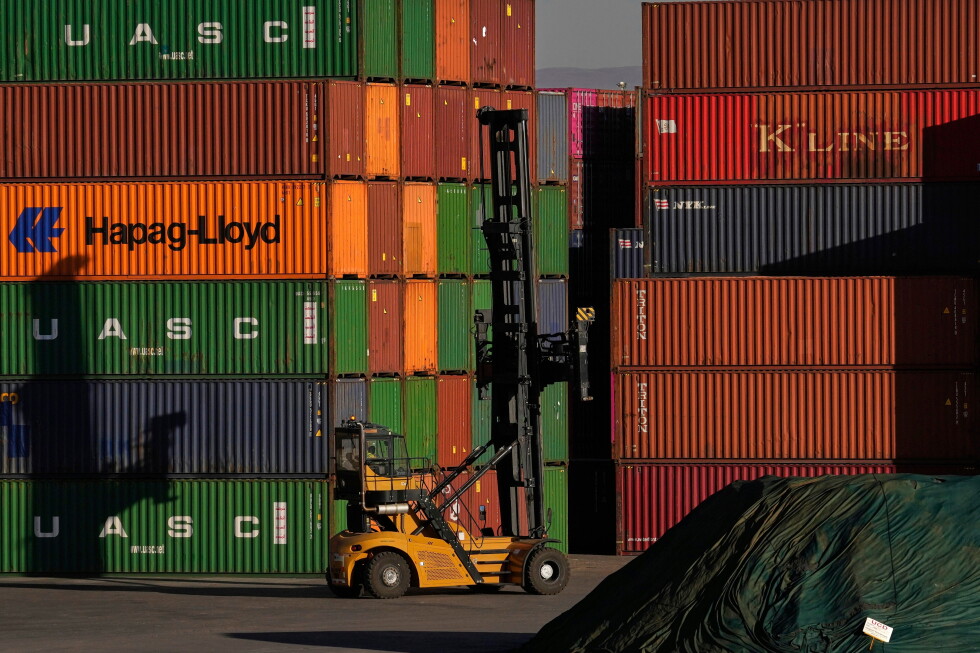
    After negotiations fell apart, Trump told CBS, a BBC partner, on Friday that the airline had been extended a “final proposal” to remain operational. Spirit’s collapse comes amid a broader crisis rocking the global aviation industry, as carriers across the world scramble to adapt to spiking fuel costs. Many have responded by cutting route capacity or raising ticket fares to offset higher expenses. The crisis has also sparked broader supply chain fears: the head of the International Energy Agency (IEA) has warned that Europe could face a total jet fuel shortage in as little as six weeks if current conditions hold.

  • Ukraine is hitting oil facilities deep inside Russia. Soaring fuel prices could blunt the impact

    Ukraine is hitting oil facilities deep inside Russia. Soaring fuel prices could blunt the impact

    Over the course of the ongoing Russia-Ukraine conflict, Ukraine has dramatically expanded its deep-strike capabilities, launching a sustained campaign of long-range drone attacks against key Russian oil infrastructure hundreds and even thousands of kilometers behind the front lines. The explicit strategic goal of these strikes is to cut off Moscow’s primary source of war funding: global oil exports, a linchpin that has sustained Russia’s full-scale invasion of Ukraine.

    Recent months have seen a sharp uptick in these attacks, targeting critical energy hubs across vast swathes of Russian territory. In just over two weeks, the Black Sea coastal town of Tuapse, located 280 miles from the Ukrainian front lines, has endured four separate drone assaults on its major oil refinery and export terminal. Each strike has ignited massive infernos that forced local evacuations, sending plumes of smoke large enough to be visible from outer space. After the third attack on April 18, local emergency officials confirmed that superheated oil products spilled onto residential streets, damaging dozens of civilian vehicles. Further inland, Ukraine confirmed it carried out back-to-back strikes on an oil pumping station in Russia’s Perm region, nearly 900 miles from Ukrainian borders – a distance that underscores the rapid advancement of Ukraine’s domestic drone program. Russian officials have only acknowledged that unspecified industrial facilities were hit, declining to share further details. These attacks are not isolated: in late March, Ust-Luga, one of Russia’s largest Baltic Sea oil and gas export terminals situated more than 500 miles from Ukraine, was struck three times in a single week. In the wake of that assault, regional governor Alexander Drozdenko made the unprecedented admission that the area surrounding St. Petersburg, Russia’s second-largest city, now qualifies as a “front-line region” due to constant aerial threats.

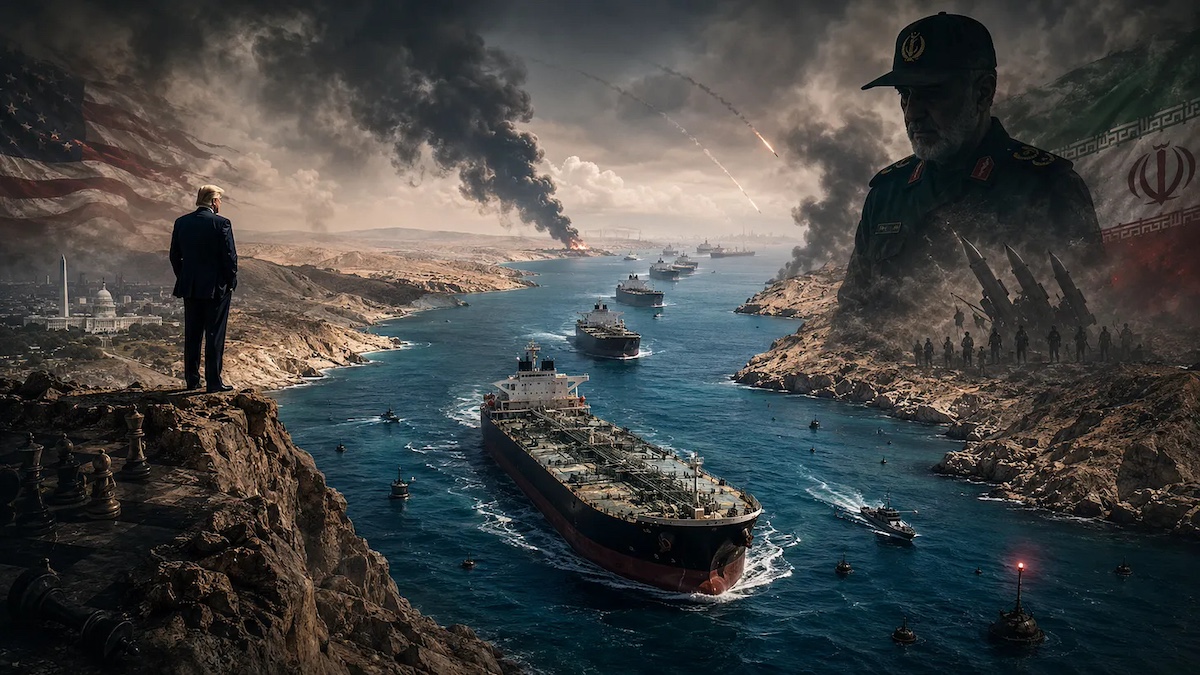
    Ukrainian President Volodymyr Zelenskyy has framed these strikes as a parallel effort to international sanctions targeting Russia’s war economy. He argues the campaign has grown even more urgent amid the global energy market upheaval triggered by the Iran conflict and the closure of the Strait of Hormuz, which has generated massive windfall profits for Russian oil exporters. Zelenskyy estimates that Russia has suffered direct losses of at least $7 billion from oil infrastructure attacks since the start of 2024, noting that exports from key terminals including Ust-Luga and Primorsk have already dropped. Independent experts add that alongside disrupting export routes, the strikes have eroded Russia’s domestic oil refining capacity – a problem compounded by existing international sanctions that make it nearly impossible for Moscow to source replacement parts for damaged infrastructure.

    Yet the full economic impact of the campaign remains uncertain, as global market shifts have worked in Russia’s favor. Data from the International Energy Agency shows that Russian crude and oil product exports rose by 320,000 barrels per day month-over-month in March 2024, hitting a total of 7.1 million barrels daily. Soaring global oil prices pushed export revenues nearly double between February and March, jumping from $9.7 billion to $19 billion. It remains unclear whether the more recent April strikes will alter this upward trajectory. Chris Weafer, CEO of the international consultancy Macro-Advisory Ltd, notes that geopolitical tensions around Iran have unexpectedly propped up Russia’s energy sector and federal budget, pulling it back from a financial crisis that was emerging in late February. Weafer also adds that the visible damage from strikes is often less severe than the dramatic footage suggests: attacks on partially filled oil storage tanks produce spectacular fires from ignited vapors, but typically only delay deliveries by a few days, rather than destroying critical pumping or loading infrastructure that is far better protected than above-ground storage tanks.

    Militarily, the strikes have demonstrated just how far Ukraine’s domestic drone program has advanced since the start of the full-scale invasion in 2022. Ukraine’s Defense Ministry confirms the country has more than doubled the range of its deep-strike capabilities over the past two years, allowing drones to approach targets from multiple directions and significantly complicate Russian air defense efforts. Marcel Plichta, a security researcher at the University of St. Andrews, notes that this level of long-range domestic strike capability simply did not exist for Ukraine just four years ago. “Drone attacks have so far been a very successful case of leveraging simple, domestically assembled technology to attack Russia in places that, at the start of the war, they just would have never expected to be attacked,” Plichta explained.

    Beyond military and economic outcomes, the strikes have already brought severe, lasting environmental damage that is forcing ordinary Russians far from the front lines to confront the realities of the war. In Tuapse, a popular Black Sea tourist destination, officials confirmed dangerous levels of the carcinogen benzene were detected in the air during active fires, urging residents to stay indoors. Local residents have widely reported so-called “black rain” – oily, toxic droplets that stain skin, clothing and infrastructure. Local media has shared graphic footage of stray animals with fur stained gray by oil residue, while oil spills along the coastline have coated marine life, and photos of oil-covered beached dolphins have circulated widely across Russian social media.

    Vladimir Slivyak, co-chair of Russian environmental NGO Ecodefense, warned that the damage will have decades-long consequences for both human health and the regional ecosystem. “There is a lot of oil in the sea,” Slivyak said. “In the next few years, every storm will be bringing more oil pollution onto the coast.”

    So far, widespread public backlash against the war has not emerged, as Russian authorities continue a sweeping crackdown on anti-war dissent. But Slivyak argues that the visible, personal impact of these strikes is eroding trust in official government messaging. “I think a lot of people understand that there is a very big difference between what Putin says and what regional authorities are saying, and what’s really going on,” he noted.

  • Cuba condemns new US sanctions as ‘illegal’ and ‘abusive’

    Cuba condemns new US sanctions as ‘illegal’ and ‘abusive’

    On International Workers’ Day, thousands of Cuban demonstrators gathered outside the United States Embassy in Havana to protest against a fresh round of punitive sanctions imposed by the Trump administration, paired with an ongoing US oil blockade that has brought widespread disruption to daily life across the island nation.

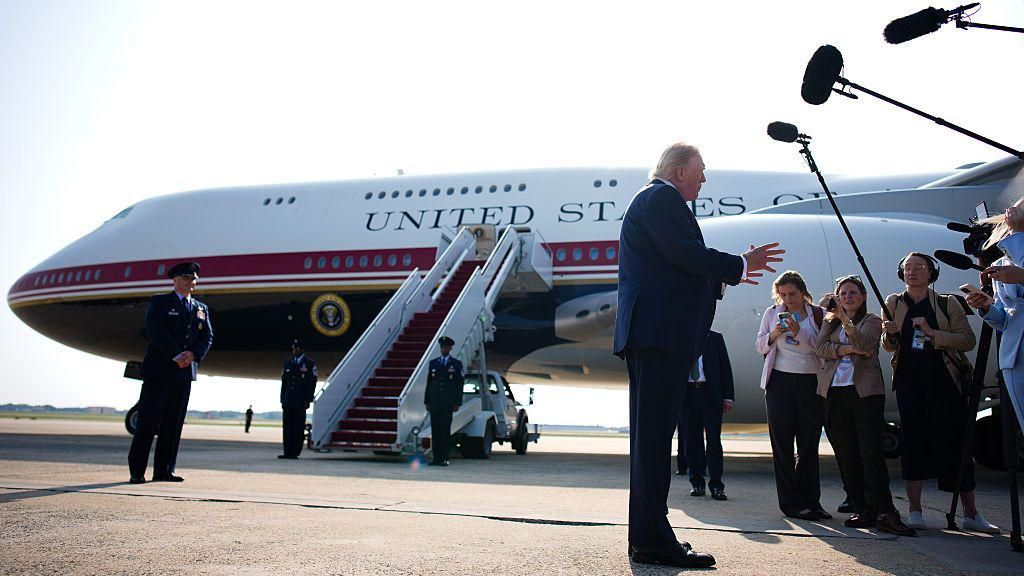
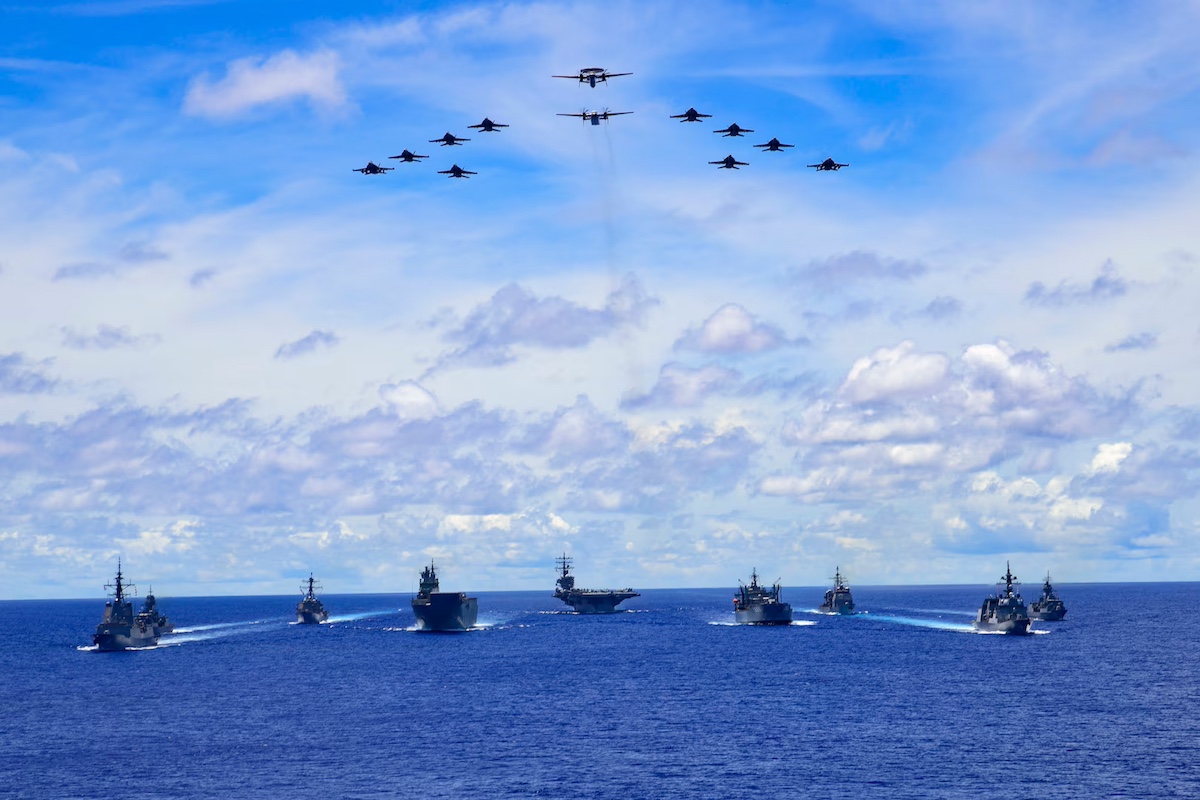
    The new executive order, signed by former President Donald Trump during a Florida campaign appearance Friday, expands US restrictions to target Cuban officials working in the country’s energy, defense, financial and security sectors, as well as individuals the administration accuses of human rights violations and corruption. Speaking to supporters in Florida, Trump doubled down on his aggressive anti-Cuba rhetoric, claiming the US would “take over” the Caribbean island – located just 90 miles off the coast of Florida – “almost immediately.” In a provocative boast, he suggested that the USS Abraham Lincoln, the US Navy’s massive aircraft carrier, could be deployed off Cuban shores to force the country’s leadership into surrender.

    Cuba’s top diplomat, Foreign Minister Bruno Rodriguez, immediately condemned the new measures as “illegal and abusive,” writing on the social platform X that the unilateral coercive measures violate core tenets of the United Nations Charter. Rodriguez emphasized the sanctions amount to deliberate collective punishment of the Cuban people, and shared footage of the May Day demonstrations, framing the protests as a defensive stand for national sovereignty. “Our people do not cower,” he added. Cuban President Miguel Díaz-Canel echoed that criticism, pointing to the intimidation and arrogance of the world’s largest military power as the root of continued hardship for Cuban citizens. The new sanctions come as a surprise reversal of tentative bilateral talks: Díaz-Canel confirmed as recently as March that Cuban officials were in negotiations with the US to reset strained bilateral relations.

    The ongoing US oil blockade has already triggered crippling fuel shortages and rolling nationwide blackouts that have disrupted critical public services, from hospital operations to public transit and school sessions. Since the blockade was implemented, only one Russian oil tanker has successfully docked in Cuba to deliver supplies. Trump has further threatened to impose steep tariffs on any country that chooses to export oil to Cuba, raising the stakes for the island’s already fragile economy.

    Bilateral tensions between the US and Cuba have persisted for more than six decades, dating back to 1959, when Fidel Castro’s communist revolution overthrew a US-backed authoritarian government. A sweeping US economic and trade embargo has been in place since 1960, and this year Cuba is marking the 100th anniversary of Castro’s birth. The latest escalation of US pressure comes as the Trump administration has made dismantling Cuba’s communist leadership a core foreign policy priority for a second term.