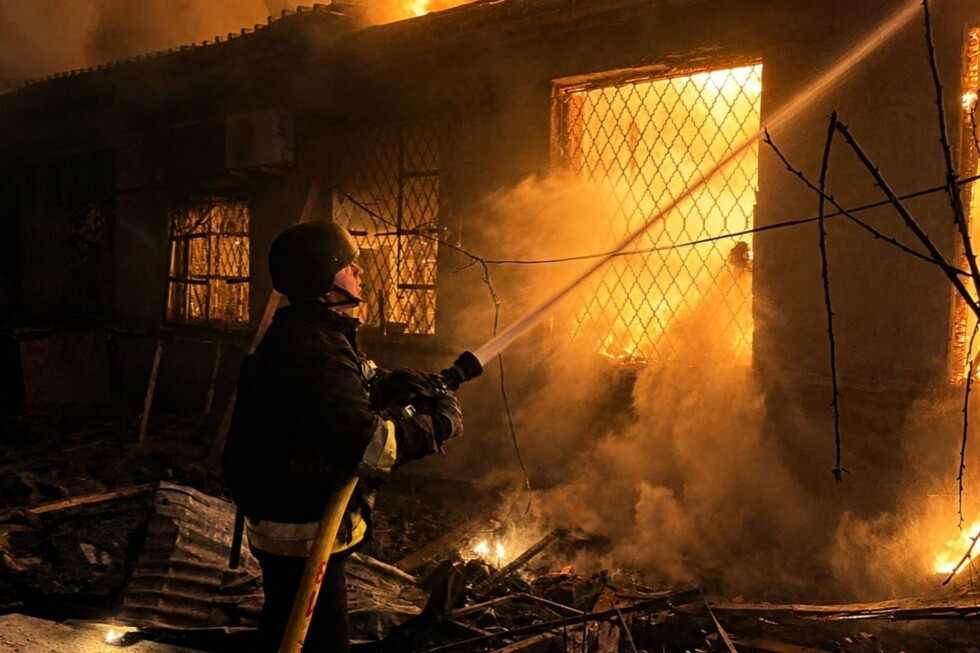
On a Saturday marked by fresh violence across Ukraine, Russian drone attacks left two civilians dead and multiple others injured in the southern city of Kherson, continuing a pattern of targeted strikes on populated civilian areas that has defined Moscow’s full-scale invasion, regional authorities confirmed.
Oleksandr Prokudin, the head of Kherson’s regional military administration, announced that the first attack on a civilian minibus claimed two lives and left seven people with wounds ranging from minor to severe. Just hours later, a second Russian strike targeted another minibus in the same region, leaving the vehicle’s driver injured. Further along Ukraine’s strategic Black Sea coastline, a separate Russian bombardment damaged critical port infrastructure in the major city of Odesa, though no casualties were reported in that incident.
More than two years into Russia’s full-scale invasion, Ukrainian civilians continue to face unrelenting waves of aerial attacks across multiple frontline and rear areas. Diplomatic efforts brokered by the United States over the past 12 months have failed to deliver any de-escalation, as Moscow has repeatedly rejected Kyiv’s calls for a bilateral ceasefire. In recent weeks, the outbreak of conflict in Iran has shifted global media and diplomatic focus away from Ukraine’s ongoing humanitarian crisis, leaving many Ukrainian civilians facing heightened vulnerability with less international scrutiny.
On the extended 1,000-mile front line stretching across eastern and northeastern Ukraine, Russian defense officials announced Saturday that their forces had seized full control of the village of Myropillia, located in Ukraine’s northeastern Sumy region. This battlefield claim could not be independently verified by independent open-source observers or international media, and Kyiv’s military command did not issue an immediate comment confirming or denying the territorial shift.
Across the border in southern Russia, local authorities in the Krasnodar region confirmed Saturday that firefighters had fully extinguished a large blaze that broke out Friday at the Tuapse Black Sea oil terminal following a Ukrainian drone strike. This marked the fourth Ukrainian attack on the Tuapse refinery and export terminal in just over a fortnight, with previous strikes triggering large-scale fires, forcing temporary civilian evacuations, and sending thick plumes of black smoke visible for dozens of kilometers.
Kyiv has steadily ramped up long-range drone strikes targeting Russian energy infrastructure in recent months, part of a deliberate strategy to disrupt Moscow’s oil export operations—one of the Kremlin’s largest single sources of revenue for its war campaign. To date, however, the broader economic impact of these strikes remains uncertain. Global oil price increases tied to the Iran conflict, paired with a concurrent easing of some U.S. secondary sanctions on Russian crude, have offset losses and helped replenish Russian government war coffers.
Related recent developments include Ukrainian strikes on oil facilities deep inside Russian territory, which analysts warn could push domestic fuel prices higher inside Russia and blunt the impact of Kyiv’s energy targeting campaign. Ukrainian officials have confirmed the Tuapse terminal strike, and Ukrainian President Volodymyr Zelenskyy has stated that his administration is still gathering detailed information on a purported ceasefire proposal from Russian President Vladimir Putin tied to Russia’s annual May 9 Victory Day holiday. Coverage of the ongoing Russia-Ukraine conflict is updated continuously via the Associated Press’s dedicated conflict hub.