
A remarkable 67-million-year-old Tyrannosaurus rex fossil, nicknamed ‘Gus’, has made history by becoming the most expensive dinosaur fossil ever sold at auction, surpassing a record that stood for less than a full year. The fossil, which preserves rare bone structure from one of the most iconic predators to ever walk the Earth, fetched a final sale price that outstripped the previous high mark set by a well-preserved Stegosaurus specimen auctioned in 2024. Paleontology enthusiasts and private collectors alike have followed the sale closely, as high-profile dinosaur fossil auctions continue to spark conversation about accessibility to important prehistoric specimens. The unprecedented price tag for ‘Gus’ underscores the intense demand among private collectors for one-of-a-kind prehistoric artifacts, a trend that has reshaped the market for rare fossils over the past decade. While the sale confirms the significant cultural and commercial value of iconic dinosaur remains, it also reignites ongoing debate within the scientific community about whether such rare specimens should remain publicly accessible for research rather than entering private collections. Experts note that ‘Gus’ offers valuable insights into the biology and evolution of Tyrannosaurus rex, one of the most studied yet still poorly understood apex predators of the Cretaceous period. The new record set by this sale signals a continuing shift in the global fossil market, where rare, charismatic specimens draw increasingly high bids from wealthy collectors around the world.
作者: admin
-

Who is the referee for the World Cup semifinal between France and Spain?
The official officiating crew for the first 2024 FIFA World Cup semifinal has been confirmed, with 35-year-old Salvadoran referee Ivan Barton set to take charge of the high-stakes match between France and Spain on Tuesday. This assignment marks Barton’s fourth officiating appointment at this year’s tournament, bringing his experience at the global event to one of its biggest stages.
Throughout the current World Cup, Barton has already overseen three prior matches, with the most widely discussed incident coming during a group-stage clash between Turkey and Paraguay. In that contest, Paraguay star Miguel Almiron was shown a red card and sent off after covering his mouth amid an on-field confrontation with other players. To date, that ejection remains the only red card Barton has issued across his three matches at the tournament. His other previous World Cup assignments this year include group-stage fixtures between Japan and Sweden, and Switzerland and Colombia, giving him familiarity with the pace and physicality of top international competition ahead of the semifinal.
Alongside Barton, the full match official team has also been finalized. David Moran of El Salvador and Antonio Pupiro of Nicaragua will serve as Barton’s assistant referees, while Sweden’s Glenn Nyberg has been named the fourth official for the fixture. The video assistant referee (VAR) team will be led by Poland’s Tomasz Kwiatkowski, with support from Dennis Higler of the Netherlands and Guillermo Pacheco of Mexico.
The France-Spain semifinal, the first of two final-four matches scheduled at this year’s World Cup, will be hosted at AT&T Stadium, the home ground of the National Football League’s Dallas Cowboys. The second semifinal will follow a day later on Wednesday, when England face off against Argentina in Atlanta at the venue originally announced for the fixture.
-

Trump pays writer E Jean Carroll $5m in damages over sexual abuse and defamation
Three years after a U.S. civil court found former President Donald Trump legally liable for the sexual abuse and defamation of writer E. Jean Carroll, Carroll’s legal team has confirmed that the full awarded damages plus accrued interest, totaling more than $5.62 million, have been successfully transferred to Carroll.
In a brief public statement released Tuesday, Roberta Kaplan, lead counsel for Carroll, confirmed that the long-awaited payment aligned with the damages grant originally handed down by the jury. The resolution comes after a drawn-out series of appeals and efforts by Trump’s legal team to delay the disbursement, which concluded only after a court order forced the payout last week. A spokesperson for Trump’s legal camp declined to issue any on-the-record comment about the completed transfer.
The case at the center of the payment dates back to the mid-1990s, when Carroll, now an 82-year-old former magazine columnist, alleged that Trump sexually assaulted her inside a fitting room at the luxury Bergdorf Goodman department store in Manhattan. Years later, Carroll filed her civil suit after Trump issued a categorical denial of her claims on his Truth Social platform in 2022, which she argued amounted to defamation.
In 2023, a jury seated in New York reached a unanimous verdict upholding Carroll’s claims and ordered Trump to pay $5 million in compensatory and punitive damages. Immediately after the ruling, Trump deposited the awarded sum into a court-managed holding account, where it remained frozen through the multi-year appeals process.
Trump and his legal team have repeatedly denounced the entire proceedings as a politically motivated “hoax” and “witch hunt”, claiming the case was improperly financed by Democratic political opponents. They have also argued that presiding Judge Lewis Kaplan improperly allowed evidence that biased the jury against their client, creating unfair prejudice. These legal challenges were rejected repeatedly by higher courts: a federal appeals court upheld the jury’s original verdict last year, finding that Kaplan had not committed legal errors that would justify overturning the ruling or ordering a new trial. Last month, the U.S. Supreme Court declined to take up Trump’s appeal, removing the final legal barrier to the release of funds to Carroll.
Following the Supreme Court’s decision, Carroll celebrated the outcome in a post on her Substack blog, writing: “WE WON!” and adding, “THIS WIN IS FOR EVERY WOMAN IN THE WORLD!”
This is not the only outstanding legal defeat for Trump related to his interactions with Carroll. In a separate 2024 defamation case brought by Carroll, a second jury found Trump liable and awarded Carroll nearly $84 million in additional damages. Trump has appealed that ruling as well, but a panel of federal judges has already rejected his challenge to that verdict.
-

Trump scraps threat of 20% fee on Hormuz cargo as US prepares to resume blockade of Iran ports
Escalating military clashes between the United States and Iran have thrown global energy supplies into chaos, forcing a sudden reversal of one of the Trump administration’s most controversial recent policy proposals. Just hours before a renewed US naval blockade of Iranian ports was set to go into effect, President Donald Trump announced he was abandoning his plan to impose a 20% fee on all commercial cargo passing through the strategically critical Strait of Hormuz. Instead, he says, the cost of US security operations in the waterway will be covered by large-scale trade and investment agreements with Gulf Cooperation Council nations. The sudden shift came amid rapidly intensifying cross-border strikes that have virtually halted tanker traffic through the chokepoint, driving international oil prices sharply higher and sending shockwaves through global energy markets.
-

US strikes hit Iran for a third night killing three people
Escalating tensions between the United States and Iran entered a sharper new phase this week, as Washington launched its third straight overnight wave of airstrikes on Iranian targets that has left at least three people dead, followed by a sweeping announcement of new economic and security measures targeting the strategic Strait of Hormuz.
Shortly after confirming its forces had completed the latest round of strikes on Tuesday, the US Department of Defense released combat footage documenting the attacks, bringing a new level of visibility to the expanding military campaign that resumed earlier this year. In a public statement issued Tuesday afternoon, former US President Donald Trump announced that Washington would reimpose a full blockade on Iranian commercial shipping moving through the Persian Gulf.
Trump asserted that the Strait of Hormuz — one of the world’s most critical chokepoints for global oil trade, through which roughly 20% of the world’s daily oil consumption passes — would remain open to international shipping regardless of Iran’s objections. As part of the new security framework, he added, the US would impose transit fees on all commercial vessels passing through the waterway, including a 20% surcharge designed to cover all costs associated with providing security for transiting ships.This sharp escalation of military and economic pressure comes despite intermittent diplomatic talks aimed at de-escalating the conflict, which the US formally resumed in February. The renewed strikes mark a clear breakdown in these tentative negotiations. Last week, Trump formally notified Congress of the resumption of hostilities, granting the Pentagon a 60-day extension to conduct military operations in the region without explicit congressional approval.
Beyond the Gulf shipping measures, Trump has also issued an explicit threat to destroy Pickaxe Mountain, a deeply buried underground facility near Iran’s Natanz nuclear complex. Western intelligence agencies have long alleged that the site is being developed to house an undeclared nuclear enrichment program, a claim Iran has repeatedly denied.On Tuesday, Iran’s state-owned media reported that five separate explosions were heard west of Bandar Abbas, Iran’s key port city located along the edge of the Strait of Hormuz. The state broadcaster did not release additional details on casualties or damage from the blasts.
In a post on the social platform X, Ebrahim Azizi, head of the Iranian Parliament’s National Security Committee, confirmed that Tehran had introduced a new draft bill aimed at cementing the country’s control over waterway security. Azizi noted that the legislation — titled the Strategic Action for the Security and Sustainable Progress of the Strait of Hormuz and the Persian Gulf — was formally introduced to parliament overnight, coinciding with Iran’s reported downing of multiple US drones operating in Iranian airspace. He emphasized that Tehran remains unwavering in its commitment to defending its national red lines, particularly when it comes to sovereignty and management of the strategic waterway.The escalating cross-region tensions have also drawn in neighboring Gulf states. Bahrain’s defense forces announced earlier this week that they had intercepted multiple Iranian drone and missile attacks targeting the kingdom on Sunday, accusing Tehran of waging a deliberate campaign of aggression against Bahraini territory. In an official statement, the Bahrain Defence Force said the Iranian attacks targeted civilian areas and private infrastructure, arguing that “the deliberate use of missiles and drones to target civilians and private property constitutes a flagrant violation of international humanitarian law.” Bahraini authorities have urged local residents to remain vigilant and avoid any suspicious objects in the wake of the attacks.
-

German man, 68, charged over alleged serial rapes of drugged women
A shocking case of serial sexual violence has unfolded in Germany, where Berlin prosecutors have formally charged a 68-year-old man with drugging and raping 14 women he connected with through online dating platforms — and recorded the attacks on his personal devices. Prosecutors confirmed the defendant faces 22 counts of aggravated rape connected to the 14 identified victims, though investigators suspect he carried out non-consensual sexual acts against a total of 58 women over more than a decade of criminal activity.
The investigation into the man traces back to March 2025, when his profile appeared in chat logs linked to another sexual offender already under police surveillance following an anonymous tip. That co-person of interest has since died, but authorities moved quickly to search the 68-year-old’s Berlin residence last year. It was not until several months after the raid, however, that a forensic digital specialist uncovered graphic video footage of the assaults stored on devices seized from the home, which confirmed the suspected offenses.
Since March 2026, the accused has been held in pre-trial detention, and he has thus far declined to make any public statement regarding the allegations against his person. The case file has now been passed to Berlin’s court system, which will schedule procedural hearings to determine whether a full public trial will proceed.
According to official case details, the suspect’s alleged pattern of abuse followed a consistent template: he would first build contact with women via online dating platforms, then invite them to meet in person before lacing their drinks with a combination of sedative drugs and alcohol. Disturbingly, none of the 14 victims connected to the pending charges have any memory of being assaulted; they only learned of the attacks when investigators showed them the recovered video footage.
To date, law enforcement has successfully identified 30 of the 58 women captured in the suspect’s video records, while 10 others remain unaccounted for, with efforts to confirm their identities ongoing.
This high-profile case comes less than a week after another related sexual violence conviction made headlines in Berlin. A 32-year-old doctor of Chinese origin was sentenced to five years in prison on charges of aggravated rape, after the regional court found he was a member of an online chat group that shared tactics for raping unconscious, sedated women, and repeatedly distributed advice to other group members on carrying out these attacks. In that ruling, the presiding judge drew attention to a disturbing modern shift in sexual offending, noting that “sexual offences are no longer committed silently and in secret, but are publicly shared on the internet and applauded.”
In the current case against the 68-year-old, prosecutors were forced to drop 36 counts of alleged rape connected to one victim that occurred between 2010 and 2014, due to Germany’s existing five-year statute of limitations for most rape offenses. The 22 counts that do proceed fall under the 20-year statute of limitations for aggravated rape involving the use of force.
The limitations of current German law exposed by this case have given new momentum to long-debated legal reforms pushed by the country’s Justice Ministry. Just last month, Federal Justice Minister Stefanie Hubig announced her support for extending the general statute of limitations for rape from five years to 20 years. Hubig has also put forward draft legislation that would create a mandatory minimum five-year prison sentence for anyone convicted of using so-called “date-rape drugs” to commit rape or robbery.
The proposed reform comes in response to a 2024 ruling from Germany’s highest court, which found that date-rape drugs added to a victim’s drink did not qualify as “dangerous items” under the current legal definition for sexual assault cases. That ruling effectively capped the mandatory minimum sentence for these offenses at three years. Under the government’s draft amendment, all dangerous substances and items used during the commission of a sexual offense or robbery will be reclassified alongside traditional weapons and dangerous implements, closing the legal loophole exposed by the high court’s decision.
-
ICE told to halt most vehicle stops after pair of fatal shootings
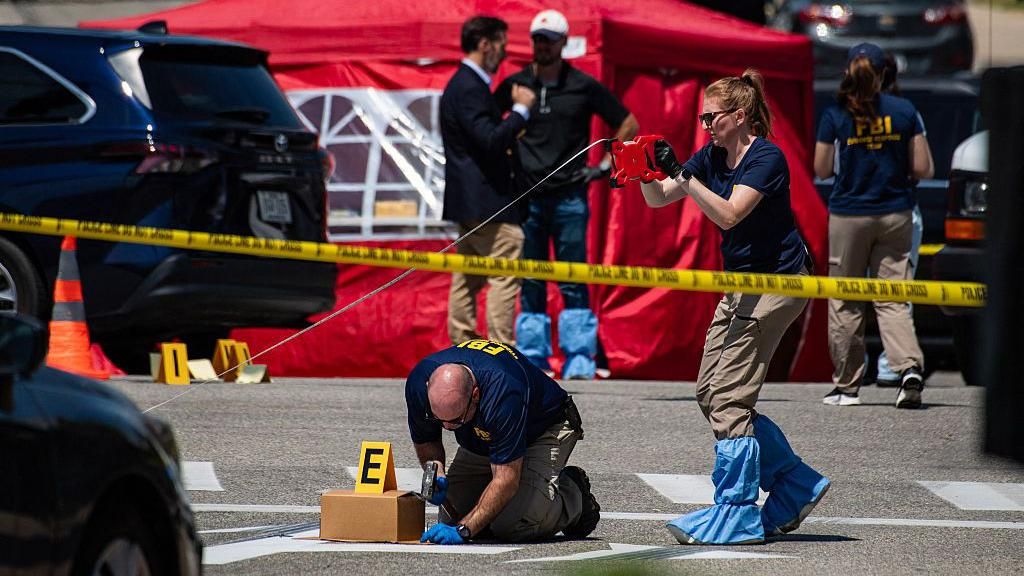
U.S. Immigration and Customs Enforcement (ICE) has issued an urgent directive ordering its agents to pause nearly all routine vehicle stops across the country, a sweeping policy change triggered by two recent fatal shootings of immigrants by agency personnel in Texas and Maine that have reignited widespread anger over the agency’s use of force. Multiple U.S. media outlets, citing anonymous law enforcement sources, confirmed that the suspension only excludes stops targeting individuals linked to serious criminal activity.
This policy shift comes as ICE has faced mounting scrutiny over the last year, with repeated accusations of excessive force and growing public and political backlash over multiple deaths that have occurred during the agency’s immigration enforcement operations. The BBC has formally reached out to the U.S. Department of Homeland Security (DHS), ICE’s parent agency, to request official comment on the new suspension order.
The most recent deadly incident unfolded in Biddeford, Maine, roughly 15 miles south of Portland, where an ICE agent shot and killed a 26-year-old Colombian national during a routine enforcement operation. DHS officials have claimed the officer opened fire “fearing for public safety” after the man attempted to drive away from the scene when agents tried to stop his vehicle, but the department has offered no specific details about what threat the man was alleged to pose.
Immigration advocates have pushed back on the official account, confirming that the man — who has not yet been formally identified publicly — held valid work authorization in the U.S. and had a Social Security number. In a joint statement condemning the killing, the Maine Immigrants’ Rights Coalition and Presente! Maine called the death “devastating, enraging, and unacceptable.”
Less than one week before the Maine shooting, a second fatal incident left 52-year-old Lorenzo Salgado Araujo, a Mexican national who had lived in the U.S. for decades, dead after an ICE officer shot him during a morning stop in Houston, Texas. Araujo was shot while driving to his job at approximately 7 a.m. local time. DHS later clarified that agents initiated the stop after mistaking Araujo for a target in an ongoing operation, claiming the officer acted in self-defense during the encounter. However, witnesses who were passengers in Araujo’s van and the victim’s family have directly disputed DHS’s version of events, and the agency’s independent watchdog has launched a formal investigation into the killing.
Protests have broken out across the country in response to both of the latest fatal shootings. The two deaths are not isolated incidents: earlier this year, nationwide protests erupted after two U.S. citizens, 37-year-old Renée Good and 37-year-old Alex Pretti, were shot and killed by ICE agents during January raids in Minneapolis, Minnesota. Since January 2025, at least seven people have been killed during ICE enforcement operations, according to reporting from Reuters.
The growing backlash over these deaths has already triggered leadership changes at the top of DHS. After returning to the White House, U.S. President Donald Trump — who fulfilled a core campaign promise by launching a large-scale mass deportation campaign shortly after taking office — replaced former DHS Secretary Kristi Noem with U.S. Senator Markwayne Mullin of Oklahoma. Former Border Patrol Chief Gregory Bovino was also removed from his post not long after the leadership shakeup at the agency.
-
US wartime buildup races against China’s industrial clock
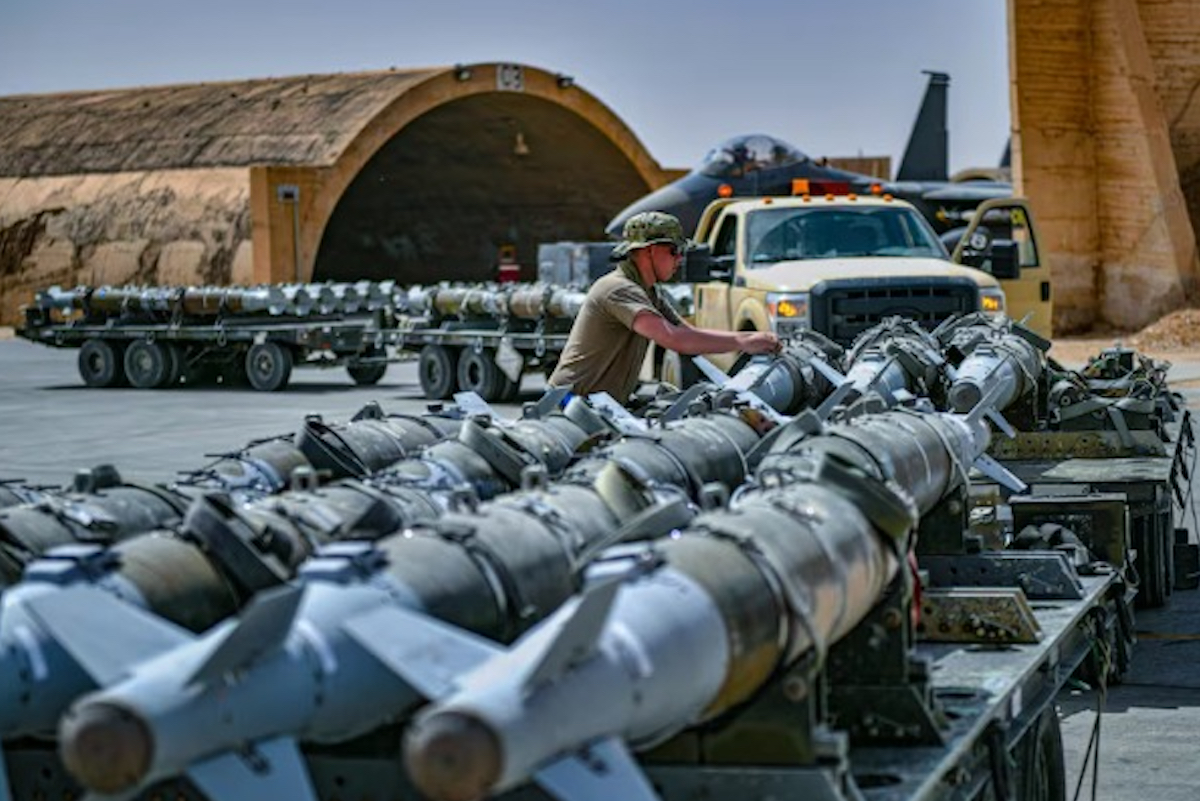
As the United States accelerates its efforts to rebuild a wartime-capable defense industrial base, a growing body of independent defense research warns that the initiative faces a make-or-break test: can new weapons be produced, transported, and sustained fast enough to meet the demands of high-intensity, simultaneous conflicts across the Indo-Pacific?
A July 2026 analysis draws on multiple recent reports from leading U.S. think tanks to unpack both the progress the Pentagon has made and the lingering structural vulnerabilities that could undermine its preparedness. This month, the Center for Strategic and International Studies (CSIS) released an assessment noting that while Washington has made notable strides in reorienting its defense industrial base for potential great power conflict, critical gaps in munition stockpiles and supply chain resilience still persist.
To date, the U.S. Department of Defense (DoD) has deployed large pools of combined public and private investment to counter strategic competition, particularly from China. In fiscal year 2025 alone, the DoD expanded its defense vendor ecosystem by adding 5,000 new suppliers, pushing total contract obligations for non-traditional defense contractors past $120 billion. To replenish stockpiles drawn down by recent engagements, the department has secured landmark multi-year contracts to ramp up production of defensive interceptors, and shifted its procurement strategy to a “high-low mix” that targets low-cost munitions making up 70% of all requested units by fiscal year 2031. Additionally, Washington has allocated $7.6 billion across 2025 and 2026 to build a secure, China-independent rare earth supply chain spanning from mining to final magnet production.
Despite these sweeping acquisition reforms and a proposed fiscal year 2027 defense budget equivalent to 4.6% of U.S. GDP, multiple reports caution that fully institutionalizing wartime readiness will take years. Lead times for production of critical weapon systems still stretch to more than three years, meaning many current investments will not translate to usable stockpiles for the near term. While the DoD currently frames industrial mobilization progress around total funding committed and planned capacity expansions, the ultimate decisive metric will be whether the U.S. can outproduce China, deploy military materiel across the vast Pacific, and replace combat losses faster than a conflict consumes them. It remains unproven whether projected U.S. production can meet the demands of high-intensity conflict across multiple simultaneous theaters, including the Korean Peninsula and Taiwan.
Recent war gaming and scenario planning highlights just how stark the demand for munitions would be in a regional conflict. In a 2025 article for the Texas National Security Review, analysts Nicholas Anderson and Daryl Press calculated that even a limited pre-emptive strike on North Korean targets would require 24 long-range B-1 and B-52 bombers carrying 528 air-launched cruise missiles, plus 120 sea-launched Tomahawk missiles from naval vessels, alongside 48 M270A1 precision multiple launch rocket systems from U.S. ground forces based on the Korean Peninsula. That level of expenditure is negligible compared to the projected munition use in a U.S.-China conflict over Taiwan, according to a May 2026 CSIS report from Seth Jones. Jones estimates that in the first seven days of conflict alone, U.S. forces would fire between 3,000 and 5,000 baseline Joint Air-to-Surface Standoff Missiles (JASSMs), 3,500 to 4,000 extended-range JASSM-ERs, and 400 to 1,000 Tomahawk missiles — a rate of expenditure that would severely deplete or entirely exhaust key U.S. stockpiles almost immediately.
If conflicts broke out simultaneously on the Korean Peninsula and over Taiwan, scarce U.S. missiles, bombers, and logistics capacity would be split between the two fronts, forcing the Pentagon to prioritize support for one theater at the direct expense of the other. These projections have amplified core questions about whether U.S. munitions production can offset China’s established industrial advantage and replace wartime losses fast enough to shift the regional military balance.
A January 2026 TIDALWAVE report from The Heritage Foundation compared U.S. and Chinese munitions production ecosystems, finding that the U.S. Indo-Pacific munitions network suffers from significant structural fragility, while China’s system is a large, highly integrated enterprise purpose-built for high-intensity regional conflict. The report warns that the U.S. model, which relies on finite pre-positioned stockpiles, could face a catastrophic “Triple Bind” supply failure within 25 to 120 days of a conflict starting. This risk stems from a two-year lag in production scaling, critical bottlenecks in rocket motor manufacturing, and heavy U.S. reliance on imported TNT from Poland. In contrast, China’s state-owned defense conglomerates, such as NORINCO, operate automated, robotic smart factories that maintain resilient peacetime production with the capacity to surge output by 150% to 250% during wartime, allowing China to sustain prolonged combat operations.
The report does note that both powers face critical chokepoint vulnerabilities: the U.S. remains heavily dependent on Chinese processing and production of rare earth minerals, while China’s highly centralized, rail-reliant distribution network is uniquely vulnerable to targeted cyberattacks and international restrictions on advanced semiconductor exports. Overall, the analysis finds China holds a clear advantage in sustained regional munitions production, though both sides are susceptible to targeted disruption of key industrial and logistical bottlenecks.
Even if the U.S. successfully consolidates supply chains and expands domestic munitions production, those gains will not translate to usable combat power if forward bases, ports, transport networks, storage sites, and maintenance hubs cannot survive Chinese missile attacks and keep weapons flowing to frontline forces. A January 2025 report from the Hudson Institute by Thomas Shugart III and Timothy Walton warns that decades of underinvestment in Indo-Pacific combat logistics have left U.S. forward bases unhardened and extremely vulnerable to precision strikes. The authors note that Chinese precision strikes could disable interconnected fuel lines, above-ground storage tanks, and pre-positioned munition stocks that are essential for sustained air operations. These vulnerabilities also prevent the rapid dispersal of aircraft to alternate bases, as most lack pre-positioned munitions, redundant fuel supplies, and sufficient passive defensive infrastructure.
A December 2024 report from the Stimson Center, led by Kelly Grieco, reached a nearly identical conclusion. Grieco and her co-authors warn that Chinese missile attacks on forward base runways could cut critical logistics and refueling links. Prolonged runway closures would ground aerial refueling tankers, severely limiting operations for short-range fighter jets that depend on in-flight refueling to reach combat zones. Damaged airfields would also block deliveries of spare parts and fresh munitions, while exposed fuel and weapon stocks could be entirely depleted within days without secure, reliable resupply routes.
In short, U.S. munitions expansion will only deliver limited wartime value unless forward bases and logistics networks can survive attack and keep aircraft fueled, armed, and operational. Beyond these logistical challenges, many experts argue that current Pentagon contract announcements and investment targets overstate actual wartime capacity, as much of the reported progress has yet to result in delivered weapons, qualified suppliers, skilled manufacturing labor, or sustained industrial output.
A May 2026 CSIS report from Mark Cancian and Chris Park argues that even with major funding increases and ambitious industrial framework agreements, the U.S. still faces a prolonged “window of vulnerability.” Billions of dollars in planned procurement have not yet materialized into battlefield-ready weapons. Cancian and Park note that while the DoD emphasizes its aggressive contract activity, critical interceptors and missiles face severe manufacturing backlogs, requiring three or more years from initial funding allocation to arrival in U.S. military stockpiles. They stress that funding alone cannot instantly resolve long-standing supply chain bottlenecks or expand actual factory output, and that most projected maximum surge capacities remain theoretical, rather than proven, sustained industrial output.
Looking ahead, the next phase of the U.S. defense industrial buildup will be measured not by announcements of new capacity, but by proven results: can the U.S. sustain steady production, demonstrate through realistic contested-theater exercises that weapons can be replenished and delivered faster than China can disrupt their flow. Unless Washington aligns factory expansion with hardened logistics infrastructure, coordinated allied production, and realistic multi-theater war planning, new industrial capacity may arrive too late to strengthen deterrence before the next major regional crisis.
-
Family says US seismologist has been detained in China for nearly 2 years with no trial
Nearly two years have passed since China-born American seismologist Youlin Chen was detained without trial in China, and his family has finally broken their silence to push for his release ahead of a much-anticipated meeting between Chinese President Xi Jinping and U.S. President Donald Trump in Washington this September. The revelation comes from Global Reach, a Washington-based non-profit that supports families of Americans wrongfully held overseas and has been advising Chen’s relatives through their ordeal.
Chen, a Boston-based researcher who previously worked as a U.S. government contractor for both the State Department and the U.S. Air Force Research Laboratory, was taken into custody by Chinese state security agents in November 2024 during a personal trip to Beijing to visit his aging parents. Global Reach says Chinese authorities have charged the seismologist with espionage, a charge the group argues is unfounded. Much of Chen’s professional work focused on collaborative seismological data analysis with Chinese research counterparts, the organization confirmed.
Global Reach officials believe Chen’s arbitrary detention is likely a deliberate attempt by Chinese security officials to obtain sensitive information about U.S. methods for detecting nuclear tests via seismic monitoring. While U.S. Embassy consular staff have been granted limited access to visit Chen multiple times since his detention, they have not been permitted to discuss the details of his case with him, and Chen has remained cut off from direct communication with his family.
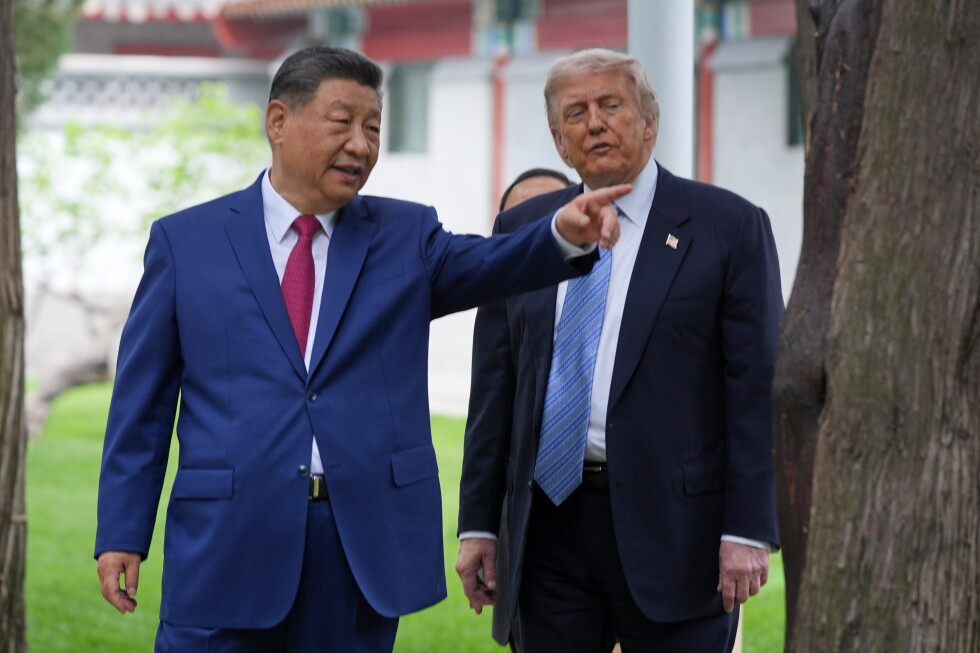
Chen’s wife Yufang Rong released her first public statement this week, saying she has not spoken to her husband in more than 600 days and lives in constant worry about his physical health and overall well-being. Rong noted that President Trump personally raised Chen’s case during his meeting with President Xi in Beijing last May, and expressed confidence that the Trump administration will deliver on its commitment to bring her husband home. To date, the administration has secured the release of more than 100 wrongfully detained Americans held overseas, she added.
The State Department has formally designated Chen as the only U.S. citizen wrongfully detained in China, a classification that elevates his case to high-priority status for U.S. diplomatic engagement and typically triggers intensive diplomatic efforts to secure his release. Secretary of State Marco Rubio officially made this designation in March, and a State Department spokesperson confirmed Tuesday that U.S. officials have repeatedly raised Chen’s case directly with Chinese authorities, formally calling for his immediate release. The Washington Post first reported on Chen’s detention earlier this year.
White House spokesperson Anna Kelly reaffirmed the administration’s position Tuesday, stating that President Trump has repeatedly made clear that bringing every wrongfully detained American home is a top priority, and that the administration has already reunited more than 100 individuals with their families since Trump took office this term. In 2024, the Biden administration oversaw the successful release of three other wrongfully detained American citizens from China, setting a precedent for high-level diplomatic action on such cases.
Eric Lebson, a Global Reach adviser working with Chen’s family, explained that the relatives chose to go public now because there has been no visible progress from Chinese officials, despite President Xi’s stated commitments to President Trump when the case was raised in May. If no resolution is reached before the September summit, Lebson warned that Chen’s case will be a prominent topic during the bilateral meeting between the two leaders.
Senator Edward Markey, a Massachusetts Democrat who represents Chen’s home constituency, also vowed Tuesday to use every tool at his disposal to push for Chen’s immediate release. “It is my hope that increased attention on his unjust detention will force the Chinese government to do the right thing and release Dr. Chen and allow him to return to his family in Massachusetts,” Markey said.
-

‘Gus’ the T. rex fetches record $50.1 mn at US auction
A nearly 76-million-year-old Tyrannosaurus rex skeleton, famously nicknamed “Gus,” has made history as the most expensive dinosaur fossil ever sold at auction, fetching a staggering $50.1 million at Sotheby’s New York location this Tuesday. The landmark sale came after a tense 10-minute bidding war that saw seven prospective buyers compete for the extraordinary specimen, with the final purchase going to an anonymous bidder whose identity has not been released.
Unearthed just three years ago on a working cattle ranch in South Dakota, Gus stands out as one of the most complete and largest T. rex skeletons ever documented by paleontologists. The fossil retains 183 original bones, bringing its overall completeness to roughly 63 percent, and stretches an imposing 38 feet (11.6 meters) from snout to tail. The giant predator roamed western North America between 72 and 66 million years ago, during the late Cretaceous period — an era marked by global warm temperatures, elevated sea levels, and extensive coastal floodplains that supported diverse prehistoric ecosystems.
The record-breaking sale has reignited long-running debates surrounding the private ownership of scientifically significant fossils, a practice that draws sharp criticism from many paleontological researchers. Critics argue that when rare specimens pass into private collections, they are closed off to scientific study and public education, robbing the global research community of opportunities to advance understanding of prehistoric life.
Cassandra Hatton, Sotheby’s global head of science and natural history, explained ahead of the auction that the commercial sale of such fossils is uniquely permitted under U.S. law. Unlike most other nations, the U.S. classifies dinosaur fossils found on private land as the personal property of the landowner. “If you own the land, you own the fossil and you have the right to sell it. So if you want a dinosaur, this is the only place that you can get it,” Hatton told Agence France-Presse prior to the bidding.
Gus’ sale shatters the previous fossil auction record set earlier in 2024, when a Stegosaurus skeleton nicknamed “Apex” sold for $44.6 million to Ken Griffin, the billionaire founder of the Citadel hedge fund. The skyrocketing final price for Gus underscores a rapidly growing global market for rare dinosaur fossils, where demand from wealthy private collectors has driven sale prices to unprecedented heights over the past decade.