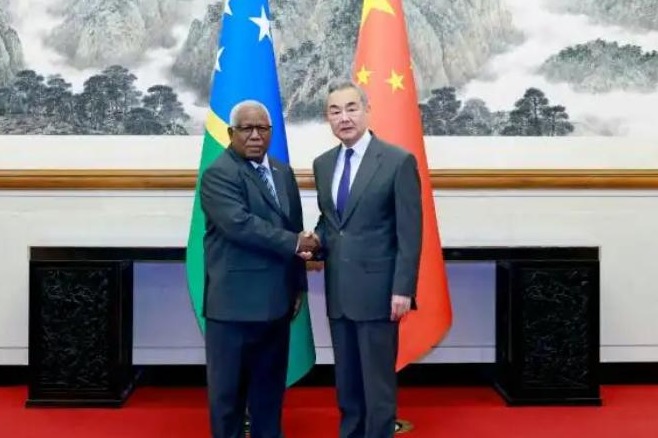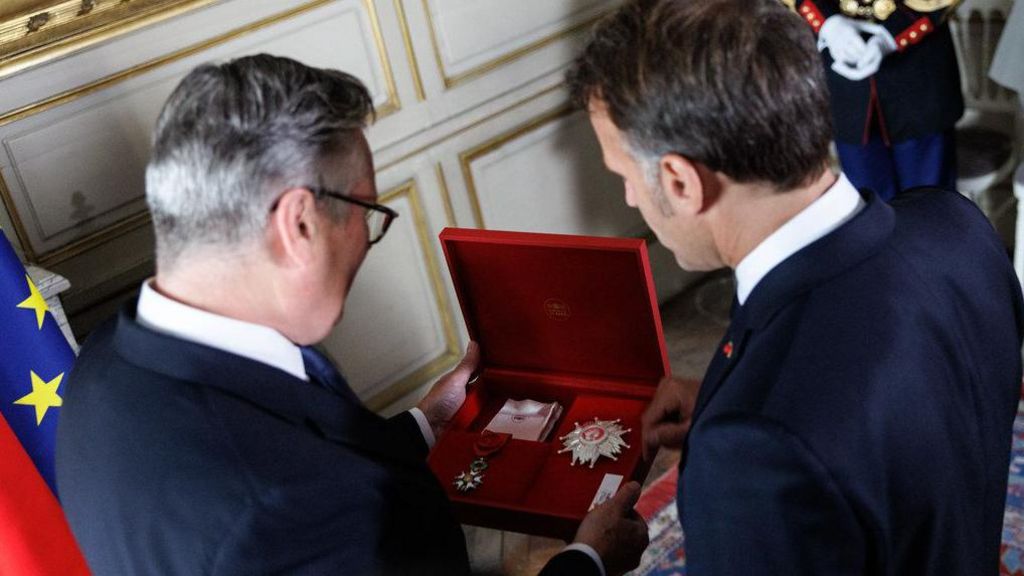
Against the backdrop of the 75th anniversary of formal diplomatic relations between China and Pakistan, Pakistani President Asif Ali Zardari’s April 25 to May 1 visit to China has opened an unprecedented new chapter in bilateral economic partnership, shifting long-standing cooperation beyond traditional infrastructure projects into a broader range of mutually beneficial sectors, according to leading Pakistani policy and economic experts. The seven-day trip, which included stops at industrial and agricultural hubs in China’s central Hunan province and southern Hainan province, has been framed as a strategically significant initiative rather than a mere ceremonial diplomatic engagement, addressing pressing economic needs facing Pakistan while deepening the all-weather strategic ties between the two nations.
作者: admin
-

Cruise passengers tell of life on board stranded ship after hantavirus outbreak
A luxury expedition cruise that began as a dream Atlantic voyage has devolved into a deadly, uncertain quarantine, leaving roughly 150 passengers and crew from 23 countries stranded in waters off the coast of West Africa after a hantavirus outbreak claimed three lives.
The MV Hondius, operated by Netherlands-based expedition company Oceanwide Expeditions, departed Ushuaia, Argentina — the world’s southernmost city — on April 1 on a highly anticipated itinerary that would take guests past dramatic, untapped Atlantic landscapes. The route included stops at South Georgia, the remote British overseas territory famous for its massive penguin colonies, and Tristan da Cunha, the most remote inhabited island on Earth. For weeks, passengers documented the once-in-a-lifetime trip on social media: American travel vlogger Jake Rosmarin shared clips of alpine snowfall, vibrant autumn coastal hues, penguin-spotting excursions, and leisurely iced lattes on deck, calling the quiet moments at remote ports unforgettable.
That idyllic narrative unraveled rapidly in mid-April. On April 11, a Dutch passenger died on board with no clear cause of death. His remains were offloaded in St Helena nearly two weeks later, and his 69-year-old wife, who accompanied the body, was evacuated to a Johannesburg hospital in South Africa, where she also died. The World Health Organization (WHO) later confirmed she had been infected with hantavirus, a rare but serious infectious disease most commonly transmitted to humans by rodent populations. A British passenger fell ill on April 27 and was also evacuated to South Africa, where they remain in critical but stable condition after testing positive for the virus. A third fatality, a German national, was recorded on May 2, bringing the total death toll to three; health officials have not yet confirmed if the German victim died from hantavirus. Currently, two crew members are experiencing acute respiratory symptoms consistent with the virus, one mild and one severe, requiring urgent medical intervention. In total, health authorities have confirmed two cases of hantavirus on board and are investigating five additional suspected cases, with WHO warning the virus may have spread among the vessel’s population.
Today, the stricken vessel remains anchored off Cape Verde, after local authorities declined entry to the port earlier this week. Passengers have described divided moods on board, with conflicting accounts of the crisis shared on social media. In an emotional viral TikTok posted to his followers, Rosmarin, who first brought widespread attention to the outbreak, spoke through tears about the fear and uncertainty gripping many on board. “We’re not just a story. We’re not just headlines, we’re people with families, with lives, with people waiting for us at home,” he said. “There’s a lot of uncertainty and that is the hardest part. All we want right now is to feel safe, to have clarity and to get home.”
In subsequent posts, Rosmarin clarified he had settled his emotions, noting that he remained healthy, was getting regular fresh air, and was well cared for by the ship’s crew. “I’m just trying to focus on the positive,” he added.
Another travel influencer and passenger, Kasem Hato, pushed back on widespread media coverage of the crisis, arguing the situation has been overblown. Hato claimed the intense public attention stemmed from Rosmarin’s viral panicked video, noting that “148 out of 149” people on board have remained calm, and that the outbreak is under control. “While his reaction is valid, it doesn’t represent the situation on board,” Hato wrote, adding that passengers are passing the time with reading, film screenings, and social activities, and wished ill passengers a quick recovery. Cruise operator Oceanwide Expeditions has echoed this framing, saying the overall atmosphere on board remains calm, with most passengers composed. The company said it is working urgently to secure a docking port, expedite disembarkation, and complete required medical screenings for all guests.
Footage from inside the vessel confirms new public health protocols are in place: passengers are required to maintain social distance, wear face coverings in indoor common areas, and practice frequent hand sanitization. Usually bustling communal spaces, including plush lounges designed for evening socializing, now sit empty. One anonymous passenger told the BBC the group is preparing for at least three to four more days at sea, with no clear timeline for when they will be able to dock.
The vessel’s next destination remains shrouded in confusion. WHO initially announced Spain had granted permission for the MV Hondius to dock in the Canary Islands, where officials could conduct a full risk assessment and ongoing medical monitoring. But Spain’s Ministry of Health has pushed back on that reporting, saying it has not yet received a formal request for the vessel to enter Canarian ports. A ministry spokesperson added that Spanish authorities stand ready to take over management of the situation if a request is submitted, including providing medical care, diagnostic testing, and vessel disinfection, though they would not confirm whether passengers would be allowed to disembark once docked.
Hantavirus, which primarily spreads through contact with rodent urine, droppings, or saliva, can cause severe respiratory and cardiovascular illness in humans, with a mortality rate of roughly 36% for the most common strain found in the Americas. Person-to-person transmission is rare, though not impossible, according to global health guidelines.
-

Macron croons classic ballads at a state dinner in Armenia for the French leader
During a high-profile state visit to Yerevan, Armenia this week, French President Emmanuel Macron unexpectedly captured public attention with an unexpected musical interlude that overshadowed the formal diplomatic agenda of his trip. While attending a lavish state banquet held in his honor at the Armenian presidential residence on Monday night, Macron took the stage to perform two beloved French classic ballads for the assembled crowd of dignitaries and guests.
Among the songs he delivered was the iconic 1965 hit *La Bohème*, most famously recorded by legendary Armenian-French artist Charles Aznavour, alongside another timeless French ballad, *Les Feuilles Mortes*, originally popularized by famed French performer Yves Montand. The French leader was not alone on stage: he was joined by Armenia’s own Prime Minister Nikol Pashinyan, who accompanied him on drums, with celebrated local jazz virtuoso Vahagn Hayrapetyan handling piano accompaniment for the surprise performance.
Macron’s unplanned musical appearance came during a packed diplomatic schedule that saw him in Yerevan for a bilateral state visit overlapping with two major European political gatherings: a full meeting of the European Political Community and a landmark European Union summit. This was far from Pashinyan’s first public turn as a working musician, however. Since taking office in 2018, the Armenian prime minister has been open about his passion for music, and performs regularly with his own amateur musical ensemble, Varchaband. The group held its first public debut concert in central Yerevan just this past January, drawing significant local attention.
Beyond his group performances, Pashinyan has cultivated a public reputation as an avid music fan with wide-ranging tastes, frequently sharing clips of himself listening to tracks on his personal Instagram account. His public playlists have run the gamut from mainstream pop superstar Taylor Swift to top American hip-hop acts including Travis Scott and A$AP Rocky, highlighting his eclectic appreciation for modern global popular music.
-

French political row over calls for overhaul and €1bn cuts at public broadcaster
A years-long ideological battle over France’s state-funded public broadcasting system erupted into open conflict this week, after a parliamentary inquiry committee released a damning report calling for sweeping budget cuts, channel closures, and structural overhauls of the nation’s public media sector. The 1 billion euro ($1.09 billion) recommended cut to public broadcasters France Télévisions and Radio France comes alongside explosive accusations of systemic left-wing ideological bias and rampant mismanagement of public funds, sparking immediate pushback from political leaders, industry executives, and even the committee’s own chair.
The inquiry, which wrapped up six months of often fractious public hearings, was led by rapporteur Charles Alloncle, a 32-year-old lawmaker from the small Union of the Right for the Republic (UDR), a minor right-wing party aligned with Marine Le Pen’s populist National Rally (RN) — France’s largest single political party. For decades, Le Pen’s movement and its right-wing allies have claimed that state media systematically marginalizes conservative and far-right voices, a grievance Alloncle amplified in his final report.
In the report’s opening, Alloncle argues that France’s sprawling public audiovisual ecosystem is fundamentally ill-suited to 21st-century media challenges, calling for a full or partial restructuring of how the sector operates. Among his 69 formal recommendations are a one-third reduction to public television’s sports rights budget, major cuts to the number of prime-time game shows, and the full elimination of three youth-focused outlets: television channel France 4, digital channel Slash, and radio station Mouv’. Alloncle also proposes a series of mergers to eliminate overlapping services: merging main generalist channel France 2 with low-viewership France 5, combining international news channel France 24 with domestic 24-hour news outlet France Info, and consolidating duplicative regional television and radio networks.
On the editorial side, Alloncle pushes for greater ideological diversity among on-air commentators, who right-wing leaders have repeatedly accused of being uniformly drawn from a small circle of left-leaning, Paris-based elites. He supports these claims with multiple documented examples of perceived bias, including an intercepted 2025 conversation where two prominent public media commentators allegedly told Socialist Party officials they would work to block right-wing candidate Rachida Dati’s Paris mayoral campaign. He also highlights an off-camera incident where commentator Natalie Saint-Cricq compared UDR party leader Eric Ciotti to fascist dictator Benito Mussolini.
On the financial front, Alloncle details what he frames as years of unchecked waste of taxpayer funds, including the outsourcing of hundreds of millions of euros in production contracts to private firms, many of which are led by on-air public media personalities already receiving public salaries. He also calls out excessive expenses, including a total 3.2 million euro taxi bill for public media staff in 2024 and 110,000 euros in hotel costs for 2023 Cannes Film Festival coverage.
Critics however have rejected the report as a thinly veiled ideological push to weaken public broadcasting and clear the way for full privatization, a long-stated goal of the French far-right. The report drew cross-party condemnation within hours of its public release Tuesday. Centrist committee president Jérémie Patrier-Leitus accused Alloncle of turning a nonpartisan inquiry into a political project designed to undermine public media ahead of a potential sale. Prime Minister Sébastien Lecornu called the report a “missed opportunity” that failed to address the core challenges facing French public broadcasting. France Télévisions chief Delphine Ernotte dismissed the document as nothing less than a political show trial, designed to impose ideological preferences on a neutral public service.
Compounding the controversy, Alloncle is currently facing a formal judicial complaint over allegations that right-wing media conglomerate Lagardère — controlled by conservative billionaire Vincent Bolloré, a prominent supporter of privatization — provided Alloncle with pre-written questions to use during committee hearings. Alloncle for his part has doubled down on his claims, saying he is himself a victim of unfair bias from state media, echoing the longstanding grievance of his party and its RN ally. In a public petition organized by the RN calling for full privatization, the party argues that public broadcasting “is no longer a space of impartial information, but a tool of influence in the service of a particular camp.”
France currently spends nearly 4 billion euros annually on public broadcasting, a cost that since 2022 has been funded through general VAT revenue rather than the traditional television license fee. Unlike the UK’s BBC, French public broadcasters are allowed to sell advertising, and operate a sprawling portfolio of nearly 100 national, regional, international, and local television and radio stations, plus major assets including the European cultural channel ARTE and the National Audiovisual Institute’s extensive archive.
The heated standoff in France mirrors growing tensions across many Western democracies, where aging tax-funded public broadcasters face declining audience share and increasing political attacks from both right and left over perceived bias and funding questions. The outcome of this latest debate could reshape the future of public media in one of Europe’s largest democracies, setting a precedent for other nations grappling with the same questions.
-

Daniel Radcliffe and Rose Byrne nominated for Tony Awards
The most prestigious honors in American Broadway theater, the annual Tony Awards, have released their full 2026 nomination list, with a roster of celebrated screen and stage actors earning nods for their standout performances over the past season.
Among the most high-profile names in this year’s round of recognitions is Daniel Radcliffe, the globally beloved actor who rose to fame as the lead of the Harry Potter film franchise. Radcliffe picked up a nomination for Best Leading Actor in a Play for his solo turn in *Every Brilliant Thing*, a intimate one-man production that explores the sensitive topic of depression through a warm, human-centered narrative. Joining him in receiving acting nods is recent Academy Award nominee Rose Byrne, who was tapped in the Best Leading Actress in a Play category for her comedic work in Noël Coward’s *Fallen Angels*. Byrne shares her nomination with co-star Kelli O’Hara, who also earned a spot in the same category for the production.
Veteran stage and screen talents round out the lead acting acting nominations alongside the two stars. British actress Lesley Manville gained recognition for Best Leading Actress for her turn in the Greek tragedy *Oedipus*, while iconic American actor John Lithgow scored a Best Leading Actor nomination for playing legendary author Roald Dahl in *Giant*. Former *Strictly Come Dancing* competitor Layton Williams also earned a nod, taking a spot in the Best Supporting Actor in a Musical category for his role as the iceberg in the musical parody *Titaníque*. Notably, Manville, Lithgow and Williams are all previous Olivier Award winners, whose current Broadway productions transferred to New York from London’s West End, highlighting the cross-Atlantic exchange of hit theatrical work.
When it comes to overall production nominations, two projects tied for the top spot this year: the stage musical adaptation of the 1980s classic film *The Lost Boys*, and the Broadway adaption of the Apple TV comedy series *Schmigadoon!*, both earned a leading 12 nominations each. Following close behind, the revived musical *Ragtime* picked up 11 nominations, while *Death of a Salesman*, *Cats: The Jellicle Ball* and *Richard O’Brien’s The Rocky Horror Show* each earned 9 nods.
The full roster of competitive categories includes honors for every corner of Broadway production, from outstanding performances to writing, direction, and design. Key categories include Best Musical, where *The Lost Boys*, *Schmigadoon!*, *Titaníque*, and *Two Strangers (Carry a Cake Across New York)* are competing; Best Play, which features *The Balusters*, *Giant*, *Liberation*, and *Little Bear Ridge Road*; and multiple revival categories for both plays and musicals. The complete list of all nominations is available to view in full on the official Tony Awards website.
Widely considered the American equivalent of the UK’s Olivier Awards, the 2026 Tony Awards ceremony is scheduled to take place on June 7 in New York City, with Grammy-winning pop singer Pink set to host the star-studded event celebrating the very best of Broadway from the past year.
-

The year in review: Influential people who have died in 2026
Across the first four months of 2025, the world lost a remarkable cohort of trailblazers, creators, leaders, and icons whose legacies have shaped fields from entertainment and sports to science, politics, and human rights. These individuals left indelible marks on global culture, policy, and progress, and their passing has been marked by mourning from communities, leaders, and fans across the globe.
The roll call of influential figures begins in January, where the world said goodbye to icons across every sector. Diane Crump, 77, broke barriers as the first woman to compete as a professional jockey in a sanctioned horse race in 1969, and a year later made history again as the first female rider to enter the Kentucky Derby; she passed away on January 1. South Korean cinema legend Ahn Sung-ki, 74, who earned the beloved nickname “The Nation’s Actor” for his 60-year prolific career and warm public image, died January 5. The same day brought the death of Aldrich Ames, 84, the CIA turncoat whose decades-long betrayal of Western intelligence assets to the Soviet Union and Russia stands as one of the most damaging security breaches in U.S. history, who died in prison.
January also saw the passing of award-winning Hungarian filmmaker Béla Tarr, 70, celebrated for his iconic works *Sátántangó* and *The Turin Horse*; NHL Hall of Fame goaltender Glenn Hall, 94, whose 502-consecutive-start ironman streak remains an unbroken league record; Grateful Dead co-founder Bob Weir, 78, who shaped the 1960s San Francisco counterculture sound; Grammy-nominated Fugees collaborator John Forté, 50; “Dilbert” creator Scott Adams, 68, whose iconic office satire entertained millions for decades before syndication dropped him in 2023 over controversial racist remarks; civil rights pioneer Claudette Colvin, 86, who was arrested at 15 for refusing to surrender her segregated bus seat nine months before Rosa Parks’ famous protest, laying critical groundwork for the Montgomery bus boycott; iconic Italian fashion designer Valentino Garavani, 93, famous for his glamorous gowns and signature “Valentino red”; former Czechoslovakian Olympic weightlifting gold medalist Ota Zaremba, 68; William Foege, 89, the public health leader who spearheaded the global campaign that eradicated smallpox, one of humanity’s greatest public health victories; beloved Canadian comedic actor Catherine O’Hara, 71, famous for *Home Alone* and her Emmy-winning role as Moira Rose in *Schitt’s Creek*; and “Sanford and Son” star Demond Wilson, 79, who later became an ordained minister.
February brought more losses of influential figures. Award-winning poet, educator and textbook author X.J. Kennedy, 96, who taught millions of American students through works like *The Bedford Reader*, died February 1. Three Dog Night founding member Chuck Negron, 83, who sang lead on the band’s iconic hits including “Joy to the World” and “One,” died February 2. Legendary Detroit Tigers pitcher Mickey Lolich, 85, who notched three complete-game victories during the 1968 World Series, a feat no MLB pitcher has repeated since, died February 4. *Dawson’s Creek* star James Van Der Beek, 48, who became a 2000s heartthrob and later embraced self-parody, died February 11 after a battle with colorectal cancer. Iconic Oscar-winning actor Robert Duvall, 95, famous for his roles in *The Godfather* and *Tender Mercies*, died February 15.
Other February losses include groundbreaking documentary filmmaker Frederick Wiseman, 96, whose unflinching works chronicled American social institutions; civil rights leader and two-time U.S. presidential candidate Rev. Jesse L. Jackson, 84, who carried forward the work of Martin Luther King Jr. after his assassination; *Grey’s Anatomy* and *Euphoria* actor Eric Dane, 53, who died from ALS less than a year after announcing his diagnosis and became a leading advocate for the disease; Hall of Fame Pittsburgh Pirates second baseman Bill Mazeroski, 89, famous for his historic walk-off home run that won the 1960 World Series; influential salsa music architect and activist Willie Colón, 75; *Revenge of the Nerds* star Robert Carradine, 71; Broadway pioneer Sondra Lee, 97, who originated the role of Tiger Lily in the original *Peter Pan* and starred in the first production of *Hello, Dolly!*; legendary rock ‘n’ roll singer-songwriter Neil Sedaka, 86, who enjoyed two separate eras of chart-topping success across the 1950s and 1970s; and Ayatollah Ali Khamenei, 86, Iran’s long-serving supreme leader who consolidated theocratic power and led Iran through decades of regional and global conflict, who was killed in joint U.S.-Israeli military strikes on February 28.
March began with the passing of Kermit Gosnell, 85, the abortion provider convicted of murder for killing three infants born alive at his Philadelphia clinic, on March 1. Legendary college football coach Lou Holtz, 89, who led Notre Dame to the 1988 national championship and was inducted into the College Football Hall of Fame, died March 4. Civil rights leader Bernard LaFayette, 85, who laid critical on-the-ground groundwork for the 1965 Selma voting rights campaign that led to the passage of the Voting Rights Act, died March 5. 1960s anti-war rock icon “Country” Joe McDonald, 84, whose *I-Feel-Like-I’m-Fixin’-To-Die Rag* became a defining Vietnam War protest anthem and a Woodstock highlight, died March 8. Alexander Butterfield, 99, the White House aide whose accidental revelation of Richard Nixon’s Oval Office taping system accelerated the president’s resignation during the Watergate scandal, died March 9.
March also saw the death of Nicholas Haysom, 73, the white South African anti-apartheid activist tapped by Nelson Mandela to help draft post-apartheid South Africa’s constitution that enshrined equal rights for all races; Indonesian billionaire Michael Bambang Hartono, 86, who built the Djarum tobacco conglomerate into one of the nation’s largest business empires; iconic martial artist and action star Chuck Norris, 86, famous for *Walker, Texas Ranger* and his decades-long status as a global pop culture icon; Italian populist politics pioneer Umberto Bossi, 84, founder of the Northern League and one of the nation’s most polarizing modern political figures; former FBI Director and special counsel Robert S. Mueller III, 81, who restructured the FBI to counter terrorism after the 9/11 attacks and led the investigation into 2016 Russian election interference; *Buffy the Vampire Slayer* actor Nicholas Brendon, 54, who died of natural causes in his sleep; former French Prime Minister Lionel Jospin, 88, who introduced France’s 35-hour work week during his tenure; soft-rock legend Darrell “Dash” Crofts, 87, half of the Seals and Crofts duo behind hits including “Summer Breeze”; character actor James Tolkan, 94, famous for his roles in *Top Gun* and *Back to the Future*; and Tony-nominated actor Mary Beth Hurt, 79.
April closed out the first four months of the year with the passing of a new group of icons. Jim Whittaker, 97, who became the first American to summit Mount Everest in 1963, died April 7. Sid Krofft, 96, the Canadian-born entertainment pioneer who co-created cult classic children’s shows like *H.R. Pufnstuf* with his brother Marty, died April 10. Lionel Rosenblatt, 82, the U.S. Foreign Service officer who orchestrated an unauthorized evacuation of hundreds of Vietnamese civilians before the 1975 fall of Saigon, saving countless lives, died April 11.
Two icons died on April 12: legendary 92-year-old Bollywood singer Asha Bhosle, whose voice defined Indian cinema for nearly 80 years across an unprecedented 12,000 recorded tracks, earning national mourning and praise from Prime Minister Narendra Modi for her irreplaceable contribution to Indian culture; and wheelchair racing pioneer Bob Hall, 74, a polio survivor who won the Boston Marathon twice and pioneered modern racing wheelchair design, earning the title “father of wheelchair racing.”
April’s other losses include iconic country music songwriter Don Schlitz, 73, who wrote hits including “The Gambler” and “Forever and Ever, Amen”; Brazilian Basketball Hall of Famer Oscar Schmidt, 68, known to fans as “Holy Hand” for his unrivaled shooting; beloved French actor Nathalie Baye, 77; George R. Ariyoshi, 100, former Hawaii governor and the first Asian American to serve as a U.S. state governor; Traffic co-founder and Rock & Roll Hall of Famer Dave Mason, 79, who wrote the classic hit “Feelin’ Alright”; Alan Osmond, 76, eldest member of the hit family group The Osmonds; Nedra Talley Ross, 80, last surviving member of the 1960s pop group the Ronettes behind enduring hits like “Be My Baby”; iconic outlaw country singer-songwriter David Allan Coe, 86, who wrote the working-class anthem “Take This Job and Shove It”; and pioneering geneticist J. Craig Venter, 79, who led the team that produced the first draft sequence of the human genome and later became the first person to publish his own fully sequenced genome, opening new frontiers in understanding genetic inheritance and disease vulnerability.
-

‘We need people to come back’: Dubai’s tourism industry reels as foreigners flee
For more than a decade, Dubai has reigned as one of the world’s most iconic global tourism and business hubs, drawing millions of international visitors, transiting passengers and foreign investors drawn to its reputation as a stable, conflict-free oasis in the Middle East. But today, that standing is facing an unprecedented threat, sparked by escalating regional conflict between the U.S., Israel and Iran that has sent tourism numbers plummeting, triggered widespread hotel shutdowns and mass job losses across the emirate’s critical hospitality sector.
New data released by Dubai Airports this week underscores the severity of the downturn. First-quarter 2026 passenger traffic fell by a minimum of 2.5 million compared to the same period in 2025, with March alone seeing a staggering 66% drop in arrivals as international travelers deliberately avoid the Gulf amid rising security fears. The sharp decline comes in the wake of Iran’s retaliatory drone and missile strikes against Gulf Cooperation Council (GCC) states that host or cooperate closely with U.S. military forces, a escalation that followed months of rising tensions across the region.
In a urgent bid to reverse the collapse in visitor numbers, UAE authorities announced Saturday that all air travel restrictions imposed after Iran’s strikes have been fully lifted. The country’s Civil Aviation Authority confirmed the decision in an official post on its X account, noting the move followed a full review of operational and security conditions conducted in coordination with local security agencies. The policy shift is widely interpreted as a deliberate signal to reassure jittery international travelers, particularly after multiple major European carriers announced temporary suspensions of all flights to the Middle East over safety and insurance concerns.
Despite the government’s confidence-building move, hospitality workers, business owners and long-term residents who spoke to Middle East Eye – all speaking on condition of anonymity due to GCC-wide restrictions on public discussion of the impact of Iran’s actions – caution it will take time to rebuild trust among both travelers and foreign investors.
Charity, a Kenyan employee at a mid-range Dubai hotel operated by a U.S.-based chain, described the immediate fallout of the escalation, which coincided with the Muslim holy month of Ramadan, when tensions were at their highest. During the peak of the strikes, the hotel was filled not with leisure tourists, but with stranded airline passengers waiting to rebook with Emirates, who gathered in the lobby to meet with airline representatives. As a security precaution, the property closed its popular pool and relocated all guests from the 20-story building’s upper floors to lower levels by the end of the month. In the weeks that followed, she said, business slowed to a near standstill.
Charity says she holds out hope that the lifting of travel restrictions will reassure visitors to return, but is waiting to see tangible recovery in the coming weeks. “We’ll see over the next week if people really start to come back,” she said during a recent shift assisting a long-time American guest. “We need your people [foreign tourists] to come back.”
The dramatic slump in traffic is immediately visible even to frequent travelers at Dubai International, which has held the title of the world’s busiest airport for international passenger traffic for 12 straight years. Samina, a South Asian NGO worker who regularly travels between South Asia, the Gulf and North America, said the emptiness of the airport’s terminals is striking compared to just two months ago.
“Coming in, it’s empty,” she said of Terminal 3, Emirates’ main hub. “Terminal 1 and 2 are ghost towns,” she added, referring to the terminals that house other international carriers and UAE-based budget airline FlyDubai. As of the latest update from Dubai Airports, only 51 of the 90 airlines that normally operate out of the airport have resumed regular services. European and U.S. carriers have faced particular barriers to returning, as many struggle to secure affordable insurance coverage for operations in the region amid official government travel advisories warning against non-essential travel.
To shore up morale among residents and project an image of stability, Dubai’s local government has launched a public outreach campaign across the emirate. UAE flags are displayed prominently outside homes, commercial buildings, and on digital billboards along major highways. At the popular City Walk shopping mall, large electronic screens display messages thanking UAE residents in both Arabic and English. Portraits of UAE President Mohamed bin Zayed Al Nahyan line major arterial roads, paired with the message: “May our nation remain in God’s protection,” while other displays feature Emirati families saluting the national flag with the same wording.
Even with these public efforts, the economic impact of the regional tensions has been felt almost immediately across nearly all sectors, business owners say. Tatiana, a Russian entrepreneur who runs a logistics and consulting firm helping foreign businesses set up operations in the Gulf, said she was shocked by how rapidly investor and resident confidence collapsed. “Within the first two weeks people [said] it’s no longer worth [living here]. They weren’t scared per se, they just felt like it’s no longer worth it,” she explained. Many businesses moved quickly to liquidate their assets, and Tatiana said her own family is now exploring relocation options in Europe to shift their operations gradually.
The ripple effects of the downturn have even reached industries not immediately associated with tourism and international travel. Antoine, an editor who trains new writers, shared that one of his clients, an employee at a local advertising agency, was tasked with laying off 1,000 workers in the UAE following widespread business liquidations. “You’d think advertising would be a war-proof industry,” he noted, expressing surprise at how quickly the sector was impacted.
For Tatiana, the damage strikes at the core of what makes Dubai’s business ecosystem work: “Our whole business is predicated on assuring people that the UAE is a safe, convenient place to do business,” she said. That sentiment is echoed by Arjun, one of the 3.5 to 4.3 million Indian expatriates who call the UAE home, who spoke after attending a late-night screening of the Michael Jackson biopic in Dubai. Arjun noted he was encouraged to see the theater nearly full, holding out hope it could signal a gradual return to normalcy – but acknowledged the damage to Dubai’s core brand has already been done. “The entire ethos of Dubai as this place free from conflict was shaken,” he said.
-

Macron says US and EU are wasting time on tariff threats as Trump fumes over Germany
Amid rising transatlantic friction, French President Emmanuel Macron has pushed back against former U.S. President Donald Trump’s latest plan to hike tariffs on European-made passenger vehicles and trucks, arguing that the world’s two closest democratic allies have far more pressing priorities than escalating trade conflict.
Trump first announced the measure last Friday, confirming he would raise import duties on EU-origin vehicles to 25% as early as this week. The planned tariff increase arrives at an already fragile moment for the global economy, which is still grappling with widespread market disruption stemming from the ongoing war in the Middle East.
Speaking to reporters Tuesday on the sidelines of an EU-Armenia summit in Yerevan, Macron emphasized that the current tense geopolitical climate demands cooperation rather than confrontation between the U.S. and the European Union. “Especially in the geopolitical period we are experiencing, allies like the United States of America and the European Union have much better things to do than to stir up threats of destabilization,” Macron said. He added that for European businesses, households and general public, leaders should prioritize delivering a clear message of economic stability and market confidence, and expressed his hope that “reason will prevail soon.”
The tariff dispute stems from a landmark trade agreement reached by Trump and European Commission President Ursula von der Leyen back in July 2025, which established a 15% tariff ceiling for most traded goods between the two blocs. However, the legal foundation of that deal was undermined earlier this year when the U.S. Supreme Court ruled against the executive authority Trump had relied on to impose the agreed tariff levels. Trump has claimed the EU is failing to uphold the terms of the original agreement, though he has not offered further details to support his accusation.
Higher tariffs would hit Germany’s iconic automotive sector particularly hard, as the country is the EU’s largest vehicle exporter to the U.S. The new trade friction also follows heated rhetoric between Trump and new German Chancellor Friedrich Merz: Merz recently stated that the U.S. had suffered a diplomatic humiliation at the hands of Iran during negotiations to end the Middle East war, a comment that prompted Trump to threaten withdrawing thousands of U.S. military personnel stationed in Germany.
Senior trade officials from the EU and U.S. were scheduled to convene in Paris Tuesday to negotiate a path forward on the tariff dispute. Von der Leyen reaffirmed the EU’s commitment to upholding the existing 2025 trade deal during her remarks at the Yerevan summit, noting that “A deal is a deal, and we have a deal. And the essence of this deal is prosperity, common rules and reliability.”
As the EU’s executive body, the European Commission holds exclusive authority to negotiate trade agreements on behalf of the bloc’s 27 member states. Von der Leyen made clear the bloc has already prepared for all possible outcomes if talks break down, saying “we are prepared for every scenario” if the U.S. follows through on the tariff hike. Macron echoed that position, stressing that existing international trade agreements must be respected. He warned that reopening the terms of the 2025 deal would upend the entire framework of transatlantic trade relations, adding that “the European Union has instruments that would then need to be activated” in response to any unilateral U.S. action.
Reporting for this article included contributions from Masha Macpherson in Paris.
-

Players will boycott a Slam ‘at some point’ – Sabalenka
As the world’s top female tennis players gather in Rome for the Italian Open, a simmering dispute over Grand Slam prize money and player representation has broken into the open, with world No. 1 Aryna Sabalenka becoming the first high-profile player to openly predict a player boycott of one of the sport’s most prestigious events in the near future.
For weeks, top-10 ranked players from both the men’s and women’s tours have united behind a set of core demands: a larger share of the billions in revenue generated annually by the four Grand Slam tournaments, enhanced benefit contributions for lower-ranked players, and more input into key decisions like tournament scheduling. Until Sabalenka’s press conference in Rome, however, players had avoided publicly discussing strike action as a potential bargaining tool.
“I think at some point we will boycott it. I feel like that’s going to be the only way to kind of fight for our rights,” the four-time Grand Slam singles champion, from Belarus, told reporters. “I feel like the show is on us. I feel like without us there wouldn’t be a tournament and there wouldn’t be that entertainment.”
Her comments have exposed deep divisions within the women’s game over how far to push the sport’s governing bodies. World No. 4 Coco Gauff, the reigning French Open champion, quickly backed Sabalenka’s position, saying she could “100%” see herself joining a collective boycott if all players coordinate their action. Gauff added that progress on player demands has historically required collective organizing, noting that across other professional sports, meaningful change often only comes when players unionize to push for their shared interests.
“If we all collectively agree, then yes. I wouldn’t want to be the only one, but we definitely can move more as a collective,” Gauff said. “From the things I’ve seen with other sports, usually to make massive progress and things like this, it takes a union. We have to become unionised in some way.”
World No. 2 Elena Rybakina, champion of the 2022 Wimbledon, also signaled she would align with the majority of players if a boycott is called, saying she had no issue joining the action if most of the tour supported it. But other top players have pushed back on the idea of a tournament boycott, arguing that direct negotiation is a more effective and less extreme path forward.
World No. 3 Iga Swiatek, a four-time Grand Slam winner, said she fully supports calls for increased prize money but views a boycott as an overstep that risks breaking down productive dialogue between players and tournament organizers. “I think the most important thing is to have proper communication and discussions with the governing bodies so we have some space to talk and maybe negotiate,” Swiatek said, adding she hopes productive talks can be held ahead of the upcoming French Open at Roland Garros. “But boycotting the tournament, it’s a bit extreme… So it’s really hard for me to say how it would work, if it’s even there on the picture. For now, I haven’t heard anything.”
Former US Open champion Emma Raducanu went even further, saying she would refuse to participate in any boycott. Raducanu, who withdrew from the Italian Open 12 hours before Sabalenka’s comments due to lingering post-viral symptoms, said Grand Slams hold irreplaceable value for her that extends far beyond prize money. “It gives you something that money can’t and that is what is the most important to me, and what I value the most,” Raducanu told BBC Sport. “I wouldn’t be a part of [a boycott] but each to their own.”
The current dispute was reignited earlier this month when organizers of the 2025 French Open announced a 9.5% increase in total prize money, a raise that players dismissed as far insufficient to meet their demands. Players are currently calling for 22% of Grand Slam tournament revenue to be allocated to player prize money, a significant increase from the current share. In recent months, other major have already announced higher prize pool increases: the 2025 Australian Open raised its total fund by nearly 16% year-over-year, while the 2024 US Open increased its pot by 20%. Wimbledon is set to announce its 2025 prize money allocations next month.
Not all leading advocates of the prize money campaign back boycott threats. World No. 5 Jessica Pegula, one of the most vocal spokespeople for the players’ movement, told BBC Sport in March that she does not expect any player to actually strike against a Grand Slam, given how much players value competing at the sport’s biggest events. “We love playing the Slams – I don’t think anyone’s going to strike against the Slams,” Pegula said. “I just think it’s us asking for what we think we deserve, but I do think that if the men and the women can come together – which we have on that front – and keep pushing, there’s nothing wrong with us just asking for what we think is right.”
Sabalenka, for her part, said she is optimistic the two sides can reach a resolution that works for all parties, but added that women players are ready to organize to push for fair treatment. “I just really hope that we at some point are going to get to the right decision, to the conclusion that everyone will be happy with,” the 28-year-old said. “I feel like nowadays, we girls can easily get together and go for this because some of the things I feel like it’s really unfair to the players.”
-

The internet has a Strait of Hormuz problem
Most conventional discussions of threats to the global economy center on kinetic military strikes or large-scale cyberattacks on onshore data infrastructure. But a far stealthier, more destabilizing risk is now building in one of the world’s most strategically critical waterways: a coordinated sabotage campaign targeting the fiber-optic cables that crisscross the Persian Gulf seabed — infrastructure that underpins nearly all of the world’s digital and financial activity.
Recent escalations in the Middle East carry global ramifications that extend far beyond energy security, requiring urgent attention from policymakers worldwide. Iran has already disrupted oil and gas shipments through the Strait of Hormuz, the world’s busiest and most important energy chokepoint, via maritime mining operations. Now, analysts warn that a quieter, far more consequential threat is unfolding.
On April 22, 2026, Iranian media outlets linked to the Iranian government published detailed public maps of undersea cable routes, coastal landing stations, and key regional data hubs spanning the Persian Gulf. Analysts from *The Jerusalem Post* have assessed that these public disclosures are not accidental: they represent deliberate target preparation for future sabotage.
To grasp the scale of this risk, it is necessary to confront a little-known fact that shapes the entire global digital ecosystem: over 97% of all cross-border internet traffic travels not through orbital satellites, but through thin fiber-optic cables laid across ocean floors. These strands, no thicker than a standard garden hose, facilitate an estimated $10 trillion in global financial transactions every single day. They are the foundational infrastructure for bank transfers, stock market operations, cloud computing services, and the AI systems that are increasingly integrated into every sector of the modern global economy. Even with advances in satellite technology, satellites lack the bandwidth to replace even a fraction of this capacity if major cable networks are disabled.
Geographic chokepoints amplify this vulnerability dramatically. At least 17 major undersea cable systems pass through the Red Sea, with several additional core routes traversing the Persian Gulf. These are not backup redundant lines — they are the primary digital arteries connecting Europe, Asia, Africa and the Middle East. Both regions are already plagued by ongoing conflict, and their narrow channels mean a single well-executed cable cut can send shockwaves across every inhabited continent.
This threat is not hypothetical: there is a clear, documented precedent for this exact pattern of aggression. In February 2024, Yemen’s Houthi movement published a public plan on the messaging platform Telegram outlining its intent to target undersea cables connecting Europe and Asia via the Red Sea. That same day, *Foreign Policy* magazine noted that even if the Houthis lacked the independent technical capacity to carry out such an attack, Iran could easily supply the required equipment and expertise. The warning was explicit and credible, but the global community largely ignored it.
Less than three weeks later, the warnings became reality. On February 26, 2024, four undersea cables linking Saudi Arabia and Djibouti were severed in a deliberate act of sabotage, matching the pre-attack public signaling the Houthis had already provided. The pattern was unambiguous: public threat disclosure and target mapping, followed by immediate offensive action. Today, that same pattern is repeating — this time targeting infrastructure that connects the entire global digital system, not just a regional network.
Over the past decade, the Middle East has evolved from a primarily energy-focused global hub to a critical digital infrastructure hub as well. The region now hosts more than 300 data centers across 18 countries, with tech giants including Amazon, Microsoft, and Google investing billions of dollars in cloud facilities based in the Persian Gulf. A widespread cable cut would not just disrupt email and casual web browsing: it would strand hundreds of billions of dollars in digital infrastructure overnight, and could effectively shut down large swations of the global economy, since nearly all modern daily commerce, banking, and investment activity depends on continuous, high-volume internet connectivity.
What makes this threat uniquely difficult to deter is also what makes it so attractive to Iran: near-perfect plausible deniability. A missile strike is an unambiguous act of aggression that would trigger immediate diplomatic and military retaliation. But a cargo vessel dragging an anchor across a cable off the coast of the Strait of Hormuz is far more ambiguous. Was it an accidental navigational error? A fishing boat that drifted off its planned course? A proxy force operating with discreet backing from Tehran?
By the time investigators can untangle these questions — a process made even slower by the fact that cable repair vessels cannot safely operate in active conflict zones — the damage is already done. Entire global regions can remain cut off from core digital services for weeks or even months, with cascading economic consequences.
Compounding this vulnerability is the astonishingly weak international legal framework meant to deter this type of sabotage. Under the United Nations Convention on the Law of the Sea (UNCLOS), if an undersea cable is damaged in international waters, legal jurisdiction to prosecute the perpetrator falls to the perpetrator’s home country, not the state or company that owns the cable. The outcome of this framework is predictable: no state has ever been prosecuted for a deliberate cable cut, and no case of sabotage has ever been adjudicated in an international court. When states operate through proxy groups, as Iran regularly does, confirming attribution becomes even more difficult, and the threshold for meaningful retaliation is almost never met.
In 2024, the United States and more than two dozen allied nations signed the New York Joint Statement on undersea cable security, officially acknowledging the widespread vulnerability of this infrastructure. But a public acknowledgment of risk is not a deterrent, and no substantive enforcement measures have followed the statement.
To address this growing threat, policy experts argue that the international community needs a new, enforceable legal framework with real consequences. This framework would empower states that own cable infrastructure to pursue direct action against perpetrators regardless of their nationality, and would explicitly hold state sponsors accountable for attacks carried out through proxy groups. In the short term, since the U.S. already maintains a significant military presence in the Persian Gulf region, it can take immediate action to patrol and protect critical cable routes to reduce the risk of successful sabotage.
In 2024, the Houthis publicly signaled their intent to attack undersea cables, and the attacks followed shortly after. Today, Iran is engaging in the same pattern of public signaling, but for a potentially far more devastating attack that could cripple the global economy. The only open question is whether the United States and its global partners will act to prevent the attack — before the silent fall of the global digital network.