Asian stock markets surged across the board on Wednesday, with South Korea’s benchmark index leading the charge, as a cooler-than-forecast U.S. inflation reading quelled immediate fears of an interest rate hike from the Federal Reserve this month. The upbeat momentum was reinforced by strong early second-quarter earnings from major Wall Street banks and a last-minute U-turn from former U.S. President Donald Trump on planned tariffs on cargo passing through the Strait of Hormuz, though renewed geopolitical friction between the U.S. and Iran continued to push global oil prices higher.
Tuesday’s U.S. Consumer Price Index data delivered a major jolt of confidence to global investors, showing annual inflation cooled to 3.5% in June, down from a three-year high of 4.2% in May. The drop marked the sharpest monthly deceleration in inflation in six years, and came in well below the 3.8% rise economists had projected. The decline was largely driven by falling energy costs, fueled by a brief truce between Washington and Tehran that temporarily reopened the key Strait of Hormuz shipping lane.
Investors reacted quickly to the reading, scaling back bets on a Federal Reserve rate hike at its upcoming July policy meeting. However, analysts have warned that the sudden resurgence of U.S.-Iran tensions, which has driven crude prices up more than 10% since hostilities flared last week, could put upward pressure on energy costs and derail the recent inflation cooling trend. “The softer inflation data is likely to be welcomed by Federal Reserve officials, reducing the immediate pressure for further rate hikes,” noted Fiona Cincotta, senior market analyst at City Index. “However, the recent rebound in oil prices and renewed U.S.-Iran tensions could yet complicate the inflation outlook if higher energy costs persist.”
Stephen Innes, managing partner at SPI Asset Management, echoed that cautious outlook, pointing out that rate hike expectations for later this year remain firmly on the table. “The Fed can keep the gun on the table without firing it,” Innes said. “Markets still price at least one hike this year, with some chance of a second, so the tightening story has not disappeared. The consumer price index data simply removed the tripwire sitting directly in front of July.”
The rally across Asian markets came as a welcome reprieve for investors after weeks of steep sell-offs, which had hit the technology sector particularly hard amid concerns over stretched valuations and massive capital outlays for artificial intelligence development. South Korea’s Kospi index, which had suffered some of the heaviest losses in recent weeks, led gains with a 6.7% close at 7,318.27, climbing as much as 7% at its intraday peak. The jump was fueled by a 10% rebound in chipmaking giant SK Hynix, which had fallen around 30% from its record high set last month.
Gains were broad across the region: Japan’s Nikkei 225 closed up 0.9% at 68,363.59, Hong Kong’s Hang Seng Index gained 1.3% to 24,667.27, and Shanghai’s Composite index edged up 0.2% to 3,976.41. Minor gains were also recorded in Sydney, Singapore, Taipei and Manila. The U.S. dollar extended losses against most major global currencies following the inflation data, as lower rate hike expectations reduced the greenback’s yield appeal.
The positive regional momentum followed a solid trading session on Wall Street, where technology stocks bounced back from recent losses immediately after the inflation release. Sentiment on Wall Street was further lifted by better-than-expected second-quarter profits from major U.S. banking giants including JPMorgan Chase, Citigroup, Bank of America, Goldman Sachs and Wells Fargo, kicking off the unofficial start of earnings season on a strong note. The upward trend was not universal, however: IBM plummeted more than 25% after releasing disappointing preliminary quarterly results, blaming slowing customer spending driven by higher expected costs for memory chips and other AI-related infrastructure.
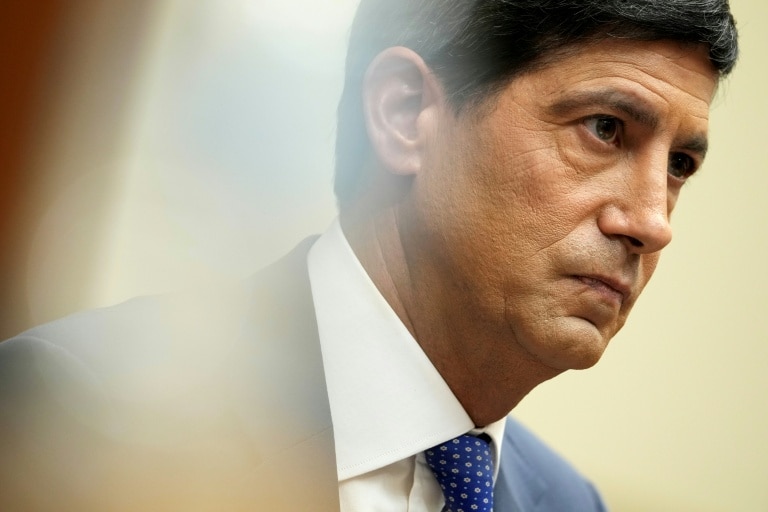
Even as investors celebrated the cooling inflation print, Federal Reserve policymaker Kevin Warsh struck a cautious tone during testimony before the House Financial Services Committee on Tuesday, warning that the fight against inflation is far from over. “There might be some that look at this morning’s data and say, ‘Oh, mission accomplished! Everything is swell,’” Warsh said. “That is not my view.” He added that Fed officials have “no tolerance” for persistently high inflation, and remain committed to taming the multi-year inflation surge that has hit U.S. household budgets. “What I’d say is there’s plenty of work to do,” Warsh said.
Oil prices extended their ongoing rally on Wednesday, despite the soft inflation data, after U.S. forces carried out new strikes on Iranian targets and Trump reimposed a naval blockade on ships traveling to and from Iranian ports. By 0200 GMT, West Texas Intermediate crude was up 0.9% to $80.04 per barrel, while Brent North Sea crude rose 1.1% to $85.68 per barrel, extending a double-digit percentage gain that has built up over the past week of escalating tensions.