作者: admin

  • Israeli soldiers say orders were to kill any man encountered in Gaza

    Israeli soldiers say orders were to kill any man encountered in Gaza

    An explosive investigative report aired on Israel’s Channel 13 has pulled back the curtain on sweeping, deadly rules of engagement Israeli forces received for their 2023 ground operation in Gaza, with serving and former soldiers confirming that troops were ordered to kill any male encountered on sight, regardless of age, and told to treat all civilians as potential threats.

    The testimony was collected directly by Iris Haim, whose son Yotam—one of three Israeli captives wrongfully killed by Israeli forces in Gaza City’s Shujaiya neighborhood in December 2023—was among the victims of the mistaken attack. In an account that has upended official military narratives, an anonymous soldier who admitted to opening fire on the three captives described the explicit standing orders he and his unit received. “A man, no matter what age, don’t play games with it; kill immediately,” the soldier said, adding that commanders even instructed troops to use lethal judgment against women and children if they perceived any threat, with similar protocols applied to working animals like donkeys in the area.

    The December 2023 killing of the three captives sparked immediate international and domestic outcry, because the hostages were unarmed, shirtless, waving a white flag, and posed no visible threat to Israeli troops when they were shot. The newly released testimonies lay bare a stark gap between on-the-ground orders and the Israeli military’s official post-incident investigation. Per the soldiers’ accounts, no ceasefire order was issued in the moments before the shooting—directly contradicting the military’s official claim that all troops received a command to halt fire.

    Recounting the fatal encounter, the soldier who participated in the shooting told Haim he operated under the mindset drilled into him by training: “I fire 500 bullets a minute. I blow things up. I don’t care. I’m here to kill terrorists.” When he spotted the three men approaching, he opened fire, believing them to be enemy fighters. After he hit two, his weapon jammed, and another soldier stepped in to kill the surviving captive, who was later identified as Yotam Haim. The investigation further confirmed that a brigade commander had instructed Yotam to approach the Israeli outpost, only for troops to open fire the moment he emerged.

    In a damning exchange with Iris Haim, the brigade commander overseeing the operation explicitly confirmed the lethal policy. When asked if even unarmed people were targeted, the commander replied: “Of course, we need to kill him – yes, even if he is completely unarmed.” He added that troops were ordered to kill any approaching threat rather than attempt to take them into custody, a framing that Iris Haim said amounted to an order to “kill every person walking on two legs.”

    A second soldier echoed those claims, telling investigators that all Gazans were framed as potential risks from the start of the operation. “Even an old man can blow himself up with an explosive device. The protocol was to shoot them,” he said, confirming that there were multiple documented cases of civilians waving white flags being shot on sight. The soldier added that the senior commander in charge of the captive shooting had publicly stated that distinguishing between Hamas fighters and civilian non-combatants in Gaza was impossible—yet that same commander was later promoted by Israeli Army Chief of Staff Eyal Zamir, with military officials praising him as “an outstanding officer.”

    Raviv Drucker, the investigative journalist who led the Channel 13 report, accused the Israeli military of carrying out a deliberate cover-up in its official investigation into the captive deaths. He said families of the deceased captives had pushed for a full, transparent inquiry “to receive a real investigation, and not what was presented to them, which in their eyes, and in mine as well, was a cover-up and a whitewash.”

    The investigation also uncovered new details of missed warnings that could have prevented the killings. Five days before the shooting, Israeli forces fired a missile at a northern Gaza building where the three captives were hiding, after an exchange of fire with Hamas fighters nearby. The captives survived the strike and moved through residential areas of Shujaiya, hanging handwritten signs requesting help from Israeli forces. But according to the report, military intelligence ignored on-the-ground reports of the captives’ presence, failing to pass the information to frontline troops.

    The killings of the three captives fit into a broader pattern of Israeli military actions harming Israeli hostages held in Gaza, the report notes. Of the 251 people taken captive during the October 7, 2023, Hamas attack on southern Israel, 85 died in captivity or were killed before they could be rescued, under circumstances that remain heavily contested. While the Israeli government has repeatedly denied or declined to comment on accusations that its operations have killed captive Israelis, multiple independent reports confirm that Israeli military actions have directly and indirectly caused the deaths of many hostages. Israeli newspaper Maariv even reported in October 2025 that, per anonymous Israeli official sources, dozens of captives were killed by Israeli attacks, particularly in the chaotic early stages of the war.

    From the first day of the conflict, the Israeli military activated the controversial Hannibal Directive, a longstanding military protocol that orders troops to fire on captives and abductors alike to prevent captives from being taken away, even if that puts the lives of the captives at extreme risk.

    As of 2025, Israeli military operations in Gaza have killed more than 72,700 Palestinians, according to local health officials, with 850 additional deaths recorded after a ceasefire was declared in October 2025. Thousands more Palestinians remain unaccounted for, and are presumed buried under the rubble of destroyed residential and infrastructure across the enclave.

  • Arsenal on brink of Premier League title, Villa slip up in Champions League chase

    Arsenal on brink of Premier League title, Villa slip up in Champions League chase

    The 2023-2024 Premier League title race edged closer to its climax on a dramatic Sunday of matchweek action, with Mikel Arteta’s Arsenal moving to the cusp of ending their 22-year wait for the top-flight crown, while Aston Villa slipped up to keep their own Champions League qualification bid finely poised.

    Fresh off a stunning midweek win over Atletico Madrid that booked their spot in the Champions League final, Arsenal started on the front foot against West Ham United at the Emirates Stadium. Early on, Gunners attacker Leandro Trossard came agonisingly close to opening the scoring: after West Ham goalkeeper Mads Hermansen palmed away his initial effort from a corner, the Belgian’s follow-up header crashed off the crossbar.

    Nerves, which have plagued Arsenal’s push for the title after three consecutive second-place finishes, took over in the second half as West Ham grew into the contest. With just over 10 minutes remaining, Arsenal keeper David Raya pulled off a critical save to deny Mateus Fernandes what would have been a go-ahead goal for the visitors.

    Just moments later, Arsenal broke the deadlock. Captain Martin Ødegaard crafted a patient build-up play to tee up Trossard, who had not found the back of the net in 25 matches dating back to December, and the attacker fired a powerful low strike past Hermansen to put Arsenal 1-0 up. The goal sparked jubilant celebrations on the Arsenal bench, with Arteta sprinting away in delight and Ødegaard sinking to his knees in relief.

    The drama was far from over, however. Deep into stoppage time, Raya misjudged a corner under pressure from West Ham forward Pablo Fornals, and Callum Wilson slotted home the rebound to seemingly level the score. After a lengthy VAR review, officials ruled that Fornals had fouled Raya before the goal, disallowing the equalizer and preserving Arsenal’s three points.

    The result stretches Arsenal’s lead over second-place Manchester City to five points with just two matches remaining, both against already-relegated teams: Burnley away and Crystal Palace at home. If City fails to pick up three points against Palace at the Etihad Stadium on Wednesday, Arsenal can clinch the title at home to Burnley on May 18, ending one of the longest title droughts in the club’s modern history. Sunday’s win also gave a helping hand to Arsenal’s north London rivals Tottenham Hotspur in their own relegation battle, with Tottenham able to move four points clear of 18th-place West Ham if they beat Leeds United on Monday.

    In other key Sunday action, Aston Villa’s bid for a top-four finish and Champions League qualification hit a snag as Unai Emery’s side were held to a 2-2 draw by already-relegated Burnley at Turf Moor. Fresh off a 4-0 thumping of Nottingham Forest that sealed their spot in the Europa League final last Thursday, Villa showed clear signs of a European hangover, falling behind early when Jaidon Anthony scored after Emi Martinez spilled a Lesley Ugochukwu shot. Ross Barkley equalized from a corner just before halftime, before Ollie Watkins put Villa ahead in the second half after latching onto a long clearance from Martinez, pushing Emery’s side up to fourth in the table. But Burnley hit back to avoid a sixth consecutive loss, with Zian Flemming firing home from an inventive Hannibal Mejbri flick to split the points.

    Villa still hold a four-point lead over sixth-placed Bournemouth and a six-point advantage over seventh-placed Brighton, but their remaining fixture list is brutal: after their Europa League final against Freiburg in Istanbul, they close out the season with matches against Liverpool and Manchester City, leaving the door open for their rivals to overtake them.

    In other relegation and European race results: Everton threw away another two points in their bid for European qualification, drawing 2-2 at Crystal Palace after surrendering two leads. The Toffees went ahead twice through James Tarkowski and a brilliant individual effort from Beto, but Ismaila Sarr (notching his 20th goal of the season across all competitions) and Jean-Philippe Mateta equalized for the Eagles, who are now mathematically guaranteed to avoid relegation. At the City Ground, Nottingham Forest also secured their Premier League survival after Elliott Anderson scored a late equalizer against his former club Newcastle United, canceling out an earlier opener from Harvey Barnes to earn a 1-1 draw.

  • Workers paint Lincoln Memorial Reflecting Pool blue

    Workers paint Lincoln Memorial Reflecting Pool blue

    As the United States prepares to mark its 250th anniversary this summer, a high-profile renovation project at one of Washington D.C.’s most iconic national landmarks has sparked fierce political and ethical debate. Workers have already started applying what former President Donald Trump calls “American Flag Blue” paint to the 2,030-foot Lincoln Memorial Reflecting Pool, a 104-year-old historic site stretching between the Lincoln Memorial and Washington Monument that has suffered from decades of chronic problems: persistent leaks, structural decay, broken plumbing, rampant algae overgrowth, and accumulated bird waste.

    Trump framed the project as a signature beautification effort for the national celebration, pushing back against original renovation proposals that came with a $300 million price tag and a multi-year construction timeline that would have required removing and replacing the pool’s original 1922 granite foundation. In an April video address from the Oval Office, Trump criticized the pool as “filthy, dirty, and it leaked like a sieve for many years”, crediting Interior Secretary Doug Burgum, whose department oversees national monuments, with committing to deliver a solution on his watch.

    Instead of moving forward with the government’s standard procurement process, Trump turned to contractors he had previously hired for private swimming pool renovations, touting a low-cost alternative approach that he claimed would cost only $1.5 million to $2 million. Under the accelerated plan, workers first cleaned the original granite, repaired and regrouted the entire structure over roughly two weeks, and are now applying an industrial-grade pool coating in the custom blue shade selected by Trump. The president has claimed the finished work will eliminate leaks entirely, last 40 to 50 years, and result in a more beautiful pool than the 1922 original, all at a fraction of the originally projected cost.

    However, reporting from The New York Times has revealed the actual contract awarded by the Trump administration came in at $6.9 million – more than three times the president’s public estimate – and was granted as a no-bid agreement using an emergency exemption that skips standard competitive bidding requirements designed to prevent favoritism and waste. The no-bid award has drawn sharp criticism from government watchdog groups, who argue the project bypasses critical legal safeguards to advance what they call a vanity project for the president.

    Tim Whitehouse, executive director of the nonpartisan nonprofit watchdog Public Employees for Environmental Responsibility, called the project clear evidence that “the system of checks and balances has broken down in the United States”. He added that Burgum “is dispensing with a variety of legal safeguards to improperly facilitate Trump vanity projects in the nation’s capital”. The BBC has reached out to the White House for official comment on the controversy, as of yet no response has been issued.

    This blue paint renovation is just the latest in a series of controversial changes Trump has advanced in Washington D.C. during his second term. Other projects include a plan to build a 250-foot victory arch on the National Mall, the demolition of the White House East Wing to construct a large new presidential ballroom, and the rebranding of multiple federal and cultural institutions to add Trump’s name to their official titles. While the president frames these changes as upgrades to the nation’s capital that honor American history ahead of the semiquincentennial, critics argue they represent a dangerous concentration of power and the abuse of federal authority for personal political gain. Experts also remain uncertain whether the cosmetic paint renovation will actually address the root structural issues that have plagued the nearly century-old reflecting pool for decades.

  • French evacuee from hantavirus-hit ship has ‘symptoms’: French PM

    French evacuee from hantavirus-hit ship has ‘symptoms’: French PM

    A major public health response has been activated in France after one of five French citizens repatriated from the hantavirus-outbreak cruise ship MV Hondius has developed symptoms consistent with the rare virus, according to French Prime Minister Sebastien Lecornu. The five passengers were flown back to France on Sunday, following a deadly outbreak that has already claimed three lives on the vessel anchored off Spain’s Tenerife Island.

    In an official post on social platform X, Lecornu confirmed that one individual began showing signs of the illness mid-flight during repatriation. “These five passengers have immediately been placed in strict isolation until further notice,” the prime minister wrote, adding that all five are already receiving targeted medical care and will undergo comprehensive diagnostic testing and full health screenings to confirm their status. Lecornu also announced plans to sign an official executive decree later the same day to formalize enforceable public health isolation protocols designed to limit any potential community spread and protect the general French public.

    AFP journalists on the ground confirmed that the evacuation flight carrying the five French passengers touched down at Paris’ Le Bourget Airport, located north of the capital, shortly before 4:30 pm local time (1430 GMT). Minutes after landing, the group was transferred to a fleet of five dedicated ambulances and transported under heavy police escort to Paris’ Bichat Hospital, a leading facility for infectious disease care, an AFP photographer documented.

    The evacuation of all passengers from the MV Hondius began early Sunday, after an outbreak that has killed three people – a Dutch married couple and a German woman – and sickened multiple others with the rare virus, which is most commonly carried by rodent populations. Repatriation flights have been coordinated to move passengers to their home countries or to specialized medical facilities in the Netherlands for urgent screening, with additional flights carrying passengers bound for the United Kingdom, Canada, Ireland, Turkey, the United States and other nations continuing through Sunday.

    Prior to departure from Tenerife, one French passenger, Roland Seitre, told reporters that the planned 72-hour pre-release quarantine did not concern the group. “We haven’t had any cases on board since the end of April and nobody is sick,” Seitre said. The original protocol called for a 72-hour in-facility quarantine for full medical evaluation, followed by an additional 45 days of at-home supervised monitoring. However, Lecornu’s confirmation of a symptomatic passenger indicates French public health officials are set to implement stricter, more expansive containment measures than initially planned.

    That shift aligns with earlier guidance released Sunday in a joint statement from France’s foreign and health ministries, which explicitly outlined that any repatriated individual developing symptoms would immediately be reclassified as a “suspect case” and moved to a specialized medical facility for full evaluation and treatment. Later Sunday afternoon, Lecornu convened an emergency high-level meeting with top cabinet ministers and senior public health leaders at his office to coordinate the response to the repatriated group. Attendees included Health Minister Stephanie Rist, Interior Minister Laurent Nunez and Foreign Minister Jean-Noel Barrot, with Lecornu noting that the health minister would release a full public update on the situation later that evening.

    The World Health Organization (WHO) has classified all former passengers of the MV Hondius as “high-risk” contacts, requiring a full 42 days of continuous medical monitoring – a timeline that matches the virus’ maximum six-week incubation period. Of particular global concern is the confirmation that the strain detected in positive cases on the ship is the Andes virus, the only known hantavirus variant capable of person-to-person transmission. Despite the elevated risk, WHO officials have moved quickly to downplay comparisons to the 2020 COVID-19 pandemic, stressing that the current outbreak poses far lower overall public health risk at a global scale.

  • Britain’s Starmer fights for his job as calls for his ouster grow after local election losses

    Britain’s Starmer fights for his job as calls for his ouster grow after local election losses

    LONDON – Less than two years after securing a landslide general election victory that brought his centre-left Labour Party back to national power, British Prime Minister Keir Starmer now faces an existential threat to his leadership, triggered by catastrophic losses across last week’s local, devolved and regional elections.

    The poor electoral showing, widely framed by political analysts as an unofficial public referendum on Starmer’s premiership, has spurred dozens of sitting Labour lawmakers to publicly call for his resignation. With internal party rivals already weighing potential leadership bids, Starmer is gearing up to deliver a make-or-break speech on Monday, where he will attempt to outline a new policy direction and rebuild his government’s flagging political fortunes.

    One backbench Labour lawmaker, Catherine West, has issued an explicit ultimatum: if she is unimpressed by the content of Starmer’s address, she will move to formally trigger a party leadership contest. Though West acknowledged she currently lacks the 51 signatures from parliamentary colleagues required to force a contest, her move is widely seen as an effort to pressure higher-profile potential challengers to publicly declare their opposition to Starmer.

    Among the most talked-about potential challengers is former Deputy Prime Minister Angela Rayner, who stopped short of directly calling for Starmer’s ouster but acknowledged the party urgently needs to shift course. “The prime minister must now meet the moment and set out the change our country needs,” Rayner said in a statement released after the election results.

    Last week’s elections, held across English local councils, as well as devolved legislative bodies in Scotland and Wales, delivered historic losses for Labour. The party was squeezed from both the left and right flanks of British politics, shedding votes to the right-wing, anti-immigration Reform UK party and the left-leaning Green Party – a shift that underscores the growing fragmentation of Britain’s traditionally two-party system, long dominated by Labour and the Conservative Party.

    Starmer’s premiership has been plagued by unmet promises and repeated missteps since taking office. His administration has failed to deliver the promised economic growth voters were promised, has struggled to repair underfunded, stretched public services, and has not meaningfully eased the persistent cost-of-living crisis that continues to burden working households across the UK. Repeated policy U-turns and mismanagement on high-profile issues, including welfare reform, have further eroded public trust. The Prime Minister also faced widespread backlash for his decision to appoint Peter Mandelson, a politician long tied to convicted sex offender Jeffrey Epstein, as Britain’s ambassador to Washington – a appointment that was ultimately scrapped amid the scandal.

    Despite the mounting pressure, Starmer struck a defiant tone in an interview with The Observer newspaper on Sunday, saying he intends to remain in Downing Street for a full decade. He is pinning his political survival on two key upcoming events: his Monday policy speech, and the State Opening of Parliament on Wednesday, where King Charles III will deliver the Labour government’s full slate of upcoming legislative plans.

    A central pillar of Starmer’s proposed new policy direction is a push for closer economic and social ties with the European Union, which the UK left in 2016, following a narrow membership referendum. Starmer’s government has already moved to relax some of the post-Brexit trade barriers that have hurt British businesses since the split, and he now plans to negotiate a youth mobility agreement that would allow British young people to work across EU member states for multiple years. “Brexit has held back our young people. We have to be closer to Europe,” Starmer told The Observer. While Labour campaigned to remain in the EU in 2016, Starmer has repeatedly ruled out seeking full re-entry to the bloc, its customs union or single market – policies that business leaders say would deliver major economic benefits.

    While no high-profile potential challengers including Rayner, Health Secretary Wes Streeting and Greater Manchester Mayor Andy Burnham have yet to publicly call for Starmer’s resignation, a growing number of backbench MPs are demanding he lay out a clear timeline for stepping down. Unlike many parliamentary democracies, UK political rules allow parties to replace their sitting prime minister mid-term without holding an early general election.

    Josh Simons, a previously loyal Labour MP, wrote in The Times of London that Starmer “has lost the country” and “should take control of the situation by overseeing an orderly transition to a new prime minister.” West echoed that sentiment, framing the internal pressure as a response to voter anger. “Working people sent us a message. We have to listen to that, and we have to change and we have to do it quickly,” she said.

  • Venezuela warns of ‘serious’ environmental impact from alleged oil spill in Trinidad and Tobago

    Venezuela warns of ‘serious’ environmental impact from alleged oil spill in Trinidad and Tobago

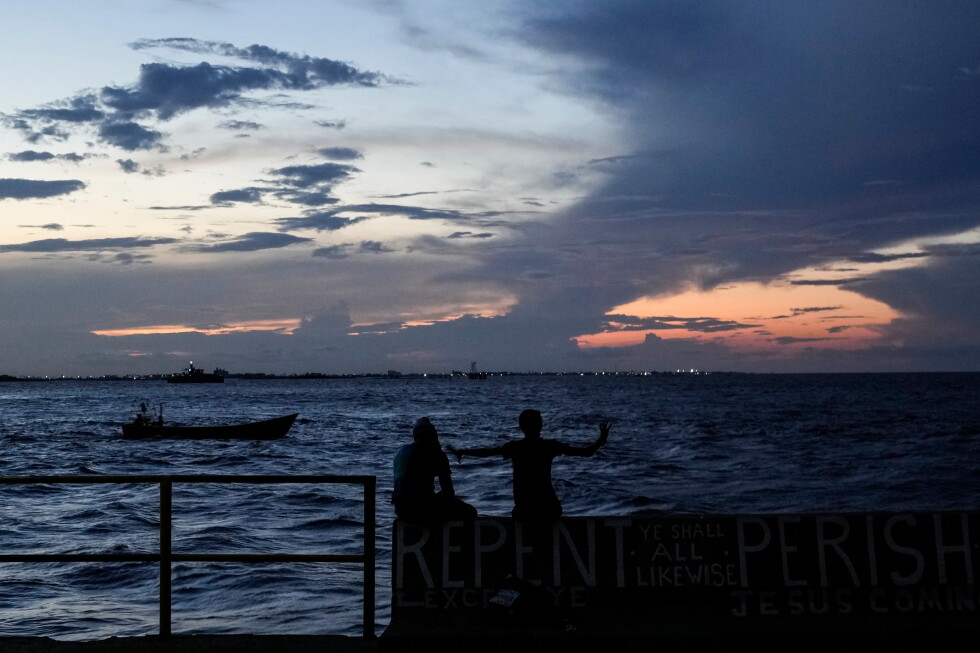
    CARACAS – In an official statement addressed to the global community released late Saturday, Venezuela has formally alleged that an oil spill originating in neighboring Trinidad and Tobago has left significant irreversible environmental harm across coastal regions of at least two of its states and a shared gulf in the Caribbean.

    Initial environmental assessments carried out by Venezuelan authorities confirm that the spill has created severe ecological risks for natural habitats in Sucre, Delta Amacuro, and the Gulf of Paria, the country’s Foreign Ministry confirmed. The contamination is already endangering critical mangrove forests, protected wetland ecosystems, and the broader environmental equilibrium that supports biodiversity and local livelihoods across the region, according to the statement.

    Venezuela has not yet released key details about the timeline of the first detection of the spill, nor has it provided an official estimate of the total volume of oil that leaked into the water. As of Monday, the government of Trinidad and Tobago has not issued any public comment, confirmation, or denial regarding Venezuela’s claims of the spill originating from its territory.

    In addition to requesting full transparency about the incident, including details of any containment and mitigation measures already in place, Venezuela is demanding formal reparations for the environmental damage in line with established international environmental law, the official statement added.

    The Gulf of Paria, a semi-enclosed inland sea positioned south of Trinidad and along Venezuela’s eastern coastline, is shared jointly between the two nations. The two countries signed a formal border delimitation treaty in the 1990s that laid out clear terms for the exploration and extraction of hydrocarbon reserves along the shared maritime boundary.

    According to data from Trinidad and Tobago’s own Ministry of Energy, the island nation is one of the largest energy producers in the Caribbean, with extensive oil and gas exploration operations across both onshore territory and shallow offshore waters, including in areas adjacent to the Gulf of Paria.

  • Prizmic follows up on Djokovic exploit by reaching Italian Open last 16

    Prizmic follows up on Djokovic exploit by reaching Italian Open last 16

    Rome’s iconic Foro Italico clay courts have served up another thrilling chapter at the 2025 Italian Open, 1000-level Masters tournament, as 20-year-old Croatian qualifier Dino Prizmic continued his Cinderella run Sunday. Fresh off his career-defining upset of global tennis legend Novak Djokovic in the previous round, Prizmic notched another impressive victory, defeating 31st-seeded Frenchman Ugo Humbert 6-1, 7-5 to book his spot in the tournament’s final 16.

    Prizmic’s dominance from the opening game left Humbert struggling to find his rhythm. The young Croatian blazed to a 5-0 lead in the first set, closing it out in just 28 minutes, with his signature combination of brute power and pinpoint clay-court accuracy. Even with a mid-set playful trick shot between his legs that cost him a single point, Prizmic never looked threatened. Humbert mounted a tighter fight in the second set, but a third break of serve in the 11th game handed Prizmic the momentum he needed to seal the win on his second match point.

    Speaking to reporters after his victory on Court Pietrangeli, Prizmic kept his expectations grounded while outlining his long-term goals. “I just want to play my game and to be myself on the court and we will see,” he said. “Maybe for me the goal is to be top 30 at the end of the year but I just want to stay healthy and play as much as I can.”

    The run marks Prizmic’s best ever performance at an ATP Masters 1000 event, and the ranking points will lift him 11 spots to world No. 68 when the new rankings are released next Monday, just ahead of the start of the French Open. Up next, Prizmic will face 13th seed Karen Khachanov for a spot in the quarterfinals.

    In other men’s draw action, second seed Alexander Zverev, bidding for his third Italian Open title, cruised to a straightforward 6-1, 6-4 win over Belgian youngster Alexander Blockx, even as rain threatened to disrupt play on the centre court. The German, who won the Rome title in 2017 and 2024 and fell to Jannik Sinner in last week’s Madrid Open final, barely broke a sweat against Blockx, who he had already defeated in the Madrid semifinals. Zverev will next face the winner of the match between Tommy Paul and Italy’s home hope Luciano Darderi in the fourth round. Heading into the next match, Zverev acknowledged Prizmic’s breakout run but said he would remain focused on his own game. “There’s a lot of young guys who are playing great tennis. He’s definitely one of them,” Zverev said. “But I’m going to go match by match, I think that’s the most important thing, not to look too far ahead and focus on the things that you can control.” Zverev and Prizmic are drawn in the same half of the bracket, setting up a potential later meeting between the two.

    Italian crowd favorite Lorenzo Musetti also advanced to the final 16 after a grueling 7-6(7), 6-4 win over Argentina’s Francisco Cerundolo. Musetti, who will face clay specialist Casper Ruud next, broke down in tears after the match, telling reporters he had been struggling physically throughout the contest but did not elaborate on his specific ailment. The match featured a combined 81 unforced errors from both players, highlighting the physical toll of clay court competition.

    In the women’s draw, four-time Grand Slam champion Naomi Osaka put on a dominant display to breeze past Russian player Diana Schnaider 6-1, 6-2 in just 54 minutes, putting her one win away from a highly anticipated showdown with three-time Rome champion Iga Swiatek in the last 16. The result equals Osaka’s best performance of a rocky 2025 season, which has seen her knocked out at the third-round stage of both Indian Wells and Madrid by Aryna Sabalenka. With Sabalenka already out of the tournament following a shocking early upset on Saturday, the 15th-seeded Osaka has emerged as a legitimate contender for the Rome title.

    Osaka said she is eager for a potential clash with Swiatek, who is set to face Italian wild card Elisabetta Cocciaretto on centre court in front of a partisan home crowd. “For me those matches are the most fun. I’m excited at the thought,” Osaka said. Swiatek, a six-time Grand Slam champion, has struggled for form on clay in recent months: she retired from her third-round match in Madrid last month due to a viral illness, suffered an early third-round exit in Rome as defending champion last year, and needed nearly three hours to get past Caty McNally in her opening match this year. She has not won a clay court title since claiming her fourth French Open crown in 2024.

  • Plane sent to bring Irish passengers home from virus-hit ship

    Plane sent to bring Irish passengers home from virus-hit ship

    A deadly hantavirus outbreak onboard the Dutch-owned cruise vessel MV Hondius has sparked a coordinated international evacuation effort, after the outbreak claimed three lives and forced hundreds of passengers to be repatriated to their home countries for mandatory quarantine.

    The vessel docked at the Spanish Canary Island of Tenerife early on Sunday morning, following weeks of the virus spreading among passengers and crew. By the time the ship reached port, passengers from Spain and France had already completed disembarkation and flown back to their home nations, where they are now completing isolation protocols.

    The Irish government moved quickly to organize the repatriation of two of its citizens who were onboard the cruise, deploying an Irish Air Corps aircraft to Tenerife on Sunday afternoon to conduct a specialized aeromedical evacuation. Ireland’s Department of Health confirmed that the operation was designed to transport the two passengers directly back to Irish territory, with the mission contingent on the pair maintaining good health following their disembarkation. Officials added that both Irish citizens have already followed required isolation rules while onboard the ship and are currently in stable good health.

    Spanish health and port authorities confirmed Sunday that the process of evaluating passengers’ health status and coordinating disembarkation was progressing smoothly and as planned. In addition to the Irish passengers, travelers from the United Kingdom, Turkey, and the United States are scheduled for evacuation from Tenerife later the same day, according to official updates.

    The outbreak has already resulted in three fatalities onboard the MV Hondius, two of which have been confirmed as linked to hantavirus infection. All passengers who leave the ship will be required to complete a period of self-isolation after departing Tenerife, a requirement driven by the virus’s maximum incubation period of up to nine weeks. The World Health Organization has formally issued a recommendation that all exposed passengers complete a 42-day quarantine starting from their date of last potential exposure to the virus.

    This is not the first emergency response triggered by the MV Hondius outbreak. Earlier in the crisis, British military medics parachuted into the remote Atlantic island of Tristan da Cunha, a British overseas territory, to assist a British national who disembarked the cruise in mid-April and developed suspected hantavirus symptoms two weeks after arriving. The man, a resident of the remote island, remains in stable condition while isolating. When local oxygen supplies on the island dropped to a critical level, the UK Ministry of Defense arranged for an RAF A400M transport aircraft to drop additional oxygen supplies to the island Saturday.

    Irish officials emphasized that the entire repatriation process has been developed in close consultation with public health experts, with strict protocols in place to protect both returning passengers and local communities. “The return of the passengers has been carefully planned and guided by public health authorities to ensure safety for everyone—these measures protect communities while respecting the dignity and well being of those returning home,” the Irish Department of Health said in a formal statement.

  • Pakistan car bomb attack kills 15 police officers

    Pakistan car bomb attack kills 15 police officers

    A devastating coordinated attack targeting a police checkpoint in Pakistan’s northwestern Khyber Pakhtunkhwa province has left 15 law enforcement officers dead, regional authorities confirmed Sunday. The assault, carried out late Saturday in Bannu district, unfolded in multiple phases that caught responding officers off guard.

    According to local police accounts, a suicide bomber first drove an explosives-laden vehicle directly into the perimeter of the guard post, triggering a massive detonation that leveled the checkpoint structure. Photos released from the attack site show extensive destruction: the checkpoint is reduced to crumbled concrete, with twisted metal fragments and charred debris scattered across the surrounding ground.

    After the initial blast, the remaining assailants moved into an adjacent building and opened gunfire on surviving officers. When additional security units rushed to the area to reinforce the outpost, they too came under sustained enemy fire. Rescue teams later pulled three wounded officers alive from the rubble; all three were immediately transported to a nearby medical facility and are currently reported to be in stable condition. Authorities have launched a full search and clearance operation to secure the area and track down any remaining attackers.

    The assault has been claimed by Ittehad-ul-Mujahideen, a fast-growing Islamist militant coalition that official records confirm has ties to the Pakistani Taliban. The alliance formed only last year in April 2025, when three separate violent factions — the Hafiz Gul Bahadur Group (HBG), Lashkar-e-Islam, and Harkat Inqilab-e-Islami Pakistan (HIIP) — merged to expand their operational reach, according to data from the Pakistan Institute for Conflict and Security Studies. The institute notes that HBG has a long track record of carrying out lethal attacks in Bannu district, while U.S.-based Combating Terrorism Center at West Point has previously documented Lashkar-e-Islam’s formal alliance with the Pakistani Taliban.

    Local senior police official Sajjad Khan praised his personnel’s conduct during the unprecedented attack. “Our force has shown courage and bravery in this difficult situation,” Khan said in an official statement, adding, “This cowardly act of extremists is intolerable and the blood of those killed will be accounted for.”

    Pakistani President Asif Ali Zardari offered formal condolences to the families of the fallen officers, reaffirming the nation’s unwavering support for its security forces. “The nation stands shoulder-to-shoulder with its security forces,” Zardari’s statement read. “The nefarious intentions of terrorists will be defeated.”

    This latest attack comes as Pakistan continues to grapple with persistent insurgent violence across multiple regions. Earlier this year in February, a suicide bombing targeting a mosque in the capital city of Islamabad killed dozens of people and wounded more than 160, an act that the Islamic State group claimed responsibility for. That attack followed just days after a wave of coordinated gun and bomb assaults in southwestern Pakistan’s Balochistan province, where a violent separatist insurgency has persisted for decades.

    Longstanding geopolitical tensions around militant activity have strained relations between Pakistan and neighboring Afghanistan. The Pakistani government has repeatedly accused Afghan authorities of harboring militant groups that use Afghan territory to plan and launch attacks inside Pakistan, a claim the ruling Afghan Taliban has consistently denied.

  • Magnier wins another nail-biting sprint at the Giro d’Italia as Silva stays in pink

    Magnier wins another nail-biting sprint at the Giro d’Italia as Silva stays in pink

    The 109th edition of the Giro d’Italia wrapped up its opening three stages hosted in Bulgaria on Sunday, with young French sprinter Paul Magnier delivering a dramatic photo-finish victory to secure his second stage win of the race, while Uruguayan trailblazer Guillermo Silva held onto his position as the overall general classification leader ahead of the race’s transition to Italian soil.

    The 175-kilometer third stage stretched from Plovdiv, one of Europe’s oldest continuously inhabited urban settlements, across the Bulgarian countryside to the capital city of Sofia. Three riders – Diego Pablo Sevilla, Alessandro Tonelli, and Manuele Tarozzi – launched an early breakaway immediately after the starting flag dropped, and maintained their gap over the peloton for most of the day. As the finish line came into view, however, the chasing main field reeled in the escapees, setting up a hotly contested bunch sprint.

    In a finish so tight it left even the winner uncertain of the result, Magnier, riding for the Soudal Quick-Step team, edged out Italian sprinter Jonathan Milan by just half a wheel’s length. Dutch veteran Dylan Groenewegen finished a hair’s breadth behind Milan to take third place. Confusion reigned in the immediate aftermath: Magnier initially threw his arm up in celebration, only to lower it just as quickly, unsure if he had crossed the line first. It was the 19-year-old Frenchman’s second stage win of this year’s Giro, following his victory in the opening stage held Friday.

    “I dreamed about it and it was the goal to go for the stage again and the team did an amazing job again,” Magnier told reporters after the official result confirmed his win. “To be honest, I was not really sure I had won the stage. I celebrated and then I thought, ‘oh, I’m not sure’ but in the end I won, so I’m really happy. Now I have to say that I feel really good and I can be with the best sprinters in the world, so I will try to enjoy this moment and keep going like this with the team.”

    Uruguay’s Guillermo Silva retained his overall lead, becoming the first Uruguayan in Giro history to not only win a stage but also hold the race’s iconic maglia rosa (pink leader’s jersey) heading into the next phase of competition. The 24-year-old XDS Astana rider won a crash-disrupted second stage on Saturday to claim the top spot, and holds a four-second advantage over his closest competitors: German rider Florian Stork and Italian climbing specialist Giulio Ciccone.

    Silva expressed his shock and gratitude at holding onto the jersey as the Giro prepares to shift to Italy, saying: “The team is extremely supportive and wanted me to keep this jersey going into the rest day. So we’re going to enjoy it. Today was just unbelievable. Every moment, people were looking at me and I still can’t quite believe it. We’ll try to hold onto it for as long as possible and it’s very nice to carry it to Italy.”

    Following Sunday’s stage, the Giro will hold a rest day on Monday, before resuming competition in Italy with the fourth stage on Tuesday. That 138-kilometer route will run from Catanzaro, in southern Italy’s Calabria region, to Cosenza. The 109th men’s Giro d’Italia will conclude on May 31 in Rome. The 2025 women’s Giro is scheduled to run from May 30 to June 7, with Italian star Elisa Longo Borghini set to defend her title.