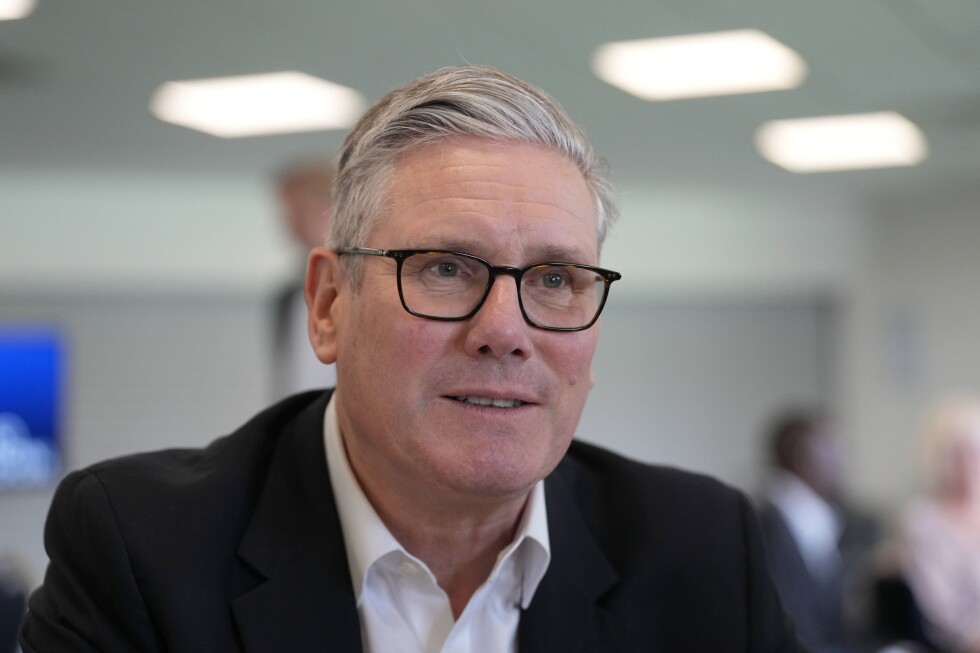
LONDON – Less than two years after securing a landslide general election victory that brought his centre-left Labour Party back to national power, British Prime Minister Keir Starmer now faces an existential threat to his leadership, triggered by catastrophic losses across last week’s local, devolved and regional elections.
The poor electoral showing, widely framed by political analysts as an unofficial public referendum on Starmer’s premiership, has spurred dozens of sitting Labour lawmakers to publicly call for his resignation. With internal party rivals already weighing potential leadership bids, Starmer is gearing up to deliver a make-or-break speech on Monday, where he will attempt to outline a new policy direction and rebuild his government’s flagging political fortunes.
One backbench Labour lawmaker, Catherine West, has issued an explicit ultimatum: if she is unimpressed by the content of Starmer’s address, she will move to formally trigger a party leadership contest. Though West acknowledged she currently lacks the 51 signatures from parliamentary colleagues required to force a contest, her move is widely seen as an effort to pressure higher-profile potential challengers to publicly declare their opposition to Starmer.
Among the most talked-about potential challengers is former Deputy Prime Minister Angela Rayner, who stopped short of directly calling for Starmer’s ouster but acknowledged the party urgently needs to shift course. “The prime minister must now meet the moment and set out the change our country needs,” Rayner said in a statement released after the election results.
Last week’s elections, held across English local councils, as well as devolved legislative bodies in Scotland and Wales, delivered historic losses for Labour. The party was squeezed from both the left and right flanks of British politics, shedding votes to the right-wing, anti-immigration Reform UK party and the left-leaning Green Party – a shift that underscores the growing fragmentation of Britain’s traditionally two-party system, long dominated by Labour and the Conservative Party.
Starmer’s premiership has been plagued by unmet promises and repeated missteps since taking office. His administration has failed to deliver the promised economic growth voters were promised, has struggled to repair underfunded, stretched public services, and has not meaningfully eased the persistent cost-of-living crisis that continues to burden working households across the UK. Repeated policy U-turns and mismanagement on high-profile issues, including welfare reform, have further eroded public trust. The Prime Minister also faced widespread backlash for his decision to appoint Peter Mandelson, a politician long tied to convicted sex offender Jeffrey Epstein, as Britain’s ambassador to Washington – a appointment that was ultimately scrapped amid the scandal.
Despite the mounting pressure, Starmer struck a defiant tone in an interview with The Observer newspaper on Sunday, saying he intends to remain in Downing Street for a full decade. He is pinning his political survival on two key upcoming events: his Monday policy speech, and the State Opening of Parliament on Wednesday, where King Charles III will deliver the Labour government’s full slate of upcoming legislative plans.
A central pillar of Starmer’s proposed new policy direction is a push for closer economic and social ties with the European Union, which the UK left in 2016, following a narrow membership referendum. Starmer’s government has already moved to relax some of the post-Brexit trade barriers that have hurt British businesses since the split, and he now plans to negotiate a youth mobility agreement that would allow British young people to work across EU member states for multiple years. “Brexit has held back our young people. We have to be closer to Europe,” Starmer told The Observer. While Labour campaigned to remain in the EU in 2016, Starmer has repeatedly ruled out seeking full re-entry to the bloc, its customs union or single market – policies that business leaders say would deliver major economic benefits.
While no high-profile potential challengers including Rayner, Health Secretary Wes Streeting and Greater Manchester Mayor Andy Burnham have yet to publicly call for Starmer’s resignation, a growing number of backbench MPs are demanding he lay out a clear timeline for stepping down. Unlike many parliamentary democracies, UK political rules allow parties to replace their sitting prime minister mid-term without holding an early general election.
Josh Simons, a previously loyal Labour MP, wrote in The Times of London that Starmer “has lost the country” and “should take control of the situation by overseeing an orderly transition to a new prime minister.” West echoed that sentiment, framing the internal pressure as a response to voter anger. “Working people sent us a message. We have to listen to that, and we have to change and we have to do it quickly,” she said.