作者: admin

  • Healthcare heavyweight CSL plunges to nine-year low, dragging down the ASX

    Healthcare heavyweight CSL plunges to nine-year low, dragging down the ASX

    On a volatile trading session for Australia’s equity markets, two separate events combined to push benchmark indexes lower: a sharp selloff in the healthcare sector driven by a major biotech firm’s impairment announcement, and a sudden jump in global oil prices triggered by a social media post from former US President Donald Trump derailing hopes of a Middle East peace breakthrough.

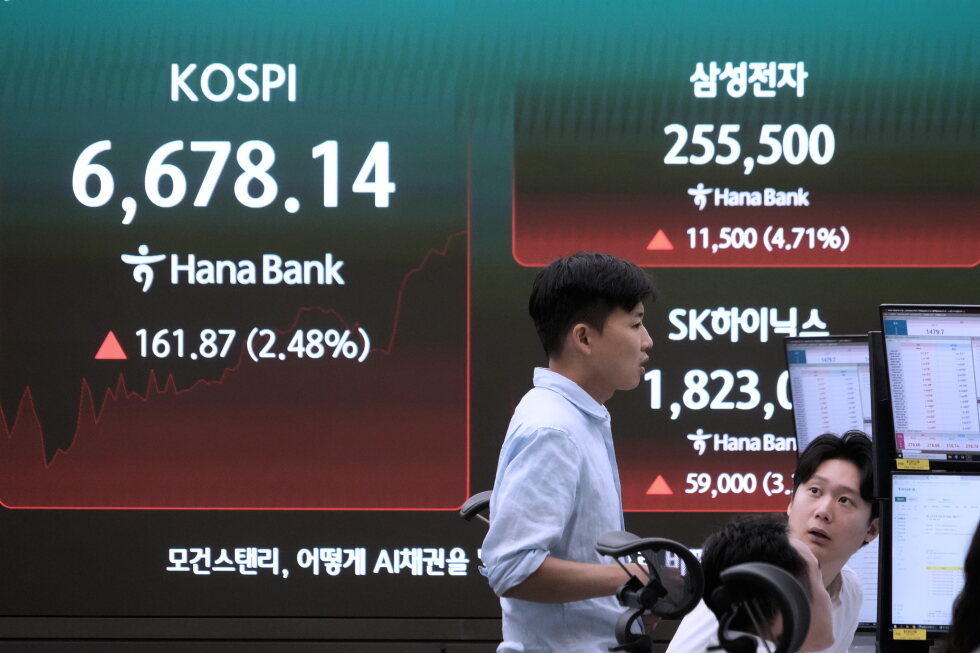
    The benchmark ASX 200 closed 42.60 points, or 0.49%, lower at 8701.80, while the broader All Ordinaries index retreated 38.10 points, or 0.42%, to settle at 8942.40. Eight of the 11 tracked market sectors finished the day in negative territory, with only the energy and mining sectors bucking the downward trend. The Australian dollar edged slightly higher, gaining 0.08% to trade at 72.38 US cents by market close.

    The single biggest drag on the market came from the healthcare sector, which plummeted 6.47% overall following a major announcement from CSL, the sector’s largest Australian-listed heavyweight. The global biotech firm revealed in a 90-day operational review that it would record an additional $US5 billion ($A6.9 billion) in non-cash impairment, on top of the $US1.5 billion impairment it already recognized during its first-half financial results. The news sent CSL shares tumbling 15.96% to $100.75, marking one of the worst single-day trading performances in the company’s history and pushing the stock to a near nine-year low. Other healthcare stocks also felt the spillover: Sigma Healthcare slid 0.35% to $2.84, and New Zealand-based medical device manufacturer Fisher & Paykel dropped 0.21% to $28.94.

    Adding further downward pressure on Australian equities was a sudden surge in global crude oil prices, sparked by a post on Donald Trump’s Truth Social platform that rejected a proposed peace framework with Iran. In the post, Trump wrote, “I have just read the response from Iran’s so-called ‘Representatives.’ I don’t like it – TOTALLY UNACCEPTABLE.” The blunt dismissal of progress in negotiations immediately roiled energy markets, where pricing has long been highly sensitive to geopolitical instability in major oil-producing Middle Eastern regions. By the close of global trading, Brent Crude surged 3.9% to settle at $US105 ($A145) per barrel, while U.S. benchmark West Texas Intermediate climbed 4.6% to hit $US99.78 ($A138) per barrel.

    Josh Gilbert, lead APAC analyst for global investment platform eToro, explained that oil volatility will remain tied directly to diplomatic developments in the region for the foreseeable future. “The core issue is still firmly on the table, which is that the Strait of Hormuz remains largely closed, and every failed negotiation is a reminder that there is no quick fix to the biggest supply disruption in history,” Gilbert noted. “We continue to see strong swings in the oil price, and that’s unlikely to change in the near term.”

    Against the broader market downturn, a handful of sectors posted solid gains. Australia’s largest iron ore miners outperformed, even amid the oil price shock: BHP closed 0.66% higher at $58.33, Rio Tinto gained 0.60% to $179.79, and Fortescue Metals rose 0.71% to $21.42. The energy sector also closed in positive territory, led by a rally among Australian uranium producers: Paladin Energy jumped 5.76% to $13.21, Deep Yellow gained 4.62% to $1.81, and Boss Energy climbed 6.47% to $1.48.

    Several individual companies posted strong gains on the back of positive corporate announcements. Metcash, a leading Australian wholesaler of food, liquor and hardware, surged 6.57% to $2.92 after it upgraded its full-year underlying net profit after tax guidance to a range of $268 million to $270 million. Out-of-home advertising firm oOh!media also rallied 7.1% to $1.35 after confirming it had received an unsolicited takeover proposal from U.S.-based infrastructure investment firm I Squared Capital. Among banking stocks, ANZ fell 0.17% to $35.90 as the lender went ex-dividend for its partially franked interim dividend of 83 cents per share, which will be paid out to registered shareholders in the coming weeks.

  • Party’s over: China tells fans to end birthday blowouts for sport idols

    Party’s over: China tells fans to end birthday blowouts for sport idols

    China’s top sports governing body has issued a formal call for sports fans to curb extravagant, large-scale birthday celebrations for elite national athletes, warning that such events carry multiple downsides ranging from resource waste to disruption of competitive preparation. The new guidance comes amid a broader nationwide push to rein in what state outlets have labeled “toxic fandom” — a pattern of obsessive behavior around public figures that has increasingly spilled into the country’s professional sports circuit.

    The trend of over-the-top birthday tributes is not unique to China, with fans across neighboring East Asian markets like South Korea and Japan long organizing large-scale public events to mark favorite celebrities’ special days. In China, this practice has recently extended to popular national sports stars, most notably table tennis world champion Sun Yingsha. When Sun turned 25 in November, fans across the country pulled together a multi-city celebration: dedicated birthday messages were displayed on giant digital billboards in major commercial districts, a custom drone show was staged, and dozens of fan meetups packed public shopping malls.

    But that level of lavish fan activity has now drawn official pushback. On Sunday, state media outlets reported that a senior unnamed manager from China’s General Administration of Sport issued a recent public appeal urging supporters to maintain a rational perspective on their favorite athletes, and to stop organizing or taking part in large-scale organized birthday events.

    “Such activities not only consume large amounts of social and public resources, they also easily interfere with the focused preparations athletes are making for upcoming competitions,” the official stated, according to China’s state-owned national broadcaster CCTV. The official also noted that in many cases, event organizers use athletes’ personal images and likenesses without formal permission, which can violate the athletes’ own publicity and intellectual property rights. Instead of putting together costly offline celebrations, fans should focus on supporting athletes through their performance in official competitions, the official added.

    The guidance is the latest step in a broader crackdown on toxic fandom in China’s sports space. In recent years, growing adoration for high-profile sports stars has led to increasing levels of obsessive fan behavior, including unwanted intrusion into athletes’ private personal lives and recurring cycles of cyberbullying directed at rival fans or even the athletes themselves. State media has repeatedly called out this harmful pattern of behavior, and regulatory authorities have made repeated public vows to rein it in across the entertainment and sports industries.

  • Starmer pledges to bring Britain closer to the EU as he fights calls for his ouster

    Starmer pledges to bring Britain closer to the EU as he fights calls for his ouster

    LONDON – Barely two years after sweeping into office in a landslide victory, UK Prime Minister Keir Starmer is battling to save his leadership after catastrophic results across last week’s local elections in England and devolved legislative votes in Scotland and Wales. The poor showing, widely framed as an unofficial public referendum on Starmer’s premiership, has triggered growing calls within his own Labour Party for him to step down, prompting the prime minister to push back publicly on Monday with a defiant speech aimed at winning over sceptics both inside his party and across the British electorate.

    In his address to party members and activists in London, Starmer struck a resolute tone, vowing to prove all doubters wrong, tackle the UK’s most pressing challenges head-on, and rebuild a sense of national hope. A core pillar of his plan to reset his government, he announced, is forging closer alignment with the European Union, a decade after the UK voted to leave the bloc, and repositioning Britain as a central player in European affairs. “I know I have my doubters and I know I need to prove them wrong, and I will,” Starmer said. He added that he would demonstrate to millions of Britons frustrated by a failing status quo that his government prioritizes their interests, warning that a victory for Nigel Farage’s hardline anti-immigration Reform UK would send the country down a “dark path” and frame the current moment as “a battle for the soul of our nation.”

    Despite Starmer’s defiance, his position remains deeply fragile. Dozens of Labour MPs have now publicly called on him to outline a clear timeline for his departure, and even senior party figures have openly criticized his leadership. Among the most prominent critics is former Deputy Prime Minister Angela Rayner, a powerful Labour figure long viewed as a potential leadership challenger. While Rayner stopped short of explicitly demanding Starmer’s resignation, she issued a blunt rebuke on Sunday, stating that “what we are doing isn’t working, and it needs to change.” She accused Starmer of overseeing a “toxic culture of cronyism” and urged the government to return to core Labour and social democratic values to ease the crippling cost of living crisis facing working British households, adding that “this may be our last chance” to course-correct.

    The scale of Labour’s electoral defeat has plunged the party into widespread internal gloom. Since taking office less than two years ago, Starmer’s popularity has plummeted amid a string of unmet promises and high-profile missteps. His government has failed to deliver on pledges of robust economic growth, repair overstretched and underfunded public services, or bring meaningful relief to households struggling with persistent cost of living pressures. It has also been hobbled by repeated policy missteps and last-minute U-turns on key issues including welfare reform, and damaged further by Starmer’s deeply controversial decision to appoint scandal-plagued former politician Peter Mandelson, a known associate of disgraced financier Jeffrey Epstein, as UK ambassador to the United States.

    Last week’s election results laid bare the growing fragmentation of Britain’s traditionally two-party political system, long dominated by Labour and the Conservative Party. Labour was squeezed from both the left and right, shedding significant votes to Farage’s right-wing Reform UK and the left-leaning eco-populist Green Party.

    Starmer is pinning his hopes of regaining political momentum on his Monday speech and a ambitious slate of new legislative plans that King Charles III will outline during the State Opening of Parliament on Wednesday. In his address, Starmer reaffirmed that his government would prioritize strengthening Britain’s energy, economic and defense security while advancing policies to build a fairer society.

    A centerpiece of his new policy agenda is rebuilding ties with the EU, which the UK formally left in 2020, four years after the narrow 2016 Brexit referendum victory for the leave campaign. Starmer’s government has already moved to roll back some of the trade barriers that have imposed heavy burdens on British businesses since Brexit took effect, and the prime minister announced plans to secure a new youth mobility agreement that will allow young British people to work across European countries for multi-year stints. Starmer emphasized that his government will be “defined by rebuilding our relationship with Europe,” though he has repeatedly ruled out pursuing full re-entry to the EU, or rejoining the bloc’s single market or customs union – changes that economists argue would deliver major benefits to British businesses.

    While no high-profile potential challengers – including Rayner, Health Secretary Wes Streeting and Greater Manchester Mayor Andy Burnham – have yet publicly called for Starmer’s resignation, grassroots pressure for a leadership contest continues to build. Unlike many other parliamentary systems, UK political parties can change their leader mid-term without triggering a full national general election, creating a clear pathway for ousting an incumbent prime minister.

    Josh Simons, a formerly backbench Labour MP who was once a loyal Starmer ally, wrote in The Times of London that the prime minister has “lost the country” and “should take control of the situation by overseeing an orderly transition to a new prime minister.” Former junior minister Catherine West has gone a step further, announcing that she will attempt to trigger a formal leadership contest if Starmer fails to deliver a convincing reset speech. West acknowledged she currently lacks the 81 MP signatures required to force a contest, but her move is widely seen as an attempt to pressure higher-profile party figures to publicly challenge Starmer’s leadership. Echoing the growing consensus among critics, West said “Working people sent us a message, we have to listen to that, and we have to change and we have to do it quickly.”

  • French woman evacuated from cruise ship tests positive for hantavirus

    French woman evacuated from cruise ship tests positive for hantavirus

    In recent developments linked to a global cruise evacuation operation, two passengers from the MV Hondius have tested positive for hantavirus, with one of the patients in declining health, French health authorities confirmed this week. French Health Minister Stephanie Rist shared updates with public broadcaster France-Inter on Monday, noting that the first confirmed case is a French national who was repatriated to Paris alongside four other compatriots on Sunday. The patient first began exhibiting noticeable symptoms during the return flight to the French capital, and after being admitted to a local hospital, her condition deteriorated overnight, according to Rist’s statement.

    The MV Hondius anchored off the coast of the Canary Islands earlier this week following reports of potential hantavirus exposure among those on board, prompting an international repatriation effort organized by multiple national governments. On Sunday, the first groups of passengers began departing the vessel for home aboard military and government-chartered aircraft. The disembarkation process, which was still ongoing as of Monday, saw passengers escorted from the ship to the shore of Tenerife by emergency personnel wearing full-body protective suits and filtration respirator masks to reduce the risk of virus transmission.

    Global health authorities have issued guidance for handling the evacuated passengers, with the World Health Organization recommending that all former passengers from the MV Hondius undergo close medical monitoring following their return. In response to this guidance, many countries have implemented mandatory quarantine measures for every passenger repatriated from the vessel. Late on Sunday, United States health officials confirmed a second positive case: an American national who was among 17 passengers being flown to a medical facility in Nebraska for monitoring and treatment. Unlike the French patient, this American case is currently asymptomatic, officials reported.

  • Groundbreaking: ‘Controlled’ quakes triggered under Swiss Alps

    Groundbreaking: ‘Controlled’ quakes triggered under Swiss Alps

    Deep beneath the snow-capped peaks of the Swiss Alps, a team of European scientists has pulled off a world-first seismology experiment: intentionally triggering thousands of small, controlled earthquakes to unlock long-held secrets of tectonic activity that could one day prevent dangerous man-made quakes across the globe.

    The ambitious project, led by Domenico Giardini, a geology professor at Switzerland’s prestigious ETH Zurich, is hosted at the custom-built BedrettoLab, a cutting-edge underground research facility carved into a 5.2-kilometer ventilation tunnel that connects to the iconic Furka railway tunnel. Accessible only via specially modified electric vehicles navigating damp, dark passages beneath 1.5 kilometers of solid mountain rock, the lab offers a one-of-a-kind setting to observe fault activity up close — a stark departure from traditional seismological research, where scientists typically install monitoring sensors along known faults and wait for natural quakes to occur.

    For the second iteration of the experiment, dubbed Fault Activation and Earthquake Rupture (FEAR-2), dozens of researchers from across European institutions spent four days in late April executing a carefully planned procedure: they pumped 750 cubic meters of water into pre-drilled boreholes targeting an existing geological fault, with the goal of prompting a magnitude 1 earthquake. Unlike common misconceptions, the team did not create a new fault; instead, the water injection only lubricated existing fractures to encourage natural movement. For safety, no personnel remained in the tunnel during the active phase of the experiment, with all operations remotely controlled from ETH Zurich’s main laboratory 100 kilometers to the north.

    During the experiment, the research team experienced a brief moment of disruption when a sudden power cut hit the underground tunnel, forcing scientists in Zurich to scramble to resolve the issue. The glitch was resolved quickly, and water pumping resumed within minutes. When the trial concluded, the results exceeded many expectations: the team had successfully induced around 8,000 distinct seismic events along the target fault, as well as unexpected activity along secondary faults running perpendicular to the main fracture. Event magnitudes ranged from -5 to -0.14, falling just short of the team’s 1.0 magnitude target, a outcome Giardini called a resounding success.

    Never before has a controlled seismic experiment been conducted at this scale and depth, Giardini explained. Even the smaller events generated by the trial offered unprecedented data that no previous laboratory study has been able to collect. Even the smallest measured events hold valuable insight: Giardini noted that the largest induced quake, at magnitude -0.14, would generate a 1.5 G acceleration strong enough to lift a person standing near the fault off the ground into the air. Crucially, no seismic activity was detected at the surface, and Giardini emphasized that the trial added only one percent additional seismic risk to the region, making it completely safe for local communities.

    The groundbreaking work carries major implications for global industrial safety. Researchers note that unplanned induced seismicity has caused major damage around the world in recent decades, from large quakes linked to fracking wastewater disposal in Texas to the 5.4 magnitude 2017 Pohang earthquake in South Korea, which was triggered by unregulated water injection at an experimental geothermal power plant that damaged thousands of buildings. Giardini argues that by mastering the mechanics of controlled fault movement, scientists can develop better safety guidelines for all kinds of underground activity, from mining to geothermal energy development. The team plans to build on the current findings and run a second trial in June, adjusting injection parameters to hit their target magnitude 1 goal and collect even more detailed data on fault rupture dynamics. As Giardini puts it, the core goal of the research is not to create earthquakes, but to learn how to avoid dangerous accidental quakes: “If we master how to produce quakes of a certain size, then we know how not to produce them. We need to learn how to do underground activity more safely.”

  • Bangladesh reach 93-2 at lunch on Day 4, lead Pakistan by 115 in first Test

    Bangladesh reach 93-2 at lunch on Day 4, lead Pakistan by 115 in first Test

    On the fourth day of the opening Test cricket fixture between Bangladesh and Pakistan, the hosts entered the lunch interval at 93 runs for the loss of two wickets, extending their overall lead over the visiting side to a solid 115 runs. The steady, determined batting performance from captain Najmul Hossain Shanto and veteran batter Mominul Haque laid the foundation for Bangladesh’s advantageous position after an early collapse put the team on the back foot early in the second innings.

    Bangladesh began the day smoothly, resuming their second innings at 7 runs without any losses. However, Pakistan’s fast bowling attack struck twice in quick succession to flip the early momentum. Pace bowler Mohammad Abbas trapped opener Mahmudul Hasan leg before wicket for a score of 5, breaking the first opening partnership. Shortly after, fellow pacer Hasan Ali claimed the second wicket, dismissing Shadman Islam for 10. Islam was caught off guard by an unexpected extra bounce from the delivery, and Saud Shakeel secured a clean catch at gully to end the batter’s innings. By the 11th over of the second innings, Bangladesh had been reduced to just 23 runs for two wickets, putting the hosts in a precarious position.

    Facing a potential collapse, Shanto and Mominul stepped up to rebuild the innings, repeating the stubborn rearguard performance they had delivered in Bangladesh’s first innings. The pair put together an unbeaten 70-run partnership for the third wicket, frustrating Pakistan’s bowling attack and dragging the hosts back into a commanding position. At the lunch break, Shanto – who had already notched up a century in Bangladesh’s first innings – remained unbeaten on 34 runs, while Mominul was also not out on 37 runs, holding firm against the tourists’ pressure.

    The solid second innings partnership puts Bangladesh on track to set a challenging target for Pakistan to chase in their final innings. Looking back at the match’s earlier proceedings, Bangladesh posted a strong first innings total of 414 after being bowled out, claiming a 27-run first innings lead after dismissing Pakistan for 386. Offspinner Mehidy Hasan was the star of Bangladesh’s first innings bowling performance, taking a five-wicket haul to dismantle the tourists’ batting line-up.

  • Nazi-looted portrait found in home of Dutch SS leader’s family: art sleuth

    Nazi-looted portrait found in home of Dutch SS leader’s family: art sleuth

    Dutch art investigator Arthur Brand, globally recognized for cracking high-profile stolen art cases, revealed a groundbreaking discovery Monday: a long-lost painting looted by the Nazis from the iconic Goudstikker collection has been found in the possession of the descendants of one of the Netherlands’ most infamous Nazi collaborators. The work, *Portrait of a Young Girl* by 20th-century Dutch artist Toon Kelder, is believed to have hung unnoticed on the walls of the Seyffardt family home for more than 75 years, in what Brand calls the most extraordinary case of his entire career.

    The discovery echoes a 2025 global headlines-making find, where another Nazi-plundered piece from the Goudstikker collection was uncovered in an Argentine property listing, reigniting global interest in the hundreds of artworks still missing from the legendary collection. Jacques Goudstikker, a prominent Jewish art dealer based in Amsterdam, fled the Netherlands for England in 1940 as Nazi forces invaded, leaving his entire 1,300-piece collection behind. Top Nazi official Hermann Göring seized the entire collection within months, dispersing many works at public auctions later that year.

    The current case was set in motion when an anonymous descendant of Hendrik Seyffardt reached out to Brand with two startling revelations: he came from a line of high-ranking Nazi collaborators, and his family had kept the stolen artwork for generations. The anonymous man told investigators he spotted the painting hanging in the hallway of Seyffardt’s granddaughter. Hendrik Seyffardt, who led a Dutch volunteer Waffen-SS unit deployed to the Eastern Front, was the highest-profile Dutch collaborator assassinated by Dutch resistance fighters in 1943. His death made the front page of *The New York Times*, and the Nazi regime held a state-funded funeral in The Netherlands’ capital The Hague, where Adolf Hitler personally sent a wreath to honor his death.

    Brand’s investigation confirmed the artwork’s provenance: the painting bears an original Goudstikker collection label on its back, and the number 92 is carved directly into its frame. Cross-referencing with archives from the 1940 Nazi auction of looted Goudstikker works matched the number and description to Kelder’s portrait. Brand concluded Seyffardt acquired the piece at that auction, and it was passed down through his family over the decades. According to testimony from the anonymous descendant, Seyffardt’s granddaughter acknowledged the painting was stolen Jewish property, noting it was “unsellable” and instructing family members to keep its existence secret. But the anonymous descendant, who says he feels deep shame over the family’s connection to the stolen work, pushed to make the story public, telling Dutch daily *De Telegraaf* “the painting should be returned to the heirs of Goudstikker.”

    Seyffardt’s granddaughter has pushed back against claims she knew the work was looted, telling the outlet she inherited the piece from her mother and did not know of its stolen origins. “Now that you confront me like this, I understand that Goudstikker’s heirs want the painting back. I didn’t know that,” she said.

    Lawyers representing the Goudstikker heirs have already confirmed the artwork was looted and formally demanded its return. But legal avenues for recovery are limited: the theft falls far outside the Netherlands’ statute of limitations, leaving police with no authority to seize the piece. The Dutch Restitution Committee, the national body that advises on the return of Nazi-looted art, also lacks the legal power to compel private individuals to surrender stolen works. The anonymous descendant has chosen public exposure as the best path forward to pressure the family to return the portrait to its rightful owners.

    Brand, who has been nicknamed the “Indiana Jones of the Art World” for his track record of recovering high-value stolen art, said this find outstrips any other discovery in his career. He has previously recovered Nazi-looted works from major institutions including the Louvre and the Dutch Royal Collection, but said “discovering a painting from the famous Goudstikker collection, in the possession of the heirs of a notorious Dutch Waffen-SS general, truly tops everything.”

  • Filmmakers slam BBC after Gaza documentary wins award despite being dropped

    Filmmakers slam BBC after Gaza documentary wins award despite being dropped

    On Sunday evening at the British Academy Television Awards, a hard-hitting documentary about Israeli attacks on Gaza’s healthcare system delivered a double blow: it took home one of the night’s most prestigious honors, and used its moment in the spotlight to publicly condemn the BBC for shelving the project. The film, *Gaza: Doctors Under Attack*, was originally commissioned and funded by the UK’s public broadcaster before being pulled from broadcast schedules just months before its planned release in June 2023. It went on to air on rival network Channel 4, which stepped in to back the project after the BBC’s decision to drop it, and ultimately won the BAFTA for Best Current Affairs Programme.

    Accepting the award on the team’s behalf, journalist and documentary presenter Ramita Navai did not hold back in calling out the BBC’s choice to censor the work. “The BBC paid for this documentary but refused to show it,” Navai told the ceremony audience. “But we refused to be silenced and censored. We thank Channel 4 for stepping up and showing this film.”

    The content of the award-winning film has made its censorship controversy understandable to many observers, as it pulls back the curtain on one of the most sensitive and widely debated aspects of Israel’s ongoing military campaign in Gaza: the systematic targeting of the enclave’s crippled healthcare system. The documentary opens with graphic footage recovered from the mobile phone of a Palestinian medic killed by Israeli gunfire, immediately centering the narrative on the toll of attacks on medical workers and infrastructure. In the film, Navai argues that “Israel has been killing the very people trying to keep [Gaza’s] healthcare system alive.”

    Throughout the documentary, the production team highlights repeated official claims from the Israeli military about its operations in Gaza, systematically noting that the military has failed to provide tangible evidence to back up many of its key assertions. This narrative framing directly challenges longstanding justifications for Israeli attacks on Gaza hospitals, strikes that have been repeatedly condemned by international human rights organizations as clear violations of international humanitarian law.

    When the BBC first pulled the documentary weeks ahead of its planned broadcast, the public broadcaster cited concerns over the work’s compliance with its internal impartiality rules. Deborah Turness, who served as head of BBC News and Current Affairs at the time of the decision, pointed to alleged problematic social media activity from one of the journalists involved in the project, and criticized language Navai used in a radio interview as inconsistent with the BBC’s impartiality standards.

    The BAFTA victory amplified the criticism of the BBC’s decision, with the documentary’s executive producer Ben de Pear doubling down on the rebuke during his acceptance remarks. De Pear directly referenced the BBC’s role as the official broadcaster of the BAFTA ceremony, asking in a pointed jab: “Given you dropped the film, will you drop us from the BAFTA screening?”

    The confrontation has brought renewed attention to growing accusations that the BBC has systematically censored and sidelined Palestinian perspectives throughout the current war in Gaza, while giving disproportionate platform to Israeli official narratives. In a previous defense of its decision to drop *Gaza: Doctors Under Attack*, the BBC argued that it had worked closely with the documentary team to develop the project, but ultimately concluded that airing the film’s documentation of alleged Israeli crimes would risk creating a public perception of partiality. The broadcaster also acknowledged disappointment over the outcome, saying “We want to thank the doctors and contributors and we are sorry we could not tell their stories. The BBC will continue to cover events in Gaza impartially.”

    The BAFTA win for the censored documentary has ignited fresh debate across the UK about media balance, press freedom, and the ethics of covering the ongoing humanitarian catastrophe in Gaza, with advocates for Palestinian rights pointing to the award as validation of the film’s urgent, unflinching reporting.

  • Modi urges Indians to WFH and limit foreign travel as Iran war continues

    Modi urges Indians to WFH and limit foreign travel as Iran war continues

    Against the backdrop of a prolonged Middle East conflict that has upended global energy markets, Indian Prime Minister Narendra Modi has launched a public appeal for nationwide austerity measures to cushion the economic blow of skyrocketing global energy prices. Addressing a gathering in the southern Indian city of Hyderabad on Sunday, Modi outlined a series of voluntary cuts to energy and import-reliant consumption, framing the choices as an act of modern-day patriotism amid an unprecedented national economic challenge.

  • US citizen from hantavirus ship tests positive

    US citizen from hantavirus ship tests positive

    A multi-day international repatriation operation for passengers and crew of the cruise ship MV Hondius, the center of a deadly hantavirus outbreak, stretched into Monday, with U.S. health officials confirming one American passenger has tested positive for the rare virus.

    The outbreak has already claimed three lives: a Dutch couple and a German citizen, with multiple other people falling ill. Hantavirus, a pathogen most commonly carried and spread by rodents, has no licensed vaccines or targeted treatments currently available. The strain confirmed among infected people on board is the Andes virus, the only hantavirus variant capable of human-to-human transmission, a detail that has spurred global public health concern. The ship originally departed Ushuaia, Argentina in early April, where the virus is endemic.

    Despite the outbreak, global and Spanish public health officials have emphasized that the broader risk to global public health remains low, pushing back against unnecessary comparisons to the global COVID-19 pandemic. The Canary Islands regional government had initially refused to allow the vessel to dock, only granting permission for it to anchor offshore when it arrived early Sunday, with authorities stressing there would be no uncontrolled contact between evacuees and the local population of Tenerife.

    On Sunday, 94 people from 19 different nationalities were evacuated from the ship, which carries a total of nearly 150 passengers and crew spanning 23 nationalities. Spanish Health Minister Monica Garcia confirmed that all passengers who disembarked on Sunday were asymptomatic and passed a final medical screening before leaving the vessel. AFP journalists on the ground observed evacuees, clad in blue protective medical suits, disembarking at Granadilla de Abona’s industrial port before being transported via Spanish military buses in a convoy to Tenerife South Airport for repatriation flights.

    Evacuation operations were scheduled to conclude by Monday, after which the ship will refuel and depart for the Netherlands with roughly 30 remaining crew members that evening. Adverse weather forecast for later Monday forced authorities to accelerate the repatriation timeline to avoid endangering the operation.

    Even with pre-departure screenings in place, multiple countries have reported cases among evacuees. Shortly after the first evacuations began, French Prime Minister Sebastien Lecornu announced on social platform X that one of five French evacuees returning to Paris showed active hantavirus symptoms, and all five were placed into immediate strict isolation. Late Sunday, U.S. health authorities confirmed the positive mild PCR test result for one American passenger, noting a second American passenger has mild symptoms.

    By Sunday evening, repatriation flights had already carried groups of passengers to dozens of countries across the globe. A flight carrying dozens of passengers of multiple nationalities landed in the Netherlands, while other flights departed for Canada, Turkey, the United Kingdom, Ireland, and the U.S., among other destinations. A plane carrying 20 UK passengers landed in Manchester Sunday, with all passengers transferred to a Liverpool-area hospital for testing and 72 hours of quarantine. Greece’s health ministry confirmed a Greek male evacuee will complete a 45-day mandatory quarantine in an Athens hospital, while 14 Spanish citizens will isolate at a military hospital in Madrid.

    The World Health Organization has recommended a 42-day quarantine period and active daily symptom monitoring for all evacuees, per Maria Van Kerkhove, the WHO’s director of epidemic and pandemic preparedness and prevention. However, the U.S. has adopted a more flexible approach: acting CDC Director Jay Bhattacharya noted that the 17 American passengers on board would not be required to quarantine at Nebraska’s specialized medical center by default. Instead, passengers will be able to complete isolation at home based on individual risk assessment, as long as they do not put other people at risk during travel. WHO Director-General Tedros Adhanom Ghebreyesus, who was on Tenerife observing the evacuation operation, warned that this U.S. policy carries potential public health risks. A group of American passengers was expected to land in Omaha, Nebraska early Monday local time.

    Investigations into the origin of the outbreak are still ongoing. The WHO believes the initial infection occurred before the cruise departed Argentina, with subsequent spread between passengers on the cramped vessel. However, Argentine provincial health official Juan Petrina pushed back on this narrative, arguing that based on the virus’ multi-week incubation period and other evidence, the Dutch patient linked to the initial outbreak had an almost zero chance of contracting the virus in Ushuaia. Health authorities across multiple nations are currently tracking all passengers who have already disembarked the vessel, as well as any close contacts that may have been exposed to the virus.