On a volatile trading session for Australia’s equity markets, two separate events combined to push benchmark indexes lower: a sharp selloff in the healthcare sector driven by a major biotech firm’s impairment announcement, and a sudden jump in global oil prices triggered by a social media post from former US President Donald Trump derailing hopes of a Middle East peace breakthrough.
The benchmark ASX 200 closed 42.60 points, or 0.49%, lower at 8701.80, while the broader All Ordinaries index retreated 38.10 points, or 0.42%, to settle at 8942.40. Eight of the 11 tracked market sectors finished the day in negative territory, with only the energy and mining sectors bucking the downward trend. The Australian dollar edged slightly higher, gaining 0.08% to trade at 72.38 US cents by market close.
The single biggest drag on the market came from the healthcare sector, which plummeted 6.47% overall following a major announcement from CSL, the sector’s largest Australian-listed heavyweight. The global biotech firm revealed in a 90-day operational review that it would record an additional $US5 billion ($A6.9 billion) in non-cash impairment, on top of the $US1.5 billion impairment it already recognized during its first-half financial results. The news sent CSL shares tumbling 15.96% to $100.75, marking one of the worst single-day trading performances in the company’s history and pushing the stock to a near nine-year low. Other healthcare stocks also felt the spillover: Sigma Healthcare slid 0.35% to $2.84, and New Zealand-based medical device manufacturer Fisher & Paykel dropped 0.21% to $28.94.
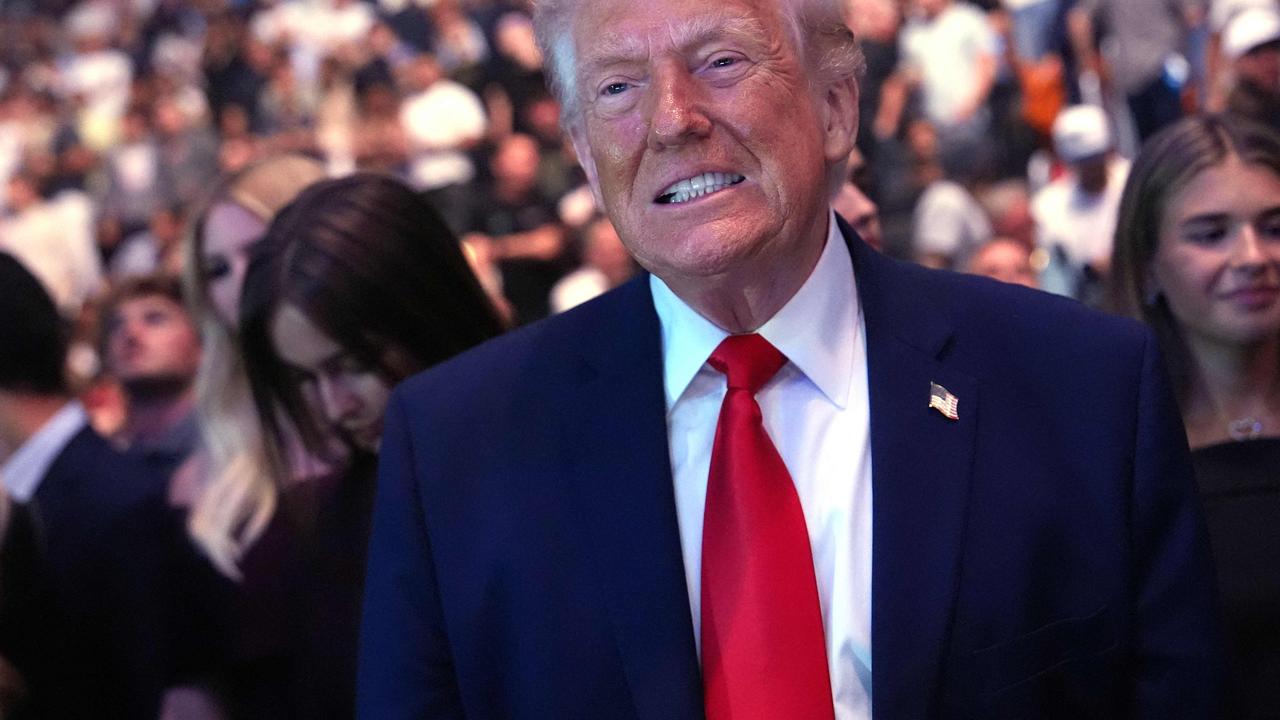
Adding further downward pressure on Australian equities was a sudden surge in global crude oil prices, sparked by a post on Donald Trump’s Truth Social platform that rejected a proposed peace framework with Iran. In the post, Trump wrote, “I have just read the response from Iran’s so-called ‘Representatives.’ I don’t like it – TOTALLY UNACCEPTABLE.” The blunt dismissal of progress in negotiations immediately roiled energy markets, where pricing has long been highly sensitive to geopolitical instability in major oil-producing Middle Eastern regions. By the close of global trading, Brent Crude surged 3.9% to settle at $US105 ($A145) per barrel, while U.S. benchmark West Texas Intermediate climbed 4.6% to hit $US99.78 ($A138) per barrel.
Josh Gilbert, lead APAC analyst for global investment platform eToro, explained that oil volatility will remain tied directly to diplomatic developments in the region for the foreseeable future. “The core issue is still firmly on the table, which is that the Strait of Hormuz remains largely closed, and every failed negotiation is a reminder that there is no quick fix to the biggest supply disruption in history,” Gilbert noted. “We continue to see strong swings in the oil price, and that’s unlikely to change in the near term.”
Against the broader market downturn, a handful of sectors posted solid gains. Australia’s largest iron ore miners outperformed, even amid the oil price shock: BHP closed 0.66% higher at $58.33, Rio Tinto gained 0.60% to $179.79, and Fortescue Metals rose 0.71% to $21.42. The energy sector also closed in positive territory, led by a rally among Australian uranium producers: Paladin Energy jumped 5.76% to $13.21, Deep Yellow gained 4.62% to $1.81, and Boss Energy climbed 6.47% to $1.48.
Several individual companies posted strong gains on the back of positive corporate announcements. Metcash, a leading Australian wholesaler of food, liquor and hardware, surged 6.57% to $2.92 after it upgraded its full-year underlying net profit after tax guidance to a range of $268 million to $270 million. Out-of-home advertising firm oOh!media also rallied 7.1% to $1.35 after confirming it had received an unsolicited takeover proposal from U.S.-based infrastructure investment firm I Squared Capital. Among banking stocks, ANZ fell 0.17% to $35.90 as the lender went ex-dividend for its partially franked interim dividend of 83 cents per share, which will be paid out to registered shareholders in the coming weeks.