作者: admin

  • Former Polish justice minister who faces prosecution at home says he’s traveled from Hungary to US

    Former Polish justice minister who faces prosecution at home says he’s traveled from Hungary to US

    In a dramatic development that has triggered a cross-border legal probe and raised questions of potential diplomatic friction, former Polish Justice Minister Zbigniew Ziobro — a top figure in Poland’s nationalist conservative Law and Justice (PiS) government that ruled from 2015 to 2023 — has announced he traveled from Hungary, where he held asylum, to the United States. Polish prosecutors confirmed Monday they are now probing whether any third parties helped Ziobro evade the criminal charges he faces in his home country.

    Ziobro, a central architect of the PiS administration’s controversial overhaul of Poland’s judiciary, has been wanted by Polish authorities since last year for allegations of abuse of power. Under his leadership, the PiS government installed ideologically aligned judges to secure political control over Poland’s highest courts, and targeted judicial critics with disciplinary punishments and unwanted geographic reassignments, moves that drew widespread international criticism over democratic backsliding.

    In January, Ziobro confirmed he had been granted political asylum in Hungary, then led by long-time nationalist Prime Minister Viktor Orbán, a close ideological ally of the PiS movement. His unexpected move to the U.S. was made public on Sunday, in an interview with Polish right-wing media outlet Republika — timed on the exact same day that Orbán’s elected successor, Péter Magyar, was sworn into office in Budapest following an upset election victory last month that ended Orbán’s 16-year tenure. According to Polish state news agency PAP, Ziobro stated he used travel documentation issued to him as part of his asylum status in Hungary to enter the U.S.

    The charges against Ziobro date back to October 2023, when Polish prosecutors requested that his parliamentary immunity be stripped to allow formal charges to proceed. Prosecutors accuse Ziobro of misappropriating funds from a public state fund established for victims of violence, including diverting money to purchase Israeli Pegasus spyware. Tusk’s governing Civic Coalition has repeatedly accused the former PiS administration of using Pegasus to conduct illegal surveillance on political opponents ahead of the 2020 parliamentary election. Ziobro has consistently denied all wrongdoing, maintaining every action he took was fully legal under Polish law.

    Poland’s new pro-European Union government, led by Prime Minister Donald Tusk, took office in late 2023 on a pledge to roll back the judicial overhaul implemented by the PiS and restore the rule of law. To date, however, those efforts have been blocked by two consecutive Polish presidents affiliated with the nationalist right, leaving the reform process deadlocked.

    On Monday, Poland’s national prosecutor’s office announced via social media that it has opened a new investigation into Ziobro’s sudden departure, focused on identifying any individuals who may have aided his flight and helped him avoid standing trial on existing charges, which would constitute obstruction of the ongoing inquiry into the management of the national justice fund.

    Current Polish Justice Minister Waldemar Żurek confirmed via a post on X Sunday evening that Polish authorities had already invalidated all of Ziobro’s Polish-issued travel documents, including his diplomatic passport, before his international travel. He added that Poland will formally request clarification from both the U.S. and Hungary on the legal basis that allowed Ziobro to exit Hungarian territory and enter the United States.

    The cross-border movement has opened the door to potential political tension between Warsaw and Washington, but Polish officials have moved quickly to downplay that risk. “We don’t want this issue to become political,” Polish Foreign Ministry spokesperson Maciej Wewiór told the Associated Press in an interview. “Our relationship with the U.S. goes much deeper than what happens with Ziobro. But we do want our citizen to eventually return to Poland and face justice.”

  • Trump-Xi meet more about US uncertainty than China ambition

    Trump-Xi meet more about US uncertainty than China ambition

    As U.S. President Donald Trump prepares to touch down in Beijing this week for high-stakes talks with Chinese President Xi Jinping, the choreographed opening moments of the summit are already predictable: firm, photographed handshakes, sweeping rhetorical claims, carefully staged symbolic gestures, and mutual declarations of unlocking new “historic” economic cooperation. But behind this carefully curated diplomatic spectacle lies a far more consequential shift reshaping the geopolitical future of the Indo-Pacific.

    Donald Trump’s second term in office has not delivered a cohesive new U.S. doctrine for the Indo-Pacific. Instead, it has amplified longstanding American strategic anxieties into a louder, purely transactional approach that departs sharply from the frameworks built by his two immediate predecessors. For more than a decade, successive U.S. administrations have framed the Indo-Pacific as the global center of geopolitical gravity. Barack Obama’s “pivot to Asia” was designed to reassure regional allies that Washington recognized the region’s growing strategic weight. Joe Biden built on that foundation, expanding the framework through minilateral security pacts, technology alliances, and targeted diplomatic engagement crafted to balance China’s rise without triggering open conflict.

    Trump’s second term marks a clear break from this trajectory. While the current administration has retained most of Washington’s hard-line rhetoric toward Beijing, it has abandoned the broader diplomatic and institutional architecture that once sustained U.S. credibility across the region. Instead, the Trump 2.0 approach relies heavily on economic nationalism, repeated tariff threats, and demands for increased defense burden-sharing from allies already navigating mounting geopolitical and financial volatility. Despite the administration’s claims of strategic renewal, this strategy largely repackages long-running U.S. anxieties about China into a more confrontational doctrine centered on trade escalation, economic coercion, and increasingly inflammatory rhetoric around global great-power competition.

    This shift has left regional governments viewing Washington through an increasingly transactional lens. U.S. allies and partners face repeated calls to decouple their supply chains from China, even as they confront new American tariffs, industrial policy disputes, and growing uncertainty about the durability of long-term U.S. commitments to the region.

    This ambiguity matters deeply, because most middle powers in Asia have no interest in being forced to choose between Washington and Beijing. The vast majority of regional governments seek to retain strategic flexibility, diversified trade relationships, and stable security arrangements that avoid dividing the region into rigid, opposing blocs. Vietnam offers a clear illustration of this common regional dilemma. Over the past decade, Hanoi emerged as one of the biggest beneficiaries of global supply chain diversification, as manufacturers shifted production out of China amid escalating U.S.-China tensions. American firms were major drivers of this shift. Yet today, Washington increasingly frames Vietnam’s export growth through a narrative of “overcapacity” and industrial imbalance, even though most of Vietnam’s manufacturing sector is powered by multinational investment, not state-directed dumping. This contradiction has not been lost on regional capitals, nor has the growing gap between Washington’s military posture and its diplomatic messaging.

    The U.S. continues to carry out freedom of navigation operations in the South China Sea, deepen defense ties with regional allies, and strengthen deterrence frameworks around Taiwan. But military posturing alone does not add up to a cohesive regional strategy. Diplomatic engagement, economic integration, and institutional trust remain equally critical pillars of influence in Asia. That power vacuum is an opening Beijing has been quick to exploit. China’s leadership understands that regional influence today depends not just on naval power, but on infrastructure financing, deep trade relationships, development assistance, and increasingly, environmental diplomacy and ocean governance.

    Beijing’s bid to host the secretariat for the new UN High Seas Treaty is a perfect example of this broader strategy. China has positioned itself as a responsible steward of the global maritime commons, pledging financial support for marine conservation projects while expanding its diplomatic footprint across developing coastal states. To be sure, many regional governments remain deeply cautious of China’s strategic intentions, particularly in the South China Sea, where gray zone tactics, maritime coercion, and unresolved territorial disputes continue to erode trust. But Beijing does not need to be fully consistent in its own policies to displace American influence; it only needs to capitalize on growing perceptions of inconsistency in U.S. policy. Trump’s return to the White House has only amplified these perceptions. The administration’s focus on tariffs and economic confrontation risks undermining the very partnerships Washington needs to sustain long-term strategic competition with China.

    Regional leaders hear constant demands to align with Washington against Beijing, even as they watch the U.S. withdraw from many of the multilateral trade frameworks and regional agreements that once anchored American economic leadership in Asia. At the same time, Xi Jinping enters the upcoming summit with key advantages that extend far beyond diplomatic positioning. While China’s economy is experiencing slower growth, Beijing retains enormous leverage across regional supply chains, manufacturing networks, and infrastructure financing. It can restrict exports of critical rare earth minerals, which are essential for defense systems, electric vehicles, and a wide range of everyday modern products. It continues to invest heavily in advanced technologies, maritime capabilities, and strategic industries that will define future great-power competition.

    Xi has projected consistent policy continuity in Asia, anchored by long-term planning and institutional discipline – qualities that many regional governments value greatly, even when they remain wary of Beijing’s long-term ambitions. For instance, the Belt and Road Initiative, for all the criticism it has drawn, projects permanence through ports, railways, energy projects, and long-term financing commitments that unfold over decades. Chinese diplomacy also prioritizes patience and gradualism. Even when Beijing acts assertively in the South China Sea or the Taiwan Strait, it typically frames those actions within a broader narrative of historical continuity and national rejuvenation. This consistency holds unique weight in Asia, where political stability and policy predictability are often valued as much as ideological alignment. While many regional governments still do not fully trust Beijing, a growing number are questioning whether U.S. policy can remain durable beyond U.S. electoral cycles and the shifting priorities of individual political leaders.

    Against this backdrop, Trump’s Beijing visit carries significance that stretches far beyond bilateral U.S.-China relations. The summit will serve as a critical test of whether Washington can still articulate a broad, cohesive Indo-Pacific vision that goes beyond tariffs, confrontation, and occasional displays of military strength. It will also reveal whether the U.S. still understands that regional influence depends not just on containing China, but on offering regional partners a credible, stable, and economically attractive alternative to Beijing’s model. The core risk for Washington is not that Asia will suddenly align fully with China. It is that the region will gradually adapt to a new order where U.S. policy appears unpredictable, excessively transactional, and increasingly disconnected from the long-term economic and political realities shaping the Indo-Pacific. This kind of strategic drift would benefit Beijing far more than any joint summit communique or carefully staged diplomatic performance.

    Trump will arrive in Beijing seeking to project American strength. But most regional observers will be watching for a far more critical marker: whether the U.S. still possesses the strategic patience and political coherence required to sustain leadership in the Indo-Pacific. Right now, the answer to that question remains deeply uncertain. This analysis is contributed by James Borton, editor-in-chief of the South China Sea NewsWire, co-author of the recently released SCSNW Indo-Pacific Report, with contributions from managing editor David Hessen.

  • China’s passenger car exports surge nearly 85% in April as domestic sales slump

    China’s passenger car exports surge nearly 85% in April as domestic sales slump

    Against a backdrop of softening domestic demand and intense domestic market competition, Chinese passenger car exports posted explosive year-over-year growth in April, new data from a leading national industry group shows, fueled by booming global demand for electric vehicles and aggressive overseas expansion by domestic automakers.

    Data released Monday by the China Association of Automobile Manufacturers (CAAM) reveals that China’s passenger car exports rose nearly 85% year-on-year last month, hitting approximately 796,000 units. That figure marks a steady uptick from March’s 748,000 exported vehicles, extending a months-long trend of strong outbound shipment growth. New energy passenger vehicles – encompassing battery electric models and plug-in hybrids – delivered an even more dramatic performance, with April exports jumping more than 120% from the same period a year earlier to reach roughly 420,000 units.

    This stellar export performance stands in stark contrast to conditions in China’s domestic market, the world’s largest single auto market by volume. CAAM data confirms that domestic passenger car sales dropped 25.5% year-on-year in April to 1.3 million units, marking the sixth consecutive month of annual declines.
    Auto analysts point to two core factors dragging down domestic demand: the rollback of government subsidies for new energy vehicle purchases implemented earlier this year, and sustained consumer uncertainty stemming from a prolonged downturn in China’s key property sector, which has left many households hesitant to commit to big-ticket purchases like new cars. Intense competition within China’s domestic auto industry has also intensified in recent months, highlighted by the April Beijing auto show, where manufacturers showcased more than 1,450 vehicles spanning next-generation models and cutting-edge technologies, from AI-integrated infotainment and driving systems to ultra-fast charging battery innovations.

    While some industry observers expect domestic sales to regain momentum in the second half of 2025, most forecasts center on continued double-digit export growth for Chinese automakers, particularly in the new energy segment. Leading domestic brands including BYD and Geely Auto have already built significant traction across global markets, with many manufacturers complementing export growth by building local production capacity in high-demand regions including Europe and Latin America.

    Global market conditions have also aligned to benefit Chinese electric vehicle exports. Geopolitical tensions driving sustained elevated global fuel prices have spurred growing consumer adoption of EVs across many regions: data from Australia’s Federal Chamber of Automotive Industries shows one in six new cars sold in Australia in April were electric, with BYD ranking as the country’s second-best-selling EV brand behind only global giant Toyota. “Sustained high oil and fuel prices will continue to incentivize consumers to shift to EV purchases, and this trend will disproportionately benefit Chinese EV exporters,” noted Claire Yuan, an auto analyst at S&P Global Ratings.

    Industry consultancy AlixPartners projects that China’s total annual passenger car exports will continue growing roughly 20% through 2026, as domestic brands deepen their footprint in fast-growing emerging markets including Southeast Asia. Beijing has also recently made progress in trade negotiations with the European Union and Canada to smooth EV import access for Chinese manufacturers, though major trade uncertainty remains on the horizon. All eyes are now on upcoming trade talks between U.S. President Donald Trump and Chinese leader Xi Jinping during Trump’s upcoming visit to Beijing. The U.S. has already effectively blocked Chinese EV imports via a 100% tariff implemented by the Biden administration in 2024, and the future of market access for Chinese automakers remains a key sticking point in bilateral trade relations.

  • Russia and Ukraine trade blame for continued fighting as US-brokered ceasefire nears its end

    Russia and Ukraine trade blame for continued fighting as US-brokered ceasefire nears its end

    The 72-hour ceasefire between Russia and Ukraine negotiated by the United States expired on Monday amid mutual accusations of breaches, leaving Western powers scrambling to map out a path toward new diplomatic negotiations to end the more than four-year-old conflict. This truce, announced by former U.S. President Donald Trump late last week, was framed as a gesture to mark Russia’s Victory Day holiday commemorating the defeat of Nazi Germany in World War II, and was also paired with a proposed prisoner swap of 1,000 detainees from each side. Trump had even hailed the temporary pause in fighting as the potential “beginning of the end” of the full-scale invasion that began in 2022.

    Even before the truce reached its expiration deadline, both warring parties had already levied widespread claims of violations against one another. Ukrainian officials confirmed on Monday that Russian strikes using drones, aerial bombs and heavy artillery hit populated civilian areas in northeastern Kharkiv and southern Kherson, leaving at least two civilians dead and seven more injured. For its part, Russia’s Defense Ministry released a claim Sunday that Kyiv had violated the truce more than 1,000 times, according to Russian state media reports.

    Independent analysis from the Washington-based Institute for the Study of War (ISW), which draws on NASA satellite observation data, found that while large-scale military activity dropped slightly after the ceasefire took effect, fighting never fully halted across the front line. In an assessment published late Sunday, the think tank cautioned that ceasefires lack durability without three core components: clear enforcement rules, independent credible monitoring systems, and formal structured processes to resolve disputes. This collapse follows a pattern of similar temporary truces that have failed to end sustained fighting since Russia’s full-scale invasion, as well as a year of U.S.-led diplomatic efforts that have yielded no tangible progress toward a lasting peace.

    Despite the tentative prisoner swap plans announced alongside the ceasefire, neither side has shown any willingness to compromise on their core negotiating demands. Russian President Vladimir Putin continues to insist on full Russian control of Ukraine’s Donbas region, the country’s major industrial heartland that Russian forces have yet to fully capture, a non-negotiable demand that Ukrainian President Volodymyr Zelenskyy has repeatedly rejected outright. While Zelenskyy has offered to hold direct face-to-face peace talks with Putin, the Russian leader has refused to meet until a final negotiated settlement is nearly complete, creating a stalemate that has persisted for months.

    Over the weekend, Putin floated the idea of former German Chancellor Gerhard Schröder—who has long-standing close business ties to Russia—serving as an independent mediator, but the proposal was immediately dismissed by German and European officials. The move comes as European Union officials acknowledge that their own peace efforts have been largely sidelined by U.S. leadership over the past year, but the bloc is now moving to take a more prominent role in diplomatic processes. EU foreign policy chief Kaja Kallas emphasized that the bloc must first align on its core objectives before entering any formal discussions with the Kremlin, telling reporters in Brussels that “Before we discuss with Russia, we should discuss amongst ourselves what we want to talk to them about.”

    Ukrainian Foreign Minister Andrii Sybiha joined EU foreign ministers for their Brussels meeting, and backed a continued dual-track approach to diplomacy. “We have mainstream peace talks under the leadership of the U.S., and we need this track and we need U.S. leadership. But Europe could play also its role,” he said. Sybiha also highlighted shifting battlefield dynamics, noting that Ukraine has strengthened its position in recent months, slowing Russia’s gradual advance into Ukrainian territory to a costly, slow-moving campaign across the 1,250-kilometer front line. Ukraine has also leveraged domestically produced long-range drones and missiles to strike military targets deep inside Russian territory, he added, saying “We have a new reality on the battlefield … Ukraine became stronger after the most difficult winter.”

    On the sidelines of diplomatic talks, a separate incident linked to the war has sparked political upheaval in the Baltic state of Latvia. Investigations into recent stray drone incidents on Latvian territory concluded that Russian electronic warfare systems deliberately diverted Ukrainian drones that had been targeting sites inside Russia, pulling them off course into Latvian airspace. On Sunday, Latvian Prime Minister Evika Silina ordered Defense Minister Andris Sprūds to resign over the incident, saying he had lost her trust after the incident “clearly demonstrated that the political leadership of the defense sector has failed to fulfill its promise of safe skies over our country.” Sprūds complied with the order, framing the ouster as an internal domestic political dispute.

    Sybiha confirmed he had spoken with Latvian Foreign Minister Baiba Braže about the incident, and reaffirmed Ukraine’s commitment to collaborating with Baltic states and Finland to prevent similar stray drone incursions in the future. He offered to deploy Ukrainian technical specialists directly to assist with prevention efforts. Latvia is not the only European country to report such incidents in recent weeks; Estonia, Poland and Romania have all also documented stray drones landing on their territory in recent months.

    German Defense Minister Boris Pistorius became the latest senior European official to visit Kyiv on Monday, arriving for an unannounced trip focused on expanding bilateral defense cooperation between Germany and Ukraine. Western leaders have continued to reiterate their commitment to supporting Ukraine’s military capabilities amid the ongoing stalemate on the front lines.

  • Portrait looted by Nazis found in home of Dutch SS leader’s descendants

    Portrait looted by Nazis found in home of Dutch SS leader’s descendants

    Eighty years after it was stolen from a prominent Jewish art collector by Nazi occupiers, a long-missing looted painting has been recovered in the Netherlands, after a descendant of the family that held it for generations chose to come forward in an act of accountability. Renowned Dutch art detective Arthur Brand, who has built his career tracking down stolen Nazi-era art, has revealed the details of this extraordinary case: *Portrait of a Young Girl*, a work by early 20th century Dutch artist Toon Kelder, was discovered in the residence of descendants of Hendrik Seyffardt, a notorious Dutch Nazi collaborator.

    The painting was originally part of the vast, celebrated collection of Jacques Goudstikker, a leading Jewish art dealer based in the Netherlands. When Nazi Germany invaded the Netherlands in 1940, Goudstikker fled the country for his life, but died mid-escape, leaving behind more than 1,000 works of art that were quickly seized by Nazi plunderers. Most of Goudstikker’s collection was dispersed, sold off at auction after being looted.

    The case came to Brand’s attention when a man, who discovered he was a direct descendant of Seyffardt, reached out through an intermediary. Seyffardt was a high-ranking Dutch military officer who commanded a volunteer Waffen-SS unit fighting for Nazi Germany on the Eastern Front, before being assassinated by Dutch resistance fighters in 1943. The descendant told Brand he was disgusted upon learning his family had held the looted artwork for decades, and decided to act to return it to its rightful owners. When he confronted his grandmother about the painting, she acknowledged its provenance openly: she told him it had been acquired during the war, that it was looted Jewish property stolen from Goudstikker, and that it was unsellable, instructing him to keep the secret, Brand confirmed.

    In statements to Dutch media, the family, who changed their surname after World War Two ended, has confirmed they held the painting for generations, but maintain they had no knowledge of its true origins until recently. The descendant told De Telegraaf, a major Dutch newspaper, that he feels deep shame and believes the work belongs with Goudstikker’s surviving heirs. His grandmother echoed that position in her own statement, saying she inherited the painting from her mother and now understands why Goudstikker’s family wants it returned.

    After being contacted, Brand launched a thorough investigation to verify the painting’s provenance. He found an old label on the back of the canvas and the number 92 etched into the work’s frame. Cross-referencing this mark with archival records from a 1940 auction where hundreds of pieces from Goudstikker’s looted collection were sold, Brand found a matching entry: lot number 92 was listed as *Portrait of a Young Girl* by Toon Kelder. Brand’s investigation suggests the painting was originally seized by Hermann Goering, one of the most powerful Nazi leaders and an avid art plunderer, after Goudstikker fled the Netherlands. It was then sold at the 1940 auction to Seyffardt, and passed down through the family ever since.

    Brand confirmed he reached out to legal representatives for Goudstikker’s heirs, who verified that Goudstikker once owned six works by Toon Kelder, all of which were included in that 1940 auction of looted art. For Brand, a seasoned investigator who has recovered dozens of Nazi-looted works from major institutions including the Louvre and the Dutch Royal Collection, this case stands out as one of the most remarkable of his career. “This is stunning, the most bizarre case of my entire career,” he told the BBC. “But discovering a painting from the famous Goudstikker collection, in the possession of the heirs of a notorious and famous Dutch Waffen-SS general, truly tops everything.” He noted that while the current generation of the family bears no personal responsibility for Seyffardt’s wartime crimes, they kept the painting for decades when they could have done the right thing and returned it voluntarily.

    This recovery draws parallels to another high-profile case involving Goudstikker’s looted collection, when an Italian Renaissance masterpiece by Giuseppe Ghislandi, also stolen by the Nazis from Goudstikker, was spotted on an Argentine real estate website, hanging in a home once owned by a senior Nazi official who fled to South America after the war. Authorities launched a raid to recover the work, but it had been removed before police arrived, and remains missing to this day.

    This new recovery marks another small step toward correcting the widespread art theft carried out by the Nazi regime during World War Two, and highlights how even 80 years later, looted works are still being traced and returned to the families of their original owners.

  • No end to deadlock as Iran, US reject talks terms

    No end to deadlock as Iran, US reject talks terms

    A months-long diplomatic standoff between the United States and Iran has reached a new boiling point, with a sharp exchange of negotiating terms dashing hopes for a quick de-escalation of tensions in the Persian Gulf and raising the prospect of a full resumption of open conflict. The deadlock has already sent shockwaves through global energy markets, pushed oil prices sharply higher, and been compounded by fresh drone strikes across the region that have fractured a fragile existing ceasefire.

    The breakdown in talks came after Iranian officials responded to a latest US peace proposal with a formal counteroffer that former US President Donald Trump rejected outright as “TOTALLY UNACCEPTABLE” in a terse social media statement over the weekend. While Trump did not specify which provisions of Iran’s counteroffer sparked his fury, Tehran has publicly outlined its non-negotiable core demands: an immediate end to the US naval blockade of Iranian ports, the full release of billions of dollars in Iranian sovereign assets frozen in international financial institutions for years, and a cessation of all regional hostilities – a condition that implicitly requires an end to Israeli military strikes targeting Hezbollah in Lebanon.

    Esmaeil Baqaei, spokesman for Iran’s foreign ministry, emphasized to reporters on Monday that Tehran is not seeking excessive concessions, only the enforcement of its long-recognized legitimate rights. “We did not demand any concessions. The only thing we demanded was Iran’s legitimate rights,” Baqaei said. Analysts note that meeting Iran’s core demands would not only roll back the military and economic pressure imposed by the US and Israel ahead of the outbreak of the current conflict in late February, but also represent a major policy victory for the Islamic Republic’s years-long campaign to break global economic isolation. It would also significantly reduce Washington’s diplomatic leverage over Tehran regarding its nuclear program, a key longstanding priority for US policymakers.

    The US, Israel and their Western allies have for decades accused Iran of pursuing a secret nuclear weapons program, a charge Tehran has consistently and categorically denied. Israeli Prime Minister Benjamin Netanyahu reiterated his hardline stance over the weekend in an interview with CBS’s *60 Minutes*, insisting that the conflict will not end until all of Iran’s nuclear infrastructure is permanently destroyed. “It’s not over, because there’s still nuclear material — enriched uranium — that has to be taken out of Iran,” Netanyahu said. “There’s still enrichment sites that have to be dismantled.”

    Despite the public breakdown, reporting from *The Wall Street Journal* citing anonymous sources familiar with the negotiations indicates Iran’s counteroffer included tentative concessions on nuclear enrichment. According to the outlet, Tehran proposed diluting a portion of its existing highly enriched uranium and transferring the remainder to a neutral third country for storage, with a guarantee that the material would be returned if the final agreement collapses or Washington withdraws from the deal, a key Iranian protection against future US policy shifts.

    With talks stalled, the focus of global concern has shifted back to the Strait of Hormuz, the strategic international waterway that carries roughly one-fifth of the world’s total oil exports. Iran has already begun restricting commercial maritime traffic through the strait and moving forward with plans to implement a new toll system for transiting vessels, a step US officials have repeatedly called unacceptable. Meanwhile, the US Navy maintains its ongoing blockade of Iranian ports, regularly intercepting and diverting commercial vessels traveling to and from Iranian territorial waters.

    Compounding the already tense situation, fresh drone attacks across the Gulf on Sunday shattered the fragile ceasefire that had held for weeks. The United Arab Emirates announced its air defense systems successfully intercepted a drone launched from Iranian territory, while Kuwait reported detecting hostile unauthorized drones in its national airspace. Qatar’s defense ministry also confirmed a cargo freighter sailing into Qatari waters from Abu Dhabi was struck by a drone in the incident.

    Ebrahim Rezaei, spokesman for the Iranian parliament’s national security commission, issued a stark public warning to Washington over the weekend that marked the end of Tehran’s period of voluntary restraint. “Our restraint is over as of today,” Rezaei said in a social media post. “Any attack on our vessels will trigger a strong and decisive Iranian response against American ships and bases.”

    Looking ahead, the Trump administration has signaled it will raise the Iran issue during the president’s upcoming visit to Beijing this Thursday, where he is expected to press Chinese President Xi Jinping – leader of the world’s largest importer of Iranian crude oil – to back tougher pressure on Tehran to compromise on the peace terms.

  • Police find body believed to be of fugitive Australian shooter

    Police find body believed to be of fugitive Australian shooter

    Four months after a horrific triple shooting that left three people dead — including a seven-month pregnant woman — in the small Australian outback town of Lake Cargelligo, authorities have confirmed the discovery of a body believed to be that of the prime suspect, Julian Ingram.

    The tragedy dates back to January 22, when Ingram, a local council worker who had been granted bail on prior domestic violence offences, allegedly opened fire on his ex-partner Sophie Quinn, who was expecting a child due in March, Quinn’s close friend, and Quinn’s aunt. All three died at the scene. A 19-year-old man who was also attacked in the shooting survived with serious injuries and has since been discharged from hospital, police confirmed.

    In the immediate aftermath of the killings, law enforcement launched a massive manhunt, deploying roughly 100 officers to scour the remote region surrounding Lake Cargelligo, a community of just 1,500 residents located around 450 kilometres west of Sydney. Assistant Commissioner Andrew Holland noted at the time that Ingram’s long-term work in the area had given him intimate local knowledge, allowing him to stay off the grid for an extended period. He was not spotted after the day of the shootings.

    The breakthrough came when wildlife officers conducting routine feral pest eradication operations stumbled across the remains 50 kilometres northwest of the murder site, next to an abandoned utility vehicle. On Monday, Holland told reporters that forensic and on-site checks have already linked the vehicle to Ingram. “Based on the identification evidence from the scene and the clothing the deceased was wearing, we are confident this is Julian Ingram,” Holland told reporters, according to Australian public broadcaster ABC.

    Investigators added that the body appeared to have been left at the remote location for a significant amount of time, consistent with Ingram having disappeared shortly after the January attacks. For the tight-knit community of Lake Cargelligo that has lived under the shadow of the unsolved case for months, the discovery marks a pivotal turning point. Holland said the finding brings a formal close to the active investigation, and can offer some measure of comfort to a shaken town, allowing residents to finally move forward after the tragedy.

  • Trump-Xi summit comes with high stakes for Taiwan, the island democracy that China claims as its own

    Trump-Xi summit comes with high stakes for Taiwan, the island democracy that China claims as its own

    As U.S. President Donald Trump prepares for his high-stakes summit with Chinese President Xi Jinping this week, growing ambiguity around his approach to Taiwan has sparked intense speculation across global capitals about the future of long-standing U.S. policy toward the self-governing island that Beijing claims as its own.

    Trump’s actions and public comments have painted a contradictory picture in recent months. In December last year, he approved a historic $11 billion arms package for Taiwan – the largest single weapons deal the U.S. has ever concluded with the island. To date, however, no delivery timeline has been finalized, and Trump has publicly confirmed he has already discussed the proposed sale with Xi. Beyond the arms deal debate, the U.S. leader has publicly complained that Taiwan “stole” American semiconductor industry business, and has repeatedly pressured Taipei to compensate Washington for its security commitments. Using the threat of steep new tariffs as leverage, Trump has also pushed Taiwan to commit to large-scale investments in U.S.-based advanced semiconductor manufacturing, and to purchase billions of dollars in American crude oil and liquefied natural gas.

    This inconsistent approach has left policymakers and analysts in Beijing, Taipei, and Washington questioning the durability of the U.S.’s long-held commitment to Taiwan’s self-defense. Critics, particularly among Washington’s foreign policy circles that back strong U.S. support for Taipei, warn that Trump’s transactional approach to diplomacy could leave Taiwan vulnerable to concessions during the summit. Retired U.S. Navy Rear Admiral Mark Montgomery, now a senior fellow at the Foundation for Defense of Democracies, noted that supporters of Taiwan are growing increasingly concerned that the island could become a bargaining chip in talks between the two global leaders.

    For its part, Beijing has made clear that the Taiwan issue will be a central topic of discussion during this week’s meetings. Chinese Foreign Minister Wang Yi raised the island’s status during a pre-summit call with U.S. Secretary of State Marco Rubio, urging Washington to “make the right choices” on Taiwan policy to preserve bilateral stability, according to an official statement from the Chinese Foreign Ministry. While Rubio reaffirmed in a press briefing in Rome that long-standing U.S. policy has not shifted – stating Washington opposes any forced changes to the cross-strait status quo that would threaten global stability – he did acknowledge that Taiwan would feature on the summit’s agenda, even if it is not a formal centerpiece.

    White House officials have pushed back against concerns over shifting policy, pointing out that Trump has already approved more military sales to Taiwan in the first year of his second term than former Democratic President Joe Biden approved across his full four-year term. In addition to the $11 billion arms package, Trump greenlit a $330 million deal for military aircraft parts for Taiwan in November. The Trump administration has also long pressured Taipei to increase its own defense spending, a goal that saw partial progress Friday when Taiwanese lawmakers ended months of legislative gridlock to approve a $25 billion arms purchase budget. That figure fell far short of the $40 billion proposal put forward by Taiwanese President Lai Ching-te, a gap that a senior anonymous Trump administration official called disappointing.

    Taiwanese officials have publicly acknowledged concern over Beijing’s intensified rhetoric ahead of the summit, though they have drawn some reassurance from Rubio’s recent comments. National Security Bureau Director-General Tsai Ming-yen told reporters that while Beijing may attempt diplomatic maneuvering during the talks, Washington has repeatedly confirmed through both public and private channels that its Taiwan policy remains unchanged.

    China analysts note that Xi’s core goal will be to pressure Trump to roll back elements of U.S. support for Taipei, aligned with Beijing’s long-standing position that Taiwan is a breakaway province that must eventually be reunified with the mainland, by force if necessary. Since 1979, the U.S. has maintained a policy of “strategic ambiguity”: it acknowledges Beijing’s claim that Taiwan is part of China, but does not explicitly endorse that position, opposes Taiwanese independence, rejects unilateral changes to the status quo, and provides informal security support and arms to Taipei.

    Analysts say Xi will likely push Trump to curb U.S. arms sales and impose informal restrictions on high-level U.S. official visits to the island, taking advantage of Trump’s already demonstrated willingness to deviate from traditional diplomatic norms. In February, Trump made headlines by confirming he consults Xi on U.S. arms sales to Taiwan, breaking with decades of established policy. Patricia Kim, a China expert with the Brookings Institution’s Assessing China Project, warned that even if no formal policy shift is announced, Trump’s well-documented tendency to make off-the-cuff remarks could create unintended shifts that upend cross-strait stability.

    Uncertainty over the U.S. commitment has also been amplified by Trump’s muted response to a recent diplomatic rift between U.S. ally Japan and China over Taiwan. In November, Japanese Prime Minister Sanae Takaichi said a Chinese attack on Taiwan would constitute a regional security threat that could qualify as a “survival-threatening situation” for Japan, justifying a military response. Trump spoke with both Takaichi and Xi that same month, but has largely avoided taking a public stance on the dispute, noting in March talks with Takaichi that he would “be speaking Japan’s praises when I’m in China with President Xi.” Additional scrutiny came after the 2026 U.S. National Defense Strategy omitted any direct mention of Taiwan.

    Still, many analysts point to one key factor that may protect Taiwan from major policy shifts: its dominant position in the global semiconductor industry, a sector critical to U.S. technological competitiveness in its race with China. Lev Nachman, a political science professor at National Taiwan University, noted that Trump is well aware of Taiwan’s central role to U.S. economic and technological growth, creating a baseline that makes drastic policy shifts unlikely.

    Edgard Kagan, a former senior State Department official who worked on East Asia policy for both the Trump and Biden administrations and now holds the China Studies chair at the Center for Strategic and International Studies, added that while Trump approaches diplomacy from a transactional perspective, his administration has never treated core U.S. interests in the region as negotiable trade-offs. “The president understands leverage. My experience of being in meetings with him, he has a very, very acute sense of how to use it,” Kagan said. “And so I think that the idea that there’s going to be a trade where the president sort of sacrifices U.S. interests in Taiwan in order to get other things — I think it’s unlikely based on my own experience of how he operates.”

    In the end, the outcome of the summit for Taiwan will likely be measured by the public statements the two leaders release. After Trump’s last in-person meeting with Xi in October, he claimed the Chinese leader had not raised the Taiwan issue, and that Chinese officials “know the consequences” of any military action against the island. For Taipei, Nachman noted, the best possible outcome is that the issue is not discussed publicly, or addressed only in passing.

  • Philippine VP Sara Duterte impeached for a second time

    Philippine VP Sara Duterte impeached for a second time

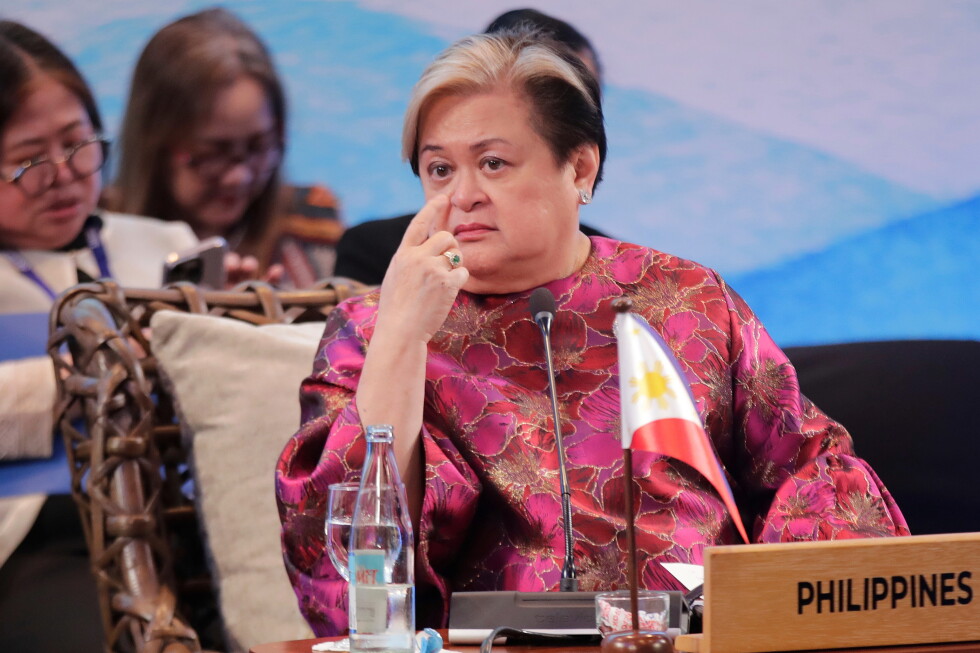
    In a major development reshaping Philippine politics, the House of Representatives has approved a second impeachment vote against Vice President Sara Duterte, clearing the way for a Senate trial that could permanently end her presidential ambitions for the 2028 election.

    Monday’s vote crossed the required one-third threshold easily, with 255 out of 290 attending lawmakers backing the impeachment move. The case centers on two core allegations: unauthorized misuse of public funds during Duterte’s tenure as vice president, and public threats she made against President Ferdinand Marcos Jr., First Lady Liza Araneta Marcos, and former House Speaker Martin Romualdez.

    This is not the first time impeachment proceedings have been brought against Duterte on identical grounds. The first attempt in 2025 was derailed by the Philippine Supreme Court, which blocked the process on a technicality before it could reach the Senate for trial. The case was revived earlier this year, and last week a House investigative committee concluded there was enough credible evidence to support moving forward with impeachment.

    Duterte has repeatedly dismissed the proceedings as a politically motivated sham. In a formal written statement responding to the committee’s ruling, she called the case “nothing more than a scrap of paper,” and refused to participate in the committee hearings, citing what she claims is a biased, partisan process.

    The lopsided House vote is widely seen as a clear demonstration of Marcos’ retained influence over the lower chamber of Congress. Unlike House members, who are elected by individual legislative districts and typically align with the sitting president to secure patronage and resources for their constituencies, the 24-member Senate is elected nationally and has long served as a launching pad for future presidential and vice presidential candidates.

    The path to a conviction remains far from certain, however. Half of the Senate seats were up for grabs in the 2025 midterm elections, and candidates aligned with Duterte outperformed those running under Marcos’ ruling coalition. In a political system defined by shifting dynastic alliances and flexible multi-party loyalties, forecasting the outcome of an impeachment trial is exceptionally difficult.

    For Duterte, a conviction would result in immediate permanent disqualification from holding any public office, scrapping her well-publicized plan to run for president in 2028. The 47-year-old politician, daughter of former Philippine President Rodrigo Duterte, currently holds a commanding lead in early presidential polling. A March 2026 survey by Manila-based pollster WR Numero placed her 17 percentage points ahead of her closest competitor.

    The current rift between Duterte and Marcos marks a dramatic reversal of fortune for the once-powerful political alliance that swept both into office in the 2022 national election. Duterte was originally the frontrunner to succeed her father as president in 2022, but agreed to run for vice president alongside Marcos to unify their support bases and block a rising reformist opposition. The ticket won election by a landslide, but the partnership quickly fractured as the two leaders pursued conflicting political agendas.

    Tensions boiled over after Marcos allies led by Romualdez launched an investigation into allegations of misappropriated funds in Duterte’s vice presidential office. During a fiery late-night online address at the height of the probe, Duterte openly stated she had instructed an associate that if she were killed, the associates should target Marcos, the first lady, and Romualdez.

    The relationship deteriorated further last March, when Marcos granted authority to the International Criminal Court to arrest former President Rodrigo Duterte, who is currently detained at The Hague awaiting trial on crimes against humanity charges linked to thousands of deaths during his controversial war on drugs.

  • Philippine House votes to impeach Vice President Sara Duterte

    Philippine House votes to impeach Vice President Sara Duterte

    In a major political shakeup that has sent shockwaves through the Philippines, the country’s House of Representatives delivered a historic vote on Monday, approving the impeachment of Vice President Sara Duterte by an overwhelming margin over a trio of serious allegations. The accusations leveled against Duterte include undeclared unexplained assets, the improper use of public government funds, and even threats to arrange the assassination of sitting President Ferdinand Marcos Jr.

    Dominance of Marcos Jr.’s political allies in the lower chamber shaped the final outcome, which landed at 255 votes in favor of impeachment to just 26 votes against, with nine lawmakers choosing to abstain from the historic ballot. Two separate impeachment complaints brought against the vice president will now advance to the Philippine Senate, where the upper legislative chamber will be convened as a formal impeachment tribunal to conduct Duterte’s trial.

    Duterte, who is the daughter of former Philippine President Rodrigo Duterte, one of the country’s most polarizing and influential modern political figures, has issued a general denial of all wrongdoing connected to the allegations. She has not, however, addressed the specific criminal claims brought against her in any public detailed response.

    This is not the first time the vice president has faced an impeachment vote: in 2023, the House similarly advanced impeachment proceedings against her, but Duterte avoided a Senate trial after the Supreme Court ordered the attempt halted on a constitutional technicality. It remains unclear whether the new impeachment attempt will face similar legal challenges, or if the Senate tribunal will move forward to weigh the merits of the accusations against the country’s second-highest elected official.