Deep beneath the snow-capped peaks of the Swiss Alps, a team of European scientists has pulled off a world-first seismology experiment: intentionally triggering thousands of small, controlled earthquakes to unlock long-held secrets of tectonic activity that could one day prevent dangerous man-made quakes across the globe.
The ambitious project, led by Domenico Giardini, a geology professor at Switzerland’s prestigious ETH Zurich, is hosted at the custom-built BedrettoLab, a cutting-edge underground research facility carved into a 5.2-kilometer ventilation tunnel that connects to the iconic Furka railway tunnel. Accessible only via specially modified electric vehicles navigating damp, dark passages beneath 1.5 kilometers of solid mountain rock, the lab offers a one-of-a-kind setting to observe fault activity up close — a stark departure from traditional seismological research, where scientists typically install monitoring sensors along known faults and wait for natural quakes to occur.
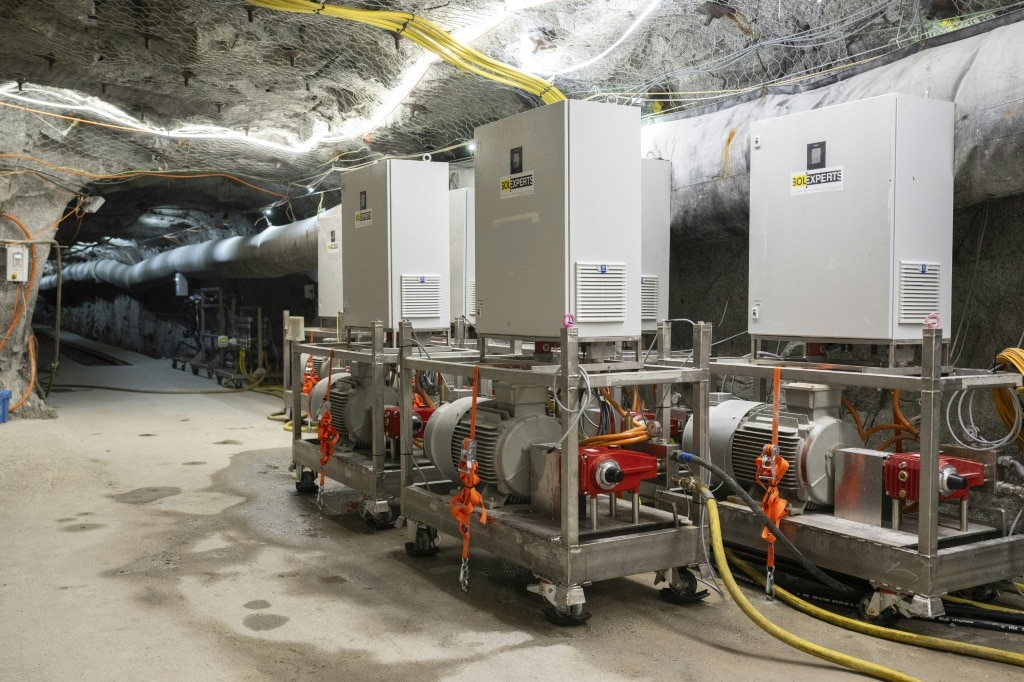
For the second iteration of the experiment, dubbed Fault Activation and Earthquake Rupture (FEAR-2), dozens of researchers from across European institutions spent four days in late April executing a carefully planned procedure: they pumped 750 cubic meters of water into pre-drilled boreholes targeting an existing geological fault, with the goal of prompting a magnitude 1 earthquake. Unlike common misconceptions, the team did not create a new fault; instead, the water injection only lubricated existing fractures to encourage natural movement. For safety, no personnel remained in the tunnel during the active phase of the experiment, with all operations remotely controlled from ETH Zurich’s main laboratory 100 kilometers to the north.
During the experiment, the research team experienced a brief moment of disruption when a sudden power cut hit the underground tunnel, forcing scientists in Zurich to scramble to resolve the issue. The glitch was resolved quickly, and water pumping resumed within minutes. When the trial concluded, the results exceeded many expectations: the team had successfully induced around 8,000 distinct seismic events along the target fault, as well as unexpected activity along secondary faults running perpendicular to the main fracture. Event magnitudes ranged from -5 to -0.14, falling just short of the team’s 1.0 magnitude target, a outcome Giardini called a resounding success.
Never before has a controlled seismic experiment been conducted at this scale and depth, Giardini explained. Even the smaller events generated by the trial offered unprecedented data that no previous laboratory study has been able to collect. Even the smallest measured events hold valuable insight: Giardini noted that the largest induced quake, at magnitude -0.14, would generate a 1.5 G acceleration strong enough to lift a person standing near the fault off the ground into the air. Crucially, no seismic activity was detected at the surface, and Giardini emphasized that the trial added only one percent additional seismic risk to the region, making it completely safe for local communities.
The groundbreaking work carries major implications for global industrial safety. Researchers note that unplanned induced seismicity has caused major damage around the world in recent decades, from large quakes linked to fracking wastewater disposal in Texas to the 5.4 magnitude 2017 Pohang earthquake in South Korea, which was triggered by unregulated water injection at an experimental geothermal power plant that damaged thousands of buildings. Giardini argues that by mastering the mechanics of controlled fault movement, scientists can develop better safety guidelines for all kinds of underground activity, from mining to geothermal energy development. The team plans to build on the current findings and run a second trial in June, adjusting injection parameters to hit their target magnitude 1 goal and collect even more detailed data on fault rupture dynamics. As Giardini puts it, the core goal of the research is not to create earthquakes, but to learn how to avoid dangerous accidental quakes: “If we master how to produce quakes of a certain size, then we know how not to produce them. We need to learn how to do underground activity more safely.”