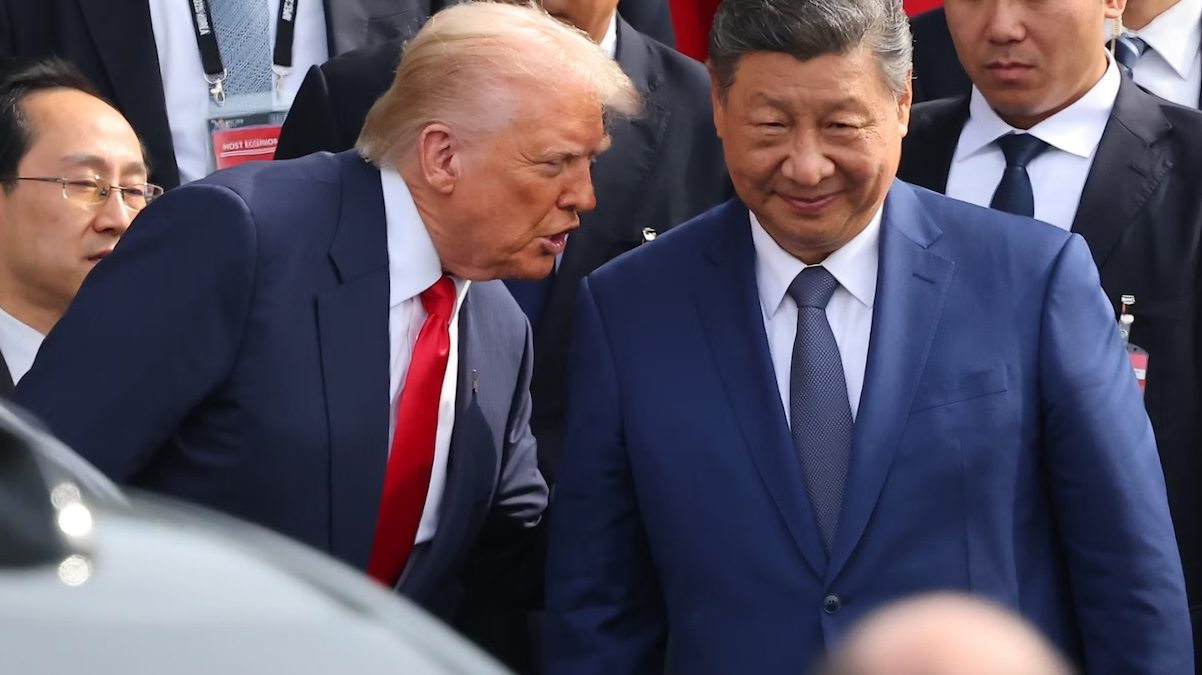
As U.S. President Donald Trump prepares to touch down in Beijing this week for high-stakes talks with Chinese President Xi Jinping, the choreographed opening moments of the summit are already predictable: firm, photographed handshakes, sweeping rhetorical claims, carefully staged symbolic gestures, and mutual declarations of unlocking new “historic” economic cooperation. But behind this carefully curated diplomatic spectacle lies a far more consequential shift reshaping the geopolitical future of the Indo-Pacific.
Donald Trump’s second term in office has not delivered a cohesive new U.S. doctrine for the Indo-Pacific. Instead, it has amplified longstanding American strategic anxieties into a louder, purely transactional approach that departs sharply from the frameworks built by his two immediate predecessors. For more than a decade, successive U.S. administrations have framed the Indo-Pacific as the global center of geopolitical gravity. Barack Obama’s “pivot to Asia” was designed to reassure regional allies that Washington recognized the region’s growing strategic weight. Joe Biden built on that foundation, expanding the framework through minilateral security pacts, technology alliances, and targeted diplomatic engagement crafted to balance China’s rise without triggering open conflict.
Trump’s second term marks a clear break from this trajectory. While the current administration has retained most of Washington’s hard-line rhetoric toward Beijing, it has abandoned the broader diplomatic and institutional architecture that once sustained U.S. credibility across the region. Instead, the Trump 2.0 approach relies heavily on economic nationalism, repeated tariff threats, and demands for increased defense burden-sharing from allies already navigating mounting geopolitical and financial volatility. Despite the administration’s claims of strategic renewal, this strategy largely repackages long-running U.S. anxieties about China into a more confrontational doctrine centered on trade escalation, economic coercion, and increasingly inflammatory rhetoric around global great-power competition.
This shift has left regional governments viewing Washington through an increasingly transactional lens. U.S. allies and partners face repeated calls to decouple their supply chains from China, even as they confront new American tariffs, industrial policy disputes, and growing uncertainty about the durability of long-term U.S. commitments to the region.
This ambiguity matters deeply, because most middle powers in Asia have no interest in being forced to choose between Washington and Beijing. The vast majority of regional governments seek to retain strategic flexibility, diversified trade relationships, and stable security arrangements that avoid dividing the region into rigid, opposing blocs. Vietnam offers a clear illustration of this common regional dilemma. Over the past decade, Hanoi emerged as one of the biggest beneficiaries of global supply chain diversification, as manufacturers shifted production out of China amid escalating U.S.-China tensions. American firms were major drivers of this shift. Yet today, Washington increasingly frames Vietnam’s export growth through a narrative of “overcapacity” and industrial imbalance, even though most of Vietnam’s manufacturing sector is powered by multinational investment, not state-directed dumping. This contradiction has not been lost on regional capitals, nor has the growing gap between Washington’s military posture and its diplomatic messaging.
The U.S. continues to carry out freedom of navigation operations in the South China Sea, deepen defense ties with regional allies, and strengthen deterrence frameworks around Taiwan. But military posturing alone does not add up to a cohesive regional strategy. Diplomatic engagement, economic integration, and institutional trust remain equally critical pillars of influence in Asia. That power vacuum is an opening Beijing has been quick to exploit. China’s leadership understands that regional influence today depends not just on naval power, but on infrastructure financing, deep trade relationships, development assistance, and increasingly, environmental diplomacy and ocean governance.
Beijing’s bid to host the secretariat for the new UN High Seas Treaty is a perfect example of this broader strategy. China has positioned itself as a responsible steward of the global maritime commons, pledging financial support for marine conservation projects while expanding its diplomatic footprint across developing coastal states. To be sure, many regional governments remain deeply cautious of China’s strategic intentions, particularly in the South China Sea, where gray zone tactics, maritime coercion, and unresolved territorial disputes continue to erode trust. But Beijing does not need to be fully consistent in its own policies to displace American influence; it only needs to capitalize on growing perceptions of inconsistency in U.S. policy. Trump’s return to the White House has only amplified these perceptions. The administration’s focus on tariffs and economic confrontation risks undermining the very partnerships Washington needs to sustain long-term strategic competition with China.
Regional leaders hear constant demands to align with Washington against Beijing, even as they watch the U.S. withdraw from many of the multilateral trade frameworks and regional agreements that once anchored American economic leadership in Asia. At the same time, Xi Jinping enters the upcoming summit with key advantages that extend far beyond diplomatic positioning. While China’s economy is experiencing slower growth, Beijing retains enormous leverage across regional supply chains, manufacturing networks, and infrastructure financing. It can restrict exports of critical rare earth minerals, which are essential for defense systems, electric vehicles, and a wide range of everyday modern products. It continues to invest heavily in advanced technologies, maritime capabilities, and strategic industries that will define future great-power competition.
Xi has projected consistent policy continuity in Asia, anchored by long-term planning and institutional discipline – qualities that many regional governments value greatly, even when they remain wary of Beijing’s long-term ambitions. For instance, the Belt and Road Initiative, for all the criticism it has drawn, projects permanence through ports, railways, energy projects, and long-term financing commitments that unfold over decades. Chinese diplomacy also prioritizes patience and gradualism. Even when Beijing acts assertively in the South China Sea or the Taiwan Strait, it typically frames those actions within a broader narrative of historical continuity and national rejuvenation. This consistency holds unique weight in Asia, where political stability and policy predictability are often valued as much as ideological alignment. While many regional governments still do not fully trust Beijing, a growing number are questioning whether U.S. policy can remain durable beyond U.S. electoral cycles and the shifting priorities of individual political leaders.
Against this backdrop, Trump’s Beijing visit carries significance that stretches far beyond bilateral U.S.-China relations. The summit will serve as a critical test of whether Washington can still articulate a broad, cohesive Indo-Pacific vision that goes beyond tariffs, confrontation, and occasional displays of military strength. It will also reveal whether the U.S. still understands that regional influence depends not just on containing China, but on offering regional partners a credible, stable, and economically attractive alternative to Beijing’s model. The core risk for Washington is not that Asia will suddenly align fully with China. It is that the region will gradually adapt to a new order where U.S. policy appears unpredictable, excessively transactional, and increasingly disconnected from the long-term economic and political realities shaping the Indo-Pacific. This kind of strategic drift would benefit Beijing far more than any joint summit communique or carefully staged diplomatic performance.
Trump will arrive in Beijing seeking to project American strength. But most regional observers will be watching for a far more critical marker: whether the U.S. still possesses the strategic patience and political coherence required to sustain leadership in the Indo-Pacific. Right now, the answer to that question remains deeply uncertain. This analysis is contributed by James Borton, editor-in-chief of the South China Sea NewsWire, co-author of the recently released SCSNW Indo-Pacific Report, with contributions from managing editor David Hessen.