作者: admin

  • UEFA head Čeferin criticized for allegedly saying expanded World Cup creates uninteresting matches

    UEFA head Čeferin criticized for allegedly saying expanded World Cup creates uninteresting matches

    A cross-regional backlash has erupted against UEFA President Aleksander Čeferin following reported comments dismissing matches involving lower-ranked teams at the newly expanded 48-team FIFA World Cup as “completely uninteresting”, drawing joint condemnation from governing bodies across Africa, Asia and the Caribbean.

    The criticism, organized and released by South Africa’s national soccer federation, brings together six associations — Cape Verde, Congo, Curaçao, Haiti, Jordan and Uzbekistan — in a show of solidarity with 10 other African federations including Algeria, Egypt, Ghana, Morocco, Senegal and Tunisia. The joint statement pushes back against Čeferin’s reported remarks, which were first published by Slovenian outlets Zurnal 24 and Dosi following a conference in Ljubljana a week before the condemnation.

    While Čeferin also reportedly acknowledged that the 2026 format expansion opens the door for smaller nations to experience the thrill of the world’s biggest soccer tournament, his take on the quality of matches involving debutants and long-absent sides struck a nerve across global soccer communities. For many of the nations signing onto the statement, the current 48-team tournament marks a historic milestone: Cape Verde, Curaçao, Jordan and Uzbekistan are making their first-ever World Cup appearances, while Congo and Haiti are returning to the global stage for the first time since 1974.

    “Football does not belong to a select group of nations. Its strength comes from its universality,” the statement reads. It goes on to emphasize that for emerging soccer nations, qualifying for the World Cup is far more than a simple sporting entry: it is a generational moment that can inspire young players, accelerate grassroots and professional soccer development across the region, and leave lifelong, meaningful memories for entire populations.

    The statement adds: “To suggest that these matches are somehow less important is deeply disappointing and fails to recognize the efforts, sacrifices and aspirations of players, coaches, clubs, football leaders and supporters across the world. For Cape Verde, Curaçao, Jordan and Uzbekistan, qualification for the FIFA World Cup represents a historic achievement and the realization of a dream shared by generations. For nations such as Congo and Haiti, returning to football’s biggest stage after a long absence carries a special meaning for millions of supporters who have waited years, and in some cases decades, for this moment.”

    Notably, the joint statement does not directly name Čeferin or explicitly quote his reported comments. As of Sunday, neither UEFA nor the signatory federations have issued immediate responses to requests for additional comment on the controversy. The condemnation comes the same day that Curaçao, one of the debutant signatory nations, played its first ever World Cup group stage match against Germany, falling 7-1 after notching the underdog side’s first-ever World Cup goal.

  • Thousands of Palestinians buried under rubble in Gaza ‘may never be identified’, says Red Cross

    Thousands of Palestinians buried under rubble in Gaza ‘may never be identified’, says Red Cross

    Two years into the ongoing Israeli military campaign in the Gaza Strip, a grave new humanitarian crisis is emerging, with the International Committee of the Red Cross (ICRC) issuing a stark warning that thousands of Palestinians buried under collapsed infrastructure may never receive formal identification, leaving grieving families without closure. The warning, first reported by The Guardian on Sunday, comes against a backdrop of cripplingly slow body recovery efforts and a catastrophic scale of destruction that has left the enclave unrecognizable.

    Pat Griffiths, ICRC spokesperson based in Jerusalem, explained to the outlet that the mounting delay in retrieving human remains directly amplifies the risk of permanent identification failure. “The longer it takes for human remains to be recovered, the more difficult it can be to identify them,” Griffiths said. “The longer the deceased lie beneath the rubble, the more likely they will be in advanced stages of decomposition – even skeletonised – when eventually recovered. Forensic experts lose access to circumstantial evidence that can be used to corroborate their identity.”

    The ICRC emphasized that critical identifying markers — including intact fingerprints, dental records, and personal belongings that can link remains to missing people — degrade rapidly as time passes. Gaza’s environmental conditions only worsen this challenge: high humidity in the coastal enclave and scavenging animal activity steadily erode what little forensic evidence remains, making the work of identification teams increasingly futile.

    Official UN data underscores the unprecedented scale of destruction Gaza has suffered after two years of conflict. Some 61.5 million tonnes of debris now cover the territory, with 75% of all Gaza’s residential and public buildings reduced to rubble. The United Nations Environment Programme has confirmed that this volume of wreckage is 20 times greater than the total debris generated by all conflicts in Gaza combined between 2008 and the start of the current campaign.

    Local Gaza residents add another layer of concern: they fear Israeli military bulldozers operating in areas under Israeli control are moving and disturbing remains still trapped under rubble, scattering evidence and making it even harder for families to locate their missing loved ones.

    Official casualty figures put the total number of people killed in Israeli attacks across the besieged enclave at nearly 73,000, a toll that has continued to climb even after a nominal ceasefire took effect in December. Back in February, the Palestinian Civil Defence reported that roughly 8,000 bodies remained trapped under rubble across Gaza, even after months of exhaustive recovery work by local teams. An additional 3,000 people are still listed as missing, with no clarity on whether they are alive, dead, or being held in Israeli detention.

    Since the ceasefire was implemented, recovery operations have been crippled by systemic shortages of essential heavy machinery. Rescue teams have been forced to rely on basic hand tools — shovels, pickaxes, wheelbarrows — and even bare hands to sift through millions of tonnes of wreckage, as repeated requests to Israel to allow excavators and other heavy recovery equipment into Gaza have been denied.

    Griffiths stressed that unimpeded access and proper resources are non-negotiable for the recovery effort to succeed. “Search and recovery teams need access to all sites where human remains are thought to be located,” she said. “We know that much of this machinery and equipment remains almost impossible to bring into Gaza right now. And it remains our call, and part of our ongoing direct dialogue with the relevant authorities, to allow the entry of these items and equipment into Gaza.”

    For thousands of grieving Palestinian families, the growing risk of permanent unidentified burials adds another layer of unending trauma, as they face the prospect of never being able to properly bury and mourn their loved ones lost to the conflict.

  • 11 skydivers and pilot killed in plane crash

    11 skydivers and pilot killed in plane crash

    A devastating aviation incident in rural Missouri has claimed the lives of 11 skydivers and one aircraft pilot, local emergency officials confirmed this week. The fixed-wing plane, which was leased out to a local skydiving operation, departed from Butler Memorial Airport at approximately 11:20 a.m. local time on Sunday, according to a spokesperson for Bates County Emergency Management.

    Witnesses and initial on-site assessments show the aircraft failed to climb to a safe altitude shortly after takeoff. It quickly banked hard to the left before plummeting into terrain roughly 200 yards from the airport runway, the spokesperson told the BBC in an initial media briefing. Tragically, there were no survivors among the 12 people on board the aircraft.

    The U.S. Federal Aviation Administration (FAA) has identified the downed plane as a Pacific Aerospace P750, a utility aircraft commonly used for recreational skydiving operations. The agency also confirmed that no active air traffic control services were being provided to the airport at the time of the crash, which occurred around 50 miles south of the Kansas City metro area.

    Early local media reports noted that first responders initially conducted a sweep of the surrounding area to check whether any skydivers had managed to exit the plane before the crash, though officials have since confirmed all casualties remained on board. The National Transportation Safety Board (NTSB), the U.S. federal body responsible for probing civil aviation accidents, has taken lead of the ongoing investigation into the cause of the crash. The BBC has reached out to the NTSB for additional comment on preliminary findings as the investigation progresses.

  • Canadian Prime Minister Mark Carney says US AI restrictions underscore risks of dependence

    Canadian Prime Minister Mark Carney says US AI restrictions underscore risks of dependence

    WESTPORT, Ireland — On the eve of the G7 leaders’ gathering in Evian-les-Bains, France, Canadian Prime Minister Mark Carney has issued a stark warning about the systemic risks of overreliance on a small cohort of American artificial intelligence developers, following new U.S. export restrictions that forced AI firm Anthropic to pull its most advanced models offline.

    The controversy began Friday when San Francisco-based Anthropic confirmed it had taken its two cutting-edge AI models, Fable 5 and Mythos 5, offline to comply with a Trump administration directive barring access to the systems by foreign nationals. This move marks the most sweeping restriction the U.S. government has imposed to date on access to state-of-the-art AI technology.

    Anthropic had only just publicly released a limited version of Fable 5 earlier that same week. The more capable Mythos 5 model, first announced by the company on April 7, had already been restricted to a small pool of pre-vetted customers over serious cybersecurity concerns: Anthropic itself has acknowledged Mythos 5 is so “strikingly capable” that it can outperform experienced human cybersecurity experts at identifying and exploiting software vulnerabilities, making unregulated access a major global security risk.

    Speaking to reporters during a visit to Ireland on Sunday, Carney framed the shutdown as a cautionary tale for nations around the world. “The situation we’re in collectively right now with Mythos and Fable is exactly the kind of disruption that can happen when you overrely on a narrow set of providers from a single country,” Carney said. He emphasized no party involved acted improperly in this instance, but argued that global powers would be making a critical mistake if they failed to learn from the event: “We will have done something wrong if we just accept this, don’t take the lesson, don’t build out and diversify our own AI ecosystems.”

    “It is never a good idea to have only one option,” Carney repeated, doubling down on his call for global diversification in AI development and supply chains.

    The Prime Minister noted that AI policy will top the agenda for Monday night’s working sessions at the G7 summit, adding that he held a 45-minute bilateral discussion on AI governance and strategy with French President Emmanuel Macron Friday evening. Carney cautioned against expecting sweeping, final agreements from this gathering, noting the complexity of AI regulation and cross-border coordination means there will be no “mission accomplished” moment after the summit.

    Carney connected the AI export restrictions to Canada’s broader long-term strategy to diversify its trade and technology partnerships, a policy push he has championed amid ongoing trade tensions with the U.S. More than 70% of Canada’s total exports currently flow to the United States, and Carney has set an ambitious national goal to double the volume of Canadian exports to non-U.S. markets over the next 10 years. The Trump administration’s ongoing trade war has already created significant uncertainty that has cooled cross-border investment in Canada, he added.

    On another key bilateral topic, Carney confirmed he does not have a formal one-on-one meeting scheduled with U.S. President Donald Trump at the G7, even as the United States-Mexico-Canada Agreement (USMCA) approaches its mandatory renewal. Instead, negotiations at this stage will be led by senior trade officials: Canada’s Minister responsible for U.S. Trade Dominic LeBlanc and chief negotiator Janice Charette will meet with U.S. Trade Ambassador Jamieson Greer and U.S. Treasury Secretary Scott Bessent on the sidelines of the Evian summit. “The right way to do it at this stage will be between the principal negotiators, which is going to happen in Evian,” Carney explained.

    Sunday’s appearance in Ireland came after Carney visited his family’s ancestral village of Aghagower in County Mayo earlier in the day. Both of his grandparents, Robert Carney and Nora Moran, were born in the town before immigrating to Canada in the 1920s. Local resident Owen Morgan, who brought his 17-month-old son Malachy — dressed in a Montreal Canadiens hockey jersey — to meet the Prime Minister, said locals in County Mayo take great pride in Carney’s career. “People are very impressed,” Morgan said. “He’s very much standing up for Canadians and I think that’s very much admired.”

  • Deepti Sharma rips through Pakistan as India opens its Women’s T20 World Cup quest with big win

    Deepti Sharma rips through Pakistan as India opens its Women’s T20 World Cup quest with big win

    The 2024 Women’s Twenty20 World Cup opened with two dramatic days of group-stage action in Birmingham, England, that delivered record-breaking performances and historic upsets at the sold-out Edgbaston Stadium on Sunday.

    In the headline matchup between long-time rivals India and Pakistan, India claimed a dominant 64-run victory, kicking off its long-running quest for a first-ever Women’s T20 World Cup title in style. Off-spinner Deepti Sharma produced one of the most devastating closing spells in tournament history, spinning through Pakistan’s final three wickets in just five deliveries to seal the win, finishing with career-defining figures of 5 wickets for just 10 runs. The result extended India’s unbeaten streak against Pakistan in T20 World Cup competition.

    India’s total of 170 for 6 came from a late-order turnaround that shocked even their own supporters. Opening batter Smriti Mandhana survived two dropped catches early in her innings — including one on 27 and another on 55, where a top-edged hit ricocheted off her helmet and forced a mandatory concussion check — before storming to a 38-ball 68. After Mandhana’s departure triggered a minor batting collapse that left India at 132 for 5 heading into the 19th over, young wicketkeeper-batter Richa Ghosh exploded into action, blasting 34 runs off just 17 deliveries. Ghosh and Sharma piled on 23 runs against World Cup debutant Tasmia Rubab in the 19th over, before Pakistan captain Fatima Sana conceded 15 runs in the final over, pushing India to its highest ever total against Pakistan in T20 World Cup history.

    Pakistan got off to a flying start in its chase, posting its highest ever powerplay score against India at 52 for 1, with opener Muneeba Ali surviving two dropped catches off Shreyanka Patil. But India turned the tide by the 10th over, when Sharma produced a spectacular direct hit from backward point to run out Ali for 41, breaking Pakistan’s momentum. When Sana fell in the following over to leave Pakistan at 77 for 5, the chase collapsed entirely. Shree Charani supported Sharma’s match-winning spell with 3 wickets for 21 runs, helping bowl Pakistan out for just 106. The five-wicket haul pushed Sharma to become the leading wicket-taker in the history of women’s T20 international cricket, marking her second five-wicket haul in a major ICC tournament just seven months after her player-of-the-match performance in India’s ODI World Cup final win over South Africa.

    The sell-out crowd of 18,814 at Edgbaston set a new attendance record for a Women’s T20 World Cup group-stage match, underscoring the growing global popularity of women’s cricket.

    In the second match of the day on the same Edgbaston pitch, Bangladesh pulled off the highest successful run chase in their Women’s T20 World Cup history, defeating the Netherlands by six wickets with five balls to spare. Chasing a target of 140 set by the Netherlands’ 139 for 8, 20-year-old opener Juairiya Ferdous laid the perfect foundation for Bangladesh with a blistering 50 off 33 balls. Ferdous survived two reprieves — a controversial third-umpire overturned catch on 7 and a dropped catch on 18 — before hammering two sixes over midwicket to put Bangladesh well on track for victory.

    Dutch spinners Silver Siegers, Heather Siegers and Caroline de Lange slowed Bangladesh’s progress after Ferdous’ departure, with de Lange picking up two wickets for 27 runs. But an unbroken 56-run partnership between Sharmin Akhter and Shorna Akter closed out the chase, securing Bangladesh their fourth win in seven Women’s T20 World Cup campaigns. For the Netherlands, captain Babette de Leede top-scored with a 45-ball 50 before being run out in the 17th over while attempting a second run, while Bangladesh medium-pacers Marufa Akter and Ritu Moni led the bowling attack with two wickets for 31 and one wicket for 17 respectively.

    The tournament continues Tuesday with matches between New Zealand and Sri Lanka, followed by hosts England facing Ireland.

  • Armenia’s elections regulator confirms victory for PM’s party in poll closely watched by Russia

    Armenia’s elections regulator confirms victory for PM’s party in poll closely watched by Russia

    YEREVAN, Armenia — Armenia’s Central Electoral Commission has formally validated the results of the country’s June 7 general election, confirming that Prime Minister Nikol Pashinyan’s ruling Civil Contract Party secured a decisive victory in a poll widely framed as a defining vote on the nation’s geopolitical alignment and a major test of Russian influence in the South Caucasus. Final vote tallies show Civil Contract captured 49.7% of the popular vote, a result that grants the party an outright majority of 64 seats in the 101-seat National Assembly, clearing the way for Pashinyan to form a new government independent of coalition negotiations.

    This election unfolded against an unprecedented backdrop of geopolitical tension, as Pashinyan’s administration has openly pursued deeper economic and political integration with the European Union and the United States, breaking with Armenia’s decades-long close alignment with Moscow — a shift that Pashinyan’s pro-Russian opposition has centered its campaign against. The main opposition bloc, pro-Russian Strong Armenia, led by Russian-based billionaire Samvel Karapetyan, secured 29.2% of the vote for 29 assembly seats, while former President Robert Kocharyan’s Armenia Alliance took 12 seats. As commission officials met to finalize the results Sunday, Strong Armenia and allied opposition groups held a protest rally outside the commission headquarters, submitting a formal appeal to annul the vote over unsubstantiated claims of widespread electoral violations.

    The post-preliminary result period, which stretched from the June 8 preliminary announcement to the final Sunday confirmation, was designed to give all political parties time to file complaints over perceived irregularities. Leading up to election day, Armenian law enforcement issued six arrest warrants for Strong Armenia members on vote-buying charges, and Karapetyan himself remains under house arrest, accused of inciting the overthrow of Pashinyan’s government — a charge he denies, framing it as a politically motivated fabrication.

    International monitors from the Organization for Security and Co-operation in Europe (OSCE) concluded that the election offered Armenian voters a genuine competitive choice, but noted the contest was marred by highly confrontational, divisive political rhetoric and unequal access to campaign resources for competing parties. Crucially, monitors also explicitly labeled pre-election trade restrictions imposed by Moscow as “direct pressure” on the Armenian electorate.

    In the weeks before voting, Russia implemented sweeping import bans on a range of Armenian goods, including cut flowers, premium cognac, wine, eggplant, potatoes, dried fruit, and fish. Moscow has claimed the restrictions were rooted in agricultural safety violations, but European Commission President Ursula von der Leyen condemned the move as “economic coercion” that weaponized trade for political gain, announcing a €50 million ($58 million) EU support package for Armenia to offset economic losses from the bans.

    Geopolitical orientation dominated campaign discourse from start to finish. Casting his ballot on election day, Pashinyan reaffirmed his government’s commitment to Western integration, stating: “The European Union is our main partner in democratic reform implementation, and we will continue that path.” Last year, Armenia formally submitted its EU membership candidacy, a historic step that has drawn sharp pushback from the Kremlin. Russia, which maintains a permanent military base on Armenian territory, has repeatedly warned that a Western turn would carry severe political and economic consequences, with President Vladimir Putin drawing explicit parallels between Armenia’s current trajectory and Ukraine’s pre-2022 EU alignment bid.

    The growing rift between Yerevan and Moscow stems largely from the 2023 Azerbaijani recapture of the Nagorno-Karabakh region, a territory controlled by ethnic Armenian separatists backed by Yerevan for three decades. Pashinyan’s government has publicly accused Russian peacekeepers deployed to the region of failing to intervene to stop Azerbaijan’s military offensive, a criticism Moscow has rejected amid its own preoccupation with the ongoing war in Ukraine.

    Over the past two years, Pashinyan has steadily reduced Armenia’s reliance on Moscow: in 2023, Yerevan joined the International Criminal Court (which has issued an arrest warrant for Putin), and in 2024 it suspended its membership in the Russia-led Collective Security Treaty Organization, a post-Soviet military bloc. Earlier this year, Armenia hosted the European Political Community summit and its first standalone high-level summit with the EU in Yerevan, and in August 2025 U.S. President Donald Trump mediated a landmark peace deal between Pashinyan and Azerbaijani President Ilham Aliyev to end the decades-long Karabakh conflict, including provisions for a new transit corridor connecting Azerbaijan to its Nakhchivan exclave.

  • Germany surges to a 3-1 halftime lead as Curacao nets its 1st World Cup goal

    Germany surges to a 3-1 halftime lead as Curacao nets its 1st World Cup goal

    HOUSTON — In a thrilling opening 45 minutes of their 2026 FIFA World Cup group stage encounter Sunday, tournament giant Germany held a 3-1 lead over first-time qualifier Curacao, where the tiny Caribbean underdog not only earned a spot in history as the smallest nation ever to compete at the World Cup, but also bagged its first-ever tournament goal to hold the four-time world champions level deep into the first half.

    The game opened with a quick strike from Germany, as Felix Nmecha buried a one-time right-footed finish into the near post just inside the 18-yard box in the sixth minute. The attacking chance was set up neatly by a crafty assist from Florian Wirtz, putting the European side ahead 1-0 early on.

    But Curacao, a nation with a population of less than 160,000 competing in its first ever World Cup finals, refused to be overawed by the occasion. In the 21st minute, Livano Comenencia levelled the score, drilling a powerful left-footed shot through a crowd of defenders from the center of the penalty area. The landmark goal — the first ever for Curacao at the World Cup — sent the island’s traveling “Blue Wave” fan contingent into wild celebration inside the Houston stadium.

    While most of the sellout crowd leaned heavily in support of Germany, Curacao’s spirited group of supporters made their presence felt throughout the opening stanza, cheering their side on as they held firm against the tournament favorite.

    Germany reclaimed the lead in the 38th minute, after a well-executed set piece: Nathaniel Brown delivered an accurate corner kick into the box, where defender Nico Schlotterbeck rose above the Curacao defense to nod a header into the net, putting Germany back on top 2-1 heading toward halftime.

    Just before the break, in first-half stoppage time, Germany extended its advantage to 3-1 from the penalty spot. The spot kick was awarded after Riechedly Bazoer brought down Felix Nmecha inside the penalty area, and Kai Havertz stepped up to calmly slot the ball into the left corner of the net.

    For Germany, this World Cup run carries extra pressure and motivation. The side claimed the world title in 2014, but suffered shocking early eliminations in the 2018 Russia and 2022 Qatar tournaments, failing to advance past the group stage in both events. Now, the four-time champions are entering this tournament with a clear goal of redemption, looking to reestablish their status as one of the global game’s elite sides.

  • Disabled oil tanker received dozens of warnings before US opened fire, AP source says

    Disabled oil tanker received dozens of warnings before US opened fire, AP source says

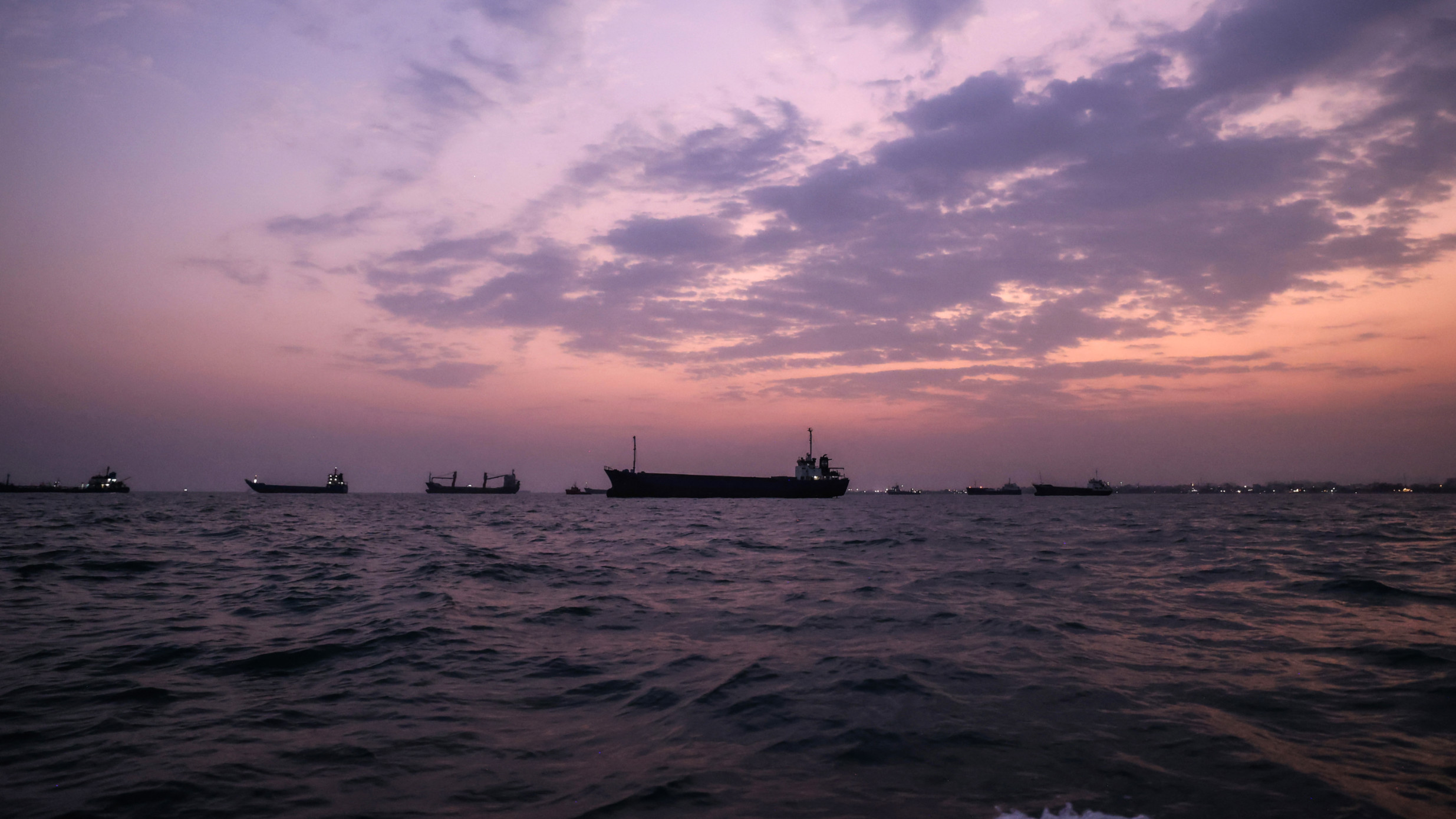
    A deadly confrontation in the Gulf of Oman has escalated tensions around U.S. sanctions enforcement against Iran, after American military forces disabled a tanker linked to Tehran’s illicit oil trade, leaving three Indian crew members dead and triggering a formal diplomatic protest from New Delhi.

    An anonymous U.S. official, speaking on condition of anonymity because they were not cleared to discuss the sensitive operation publicly, has provided new details about the hours-long standoff preceding the strike. According to the official, the Palau-flagged M/T Settebello — identified by Washington as part of Iran’s “shadow fleet” of vessels used to evade international oil sanctions and break the U.S. blockade on Iranian crude exports — ignored nearly 60 distinct verbal warnings from U.S. forces over the course of the standoff. Even after eight separate shows of force, including low-altitude flybys by military aircraft and the deployment of warning flares, the vessel’s crew refused to alter course or comply with orders. Two final, explicit warnings were issued before U.S. forces opened fire on Wednesday.

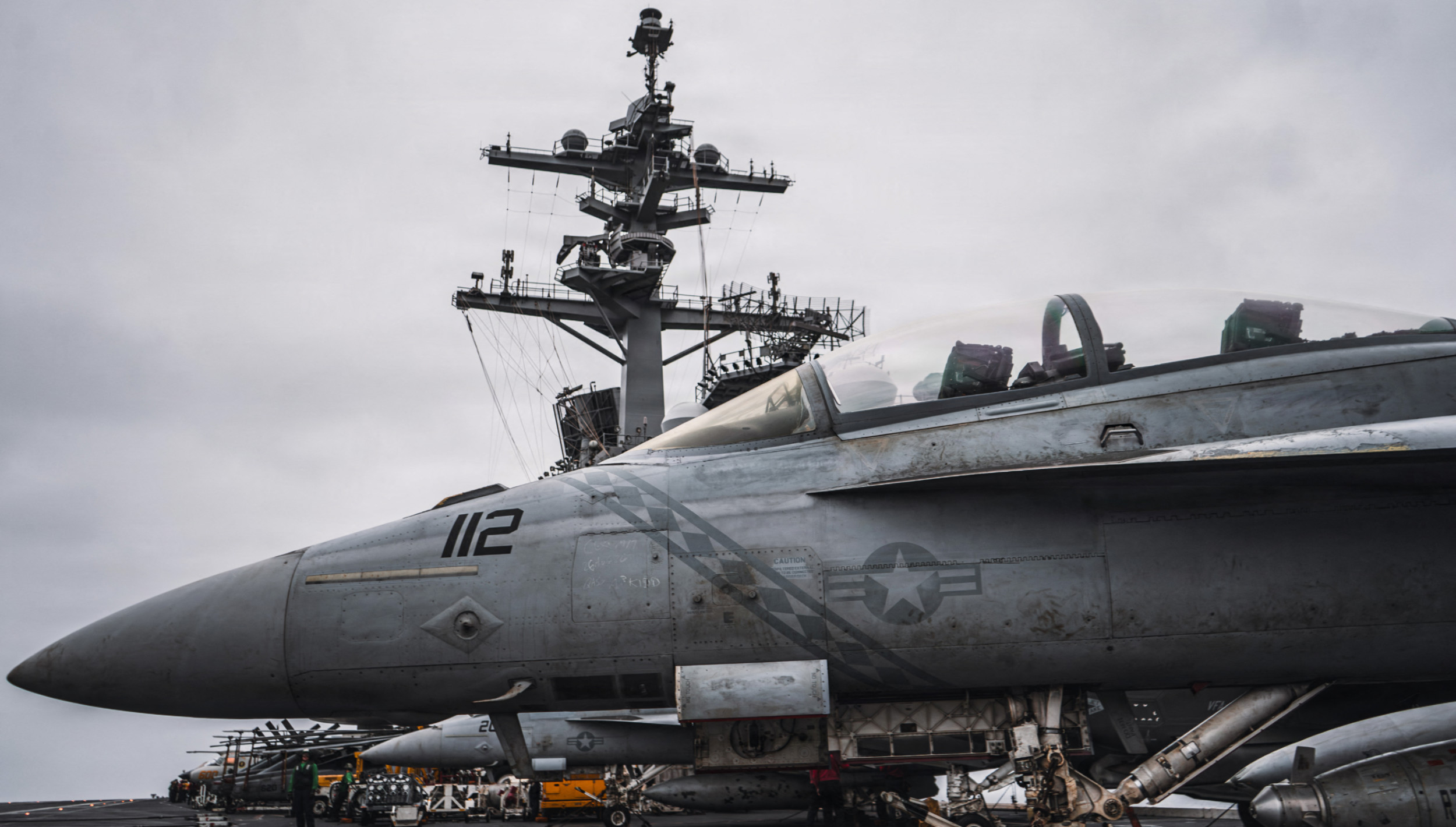
    Earlier official confirmations from the U.S. military note that a U.S. aircraft launched precision munitions directly into the tanker’s engine room to disable the vessel. Indian government officials have verified that three Indian nationals working aboard the Settebello were killed in the strike. The U.S. official added that American forces had maintained contact with the tanker repeatedly across the two weeks leading up to the incident, as the vessel made multiple attempts to breach the U.S. blockade.

    In an official statement released after the operation, U.S. Central Command clarified that the tanker’s crew was given a full 15-minute window to evacuate the engine room before the strike was carried out. “After being in place for more than 60 days, it should be clear by now that U.S. forces will strictly enforce the blockade,” the statement added.

    The incident has already sparked immediate diplomatic tension between Washington and New Delhi. India’s Ministry of Foreign Affairs confirmed it has lodged a “strong protest” with U.S. authorities over the deaths of its citizens. On Saturday, the U.S. State Department released a readout of a call between Secretary of State Marco Rubio and India’s top foreign affairs official, in which Rubio emphasized that “all commercial vessels should immediately comply with orders from U.S. forces as they seek to uphold peace and security in the Strait.”

  • Justin Trudeau skipped Canada World Cup opener because girlfriend Katy Perry performed at US game

    Justin Trudeau skipped Canada World Cup opener because girlfriend Katy Perry performed at US game

    In a surprising personal turn amid the 2026 co-hosted FIFA World Cup, former Canadian Prime Minister Justin Trudeau opted to attend the United States’ opening tournament match against Paraguay this past Friday instead of cheering on his own country’s squad in their opening game held in Toronto. The high-profile appearance drew immediate public attention, as Canada shares hosting duties for this year’s World Cup alongside the United States and Mexico, making the Toronto match a landmark moment for Canadian soccer.

    Trudeau, who served as Canada’s head of government from 2015 to 2025, quickly clarified his decision on social media platform X over the weekend. He explained that his attendance at the match at Inglewood, California’s SoFi Stadium stemmed from a commitment to his girlfriend, global pop star Katy Perry, who headlined the pre-game performance ahead of the U.S. versus Paraguay fixture.

    “Sometimes supportive boyfriend duties call. But you know who I’m rooting for to take the Cup,” Trudeau wrote in his social media post, confirming that despite his presence at the U.S. match, his championship support remains with his home nation’s team.

    The scheduling of the two opening matches created an unavoidable conflict for Trudeau: Canada’s 3 p.m. EDT opening draw against Bosnia-Herzegovina finished just hours before the U.S. match kicked off six hours later in California. Canada left their opening match with a 1-1 tie, while the host United States secured a solid 4-1 victory over Paraguay in their opening outing. Full coverage of the 2026 FIFA World Cup is available via The Associated Press’ dedicated coverage hub.

  • UK and Japan agree £18bn investment deal

    UK and Japan agree £18bn investment deal

    In a high-profile diplomatic and economic meeting held in London on Sunday, UK Prime Minister Keir Starmer and his Japanese counterpart Sanae Takaichi have formalized a landmark multi-billion-pound bilateral investment pact that London officials frame as opening a new chapter of deepened cooperation between the two island nations.

    According to announcements from Downing Street, the agreement brings a total of up to £18 billion in planned Japanese investment across key UK sectors. Japanese private firms have committed more than £9 billion to UK infrastructure, real estate and financial services projects over the next five years, with an additional £9 billion earmarked for British offshore wind energy development. If fully realized, Downing Street projects the investments will generate tens of thousands of new jobs across the country.

    Alongside the core investment package, the two leaders confirmed ongoing collaboration on two major high-tech projects. The pair reaffirmed their shared commitment to the GCAP global combat air programme, a next-generation fighter jet initiative developed jointly by the UK, Japan and Italy. Additionally, a new technical partnership was announced: British engineering giant Rolls-Royce will join forces with Japan’s Atomic Energy Agency to advance cutting-edge next-generation nuclear technology, while a broader R&D agreement will connect UK software and research expertise with Japanese manufacturing capabilities to drive cross-border innovation.

    Major Japanese firms participating in the infrastructure and real estate commitments include Mitsubishi Estate, Mitsui Fudosan and Nomura Real Estate, according to Downing Street. After holding talks with Japanese business leaders alongside Takaichi, Starmer called the negotiations “very productive”, and said he was pleased to lock in the expanded bilateral partnership. For his part, Takaichi emphasized through a translator that the UK remains “an extremely important partner” for Japan in Europe and globally.

    The deal comes at a critical moment for the UK economy, which is already facing significant headwinds even before accounting for new geopolitical risks. While the UK registered 0.6% GDP growth in the first quarter of 2025, analysts broadly predict sluggish growth in the coming quarters. Last month, the International Monetary Fund warned that the ongoing conflict between the US-Israel alliance and Iran will hit the UK harder than any other advanced global economy. The Bank of England has also cautioned that the conflict could push UK inflation back up to as high as 6% in a worst-case scenario, putting renewed pressure on households and policymakers.

    A key question hanging over the investment package remains unresolved: Downing Street has not clarified what share of the announced £18 billion represents new, previously unannounced commitments versus existing investment plans that were already public. Political opposition has also weighed in on the deal. Andrew Griffith, shadow business and trade secretary for the opposition Conservative Party, said his party welcomes any agreement that brings new investment to the UK, but added that the current Labour government’s “tax hikes and employer red tape are doing huge damage, destroying jobs and putting more and more people onto welfare”.

    While Downing Street frames the agreement as a long-term boost to British jobs and sustainable economic growth, most economists continue to expect near-term economic strain for the UK regardless of the new investment, which will take years to roll out fully.