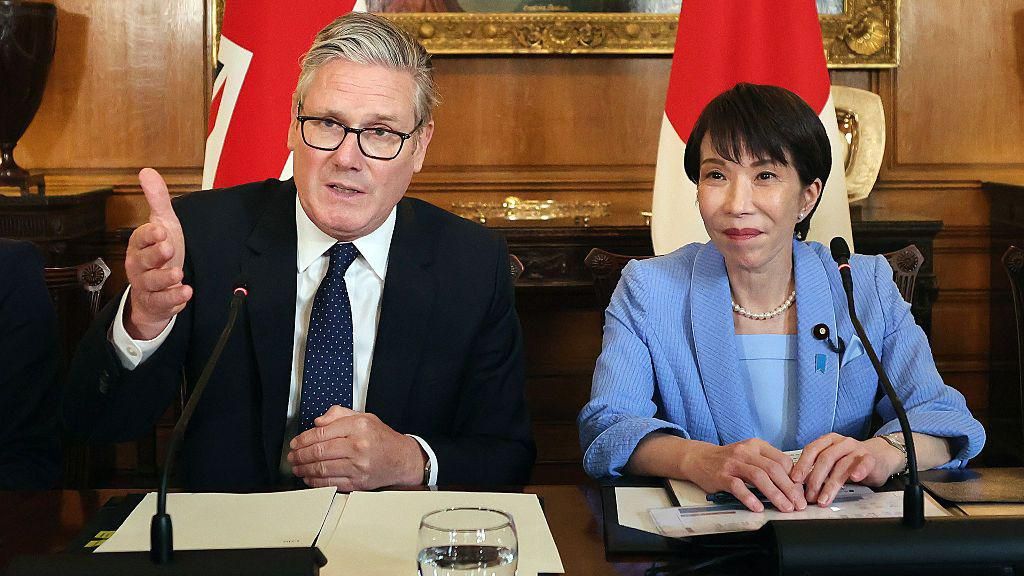
In a high-profile diplomatic and economic meeting held in London on Sunday, UK Prime Minister Keir Starmer and his Japanese counterpart Sanae Takaichi have formalized a landmark multi-billion-pound bilateral investment pact that London officials frame as opening a new chapter of deepened cooperation between the two island nations.
According to announcements from Downing Street, the agreement brings a total of up to £18 billion in planned Japanese investment across key UK sectors. Japanese private firms have committed more than £9 billion to UK infrastructure, real estate and financial services projects over the next five years, with an additional £9 billion earmarked for British offshore wind energy development. If fully realized, Downing Street projects the investments will generate tens of thousands of new jobs across the country.
Alongside the core investment package, the two leaders confirmed ongoing collaboration on two major high-tech projects. The pair reaffirmed their shared commitment to the GCAP global combat air programme, a next-generation fighter jet initiative developed jointly by the UK, Japan and Italy. Additionally, a new technical partnership was announced: British engineering giant Rolls-Royce will join forces with Japan’s Atomic Energy Agency to advance cutting-edge next-generation nuclear technology, while a broader R&D agreement will connect UK software and research expertise with Japanese manufacturing capabilities to drive cross-border innovation.
Major Japanese firms participating in the infrastructure and real estate commitments include Mitsubishi Estate, Mitsui Fudosan and Nomura Real Estate, according to Downing Street. After holding talks with Japanese business leaders alongside Takaichi, Starmer called the negotiations “very productive”, and said he was pleased to lock in the expanded bilateral partnership. For his part, Takaichi emphasized through a translator that the UK remains “an extremely important partner” for Japan in Europe and globally.
The deal comes at a critical moment for the UK economy, which is already facing significant headwinds even before accounting for new geopolitical risks. While the UK registered 0.6% GDP growth in the first quarter of 2025, analysts broadly predict sluggish growth in the coming quarters. Last month, the International Monetary Fund warned that the ongoing conflict between the US-Israel alliance and Iran will hit the UK harder than any other advanced global economy. The Bank of England has also cautioned that the conflict could push UK inflation back up to as high as 6% in a worst-case scenario, putting renewed pressure on households and policymakers.
A key question hanging over the investment package remains unresolved: Downing Street has not clarified what share of the announced £18 billion represents new, previously unannounced commitments versus existing investment plans that were already public. Political opposition has also weighed in on the deal. Andrew Griffith, shadow business and trade secretary for the opposition Conservative Party, said his party welcomes any agreement that brings new investment to the UK, but added that the current Labour government’s “tax hikes and employer red tape are doing huge damage, destroying jobs and putting more and more people onto welfare”.
While Downing Street frames the agreement as a long-term boost to British jobs and sustainable economic growth, most economists continue to expect near-term economic strain for the UK regardless of the new investment, which will take years to roll out fully.