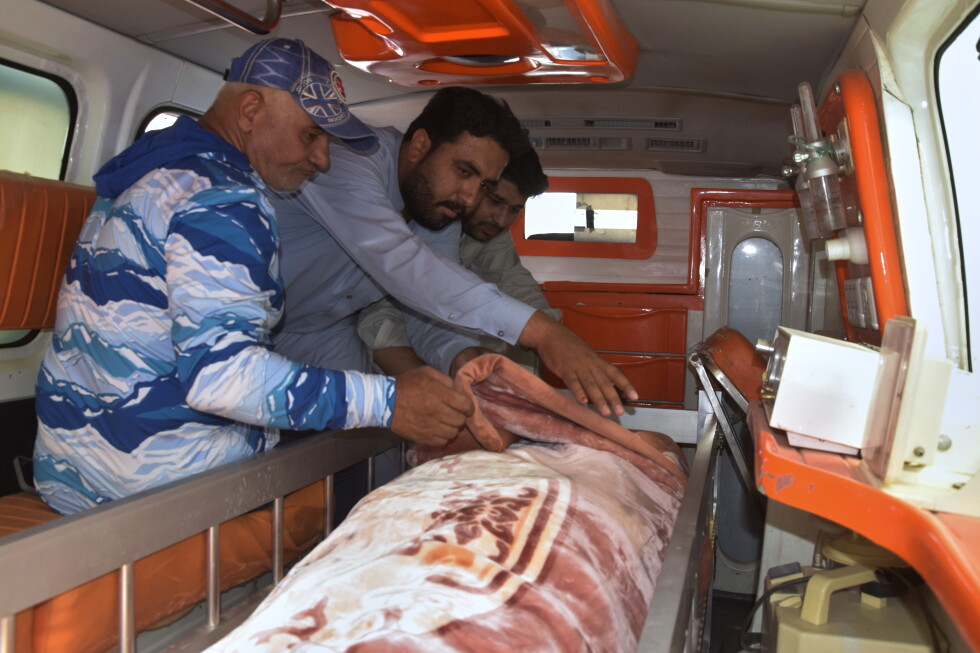
A brazen militant ambush targeting a district judicial official in Pakistan’s restive southwestern province of Balochistan has left two people dead, triggering swift pledges from the country’s top military leadership to wipe out all terrorist infrastructure operating across the nation. The attack unfolded Thursday on the outskirts of Mastung district, where separatist insurgent groups have sharply ramped up violent operations targeting both security personnel and civilian authorities in recent months. According to local Mastung police chief Abdul Rauf, District Judge Abdul Hakim Kakar was en route from Quetta, the capital of Balochistan, to Mastung to preside over scheduled court hearings when the ambush was carried out. Both Kakar and his assigned security guard were killed at the scene, with the assailants fleeing before security reinforcements arrived. As of Friday morning, no militant organization has issued a public claim of responsibility for the attack. Counterterrorism analysts and local law enforcement however point to long-active Baloch separatist insurgent networks as the prime suspects, particularly the Baloch Liberation Army (BLA), an outlawed faction that has led a years-long insurgency against the Pakistani government. The BLA was officially designated a global terrorist organization by the United States in 2019, and has carried out dozens of high-profile attacks targeting government officials, security personnel, and civilian infrastructure across Balochistan in recent years. The targeted killing of Judge Kakar drew immediate and widespread condemnation from Pakistan’s top civilian leadership. President Asif Ali Zardari, Prime Minister Shehbaz Sharif, and Balochistan Chief Minister Sarfraz Bugti all issued statements denouncing the attack, with Bugti ordering law enforcement and counterterrorism units to launch an urgent manhunt to track down and apprehend all those involved in planning and executing the ambush. The attack comes against a backdrop of intensifying clashes between Pakistani security forces and Baloch insurgent groups across the province. In recent weeks alone, security operations targeting insurgent cells have killed more than 100 alleged Baloch militants across multiple districts of Balochistan, following a string of large-scale insurgent attacks that killed dozens of security personnel and civilians. On the same day as Thursday’s ambush, Pakistan’s Army Chief Field Marshal Asim Munir used a public address at a national security workshop in Rawalpindi, the country’s main garrison city, to reaffirm the military’s unwavering commitment to rooting out terrorism. “Operations against militants in Balochistan and all other parts of the country will continue until the menace of terrorism and its abettors are eliminated from Pakistan,” Munir stated, according to an official statement released by the Pakistani military. He added that coordinated, sustained operations by security forces and law enforcement agencies, supported by broad public backing, would ultimately bring lasting stability and peace to Balochistan. Munir also repeated longstanding Pakistani military accusations that foreign powers are backing proxy insurgent groups in Balochistan to foment unrest and destabilize the province, stressing that these disruptive efforts would be defeated through a “firm and decisive response” from Pakistan’s armed forces. As Pakistan’s largest and least densely populated province, Balochistan has faced decades of insurgent violence. Multiple separatist Baloch factions have waged an armed campaign against the federal government since the early 2000s, demanding greater political autonomy and control over the province’s abundant natural energy and mineral resources. In addition to separatist violence, the province has also faced repeated attacks by the Pakistani Taliban, an affiliate of the Afghan Taliban that has carried out hundreds of attacks across Pakistan in recent years.
作者: admin
-
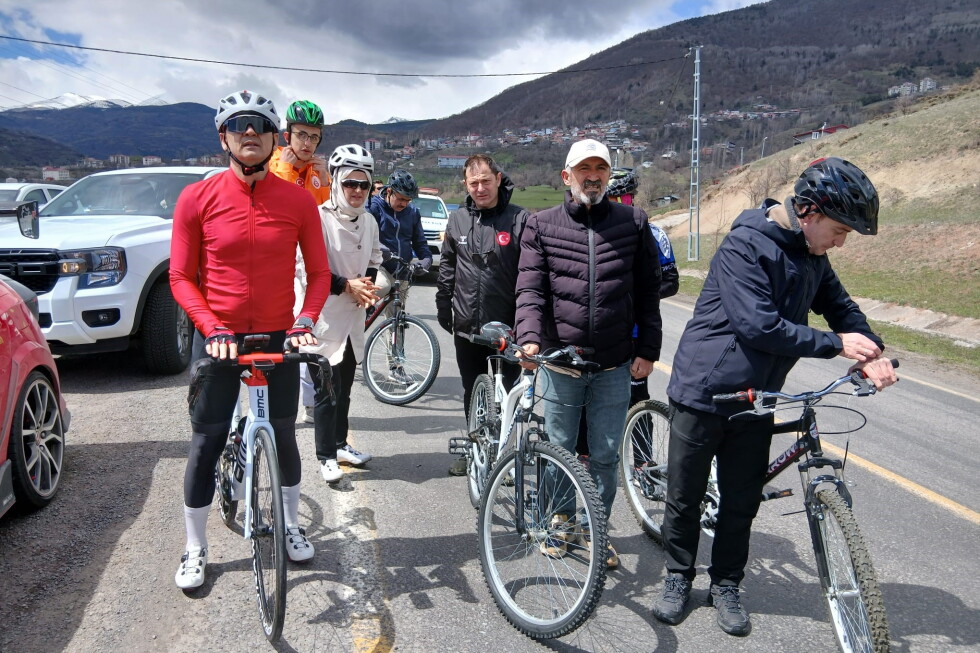
A Turkish governor is sacked over photos in snug cycling shorts. Many want him reinstated
A prominent Turkish provincial governor’s passion for cycling has unexpectedly landed him at the center of a fierce national political debate, resulting in his dismissal by presidential decree and spurring a widespread public campaign demanding his reinstatement.
Mehmet Fatih Cicekli, who had served as governor of the remote eastern province of Ardahan since his January appointment by President Recep Tayyip Erdogan, was removed from his post on July 17 via an official presidential order signed by Erdogan. No formal justification was publicly released alongside the dismissal, but the decision followed sharp criticism from several Turkish politicians over Cicekli’s choice to wear form-fitting cycling tights during a public sports promotion event, followed by his posting of photos from the outing to his social media accounts.
Inan Akgun Alp, a lawmaker from Turkey’s main opposition Republican People’s Party (CHP), opened the parliamentary criticism, claiming Cicekli prioritized social media engagement over his official governance duties and arguing that the tight athletic wear was inappropriate for a sitting provincial governor. Speaking during a recent parliamentary debate, Alp told attendees, “He goes around in tights, spends all day cycling, with bodyguards in front of him, cycling in tights until the evening. A governor cannot wander around the city center like this,” according to reporting from Turkish independent outlet T-24.
Samil Tayyar, a former lawmaker from Erdogan’s ruling Justice and Development Party (AKP), which draws its ideological roots from Turkey’s Islamic political movement, echoed the criticism, saying the attire clashed with deeply held local cultural norms, particularly in Ardahan, a strongly conservative and traditional region bordering Armenia and Georgia. Tayyar noted that other Turkish politicians opt for loose sweatpants when cycling, and emphasized on the social platform X that public officials face different standards than private citizens.
“People can wear whatever they want in their private lives, but a governor cannot visit the public in tights while on duty; it does not align with the seriousness of the state. In a traditional social setting like Ardahan, it is completely unacceptable,” Tayyar wrote.
Cicekli has pushed back firmly against the criticism, framing his cycling attire as standard professional sportswear for the activity. A lifelong athlete who participates in sailing and rowing in addition to cycling, Cicekli told T-24, “(We will) keep pedaling. I am an athlete who practices sailing, rowing and cycling. The clothes I’m wearing are sportswear.”
In the wake of his dismissal, public support for Cicekli has surged rapidly. A grassroots online petition calling for his reinstatement has already collected more than 10,000 signatures from supporters across Turkey, who highlight the governor’s popular work in Ardahan to expand access to sports, develop youth programming, and grow bicycle tourism as a new economic driver for the province, opposition-aligned Halk TV reported.
During an emotional farewell gathering with supporters in Ardahan earlier this week, Cicekli expressed gratitude for the public backing he has received. “I believe that I have not let down those who vouched for me and stood by me throughout my journey until now. I believe that this is the greatest honor of all,” he said. As he departed the province, a large group of local cyclists rode alongside his vehicle to the provincial border as a visible show of solidarity, Halk TV added.
The dismissal has also drawn international attention from European lawmakers monitoring Turkey’s political progress. Nacho Sánchez Amor, a Spanish Member of the European Parliament who serves as the EU’s rapporteur on Turkey, publicly voiced support for Cicekli, arguing that the criticism from Alp and AKP figures advances what he called the ruling party’s “Islamist conservative agenda” at the expense of personal choice.
-
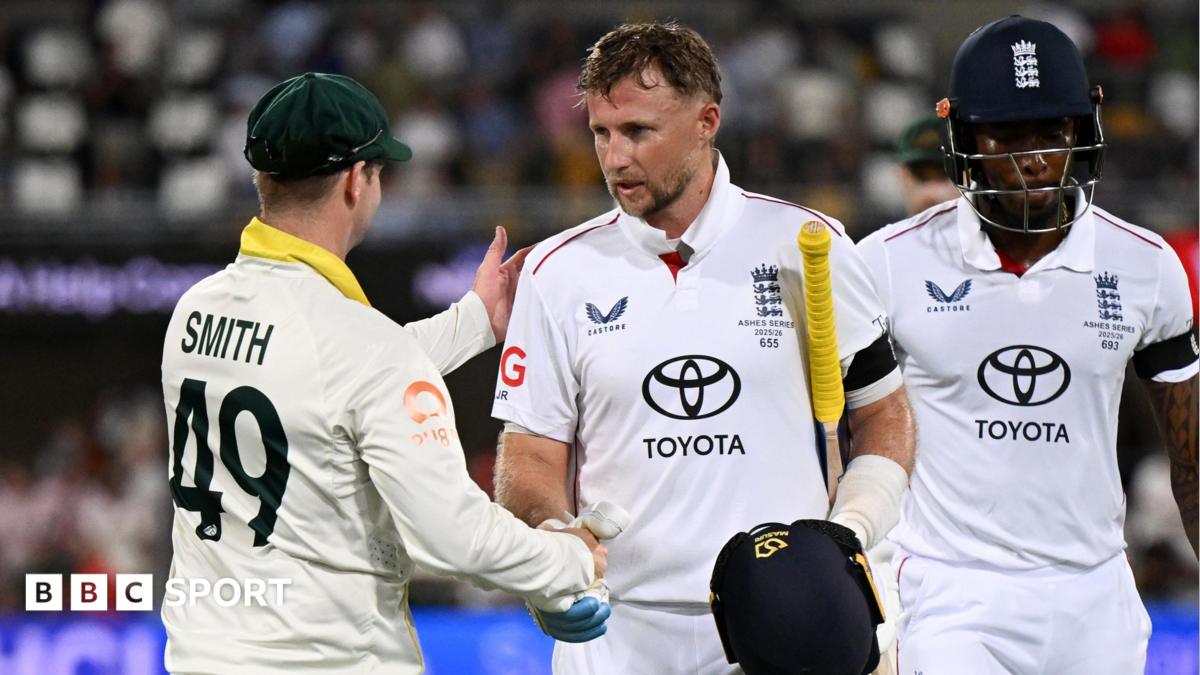
Australia open to playing Test against England in India
The iconic Ashes cricket rivalry between England and Australia could one day take center stage on Indian soil, if Cricket Australia chief executive Todd Greenberg gets his way. In an interview with BBC Sport journalist Timothy Abraham, Greenberg has called for both cricketing governing bodies to keep the groundbreaking idea on the table as the sport works to reignite global interest in the traditional Test format.
For more than a century, England and Australia have only contested Test matches against one another as part of the Ashes series, the bi-annual home-and-away competition that rotates between the two nations roughly every four years, with Australia currently holding the urn after a dominant 4-1 victory in the 2025-26 series. That tradition is already set to break next year, however: the two sides will clash in a standalone one-off Test at the Melbourne Cricket Ground (MCG) in March 2027 to mark the 150th anniversary of their very first Test meeting.
It is this spirit of evolution that Greenberg says should open the door to exploring a neutral-venue match in cricket’s largest and most high-impact market. “It’s not something that we are planning, but it’s open for consideration. We’d have to be open to considering all options,” Greenberg told BBC Sport. A fixture of this kind would require formal approval from both the England and Wales Cricket Board (ECB) and the Board of Control for Cricket in India (BCCI), but Greenberg pointed to strong existing relationships between all three governing bodies as a solid foundation for discussion.
Cricket Australia is already laying the groundwork for expanding its footprint in India, with the country’s domestic Big Bash League set to play its first ever overseas match in Chennai this December, where the Melbourne Renegades will face off against the Perth Scorchers. The move is explicitly designed to tap into the world’s biggest cricket market and grow the competition’s global profile. While Test cricket has seen declining popularity in India in recent years, overshadowed by the explosion of T20 franchise cricket and the Indian Premier League, Greenberg argued that a historic England-Australia Test on Indian soil would draw massive fan interest. “There’s no doubt [it] would capture the imagination,” he said. “I think Test cricket between us, India and England is very strong and probably bucking the trend in some other parts of the world. We want to make sure we grow and strengthen it.”
Greenberg also addressed ongoing controversy around the 150th anniversary Test scheduled for next year, which will be played under lights with a pink ball – a first for men’s Test cricket at the MCG. A number of high-profile former Australian players have publicly criticized the decision, departing from the format of the 1977 centenary Test, which was played as a traditional daytime match. But Greenberg defended the change, noting that a daytime match would struggle to draw large crowds given most fans work and attend school during weekday hours. He added that favorable broadcast time zones for UK audiences and larger overall viewership numbers make the pink-ball format a strategic choice to grow the sport’s reach.
“It will anger some of the traditionalists but we’re in the business of getting more eyeballs on our game,” Greenberg said. “We wanted to get as many people for the game as possible. Playing that game in the day while people are at work and school would’ve made that difficult. Clearly there’s a commercial imperative with broadcast rights back in the UK and the time zone. Pink-ball Tests for us are hugely advantageous in terms of audience.”
The CA chief also pushed back against criticism of the MCG’s recent Test pitch, which England infamously won in just two days during the 2025-26 Ashes series. He confirmed that preparations for the 2027 anniversary Test will target a flatter, less grassy pitch designed to produce a longer, more spectator-friendly contest. Greenberg emphasized that the governing body is working to strike a careful balance between honoring the 150-year history of Anglo-Australian Test cricket and adapting the format to meet the needs of modern audiences to ensure its long-term survival. “We’re trying to balance celebrating 150 years of Test cricket between our two countries but also have an eye on the future and how we can evolve the sport,” he added.
-
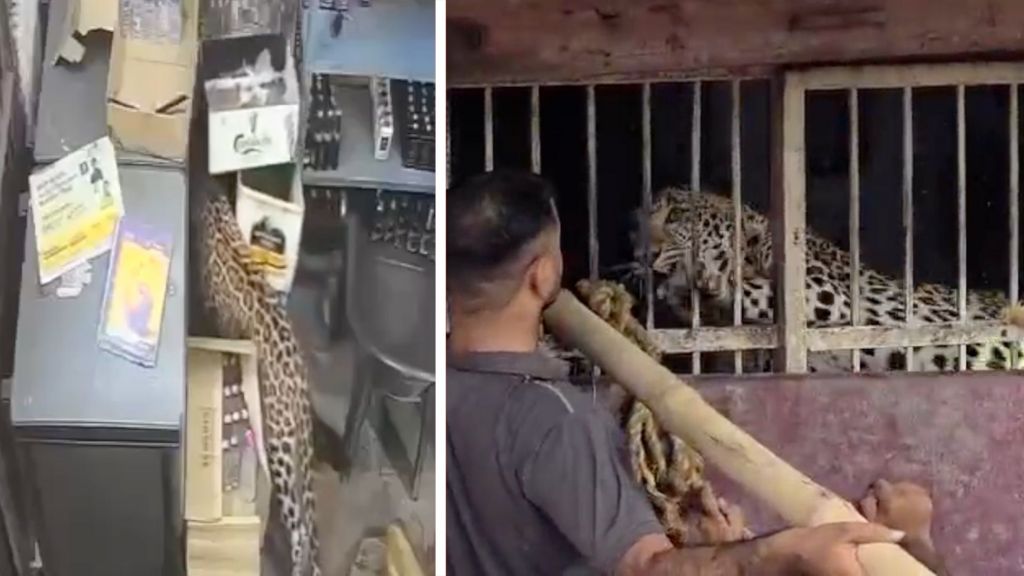
Liquor store employee narrowly escapes leopard attack
A close call for a liquor store employee in a wild animal encounter that unfolded in a populated area, as the worker escaped a leopard attack with only narrow margins to spare. Local authorities have confirmed that after a tense nearly five-hour operation to contain and secure the unrestrained animal, wildlife teams successfully captured the leopard. Following the capture, wildlife officials completed the process by releasing the big cat back into its natural wild habitat, following standard animal management protocols for unexpected urban-wildlife intersections. The incident highlights growing instances of wildlife venturing into human-populated zones as habitat boundaries shift, prompting local officials to reiterate guidance for residents on how to respond safely when encountering wild animals in developed areas. No serious injuries were reported beyond the fright of the encounter, and the leopard was confirmed to be unharmed during the capture and release process.
-

Norway consider complaint over Balogun ban decision
The 2026 FIFA World Cup has been thrown into fresh controversy over the unprecedented suspension of an automatic one-match ban for United States forward Folarin Balogun, with the Norwegian Football Federation (NFF) now moving toward a formal ethics complaint to global football’s governing body. The dispute traces back to the US’ group stage match against Bosnia-Herzegovina, where Balogun — who would finish the tournament as Team USA’s top scorer with three goals — received a straight red card. By FIFA’s standard rules, this should have ruled him out of the US’ knockout round last-16 clash with Belgium.
That automatic suspension was put on hold for 12 months shortly after the red card, however, following direct personal intervention from former US President Donald Trump. Trump acknowledged he made a personal phone call to FIFA President Gianni Infantino to request a review of the red card decision, with FIFA ultimately allowing Balogun to start against Belgium, a match Belgium went on to win 4-1. No detailed explanation for the suspension was provided, with FIFA only citing a vague existing rule that allows for punishment suspensions in certain cases.
In a written statement provided exclusively to BBC Sport, NFF president Lise Klaveness said her organization views the decision with “strong concern”, and will vote on whether to file a formal ethics complaint during the federation’s upcoming board meeting. This would not be the NFF’s first complaint over FIFA’s ties to Trump: the federation previously raised objections to FIFA awarding its inaugural Peace Prize to the former US president ahead of the 2026 tournament. Klaveness noted that the Balogun case would be added to the existing ethics inquiry the NFF previously launched over that award.
The controversy has also spilled over to the International Olympic Committee, where Infantino has held a membership since 2020. Existing IOC rules bar members from accepting outside instructions or mandates that could compromise their independent decision-making, spurring reports that the IOC is preparing to open its own investigation into Infantino’s conduct in the Balogun case. When contacted by the BBC for comment, the IOC declined to confirm or deny whether any complaint had been received, citing its policy that all ethics commission complaints remain confidential. The organization noted it would only issue a public statement if the commission ultimately votes to impose sanctions.
Infantino has repeatedly defended the independence of FIFA’s judicial bodies, claiming they operate free from outside political influence. Trump echoed that framing during a July 6 Oval Office press briefing, saying “I didn’t tell him what to do, I can’t tell him what to do,” while adding that he believed the original red card was unwarranted and called the eventual suspension of the ban a “great decision.”
Criticism of the decision has spread far beyond Norway. The Royal Belgian Football Federation, which benefited from the US’ elimination in the match, said it was “deeply concerned by the course of events” and committed to defending “the fundamental principles of ethics, fair competition, and the interests of football as a whole.” FIFA rejected Belgium’s formal request for an official explanation of the ban suspension, ruling the appeal “inadmissible” on procedural grounds. Uefa, European football’s governing body, issued one of the strongest condemnations, saying FIFA’s actions “crossed a red line” and calling the decision “unprecedented, incomprehensible and unjustifiable.”
-
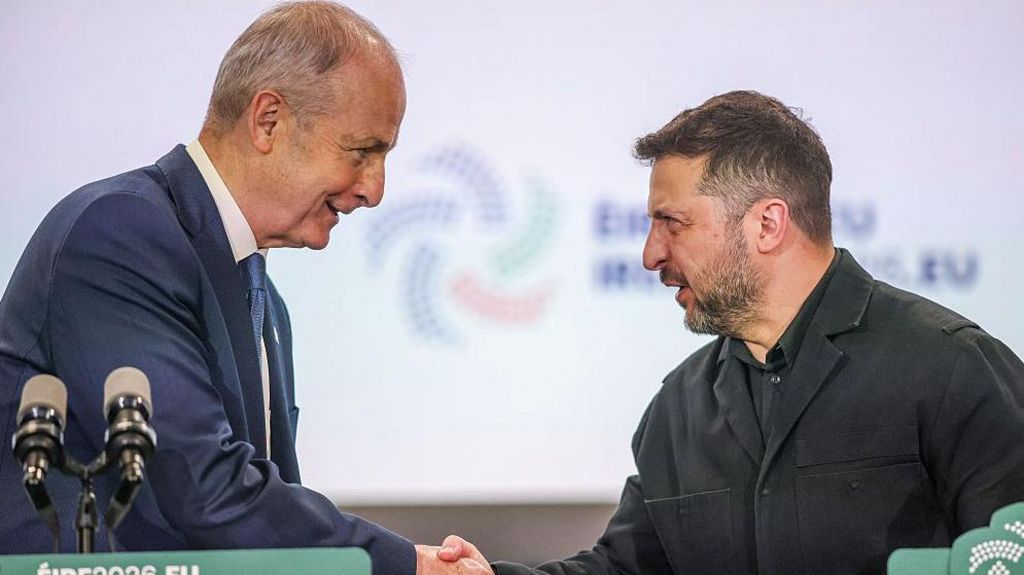
Ireland announces €125m Ukraine support package
During an official visit to Kyiv where Irish Taoiseach Micheál Martin held high-level talks with Ukrainian President Volodymyr Zelenskyy, the Irish government unveiled a fresh €125 million (£106 million) aid package for Ukraine scheduled to be delivered in 2025.
This new contribution breaks down into two key components: €100 million earmarked exclusively for non-lethal military supplies, and an additional €25 million allocated to repair and secure Ukraine’s vulnerable energy network, which has been repeatedly targeted by Russian strikes. With this latest commitment, Ireland’s total support for Ukraine since the full-scale Russian invasion launched in February 2022 will surpass €670 million (£571 million), marking one of the country’s largest sustained humanitarian and military assistance efforts in modern history.
Speaking ahead of and during his Kyiv meeting, Martin framed the ongoing Russian conflict as an ‘unprovoked war of aggression’ against Ukraine, and reaffirmed that backing Ukraine remains a leading policy priority for Ireland’s current rotating presidency of the Council of the European Union. He emphasized that Ireland stands in unwavering solidarity with the Ukrainian people through every phase of their defensive struggle.
Ireland’s Minister for Foreign Affairs and Trade Helen McEntee expanded on the purpose of the new funding, noting that Russian forces have continued to deliberately strike Ukrainian civilian communities, urban centers and critical infrastructure. She pointed out that civilian casualty rates have now reached their highest point since the full-scale invasion began, making continued international support more urgent than ever. ‘This funding will boost Ukraine’s ability to withstand these brutal, indiscriminate attacks,’ McEntee said, adding that supporting Ukraine’s resilience is a core focus of Ireland’s EU presidency tenure.
Beyond immediate military and infrastructure support, McEntee also confirmed Ireland’s long-term commitment to backing Ukraine’s formal path to accession into the European Union, aligning with the bloc’s collective commitment to Ukraine’s European integration future.
-
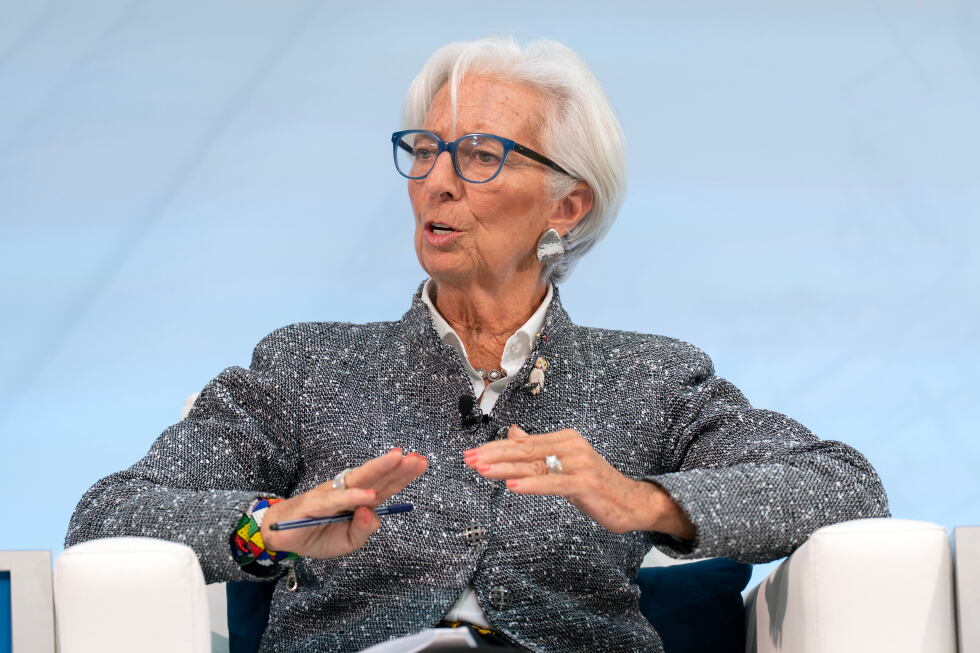
Europe’s central bank holds rates steady amid swings in oil prices
FRANKFURT, Germany — Against a backdrop of swirling geopolitical tensions and wildly fluctuating energy markets, the European Central Bank (ECB) announced Thursday it will keep its benchmark interest rate unchanged at 2.25%, hitting pause on monetary tightening just one month after its last quarter-point adjustment.
The June 11 rate increase had been explicitly crafted to counter inflationary pressure driven by spiking global oil prices, which surged after conflict between the U.S. and Iran disrupted critical oil shipping lanes through the Strait of Hormuz. Since that decision, however, energy markets have seesawed dramatically: prices fell sharply following a brief ceasefire announcement, only to rebound once the truce collapsed and hostilities resumed, leaving policymakers scrambling to assess the long-term trajectory of inflation.
Speaking at a post-meeting press conference, ECB President Christine Lagarde emphasized that persistent uncertainty surrounding the energy price shock has left the bank unable to map out a fixed path for future rate moves. “Uncertainty remains high and the full inflationary impact of the energy shock has yet to play out,” Lagarde told reporters. “We are therefore closely monitoring the intensity and duration of the shock, as well as its indirect and second round effects…the longer energy prices stay high, the more likely they are to drive up broader inflation.”
Lagarde confirmed the ECB will take a data-dependent, meeting-by-meeting approach to future policy decisions, refusing to pre-commit to any specific trajectory for borrowing costs. Most economists now see the ECB’s September 10 policy meeting as the most likely timeline for a potential additional rate increase if inflationary pressures do not abate.
In addition to monetary policy questions, Lagarde addressed speculation about her tenure, pushing back against requests for a rigid “yes or no” commitment to serving out her full eight-year term set to end in October 2027. “I hate to be boxed in in any particular circumstances,” she said, before adding: “you are not going to see the back of me before 2027. When there are clouds on the horizon, the captain stays on the ship, and this captain is staying on this ship as long as there are clouds on the horizon.”
The ECB’s rate hold comes as fresh geopolitical turmoil sent global oil prices surging to key new thresholds Thursday. International benchmark Brent crude climbed above $100 per barrel for the first time in two months, after Iran-aligned Houthi rebels in Yemen claimed responsibility for attacks on two Saudi oil tankers in the Red Sea. The attack has stoked fears that ongoing Middle East conflict could widen and disrupt alternative shipping routes that Saudi Arabia has increasingly relied on to avoid closures in the Strait of Hormuz. Brent crude jumped 7% in the aftermath of the attack, deepening market volatility.
Interest rate hikes work to curb inflation by raising borrowing costs for consumer and business purchases, cooling overall demand and easing upward pressure on prices. Eurozone annual inflation dipped to 2.8% in June, down from 3.2% in May, but policymakers remain wary that sustained high energy prices could spill over into broader price growth across the economy.
-
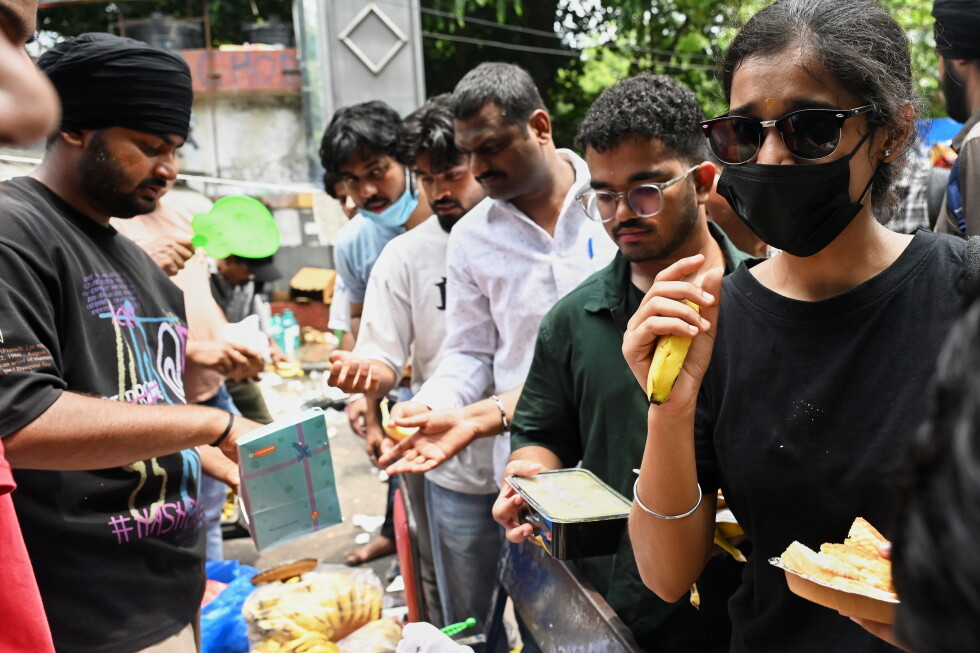
Supporters across India send food via delivery apps to sustain the ‘Cockroach’ protest
NEW DELHI – As thousands of demonstrators hold their ground at a central New Delhi protest site, an unexpected network of grassroots support has emerged to sustain their movement: a constant flow of food ordered via online delivery apps from backers across the country. This steady stream of donated sustenance has become one of the most visible markers of the rapidly expanding public backing for the ‘Cockroach’ movement, a youth-led uprising that has grown into one of the most significant political challenges faced by Prime Minister Narendra Modi’s administration in recent years.
What began as an outcry over repeated leaks of high-stakes entrance examinations for medical colleges and government jobs – a scandal that drove some impacted young people to suicide – the movement has evolved into a broader national call for greater government accountability. Thousands of protesters have set up a continuous sit-in at Jantar Mantar, New Delhi’s historic designated protest zone, which now serves as the epicenter of the movement. Even after a harsh police crackdown on Monday, when officers deployed tear gas and batons to block demonstrators from marching toward India’s Parliament, the remaining protesters refused to disperse. Instead, the violent response only amplified public anger, swelling the crowd beyond student circles to include young working professionals, parents and other community members sympathetic to the movement’s demands.
To sustain the growing encampment, supporters who cannot attend the protest in person have turned to a simple but effective act of solidarity: ordering meals directly to the demonstration site through popular online food delivery platforms. Every few minutes, motorbike-riding delivery riders pull up to Jantar Mantar with bags packed with everything from homemade-style Indian curries and rice to burgers, pizza, snacks and bottled water. Volunteers collect each delivery, stack the contributions alongside other donated supplies, and distribute the food and water to protesters on the ground. Many donors have never visited the protest site personally and do not know the demonstrators they are supporting; they simply instruct delivery riders to hand their order to any protester they encounter at the camp.
For Shakti Vashisth, a 24-year-old protester camped at Jantar Mantar, every incoming delivery is a powerful reminder that the movement’s support extends far beyond the boundaries of the protest site. “There are a lot of people that I can understand might not be able to come here, but they are sending their love,” she explained.
The outpouring of support has been so overwhelming that protest organizers have recently been forced to ask the public to pause new food orders, as incoming donations now far outnumber the daily needs of the demonstrators camped on site. “The amount of food coming in is overwhelming. It’s difficult to even keep count,” said Bhoomi Kapoor, a volunteer coordinating food distribution at the site.
Neg Singh, a motorbike delivery courier who has made 19 trips to the protest site, recalled one particularly massive order: 70 pizzas that required three separate riders to carry through the dense crowd, placed by a donor living in Noida, a city roughly 25 kilometers outside of New Delhi. For Singh, the constant trips to the camp have done more than add extra work to his schedule – they have pulled him into the movement as a supporter too. “We also feel deeply connected to this protest. We support it wholeheartedly,” he said.
-
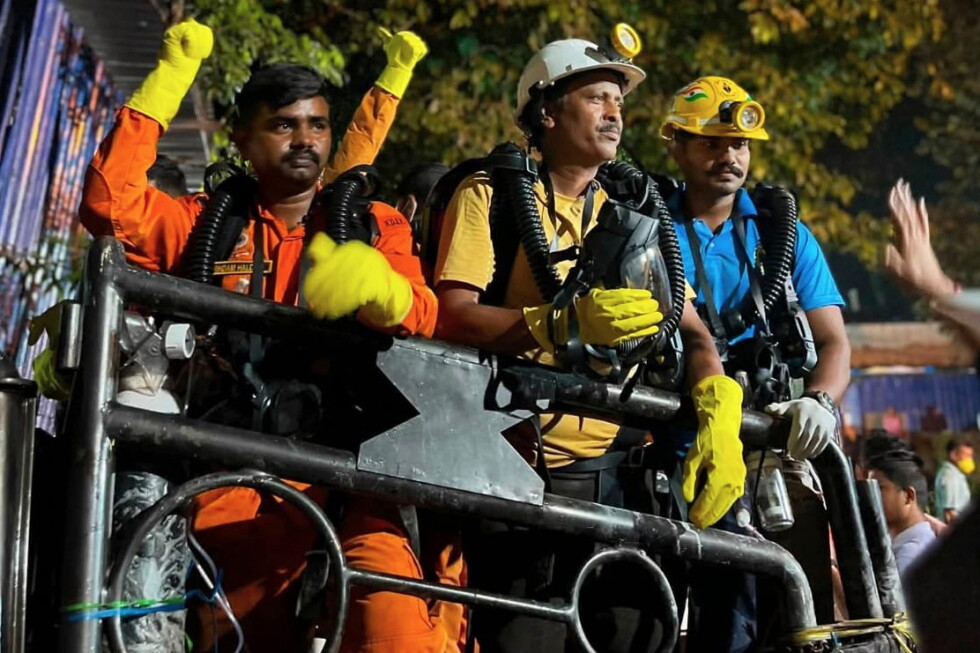
Death toll in India hydropower tunnel disaster rises to 25 as rescue effort ends
GUWAHATI, India – Rescue operations for trapped workers at a collapsed hydropower tunnel in India’s Himalayan state of Sikkim concluded Thursday, after recovery teams pulled the bodies of the final 13 missing workers, raising the total confirmed death toll to 25.
The tragedy unfolded on Monday, when a methane gas buildup ignited a powerful explosion inside the tunnel of the under-construction 500-megawatt Teesta Hydroelectric Project. The site sits roughly 40 kilometers south of Sikkim’s capital Gangtok, in the seismically active Teesta River basin. The blast trapped dozens of workers deep underground, leaving no chance of survival for those caught in the disaster. Multiple state and national agencies launched a coordinated four-day rescue effort, but operations were slowed significantly by high levels of toxic gas lingering inside the tunnel, according to official statements.
After all trapped workers’ remains were recovered, search teams conducted a full final structural inspection of the damaged tunnel, the Sikkim state government confirmed in an official release. In response to the disaster, authorities have assembled a high-level special committee to launch a full investigation into the causes of the explosion. The panel will also be tasked with outlining new regulatory safeguards to prevent similar deadly accidents on future infrastructure projects.
This latest industrial disaster has drawn renewed attention to systemic construction safety risks across India, where the country’s rapid push for large-scale infrastructure expansion frequently clashes with challenging geographic conditions, inconsistent safety oversight, and common construction lapses. Experts note that the Teesta River basin, where the hydropower project is located, presents uniquely high dangers for underground construction. The region is marked by young, geologically fragile rock formations intersected by frequent fractures and naturally occurring underground pockets that can trap ancient gases such as methane. Combined with ongoing seismic activity and unpredictable subterranean conditions, tunnel projects in the area carry inherently elevated risk.
This disaster is far from an isolated incident in India. Just this year, a coal mine explosion in neighboring Meghalaya state claimed the lives of 18 workers. In 2023, a major tunnel collapse on an infrastructure project in northern Uttarakhand state trapped 41 workers for 17 days before a dramatic multi-week rescue effort successfully freed all those stuck underground.
-
What experts are saying as Ebola outbreak in Congo and Uganda kills more that 1,000 people
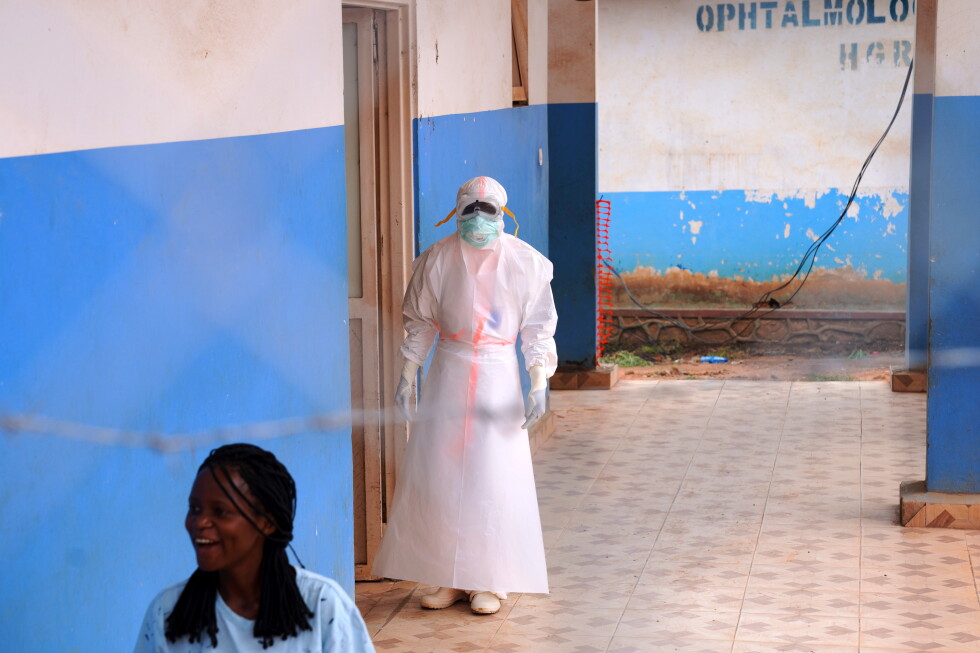
DAKAR, SENEGAL – The fastest-expanding Ebola outbreak ever recorded has claimed more than 1,000 lives in the eastern region of the Democratic Republic of the Congo, as global and local health workers rush to curb a viral strain with no licensed medical countermeasures available. New data released Wednesday by Congo’s National Public Health Institute confirms 2,536 laboratory-confirmed infections and 1,033 fatalities to date, with at least 738 patients currently held in isolation or receiving hospital care. What makes this outbreak, declared in mid-May, unique among modern Ebola events is the pathogen driving it: the Bundibugyo strain, for which no approved vaccines or targeted treatments currently exist. The crisis is heavily concentrated in the hard-to-reach Ituri province, which accounts for nearly 90 percent of all documented cases, but infections have spread to five additional Congolese provinces – including the major eastern city of Kisangani – and have spilled across the border into neighboring Uganda. Though Congolese health authorities note the explosive growth in new cases has begun to moderate, they warn the outbreak has not yet reached its peak. The latest institute report confirms sustained community transmission remains ongoing, with recent swings in case counts largely attributed to lags in reporting and ongoing data consolidation. A persistent gap in contact tracing also undermines containment efforts: only 77 percent of known close contacts of confirmed cases are under active surveillance nationwide, far below the 95 percent threshold public health experts say is required to stop transmission chains. Last month, researchers from the U.S. Centers for Disease Control and Prevention (CDC) used predictive modeling to warn that in the worst-case scenario, the current outbreak could match the deadliest Ebola event in recorded history: the 2014–2016 West African epidemic that killed more than 11,000 people. Notably, that 2014 outbreak took eight months to reach the 1,000-death mark – a threshold the current Congolese outbreak crossed far faster. The World Health Organization (WHO) adds that a large share of new cases are linked to unknown transmission chains, leaving the full scope and trajectory of the outbreak uncertain for responders. Despite the severity of the crisis inside Central Africa, global health authorities agree the overall risk of widespread international spread remains low. The WHO classifies the risk as “very high” within Congo and “high” for neighboring countries such as Uganda, due to frequent cross-border population movement and ongoing local transmission, but rates the global risk as low. Unlike respiratory viruses such as influenza or COVID-19, Ebola only spreads through direct contact with the bodily fluids of an infected person who is already showing symptoms, making sustained global spread far less likely. “You cannot get Ebola from being near someone,” the CDC emphasized in its latest situation update. The agency also noted that since infected people do not become contagious before they develop symptoms, identifying cases and tracking contacts is simpler than for diseases that can spread asymptomatically. To date, the outbreak has produced only a handful of cases outside Congo’s borders. Uganda has recorded 20 confirmed infections linked to cross-border travel from Congo, including two deaths, all concentrated in the capital Kampala. The country has not reported a new case since June 21, and the last confirmed patient has been discharged from care, triggering the 42-day waiting period that precedes an official declaration that the Ugandan outbreak is over. In June, one imported case was detected in France involving a doctor traveling from Congo; the patient has since made a full recovery and been released from hospital. In response to the outbreak, the U.S. has imposed entry restrictions on most recent travelers from Congo, requiring U.S. citizens to complete a 21-day monitoring period outside the country before returning, and routing permitted travelers from Uganda and South Sudan through designated airports for mandatory Ebola screening. A U.S. plan to construct a dedicated Ebola quarantine facility in Kenya for U.S. citizens evacuated from Congo has faced significant pushback, including legal challenges and large protests, some of which have turned violent. Multiple barriers continue to slow the global response effort. According to health authorities and aid groups, low public trust and community resistance are among the biggest obstacles. Misinformation about Ebola treatment centers, fear of isolation protocols, and resistance to culturally sensitive safe burial practices have led many residents to avoid testing and delay seeking care until they are severely ill. Ongoing armed conflict in the region has also complicated response work: fighting between government forces and the Rwanda-backed M23 rebel group, plus attacks by the Islamic State-linked Allied Democratic Forces, have displaced hundreds of thousands of people and made it difficult for responders to access affected communities and conduct surveillance. In addition to the lack of approved medical tools for the Bundibugyo strain, limited testing capacity has slowed detection – even as capacity has expanded since the outbreak began, the virus continues to outpace containment efforts. “There’s never been an Ebola outbreak that started with so many cases because it was so late to be identified,” explained Trish Newport, emergency program manager for Doctors Without Borders (Medicines Sans Frontieres), who has been deployed to the outbreak zone. Earlier this month, researchers launched the first clinical trial for experimental treatments targeting the Bundibugyo strain, enrolling patients at a dedicated Ebola treatment center in Ituri province. The WHO notes it could take several months and up to 1,000 trial participants to determine whether either of the two test treatments is safe and effective. Associated Press writers Mike Stobbe in New York and Prosper Heri Ngorora in Bunia, Congo contributed reporting to this article.