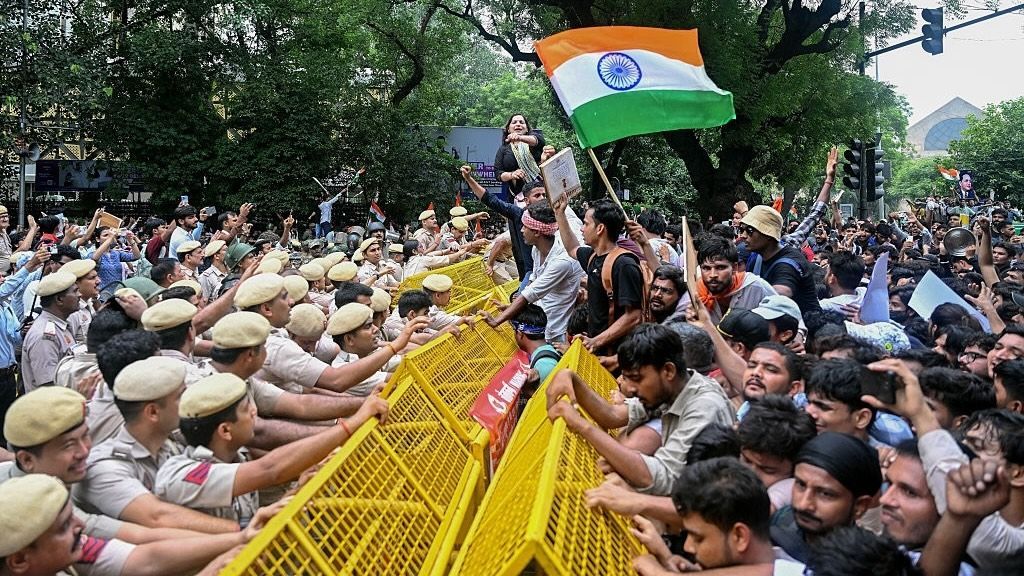
Across India, tens of thousands of demonstrators have mobilized in public spaces in what has become one of the most significant grassroots protest movements the country has seen in recent years. What began as a localized outcry over unchecked corruption, bureaucratic negligence, and the exploitative practices of state-backed sand mining mafias in the southern state of Karnataka has quickly erupted into a nationwide movement that has captured public attention. The movement’s unconventional mascot – the humble cockroach – has become its most recognizable symbol, and its roots trace back to a controversial comment from a senior state politician. In a 2024 public address, Karnataka’s incumbent Chief Minister Siddaramaiah dismissively labeled opposition protestors who were criticizing his administration’s corruption as “cockroaches that need to be stamped out.” Instead of silencing critics, the insult backfired spectacularly: activists embraced the label, turning the disparaging comparison into a rallying cry. Protestors argue that just as cockroaches thrive in unhygienic, dark environments, systemic corruption festers in the hidden, unaccountable corners of state governance – framing themselves as the unwanted pests that will not be erased until the rot of corruption is rooted out. Demonstrations have stretched across major urban centers, from Bengaluru to New Delhi, with participants cutting across demographic lines: students, working-class laborers, civil society activists, and opposition party members have all joined the call for greater government accountability, an end to illegal resource extraction, and transparent policy making. While the movement began as a response to local grievances, it has tapped into a broader national frustration with persistent corruption across all levels of Indian politics, turning a regional dispute into a conversation about systemic change. The “cockroach” mascot has also spawned widespread viral engagement on social media, with users sharing memes, protest art, and calls to action that have expanded the movement’s reach far beyond Karnataka’s borders.
作者: admin
-

Eight Muslim countries condemn mass Israeli raid on Al-Aqsa
On Thursday, a coalition of eight foreign ministers from key Arab and Muslim-majority nations issued a harsh rebuke of recent large-scale incursions by Israeli ultranationalist settlers and officials into Jerusalem’s Al-Aqsa Mosque compound, labeling the provocative actions illegal and dangerous extremist acts. The joint statement, shared publicly via Qatar’s Ministry of Foreign Affairs on the social platform X, builds on widespread international outrage over a mass raid staged earlier that same day, which drew thousands of far-right Israeli participants and was openly led by sitting cabinet ministers and members of parliament from Prime Minister Benjamin Netanyahu’s ruling coalition.
Among the high-profile Israeli figures who took part in the incursion were Itamar Ben Gvir, Israel’s far-right national security minister; Yitzhak Wasserlauf, the minister in charge of the Negev, Galilee and national resilience portfolio; and Amit Halevi, a sitting lawmaker from Netanyahu’s Likud Party. Ahead of the raid, Israeli security forces imposed restrictions that blocked hundreds of Palestinian worshippers from accessing the mosque compound for traditional pre-dawn prayers, forcing many to hold prayer services in adjacent streets outside the holy site.
The joint statement from the foreign ministers of Qatar, the United Arab Emirates, Jordan, Turkey, Egypt, Indonesia, Pakistan, and Saudi Arabia emphasized that the storming of Al-Aqsa represents a blatant violation of international law, binding United Nations resolutions, and the long-standing historic and legal status quo that has governed the holy site in Occupied East Jerusalem for decades. The group issued its strongest possible condemnation not only of the incursions themselves, but also of the public incitement and mobilization calls that preceded the raid, as well as the ongoing violent provocations carried out by sitting Israeli government ministers and extremist nationalist groups.
In their warning, the ministers stressed that repeated incursions and provocative actions at the sensitive holy site fuel religious animosity, embolden extremism across the region, and directly undermine ongoing diplomatic efforts to secure a just, lasting peace in the Israeli-Palestinian conflict built on the internationally supported two-state solution. The group also formally called for global recognition of Jordan’s long-standing historic custodianship over the entire Al-Aqsa Mosque compound, and rejected both Israel’s claims of sovereignty over Occupied East Jerusalem and its Islamic and Christian holy sites, as well as ongoing Israeli efforts to forcibly alter the area’s historical, legal, and demographic character.
The decades-old status quo agreement for the Al-Aqsa compound, a arrangement forged after the 1967 Six-Day War, outlines a clear governing structure: the Jordanian-backed Islamic Waqf, an Islamic charitable trust, retains full authority over all internal religious and administrative affairs of the site, while Israel controls external security access to the compound. Under the terms of this agreement, non-Muslim visitors are permitted to tour the site during scheduled visiting hours, but are strictly prohibited from holding any form of non-Islamic prayer on the grounds. In recent years, however, the site has seen a sharp escalation in settler incursions, most of which are carried out with armed military escort from Israeli security forces.
This latest diplomatic push comes amid previously unreported plans, first revealed by independent outlet Middle East Eye, that the U.S. and Israel are actively working to strip Jordan of its historic custodianship of the Al-Aqsa compound. According to sources familiar with the proposal, which is championed by former White House advisor Jared Kushner and current U.S. Ambassador to Israel Mike Huckabee, the existing authority of the Jordanian-backed Islamic Waqf would be dissolved entirely, and a new Israeli-government appointed body would reclassify the Al-Aqsa Mosque as a multi-faith site, bringing management of the holy site fully in line with Israeli government interests. U.S. Secretary of State Marco Rubio has denied the existence of such a plan, but has declined to explicitly reaffirm U.S. recognition of Jordan’s long-standing custodianship over the site.
-
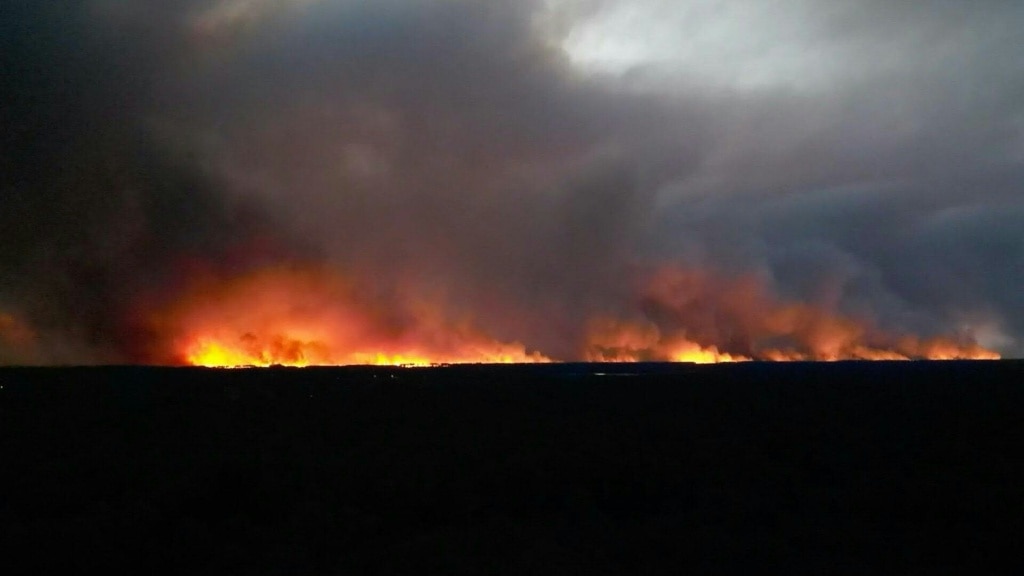
Thousands flee wildfires in southern Europe
A devastating wave of wildfires fanned by record-breaking high temperatures is sweeping across Western and Southern Europe, triggering mass evacuations, emergency declarations, and urgent requests for cross-continental assistance as blazes consume thousands of hectares of land and claim multiple lives. As of Friday, smoke from out-of-control blazes burning just 60 miles from the Spanish capital had drifted into Madrid, while thousands of tourists and local residents were evacuated by boat from a popular French Atlantic vacation peninsula, marking one of the most severe wildfire crises the region has faced in years.
-
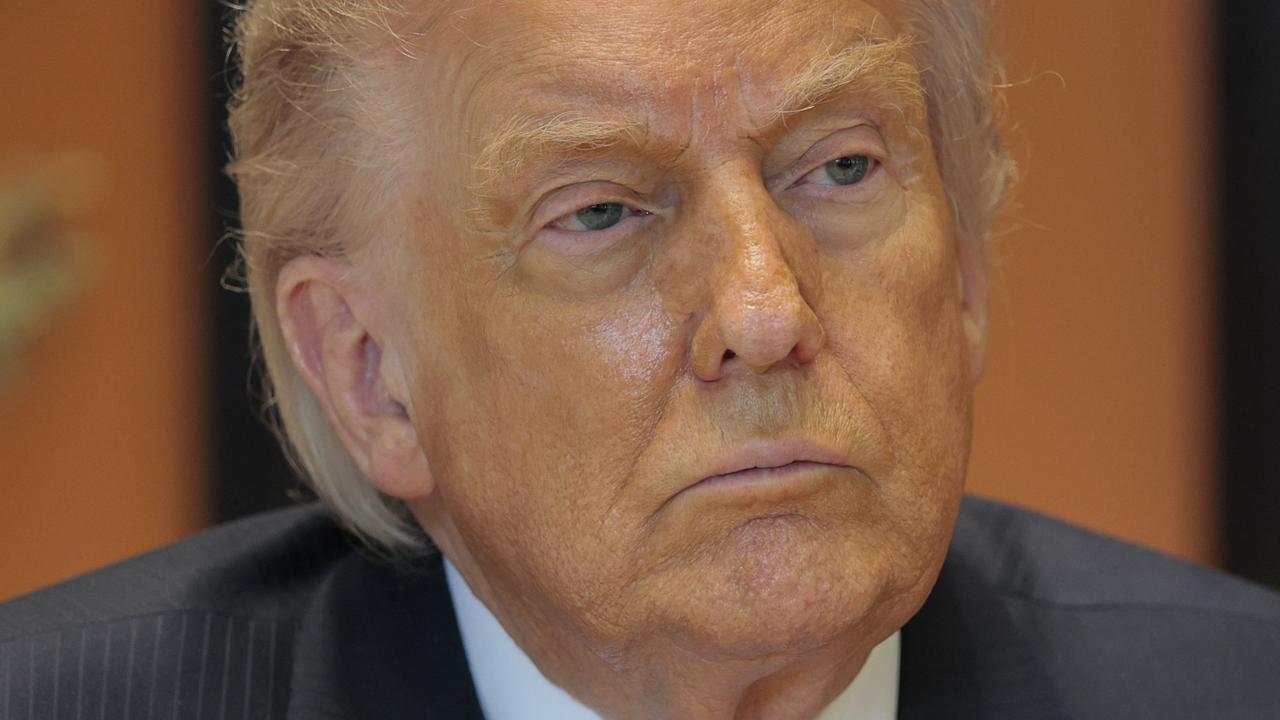
ASX 200 plunges amid Trump’s Iran threat and soaring interest rate fears
A sharp downturn swept across Australia’s benchmark share index on Friday, driven by two interconnected pressures: escalating geopolitical risk from a newly revealed U.S. military threat against Iran and growing market expectations that interest rates will remain higher for longer across the globe.
The S&P/ASX 200, Australia’s primary blue-chip index, closed down 66.70 points, or 0.75%, to settle at 8772.30, marking its worst single-day performance in July. The broader All Ordinaries index followed suit, dropping 76.60 points, or 0.85%, to end the session at 8941.50. The Australian dollar also weakened, slipping to 69.86 U.S. cents by market close.
Seven out of the ASX’s 11 industry sectors closed in negative territory, led by steep declines in information technology, materials, and consumer discretionary stocks. The technology sector bore the brunt of the selloff: cloud accounting firm Xero fell 4.45% to $61.58, logistics software developer WiseTech Global plunged 4.64% to $30.02, and communications technology firm Codan dropped 4.13% to $39.65.
Major mining firms also faced significant downward pressure. BHP Group declined 2.94% to $58.85, Rio Tinto fell 1.69% to $159.99, and Fortescue Metals Group closed down 1.01% at $18.57.
The trigger for much of the market jitters was comments from former U.S. President Donald Trump, who confirmed to U.S. news outlet Axios that he was considering a “massive attack” on Iran, larger than any previous U.S. military action against the country. “I am close to making a decision. We are all set for it,” Trump stated, amplifying existing geopolitical instability in the Middle East that already included 13 consecutive days of strikes targeting Iran and Iran-aligned Houthi rebels in Yemen.
Commonwealth Bank sustainable and energy economist John Oh noted that the threat spooked already jittery global and domestic markets. “Although the scale of the ‘massive attack’ considered by U.S. President Trump remains unclear, any expansion of attacks to include key civilian and energy infrastructure, and the risk of subsequent Iranian retaliation, would continue to worry markets,” he explained.
The heightened risk of regional conflict sent global crude oil prices soaring, with Brent crude jumping more than 6% to hold near $100 U.S. per barrel, its highest level since May. The oil price surge in turn stoked fears of renewed inflationary pressure, which raised expectations for further interest rate hikes from the U.S. Federal Reserve. This dynamic pushed gold prices down 2.5% to $4048 U.S. per ounce, dragging down Australian gold producers: Northern Star Resources fell 3.91% to $19.93, while Evolution Mining declined 2.42% to $11.29.
Domestic monetary policy expectations added further downward pressure to the equity market. Australia’s 10-year government bond yield climbed back above 5%, a level last seen during the 2011 Eurozone debt crisis, as money markets priced in a higher probability of future Reserve Bank of Australia rate hikes.
Global X strategy analyst Joseph Marassa noted that the shift in rate expectations had a notable impact on equity valuations. “It marked the ASX’s worst session of the month,” he said. “Markets will be focused on next week’s inflation print, following yesterday’s hotter-than-expected unemployment data. Market-implied odds of a rate hike next month have risen above 40 per cent, double last week’s level.”
Even positive corporate news failed to stem the downward trend for several listed firms. Qantas Airways shares fell 1.96% to $9.99 despite the airline confirming a key milestone for its Project Sunrise initiative, which will launch non-stop Sydney-to-London flights from October 2027. Cochlear shares slipped 0.45% to $111.61 even after the hearing implant manufacturer confirmed it would retain duty-free access to the U.S. market following the conclusion of a U.S. government investigation. ASX Limited itself closed down 1.23% at $54.33 after announcing that chief financial officer Andrew Tobin, who joined the market operator in 2022, will retire from his role.
-
Eight health workers probed over ‘inappropriate’ access to AFL star’s health records
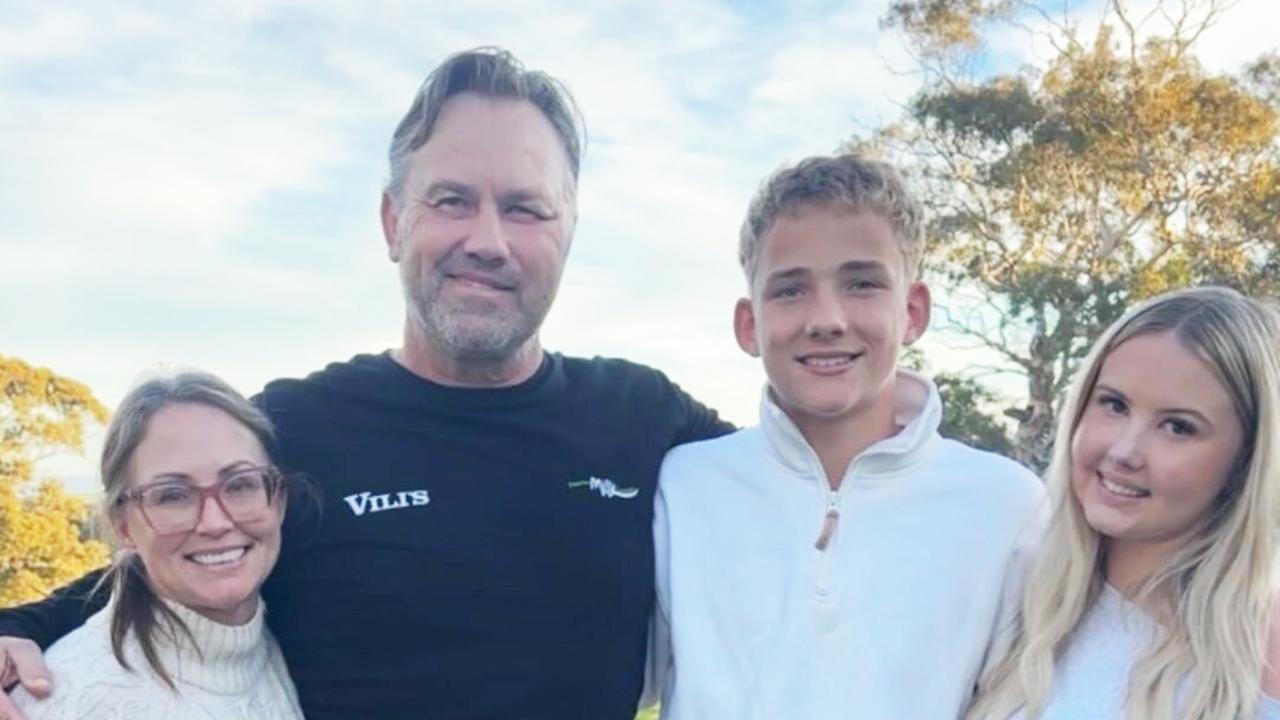
A former Australian Football League star, Tony Modra, is at the center of a growing privacy scandal after a near-fatal car crash left him recovering in a South Australian hospital, with eight hospital staff now under scrutiny for allegedly snooping on his confidential medical records.
Modra’s life-threatening accident unfolded earlier this year near Victor Harbor, when a falling tree branch crashed straight through the windscreen of his moving vehicle. The impact left him with severe injuries that required extensive surgery and a multi-week stay at Flinders Medical Centre for intensive care and recovery. Earlier this week, the beloved former Adelaide Crows player shared a heartfelt public update, thanking the clinical team that supported his recovery and confirming he had returned home to reunite with his wife Erica and their two children, Luke and Hayley. Images shared on social media showed Modra reunited with his family just one month after his life-saving surgery, offering fans a glimpse of his ongoing recovery journey.
But the celebratory update has been overshadowed by the revelation of an official investigation into potential privacy breaches by hospital employees. SA Health, the government body overseeing public health services in the state, has confirmed that an internal probe is actively underway, and has issued a formal apology to Modra and his family for the unnecessary distress the incident has caused.
In an official statement, SA Health emphasized that protecting patient confidentiality and private clinical data is one of its highest priorities. “Protecting patients and their private clinical information is a matter we take extremely seriously,” the statement read. The organization noted that it maintains strict internal policies and routine auditing processes to ensure staff only access patient information when it is clinically necessary for their work. “Any staff member who has accessed information inappropriately may be subject to disciplinary processes, which may include termination of their employment,” the statement added.
According to SA Health’s update, the potential breach was uncovered during a routine compliance audit. Three members of staff are currently facing formal investigation for allegedly gaining unauthorized access to Modra’s patient records, while a further five employees are being assessed to confirm whether their access to the files was legitimate and work-related. While SA Health has not publicly confirmed Modra’s identity as the patient in question, multiple public reports and industry sources have confirmed he is the individual at the center of the probe. SA Health added that the investigation remains ongoing, and repeated its apology to the family for the privacy violation.
The scandal has sparked renewed conversation about patient privacy protections in South Australia’s public health system, with advocates highlighting that even high-profile patients are entitled to full confidentiality during their medical care.
-
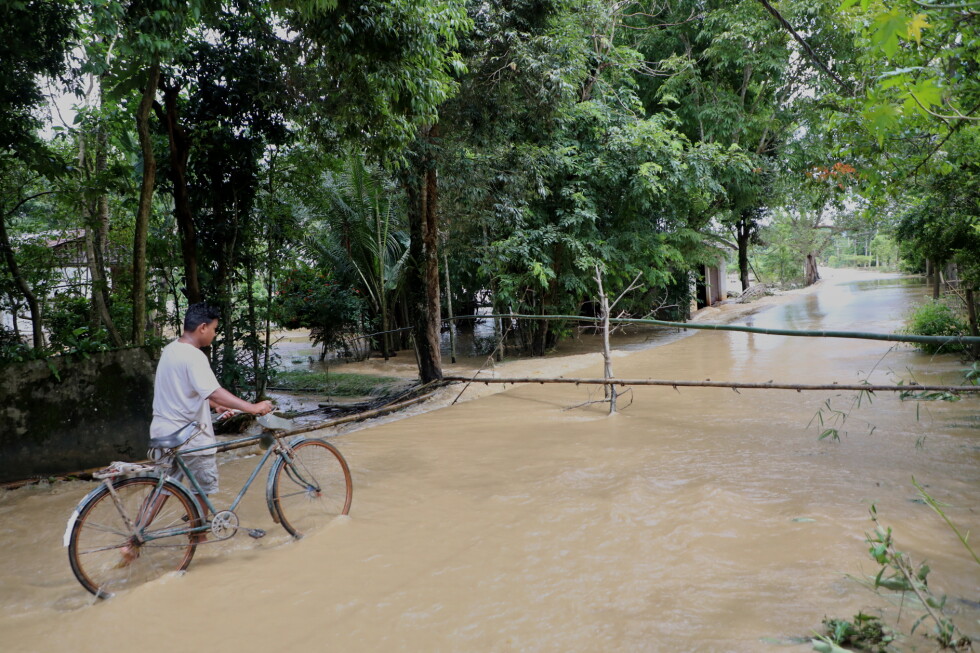
At least 50 people killed and 700,000 displaced by India floods after monsoon rains
Devastating floodwaters triggered by days of relentless heavy monsoon rainfall have swept through India’s northeastern Assam state, leaving at least 50 people dead and forcing more than 700,000 residents from their homes, government officials confirmed Friday. The downpour swelled the banks of the Brahmaputra River, one of Asia’s largest transboundary waterways, beyond capacity, turning vast swathes of the rural and urban landscape into submerged disaster zones.
Originating in China’s Tibet Autonomous Region, the Brahmaputra cuts 900 kilometers through the length of Assam. This year’s extreme flood event has swallowed nearly 900 entire villages, destroyed thousands of structures, and left thousands of households without critical power access. Official data shows more than 7,000 homes are currently without electricity, while over 290,000 displaced people have sought emergency shelter in government-run relief camps across the state.
Assam’s Chief Minister Himanta Biswa Sarma confirmed that disaster management authorities have rolled out large-scale relief operations, including airdrops of food, clean water, and essential supplies from military helicopters to cut-off communities. State police, national disaster response teams, and hundreds of local volunteers have been deployed to conduct rescue missions for residents stranded by rising floodwaters and distribute emergency provisions to affected populations.
For residents like 52-year-old Nazira-based farmer Jatin Gogoi, the floods have brought total ruin. Rising waters washed away his traditional bamboo-walled home, killed all of his cattle, and destroyed his only source of income. With no property left to return to, Gogoi and his five-member family are now relying on the charity of relatives for temporary shelter. “I lost all my cattle. My five-member family and I have nowhere to go, so we are taking shelter in a relative’s home,” Gogoi shared in a phone interview.
The disaster has also severely disrupted life in Assam’s capital city of Guwahati, a bustling urban center home to nearly 2 million people. Flash flooding on Thursday evening submerged major arterial roads, leaving commuters trapped in their vehicles or workplaces for hours. Sudip Mazumdar, a journalist based in Guwahati, recounted being forced to spend the night at his office after floodwaters reached waist depth on access roads, making travel impossible.
Climate scientists have long warned that human-caused climate change is intensifying monsoon patterns across South Asia, where the seasonal rain system traditionally occurs in two predictable phases: June to September and October to December. In recent decades, the monsoon has grown far less predictable, with extreme short-duration rain bursts replacing gradual, steady rainfall, followed by extended dry periods that exacerbate both flood and drought risk across the region.
-
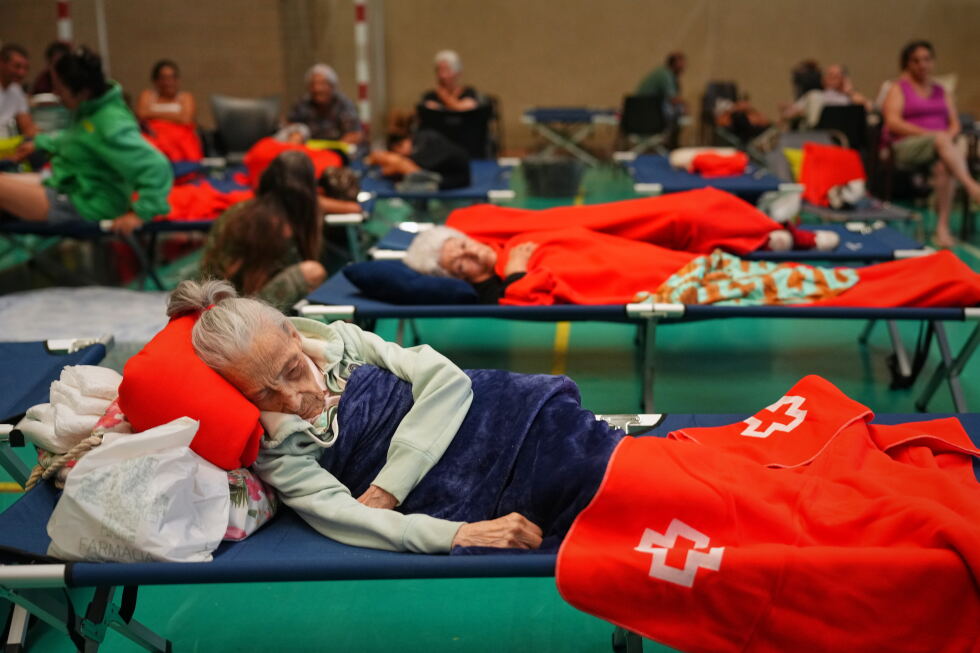
Spain declares an emergency after wildfires force evacuations of 10,000 people
MADRID – In a dramatic escalation of response to rapidly spreading wildfires that have displaced thousands, Spain’s national government enacted a nationwide state of emergency this Friday. The declaration comes as multiple out-of-control blazes, supercharged by an unrelenting heat wave, swept through central areas surrounding the capital, prompting emergency evacuation orders for nearly 10,000 residents across dozens of small villages.
Under the new emergency framework, Spain’s interior ministry – the federal body that oversees the country’s national police and security forces – will assume centralized command of all wildfire suppression operations currently being carried out by regional authorities. This move streamlines coordination between local and national response teams, a step officials say is critical to containing the fast-moving fires that have overwhelmed regional resources.
The Madrid regional government, which governs a broad swath of territory surrounding the capital city, confirmed that evacuation orders had been issued for communities across high-risk fire zones, with the total number of displaced residents climbing to 10,000 as of Friday afternoon. Record-high temperatures and persistent dry conditions have created tinder-dry vegetation across much of the country, turning small ignitions into large, unmanageable conflagrations that spread rapidly with shifting wind patterns.
Spain has already suffered catastrophic fire damage in 2024, with more than 100,000 hectares (nearly 247,000 acres) of forest and scrubland consumed by flames since the start of the year. Among the most damaging blazes is the second-largest wildfire recorded in modern Spanish history, which has burned roughly 32,000 hectares (79,000 acres) in the central province of Guadalajara over the past several days. The disaster has already claimed human life: earlier this month, 13 people died in a large wildfire that tore through southern Spain, underscoring the deadly threat posed by this year’s extreme fire season.
-
China coast guard uses water cannons on 2 Philippine vessels as top diplomats meet in Manila
MANILA, Philippines — A fresh maritime confrontation has escalated tensions in the South China Sea, just as top global diplomats gathered in the Philippine capital for high-stakes regional security negotiations. On Friday, the third such standoff in a single week, China’s coast guard deployed water cannons against two Philippine government fisheries vessels near Scarborough Shoal, marking the second consecutive day of clashes in that contested stretch of water.
The South China Sea has been a flashpoint for competing territorial claims for decades. China asserts sovereign rights over nearly the entire waterway, one of the world’s busiest and most economically critical global trade routes. This broad claim was formally rejected by a 2016 international arbitration ruling issued under the 1982 U.N. Convention on the Law of the Sea, though Beijing has refused to recognize the verdict.
According to Philippine coast guard officials, the incident unfolded when a Chinese coast guard vessel closed to within just 7 meters (23 feet) of a Philippine fisheries vessel in a maneuver Philippine authorities described as “reckless.” The close approach created a severe collision risk, the agency said, adding it strongly condemns the “dangerous and unprofessional actions of the China coast guard.” The Philippines maintains Scarborough Shoal is an integral part of its national territory, with its surrounding waters falling under the country’s territorial sea and exclusive economic zone.
In its own official statement, the Chinese coast guard offered a conflicting account. It said multiple Philippine vessels, including three coast guard craft, had entered what it considers Chinese territorial waters on Friday. The agency confirmed it issued verbal warnings, deployed interception maneuvers, and used water cannons to expel the Philippine ships. It issued a stark warning to Manila: “We sternly warn the Philippines to immediately cease its infringing and provocative actions or bear all consequences that may arise.”
Friday’s clash follows two other confrontations earlier in the week, including a violent encounter at Second Thomas Shoal on Monday that left two Philippine sailors injured. The Philippines says Chinese coast guard personnel struck the sailors with wooden poles, while China counters that Philippine sailors first attacked Chinese personnel with oars and long sticks.
The escalating series of incidents has placed South China Sea tensions at the top of the agenda for the annual Association of Southeast Asian Nations (ASEAN) foreign minister meetings, which have been hosted in Manila this week. Top diplomats from the 11-nation bloc and their global counterparts have held three days of closed-door talks focused heavily on the decades-long territorial dispute.
On Tuesday, ASEAN foreign ministers released a joint statement addressing the tensions, noting that “concerns were expressed by some ministers on the land reclamations, activities, serious incidents in the area, including actions that put the safety of all persons at risk, and damage to the marine environment.” The bloc confirmed it has seen “significant progress” in ongoing negotiations with China on a formal code of conduct designed to prevent large-scale armed conflict in the region, with a stated goal of concluding the negotiations before the end of 2025.
On the sidelines of the ASEAN talks, U.S. Secretary of State Marco Rubio and Chinese Foreign Minister Wang Yi held a bilateral meeting Wednesday to discuss Monday’s Second Thomas Shoal clash, with both sides describing the incident as “escalatory.”
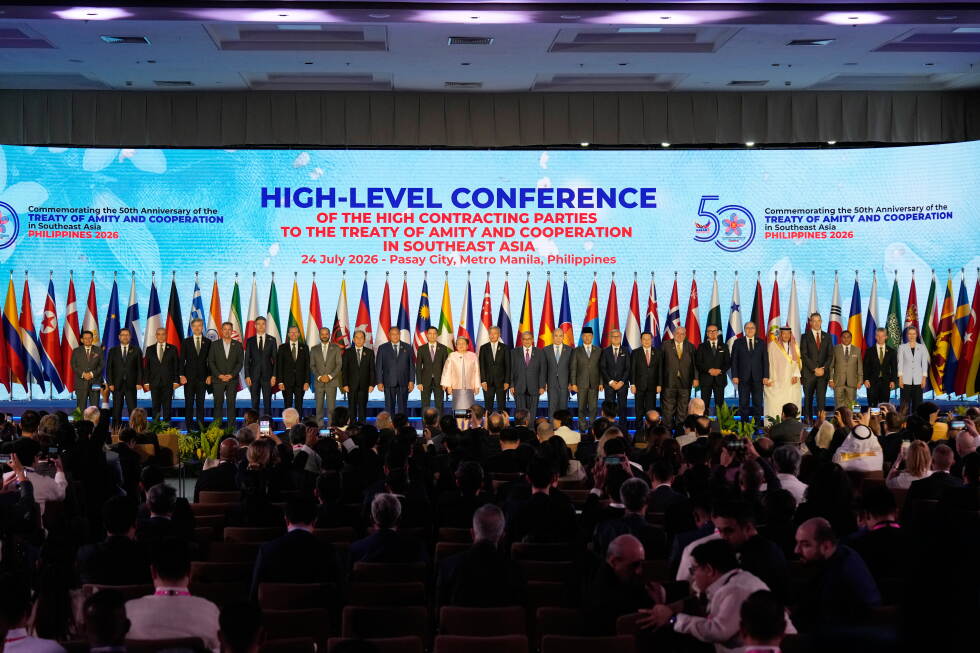
The week of diplomatic meetings in Manila concluded Friday with a commemoration of ASEAN’s 1976 Treaty of Amity and Cooperation, a landmark nonaggression pact for the region. In her remarks at the event, Philippine Foreign Secretary Theresa Lazaro emphasized the need to protect peace amid growing global uncertainty. “Peace is a daily choice,” Lazaro said. “It requires continuous labor, deliberate restraint, inclusive dialogue and an unyielding adherence to the rule of law.”
Contributions to this report were provided by Associated Press video journalist Joeal Calupitan in Manila and writer Ken Moritsugu in Beijing.
-
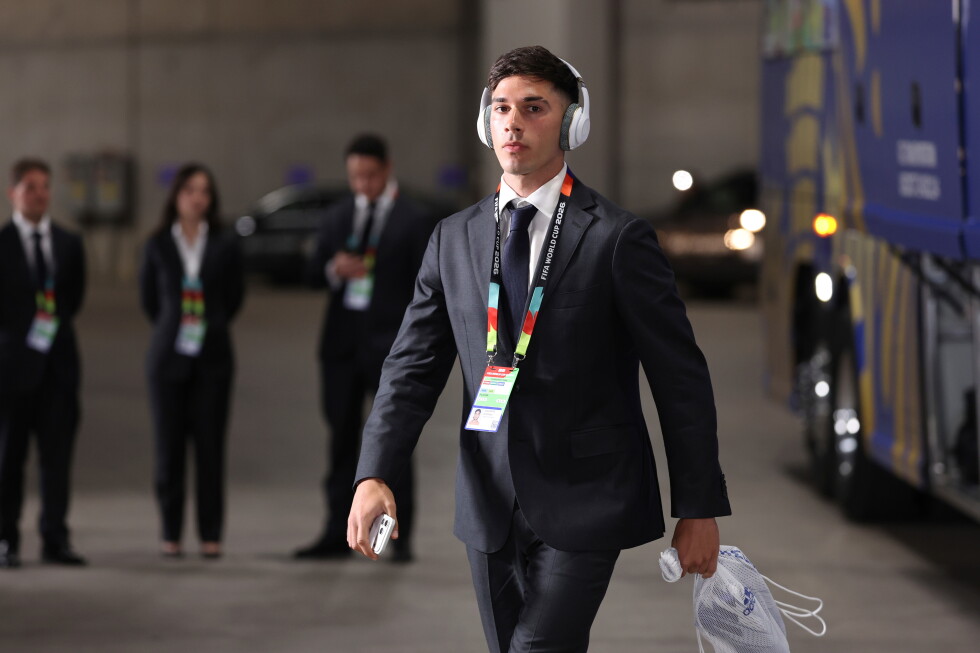
Police say Australian World Cup player Volpato has tested positive for cocaine
In an early morning traffic stop on Sydney’s iconic Anzac Bridge that has sent ripples through Australian soccer, 22-year-old former Italian youth international turned Australian World Cup representative Cristian Volpato is facing serious allegations of speeding and testing positive for cocaine, New South Wales state police confirmed in an official statement released Friday.
Law enforcement officers pulled Volpato over after radar detection clocked the player traveling 50 kilometers per hour, or 31 miles per hour, above the posted speed limit on the heavily trafficked bridge. Following the stop, officers administered a standard roadside drug screening, which returned a positive result for the presence of cocaine in Volpato’s system, according to police details.
The case marks a sudden off-field controversy for the young player, who made a high-profile national team switch in the lead-up to the 2022 FIFA World Cup, choosing to represent Australia instead of his native Italy. During the tournament, Volpato earned three caps for the Socceroos, becoming part of one of the World Cup’s most memorable underdog stories that saw Australia advance to the knockout round.
As of Friday, no formal charges have been announced by New South Wales police, and the investigation into the allegations remains ongoing. The Australian Football Association has not yet released an official comment on the matter following the public announcement of the allegations.
-

South Korean tycoon ordered to pay $644m in divorce
One of South Korea’s most high-profile and costly divorce cases has concluded a major new chapter this week, with a revised ruling cutting the massive settlement that leading tech tycoon Chey Tae-won must pay to his ex-wife Roh Soh-yeong to $644 million.
Chey, 65, serves as chairman of SK Group, the South Korean conglomerate that owns SK hynix, a global industry-leading memory chip manufacturer that counts AI giant Nvidia among its key clients. SK Group is widely regarded as a core pillar of South Korea’s tech-driven national economy, making the long-running legal battle over the couple’s assets a closely watched case both in business and political circles.
The pair were married in 1988 at Seoul’s presidential Blue House, when Roh’s father Roh Tae-woo was serving as South Korea’s president. Though they share three children, the couple has lived separately for more than 15 years. Chey publicly admitted to fathering a child with another woman in 2015, and filed for divorce two years later. Formal court proceedings began in 2022 after mediation efforts failed to resolve the split.
In 2024, the Seoul High Court issued an initial ruling ordering Chey to pay Roh a record 1.38 trillion won, equal to roughly $940 million at the time. The unprecedented size of the payout led South Korean media to label the dispute the “divorce of the century.” Chey appealed the ruling to South Korea’s Supreme Court, which sent the case back to the lower court for re-evaluation. That reconsideration resulted in Friday’s adjusted ruling, cutting the settlement to 944 billion won ($644 million). The revised ruling does not mark the end of the legal process, however: either party still has the right to appeal the new decision back to the Supreme Court for a final ruling.
At the heart of the acrimonious dispute has been debate over the definition and valuation of the couple’s shared marital assets, primarily Chey’s multi-billion dollar controlling stake in SK Group. The 2024 lower court ruling included a 30 billion won slush fund established by Roh’s father to support SK Group’s early growth as part of Roh’s contribution to the couple’s shared assets, arguing that the fund helped grow Chey’s holdings. But last October, the Supreme Court struck down that reasoning, ruling the slush fund amounted to illegal bribes and could not be counted as a legitimate contribution to the marital estate.
In Friday’s new ruling, the Seoul High Court upheld Roh’s entitlement to one-third of the couple’s shared assets accumulated during the marriage. The ruling noted that Chey’s SK Group shareholdings grew substantially during the marriage through his executive work, while Roh contributed to that growth through managing the household, raising the couple’s children, and carrying out public-facing duties on behalf of the conglomerate. The court also explicitly accounted for the dramatic surge in SK Group’s share value that has occurred since the couple separated, driven in large part by the global AI boom that has sent demand for SK hynix’s memory chips soaring. SK Group’s stock price has more than tripled since December 2015, when Chey’s extramarital affair became public. Chey’s current stake in the conglomerate is valued at approximately $5.5 billion based on recent public regulatory filings.
Beyond the property settlement, the Supreme Court has already ordered Chey to pay a separate 2 billion won in alimony to Roh. Roh, 65, has built an independent career in the cultural sector, where she operates a prominent digital art museum.