作者: admin

  • What to know about the Bundibugyo virus, a species of Ebola causing an outbreak in Congo

    What to know about the Bundibugyo virus, a species of Ebola causing an outbreak in Congo

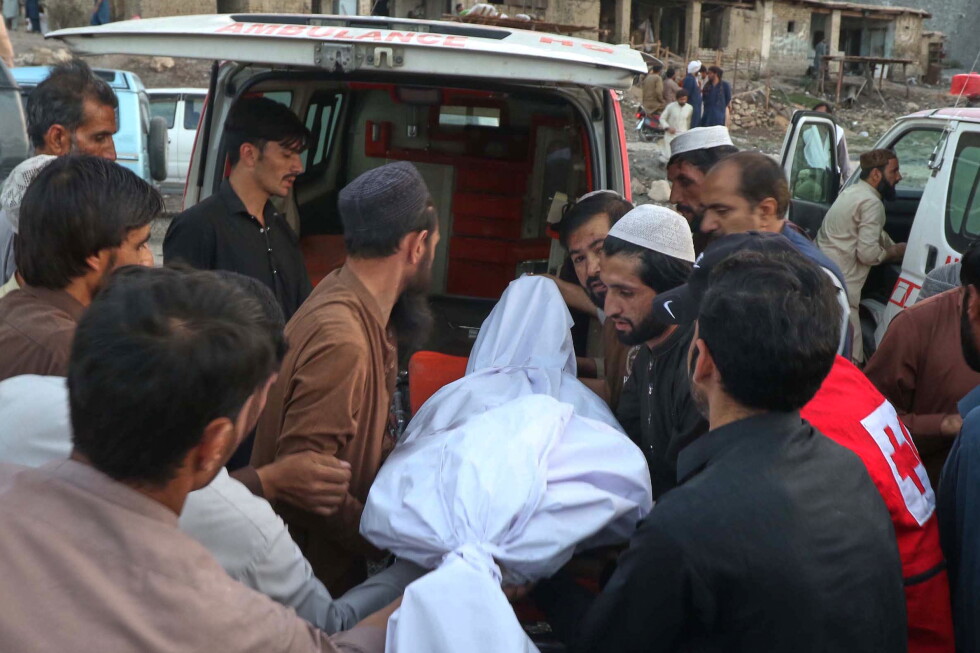
    A deadly Ebola outbreak in the Democratic Republic of the Congo has claimed nearly 120 lives, and public health teams are facing unusual challenges because the outbreak is driven by Bundibugyo virus, one of the rarest Ebola species, with no licensed specific treatments or vaccines ready for deployment. Unlike the more common Zaire Ebola species, for which multiple vaccines and therapeutics have been developed and approved, Bundibugyo virus has no candidate interventions even advanced enough to enter human clinical trials, leaving frontline responders to rely on foundational, decades-old outbreak control measures. “There’s nothing even close to ready for clinical trials,” explained Dr. Celine Gounder, an infectious disease specialist and epidemiologist who treated patients during the devastating 2014–2016 West African Ebola epidemic. “And so that means responders, healthcare workers and other aid workers are really back to the basics.”

    What makes this outbreak unusual is the specific pathogen at its center. Bundibugyo virus was first formally identified in 2007 by the U.S. Centers for Disease Control and Prevention’s Special Pathogens Branch, then led by Dr. Tom Ksiazek, now a virologist and veterinarian at the University of Texas Medical Branch. To date, this marks only the third recorded Bundibugyo outbreak, with all previous events occurring in the same Congo River basin region where the current outbreak is unfolding.

    Like all known Ebola viruses, Bundibugyo spreads through direct close contact with the bodily fluids of infected people—living or deceased. These fluids include blood, sweat, feces, and vomit, meaning healthcare workers and family members caring for sick patients face the highest risk of infection. “So very often we see doctors and nurses among the first to be infected and to die,” noted Gounder, who serves as editor-at-large for public health at KFF Health News.

    Based on limited data from the two prior small outbreaks, experts believe Bundibugyo virus may have a slightly lower mortality rate than the more widespread Zaire Ebola virus, the species responsible for most large Ebola outbreaks. Even so, the estimated 30% or higher mortality rate remains a major public health threat, though precise estimates are hard to calculate given the limited number of recorded infections. “I think a 30%-plus mortality rate is still quite scary, but it’s hard to say with a lot of precision because we don’t have a lot of experience,” Gounder said.

    Without targeted treatments or vaccines, clinical care for infected patients is limited to supportive care, a strategy that has proven effective at reducing death rates in past outbreaks. In the two previous Bundibugyo events, early identification of initial cases allowed rapid response teams to implement core control measures: providing frontline staff with full personal protective equipment, identifying and isolating exposed contacts, and delivering aggressive supportive care including intravenous or oral fluid replacement to manage dehydration, a common complication of Ebola infection. Proper supportive care “reduces mortality significantly,” Ksiazek confirmed.

    Today, public health teams are leaning on these same proven core strategies to contain the current outbreak. Response efforts focus on active case finding, prompt isolation of infected people, contact tracing to stop secondary transmission, and public education to help communities avoid exposure. As during the 2014–2016 West African epidemic, promoting safe burial practices is a top priority, since traditional funeral rites that involve close contact with deceased bodies have historically been a major driver of Ebola spread. Experts also emphasize that consistent access to high-quality personal protective equipment for healthcare workers remains non-negotiable for stopping transmission.

    While the absence of a vaccine is certainly a setback, experts point out that basic public health tools have successfully stopped every previous Ebola outbreak in the DRC, which has now weathered 17 separate Ebola events in its history. “Of course, it’s problematic because vaccines are some of our best tools for combating infectious diseases,” said Lina Moses, an epidemiologist and disease ecologist at Tulane University. “But other public health tools — public education, contact tracing, quick testing — still work. It’s important to keep in mind that every single Ebola outbreak that has occurred in the (Democratic Republic of the Congo) — we’re on our 17th now — has been stopped.”

    This reporting was contributed by Associated Press Southern Africa reporter Mogomotsi Magome from Johannesburg. The AP Health and Science Department receives funding support from the Howard Hughes Medical Institute’s Science and Educational Media Group and the Robert Wood Johnson Foundation, with the AP retaining full editorial control over all content.
  • ‘Best player in the comp’: Tom Trbojevic’s glowing endorsement of Blues star as Manly fullback provides injury timeline

    ‘Best player in the comp’: Tom Trbojevic’s glowing endorsement of Blues star as Manly fullback provides injury timeline

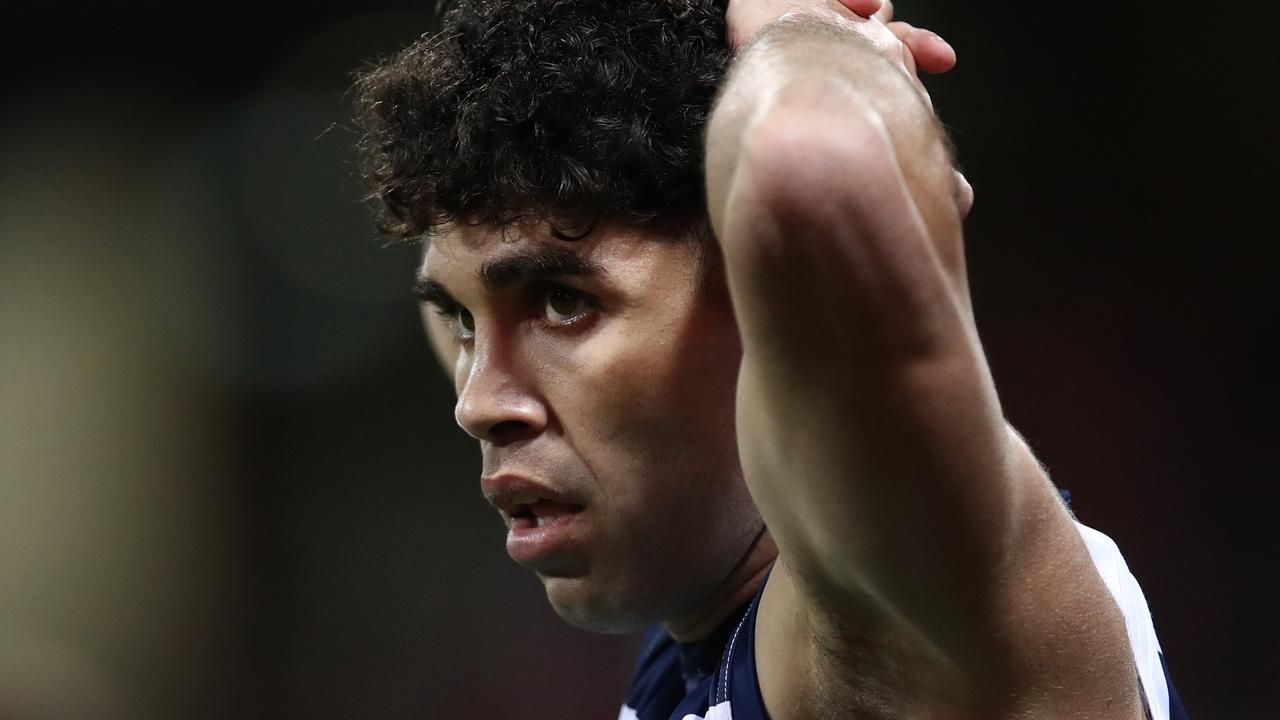
    As the 2026 State of Origin series opener in Sydney draws closer, a key injured NSW Blues star has thrown his full support behind two controversial selection calls that have rocked the rugby league community. Injured Manly Sea Eagles captain Tom Trbojevic, who ruled himself out of the squad with a hamstring injury sustained in a match against the Cowboys last month, says rookie winger Tolu Koula will thrive despite his lack of top-flight NRL experience in the position.

    Trbojevic, who is on track to return to club action no earlier than round 16 of the NRL season, opened up about the selection in an interview with SEN, where he heaped praise on the 22-year-old Manly speedster. Koula, who has been named on the left wing for the Origin opener, has never featured in the position at the NRL level, though he has played wing previously in the NSW Cup and for his home nation of Tonga in international competition. Despite the inexperience at the sport’s highest domestic level, Trbojevic says Koula’s natural aggression and athleticism make him the perfect fit for the role. “He’s a very confident kid. When he gets on a footy field, he absolutely goes after it. It’s going to be no different come next Wednesday night,” Trbojevic said. “The way that he moves is incredible. He’s going to be a real strike for them out wide.”

    The selection of Koula over veteran Blues winger Josh Addo-Carr has been one of the most talked-about calls from new NSW coach Laurie Daley, but Trbojevic also threw his weight behind another high-profile selection: the recall of former Blues captain James Tedesco, who will start at fullback after edging out in-form Penrith Panthers star Dylan Edwards for the spot. Tedesco will make his first Origin appearance since 2024, after continuing the red-hot form that earned him the 2025 Dally M Medal into the opening rounds of the 2026 NRL season. Trbojevic noted that choosing between the two elite fullbacks was an unenviable task for Daley, but said Tedesco is more than ready to deliver for his state.

    “He’s been unbelievable this season and last year, and he’s picked up this year where he left off,” Trbojevic said. “He’s always been very damaging around the ruck and gets the ball late in sets to attack tiring forwards, but he’s also done a lot of good work out wide, and that’s where he’s grown a lot. I wouldn’t like to be Laurie Daley in that situation because they’re two incredible players, but whichever way you go, you’re going to get someone to do a job.”

    Trbojevic also praised the selection of his Manly teammate Haumole Olakau’atu, who will earn his first starting Origin spot on the right edge after several appearances off the bench over previous series. Olakau’atu has been in dominant form for the Sea Eagles to open the 2026 season, with Trbojevic arguing the forward has been one of the best players in the entire competition over the past two months. “I thought he was almost the first one picked the way he’s played the last seven or eight weeks,” Trbojevic said. “He’s been our best player and has almost been the best player in the comp the way he’s gone after it. He’s obviously played Origin before coming off the bench, but if you give him that opportunity to start on the right edge, it really suits him because he can get into the game and hopefully can cause some havoc.”

  • Bolivia protest sees violent clashes, looting in La Paz

    Bolivia protest sees violent clashes, looting in La Paz

    Weeks of growing civil unrest in Bolivia boiled over into violent confrontation in the capital La Paz on Monday, as thousands of demonstrators demanding the resignation of center-right President Rodrigo Paz stormed key government sites, triggering tear gas barrages from security forces and widespread disruption across the Andean nation. The unrest comes as Bolivia grapples with its most severe economic crisis in 40 years, deepening public anger over soaring prices, failed policy reforms, and growing inequality after a shift away from two decades of socialist governance.

    The diverse coalition of protesters is led by workers, Indigenous communities, farmers, miners, and teachers, who have united around three core demands: immediate wage hikes to offset runaway inflation, concrete measures to restore long-term economic stability, and a reversal of moves to privatize Bolivia’s state-owned enterprises. Inflation in the country hit 14% year-on-year in April, the highest level in a generation, eroding household purchasing power and leaving many struggling to afford basic necessities.

    Paz, a conservative leader who took office less than six months ago after 20 years of socialist rule, has drawn sharp criticism for his early policy moves. Most notably, he eliminated long-standing fuel subsidies that had drained the national treasury’s international dollar reserves, a reform intended to shore up public finances that has instead left the country facing persistent fuel supply shortages.

    Monday’s clashes erupted early in the day, when riot police deployed tear gas to block a group of protesting miners from entering La Paz’s main central square, where the seat of national government is located. In response, demonstrators hurled stones and homemade explosives back at security forces. Official government imagery released after the confrontation confirmed that protesters had looted a government office, stealing furniture, computers, monitors and other office equipment. While authorities have not officially reported any casualties from the day’s violence, reporters from Agence France-Presse (AFP) on the ground observed at least two injured protesters. Deputy Interior Minister Hernan Paredes also confirmed that one protester died in clashes over the weekend, after falling into a ditch during skirmishes that broke out when security forces temporarily cleared protest blockades.

    On Monday afternoon, calm began to gradually return to La Paz’s streets, but the aftermath of the unrest was visible everywhere: thick clouds of tear gas still hung over major thoroughfares, most local businesses remained shuttered, and basic supplies were running critically low after weeks of road blockades that have cut off supply routes into the capital. As of Monday, the Bolivian Highway Administration counted at least 28 active blockades on major highways across the country. Prosters retook their blockade positions over the weekend after security forces briefly opened access routes Saturday, and resumed cutting off traffic to the capital on Monday. The government has been airlifting emergency food supplies into La Paz since May 10 to address widespread shortages of food, medicine, and fuel.

    In a significant escalation of the government’s response to the unrest, Attorney General Roger Mariaca announced Monday that authorities had issued an arrest warrant for Mario Argollo, secretary-general of the Central Obrera Boliviana (COB), Bolivia’s largest trade union federation, which has joined the calls for Paz’s resignation. Argollo faces charges of terrorism and inciting criminal activity, and the warrant is already in the hands of national police command. The government’s crackdown on the union leader has done little to dampen protester resolve, however.

    “We want him to resign because he’s incompetent. Bolivia is going through a moment of chaos,” 60-year-old farmer Ivan Alarcon, who traveled 60 miles from his home in Caquiaviri in western Bolivia to join the protests, told AFP.

    Supporters of former socialist President Evo Morales, who held power from 2006 to 2019, added further momentum to the protests on Monday, arriving in La Paz after a seven-day march from Oruro, a city roughly 180 kilometers south of the capital. While the government has already reached deals to end protests with some smaller groups, including urban teachers and certain mining factions, hardline factions of the movement have vowed to escalate their actions until Paz steps down.

  • Ex-British soldier imprisoned by Russia says he feels abandoned in occupied Ukraine

    Ex-British soldier imprisoned by Russia says he feels abandoned in occupied Ukraine

    Almost two years after he was captured while fighting as a volunteer with Ukraine’s Foreign Legion, a former 12-year veteran of the British Army has delivered a searing accusation against his home government, saying he has been left abandoned and without critical support while serving a 15-year sentence in a maximum-security Russian prison colony.

    Thirty-three-year-old Hayden Davies was captured by Russian forces more than 18 months ago after sustaining catastrophic injuries on Ukraine’s front lines. In a series of censored letters shared with the BBC from his detention facility — which Davies approved for publication — he detailed the brutal ordeal that led to his capture. After his radio failed and his combat partner was killed, Davies was trapped with a severely broken leg, bone protruding through the skin. With no route for evacuation, he made the desperate choice to crawl 150 meters over an entire day to a ruined building’s basement, where he survived on tinned food for two months before Russian forces discovered him. He treated his own injury by pushing the protruding bone back into his leg and crafting makeshift splints and crutches from scrap wood, describing the pain as the worst he had ever experienced.

    Davies was first convicted on charges of mercenaryism — a criminal accusation under Russian law that targets individuals fighting in foreign conflicts for material gain — by a Russian-controlled court in occupied Donetsk last December, which sentenced him to 13 years in prison. The UK does not recognize Russia’s occupation of Donetsk nor the authority of the courts operating there. Last week, a Moscow judge extended the sentence by an additional two years, ruling the original penalty was too lenient.

    In detention, Davies spent 12 months in solitary confinement before being moved to a shared cell. He told the BBC he has never received any communication from UK government representatives, and remains without the medical care his leg injury requires. After 12 years of service to the UK, he said, the total lack of support feels like a disgrace. “I served my country for 12 years in the British Army, and now, when I need help and medical treatment, no-one wants to know. This is a disgrace,” he wrote.

    A spokesperson for the UK Foreign, Commonwealth & Development Office (FCDO) confirmed the government maintains close contact with Davies’ family and provides consular assistance, and issued a strong condemnation of his conviction on what it calls false mercenaryism charges. But the FCDO has not responded to specific claims from activists who say UK officials have taken no tangible action to secure Davies’ release or support his legal team based in Russia.

    Anastasia Shevchenko, a Lithuania-based political activist who supports prisoners of war held in Russian captivity, told the BBC she notified both the UK embassies in Ukraine and Lithuania of Davies’ capture and detention last year, after connecting with him through fellow Ukrainian detainees held in the same facility. She said the only response she received was a note of thanks and a generic message wishing Davies courage. Unlike other nations that take more aggressive action to support their detained nationals, Shevchenko said, the UK has failed to provide even basic assistance: Davies has gone without adequate food, clothing and medication, forcing her to send personal funds to cover his basic needs. “This is the most important thing in captivity, not to be forgotten,” Shevchenko said, adding that the UK has the ability to do far more to secure Davies’ release and improve his conditions.

    International human rights groups have long documented systemic violations against prisoners of war and detained foreign fighters in Russia and Russian-controlled Ukrainian territory, including the widespread denial of adequate medical care, a charge Russian authorities consistently reject. The International Committee of the Red Cross has confirmed it does not have full, unimpeded access to POWs in these regions, a requirement explicitly laid out in the Geneva Conventions. A source close to Davies confirmed the former soldier continues to receive no medical care for his serious leg injury, and that UK officials have not reached out to Davies’ Russia-based legal team.

    To date, Davies has received only two letters from relatives since his capture, one from his sister and a second from another family member. The BBC’s attempts to contact Davies’ family for comment received no response.

    A Ukrainian government source with knowledge of the case told the BBC there is no evidence of active efforts by UK authorities to assist detained British citizens like Davies. The case echoes the experience of another captured British ex-soldier, Shaun Pinner, who was sentenced to death by a Russian-controlled court in 2022 and held for five months before being released in a prisoner swap brokered by the Saudi government. Pinner said the FCDO did a good job of keeping in regular contact with his family throughout his captivity, but played no role in negotiating his release.

    Pinner noted that Russia’s ongoing refusal to grant British diplomats access to detained foreign fighters makes direct government intervention extremely difficult. “I can understand there’s a lot of frustration over lack of access but if Russia doesn’t let diplomats in to see POWs, there’s not a lot you can do,” he said, adding that prisoner swaps are most effectively negotiated through Ukrainian channels.

    The FCDO has reiterated that under international law and the Geneva Conventions, prisoners of war cannot be prosecuted for taking part in hostilities, and has called on Russia to end its prosecution of detained fighters for political and propaganda purposes. In its official travel guidance for Ukraine, the FCDO warns British nationals that traveling to Ukraine to fight may violate UK domestic law and could result in prosecution on return to the UK. It also explicitly notes that the British government’s ability to provide assistance to captured or detained British fighters in Ukraine is extremely limited, a position that has drawn criticism from activists who argue the government has a duty to support its former service members even when they volunteer for foreign conflicts.

  • What really holds China and Russia together

    What really holds China and Russia together

    A candid off-script conversation caught on a hot microphone last September has offered a rare, unfiltered glimpse into the close personal and diplomatic bond between Chinese President Xi Jinping and Russian President Vladimir Putin, as the two leaders walked through Beijing’s iconic Tiananmen Square. In the casual exchange, Putin was heard musing on the possibility of extending human lifespan dramatically through sequential organ transplants, even joking about achieving immortality, to which Xi responded by noting expert projections that humans could reach a 150-year lifespan within the current century. For two long-ruling leaders who have publicly called each other their closest friend and have held power for a combined 39 years with no plans to step down, the lighthearted, off-the-record chat offered one of the few public insights into a partnership that has long been misunderstood and shrouded in secrecy. This week, that partnership is stepping back into the global spotlight, as Putin prepares to return to Beijing to mark the 25th anniversary of the landmark Treaty of Good-Neighbourliness and Friendly Cooperation between the two nations. The visit comes on the heels of U.S. President Donald Trump’s high-profile, extravagantly staged trip to meet Xi last week, which featured opulent banquets with gold tableware and a private tour of an ancient cultural site. In stark contrast, Putin’s visit has been deliberately low-key, with almost no advance details released to the public. The Kremlin has confirmed that one key goal of the trip is to hear a first-hand account of the discussions between Trump and Xi during the U.S. leader’s visit. It has also been reported that during Trump’s walk through Zhongnanhai — Beijing’s closed leadership compound, rarely accessed by foreign visitors — Xi casually referenced his long-time friend Putin, joking that the Russian leader had previously toured the restricted political space. While some in Washington have held out hope that Trump could persuade Beijing to distance itself from Moscow, analysts broadly agree that those hopes are little more than unfounded wishful thinking. In recent years, the two countries have formally described their bilateral connection as a “friendship with no limits”, but the reality of the partnership is far more nuanced than the slogan suggests. The dynamic between the two nations is deeply asymmetric, with any bilateral agreements overwhelmingly favoring Chinese terms, according to Alexander Gabuev, director of the Carnegie Russia Eurasia Center. “Russia is fully in China’s pocket, and China can dictate the terms,” Gabuev explains. This power imbalance is most visible in the economic sphere: China holds the position of Russia’s largest single trading partner, while Russia accounts for just 4% of China’s total global trade. China’s overall economy is many times larger than Russia’s, and it dominates exports to the Russian market. Years of sweeping Western sanctions imposed on Russia following its 2022 full-scale invasion of Ukraine have gradually pushed Moscow deeper into economic and diplomatic alignment with Beijing, creating new opportunities for Chinese firms to fill gaps left by departing Western companies. A prime example is Chinese tech giant Huawei, which has been targeted by U.S. sanctions and forced out of the United Kingdom’s 5G network. The company has capitalized on the exit of Western competitors to become a central foundational player in Russia’s telecommunications industry. As Russia’s economic and technological links to the West have fractured, China has become the primary source of expertise for Russia across technology, science, and industrial sectors. Most critically for Moscow’s foreign policy goals, Russia has grown increasingly dependent on Chinese components to sustain its war machine in Ukraine. A recent analysis from Bloomberg found that more than 90% of the technology restricted by Western sanctions that Russia imports now comes from China, representing a 10% increase from the previous year. Russian leadership is acutely aware of the risks that come with this lopsided dependence. In a recent commentary titled “We bow to no one”, Dmitry Trenin, president of the Moscow-based Russian International Affairs Council think tank, emphasized that Russia has no desire to become a vassal state of Beijing. “It’s absolutely essential for us to maintain an equal footing in our relations and to remember that Russia is a great power which cannot be a junior partner,” Trenin wrote. Yet for Moscow, there are few viable alternative partners to replace Beijing. China offers a scale of market demand for Russia’s core exports that no other country can match, a role that has become integral to Russia’s economic stability amid its break with the West. If China were to reduce its trade volumes with Russia, it would severely undermine Moscow’s ability to pursue its core foreign policy and military objectives. Despite the imbalance, Russia retains key buffers that prevent Beijing from exerting unchecked dominance over the relationship, analysts note. Marcin Kaczmarski, a security studies lecturer at the University of Glasgow, explains that Chinese policy makers are fully aware of the severity of the power asymmetry, and have deliberately adopted a policy of self-restraint to avoid a backlash among Russian political elites. “I would say that a summary of Chinese policy towards Russia is one of self-restraint. China is not pushing Russia around,” Kaczmarski says. This cautious approach stems in large part from recognition that while Russia is the junior partner, it remains a proud major power that is unlikely to acquiesce to external pressure. Gabuev points to a notable example from 2023, when Xi Jinping visited Moscow and was widely reported to have urged Putin to refrain from using nuclear weapons in Ukraine. Just days after the meeting, Russia announced it would station tactical nuclear weapons in neighboring Belarus, a move widely interpreted as a deliberate show of resistance to external pressure and a reminder of Russia’s independent strategic posture. While Russia’s protracted war in Ukraine creates certain liabilities for China, it also brings tangible strategic benefits for Beijing as it navigates its own regional tensions, particularly surrounding Taiwan. “Russia brings a lot to the table in terms of some military technologies such as niche equipment that it can still sell, and testing some Chinese equipment or components,” Gabuev says. Beyond military technology, Russia’s vast reserves of oil and natural gas hold huge strategic importance for China, which has been seeking to diversify its energy supplies to reduce geopolitical risk. In a May press conference, Putin noted that the two sides were close to achieving a “highly significant step forward in oil and gas cooperation”, a comment widely interpreted as referring to the long-stalled Power of Siberia 2 pipeline project. After years of slow negotiations, Russian energy giant Gazprom and China National Petroleum Corporation have reportedly signed a preliminary agreement for the pipeline, which will deliver 50 billion cubic meters of Russian natural gas to China each year via Mongolia. If completed, the project will be a transformative development for China’s energy security, particularly as tensions escalate in the strategic Strait of Hormuz. For Beijing, the shift toward increased reliance on Russian energy is not just a matter of pricing; it is a critical investment in long-term energy security amid growing global geopolitical instability. Unlike formal military alliances that require rigid coordination and shared commitments, the China-Russia partnership is defined by its deliberate strategic flexibility, a feature that analysts say gives it surprising resilience. “It is not an alliance, but a flexible strategic partnership,” explains Bobo Lo, former deputy head of mission at the Australian Embassy in Moscow, a partnership that has defied repeated Western predictions of imminent collapse. Western analysts have typically framed the Sino-Russian relationship in one of two extreme narratives: either as a unified “axis of authoritarianism” bound together by a shared goal of undermining the U.S.-led global order, or as a brittle, untrustworthy brotherhood on the brink of collapse. Neither narrative captures the nuanced reality of a deeply integrated partnership that two neighboring countries have built around shared core interests, despite their significant power asymmetry and occasional divergent priorities. Lo notes that even if both countries were to improve their relations with the West, they would still retain strong incentives to maintain close cooperation. The foundational shared interests are clear: first, they share a 4,300-kilometer border that was once a source of constant tension and insecurity, but is now a peaceful frontier that supports cross-border trade and cooperation. Second, their economies are deeply complementary: Russia is a leading exporter of energy and raw materials, while China’s massive industrial economy provides a ready, large-scale market for those exports. Third, both countries share a core opposition to the existing U.S.-led international order. A further unifying feature is the mutual non-interference stance the two countries adopt toward each other’s internal affairs. Unlike Western nations, which often condition engagement on shared values and human rights standards, Moscow and Beijing do not publicly criticize each other for controversial domestic policies. Western nations have raised repeated concerns over alleged large-scale human rights abuses in China’s Xinjiang region, which China denies, and over the death of Russian opposition leader Alexei Navalny, but neither Russia nor China has commented on these issues in the other’s case. “They don’t criticise each other over Xinjiang, the poisoning of Russian Navalny and so on. And they look eye-to-eye on a lot of issues of local governments in the UN… that creates an organic symbiotic relationship,” Gabuev says. This pragmatic approach to bilateral relations has deep historical roots that stretch back through the final years of the Soviet Union and into the post-Soviet era, he adds. On the question of whether the partnership will remain durable over the long term, one anonymous Chinese analyst acknowledged that the public framing of the relationship as an inseparable “boundless friendship” is partially performative, designed to project an image of unity and stability to the world. In practice, the public display of unity acts as a useful political tool to smooth over occasional differences in national priorities. While both countries oppose what they frame as “Western hegemony”, their strategic approaches to challenging that order differ significantly. The analyst noted that Russia favors building a new global order that completely bypasses the United States, while China adopts a far more cautious and pragmatic stance, prioritizing gradual, long-term gains over open confrontation and avoiding rash, high-stakes decisions. A clear example of this divergence came in China’s measured response to U.S. actions in Iran in the lead-up to Trump’s visit: Beijing refused to abandon its planned summit preparations, a choice that “clearly shows Beijing’s willingness not to provoke and not to close doors,” the analyst said. China has prioritized keeping communication channels open with Washington and avoiding unnecessary provocation, a markedly different approach from Russia’s more confrontational stance. Beyond high geopolitics, the depth of the Sino-Russian partnership is also being shaped by growing people-to-people ties, a factor that is often overlooked in mainstream analysis. From the top down, Xi and Putin have worked to cultivate an image of close personal friendship that sets the tone for broader bilateral connections. This visit will mark Putin’s 25th trip to China, and Russian bureaucratic officials interact with their Chinese counterparts more frequently than with officials from any other country. Not all analysts are convinced that popular cultural affinity between the two publics runs deep. Charles Parton, a former British diplomat to China, argues that ordinary citizens of both countries still prioritize the West when it comes to travel, study, and investment. “Do Chinese want to study in Moscow and settle in Moscow and buy flats in Moscow? No,” Parton says, noting that when given the choice, Russians prefer to invest and settle in Western cities like Paris, London, and Cyprus rather than Beijing. But Gabuev pushes back on that claim, arguing that people-to-people connections have grown rapidly in recent years, driven largely by Western sanctions and tighter European visa policies that have pushed ordinary Russians to turn toward China. A mutual visa-free travel regime between the two countries means Russians can easily travel to major Chinese cities, with multiple daily direct flights from Moscow. Russians are also increasingly adopting Chinese consumer technology and automobiles, a trend that has accelerated following Western sanctions that cut off access to many European and American brands. “So the interconnectedness, visa-free travel and ease of payment and navigation makes China much closer than it used to be. And then all of the exchange programmes, scholarships, joint research programmes bring the two societies closer,” Gabuev says. While the growing power imbalance between Moscow and Beijing remains a long-term structural weakness for the partnership, most analysts agree that predictions of an imminent collapse are unfounded, at least in the near term. Despite their differences and divergent priorities, Lo says, “The Sino-Russian partnership remains resilient. Both sides recognise that it is too important to fail, especially given there are no viable alternatives to continuing cooperation.”

  • English Premier League clubs accused of sportswashing Israel’s atrocities

    English Premier League clubs accused of sportswashing Israel’s atrocities

    London-based anti-poverty and human rights campaign group War on Want has released a damning new report that accuses four top English Premier League clubs of violating the freedom of expression and discriminating against pro-Palestinian staff and supporters, while documenting widespread corporate sponsorship ties between top flight clubs and entities that enable Israel’s military actions and apartheid policies in Gaza and the occupied Palestinian territories.

    Titled *Red Card: English Premier League sportswashing Israel’s atrocities against the Palestinians*, the investigation names Arsenal, Brighton & Hove Albion, Burnley and Everton as the clubs that have disproportionately targeted pro-Palestinian workers and fans for punishment. The report builds on years of scrutiny of the global league’s extensive commercial and ownership ties to international actors with direct links to Israel’s military occupation and ongoing military campaign in Gaza.

    Among the most high-profile cases documented is that of Mark Bonnick, a kitman who had served Arsenal for 22 years before his abrupt dismissal on Christmas Eve 2024. Bonnick was targeted in an online smear campaign that accused him of antisemitism over social media posts criticizing Israel’s conduct in Gaza. While both the Football Association (FA) and Arsenal’s own internal review found no evidence of antisemitism – a conclusion backed by Jewish anti-racism organizations – the club ultimately fired Bonnick on the grounds that his posts had brought the club “into disrepute”. War on Want argues Arsenal prioritized the demands of hostile pro-Israel campaigners over the staff’s right to peaceful expression in support of Palestinian human rights.

    Other cases of discriminatory treatment laid out in the report include a Brighton season-ticket holder banned from the club’s stadium for five years simply for wearing a pro-Palestine t-shirt, while an Israeli academy coach at the same club faced no disciplinary action after posting a social media message calling Palestinians “human animals” and saying “Let them die a death of suffering”. An Everton female fan was barred from entering the club’s new Hill Dickinson Stadium for wearing a Palestine-branded shirt, and Burnley has been criticized for failing to act after a senior club consultant liked a social media post claiming Palestinians are “invented people” and “the biggest Jew haters on Earth”.

    Beyond the suppression of pro-Palestinian speech, the investigation finds that at least nine of the 20 Premier League clubs count direct sponsorship from companies that War on Want deems complicit in Israel’s atrocities. The nine clubs named are Arsenal, Chelsea, Crystal Palace, Everton, Fulham, Liverpool, Manchester City, Manchester United and Tottenham Hotspur. Of these, War on Want identifies Liverpool, Arsenal, Tottenham, Manchester City and Manchester United as the most deeply entangled with companies facilitating Israeli military actions and apartheid. Additionally, Arsenal, Fulham, both Manchester clubs and Newcastle United are flagged for potential implication through the activities of their owners.

    In total, the report documents 15 current Premier League sponsors that it says profit from and are complicit in Israel’s genocide, illegal 56-year occupation and apartheid system. These include six major technology and surveillance firms – Canon, Cisco, Google/Alphabet, HPE, Oracle and Sony – that provide critical infrastructure enabling Israeli military and population control operations. Cisco, which holds an official technology partnership with Manchester City, supplies servers, cybersecurity tools and communications equipment to both the Israeli military and national police. Even as Manchester City manager Pep Guardiola has publicly voiced support for Palestinian rights this season, the club’s Emirati ownership maintains close political alliances with Israel and has been accused of fueling the ongoing civil war in Sudan through backing for the Rapid Support Forces paramilitary.

    Financial and energy firms that sponsor Premier League clubs also feature prominently in the report: AXA, BP, Eurobank, Evelyn Partners, HSBC and Standard Chartered are all named as enabling Israeli atrocities through financing and energy supplies. BP provides crude oil directly to the Israeli military, while the listed financial institutions have collectively invested billions of dollars in companies that support Israel’s military campaign and occupation. Coca-Cola, another major sponsor, operates subsidiaries and facilities including vineyards in occupied East Jerusalem, the West Bank and the Golan Heights, territory captured and occupied by Israel in 1967 in a move not recognized by international law.

    Additional firms that provide material or ideological support to Israel, per the report, include Meta, Deel, Emirates, Etihad, Puma, Wix and X (formerly Twitter). Google’s parent company Alphabet holds government contracts with Israel to provide cloud storage and core tech infrastructure that supports the country’s military, apartheid-era population tracking and border control systems. Oracle, co-founded by prominent Zionist philanthropist Larry Ellison, built the IT infrastructure that underpins Israel’s military operations and even donated specialized equipment to Israeli army units operating in Gaza during the current genocide.

    Notably, the entire Premier League is indirectly backed by Barclays, the league’s title sponsor, which War on Want says has a long history of enabling Israeli apartheid.

    “What remains unclear is why clubs and English football institutions can be so hostile to peaceful expressions of support and justice for Palestinians enduring genocide and apartheid,” said Neil Sammonds, War on Want’s senior Palestine campaigner, in an interview with Middle East Eye, which first reported on the findings. “Is it conscious or unconscious anti-Muslim or anti-Palestinian hatred? Is it support for Israel, or fear of upsetting people who support Israel? A lot more needs be done to understand this, and to challenge it.”

    The report comes amid longstanding criticism of the Premier League’s transformation into a globally focused, billion-pound business. The league is broadcast to 200 countries, generates more than £10 billion ($13.4 billion) in annual revenue and boasts a global fanbase of up to two billion people. Its clubs are increasingly owned by foreign investment vehicles, including sovereign wealth funds from Saudi Arabia and the United Arab Emirates, leading to repeated accusations that league officials have prioritized commercial profit over ethical standards and the working-class roots of the sport.

    War on Want’s findings add a new layer of ethical controversy to the league, which has faced repeated calls to address the suppression of pro-Palestinian speech and cut ties with sponsors complicit in Israel’s actions in Gaza.

  • US to screen for Ebola at airports, one American in DR Congo infected

    US to screen for Ebola at airports, one American in DR Congo infected

    The United States has rolled out new public health measures to block Ebola importation and spread, including mandatory airport screening for travelers from affected Central African regions, after a United States citizen working in the Democratic Republic of Congo (DRC) tested positive for the deadly virus, the U.S. Centers for Disease Control and Prevention (CDC) announced Monday.

    The updated precautions come just after the World Health Organization (WHO) designated the ongoing Ebola outbreak in eastern DRC as a Public Health Emergency of International Concern, the global body’s highest alert level for cross-border disease threats. During a press briefing, CDC Ebola response incident manager Satish Pillai confirmed that the infected American developed symptoms over the weekend and returned a positive diagnosis late Sunday. Medical teams are currently arranging to transfer the patient to Germany for specialized care, and six additional people who may have been exposed are being evacuated out of the region for mandatory health monitoring.

    There are currently 25 U.S. personnel based at the CDC’s DRC field office, and the agency is deploying an additional senior technical coordinator to support local response efforts at the request of global health partners. As of Monday, CDC officials assess the immediate risk of widespread Ebola transmission to the general U.S. public remains low. “We will continue to evaluate the evolving situation and may adjust public health measures as additional information becomes available,” the agency said in an official statement.

    Alongside expanded entry screening at all U.S. airports, the CDC has implemented new entry restrictions for non-U.S. citizens: any traveler who has visited the DRC, Uganda, or South Sudan in the 21-day incubation window for Ebola will be barred from entering the United States. The U.S. Embassy in Kampala, Uganda, has also temporarily suspended all routine visa services, with notifications already sent to all applicants impacted by the pause.

    Former U.S. President Donald Trump noted Monday that he was concerned by the outbreak’s scale but added, “I think that it’s been confined right now to Africa.”

    As of Sunday’s official update from DRC Health Minister Samuel-Roger Kamba, the outbreak has been linked to 91 suspected deaths and roughly 350 suspected cases, with most infections recorded among people aged 20 to 39, and over 60% of cases affecting women. There is currently no licensed specific treatment or widely available vaccine for the Ebola strain driving the current transmission surge.

    The U.S. response has drawn criticism from global health experts, particularly in the wake of the Trump administration’s formal withdrawal from the WHO earlier this year. For weeks, current U.S. officials have declined to answer questions about how deep cuts to the U.S. Agency for International Development (USAID) – an organization that led coordinated response efforts during past Ebola outbreaks – have undermined current monitoring and containment work.

    CDC officials have pushed back on some criticism, emphasizing that the agency remains in close collaboration with international partners and local health authorities in affected countries. The new measures announced Monday include sustained deployment of CDC personnel to support outbreak containment, contact tracing of exposed individuals, and laboratory testing in affected regions. The U.S. State Department also announced Monday that it has mobilized $13 million in emergency funding to support immediate response operations.

    Still, Matthew Kavanagh, director of the Georgetown University Center for Global Health Policy and Politics, called the U.S. response to date “disappointing,” arguing that the new travel restrictions and entry screenings are “more theater than effective public health measures.” He noted that the Trump administration has long claimed it could replace WHO’s global outbreak response capacity with bilateral deals and domestic U.S. efforts, saying “This outbreak clearly shows that is a failed strategy.”

    During previous large Ebola outbreaks in Central Africa, coordinated action between USAID, CDC, and U.S.-funded non-profit organizations enabled rapid deployment of resources and swift containment of spread, Kavanagh explained. In contrast, “we’re weeks into an outbreak and only finding out about it after hundreds of cases and major spread including to the capital city of Uganda,” he said, adding that the current administration is “playing catch-up” to a rapidly evolving crisis.

  • ‘FedEx says your parcel has drugs’: The scam that trapped an Indian comedian

    ‘FedEx says your parcel has drugs’: The scam that trapped an Indian comedian

    In October 2024, Mumbai-based stand-up comedian Ankita Shrivastav received a routine phone call that would turn into an eight-hour ordeal of extortion and psychological manipulation, becoming a stark example of India’s exploding digital fraud crisis. The caller, claiming to represent FedEx, told Shrivastav that police had intercepted a package she had supposedly sent to Iraq containing illegal narcotics. The conversation quickly shifted to what scammers now call a “digital arrest”: the fraudsters connected her to two men posing as uniformed police officers over a video call, who ordered her to comply with their demands while her identity was being verified.

    For nearly a full workday, the fake officers controlled Shrivastav through her laptop camera: she was forbidden from turning off the device, leaving her home, or contacting any friends, family, or actual law enforcement. They bombarded her with detailed questions about her personal finances, bank accounts, and transaction history, repeatedly emphasizing the severity of the false charges and the legal trouble she would face if she did not cooperate. Speaking to the BBC, Shrivastav recalled the unrelenting pressure leaving her disoriented and emotionally drained, desperate to end the terrifying experience. By the time the scammers cut contact, she had authorized transfers totaling 900,000 Indian rupees, equal to roughly $9,300, only to realize minutes later that the entire operation was an elaborate scam.

    Like many scam victims, Shrivastav faced the added sting of judgment after the incident. “‘You’re educated, how did you get scammed?’ That is what everyone I told asked me,” she said, a question she has repeatedly asked herself. Shrivastav kept her experience private until April 2025, when she turned her trauma into a 30-minute stand-up set uploaded to her YouTube channel, designed to raise public awareness of how easily anyone can fall victim to these schemes.

    Shrivastav is far from alone in facing this type of cybercrime. New data from India’s National Crime Records Bureau (NCRB) shows that cybercrime incidents rose nearly 18% year-over-year in 2023-2024, with total losses to digital fraud exceeding 220 billion rupees. Registered cybercrime cases hit 101,928 in 2024, a nearly 50% jump from just three years prior in 2021. Among the most common cons reported nationwide is the “digital arrest” scam, a rapidly evolving tactic where criminals impersonate police or government officials to falsely accuse victims of crimes, trap them in continuous video calls, and intimidate them into transferring funds.

    Digital scams extend far beyond fake arrests: fraudsters also deploy fake investment platforms, phishing emails and SMS messages to steal sensitive credentials such as one-time passcodes (OTPs) and account passwords, and increasingly use artificial intelligence to clone voices of loved ones or public figures to extract money. Experts note that while rising reported cases partly reflect improved reporting systems, the trend also underscores a dramatic shift in the nature of criminal activity in India. An editorial in *The Telegraph* framed the NCRB data as a reflection of “the emerging anxieties of a society that is being reshaped by technology, urbanisation and economic change,” noting that new forms of cybercrime are putting unprecedented pressure on India’s overstretched criminal justice system.

    For Shrivastav, that pressure has translated to little progress recovering her lost funds. After multiple trips to local law enforcement and banking institutions, she said she has yet to see any results: “The scammers were one step ahead of the police and bank authorities.” NCRB data supports her frustration: by the end of 2024, roughly 100,000 cybercrime cases remained stuck in the investigation pipeline, with close to 75,000 yet to go to trial.

    Indian authorities have not ignored the growing crisis. In 2020, the federal government launched the Indian Cybercrime Coordination Centre (I4C), a national body that partners with domestic and international agencies to disrupt cybercrime networks. The government has also rolled out a dedicated 1930 cyber fraud helpline, an online portal for reporting and blocking fraudulent activity, run widespread public awareness campaigns, and updated data protection and technology laws to crack down on deepfake and AI-enabled voice scams. Most recently, Home Minister Amit Shah announced that I4C is collaborating with the Reserve Bank Innovation Hub to leverage artificial intelligence to identify and shut down “mule accounts” – the bank accounts and digital wallets scammers use to launder stolen funds while hiding their identity. India’s central bank is also currently drafting new regulatory measures to target digital scammers.

    Even with these interventions, cybercrime rates continue to climb. Journalist and author Soumya Gupta, who wrote *Bharat Bluff: Inside the cons of India’s internet revolution*, explains that the rapid expansion of internet and smartphone access across India has put hundreds of millions of new users at risk. Recent government data shows that more than 86% of Indian households now have internet access, but digital literacy initiatives have failed to keep pace with this boom. While public awareness campaigns and media reporting are slowly closing that gap, Gupta emphasizes that scamming relies far more on psychology than technology.

    In her writing, Gupta notes that scammers build schemes to exploit universal human vulnerabilities: fear, greed, core beliefs, and social connections. Once a victim is pulled into a scam, many struggle to extract themselves, either out of shame to admit their mistake or due to the sunk-cost fallacy that keeps them complying as more money is on the line. Scammers also closely track users’ online activity to craft personalized cons that feel credible and compelling to their targets.

    For Shrivastav, the scammers exploited two deep-rooted vulnerabilities: a cultural fear of police authority and a desire to protect her public reputation as a comedian. “From a young age, we’re taught to be afraid of the police and to obey authority. That ingrained fear overrode the alarm bells that were ringing in my brain,” she explained. “I was also eager to prevent any incident that would spoil my reputation among fans.”

    Sharing her story through stand-up comedy felt like a risky, vulnerable step – she worried audiences would judge her as foolish for falling for the scam. But she said the choice to go public was necessary: “I wanted people to know that if I – an educated, urban woman who considers herself to be street-smart – could get scammed, it could happen to anyone.”

    Gupta echoed Shrivastav’s call for caution, urging internet users to carefully protect their personal data online and follow two core rules: any offer that seems too good to be true almost certainly is, and if a situation feels off, stop all communication and reach out to a trusted source or official authority for help.

  • Three killed in San Diego mosque shooting, two attackers dead

    Three killed in San Diego mosque shooting, two attackers dead

    A horrific act of violence has shaken the Muslim community in Southern California, after a mass shooting at the region’s largest mosque left three people dead on Monday, with the two teenage attackers dying from self-inflicted gunshot wounds shortly after the assault, local law enforcement confirmed.

    According to San Diego Police Chief Scott Wahl, emergency dispatch received an active shooter call targeting the Islamic Center of San Diego — a sprawling worship complex that also hosts an adjacent school — and first responders arrived at the scene in just four minutes. When officers pulled up to the property, they immediately found three deceased victims lying outside the center’s main building. One of those killed has been confirmed as a security guard employed by the mosque, though the identities of the other two victims have not been released to the public as of Monday evening.

    Authorities also received follow-up reports of additional gunfire near the campus, where a local landscaper working in the area came under fire but escaped without injury. Law enforcement teams launched an immediate active shooter sweep of the mosque and the connected school, confirming that all staff, teachers and children inside the facility were unharmed. Following a short lockdown order that urged local residents to shelter in place, police announced the threat had been fully neutralized.

    Aerial television footage from the scene showed dozens of law enforcement patrol cars surrounding the mosque complex, with heavily armed response units congregating outside the main building and one person visible lying on the ground in a large pool of blood. A short distance from the worship center, officers found the suspects’ vehicle parked in the middle of a street, with the two attackers — a 19-year-old and a 17-year-old — dead inside from self-inflicted gunshot wounds. Chief Wahl confirmed that no officers fired their weapons during the response to the attack.

    Mosque imam Taha Hassane expressed shock and grief over the unprecedented attack on the community’s place of worship. “We have never experienced tragedy like this before. And at this moment all that I can say is, sending our prayers and standing in solidarity with all the families in our community here,” Hassane said. “It is extremely outrageous to target a place of worship.”

    Political leaders across levels of government have offered responses to the violence. Former U.S. President Donald Trump called the shooting a “terrible situation” during a press briefing, noting that he had received initial updates and would be reviewing the incident closely. California Governor Gavin Newsom was also briefed on the attack immediately after it unfolded, with his press office releasing a statement on social media platform X thanking first responders for their rapid work to secure the area and protect local residents, while urging the public to follow instructions from local law enforcement.

    The attack has prompted renewed conversations about religious-based violence and gun safety in the United States, as the San Diego Police Department continues to process evidence at the scene and investigate the motive for the assault on the Muslim community.

  • Why Elon Musk lost in the OpenAI court battle against Sam Altman

    Why Elon Musk lost in the OpenAI court battle against Sam Altman

    In a high-stakes legal showdown that has gripped the global tech industry, billionaire entrepreneur Elon Musk has emerged on the losing end of his courtroom battle against OpenAI CEO Sam Altman, rooted in a bitter dispute over the AI research lab’s dramatic transformation from a non-profit entity to a for-profit enterprise. BBC technology correspondent Lily Jamali was present inside the courtroom to observe the proceedings as Musk laid out his core allegation: that Altman had violated the terms of the original non-profit founding agreement that shaped OpenAI’s creation when he oversaw the company’s transition to a for-profit operating model.

    The conflict traces back to OpenAI’s founding in 2015, when it was launched as a non-profit research organization with a stated mission of developing artificial general intelligence that benefits all humanity. Musk was an early founding investor and board member, though he stepped down from the board in 2018 and eventually cut ties with the organization he helped bring to life. After OpenAI launched ChatGPT in 2022 and rapidly grew its user base and commercial valuation, Musk renewed his public criticism of the company, arguing that it had abandoned its original non-profit, public-benefit roots in pursuit of corporate profit.

    Musk’s lawsuit centered on the claim that Altman and other OpenAI leaders breached the binding founding contract that committed the company to remaining non-profit and open in its research activities. The legal battle has been closely watched across the technology sector, as it raises fundamental questions about the governance of high-stakes AI development, the fiduciary duties of founders of mission-driven tech organizations, and the balance between commercial innovation and public benefit in the rapidly growing AI industry. With the court’s ruling siding with Altman and OpenAI, the decision clears a key legal hurdle for the company as it continues its commercial expansion, while leaving Musk’s public campaign to hold OpenAI to its original founding mission without a legal victory.