作者: admin

  • Trump v Massie: Could president’s Republican nemesis survive $20m attack to oust him?

    Trump v Massie: Could president’s Republican nemesis survive $20m attack to oust him?

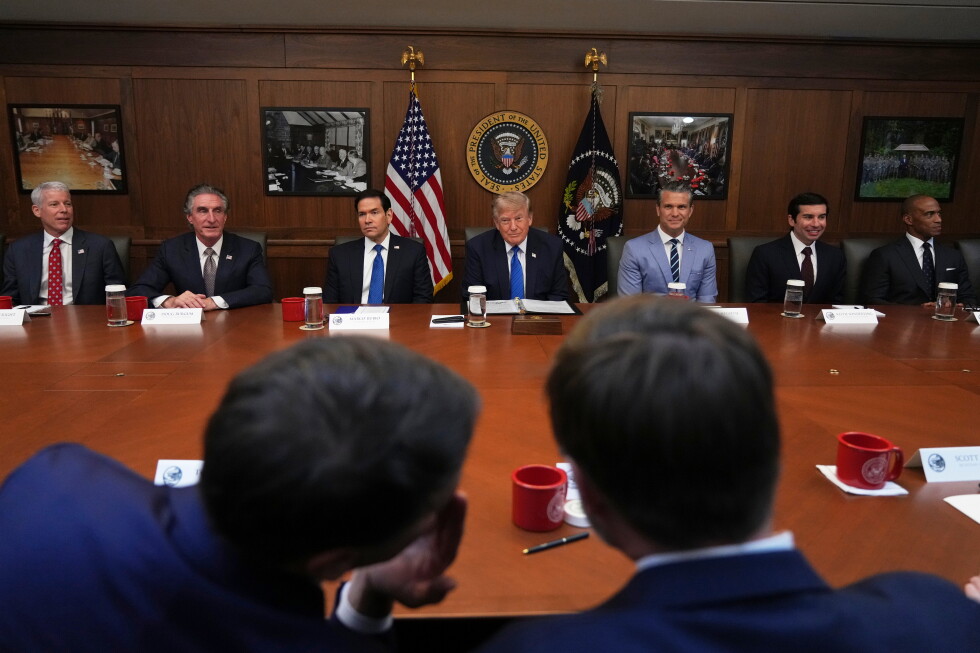
    As voters head to the polls for Kentucky’s 4th Congressional District Republican primary on Tuesday, the nation is watching one of the most explosive intraparty showdowns of the 2026 election cycle: a test of whether sitting Congressman Thomas Massie can defy former president Donald Trump and hold onto his seat. The contest has become a defining referendum on Trump’s unchallenged grip over the modern Republican Party, with national consequences for any other GOP lawmakers considering breaking with the party’s leader.

    The conflict between Massie and Trump stems from the Kentucky congressman’s repeated breaks with the White House on high-profile issues core to Trump’s agenda. Massie voted against Trump’s landmark 2025 tax and spending package, arguing it added trillions of dollars to the national debt; he backed efforts to roll back Trump’s tariffs on Canada; he supported measures to curtail Trump’s military operations in the Caribbean targeting suspected drug trafficking vessels and the ongoing U.S. military deployment in Iran. Most notably, Massie joined a bipartisan coalition that successfully pressured Trump’s own Department of Justice to release the full, unredacted files on deceased convicted sex offender Jeffrey Epstein, a move that infuriated the president.

    Trump’s response has been unrelenting. He has branded Massie with a barrage of vicious insults, calling him a “moron,” “lowlife,” “loser” and “major sleazebag,” even attacking other Republican politicians who dare to stand with the Kentuckian. When Colorado Congresswoman Lauren Boebert campaigned alongside Massie earlier this month, Trump called her “weak-minded” and “dumb” on his Truth Social platform, threatening to yank his endorsement of her re-election bid – a threat that carried little practical weight, as Colorado’s primary filing deadline had already passed, but sent a clear warning to any would-be dissenters. By March, Trump had handpicked his own challenger to unseat Massie: retired Navy Special Forces veteran Ed Gallrein, who has centered his entire campaign on being the president’s preferred candidate.

    The race has deepened divides within Kentucky’s local GOP, with officials and voters split sharply over Massie’s brand of uncompromising libertarian small-government conservatism. To his supporters, Massie is a principled lawmaker who keeps his word even when it costs him politically. “He’s one of the most consistent congressmen,” said Rex Morgan, a attendee of a Massie meet-and-greet in Shelbyville. “Even if it were to cost him his job, he will not go back on his word.” But to critics within the party, Massie’s intransigence is nothing more than political grandstanding, designed to grab media attention at the expense of the GOP’s broader agenda. With Republicans holding only a razor-thin majority in the House during Trump’s second term, Massie’s breaks have repeatedly delayed or derailed the president’s legislative priorities. “It’s not that you have to agree on every single issue, but at a certain point you’ve got to look at the big picture and say, how can we move this ball forward?” said Allen Volz, vice-chair of the Boone County Republican Party.

    Massie has walked a careful line to court the district’s deeply pro-Trump electorate – Trump won Kentucky’s 4th District by 35 points over Kamala Harris in the 2024 presidential election. He emphasizes that he has voted with the Trump administration 90% of the time, framing his occasional breaks as pushes to hold the Republican Party accountable to its small-government promises. “The problem we have is not that I’m voting against the Republican Party up there, it’s that the Republican Party up there is sometimes voting against Republican people back home. That’s the 10% of the time,” Massie explained at his Shelbyville event. He argues that his opposition to bloated spending packages improves final legislation, noting “the negotiation starts when one person says no. And if nobody says no, then you get the whole standing pile of crap.”

    By contrast, Gallrein’s campaign strategy has been straightforward: he leans entirely on Trump’s endorsement, printing it on yard signs, featuring it front-and-center on his website and social media, and making it the core of every ad buy. The former Navy SEAL, who owns a farm and events venue in Shelbyville, has run an unusually low-profile campaign: he has skipped nearly all primary debates, holds small, unannounced events, and declines almost all national media requests. “At the end of the day, Gallrein’s best argument is that Trump wants him,” said Trey Grayson, a former Kentucky secretary of state and Republican strategist. “I think their theory is there are enough folks for whom that’s enough that you get to 51%.”

    The race has attracted a raucous cast of national supporters on both sides, and has become the most expensive House primary in U.S. history, with total spending surpassing $32 million. Most of the outside money opposing Massie comes from three high-profile billionaires: Las Vegas casino magnate Miriam Adelson, and hedge fund managers Paul Singer and John Paulson, whose funding has been funneled through a pro-Trump super PAC called Kentucky MAGA and pro-Israel lobbying group AIPAC, which opposes Massie’s criticism of U.S. military aid to Israel. Anti-Massie ads have flooded local airwaves, including one controversial spot that used artificial intelligence to generate fake images of Massie with progressive Democratic lawmakers Alexandria Ocasio-Cortez and Ilhan Omar, falsely framing the trio as a threat to Trump’s agenda. Massie has fought back, outraising his opponent in large part thanks to a national grassroots donor base energized by his push for the Epstein files, and has run ads framing Gallrein as a puppet of wealthy special interests.

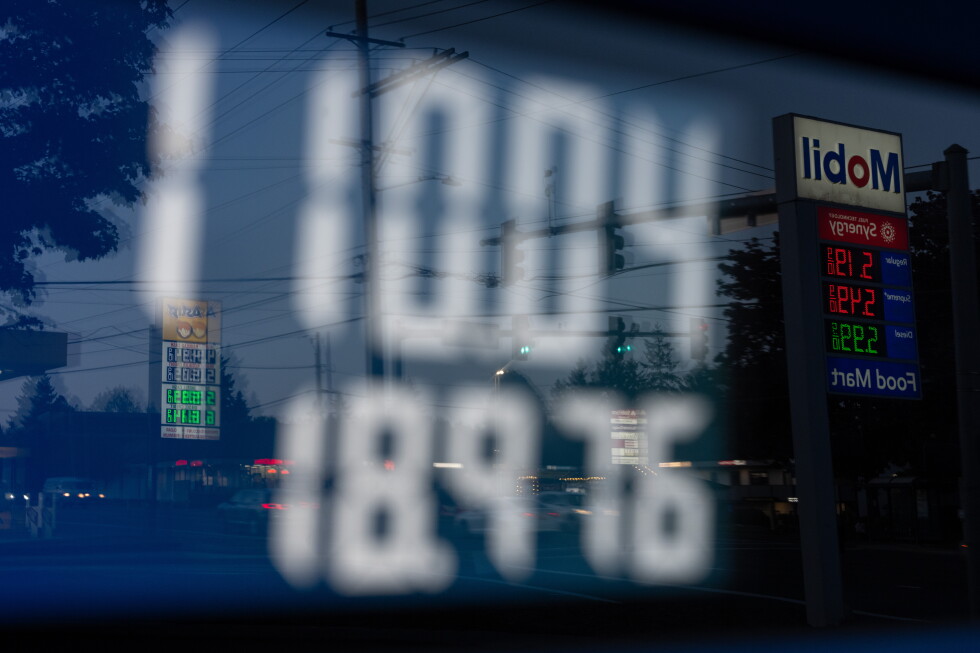
    As election day arrives, recent polling shows the race is a statistical dead heat. Political analysts note that Kentucky’s 4th District has demographic features that could work in Massie’s favor: it includes large swathes of more affluent, educated suburban voters around Louisville and Cincinnati, a demographic that is less reliably pro-Trump than the lower-income rural voters that have formed the core of the president’s recent base. Trump’s sagging national approval ratings, dragged down by rising gas prices and divisions within the GOP over his ongoing military campaign in Iran, also bolster Massie’s non-interventionist foreign policy brand. A Massie win would send shockwaves through the Republican Party, proving that it is possible for a sitting GOP lawmaker to break with Trump and survive. “A single house member going against the president of the US and prevailing?” said Grayson. “That’s a tell that maybe you can stand up and get away with it.” A loss for Massie, however, would cement Trump’s control over the party, sending a clear message that dissent from the president’s agenda will not be tolerated.

  • Students protest in Venezuela after deaths of political prisoner and his mother

    Students protest in Venezuela after deaths of political prisoner and his mother

    CARACAS, VENEZUELA – A solemn demonstration gripped Venezuela’s capital Monday, as dozens of protesters gathered to honor the life of Carmen Navas, an 82-year-old woman who died just days after finally learning her son had died in state custody nine months prior.

    Mostly made up of college students, the crowd staged a temporary blockage of a major Caracas highway, directing sharp blame at the Venezuelan government for both deaths: that of 51-year-old Víctor Hugo Quero, whose detention has been widely categorized as politically motivated, and his elderly mother Navas, who spent months searching for answers about her son’s fate. Chanting calls for accountability, protesters carried a large banner emblazoned with Navas’ portrait, and unified in slogans declaring “They didn’t die; they were killed!” and “Justice for Carmen!”

    Student leader Miguel Ángel Suárez summed up the public reaction to the pair’s deaths, noting, “What it stirs up in Venezuelans, in the Venezuelan youth, is rage.”

    The timeline of the tragedy stretches back to January 2025, when Quero was first taken into state custody. For nine months, Navas waged a relentless search for information: she visited detention facilities, courthouses, and multiple government agencies, repeatedly demanding confirmation that her son was alive. It was only 10 days before her own death that Venezuela’s prisons agency released an official statement confirming Quero had died in July, after being hospitalized for an underlying gastrointestinal issue while in custody.

    Per the government’s official account, Quero died of “acute respiratory failure secondary to pulmonary thromboembolism.” Officials attempted to justify the nine-month information blackout by claiming Quero had not provided emergency contact details for his family – a claim that has done little to quell public anger.

    The incident has sparked immediate condemnation from across Venezuela’s political opposition, local and international human rights groups, and family members of other people detained on political charges in the country. According to Foro Penal, a prominent Venezuelan prisoners’ rights organization, more than 400 people are currently being held in the country for politically motivated reasons.

    This development comes amid a string of ongoing political tensions across Latin America, with AP continuing full coverage of regional developments at its dedicated Latin America and the Caribbean hub.

  • Neymar picked for Brazil’s World Cup squad despite doubts on fitness

    Neymar picked for Brazil’s World Cup squad despite doubts on fitness

    RIO DE JANEIRO – In a surprise call-up that defied widespread local football pundit predictions, Brazil head coach Carlo Ancelotti has named 34-year-old star Neymar to the nation’s 26-man 2026 FIFA World Cup roster, locking in the forward’s spot for his fourth appearance at the global tournament. As Brazil’s all-time leading goalscorer with 79 international caps to his name, Neymar has faced an uphill battle to regain full match fitness since suffering a torn anterior cruciate ligament in his left knee back in October 2023. Since returning to his boyhood club Santos earlier this year, the forward has featured in 8 matches, notching four goals and two assists while working to build up match rhythm.

  • Selling children to survive: Afghan fathers forced to make impossible choices

    Selling children to survive: Afghan fathers forced to make impossible choices

    As the first pale light of dawn spreads over the dusty, arid streets of Chaghcharan, capital of Afghanistan’s hard-hit Ghor province, hundreds of jobless men already crowd the main square. They line the curbs, eyes scanning every passing vehicle, every potential passer-by, desperate for any day’s work that will put bread on their families’ tables. For most, this daily wait will end in disappointment. Forty-five-year-old Juma Khan is one of the lucky few: over the past six weeks, he has secured just three days of paid labour, earning between 150 and 200 Afghani – less than $3.20 – per day. His story lays bare the scale of the crisis unfolding across Afghanistan today. “My children went to bed hungry three nights straight,” Khan says, his voice heavy with despair. “My wife cried, my children cried. I had to beg a neighbour for money just to buy flour. I live in constant terror that my children will starve to death.”

    Khan’s agony is far from unusual. UN data paints an unthinkable portrait of crisis across the country: three out of every four Afghans cannot cover their most basic needs for food, shelter and healthcare. Unemployment has reached epidemic levels, what remains of the national healthcare system is teetering on collapse, and the international aid that once kept millions of Afghans alive has been slashed to a tiny fraction of its former volume. The country is now facing record-breaking famine risk: an estimated 4.7 million people – more than one-tenth of the entire population – are just one step away from catastrophic starvation.

    Ghor province sits at the epicentre of this disaster. In the daily job market in Chaghcharan, desperation hangs thick in the air. Rabani, another man waiting for work, says he received word days earlier that his children had gone without food for 48 hours. “I wanted to kill myself,” he says, his voice cracking with emotion. “But what good would that do my family? So I stay here, waiting for any work.” Seventy-eight-year-old Khwaja Ahmad can barely get a sentence out before he breaks down into sobs: “We are starving. My older children already died. I need work to feed the ones I have left, but I am too old – no one will hire me.”

    When a local bakery opens its doors and begins handing out stale bread to the waiting crowd, the loaves are torn apart in seconds, dozens of men scrapping for every crumb. Moments later, a chaotic rush erupts: a motorcyclist passes through looking for a single labourer to haul bricks, and dozens of men throw themselves toward him, desperate to be chosen. In the two hours reporters spent observing the square that morning, only three men were hired.

    A short drive from the square, across barren brown hills capped by the snow-capped peaks of the Siah Koh range, scattered mud homes tell the same devastating story. In one of these small dwellings, Abdul Rashid Azimi pulls his seven-year-old twin daughters Roqia and Rohila close, tears streaming down his face as he describes the unthinkable choice he has been forced to consider. “I am ready to sell one of my daughters,” he says. “I am poor, I am in debt, I have no other option. I come home after looking for work, hungry and parched and broken, and my children run to me asking for bread. What can I give them? There is no work anywhere. It breaks my heart, but this is the only way I can feed my other children.”

    Azimi’s wife Kayhan says their family survives on nothing but bread and hot water – they cannot even afford tea. Two of their teenage sons polish shoes in the town centre to earn pennies, while a third collects rubbish to burn for cooking fuel.

    Stories of child selling, once unthinkable in local communities, are now increasingly common. Saeed Ahmad already sold his five-year-old daughter Shaiqa two years ago, after the girl developed appendicitis and a liver cyst that required urgent surgery. “I had no money to pay for the operation,” Ahmad explains. “I sold her to a relative for 200,000 Afghani, roughly $3,200. I couldn’t take all the money at once – if I did, he would have taken her immediately. So I asked for just enough to cover her surgery, and arranged that he will take her in five years when he pays the rest. If I had any other option, I would never have done this. But if I didn’t, she would have died. This way, she gets to live, at least.” Shaiqa still lives with her father now, cuddling into his neck during the interview, but the clock is ticking down to her departure.

    Just two years ago, Saeed and his family, like millions of Afghans, received regular life-saving food aid – flour, cooking oil, lentils, and nutritional supplements for children. But steep, widespread cuts to international assistance over the past several years have stripped most Afghans of this support. The United States, once Afghanistan’s largest single donor, cut nearly all aid to the country last year, and other major donors including the United Kingdom have followed suit with deep cuts. UN data shows total aid received by Afghanistan so far this year is 70% lower than it was in 2025. A crippling multi-year drought, which has impacted more than half of Afghanistan’s 34 provinces, has only compounded the crisis, destroying crop yields and pushing millions of rural Afghans deeper into poverty.

    “We have received no help from anyone – not from the government, not from non-governmental organisations,” says local villager Abdul Malik.

    The Taliban government, which seized power in 2021 following the withdrawal of US and coalition foreign forces, blames the previous Western-backed administration for the current crisis. “During the 20 years of invasion, an artificial economy was built on an influx of US dollars,” Hamdullah Fitrat, deputy spokesman for the Taliban government, told the BBC. “When the invasion ended, we inherited poverty, unemployment, and all of these problems.” Fitrat added that the government has plans to address the crisis through major infrastructure and mining projects that will create jobs and reduce poverty over time.

    But the Taliban’s own restrictive policies, particularly sweeping bans on women’s education, work, and public life, have been a major factor driving donor nations to cut assistance. When asked about this link, the government rejected responsibility, stating that “humanitarian assistance should not be politicised.”

    For millions of Afghans on the brink of starvation, long-term economic projects are too little, too late. The crisis is already killing hundreds of the most vulnerable – especially young children. A few weeks before reporters visited, Mohammad Hashem lost his 14-month-old baby girl to hunger and lack of medical care. “My child died because she was hungry and we had no medicine,” he says. “When a baby is sick and starving, what do you expect will happen?”

    Local elder says child mortality driven by malnutrition has risen dramatically in the past two years. There are no official death records kept in the province, but the local graveyard tells the story: reporters counted roughly twice as many small graves as adult ones, confirming the surge in child deaths.

    At Chaghcharan’s main provincial hospital, the scale of the crisis is impossible to miss. The neonatal unit, where sick newborns receive care, is overflowing: every bed is full, and some cots hold two underweight babies at once. Most of the infants are severely undernourished, and many cannot breathe on their own without oxygen support.

    When reporters visited, staff wheeled in a cot holding premature twin girls, born two months early to 22-year-old Shakila. One weighed just 2 kilograms, the other only 1kg. Both were placed immediately on oxygen, in critical condition. Their grandmother Gulbadan explained that Shakila had almost nothing to eat during her pregnancy, surviving on only bread and tea – that is why the babies were born so small and sick. A few hours after reporters left the hospital, the heavier of the two twins died before she could even be given a name. “The doctors tried everything, but she didn’t make it,” Gulbadan said the next day. “I wrapped her tiny body and brought her home. When her mother found out, she fainted. I just pray the other one survives.”

    Neonatal nurse Fatima Husseini says that on some days, up to three babies die in the unit. “When I started working here, it broke my heart every time a child died,” she says. “Now, it has become normal. We see it so often.” Dr Muhammad Mosa Oldat, head of the unit, says the infant mortality rate here reaches as high as 10% – a figure he calls “completely unacceptable.” “Every day, more and more malnourished babies are brought in, but we do not have the resources to treat them properly,” he says.

    In the paediatric intensive care unit, six-week-old Zameer is fighting for his life against meningitis and pneumonia – both easily treatable conditions, but the hospital has no MRI scanner to properly diagnose and manage his case. Even more shockingly, the public hospital does not provide most medications for patients: families have to buy all required drugs from private pharmacies outside, which most cannot afford. “Sometimes we can reuse leftover medicines from families that can afford them, for babies whose parents have no money,” Fatima says.

    Even when stabilised by hospital staff, most poor families cannot afford to keep their children in hospital for ongoing care. Gulbadan’s surviving granddaughter was gaining weight and her breathing had stabilised after a few days, but her family took her home because they could not pay for continuing care. Baby Zameer was also taken home by his parents for the same reason. Now, their tiny bodies will have to fight for survival on their own, with no medical support to help them.

  • ‘Like madmen’: Palestinian family attacked in their sleep by Israeli settlers

    ‘Like madmen’: Palestinian family attacked in their sleep by Israeli settlers

    In the pre-dawn darkness of Sunday, a brutal assault by dozens of Israeli settlers upended the life of the Shalalda family in the al-Daraja region, just east of the West Bank city of Hebron, leaving four family members injured and deepening a long-running pattern of settler intimidation designed to push Palestinians off their ancestral land.

    The attack began around 3 a.m., when Mohammed Shalalda, who was sleeping on the roof of his family’s decades-old home, woke to the sound of intruders. Before he could fully register what was happening, more than 15 settlers dragged him from his sleeping spot, beating him repeatedly with kicks and wooden clubs even as his blood soaked the ground.

    “I started screaming to wake the residents and rescue me, but the settlers put a blanket over me and continued beating me violently. I was bleeding, and I didn’t know where the bleeding was coming from; my whole body was their prey,” Shalalda told independent outlet Middle East Eye in an interview after the assault.

    During the beating, the settlers repeatedly demanded Shalalda tell them where the family’s sheep were kept. When he answered the family had no sheep present that night, they intensified the attack, spraying tear gas directly into his face from canisters they had brought to the scene.

    Hearing his brother’s screams from inside the home, 36-year-old Amer Shalalda rushed outside to intervene. The settlers turned on him too, beating him severely before tying a rope around his neck. Seeing his brother being attacked, a badly injured Mohammed Shalalda shouted at the group, prompting one settler to pull a knife from his pocket and stab Shalalda in the leg — the same leg that was targeted in a previous settler attack.

    As neighbors attempted to intervene, the number of attacking settlers grew, eventually splitting into five separate groups of at least 10 people each. Inside the home, 60-year-old Suad Shalalda and her 20-year-old daughter Arwa, who had been woken by the screams of Mohammed and Amer, initially hid inside, too afraid of being attacked to venture outside. Their safety did not last, however: the settlers soon stormed the home, ransacking every room.

    Arwa Shalalda grabbed her phone to call for emergency help, but a settler snatched the device from her hand before she could make a call. When Suad Shalalda pushed the intruder away to protect her daughter, he shoved her forcefully into a wall, cutting her head open when her skull struck the plaster. Another settler struck Arwa in the head, leaving a deep gash, before the group sprayed gas directly into the women’s faces, targeting their eyes. Before leaving, the settlers smashed all mobile phones they found in the home to eliminate any evidence of the attack.

    Eventually, a growing crowd of local residents gathered to chase the settlers off the property. The attackers fled before they could steal the family’s livestock, but not before leaving a trail of injury and destruction across the home.

    The Shalalda family has lived and worked as livestock farmers in al-Daraja for more than 35 years, but they have faced repeated, near-fatal attacks from Israeli settlers seeking to claim the land for settlement expansion. Despite the violence, the family says they have no intention of leaving the only home they have ever known.

    “There’s no leaving from here. We have nowhere else to live but this area where we built our homes, raise our sheep, and make our living from farming. This attack is not the first against us, and it won’t be the last,” Mohammed Shalalda said. Suad Shalalda added that leaving would only achieve the goal of far-right Israeli National Security Minister Itamar Ben Gvir, whose policies have enabled and encouraged settler harassment of Palestinian communities across the West Bank. “They were like madmen, wreaking havoc in the house. I didn’t know what to do,” she told Middle East Eye.

    Al-Daraja is an open rural agricultural area on the eastern edge of Sair, bordering desert grazing lands, and holds strategic value for its fertile farmland, designated grazing areas, and historic herding routes. In recent years, and especially since October 2023, the eastern districts of Sair — including al-Daraja, Wadi Sair, and Jorat al-Khail — have emerged as major flashpoints for rising settler violence, as groups push to expand existing settlement outposts and the nearby formal settlements of Asfar and Kodovim.

    Settlers in the region have carried out a systematic campaign of intimidation to force Palestinian communities out: they block farmers and herders from accessing their land, remove residents at gunpoint from grazing areas and agricultural roads, set fire to olive, almond, and grape orchards, cut down mature trees with chainsaws, steal livestock, and harass Bedouin and pastoral communities to pressure small Palestinian population centers to relocate.

    Data from a recent report by the Palestine Liberation Organisation’s (PLO) Department of Labour and Planning underscores the dramatic surge in this violence. The report recorded 799 separate attacks by Israeli settlers against Palestinian civilians and their property in April 2025, representing a 135% increase compared to the same month in 2024. Between the start of 2025 and early May, 18 Palestinians have been killed by settlers, most from gunshot wounds. In April alone, there were 37 separate shooting attacks targeting Palestinians, settlers uprooted or destroyed 2,414 Palestinian-owned trees, and stole or slaughtered 488 head of livestock belonging to local farmers. Settlers also damaged 53 vehicles by arson and stone throwing, burned and destroyed five Palestinian homes, agricultural facilities, and service structures near Jerusalem and Nablus, and attempted to establish 20 new settlement outposts in April — the highest number of new outpost attempts recorded in a single month.

    As of the end of 2024, approximately 778,000 Israeli settlers reside in occupied East Jerusalem and the West Bank, alongside an estimated 3.4 million Palestinians, according to United Nations data. The surge in settler violence has been widely linked to the expansionist policies of Israel’s current far-right government, which has relaxed restrictions on settler activity and formalized dozens of previously unauthorized outposts.

  • MPs question lack of action on hate speech at Tommy Robinson’s anti-Muslim rally

    MPs question lack of action on hate speech at Tommy Robinson’s anti-Muslim rally

    A mass far-right rally organized by notorious convicted extremist Tommy Robinson in central London has sparked widespread outrage across British Muslim communities and political circles, with critics slamming the UK government for its failure to publicly denounce virulent anti-Muslim rhetoric delivered from the event’s main stage.

    Held Saturday and drawing an estimated crowd of 60,000 attendees, the “Unite the Kingdom” rally was led by Stephen Yaxley-Lennon, better known by his pseudonym Tommy Robinson — a far-right activist with a long rap sheet that includes convictions for violence, fraud, and contempt of court. Footage captured at the event captured Robinson making a series of inflammatory, anti-Muslim remarks: he told attendees he would “stop Islam” if he took national power, called for a mass “remigration” policy that would force ethnic and religious minorities out of the country, and demanded the military be deployed to remove migrants from government-funded accommodation hotels. Robinson went even further, declaring publicly that “it’s time for many Muslims to leave this country,” and urged the gathered crowd to prepare for what he framed as a coming “battle of Britain.”

    Robinson was not the only speaker to spread anti-Muslim animus at the rally. Kellie-Jay Keen-Minshull, who goes by the name Posie Parker and leads a small fringe group called the Party of Women, told the crowd that “it is not too late to get Islam out of every single official office in this country… we have to remove Islam from every single place of authority.” In a widely condemned stunt, three members of French anti-Islam far-right group Collectif Nemesis took the stage wearing full burqas as a deliberate mockery of Muslim women who choose to wear the Islamic veil. Alice Cordier, the group’s founder, told the crowd the movement stands “alone against the system that wants to destroy our Christian civilisation,” doubling down on the group’s open anti-migrant and Islamophobic ideology.

    In the aftermath of the rally, Muslim civil society organizations and cross-party political figures have launched sharp criticism of the UK government, which has not issued any formal condemnation of the anti-Muslim remarks made from the stage. While Prime Minister Keir Starmer did criticize the rally in advance of the event, warning “I will not let the likes of Tommy Robinson use their hate to drag our country backwards,” no senior minister has publicly addressed the specific hate speech delivered during the gathering.

    Independent Member of Parliament Ayoub Khan, speaking to independent news outlet Middle East Eye, rejected attempts to frame the remarks as ordinary heated political debate, arguing that the comments amounted to open, public anti-Muslim agitation. “Any government that fails to respond decisively to such rhetoric is failing in its basic duty to protect equal citizenship and public safety,” Khan said. “Ministers cannot claim to oppose extremism while remaining silent as an entire minority community is demonised in plain sight.”

    Fellow MP Iqbal Mohamed echoed that criticism, noting that speakers faced no immediate pushback from the government after calling for the exclusion of Muslims from public life, demanding Muslims leave the country, and mocking Muslim women’s religious clothing. “That tells you all you need to know about this government’s stated commitment to combatting Islamophobia,” Mohamed said, adding that political leaders have a clear responsibility to speak out consistently and take meaningful action against all forms of bigotry, including anti-Muslim hate.

    Baroness Shaista Gohir, a member of the House of Lords and CEO of Muslim Women’s Network UK, condemned the burqa mocking stunt as a deliberate act of public humiliation. “It was deliberate humiliation of Muslim women and a public display of anti-Muslim hostility aimed at dehumanising visibly Muslim women and reducing their religious dress to a source of ridicule and contempt,” Gohir said. “Such stunts have a direct and harmful impact on the safety and well-being of Muslim women.”

    Leading national Muslim organizations have amplified these calls for action, demanding the Metropolitan Police launch a full investigation into the rally speakers’ comments as potential incitement to religious hatred. The Muslim Council of Britain (MCB), the UK’s largest umbrella group for Muslim communities, said Robinson’s remarks were not protected political speech — they were criminal incitement. The group questioned why this virulent hate targeting Muslims is tolerated, when comparable rhetoric directed at any other minority community would almost certainly result in prosecution and immediate political condemnation.

    The Muslim Engagement and Development Initative (Mend) also condemned the rally’s rhetoric as incitement to religious hatred and violence against British Muslims, and announced it would file a formal request with the Metropolitan Police to obtain the force’s internal legal assessment explaining why no rally speakers had been arrested on hate crime charges. Thus far, Metropolitan Police have confirmed 20 total arrests were made at the rally, nine of which were for alleged hate crimes — but none of those arrests targeted the event’s featured speakers.

    The criticism over government silence comes amid ongoing scrutiny of UK policing and political responses to protests, with critics pointing to a stark contrast in how the government and police handled a simultaneous pro-Palestine Nakba Day march also held in London the same day. Three arrests were made at the pro-Palestine gathering: one for carrying a sign reading “Globalise the intifada” (a slogan recently criminalized under UK public order law), a second for a sign reading “We will not surrender, victory or martyrdom,” and a third for displaying support for Palestine Action, a direct action group the government banned as a terrorist organization last year.

    Ahead of the far-right rally, the government had announced it had barred 11 foreign far-right agitators from entering the UK to attend the event, including high-profile Colombian-American anti-Muslim campaigner Valentina Gomez. Middle East Eye, which first reported on the post-rally criticism, has reached out to the Metropolitan Police for comment on the calls for an investigation into the rally speakers’ remarks, and had not received a response as of publication.

  • Trump says holding off on new Iran attack

    Trump says holding off on new Iran attack

    In a sudden announcement that shook global geopolitical dynamics on Monday, former US President Donald Trump revealed he had paused a pre-planned large-scale military attack on Iran, caving to requests from key Gulf Arab allies who are pushing for negotiated de-escalation after nearly six weeks of open conflict.

    Writing on his Truth Social platform, Trump confirmed that the strike, originally scheduled for Tuesday, had been put on hold at the urging of the leaders of Qatar, Saudi Arabia, and the United Arab Emirates. The Gulf bloc argued that serious diplomatic talks are now underway, and expressed confidence that a final deal could be reached that satisfies both Washington and regional powers, with a core goal of ensuring Iran never acquires nuclear weapons. “I stopped the attack plan at the request of our Gulf allies,” Trump stated, noting that Iran has threatened widespread reciprocal retaliation against Gulf states if the US and Israel resume full-scale offensive operations after the recent six-week ceasefire. Trump, who has previously framed the ongoing conflict as a growing political liability and extended the truce indefinitely, added that he has ordered the US military to remain on high alert, ready to launch a full-scale offensive at a moment’s notice if negotiations collapse.

    Iran, which has repeatedly rejected Trump’s initial deal frameworks and maintained tight control over the strategically vital Strait of Hormuz – a chokepoint that carries a third of global seaborne oil – has driven international energy markets into volatility with its closure of the waterway. Iranian Foreign Ministry spokesman Esmaeil Baqaei confirmed that indirect talks are progressing through Pakistan, which has served as a neutral mediator between the two nations. Baqaei made clear that Tehran has laid out non-negotiable demands for any final agreement: the full release of billions of dollars in Iranian assets frozen overseas, the permanent lifting of decades-old international sanctions, and war reparations for what Tehran calls the “illegal and baseless” US-led invasion that left Iran’s top leadership decapitated – Supreme Leader Khamenei was killed in the initial February 28 strikes, though the Iranian government has remained surprisingly resilient through months of conflict. Baqaei also emphasized that Iran is “fully prepared for any eventuality” if US forces renew attacks.

    Divisions have emerged within Iran’s ruling establishment over the path forward. Iranian President Masoud Pezeshkian, widely labeled a moderate in a political system now dominated by hardline Revolutionary Guards commanders who have consolidated power since the war began, pushed back against hardline critics of diplomatic outreach. “Dialogue does not mean surrender,” Pezeshkian wrote on X. “The Islamic Republic of Iran enters into dialogue with dignity, authority, and the preservation of the nation’s rights, and will under no circumstances retreat from the legal rights of the people and the country.”

    Details of the competing negotiating proposals have begun to emerge in recent days. Over the weekend, Iran’s Fars news agency reported that Washington had tabled a five-point framework that includes a demand for Iran to shut down all but one of its nuclear facilities and transfer its entire stockpile of highly enriched uranium to US control. The report added that US negotiators have so far refused to release even 25 percent of Iran’s frozen assets or commit to any war reparations, a major sticking point for Tehran. Still, there was a small sign of progress on Monday: Iran’s Tasnim news agency, quoting an anonymous source close to the Iranian negotiating team, reported that Washington had made a key concession, agreeing to waive oil sanctions on Iran for the duration of the negotiation period.

    On Iran’s end, Tehran proposed a broader peace framework last week that calls for an end to all hostilities across the Middle East, including Israel’s ongoing military campaign in Lebanon, and a full lifting of the US naval blockade that has been in place on Iranian ports since April 13. A core tenet of Iran’s proposal is its claim to full sovereignty over the Strait of Hormuz, which it has largely closed to commercial traffic since the war began.

    Last week, Iran formalized its control over the waterway with the launch of a new governing body, the Persian Gulf Strait Authority. On Monday, the agency announced via X that it would begin publishing real-time updates on navigation and operations in the strait, and clarified that all commercial ships passing through the Strait’s Iranian territorial waters must coordinate their passage directly with the new authority – any unauthorized transit will be classified as an illegal incursion. Earlier this month, Iranian state broadcaster Press TV revealed that the authority would send navigation instructions to passing vessels via email, and the Revolutionary Guards added Monday that all undersea fiber optic cables passing through the strait will now be subject to Iranian permitting requirements.

    Beyond diplomatic maneuvering, military tensions continue to escalate across the region. On Monday, the Revolutionary Guards announced it had carried out a cross-border strike against militant groups linked to the US and Israel in Iran’s Kurdistan province, near the Iraqi border. In a statement carried by Iran’s ISNA news agency, the Guards claimed the groups were based in northern Iraq and acting on behalf of Washington and what Iran calls the “Zionist regime,” and were attempting to smuggle a large shipment of US-made weapons and ammunition into Iranian territory.

    Tensions rose further over the weekend after a drone strike sparked a large fire near a nuclear power plant in the United Arab Emirates’ Abu Dhabi emirate. The UAE defense ministry confirmed the drone entered the country from the west but declined to publicly name the party responsible. Still, senior UAE presidential adviser Anwar Gargash made clear in off-the-cuff remarks that the blame lies with Iran and its network of regional proxy militias, stoking fears that the conflict could spread beyond Iran’s borders and draw in other major regional powers.

    Separately, in a show of regional solidarity with Iran’s allies, thousands of supporters of the Iran-backed Houthi movement gathered for a rally in Yemen’s capital Sanaa on Monday to express unity with Lebanon amid Israel’s ongoing military campaign there.

  • Cuba warns of ‘bloodbath’ if US attacks; Washington adds sanctions

    Cuba warns of ‘bloodbath’ if US attacks; Washington adds sanctions

    Tensions between long-standing adversaries the United States and Cuba have surged to new heights in recent days, bringing with them fears of direct military confrontation and a deepening humanitarian crisis on the Caribbean island. On Monday, Cuban President Miguel Diaz-Canel issued a stark warning that any U.S. military attack on the country would trigger a catastrophic bloodbath with unforeseeable, far-reaching consequences, even as the U.S. Department of the Treasury unveiled a new round of punitive sanctions targeting Havana’s top intelligence apparatus and senior leadership.

    Diaz-Canel’s public statement came one day after U.S. news outlet Axios published an exclusive report citing unnamed American intelligence officials, which claimed Cuba had acquired more than 300 military drones from Russia and Iran, and was weighing potential drone strikes against U.S. targets. The alleged targets named in the report included the U.S. military base at Guantanamo Bay located on Cuban territory, American military vessels operating in the region, and even targets within the U.S. state of Florida. This unconfirmed report quickly fueled widespread global speculation that the Trump administration was actively considering full-scale military action to overthrow Cuba’s long-standing communist government.

    In a post shared on the social platform X, the Cuban leader reiterated that his country poses no military threat to the United States or any other sovereign nation. While he did not directly refute or confirm the allegations surrounding the reported drone stockpile, Diaz-Canel made clear that Cuba retains the absolute, legitimate right to arm itself in self-defense against any outside military aggression.

    Cuba’s top diplomatic representative to the United Nations echoed this defiant tone in an interview with AFP in New York. “If someone tried to invade Cuba, Cuba will fight back, no doubt about it,” Ernesto Soberon Guzman told reporters. He referenced the 1960s Bay of Pigs invasion, when a U.S.-backed assault on Cuba was soundly defeated by Cuban forces. “In the 60s, they (the US) tried to invade Cuba, and they were defeated. Of course, everybody can say this is a different situation. Yes, it is. But the will of the people of Cuba has not changed,” he added.

    Alongside the rising rhetorical conflict, the U.S. moved to ramp up economic pressure on Havana on Monday. The new sanctions target Cuba’s primary intelligence agency, plus nine senior Cuban nationals, including the nation’s cabinet ministers for communications, energy, and justice. A statement from the Treasury Department’s Office of Foreign Assets Control confirmed that several top leaders of the Cuban Communist Party and at least three senior military generals were also added to the U.S. sanctions list.

    This latest action is part of a broader campaign of intensified pressure the U.S. has waged against Cuba since January. The strategy mirrors the U.S. military intervention that ousted the Venezuelan government earlier that year, with former President Donald Trump openly musing about removing Cuba’s sitting leadership. Most impactful, Washington cut off one of Cuba’s last remaining economic lifelines by halting all oil shipments from Venezuela, Havana’s primary fuel supplier, and threatened to impose tariffs on any third country that moved to cover the resulting fuel gap.

    The U.S. oil blockade has dramatically worsened a already severe humanitarian and energy crisis across Cuba. The island now suffers from increasingly frequent and extended national blackouts, as its aging, dilapidated power plants struggle to operate without sufficient fuel to run backup generators. The Cuban government has repeatedly accused Washington of intentionally crippling the island’s economy through the fuel blockade to create a pretext for a full military intervention to overthrow its government, after decades of economic pressure failed to force regime change.

    The Axios drone report was not an isolated development: it came just days after Central Intelligence Agency Director John Ratcliffe traveled to Havana for closed-door negotiations with Cuban officials. It also aligned with ongoing U.S. media reports that the Trump administration was preparing to file criminal charges against 94-year-old Raul Castro, the brother of iconic Cuban revolutionary leader Fidel Castro, as another element of its pressure campaign.

    Amid the growing crisis, Cuba has received critical support from Mexico’s left-wing government. On Monday, the island took delivery of its fifth shipment of humanitarian aid from Mexico since February. Unlike previous aid shipments, which were transported by Mexican navy vessels, journalists from AFP observed that this consignment was carried by a commercial merchant ship sailing under a Panamanian flag. The vessel is carrying a total of 1,700 tons of relief supplies. According to Cuban Food Industry Minister Alberto Lopez, the shipment includes powdered milk and beans earmarked for distribution to children and elderly residents, the most vulnerable groups affected by the ongoing crisis.

  • American who contracted Ebola in DR Congo evacuated for treatment, CDC says

    American who contracted Ebola in DR Congo evacuated for treatment, CDC says

    In a development that has drawn global public health attention, U.S. health officials confirmed Monday that an American national working with a medical missionary organization in the Democratic Republic of Congo (DRC) has tested positive for the Ebola virus. The infected individual, identified by mission leadership as Dr. Peter Stafford, a physician with the Christian medical outreach group Serge, contracted the virus while caring for patients at Nyankunde Hospital in Bunia, located in eastern DRC’s Ituri Province – the current epicenter of the ongoing outbreak.

    After displaying the first characteristic Ebola symptoms over the weekend, the infected American will be transferred to Germany for specialized medical care, according to Dr. Satish Pillai, incident manager for the U.S. Centers for Disease Control and Prevention (CDC) Ebola response team. Beyond the confirmed case, the CDC is coordinating the evacuation of at least six other American citizens who were also exposed to the virus during their time in the affected region. Two additional exposed Serge group members, including Stafford’s wife, remain asymptomatic and are adhering strictly to monitored quarantine protocols, the organization confirmed in an official statement.

    The scale of the ongoing outbreak has already reached alarming levels: John Nkengasong, head of the Africa Centres for Disease Control and Prevention (Africa CDC), revealed in comments to the BBC that the outbreak has claimed at least 100 lives so far, with more than 390 suspected cases recorded across the affected region.

    In response to the confirmed case and ongoing outbreak risks, the CDC issued a new public health order Monday barring entry to the United States for all non-citizen travelers who have visited any Ebola-affected country – including the DRC, neighboring Uganda, and South Sudan – within the previous 21 days. The order is enacted under Title 42, a decades-old public health statute that allows U.S. authorities to impose temporary entry bans on non-citizens to prevent the spread of dangerous communicable diseases.

    Despite the new entry restrictions, CDC officials stressed that the overall risk of widespread Ebola transmission to the general U.S. public remains extremely low. To support frontline response efforts in the DRC, the agency is deploying additional specialized response staff from its Atlanta headquarters to the outbreak’s core zone to assist with containment, contact tracing, and treatment operations.

    The World Health Organization (WHO) already designated the DRC outbreak a Public Health Emergency of International Concern (PHEIC), the organization’s highest level of public health alert, though it has not met the formal criteria to be classified as a pandemic. The current outbreak is driven by the Bundibugyo Ebola strain, a variant for which no specifically approved antiviral treatments or licensed vaccines currently exist, complicating global response efforts. WHO officials have repeatedly warned that the actual size of the outbreak is likely far larger than officially reported cases indicate, with substantial risk of further spread to local communities and across regional borders.

    To contextualize the current risk, the 2014–2016 West African Ebola outbreak remains the largest on record since the virus was first identified in 1976. That outbreak infected more than 28,600 people across multiple West African nations and spread to Europe and the United States, killing a total of 11,325 people globally.

    Ebola is a zoonotic virus, meaning it circulates naturally in wild animal populations – most commonly fruit bats – with human outbreaks typically initiated when humans handle or consume infected bushmeat. After exposure, symptoms develop between 2 and 21 days, beginning abruptly with flu-like symptoms including fever, headache, and fatigue before progressing to more severe, life-threatening complications.

  • The Ebola outbreak started weeks ago, officials believe. Here’s a timeline of what we know

    The Ebola outbreak started weeks ago, officials believe. Here’s a timeline of what we know

    In an ongoing public health crisis centered in the northeastern Democratic Republic of the Congo, a rare strain of Ebola has sparked an outbreak that the World Health Organization has now designated a Public Health Emergency of International Concern (PHEIC), with fatalities topping 100 and cases already spreading into neighboring Uganda. What follows is a comprehensive chronological breakdown of how the under-recognized crisis unfolded, marked by early challenges in identifying the unusual pathogen behind the spread of disease.

    Between April 24 and 27, the first suspected case of the mysterious illness – a local health worker – fell ill and died in Bunia, the capital of Congo’s Ituri Province. According to Congo’s health minister, the worker’s body was subsequently transported to the nearby mining hub of Mongbwalu. While Congolese officials cite April 24 as the date of death, the Africa Centers for Disease Control and Prevention (Africa CDC) records the death occurring on April 27, following the onset of severe hemorrhagic symptoms characteristic of filovirus infections like Ebola.

    On April 28, the Africa CDC confirmed that a close contact of the initial suspected victim had also died after developing matching disease symptoms. Just two days later, on April 30, on-site testing of patient samples in Bunia returned negative results for Zaire ebolavirus – the strain responsible for nearly all previous large Ebola outbreaks in Congo. The WHO notes that three Ebola species are known to trigger major outbreaks: Zaire, Sudan, and the far less common Bundibugyo virus. It would take a full two additional weeks for public health authorities to confirm that the rarer Bundibugyo strain was the actual cause of the outbreak.

    By May 5, the WHO was formally notified of a “high-mortality” outbreak of unknown origin in Mongbwalu, with multiple health workers already counted among the deceased. Local preliminary reports placed the death toll at roughly 50 by this point. Congolese health officials later noted that the movement of the first victim’s contagious remains to Mongbwalu likely sparked the local transmission chain there, as bodies of Ebola victims carry extremely high infection risk.

    On May 11, a 59-year-old Congolese man with Ebola-typical symptoms of fever and body aches checked into a hospital in Kampala, Uganda’s capital, located roughly 434 miles from Ituri Province. Ugandan health authorities confirmed he had crossed the border from Congo to seek care. A WHO rapid response team deployed to investigate the expanding outbreak in Mongbwalu and the nearby Rwampara health zone on May 13, as transmission continued to accelerate. The following day, 13 blood samples from suspected Ebola cases in Rwampara were sent for official analysis at a national laboratory in Kinshasa, Congo’s capital. That same day, the cross-border patient from Congo died in the Kampala hospital, and his remains were returned to Congo for burial.

    May 15 marked a turning point in the crisis: laboratory analysis from Kinshasa confirmed the presence of Bundibugyo virus in eight of the 13 Rwampara samples. Posthumous testing of the Ugandan patient’s sample also returned positive for the rare strain, for which no licensed vaccine or specific antiviral treatment currently exists. The Congolese Ministry of Health officially declared an Ebola outbreak, with the Africa CDC reporting 246 suspected cases and 65 fatalities. Within days, those numbers jumped to more than 300 suspected cases and over 100 confirmed deaths. Ugandan officials confirmed their country’s cases were limited to two people, both of whom had entered Uganda from Congo. This outbreak marks the 17th major Ebola event in Congo since the virus was first discovered in the country in 1976.

    On May 17, the WHO formally designated the cross-border outbreak in Congo and Uganda a PHEIC, the United Nations health agency’s highest level of public health alert. The WHO emphasized that the outbreak does not meet the criteria for a pandemic classification like that applied to COVID-19, and explicitly advised against countries closing their borders to Congo or Uganda. Even so, the agency urged all nations sharing a land border with the two affected countries to immediately strengthen routine disease surveillance and ensure frontline health workers receive specialized training to identify, triage and manage Ebola cases.

    The following day, Congolese health officials confirmed that an American doctor working in Bunia had tested positive for the virus. Dr. Jean-Jacques Muyembe, medical director of Congo’s National Institute of Bio-Medical Research, confirmed the case was counted among the infections in Bunia, where the doctor had been treating patients at a local hospital, according to his employing organization.

    This reporting was a collaborative effort by Associated Press writers based across the African continent: Monika Pronczuk in Dakar, Senegal, Evelyne Musambi in Nairobi, Kenya, and Rodney Muhumuza in Kampala, Uganda.