作者: admin

  • ‘No means no’: Greenlanders protest against Trump outside new US consulate

    ‘No means no’: Greenlanders protest against Trump outside new US consulate

    On a crisp Friday in Nuuk, the capital of Greenland, hundreds of local residents gathered outside the newly inaugurated American consulate to push back against what they see as growing United States overreach in the semi-autonomous Danish territory, sparked by former President Donald Trump’s long-stated ambition to expand U.S. influence over the Arctic island.

    The demonstration capped a tense week that included the first official visit to Greenland by Jeff Landry, Trump’s special envoy for the region and the sitting Governor of Louisiana, a close ally of the U.S. president. Landry’s uninvited trip stirred immediate controversy, coming as high-stakes negotiations continue to resolve a diplomatic crisis triggered by Trump’s repeated public calls to acquire full control of Greenland for U.S. national security purposes. Landry departed for Washington D.C. on Wednesday evening and met with Trump at the White House Thursday, according to reporting from the BBC, though no readout of the closed-door meeting has been released.

    Organizer Aqqalukkuluk Fontain made the crowd’s position clear from the start: Greenland’s elected government has already repeatedly rejected any U.S. claims to the territory, and that rejection remains unchanged. “Our government already told Donald Trump and his administration that Greenland is not for sale,” Fontain told reporters. Protesters marched through central Nuuk chanting “Greenland is for Greenlanders”, before gathering outside the new consulate to turn their backs on the building and stand in a united, silent demonstration against the U.S. presence. “Our message is for the American people and to the rest of the world,” Fontain, 37, told the BBC. “That in a democratic world, no means no.”

    Many protesters echoed Fontain’s frustration, saying Landry’s trip and the opening of the new consulate represented a clear disregard for Greenlandic sovereignty. Inge Bisgaard, a protester in the crowd, told the BBC that residents were still recovering from the initial shock of Trump’s 2025 declaration that the U.S. should “own” Greenland, only for the debate to reignite early this year. “We get this fear from the United States. People were just recovering from last time, when it all began again in January,” she said. Twenty-five-year-old protester Parnuna Olsen went a step further, questioning why the U.S. required a large new diplomatic mission in Greenland at all.

    The 3,000 square-meter consulate, a major upgrade from the United States’ previous small, cabin-sized diplomatic outpost, occupies a prominent central spot in downtown Nuuk. Locals have already nicknamed the high-rise building “Trump towers”, a nod to the president’s personal role in pushing for expanded U.S. presence, and for many Greenlandic residents, the new facility is an unwelcome marker of growing American influence at a deeply sensitive moment for regional relations. While U.S. Ambassador to Denmark Kenneth Howery opened the mission last week with a ukulele performance of the American national anthem and a plaque unveiling, Greenland’s top political leaders largely boycotted the event. Prime Minister Jens-Frederik Nielsen declined the invitation to attend, and no members of his cabinet were present. Naaja Nathanielsen, one of two Greenlandic members of the Danish parliament, also turned down her invitation, noting that the boycott was an intentional signal to Washington.

    During his three-day trip, Landry attended a scheduled business summit but spent minimal time at the event, instead holding meetings with Nielsen, current and former Greenlandic foreign ministers, and local business leaders as part of what the U.S. describes as an effort to “build ties and make friends”. This so-called “charm offensive” failed to win over many local stakeholders, however, with multiple Greenlandic figures turning down meeting requests from Landry. In an interview with local newspaper *Sermitsiaq*, Landry stoked existing tensions by openly backing Greenland’s long-held hopes of full independence from Denmark, claiming “I think Greenland could have an equally good or even better economy as an independent country.” When pressed on whether the Trump administration would respect Greenland’s clearly stated red lines on sovereignty, Landry gave a provocative response: “There is only one line for us. It is red, white and blue.”

    In a statement to the BBC following Landry’s meeting with Trump, a White House spokesperson offered only a vague, optimistic update on U.S. goals in the region, saying “The United States is optimistic that we are on a good trajectory to address U.S. national security interests in Greenland.” The spokesperson also praised Landry’s work, calling him “a strong asset to the world-class team that President Trump has put together.”

    Trump has repeatedly framed his push for greater control over Greenland as a matter of critical U.S. national security, pointing to the island’s strategic location in the Arctic, where the U.S. competes for influence with Russia and China. A bilateral working group has been meeting to negotiate a new agreement that would expand U.S. military presence in Greenland, but no final deal has yet been reached. At the height of the Cold War, the U.S. maintained 17 active military bases across Greenland; today it only operates one, the Pituffik Space Base. Earlier this year, a U.S. Northern Command spokesperson confirmed the military is pursuing infrastructure upgrades at Pituffik, and is also evaluating additional potential base sites at Narsarsuaq and Kangerlussuaq.

    While Greenland’s prime minister suggested this week that the working group talks were making gradual progress, a New York Times report published earlier this week laid bare deep sovereignty concerns among Greenlandic leaders and residents. According to the report, U.S. negotiators are demanding two key concessions: the right for U.S. troops to remain in Greenland indefinitely, and authority to veto major third-party infrastructure investments in the territory to block Chinese and Russian influence. The growing tensions come ahead of a key NATO security summit in Sweden Friday, where U.S. Secretary of State Marco Rubio is set to meet allied ministers to discuss Arctic regional security.

  • Middlesbrough face Hull in football’s richest game after ‘spygate’ row

    Middlesbrough face Hull in football’s richest game after ‘spygate’ row

    Wembley Stadium is preparing to host what is widely known as the richest game in global football this Saturday, as Middlesbrough and Hull City go head-to-head in the English Championship play-off final for a coveted spot in the Premier League. But the build-up to this high-stakes fixture has been entirely overshadowed by the unfolding ‘spygate’ controversy that has rocked English football this week.

    The drama began earlier this month when Middlesbrough accused Southampton of sending an individual to covertly film their training session ahead of the first leg of their play-off semi-final. A photo soon circulated publicly showing a man positioned behind a tree, apparently capturing footage on his mobile phone. What followed was a swift investigation by the English Football League (EFL), which concluded this week with Southampton being expelled from the play-offs after the club admitted to multiple breaches of EFL rules prohibiting unauthorized filming of opposing teams’ training sessions. Southampton also confessed to carrying out similar spying operations against Oxford United and Ipswich Town earlier in the 2023-2024 campaign. As a result, in addition to their expulsion from the play-offs, the club has been handed a four-point deduction that will take effect when they compete in the Championship next season.

    Beaten semi-finalists Middlesbrough, who lost 2-1 on aggregate to Southampton before the ruling, have subsequently been reinstated into the final to face Hull. The off-field chaos has taken a visible psychological toll on both sides, whose managers have spoken out about the disruption to their preparations. Middlesbrough head coach Kim Hellberg joked about the impact of the scandal at his pre-match press conference on Thursday, saying, “I don’t sleep. I haven’t slept for one and a half weeks, I think, so there are no dreams. Hopefully, I get a good night’s sleep today, and then I will tell you about the dreams tomorrow.”

    For Hull City, the uncertainty over who their opponent would be throughout multiple legal hearings has left the club caught in the middle of a scandal they had no part in. Hull manager Sergej Jakirovic described his side as “collateral damage” in the saga, telling reporters that Southampton had clearly “crossed a line” while also questioning the actual benefit of the spying operation. “I know everything about every team, and this is my first season here, I know every player — but this is my job,” Jakirovic said, expressing confusion over why Southampton would need to resort to covert filming.

    The stakes of Saturday’s match could not be higher, with a massive financial reward on the line for the winner. According to analysis from Deloitte’s Sports Business Group, the promoted club, which will join already promoted Coventry City and Ipswich Town in the top flight next season, is guaranteed to earn at least £205 million ($275 million) over the next three years from increased broadcast, matchday and commercial revenue. That figure can jump to as much as £365 million if the club avoids relegation in its first season back in the Premier League. Tim Bridge, lead partner of Deloitte’s Sports Business Group, noted that even with the recent chaos, the Championship play-off final remains one of the most anticipated fixtures on the football calendar, as it carries the single biggest financial prize in the sport.

    Middlesbrough and Hull City share a recent shared history in the top flight, having both been relegated from the Premier League back in 2017, adding an extra layer of narrative to their clash at Wembley. Southampton, meanwhile, has pushed back hard against the sanctions: the club’s appeal against their expulsion was rejected by the EFL on Wednesday, but chief executive Phil Parsons maintains that the penalties are “manifestly disproportionate”. Southampton’s player of the season Leo Scienza described the ruling as “heartbreaking” in an Instagram post, writing, “For me, the dream of playing in the Premier League was something I fought for with everything I had. That’s why this pain cuts so deep.” The future of Southampton manager Tonda Eckert is now hanging in the balance, with unconfirmed reports suggesting that first-team players are already considering taking legal action against the club for the scandal. On Thursday, the Football Association announced it had opened its own separate investigation into Southampton’s conduct and is currently considering whether to bring additional charges against the club.

  • FIFA’s huge World Cup to generate unprecedented cash and CO2

    FIFA’s huge World Cup to generate unprecedented cash and CO2

    As the world prepares for the 2026 men’s FIFA World Cup — the first iteration of the tournament expanded to 48 competing nations, and the first co-hosted by three North American countries, the United States, Canada and Mexico — new research from environmental experts at the University of Lausanne (Unil) paints a stark dual picture: this edition will deliver unprecedented commercial revenue to FIFA, but it will also leave the largest carbon footprint of any international sporting event in history.

    Unlike the Olympic Games, which have recorded consistent reductions in tournament emissions across recent editions, the men’s World Cup is moving in the opposite direction, according to Unil geographer David Gogishvili, who shared the findings of the research with Agence France-Presse.

    Expansion from 32 to 48 teams combined with the unprecedented geographic spread of tournament venues across three countries creates unavoidable massive emissions, the research confirms. Unil’s calculations place total projected carbon dioxide emissions from the 2026 tournament between 5 million and 9 million tonnes. For context, that figure dwarfs the 1.75 million tonnes projected for the 2024 Paris Olympic Games, the 2.17 million tonnes estimated for the 2018 Russia World Cup (a 32-team event with 40 fewer matches), and the 3.17 million tonnes recorded for the 2022 Qatar World Cup, which was already criticized for its energy-intensive, hastily built, air-conditioned stadiums.

    While the bid organizers for United 2026 have emphasized that all 16 tournament venues already existed when hosting rights were awarded in 2018 — a point the bid framed as a sustainability advantage — experts say that pre-built infrastructure cannot offset the core problem: the enormous geographic distance between host cities. The straight-line distance between the southernmost host city, Miami, and the northernmost, Vancouver, measures more than 4,500 kilometers, forcing teams, officials, media, and an expected 5 million-plus fans to rely heavily on air travel, the single largest contributor to carbon emissions for major international sporting events. For example, Bosnia and Herzegovina, if it qualifies for the group stage, would need to travel a cumulative 5,040 kilometers across three group stage matches hosted in Toronto, Los Angeles, and Seattle.

    FIFA leadership, including President Gianni Infantino, has publicly framed the organization as committed to climate action: Infantino proclaimed his personal “determination” to fight climate change at the 2021 COP26 summit in Glasgow, and the body has long stated a policy to “measure, reduce and offset” World Cup-related emissions. However, FIFA’s environmental claims have faced significant regulatory and academic pushback. In 2023, the Swiss Fairness Commission reprimanded FIFA for misleading consumers by marketing the 2022 Qatar World Cup as “climate neutral,” and the organization has declined to issue any similar emissions guarantees for the 2026 tournament.

    Environmental analysts argue that the most effective step to cut the climate impact of mega-sporting events is to limit their scale — a change the International Olympic Committee has already implemented by capping the number of athletes at 10,500 for Summer Games. But FIFA has moved in the opposite direction: expanding the men’s World Cup from 32 to 48 teams just one year after expanding the Club World Cup from 7 to 32 teams.

    A 2025 report from the UK-based New Weather Institute think tank and Scientists for Global Responsibility underscores the outsized carbon cost of this expansion. The report notes that a single men’s World Cup group stage match generates between 44,000 and 72,000 tonnes of CO2 — an amount equivalent to the total annual emissions of 31,500 to 51,500 passenger vehicles in the United Kingdom. International tournament matches, the authors add, produce 26 to 42 times more emissions than top-tier national club matches.

    Gogishvili argues that this growing carbon footprint stems from FIFA’s “insatiable appetite for growth,” which creates a self-reinforcing cycle: larger tournaments require more matches, which draw more athletes and fans, demand more hotel infrastructure, and require more long-distance travel, driving emissions ever higher. Critics warn this pattern is set to continue for future tournaments: the 2030 World Cup will be spread across six host nations on three continents, opening with three opening matches in South America before moving to Morocco, Spain, and Portugal for the rest of the tournament, while the 2034 edition will be hosted by Saudi Arabia — a country with a similar hot climate to Qatar, but a much larger landmass and 40 more matches than the 2022 tournament. In 2024, Aramco, Saudi Arabia’s state-owned oil giant and the world’s largest oil producer, became a top-tier FIFA sponsor.

    Writing in the Journal of Management Research in 2024, Aix-Marseille University professor Gilles Pache concluded that “it would seem that FIFA’s environmental denial will continue” as the organization prioritizes commercial expansion over climate action.

  • US air losses over Iran may grimly foreshadow China war risks

    US air losses over Iran may grimly foreshadow China war risks

    Recent steep losses of U.S. military aircraft during joint U.S.-Israeli operations in the Middle East have ignited urgent new debate over whether American air power can endure sustained high attrition in a potential future great-power conflict against China in the Indo-Pacific.

    In May 2026, the nonpartisan U.S. Congressional Research Service (CRS) published a detailed report documenting that at least 42 U.S. aircraft have been lost or damaged beyond field repair since the launch of Operation Epic Fury, the February 2026 U.S.-Israeli military campaign targeting Iranian military and infrastructure assets. The toll cuts across every major segment of U.S. air power: fighter jets, refueling tankers, special operations aircraft, helicopters, and uncrewed surveillance and strike drones, painting a stark picture of the campaign’s high intensity.

    A breakdown of the confirmed losses includes four F-15E Strike Eagle fighters—three destroyed in friendly fire incidents over Kuwait in March, and a fourth shot down over Iranian airspace in April—plus one damaged F-35A stealth fighter, one A-10 Thunderbolt II destroyed by enemy fire, seven KC-135 refueling tankers, one E-3 Sentry AWACS early warning aircraft, two MC-130J special operations transport aircraft, one HH-60W combat rescue helicopter, 24 MQ-9 Reaper strike drones, and one MQ-4C Triton surveillance drone. Several additional aircraft were damaged on the ground at Saudi Arabia’s Prince Sultan Air Base during Iranian missile and drone counterattacks, while the two stranded MC-130Js inside Iranian territory were deliberately destroyed by U.S. forces to prevent capture.

    The CRS notes that the U.S. Department of Defense has not publicly released a full official damage assessment, but Capitol Hill lawmakers are already preparing to investigate the wide-ranging operational, budgetary, and defense industrial base implications of replacing these high-value military aircraft. Analysts have attributed the heavy losses to a mix of overlapping factors: tactical mistakes on the battlefield, surprisingly resilient Iranian air defense networks, long-unaddressed vulnerabilities in U.S. operational doctrine, and improved Iranian strike capabilities backed by technical and intelligence support from China and Russia.

    Writing for Forbes in March 2026, defense analyst Peter Suciu argued that common fog-of-war challenges contributed heavily to avoidable losses. These include ground crew and pilot errors caused by turned-off emitters or transponders during covert operations, widespread communications overload from constant radio traffic, disruptive enemy electronic warfare, rapidly shifting operational plans, failures in data linking and digital command systems, and human factors such as stress, fatigue, and inadequate training for high-intensity combat. Dense multinational operating environments, conflicting radar readings, unrecognized identification friend-or-foe (IFF) system failures, and pilots forgetting critical combat procedures have also amplified avoidable losses, Suciu added.

    Beyond tactical missteps, analysts emphasize that even after months of preliminary strikes, Iran’s integrated air defense network has retained enough operational capacity to impose heavy costs on U.S. air operations. Ahead of Operation Rising Lion—Israel’s June 2025 pre-emptive strikes on Iran’s nuclear program, widely seen as the precursor to February 2026’s Operation Epic Fury—defense journalist Arie Egozi documented that Iran operated a layered, multinational air defense architecture including Russian TOR-M1, SA-5, SA-6, and S-300PMU systems, Chinese-designed HQ-2 and FM-80 batteries, upgraded legacy HAWK missiles, British Rapier systems, and Swedish RBS-70 short-range weapons.

    Per Egozi’s analysis, the Russian-built TOR-M1 is capable of engaging fixed-wing aircraft, helicopters, drones, guided missiles, and precision-guided ordnance even in heavily contested electronic warfare environments, while the S-300PMU forms the backbone of Iran’s long-range defense capability, with advanced multi-missile compatibility, extended range, and improved lethality. Iran has also integrated Chinese-built YJ-14 search radars, modernized air surveillance systems, and a unified command-and-control network to protect key national assets including Tehran, military sites, port facilities, and oil infrastructure.

    While U.S. and Israeli strikes did degrade Iran’s largest fixed-site air defense systems such as the S-300PMU, hundreds of mobile, concealed, and dispersed short-range systems survived pre-emptive attacks and continue to pose a major threat to coalition aircraft. Lower-cost, highly portable systems have proven particularly difficult to suppress. The Robert Lansing Institute (RLI) reported in February 2026 that under a €500 million contract signed in December 2025, Russia agreed to supply Iran with 500 Verba man-portable air defense systems (MANPADS) and 2,500 9M336 missiles for delivery between 2027 and 2029. The RLI notes that Verba MANPADS are optimized to engage low-flying aircraft, helicopters, cruise missiles, and drones, and their widespread deployment across Iran has already significantly complicated U.S. air operations, increased attrition risk for low-altitude airframes, and forced coalition aircraft to alter flight routes, cruising altitudes, and mission timelines. MANPADS deployed around high-value Iranian sites also create localized no-fly zones that hinder intelligence, surveillance, and reconnaissance (ISR) operations, combat search and rescue (CSAR) missions, and rapid strike sorties.

    The heavy attrition experienced during Operation Epic Fury has also exposed critical gaps in the U.S. military’s core operating doctrine for high-intensity conflict, the Agile Combat Employment (ACE) framework. As analyst Michael Blaser outlined in a 2024 Proceedings article, ACE is designed to increase aircraft survivability by dispersing airframes across multiple small bases and relocating them frequently to outpace enemy targeting cycles. However, Blaser argues that this strategy relies on two unrealistic assumptions: that adversaries lack the long-range strike capacity to hit dozens of dispersed airfields simultaneously, and that enemy kill chains—the sequential process of identifying, tracking, and attacking targets—will remain slower than the U.S. military’s ability to generate sorties and relocate aircraft.

    The CRS report’s documentation of six U.S. aircraft destroyed on the ground at Prince Sultan Air Base by Iranian counterstrikes—five KC-135 tankers and one E-3 AWACS—directly illustrates this vulnerability. Blaser adds that modern artificial intelligence, machine learning, and persistent space-based surveillance have cut adversary kill chains to less than 24 hours, allowing peer competitors to identify and target dispersed U.S. aircraft faster than U.S. crews can relocate them to new positions.

    These doctrinal and operational vulnerabilities have been further exacerbated by alleged intelligence and targeting support provided to Iran by China and Russia. The report notes that China has supplied Iran with commercial satellite imagery, access to ground receiving stations, and AI-powered intelligence tools that can process satellite data, flight tracking, and commercial shipping information to identify U.S. deployments. Chinese private firms have also used AI-enabled open-source intelligence (OSINT) to map U.S. force positions and reconstruct coalition flight patterns. Russia, meanwhile, has reportedly provided Iran with its own satellite imagery, real-time targeting data, and ISR support tracking U.S. troops, warships, and aircraft, enabling far more precise Iranian strikes on U.S. radar sites, command infrastructure, and forward positions. Together, this support has helped Iran build a distributed, plausibly deniable intelligence network that underpins its most effective counterstrikes.

    The strategic implications of these losses extend far beyond the Middle East, directly shaping U.S. military planning for a potential future conflict with China in the Pacific. Unlike Iran, China fields a far larger, more capable missile arsenal, has a much deeper defense industrial base, and operates a far denser integrated strike network across the Indo-Pacific.

    A 2023 report from the Center for Strategic and International Studies (CSIS) led by analyst Mark Cancian already warned that the U.S. and its regional allies could lose hundreds of aircraft in a conflict over Taiwan, with 90% of those losses occurring on the ground to pre-emptive Chinese missile strikes. The report attributed these projected losses to China’s large, sophisticated arsenal of ballistic and cruise missiles, which can target the small number of fixed air bases available to U.S. forces across the Western Pacific.

    If the heavy attrition seen in Operation Epic Fury is any indication, future conflicts against peer great-power competitors will not be decided by which side fields the most technologically advanced stealth fighters. Instead, victory will likely go to the power that can keep enough of its air fleet dispersed, survivable, and operational through weeks of sustained missile and drone attacks.

  • Saudi Arabia freezes work for western consultants, even as oil revenue rises

    Saudi Arabia freezes work for western consultants, even as oil revenue rises

    Against the backdrop of heightened regional volatility sparked by the US-Israeli war on Iran, Saudi Arabia has implemented a halt on new contracts for Western consultancy firms, with some payments to existing service providers delayed, according to an exclusive report from the Financial Times published Thursday.

    One anonymous senior executive briefed on the policy told the outlet that scheduled payments on outstanding existing invoices have been pushed back to the end of June, the close of Saudi Arabia’s second fiscal quarter. Officials from the Saudi government have denied that any broad suspension of payments is in place.

    While many industry observers have linked the policy shift directly to regional instability stemming from the ongoing war, deeper structural factors underpin Saudi Arabia’s new hesitancy to engage Western consulting firms, according to sector analysts.

    Paradoxically, the conflict has delivered a major financial boost to Riyadh: data from the kingdom’s General Authority for Statistics shows that March oil export revenues hit $24.7 billion, the highest level recorded in more than three years, driven by sharp global price increases for crude and refined oil products spurred by war-related supply chain disruptions. That marked the highest monthly revenue figure for Saudi oil exports since October 2022.

    Unlike most other Gulf oil producers, Saudi Arabia has been able to capitalize on rising prices despite the effective closure of the Strait of Hormuz, the world’s busiest oil chokepoint, due to overlapping US and Iranian blockades. Most regional nations, with the lone exception of the United Arab Emirates which operates a small alternative pipeline through Fujairah and Oman, lack infrastructure to bypass the strait. Saudi Arabia’s domestic East-West Pipeline connects its Persian Gulf production fields directly to the Red Sea export terminal of Yanbu, allowing the kingdom to maintain exports at roughly 70% of pre-war levels, even as the international Brent benchmark trades 50% above pre-war prices.

    Despite this windfall from elevated oil prices, the kingdom still faces a widening fiscal deficit, with government outpacing growing far faster than incoming revenue. Preliminary first-quarter fiscal data shows a $33.5 billion deficit for the first three months of the year, as total public spending jumped 20% year-over-year. Riyadh has attributed the spending increase to broad economic stimulus measures, alongside a 26% jump in military outlays prompted by increased regional threats, including Iranian missile and drone attacks on Saudi territory.

    The pause on new Western consulting contracts also aligns with a broader strategic pivot in Saudi Arabia’s long-term development plans that predates the current conflict. In recent months, the kingdom has dramatically scaled back the massive, high-profile megaprojects that defined the early phase of Crown Prince Mohammed bin Salman’s Vision 2030 reform initiative – projects that relied heavily on expertise from top Western consultancy firms. Riyadh has instead shifted its focus toward more targeted investments in logistics, mining, technology and artificial intelligence. Most notably, the kingdom’s flagship $500 billion Neom megaproject was entirely excluded from the 2026 pre-budget policy statement released by the government.

    Western consulting firms have operated in Saudi Arabia since the 1950s, but saw explosive growth in new contracts after Vision 2030 launched in 2016, leading firms such as McKinsey & Company and the Boston Consulting Group to heavily expand their footprint in the kingdom. Western consultants took the lead on planning and developing Neom, a project that envisioned a 170-kilometer car-free linear city called The Line and an artificial snow ski resort in the middle of the Arabian desert.

    However, even before the outbreak of the US-Israeli war on Iran, Riyadh had begun rolling back these ambitious megaprojects, as officials confronted their unsustainable price tags and weaker-than-expected interest from international private investors. As early as July 2025, Saudi officials were already discussing widespread staff cuts at Neom. Addressing this trend in December, Saudi Finance Minister Mohammed al-Jadaan said the kingdom had “no ego” that would stop it from reassessing and refocusing major projects to align with fiscal reality.

    Compounding tensions with Western firms have been reported cultural frictions at high-profile projects like Neom. Multiple reports have documented instances of Western executives at the project making derogatory comments about their Saudi colleagues and local culture. Most notably, Wayne Borg, the former head of Neom’s media division, gained notoriety for aggressive outbursts that included disparaging remarks about Islam, lewd sexual comments, and derogatory statements describing Gulf Arab women as “transvestites”, according to on-the-record accounts from former colleagues.

  • Trump’s big arch approved by ally-controlled board

    Trump’s big arch approved by ally-controlled board

    A U.S. federal arts advisory body, now entirely staffed by appointees loyal to President Donald Trump, has given preliminary approval this Thursday to plans for the commander-in-chief’s proposed massive triumphal arch — a project already mired in legal battles and fierce public controversy. The U.S. Commission of Fine Arts, whose entire sitting board was dismissed by the administration last year to make way for White House-aligned replacements, approved the design in a unanimous 4-0 vote. The proposed structure stands planned at 250 feet, or 76 meters, tall, and will feature gilded statues of an angel and American eagles at its peak. If built as currently designed, it will surpass Paris’ iconic Arc de Triomphe, which stands 164 feet tall, to claim the title of the world’s largest arch, per Trump’s own remarks. The proposed site for the monument sits just outside the boundaries of Arlington National Cemetery, one of the most sacred public lands in the United States, where hundreds of thousands of U.S. military veterans and service members are laid to rest. The arch project is one of several high-profile construction initiatives Trump has pushed forward in Washington D.C., part of his broader push to leave a lasting physical legacy on the U.S. capital before the end of his term. Created by an act of Congress in 1910, the Commission of Fine Arts is composed of professional architects and urban planners tasked with advising on design and historic preservation for federal buildings and monuments in Washington’s highly regulated core public spaces. Unlike most major public monument projects in the capital, the Trump arch initiative has moved forward without any consultation or approval from Congress, a choice that has sparked sharp criticism from opponents. When pressed by reporters on Thursday about the lack of congressional oversight, Trump pushed back firmly, telling journalists “We’re doing it… we don’t need anything from Congress.” The push for the arch follows a similar pattern to Trump’s ongoing renovation of the White House ballroom, which has already seen the historic East Wing gutted to make way for the changes. Multiple advocacy groups, including organizations representing Vietnam War veterans, have already filed lawsuits seeking to block the project entirely. Plaintiffs argue that the development violates federal procedural requirements for changes to land near Arlington National Cemetery, and would permanently disrupt the protected scenic viewshed around the hallowed burial ground. A second oversight panel, also controlled by Trump appointees, is scheduled to hold its own review of the arch proposal on June 4, which will mark the next key step for the controversial project moving forward.

  • SpaceX postpones highly anticipated Starship launch

    SpaceX postpones highly anticipated Starship launch

    Elon Musk’s SpaceX called off the first test flight of its upgraded Starship V3 megarocket on May 21, 2026, following repeated countdown holds and an unresolvable last-minute technical glitch, pushing the highly anticipated launch attempt to the next day at the firm’s South Texas launch facility.

    The aborted test comes just 24 hours after the private aerospace company submitted regulatory paperwork to the U.S. Securities and Exchange Commission for a blockbuster initial public offering, widely projected to be the largest IPO in history if it moves forward as planned in June. The IPO filing lays out full financial disclosures, risk assessments and long-term business strategy for potential investors.

    Company spokesperson Dan Huot confirmed during the official launch livestream that engineering teams could not resolve the identified issue within the narrow launch window available on Thursday. Within minutes of the scrub, Musk took to social platform X to clarify the root cause: a hydraulic pin designed to secure the launch tower arm failed to retract as planned. If technicians can complete repairs to the system overnight, the next launch attempt is scheduled for 5:30 p.m. local time (2230 GMT) on May 22 at the South Padre Island, Texas, launch pad.

    This test flight marks the 12th overall mission for SpaceX’s Starship program, and the first in seven months. The third-generation Starship is larger than earlier iterations, standing 407 feet (124 meters) tall when fully stacked. SpaceX’s long-term goal for the program is to develop a fully reusable heavy-lift launch system that can support deep space missions, including NASA’s Artemis program to return humans to the lunar surface.

    If the launch proceeds successfully on Friday, the mission will follow a carefully planned 65-minute suborbital trajectory. The Super Heavy first-stage booster will splash down in the Gulf of Mexico off the Texas coast, while the upper stage will deploy 20 dummy satellite payloads and two modified Starlink satellites fitted with cameras to collect data on the craft’s heat shield. The upper stage will ultimately splash down in the Indian Ocean if all systems perform as designed.

    While recent Starship test flights have been deemed partially or fully successful, earlier tests ended in high-profile explosions: three craft broke apart over the Caribbean and one reached space before failing, and a June 2025 ground test destroyed a Starship upper stage.

    The stakes for this test could not be higher, industry observers note. Beyond the upcoming IPO, SpaceX holds a multibillion-dollar NASA contract to adapt Starship into a human-rated lunar lander, a core component of the Artemis program’s goal to land the first woman and person of color on the Moon. The U.S. is racing against China’s independent lunar program, which aims to land its own crewed mission by 2030. Current U.S. leadership under the Trump administration has publicly expressed growing anxiety that American delays could cede the milestone of the first 21st-century lunar landing to Beijing.

    G. Scott Hubbard, a former director of NASA’s Ames Research Center, told AFP that the outcome of this test carries enormous consequences for public-private lunar exploration efforts. “The government made the decision to go with these arms-length contracts for the human landing system, and now these people have to perform,” Hubbard explained.

    SpaceX and its primary competitor, Jeff Bezos’ Blue Origin, have both restructured their development roadmaps to prioritize lunar lander projects. NASA’s current timeline calls for testing in-orbit rendezvous between the Artemis crew capsule and lunar landers in 2027, with the first crewed landing targeted for late 2028. But industry analysts have repeatedly raised skepticism that both private firms will meet the accelerated benchmark schedule.

    One major unproven technical hurdle remains in-orbit refueling with super-cooled propellant, a critical capability required for any crewed lunar landing mission that has never been demonstrated successfully. “Let’s hope they succeed, but it’s a major engineering challenge,” Hubbard added. NASA is set to deliver a public update on its Artemis program timeline next Tuesday.

  • WHO warns conflict, displacement hastening spread of Ebola

    WHO warns conflict, displacement hastening spread of Ebola

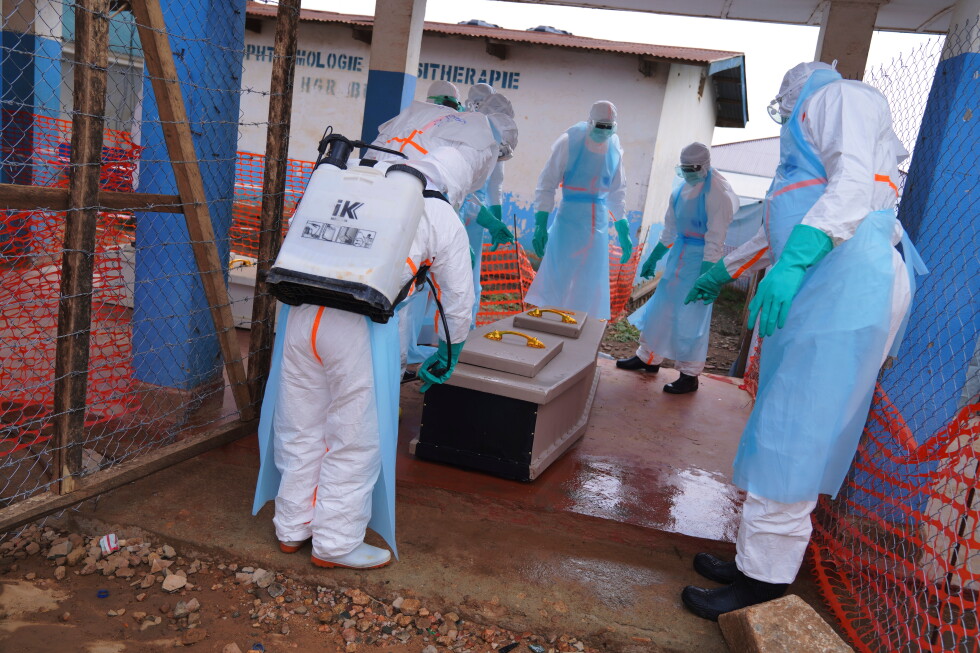
    A growing Ebola outbreak caused by the rare Bundibugyo virus strain is facing severely hindered containment efforts in the eastern Democratic Republic of the Congo (DRC), driven by ongoing armed conflict and mass population displacement, the World Health Organization (WHO) has warned. In one of Central Africa’s most unstable regions, persistent insecurity, unregulated population movement and already overburdened health systems have ground critical surveillance and emergency response operations to a near halt.

    Speaking at a Wednesday press briefing, WHO Director-General Tedros Adhanom Ghebreyesus detailed the rapid deterioration of security conditions in the area. “Conflict has intensified since late 2025, and fighting has escalated significantly over the past two months, with over 100,000 people newly displaced,” he said. Adding to the risk, the affected region is a major mining hub marked by constant cross-community and cross-border population movement that creates ideal conditions for the virus to spread further.

    The outbreak has already been categorized as a Public Health Emergency of International Concern (PHEIC), the WHO’s highest alert level. Official counts stand at 51 confirmed cases and nearly 600 suspected cases across the DRC and neighboring Uganda, but WHO officials estimate the actual scope of the epidemic is far larger than current reporting indicates.

    Insecurity in DRC’s Ituri Province has completely upended routine healthcare delivery and disease tracking infrastructure, Tedros explained. Health facilities cannot operate effectively amid active combat, and hundreds of healthcare workers have been forced to flee alongside displaced civilian communities. This has gutted the region’s already limited capacity to detect new infections and roll out targeted response measures.

    Mohamed Yakub Janabi, WHO Regional Director for Africa, noted that outbreak detection in conflict-riven remote areas faces inherent structural barriers. Effective disease surveillance depends entirely on three core pillars: reliable community reporting, fully operational local health facilities, and timely access to laboratory testing. None of these are currently functional in much of eastern DRC, he added.

    “Surveillance systems rely on a combination of community reporting, local health facilities, lab confirmation, and partnership,” Janabi said, emphasizing that the WHO’s mandate is to reinforce national health authorities rather than replace their leadership in the response.

    Even when samples are collected, logistical hurdles and limited local diagnostic capacity create dangerous delays. Currently, test samples from Ituri must be transported more than 1,700 kilometers to the DRC capital Kinshasa for confirmation, extending the window for the virus to spread between confirmed cases.

    WHO officials also confirmed that healthcare-associated transmission has already been documented, including confirmed infections among frontline healthcare workers. This development underscores the urgent need to rapidly scale up infection prevention and control protocols across all care facilities in the region.

    Lucille Blumberg, an epidemiologist and former deputy director of South Africa’s National Institute for Communicable Diseases, called for an immediate ramp-up of core response measures: enhanced active surveillance, rapid contact tracing, enforced targeted quarantine protocols, and expanded protective equipment and support for frontline health workers and affected communities.

    Blumberg added that the ongoing outbreak lays bare a critical unmet need for additional international resources and support. Local authorities are already struggling to maintain routine essential health services for conditions including tuberculosis, malaria, and maternal and child healthcare in conflict-affected regions, even as they confront the new Ebola emergency.

  • Ken Roczen creates fairytale ending with difficult ride to his first Supercross championship

    Ken Roczen creates fairytale ending with difficult ride to his first Supercross championship

    Under exploding stadium fireworks, Ken Roczen glided across the 2026 Supercross finish line, his body wracked with emotion as rival after rival pulled over to honor the newly crowned champion — a trailblazer who just claimed the oldest titleholder spot in the sport’s 50-plus year history. Down in the team paddock, tears of joy streamed down the faces of his loved ones, including his parents who traveled all the way from Germany to witness one of the most remarkable comeback stories motorsports has ever seen. This championship is legendary for far more than just Roczen’s age: it is the culmination of nine years of fighting back from near-career-ending injuries that threatened to take not just his racing dreams, but his left arm. Waiting for him on the track was Larry Brooks, his father-figure team manager, who had just finished cancer treatment to share in the moment with a hug that has already gone down in Supercross lore. “It’s one of the biggest, most complex stories our sport has ever seen. For it to finally all come together the way it did was a fairytale ending,” said Davey Coombs, president of MX Sports Pro Racing.

  • Trump says he’s sending 5,000 more troops to Poland, stirring confusion about US presence in Europe

    Trump says he’s sending 5,000 more troops to Poland, stirring confusion about US presence in Europe

    For weeks, the Trump administration has sent conflicting, shifting signals about its planned military posture in Europe, and a sudden announcement from former President Donald Trump on Thursday has only deepened the confusion among U.S. policymakers and European allies alike. In a post on his social media platform Truth Social, Trump revealed that the United States would deploy an extra 5,000 American troops to Poland, a complete reversal of the administration’s weeks of public comments committing to reduce — not expand — the U.S. military footprint across the continent.

    The policy whiplash comes against a backdrop of growing transatlantic tension over defense burden-sharing and U.S. strategy amid the ongoing Ukraine war. For weeks, the Trump administration has openly stated it planned to cut approximately 5,000 troops from its European force levels. U.S. officials had already confirmed that roughly 4,000 service members slated for a rotational deployment to Poland had their orders canceled, as part of this broader drawdown plan. A planned deployment of long-range missile personnel to Germany was also halted, aligning with Trump’s earlier order to shrink the U.S. military presence in Europe. Earlier this month, Trump even told reporters that planned cuts would go “a lot further than 5,000,” reinforcing expectations of a significant drawdown.

    Trump’s new announcement directly upends that trajectory, leaving NATO allies already caught off guard by previous policy shifts facing even more uncertainty. For months, the Trump administration has publicly pressured NATO member states to increase their own defense spending, criticizing many allies for failing to carry a sufficient share of collective defense costs and not doing enough to support U.S. policy amid tensions with Iran. These tensions grew after German Chancellor Friedrich Merz publicly criticized the administration’s lack of a clear strategy for the Iran conflict, saying the U.S. had been “humiliated” by Iranian leadership. In response, the administration moved forward with plans to draw down at least 5,000 troops from Germany.

    In his Truth Social post, Trump framed the new troop deployment as a gesture of support for Poland’s newly elected President Karol Nawrocki, whom he had publicly endorsed during the country’s election. “Based on the successful Election of the now President of Poland, Karol Nawrocki, who I was proud to Endorse, and our relationship with him, I am pleased to announce that the United States will be sending an additional 5,000 Troops to Poland,” Trump wrote.

    The conflicting announcements have sparked sharp criticism from lawmakers on both sides of the U.S. political aisle, who argue that erratic policy on European troop deployments sends a dangerous message to U.S. allies and to Russian President Vladimir Putin amid the four-year-long full-scale war in Ukraine. Republican Rep. Don Bacon of Nebraska told a congressional hearing that Polish officials had been “blindsided” by the earlier canceled deployment, calling the initial drawdown decision “reprehensible” and “an embarrassment to our country what we just did to Poland.”

    Pentagon officials have attempted to clarify the situation in recent days, but their statements have done little to resolve the ambiguity. Chief Pentagon spokesman Sean Parnell said Tuesday that the canceled deployment was only a “temporary delay,” not a permanent reversal, and described Poland as a “model U.S. ally.” He explained that the delay stems from the administration’s plan to reduce the number of brigade combat teams stationed in Europe from four to three, and said the Pentagon has not yet made final decisions about which units will be assigned to which forward positions.

    To date, it remains unclear what Trump’s new announcement means for existing plans: it is unknown whether the previously delayed 4,000-strong brigade will now deploy to Poland, whether the extra 5,000 troops will be added on top of existing rotational deployments, or whether the planned overall drawdown of 5,000 troops from Europe will still proceed, only taking cuts from locations other than Poland. When reached for comment to clarify the policy, the Pentagon directed all inquiries to the White House, which has not yet issued a formal response to requests for clarity. This week, Defense Secretary Pete Hegseth and Defense Undersecretary Elbridge Colby have both held calls with their Polish counterparts, and Polish Prime Minister Donald Tusk said Wednesday that he was “happy to hear Washington’s declaration that Poland will be treated as it deserves.”

    As of last week, U.S. Gen. Alexus Grynkewich, commander of U.S. and NATO forces in Europe, confirmed to reporters in Brussels that the administration’s plan remained for 5,000 troops to withdraw from Europe. Trump’s announcement comes as Secretary of State Marco Rubio travels to Sweden for meetings with NATO foreign ministers, who have already raised repeated questions about the Trump administration’s inconsistent troop policy.

    Retired career diplomat Ian Kelly, who served as U.S. ambassador to Georgia during the Obama administration and first Trump term and now teaches international relations at Northwestern University, said the conflicting announcements point to a lack of deliberate policy process at the highest levels of the administration. “There seems to be no process to deliberating policies like troop withdrawals and deployments at the top,” Kelly said. He noted that Rubio will likely face a difficult task explaining the sudden policy shifts to European allies, who have repeatedly called for consistent, predictable U.S. security policy even when they disagree with specific administration decisions. “These are not well thought out decisions,” Kelly said. “These are impulsive decisions based on Trump’s whims or what his advisors think are Trump’s whims.”

    Associated Press writer Michelle L. Price contributed reporting to this article.