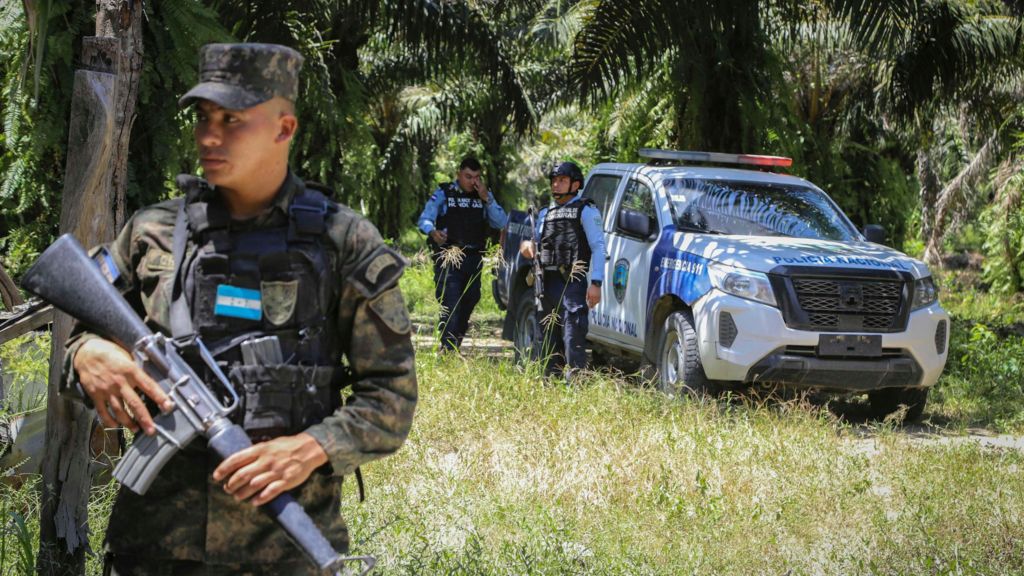
On Thursday, two shocking acts of violence ripped through different regions of Honduras, leaving a minimum of 24 people dead and sending fresh ripples of concern across the Central American nation already grappling with a generations-long public safety crisis.
The first and deadliest assault unfolded on a remote ranch located on the outskirts of Trujillo, in northern Honduras. Official reports confirm that at least 19 farm workers were gunned down in the attack. As of Friday morning, the full, final death toll for this incident remains unconfirmed. Edgardo Barahona, spokesperson for Honduras’ National Police, told the Associated Press that family members of the victims had already begun recovering and removing victims’ bodies from the crime scene before forensic teams could complete a full count. In a separate briefing with reporters, Honduran Security Minister Gerzon Velasquez offered a different account to Reuters, suggesting that many bodies were likely carried off by either the attackers’ associates or individuals with criminal connections before law enforcement could secure the site.
A second, coordinated shooting took place just hours later in Omoa, a small coastal town sitting hard against Honduras’ northern border with Guatemala. Four active-duty police officers and one civilian were killed in this attack. Authorities confirmed the officers were en route to Omoa from the country’s capital, Tegucigalpa, as part of a pre-planned anti-gang operation when they were ambushed.
To date, no suspects have been taken into custody in connection with either attack. Investigators have not yet established a clear motive for the mass killing of ranch workers in Trujillo, but the region has been a hotspot for simmering, long-running agrarian conflict that has occasionally spilled over into lethal violence for decades.
In response to the back-to-back attacks, Honduras’ National Police released an official statement announcing that it would launch a “direct intervention” operation in both affected regions to restore order and advance investigations.
The violence has cast renewed attention on Honduras’ persistent struggle with violent crime, rooted in widespread gang activity and the country’s strategic role in transnational drug trafficking routes between South American producers and North American consumers. While recent years have seen a gradual decline in the national homicide rate, the Inter-American Commission on Human Rights still ranks Honduras as holding the second-highest homicide rate in the Americas, outpaced only by one other nation in the region.