Global equity markets delivered a mixed performance across Europe and Asia on Monday, building on an upward rally that pushed major U.S. indexes to fresh records in the prior session. The uptick on Wall Street was driven by an unexpected monthly jobs report that fueled investor expectations the U.S. Federal Reserve would hold off on interest rate hikes for the near term.
In early European trading, benchmarks split gains and losses: Germany’s DAX climbed 0.3% to 26,411.01, France’s CAC 40 edged 0.1% lower to 8,703.72, and the U.K.’s FTSE 100 dipped 0.3% to 10,869.35. Futures tied to the S&P 500 ticked up 0.1% ahead of the U.S. trading open, while Dow Jones Industrial Average futures slipped 0.1%.
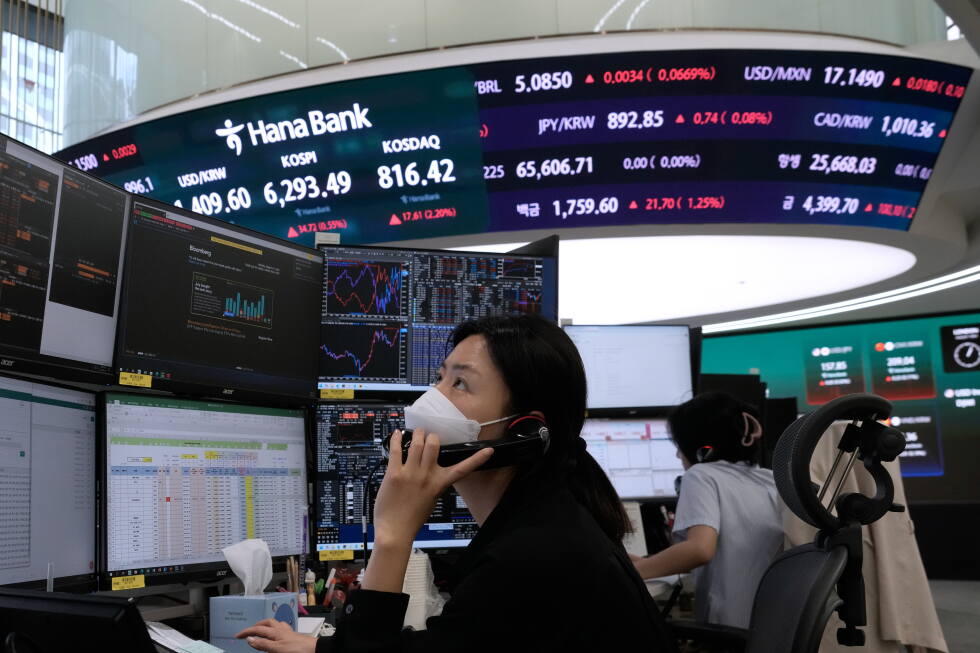
Across Asian markets, Japan’s Nikkei 225 outperformed peers, jumping 2.1% to close at 66,970.22, lifted by robust gains in the domestic technology sector. Leading chip equipment manufacturer Tokyo Electron rose 4.1%, while chip testing producer Advantest gained 6.4% to lead the index upward. South Korea’s Kospi posted a more modest 0.7% gain to 6,299.66, even as major domestic chipmakers pulled back: Samsung Electronics lost 0.4% and SK Hynix, the rival memory chip producer, edged 0.1% lower. Analysts noted foreign investors have recently started selling off large tech holdings to lock in recent gains and reallocate capital to other sectors, including defense contracting.
Other major Asian indexes also notched gains: Hong Kong’s Hang Seng Index added 1.1% to 25,937.49, and China’s Shanghai Composite rose 0.7% to 3,966.59. Australia’s S&P/ASX 200 bucked the upward trend to lose 0.3% at 9,232.60, while Taiwan’s Taiex surged 1.6% and India’s Sensex held nearly flat from Friday’s close.
Oil prices climbed on Monday as geopolitical uncertainty across the Middle East disrupted expectations for energy supply security. The uptick came after Israel rejected a Gaza ceasefire proposal announced by former U.S. President Donald Trump, while new details emerged of a potential shipping management deal between Iran and Oman for the strategic Strait of Hormuz. Tehran has recently signaled it will bar vessels linked to “hostile countries” from passing through the key waterway, through which roughly 20% of global oil supplies transit daily. Separate tensions escalated over the weekend when Yemen’s Iranian-backed Houthi rebels attacked a government-controlled port on the country’s Red Sea coast, deepening fears of threats to critical global shipping lanes and a potential resumption of full-scale Yemeni civil war.
Brent crude, the global benchmark for oil prices, gained 0.8% to trade at $84.23 per barrel on Monday. U.S. West Texas Intermediate crude rose 0.7% to settle at $78.72 per barrel. “Negotiators said that a deal to establish a safe shipping route was close, but Iran may now be exploring just how much it can extract from the U.S. in return,” Bas van Geffen, senior macro strategist for Rabobank, noted in a market commentary.
This week, investors are turning their focus to a series of key U.S. inflation updates, headlined by the release of the July Consumer Price Index (CPI), the most closely watched gauge of consumer-level inflation. Economists forecast a 3.4% annual rise in inflation for July, a slight slowdown from June’s 3.5% gain. Inflation has held stubbornly above the Federal Reserve’s 2% target for most of 2024, keeping pressure on central bank policymakers to consider continued rate hikes.
The market momentum that carried into Monday originated from Friday’s surprise U.S. jobs report, which showed employers cut 23,000 jobs in July, defying analyst projections of continued job growth. The softer than expected labor data pushed U.S. stocks higher and pulled Treasury yields lower, as investors bet a cooling jobs market would convince the Fed to delay further interest rate increases. All major U.S. indexes notched a second straight week of gains, with several hitting all-time records. The S&P 500 rose 0.6% to 7,757.64, topping its prior all-time high, while the Dow Jones Industrial Average gained 0.3% to 54,036.93, just short of the record it set Wednesday. The Nasdaq composite climbed 1.3% to 26,690.62, led by large technology stocks that have driven much of 2024’s market rally: Nvidia jumped 2.3% and Broadcom rose 1.7%.
While the soft jobs report supported expectations for steady interest rates, it also clouded the broader economic outlook, dimming one of the economy’s strongest recent performers and stoking concerns about consumer household spending amid persistent high inflation. The report also revised lower payroll numbers for May and June, cutting a combined 103,000 jobs from the prior two months’ totals. The slowing pace of employment growth complicates the Federal Reserve’s dual mandate to balance stable job growth and taming persistent inflation, as higher interest rates cool price pressures by slowing overall economic growth, but also raise borrowing costs that make business expansion more difficult.
In currency markets on Monday, the U.S. dollar strengthened against the Japanese yen, rising to 158.72 yen from 157.71 yen in the prior session. The euro edged slightly lower to $1.15617 from $1.1568.