作者: admin

  • Iran’s Jews: From ancient roots to the modern day

    Iran’s Jews: From ancient roots to the modern day

    In March 2015, as then-US President Barack Obama prepared to finalize a landmark nuclear deal with Iran, Israeli Prime Minister Benjamin Netanyahu delivered a high-stakes address to a joint session of the US Congress. Seeking to sway lawmakers against the agreement by framing Iran as an existential threat to the Jewish people and the state of Israel, Netanyahu made a notable factual error when he misrepresented the Biblical story of Esther, claiming that ancient Jews living in Persian-ruled territory were targeted for death by a Persian viceroy. The actual account holds that it was Haman, an Amalekite court official, who plotted the extermination of Iranian Jews, a scheme foiled by Queen Esther and her cousin Mordecai, after which Persian King Ahasuerus ordered Haman’s execution and spared the Jewish community.

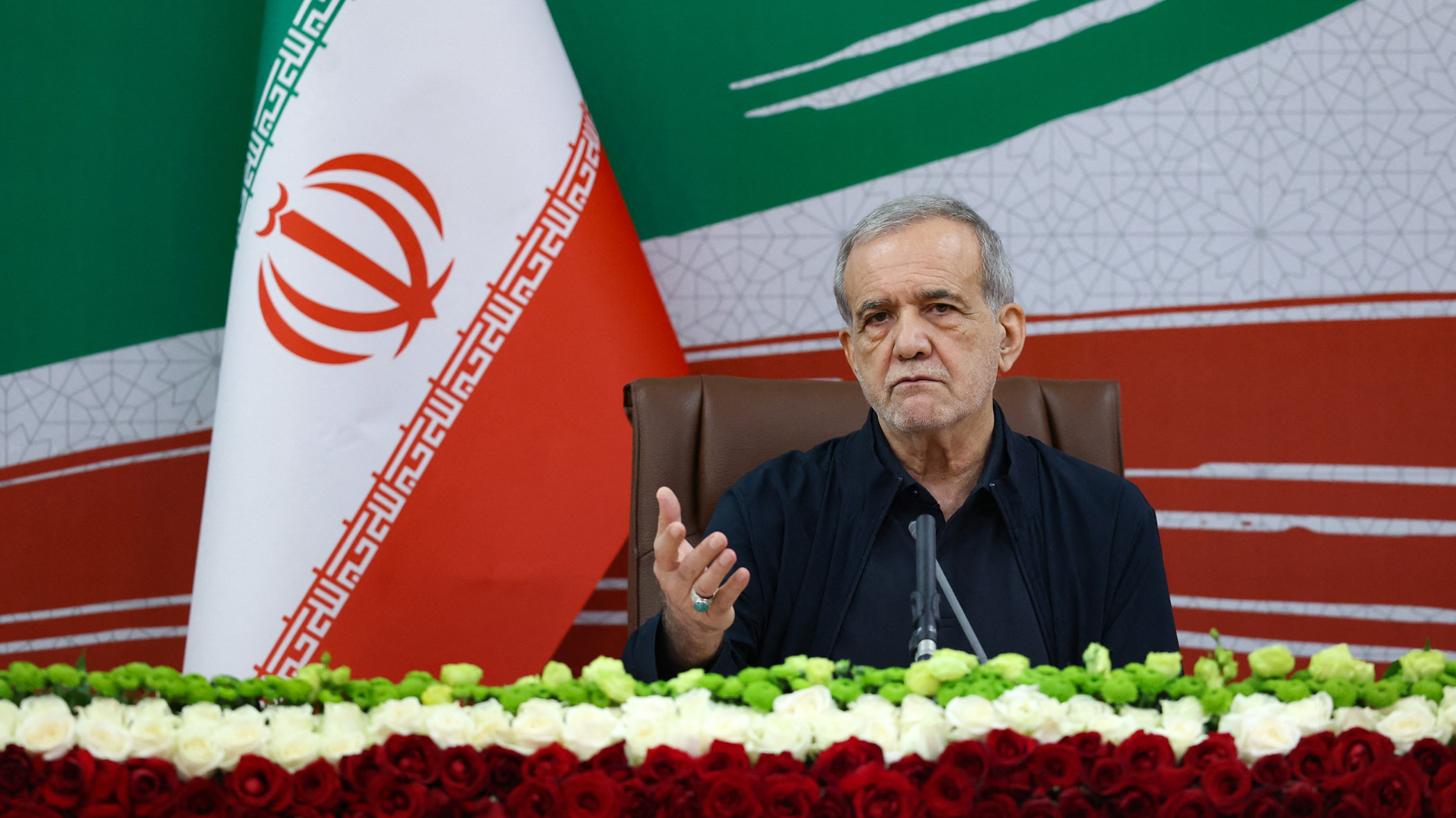
    Far less widely reported in Western discourse is the deep, continuous history of Jewish life in Iran that stretches back nearly three millennia. Today, the tomb of Esther and Mordecai stands in the western Iranian city of Hamedan, a site that has drawn Jewish pilgrims for centuries and was designated a national heritage site by the Iranian government under then-President Mahmoud Ahmadinejad in 2008. This long-standing presence challenges the pervasive Western narrative that frames Iran as a uniformly antisemitic nation, scholars and community members emphasize.

    “Compared to many countries in the region and certainly in the West, Iran has not had a history of anti-Jewish sentiment,” explains Farhang Jahanpour, former dean of the Faculty of Languages at the University of Isfahan. “Most Iranian Jews regard Iran as their home and have a strong feeling of affinity for Iranian culture, literature, music and cooking.”

    For Etan Mabourakh, a member of a centuries-old Iranian Jewish family that left the country during the reign of Shah Mohammad Reza Pahlavi, this cultural connection remains vivid decades after his family’s departure. “There’s a deep pride for Iranian Jews in our cultural heritage, and distinct traditions that we hold on to,” he says. “My father’s side hail from Hamedan, and we have a Hamedani cookbook with traditional Jewish recipes that I still cook dishes from to this day – on Passover we still practice the Jewish Iranian tradition of beating each other with scallions when we sing Dyenu. These traditions are a real source of pride for us.”

    Jews first arrived in what is now Iran following the Babylonian exile of the 6th and 7th centuries BCE, when they were displaced from the ancient kingdom of Judea by King Nebuchadnezzar II. Initial settlements centered in what is now Isfahan, before communities spread across the Iranian plateau. Biblical accounts themselves reference deep ties between ancient Jews and Persian rulers, with many holy sites associated with Jewish prophets still standing across the country today. “The Hebrew Bible speaks very highly of ancient Persians and reveals very close Jewish connections with ancient Iran and its kings,” Jahanpour notes.

    After the advent of Islam in Iran in the 7th century, the Jewish population continued to grow, drawn in large part by opportunities along regional trade routes. “We have testimonies of Jews from the period when Islam came to Iran that they were actually very pleased to see the Muslim army coming,” says Lior Sternfeld, a professor of History and Jewish Studies at Pennsylvania State University. “The message of Islam and the recognition of the people of the book was quite liberating for Iranian religious minorities. They believed it might bring positive change to their status and protections.”

    Between the arrival of Islam and the establishment of Shia Islam as Iran’s state religion in 1501, the community experienced periods of both stability and intermittent repression. By the 17th century, Jews were formally recognized as a protected and tolerated minority under Iranian law. A major milestone came with the 1906 Constitutional Revolution under the Qajar dynasty, which established Iran’s first parliament and granted Jews a guaranteed parliamentary seat, formally placing them on equal legal footing with Muslim citizens. This progress followed years of targeted violence, including a 1839 pogrom in the northeastern city of Mashhad that forced Jews to choose between conversion to Islam and exile.

    Under the Pahlavi dynasty, which took power in 1925, Iran’s new legal protections for Jews drew Jewish migrants from across the region and Europe. In the 1930s, prominent Jewish professionals and intellectuals fleeing Nazi Germany’s race-based purges arrived in Iran, followed by hundreds more Jewish refugees who fled the 1941 Farhud pogrom in Iraq that killed more than 500 Jews. By the mid-20th century, Iran’s Jewish community was a diverse tapestry of Persian, Kurdish, Iraqi, Mountain, and Ashkenazi Jews, with Ashkenazi refugees establishing a still-operational synagogue in Tehran.

    During World War II and the Holocaust, Iran hosted as many as 300,000 Polish refugees, between 5,000 and 20,000 of whom were Jewish, who settled in camps on the outskirts of Tehran, Isfahan, and Ahvaz. While the decision to accept the refugees was driven by British occupying forces and created significant food shortages for local Iranians, Sternfeld notes that contemporary accounts consistently highlight the widespread hospitality ordinary Iranians extended to the displaced Jewish arrivals. Around 780 orphaned Jewish refugees, known as the Children of Tehran, were eventually resettled in Mandatory Palestine.

    By the 1940s, Iran’s Jewish community had become integral to the Pahlavi Shah’s national development project, taking prominent roles in government bureaucracy, trade, and science, and rising to become a core part of Iran’s urban middle and upper classes. By the late 1940s, the community numbered around 100,000 and continued to grow over the next three decades. When Israel was established in 1948, only a small minority of Iranian Jews – between 17,000 and 20,000 between 1949 and 1953 – chose to emigrate, and migration effectively halted by the 1960s. For decades, Iran maintained close diplomatic ties with Israel, supplied the Jewish state with oil, and in return received military training from the Israeli army for the Shah’s brutal secret police force, Savak.

    Life for Jews under the Shah was not without tension, however. “The generation that came of age during Mohammed Reza’s time no longer carried the burden of Jewish persecution on their shoulders and they became much more Iranian,” Sternfeld explains. “They went to universities, became involved in political activism and they shared the grievances of their fellow Iranians about the shah’s dictatorship. They were also over-represented in opposition movements, and the shah didn’t cut slack for Jews in these groups, so many ended up being in exile or prison.”

    Mabourakh’s own family was forced to flee Iran for the US and Israel during the Shah’s rule due to their political activism. “They were treated like second-class citizens,” he says, adding that modern glorification of the Pahlavi dynasty does not align with his family’s experience. “Reza Pahlavi has been reframed as this figure to bring Iran back to greatness, but the more you read about the brutal oppression of the Savak under his father, the more you realise it’s no better than what exists today.”

    After the 1979 Islamic Revolution that ousted the Shah, the execution of prominent Jewish businessman Habib Elghanian, a figure linked to the former regime, sparked widespread fear among Iran’s Jewish community. Community leaders traveled to the holy city of Qom just days after the execution to meet with Supreme Leader Ruhollah Khomeini to clarify the status of Jews under the new Islamic Republic. The meeting resulted in a landmark fatwa that formally drew a distinction between Iranian Jews and Zionism, stating that Iranian Jews are full members of the Iranian nation, while Zionism is a separate political movement opposed to religious teachings. Under the edict, Iranian Jews are guaranteed full protection as a religious minority.

    Despite this guarantee, mass emigration resumed after the revolution, with nearly half of Iran’s Jewish community leaving over the course of the 1980s. Unusually, only a minority of emigrants settled in Israel; roughly 70 percent relocated to the Los Angeles area in the United States. For the community that remained, experiences have varied across successive administrations: former President Hassan Rouhani, who held office from 2013 to 2021, enacted progressive reforms including legislation protecting Jewish inheritance rights and allowing Jewish students to be absent from school on Shabbat, the Jewish sabbath.

    Today, Iran is home to between 10,000 and 15,000 Jews, the third largest Jewish population in the Middle East after Israel and Turkey. Most reside in Tehran, with sizeable communities in Shiraz and Isfahan. Though the community is a fraction of its mid-20th century peak, it remains an integrated part of Iranian society, with 60 operational synagogues, Jewish schools, kosher food outlets, and other communal institutions, granting Iranian Jews a comparatively high degree of religious autonomy. While community members cannot publicly express support for Israel, they maintain a nuanced relationship with the Jewish state, drawing a distinction between its religious significance to Judaism and its political status relative to Iran. “They make the separation between Israel as a holy place and Iran as their political homeland,” Sternfeld says.

    Most recently, after an Israeli air strike on Tehran damaged the Rafi-Nia synagogue last month, Iran’s Jewish community publicly condemned the attack, reaffirming their loyalty to the Iranian state. “The Zionist regime with its brutal ambitions has not only attacked the Muslim community but also the Jewish community,” said Homayoun Sameh, the Jewish representative to Iran’s parliament. Rabbi Younes Hamami Lalehzar, a leading Iranian Jewish community leader, added: “Beyond being an inhumane and terrorist act, this clearly shows that all the claims made by the Israeli regime about defending Jews are nothing more than a shameful lie.”

    Mabourakh, who works with the National Iranian American Council, echoed that condemnation, noting that the Iranian government’s response to the attack revealed a respect for Jewish life that is rarely acknowledged in Western media. “I felt disgusted that the synagogue had been blown up in a war that my tax dollars are funding. The fact that so much infrastructure has been targeted – these are war crimes and we should call them out,” he says. “The Jewish community asked the rescue mission not to use heavy machinery to clear the rubble, to avoid damaging Torah scrolls and other items, so the teams used their hands to retrieve them. I think there is a genuine respect from Iranian authorities towards people of the book, and this is not communicated in the West.”

  • US and Israel ‘actively working’ to strip Jordan of Al-Aqsa custodianship, sources say

    US and Israel ‘actively working’ to strip Jordan of Al-Aqsa custodianship, sources say

    A controversial covert plan backed by senior U.S. and Israeli figures to dismantle Jordan’s century-old custodianship of Jerusalem’s Al-Aqsa Mosque complex has been revealed by multiple anonymous sources in an exclusive reporting to Middle East Eye, threatening to upend decades of regional stability and upend the long-standing status quo governing one of the Muslim world’s most revered religious sites.

    Multiple layers of sources—including serving U.S., Jordanian, Palestinian, Western and Gulf Arab officials—have confirmed the proposal is being spearheaded by former White House advisor Jared Kushner, who holds no official role in the current U.S. administration, and current U.S. Ambassador to Israel Mike Huckabee. Under the terms of the draft plan, the Jordanian-backed Islamic Waqf, which has overseen day-to-day administration of the site for generations, would be stripped of all governing authority immediately. A new Israeli-created regulatory body would reclassify the 35-acre compound, known to Jews as the Temple Mount, as a multi-faith religious center, granting Jews equal access and formal permission for organized large-group communal prayer on the site, which has been an exclusively Islamic holy site under the long-standing international status quo.

    The plan would also grant the Israeli government significant influence over key personnel decisions at the mosque, including the appointment of imams, senior clerics and preachers, as well as approval power over the content of weekly Friday sermons. Two senior U.S. officials confirmed that Washington has already drafted a policy document outlining this vision for the site’s future, stating the Trump administration’s goal is to erase the site’s exclusive Muslim identity and rebrand it as a cross-religious tourist landmark open to followers of all three Abrahamic faiths.

    According to one proposal that has circulated among regional stakeholders, Arab nations including Bahrain, Egypt, Morocco and the United Arab Emirates have already received briefings on the plan and could be offered rotating oversight responsibilities for the complex. Multiple Gulf Arab sources and a source familiar with Jordanian government policy confirmed that Saudi Arabia—Jordan’s close historic ally—has already publicly taken a stance opposing the proposal.

    The idea of altering Al-Aqsa’s governance was first raised by Israeli officials to the U.S. government nearly a decade ago, but gained new momentum after Huckabee took up his post as U.S. ambassador last year. A devout Evangelical Christian and long-time hardline pro-Israel advocate who has openly supported illegal Israeli settlements in occupied Palestinian territory, Huckabee has repeatedly pressured Washington to move forward with the plan, sources say. A source familiar with Jordan’s position noted the U.S. has long resented Amman’s frequent use of its custodianship status to file formal complaints against Israeli actions at the compound, most recently this month when Jordan’s parliament formally condemned Israeli seizures of Palestinian property and Islamic endowments in areas adjacent to the mosque.

    The proposal also leaves the future of Jerusalem’s Christian holy sites—for which Jordan’s Hashemite monarchy also holds formal custodianship, including the Church of the Holy Sepulchre and the Church of the Ascension, plus a veto over appointments to the Greek Orthodox Patriarchate of Jerusalem—unaddressed, a gap that has sparked deep new concerns among regional stakeholders. “This plan says nothing about the Christian sites, which raises a whole new set of concerns,” one senior source told MEE.

    A senior Jordanian government official reaffirmed Amman’s unwavering position on the issue, stressing that Hashemite custodianship of Jerusalem’s holy sites is formally recognized under international law and binding bilateral treaties, including Article 9 of the 1994 Jordan-Israel peace treaty. The official added that Jordan is coordinating closely with Palestinian, Arab and international partners to protect the sites’ Arab, Islamic and Christian identity and block any attempt to alter the historical and legal status quo.

    The current governing framework for Al-Aqsa, the status quo arrangement, has been in place for more than half a century. Following Israel’s 1967 seizure of East Jerusalem, the two countries reached a formal agreement that left the Islamic Waqf in charge of all internal religious and administrative affairs at the compound, while Israel retained control over external security. Under the terms of this arrangement, non-Muslims are permitted to visit during set time windows, but are barred from holding prayer services at the site. For Jewish communities, the site holds deep religious significance as the location of the two ancient Jewish temples destroyed in antiquity.

    Jordanian and Palestinian officials warn the proposed new framework closely mirrors Israel’s long-standing policy at Hebron’s Ibrahimi Mosque, also known to Jews as the Tomb of the Patriarchs. Following a 1994 massacre carried out by an Israeli extremist settler that killed 29 Muslim worshippers, Israel imposed a formal division of the site, allocating 63% of the compound to Jewish worship even though the site is equally revered by all three Abrahamic faiths as the burial place of the Prophet Abraham.

    For Jordan’s Hashemite monarchy, custodianship of Jerusalem’s holy sites is a core pillar of its domestic and regional legitimacy. The ruling family’s claim to custodianship dates back to 1924, shortly after the collapse of the Ottoman Empire and the abolition of the Islamic Caliphate, when the British Mandate administration granted the Hashemites oversight of Jerusalem’s Muslim and Christian holy sites after the family lost control of Mecca and Medina, Islam’s two holiest sites, to the Al Saud dynasty. The custodianship was later reaffirmed in the 1994 peace treaty with Israel, which explicitly recognized Amman’s special role in governing Jerusalem’s Islamic holy sites.

    For years, Palestinian and Jordanian officials have warned that the status quo is being steadily eroded by successive Israeli governments and emboldened far-right nationalist groups pushing for greater Jewish control of the compound. Frequent Israeli police raids inside the mosque, growing numbers of visits by ultranationalist Jewish activists, and repeated calls by senior Israeli cabinet ministers for formal Jewish prayer rights at the site have led to widespread accusations that Israel is incrementally altering the long-standing arrangement. Waqf officials have also repeatedly documented that Israel imposes harsh restrictions on Palestinian worshippers and blocks the Waqf from carrying out critical maintenance and repair work at the site.

    Mustafa Abu Sway, deputy head of the Waqf council, described Hashemite custodianship as an non-negotiable foundation for regional peace. “The Hashemite Custodianship is a cornerstone for stability in the region, undermining it is tantamount to undermining the very principles for peace,” he said, adding that Palestinians view Jordan’s role as a strategic lifeline that has consistently defended the status quo in international forums including UNESCO.

    The Palestinian Jerusalem Governorate said it had not received formal notification of the proposal but rejected it outright, noting that there has already been a dangerous escalation in Israeli interference in the Waqf’s work, including restrictions on Waqf security and staff, and growing incursions into the compound by extremist Israeli settlers.

    Gulf Arab sources say Jordan, which relies on regional support to counter the U.S.-Israeli proposal, can count on Saudi opposition to the plan. Saudi Arabia fully understands that any move to alter Hashemite custodianship would ignite widespread anger across the Middle East and inflame regional conflict, one senior Gulf Arab source said. “The Saudis may have disagreements with Jordan on some issues, but on Jerusalem and Al-Aqsa they understand the consequences of dismantling the existing arrangement,” the source added.

    In recent years, Jordanian Crown Prince Hussein bin Abdullah has built a close working relationship with Saudi Crown Prince Mohammed bin Salman, with bilateral ties deepening following the 2020 Abraham Accords that saw a number of Arab states normalize relations with Israel. It remains unclear how Saudi Arabia would respond if the UAE or Bahrain chooses to publicly back the proposal, sources noted.

    Since signing the Abraham Accords, both the UAE and Bahrain have significantly deepened political, economic and security ties with Israel, even as regional anger over Israeli actions in Jerusalem and Gaza has grown. The UAE has positioned itself as Israel’s closest Arab partner, expanding cooperation across trade, technology, energy and defense sectors. Emirati-backed diplomatic and religious initiatives have also promoted a framework of multi-faith coexistence that Jordanian and Palestinian officials fear could be used to legitimize changes to Al-Aqsa’s historical status quo. In 2023, the UAE opened a state-backed multi-faith complex in Abu Dhabi housing a mosque, church and synagogue. Bahrain has similarly built close ties with Israel, framing its engagement as a critical tool to counter Iran, and has generally avoided public criticism of Israeli policy in Jerusalem, stoking fears it is willing to accommodate Israeli demands over the holy sites.

    “They [UAE and Bahrain] understand how explosive this issue is in the Arab and Muslim world,” a Gulf Arab source said. “Given that they are closely aligned with Israel, they should be cautious about publicly supporting changes to the status quo.”

    MEE reached out to the foreign ministries of Bahrain, Egypt, Morocco, Saudi Arabia and the UAE for comment, but received no response prior to publication. The Jordanian government, which has banned MEE access in the country since May 2025, acknowledged receipt of questions but declined to comment.

  • Cambodia’s new conscription law takes effect in wake of conflict with Thailand

    Cambodia’s new conscription law takes effect in wake of conflict with Thailand

    PHNOM PENH, Cambodia – Cambodia’s overhauled military conscription framework, which carries criminal penalties of up to five years behind bars for people who refuse mandated military service, officially entered into force on Monday, according to Prime Minister Hun Manet. The new law was formally signed into effect this past Saturday by Senate President Hun Sen, who stepped in as acting head of state while Cambodia’s monarch King Norodom Sihamoni receives ongoing medical care for prostate cancer in Beijing. The push to update the country’s decades-old draft rules comes on the heels of two deadly outbreaks of cross-border armed clashes with neighboring Thailand last year, a series of conflicts that claimed roughly 100 lives and forced hundreds of thousands of civilians to flee their homes near the shared border.

    Structured across eight chapters and 20 individual articles, the updated regulation replaces a 2006 conscription law that was never put into practice and had long been labeled outdated by policymakers. Under the new guidelines, all Cambodian men between the ages of 18 and 25 are required to complete a two-year active service term in the national military, while female citizens are eligible to enlist on a voluntary basis. Recipients of conscription summons are legally mandated to report for processing within 30 days of receiving their official notice, unless they can demonstrate a qualified, legitimate exemption; failure to meet this requirement results in being formally classified as a draft evader.

    Penalties for evasion are tiered based on whether the nation is in a state of peace or active conflict. During peacetime, convicted evaders face between six months and two years of imprisonment, plus financial fines ranging from $250 to $1,000. If the country is at war or facing an imminent foreign incursion, the penalties jump to 2 to 5 years in prison and fines between $1,000 and $2,500.

    A narrow set of groups qualify for permanent exemptions from the mandatory service requirement, including Buddhist monks, recognized religious clergy, people with permanent disabilities, and individuals holding high-demand specialized skills in science and technology. After completing their mandatory active service, conscripts transition to the national military reserve force and remain eligible for reserve activation until they turn 45 years old.

    Speaking to Cambodian lawmakers earlier in October, Prime Minister Hun Manet framed the new law as a critical institutional foundation for nurturing national identity among young Cambodians, encouraging love of country, building a culture of patriotism, and cultivating a widespread willingness to serve the nation’s defense needs. This policy shift comes as Cambodia continues to navigate lingering regional border tensions and seeks to strengthen its national defense capabilities following last year’s deadly clashes.

  • Brazil’s Lula starts radiotherapy after removal of skin lesion

    Brazil’s Lula starts radiotherapy after removal of skin lesion

    Eighty-year-old Brazilian incumbent President Luiz Inacio Lula da Silva has embarked on a course of preventive radiotherapy starting this Monday, following the surgical removal of a cancerous skin lesion from his scalp last month, according to an official statement released by Sao Paulo’s Sirio-Libanes Hospital. The treatment comes as the veteran leftist politician campaigns for a fourth presidential term in Brazil’s upcoming October general election, a race that has already put health and age-related questions at the center of public discourse.

    Last month, dermatologist Cristina Abdalla removed a visible basal cell carcinoma from Lula’s scalp. Abdalla previously noted that this type of skin growth is extremely common and primarily triggered by long-term sun exposure, easing initial public concern over the diagnosis. After the successful surgical excision of the lesion, medical teams made the collective decision to administer complementary preventive superficial radiotherapy to reduce the risk of recurrence, the hospital confirmed in its latest announcement.

    In the weeks since the lesion removal, Lula has been spotted wearing a head covering during all public appearances, a habit he previously adopted after a 2024 emergency surgery to address a brain hemorrhage sustained in a domestic accident. This is not the only minor health procedure Lula has undergone this year: he also underwent cataract surgery on his left eye back in January, adding to a string of publicized health events that have drawn scrutiny amid the election cycle.

    To pre-empt growing public anxiety over his fitness for office at 80, Lula and his campaign team have ramped up social media outreach over the past several months. The president has repeatedly shared content showcasing his daily exercise routines, framing an image of vitality to counter questions about whether his age will hinder his ability to serve another four-year term. On the campaign trail, Lula’s most likely leading challenger is Senator Flavio Bolsonaro, the son of former far-right Brazilian President Jair Bolsonaro, who has built a leading position in pre-election polling to secure the main opposition’s nomination.

  • Resource dominance reshaping Trump’s rivalry with China

    Resource dominance reshaping Trump’s rivalry with China

    The May 2026 Trump-Xi summit held in Beijing has laid bare a profound shift in global geopolitics: commodities have evolved from ordinary traded goods into central pillars of great-power competition, with resource diplomacy now emerging as a defining organizing principle for strategic engagement between the world’s two largest economies. Far from a routine round of trade talks, the meeting brought into sharp focus how energy, food, critical minerals, and supply chain access have become core tools of statecraft in the new geopolitical order.

    Per White House announcements, the summit delivered several concrete trade and resource agreements. China committed to purchasing a minimum of $17 billion worth of U.S. agricultural commodities every year through 2028, expanding on earlier soybean-specific deals reached in 2025. Beijing also agreed to reopen its markets to imported American beef and poultry, addressing longstanding U.S. trade demands. On the energy front, U.S. officials confirmed China has agreed to ramp up purchases of American crude oil, a move driven by ongoing instability in the Strait of Hormuz that threatens Beijing’s critical energy import flows. In exchange, China has pledged to address U.S. concerns over supply shortages of rare earths and other critical minerals that are essential to American industrial and military production.

    The summit underscores a dramatic strategic reorientation in Washington’s approach to global commodities. Where once resources were viewed primarily through an economic lens, they are now increasingly framed as instruments of geopolitical leverage, industrial resilience, and strategic coercion. For the Trump administration, resource dependence on a rival power is treated as a critical national vulnerability, while control over key commodity supply chains is considered a defining geopolitical advantage.

    This strategic shift is most visible in U.S. policy toward China’s dominance of critical mineral markets. For years, American defense and foreign policy strategists have sounded alarms over Beijing’s control of global processing and refining capacity for rare earths, graphite, cobalt, and battery materials—inputs that underpin modern technologies ranging from semiconductors and electric vehicles to advanced weapons systems, renewable energy infrastructure, and artificial intelligence hardware. The Trump administration now views this dominance not merely as an economic challenge, but as an existential strategic threat that could cripple U.S. military and industrial capacity during a crisis.

    In response, Washington has pursued an aggressive policy of critical mineral securitization. Recent executive actions have deployed emergency powers to speed up domestic mining development, expand domestic refining capacity, advance deep-sea mineral extraction projects, and build national strategic stockpiles. The end goal is not just full national self-sufficiency, but strategic insulation from potential Chinese coercive action. Policymakers have also recognized that China’s advantage extends beyond raw resource ownership to its unmatched processing capacity and industrial integration: even rare earths mined outside China are most often refined within its borders before entering global manufacturing supply chains. As a result, the administration’s strategy has taken on the character of a Cold War-era industrial mobilization effort, aimed at rebuilding entire domestic supply ecosystems from ore extraction to finished military and technological components.

    This approach marks a radical break from the post-Cold War consensus on globalization. For decades after the collapse of the Soviet Union, deep economic interdependence between nations was widely viewed as a stabilizing, mutually beneficial force that reduced the risk of great-power conflict. The emerging Trump administration doctrine rejects this framing, arguing that interdependence becomes a dangerous liability when rival powers control strategic supply chain chokepoints. In response, Washington has embraced tariffs, targeted industrial subsidies, domestic extraction mandates, friend-shoring of supply chains, and strategic decoupling in all sectors tied to national security.

    Today, critical rare earth minerals hold the same geostrategic importance that oil occupied for much of the 20th century. Rare earth magnets are core components of fighter jets, missile guidance systems, military drones, radar networks, and advanced computing infrastructure. Semiconductor manufacturing also relies on a host of critical minerals that are vulnerable to supply disruptions. In Washington’s strategic planning, potential Chinese export restrictions on these materials are treated as analogous to a 1970s-style oil embargo that could cripple the industrial foundations of American global power.

    The administration’s push for deep-sea mining directly reflects this strategic mindset. Offshore polymetallic nodules, which hold high concentrations of nickel, cobalt, manganese, and rare earth elements, are increasingly framed as strategic assets that can reduce U.S. reliance on Chinese-controlled supply chains. White House policy documents explicitly frame seabed extraction as a tool to break Beijing’s market dominance, pushing the global resource frontier from onshore mining into the deep ocean.

    Hydrocarbons remain equally central to the administration’s geopolitical doctrine. Unlike many European governments, which center climate transition as the core organizing principle of economic policy, the Trump administration continues to view dominance in oil and natural gas markets as an enduring strategic advantage. Abundant cheap domestic energy boosts U.S. industrial competitiveness, expands American export capacity, and gives Washington significant leverage over energy-dependent rival powers.

    This focus on energy leverage targets a key vulnerability for China: Beijing remains heavily dependent on imported hydrocarbons, most of which pass through the Strait of Hormuz, the world’s most critical maritime energy chokepoint. The 2026 Strait of Hormuz crisis, in which Iranian actions disrupted commercial shipping, sent shockwaves through global oil markets and exposed the fragility of Asian energy security, particularly for China and India—the two major powers seen as capable of challenging American global primacy. U.S. naval dominance in the region and growing American energy export capacity are increasingly viewed as interconnected strategic tools that can constrain China’s freedom of action on the global stage.

    This explains Iran’s central role in the administration’s broader commodity strategy. Beyond being a regional U.S. adversary, Iran controls access to the energy routes that are the lifeline of most major Asian economies. Against this backdrop, the oil talks at the Trump-Xi summit carried outsized strategic significance: according to U.S. officials, China’s willingness to increase American oil purchases is driven in large part by a desire to reduce its exposure to Hormuz-related supply disruptions. This creates a striking geopolitical irony: the U.S. positions itself as China’s primary great-power rival, while also seeking to become the reliable supplier of the energy China needs to sustain its economic growth.

    This transactional approach is a defining feature of Trumpian geopolitics. The administration does not aim for full economic decoupling from China; instead, it seeks to restructure economic interdependence on terms that maximize American strategic leverage. Commodity trade flows have become bargaining chips embedded in broader strategic negotiations that span tariffs, sanctions, military tensions, and technological competition.

    Iran remains central to this architecture due to its deepening economic and strategic ties to China. Chinese refiners have continued to purchase Iranian oil despite sweeping Western sanctions, providing Tehran with a critical economic lifeline. Washington’s sanctions pressure on Chinese entities linked to Iranian crude therefore serves multiple overlapping goals: it constrains Iran’s regional ambitions, raises economic costs for Beijing, and reinforces American dominance over global financial and energy systems.

    The summit also highlighted the enduring strategic importance of agricultural commodities. American agricultural production has long been one of Washington’s most underrecognized strategic assets: food dependence on other nations creates inherent political leverage, especially during periods of global supply disruption or food price inflation. China’s renewed commitment to large-scale U.S. agricultural purchases therefore carries strategic weight far beyond its impact on bilateral trade balances. The agreement stabilizes politically influential American farming constituencies ahead of U.S. elections, while also reinforcing Washington’s role as a core guarantor of global food security.

    India occupies an ambiguous position in this emerging resource order. Washington increasingly views New Delhi as a key strategic balancer against Chinese influence in the Indo-Pacific, but it also recognizes that India’s rapid economic rise will intensify global competition for hydrocarbons, minerals, fertilizers, and other critical industrial inputs. India remains heavily dependent on imported energy and has refused to fully align with Western sanctions regimes against Russia and Iran. For the Trump administration, integrating India into commodity supply chains that are not controlled by China, while retaining leverage over India’s own resource dependencies, remains a long-term strategic priority.

    The administration’s broader resource strategy also carries clear military implications. Resource-rich regions are increasingly becoming frontlines of great-power competition. Access to lithium reserves in Latin America, cobalt deposits in Africa, rare earth resources in Central Asia and Greenland, and control over Arctic shipping lanes are all now evaluated through a strategic national security lens.

    Ultimately, the Trump administration’s commodity-focused resource strategy reflects the return of classical geopolitics in the 21st-century technological age. Energy, food, minerals, shipping routes, and industrial supply chains are now being redefined as core instruments of national power, on par with military bases and naval fleets. The May 2026 Trump-Xi Beijing summit offered a clear, vivid illustration of this global transformation. Agricultural trade, oil security, Strait of Hormuz stability, sanctions policy, and critical mineral access were all folded into a single, integrated great-power negotiation.

    The Trump administration appears convinced that the global balance of power in the coming decades will depend less on the abstract dynamics of unfettered globalization, and more on which power controls the material foundations of modern civilization: energy flows, strategic minerals, industrial supply chains, and critical maritime chokepoints. In this emerging world order, commodities are no longer just ordinary goods traded in global markets—they are core strategic weapons in an era of intensifying resource-focused great-power rivalry.

  • Huckabee tells Lebanese being bombed to thank Israel for seedless watermelons

    Huckabee tells Lebanese being bombed to thank Israel for seedless watermelons

    A recent controversial speech by U.S. Ambassador to Israel Mike Huckabee has ignited widespread anger across the Middle East, as the longtime pro-Israeli hawk called on Lebanese civilians to thank Israel for technological and agricultural innovations amid a brutal ongoing bombardment of southern Lebanon that has killed thousands.

    Footage of Huckabee’s remarks delivered at the 12 May Atlas Awards ceremony in Tel Aviv began circulating widely online after being first published by Chris Menahan of independent news outlet Information Liberation. In the speech, Huckabee rattled off a list of developments he credits to Israeli innovation, ranging from universal serial bus (USB) drives to cherry tomatoes and seedless watermelons.

    Huckabee went on to pose a provocative question to the Lebanese public, claiming that without the existence of Israel, Lebanon would not have modern cellular technology. “I wonder if they understand that every time they use a USB, every time they use car navigation, that every time they eat a cherry tomato or have a delicious bite of seedless watermelon, instead of saying, ‘I can’t talk to those people,’ they should step across the border, shake their hands and say, ‘Thank you’,” he said in the address.

    Huckabee’s comments come at a catastrophic moment for southern Lebanon, where relentless Israeli air and ground bombardment has displaced hundreds of thousands of people and killed thousands of civilians since early March. Even residents who have braved unsafe conditions to return to their damaged homes in border regions have been deliberately targeted by Israeli forces, according to on-the-ground reports. Lebanon’s Ministry of Public Health confirmed that Israeli airstrikes have killed at least 3,151 people and injured more than 9,571 since 2 March, with the death toll including 123 medical workers responding to the crisis, 210 children, and nearly 300 women.

    The remarks are not an outlier for Huckabee, an outspoken Christian Zionist who has spent decades openly backing the most expansionist policies of the Israeli government. In a recent interview with conservative U.S. podcast host Tucker Carlson, Huckabee doubled down on his support for Israeli territorial expansion, claiming that the Book of Genesis in the Christian Old Testament grants the modern state of Israel divine right to all land stretching from the Nile River to the Euphrates, forming a so-called “Greater Israel”. When asked directly whether Israel was justified in claiming the entire region, Huckabee replied plainly: “It would be fine if they took it all.”

    Beyond his advocacy for territorial expansion, Huckabee has also pushed aggressively for a direct U.S.-Israeli military confrontation with Iran. The escalating standoff between the U.S.-Israel bloc and Iran has reached a stalemate in recent months, with Tehran moving to block access to the Strait of Hormuz, the world’s most critical energy chokepoint through which roughly a fifth of global oil supplies pass daily.

    This report was originally produced by Middle East Eye, an independent outlet specializing in original, on-the-ground coverage of the Middle East, North Africa, and surrounding global affairs.

  • Malaysia prepares ICJ case against Israel over ‘torture’ of Gaza flotilla activists

    Malaysia prepares ICJ case against Israel over ‘torture’ of Gaza flotilla activists

    Amid growing global outrage over Israel’s interception of a Gaza-bound humanitarian flotilla in international waters, Malaysia has formally announced plans to bring a legal case against Israel before the International Court of Justice (ICJ) over documented abuses of detained activists, including multiple Malaysian citizens.

    Local Malaysian media outlets confirm that government legal teams are currently compiling evidence and witness testimonies, with the official filing expected once evidence gathering is completed. The legal push follows last week’s controversial seizure of the 430-person Global Sumud Flotilla (GSF), a mission launched to deliver urgently needed humanitarian aid to Gaza, where Israel’s ongoing military campaign and blockade since 2023 has crippled access to basic necessities including food, clean water, medical supplies and electricity.

    At a welcome ceremony for repatriated Malaysian activists held at Kuala Lumpur International Airport on Monday, ruling party MP Amirudin Shari reaffirmed the government’s dual commitment to pursuing both legal accountability and diplomatic pressure to secure full independence for Gaza. “We will not remain silent, we will not stop,” Amirudin stated, noting that aid mission participants were subjected to kidnapping and systematic abuse while in Israeli custody. Beyond legal and diplomatic action, he added that Malaysia would organize nationwide outreach, host international pro-Palestine conferences, and move forward with preparations for additional future aid missions to Gaza.

    Amirudin also shared firsthand observations of the harm inflicted on detained activists: “I saw quite a lot of injuries to the head, to the ribs, to the legs, to the genital areas as well.”

    Multiple accounts from detainees and rights organizations have detailed severe mistreatment of the captured activists. Detainees report being shot with rubber bullets immediately after boarding, beaten, bound, stunned with tasers, sexually assaulted, and injected with unlabeled sedatives during their detention. Adalah, the Israeli Legal Centre for Arab Minority Rights, has confirmed that detainees also endured electric shocks as well as sustained physical and psychological abuse.

    Viral videos circulated online last week further inflamed global public anger, showing Israeli National Security Minister Itamar Ben Gvir personally overseeing the mistreatment of activists. The footage captures Ben Gvir waving an Israeli flag and taunting handcuffed activists as Israeli prison personnel forced them to kneel on the ground. Following their detention, most activists, including the GSF group that eventually traveled to the United Kingdom via Istanbul, have been deported to their home countries.

    Malaysia’s planned ICJ filing marks the latest formal international response to Israel’s interception of the flotilla, a move widely condemned by legal experts, human rights organizations and governments across the globe as a violation of international law, given the seizure took place in open international waters.

  • Pope Leo says AI must be ‘disarmed’ in first major teaching

    Pope Leo says AI must be ‘disarmed’ in first major teaching

    In a historic, wide-ranging address marking the first major teaching document of his papacy, Pope Leo has delivered a urgent call to rein in unregulated artificial intelligence, warning that unchecked advancement of the technology risks creating what he terms “new digital slaveries” while issuing one of the Vatican’s most comprehensive apologies ever for the Catholic Church’s historical role in the transatlantic slave trade.

    Titled *Magnifica Humanitas* (“Magnificent Humanity”), the encyclical — a formal papal document that, in modern times, functions as a global moral message rather than solely a communication to Catholic bishops — was presented personally by Pope Leo at the Vatican, in an unusual break from tradition. He was joined by leading AI sector figures including Christopher Olah, co-founder of major U.S. AI developer Anthropic.

    In the text, Pope Francis defended his sharp, uncompromising language, noting: “The word is strong, I know, but deliberately chosen because this moment needs words capable of attracting attention.” He frames modern AI risks through a direct parallel to historical chattel slavery, arguing that the world is currently at the same kind of moral crossroads humanity faced centuries ago, when the exploitation of marginalized people was normalized and accepted by global institutions.

    He draws explicit connections between historical exploitation and emerging digital harms, warning that both the supply chains that build AI hardware and the real-world applications of advanced algorithms risk normalizing a new wave of dehumanizing exploitation. He also coined the term “digital colonialism,” linking the extractive abuses of 19th-century colonial rule to modern unregulated tech development that exploits vulnerable communities and nations.

    Alongside his warnings about AI-driven exploitation, Pope Leo issued a formal apology for the Church’s complicity in slavery. “It was impossible not to feel deep sorrow when contemplating the immense suffering and humiliation endured by so many,” he wrote, adding that he “sincerely asked for pardon” in the name of the entire Catholic Church. The apology is one of the most sweeping the Vatican has ever issued on the topic of historical slavery.

    The encyclical addresses multiple specific risks posed by advancing AI, going beyond exploitation to condemn the development of AI-augmented weaponry. “No algorithm can make war morally acceptable,” Pope Leo wrote, arguing that reducing human control over weapons not only fails to erase the “intrinsic inhumanity” of war, but also lowers the threshold for armed conflict by making violence less personal and turning civilian casualties into abstract data points. He explicitly warned against the rise of a global AI arms race.

    Pope Leo also criticized the use of AI in political systems, particularly the spread of AI-generated deepfake images and videos that manipulate public perception and expose audiences to biased, misleading content that erodes trust in democratic processes. Echoing past remarks, he compared the current need for AI guardrails to the protections that had to be put in place to protect human dignity during the Industrial Revolution, noting that both the Church and global society were far too slow to condemn the historical scourge of slavery — a mistake he argues must not be repeated with AI.

    In a special direct appeal to AI developers worldwide, the Pope emphasized that creators of the technology carry unique moral and spiritual responsibility: “Developers bear a particular ethical and spiritual responsibility, for every design choice reflects a vision of humanity.”

    Olah, the Anthropic co-founder, echoed the Pope’s framing during the post-presentation remarks, acknowledging that the questions raised by AI extend far beyond the technical research community. “Every AI lab including his operated ‘inside a set of incentives and constraints that can sometimes conflict with doing the right thing’,” Olah said, adding that “the questions raised by AI are bigger than the AI research community, not just in their implications, but also in their nature.”

    To advance the recommendations laid out in the encyclical, Pope Leo has convened a special commission to continue work on AI governance and ethical standards. Still, observers have raised questions about how much impact the papal message will have amid the breakneck pace of global AI development. Analysts point to the 2015 encyclical *Laudato Si* from the late Pope Francis, which called for urgent action on climate change, only for Pope Francis to publicly express disappointment at global inaction on the issue eight years later. Many wonder that, despite his passionate call for AI regulation today, Pope Leo may be forced to issue a similar frustrated warning in years to come.

  • Parts of Europe swelter in record May heat as deaths at amateur sports events spur warnings

    Parts of Europe swelter in record May heat as deaths at amateur sports events spur warnings

    An unseasonal, record-shattering heat wave has swept across Western Europe this May, triggering urgent public health warnings from national authorities following two confirmed fatalities linked to extreme heat during amateur sports competitions in France.

    The fatal incidents, both occurring on Sunday, have underscored the growing risks of out-of-season extreme heat as climate change amplifies the frequency of abnormal weather events. French Sports Minister Marina Ferrari released an official statement mourning the death of a 53-year-old male runner who collapsed from a cardiac arrest mid-race in Paris’ 20th arrondissement. First responders were unable to resuscitate the athlete, per local French newspaper Le Parisien. While a formal cause of death has not been finalized, Ferrari highlighted a probable connection to the extreme ongoing heat.

    “The events that took place during Sunday’s running races serve as a critical reminder that sporting activity in extreme heat demands the highest level of vigilance,” Ferrari wrote in a post on X, formerly Twitter. “My deepest condolences go out to the family and loved ones of the runner who lost their life in Paris, as well as to all those who required emergency medical care during Sunday’s events.”

    A second heat-related fatality was reported in the southeastern French city of Lyon on Monday, per local outlet Actu Lyon. A female participant in another Sunday sporting event died after suffering severe heat stroke during competition.

    National meteorological service Meteo France confirmed that this May’s heat wave has broken long-standing monthly temperature records, with thermometers climbing above 30 degrees Celsius (86 degrees Fahrenheit) across most of the country, with the unseasonal heat expected to persist through the rest of the week.

    Across the English Channel, the United Kingdom also joined the list of nations facing record-breaking early heat. London’s Heathrow Airport registered a high of 33.5 degrees Celsius (92.3 degrees Fahrenheit) on Monday, beating the country’s previous May temperature record of 32.8 degrees Celsius (91.4 Fahrenheit) — a mark that was first set in 1922 and later matched in 1944. The record high prompted national officials to declare an official heat wave across multiple regions of the UK, as both local residents and holiday travelers crowded into beaches, public parks and shaded spaces to find relief from the sweltering conditions.

    The U.K. Health Security Agency has issued its first amber heat health alert of 2024, warning the public of elevated risks of heat-related deaths, particularly for vulnerable groups including elderly people, during the hottest peak hours of the day.

    Climate scientists have repeatedly warned that extreme, often deadly weather events are growing more frequent as global average temperatures rise from anthropogenic climate change. Unprecedented heat surges that hit outside the typical summer season, and in regions unaccustomed to early extreme heat, are putting increasingly large numbers of people at risk of preventable heat-related illness and death.

  • White House gunman had previous run-ins with Secret Service, court documents show

    White House gunman had previous run-ins with Secret Service, court documents show

    A shooting incident outside the White House on Saturday evening has left the armed suspect dead and an uninvolved bystander injured, just one month after a separate security scare at the high-profile White House Correspondents’ Dinner. Court records and law enforcement statements have confirmed the shooter was Nasire Best, a resident of Dundalk, Maryland, who had a repeated history of troubling encounters with federal authorities near the presidential residence dating back to mid-2025.

    According to official court documents obtained by law enforcement agencies, Best’s first known confrontation with the United States Secret Service occurred in June 2025, when he blocked a designated vehicle entry lane to the White House complex and told responding agents that he was Jesus Christ, adding that he intended to be taken into custody. Following that incident, Best was ordered to undergo a mandatory mental health evaluation, but the encounter did not result in long-term restrictions that prevented further incursions.

    Just one month after that first incident, in July 2025, Best returned to the White House perimeter and attempted to gain unauthorized access to the secured grounds. He was taken into custody by Secret Service agents and formally charged with unlawful entry onto a federally controlled property. After his initial arraignment hearing, Best was released from custody, but court records show he failed to appear for a scheduled status hearing the following August. This absence prompted the issuance of a no-bond bench warrant that authorized law enforcement to take him into custody on sight, though Best was not apprehended before Saturday’s attack.

    Less than 12 months after the warrant was issued, Best reemerged at a high-traffic Secret Service checkpoint located at the intersection of 17th Street and Pennsylvania Avenue NW, steps from the Eisenhower Executive Office Building, just after 6:00 PM Eastern Standard Time (11:00 PM GMT). He immediately opened fire on the checkpoint, catching off-duty members of the press who were reporting from outside the White House off guard. Video footage captured on scene shows reporters diving for cover and fleeing indoors to escape the gunfire.

    Secret Service officers stationed at the intersection returned fire immediately, striking the gunman. Best was rushed to a nearby local hospital, where he was later pronounced dead. One bystander not affiliated with law enforcement or security operations was wounded during the exchange of gunfire; as of the latest update, the Secret Service has not released additional details regarding the bystander’s identity or current medical condition. No Secret Service officers were injured in the attack.

    At the time of the shooting, former President and current U.S. President Donald Trump was inside the White House complex. Official statements confirm that Trump was unharmed, and no protected individuals or core White House operations were affected by the incident. On Saturday evening, Trump publicly thanked law enforcement for their response via social media, writing: “Thank you to our great Secret Service and Law Enforcement for the swift and professional action taken this evening against a gunman near the White House.”

    Saturday’s shooting comes just one month after another security incident at the annual White House Correspondents’ Dinner, where an active shooter scare forced an early end to the event, a mass evacuation of hundreds of attendees, and an emergency evacuation of Trump by Secret Service agents. Photographs taken in the aftermath of Saturday’s attack show visible bullet holes and shattered glass at the nearby White House History Shop, a popular tourist location adjacent to the shooting site.