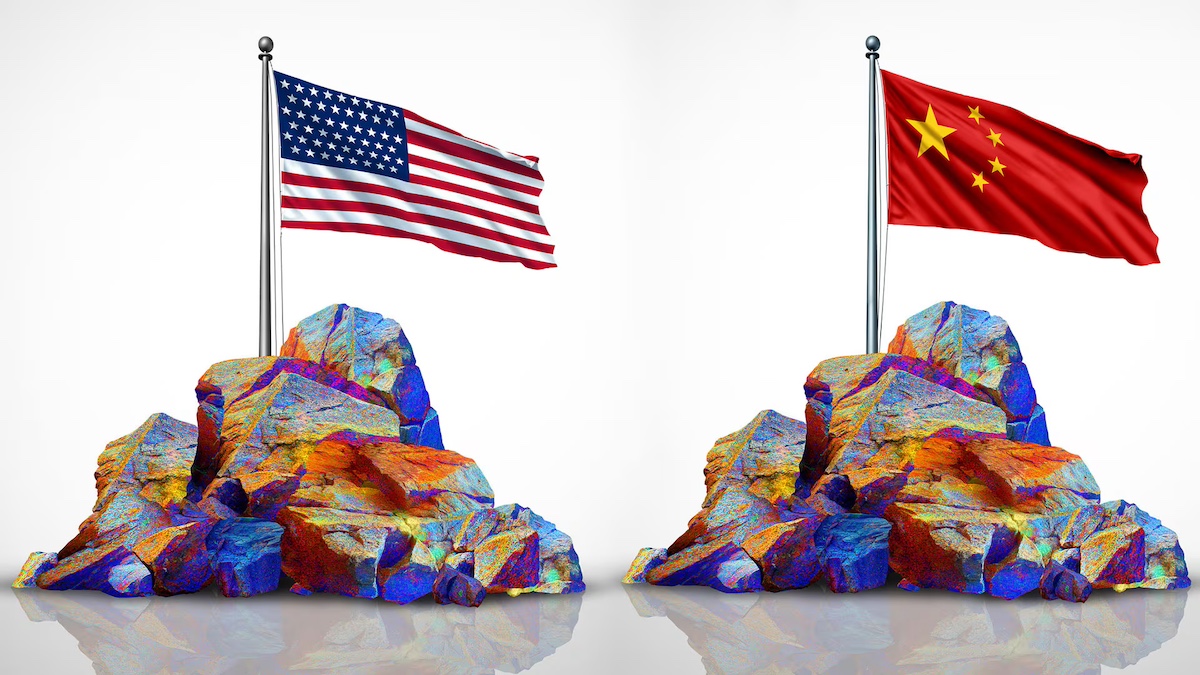
The May 2026 Trump-Xi summit held in Beijing has laid bare a profound shift in global geopolitics: commodities have evolved from ordinary traded goods into central pillars of great-power competition, with resource diplomacy now emerging as a defining organizing principle for strategic engagement between the world’s two largest economies. Far from a routine round of trade talks, the meeting brought into sharp focus how energy, food, critical minerals, and supply chain access have become core tools of statecraft in the new geopolitical order.
Per White House announcements, the summit delivered several concrete trade and resource agreements. China committed to purchasing a minimum of $17 billion worth of U.S. agricultural commodities every year through 2028, expanding on earlier soybean-specific deals reached in 2025. Beijing also agreed to reopen its markets to imported American beef and poultry, addressing longstanding U.S. trade demands. On the energy front, U.S. officials confirmed China has agreed to ramp up purchases of American crude oil, a move driven by ongoing instability in the Strait of Hormuz that threatens Beijing’s critical energy import flows. In exchange, China has pledged to address U.S. concerns over supply shortages of rare earths and other critical minerals that are essential to American industrial and military production.
The summit underscores a dramatic strategic reorientation in Washington’s approach to global commodities. Where once resources were viewed primarily through an economic lens, they are now increasingly framed as instruments of geopolitical leverage, industrial resilience, and strategic coercion. For the Trump administration, resource dependence on a rival power is treated as a critical national vulnerability, while control over key commodity supply chains is considered a defining geopolitical advantage.
This strategic shift is most visible in U.S. policy toward China’s dominance of critical mineral markets. For years, American defense and foreign policy strategists have sounded alarms over Beijing’s control of global processing and refining capacity for rare earths, graphite, cobalt, and battery materials—inputs that underpin modern technologies ranging from semiconductors and electric vehicles to advanced weapons systems, renewable energy infrastructure, and artificial intelligence hardware. The Trump administration now views this dominance not merely as an economic challenge, but as an existential strategic threat that could cripple U.S. military and industrial capacity during a crisis.
In response, Washington has pursued an aggressive policy of critical mineral securitization. Recent executive actions have deployed emergency powers to speed up domestic mining development, expand domestic refining capacity, advance deep-sea mineral extraction projects, and build national strategic stockpiles. The end goal is not just full national self-sufficiency, but strategic insulation from potential Chinese coercive action. Policymakers have also recognized that China’s advantage extends beyond raw resource ownership to its unmatched processing capacity and industrial integration: even rare earths mined outside China are most often refined within its borders before entering global manufacturing supply chains. As a result, the administration’s strategy has taken on the character of a Cold War-era industrial mobilization effort, aimed at rebuilding entire domestic supply ecosystems from ore extraction to finished military and technological components.
This approach marks a radical break from the post-Cold War consensus on globalization. For decades after the collapse of the Soviet Union, deep economic interdependence between nations was widely viewed as a stabilizing, mutually beneficial force that reduced the risk of great-power conflict. The emerging Trump administration doctrine rejects this framing, arguing that interdependence becomes a dangerous liability when rival powers control strategic supply chain chokepoints. In response, Washington has embraced tariffs, targeted industrial subsidies, domestic extraction mandates, friend-shoring of supply chains, and strategic decoupling in all sectors tied to national security.
Today, critical rare earth minerals hold the same geostrategic importance that oil occupied for much of the 20th century. Rare earth magnets are core components of fighter jets, missile guidance systems, military drones, radar networks, and advanced computing infrastructure. Semiconductor manufacturing also relies on a host of critical minerals that are vulnerable to supply disruptions. In Washington’s strategic planning, potential Chinese export restrictions on these materials are treated as analogous to a 1970s-style oil embargo that could cripple the industrial foundations of American global power.
The administration’s push for deep-sea mining directly reflects this strategic mindset. Offshore polymetallic nodules, which hold high concentrations of nickel, cobalt, manganese, and rare earth elements, are increasingly framed as strategic assets that can reduce U.S. reliance on Chinese-controlled supply chains. White House policy documents explicitly frame seabed extraction as a tool to break Beijing’s market dominance, pushing the global resource frontier from onshore mining into the deep ocean.
Hydrocarbons remain equally central to the administration’s geopolitical doctrine. Unlike many European governments, which center climate transition as the core organizing principle of economic policy, the Trump administration continues to view dominance in oil and natural gas markets as an enduring strategic advantage. Abundant cheap domestic energy boosts U.S. industrial competitiveness, expands American export capacity, and gives Washington significant leverage over energy-dependent rival powers.
This focus on energy leverage targets a key vulnerability for China: Beijing remains heavily dependent on imported hydrocarbons, most of which pass through the Strait of Hormuz, the world’s most critical maritime energy chokepoint. The 2026 Strait of Hormuz crisis, in which Iranian actions disrupted commercial shipping, sent shockwaves through global oil markets and exposed the fragility of Asian energy security, particularly for China and India—the two major powers seen as capable of challenging American global primacy. U.S. naval dominance in the region and growing American energy export capacity are increasingly viewed as interconnected strategic tools that can constrain China’s freedom of action on the global stage.
This explains Iran’s central role in the administration’s broader commodity strategy. Beyond being a regional U.S. adversary, Iran controls access to the energy routes that are the lifeline of most major Asian economies. Against this backdrop, the oil talks at the Trump-Xi summit carried outsized strategic significance: according to U.S. officials, China’s willingness to increase American oil purchases is driven in large part by a desire to reduce its exposure to Hormuz-related supply disruptions. This creates a striking geopolitical irony: the U.S. positions itself as China’s primary great-power rival, while also seeking to become the reliable supplier of the energy China needs to sustain its economic growth.
This transactional approach is a defining feature of Trumpian geopolitics. The administration does not aim for full economic decoupling from China; instead, it seeks to restructure economic interdependence on terms that maximize American strategic leverage. Commodity trade flows have become bargaining chips embedded in broader strategic negotiations that span tariffs, sanctions, military tensions, and technological competition.
Iran remains central to this architecture due to its deepening economic and strategic ties to China. Chinese refiners have continued to purchase Iranian oil despite sweeping Western sanctions, providing Tehran with a critical economic lifeline. Washington’s sanctions pressure on Chinese entities linked to Iranian crude therefore serves multiple overlapping goals: it constrains Iran’s regional ambitions, raises economic costs for Beijing, and reinforces American dominance over global financial and energy systems.
The summit also highlighted the enduring strategic importance of agricultural commodities. American agricultural production has long been one of Washington’s most underrecognized strategic assets: food dependence on other nations creates inherent political leverage, especially during periods of global supply disruption or food price inflation. China’s renewed commitment to large-scale U.S. agricultural purchases therefore carries strategic weight far beyond its impact on bilateral trade balances. The agreement stabilizes politically influential American farming constituencies ahead of U.S. elections, while also reinforcing Washington’s role as a core guarantor of global food security.
India occupies an ambiguous position in this emerging resource order. Washington increasingly views New Delhi as a key strategic balancer against Chinese influence in the Indo-Pacific, but it also recognizes that India’s rapid economic rise will intensify global competition for hydrocarbons, minerals, fertilizers, and other critical industrial inputs. India remains heavily dependent on imported energy and has refused to fully align with Western sanctions regimes against Russia and Iran. For the Trump administration, integrating India into commodity supply chains that are not controlled by China, while retaining leverage over India’s own resource dependencies, remains a long-term strategic priority.
The administration’s broader resource strategy also carries clear military implications. Resource-rich regions are increasingly becoming frontlines of great-power competition. Access to lithium reserves in Latin America, cobalt deposits in Africa, rare earth resources in Central Asia and Greenland, and control over Arctic shipping lanes are all now evaluated through a strategic national security lens.
Ultimately, the Trump administration’s commodity-focused resource strategy reflects the return of classical geopolitics in the 21st-century technological age. Energy, food, minerals, shipping routes, and industrial supply chains are now being redefined as core instruments of national power, on par with military bases and naval fleets. The May 2026 Trump-Xi Beijing summit offered a clear, vivid illustration of this global transformation. Agricultural trade, oil security, Strait of Hormuz stability, sanctions policy, and critical mineral access were all folded into a single, integrated great-power negotiation.
The Trump administration appears convinced that the global balance of power in the coming decades will depend less on the abstract dynamics of unfettered globalization, and more on which power controls the material foundations of modern civilization: energy flows, strategic minerals, industrial supply chains, and critical maritime chokepoints. In this emerging world order, commodities are no longer just ordinary goods traded in global markets—they are core strategic weapons in an era of intensifying resource-focused great-power rivalry.