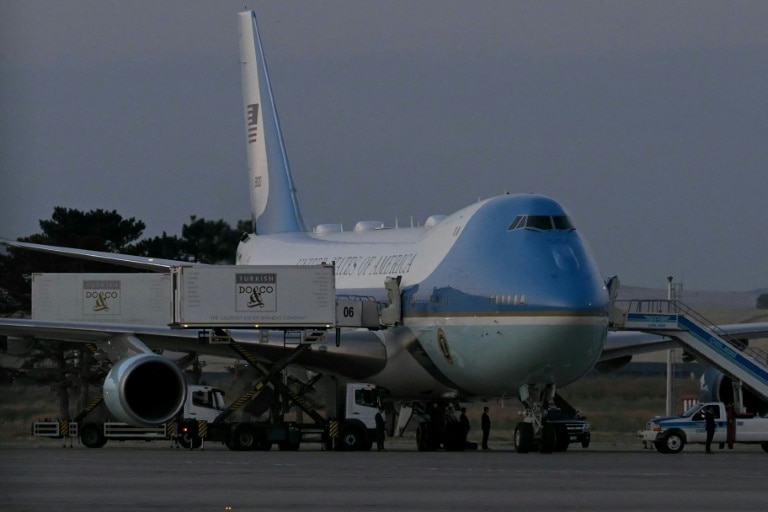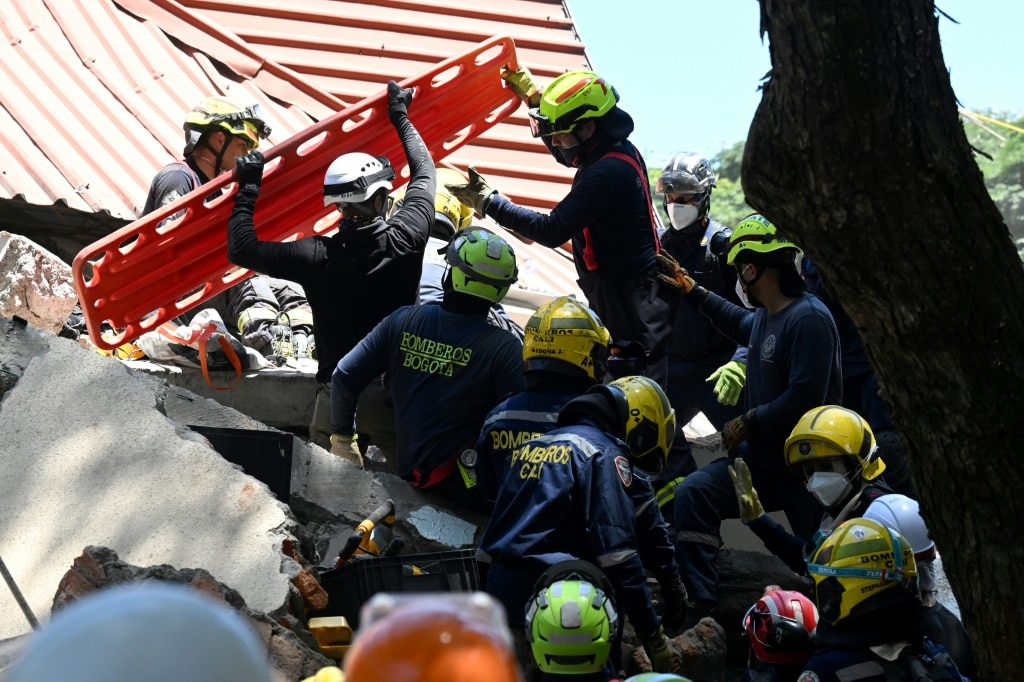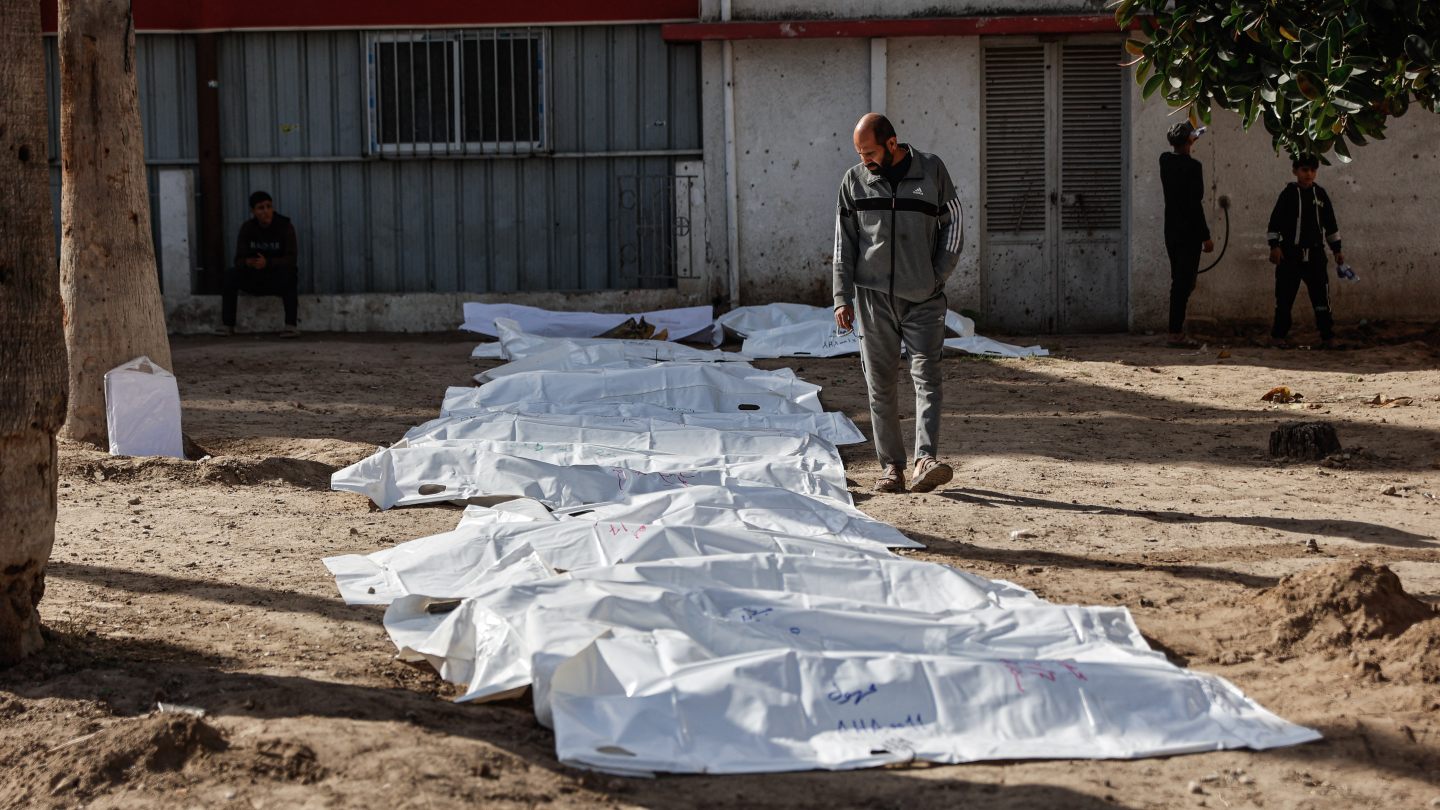
On the annual observance of Memorial Day, communities across the United States came to a standstill Monday, gathering for heartfelt, solemn ceremonies to pay tribute to the military service members who gave their lives in service to the nation. From small rural town squares to major national memorials in Washington D.C., organizers and attendees laid wreaths adorned with red, white and blue flowers at gravesites and memorial markers, the deep skirl of bagpipes echoed through cemeteries and public spaces, and uniformed service members fired ceremonial rifle salutes to honor the fallen. This national day of remembrance, which traces its origins back to the aftermath of the American Civil War, has grown into a unifying annual tradition that brings together veterans, active-duty troops, government officials, and ordinary American families. Many attendees shared personal stories of loved ones lost in conflict, using the occasion to reflect on the cost of freedom and the enduring legacy of those who made the ultimate sacrifice. While the day often marks the unofficial start of summer with recreational events, the core ceremonial observances across the country remain a deeply meaningful moment of national pause and reflection.
作者: admin
-

‘Failure’: Israel reacts with alarm as emerging US-Iran deal draws criticism
A reported emerging US-Iran agreement to permanently end ongoing conflict has triggered sharp skepticism and deepening alarm across Israel, with political, military and security leaders warning that the proposed framework fails to address core Israeli national security priorities.
Early weekend reports outlined that the tentative deal centers on a 60-day preliminary ceasefire captured in a memorandum of understanding, with the draft text notably omitting any provisions targeting Iran’s controversial nuclear program. The preliminary scope of the agreement also calls for an end to hostilities across all regional fronts, including the ongoing conflict in Lebanon.
Cross-party criticism from U.S. lawmakers, ranging from Democratic members to hardline Republican hawks, has been mirrored by widespread condemnation from Israeli political analysts and security experts. Against this mounting backlash, Israeli Prime Minister Benjamin Netanyahu released a statement Sunday confirming he had reached an understanding with U.S. President Donald Trump that any final, binding agreement with Iran must fully eliminate the nuclear threat posed by the regime. Netanyahu added that Trump had reaffirmed Israel’s sovereign right to self-defense against threats across all fronts, including Lebanon.
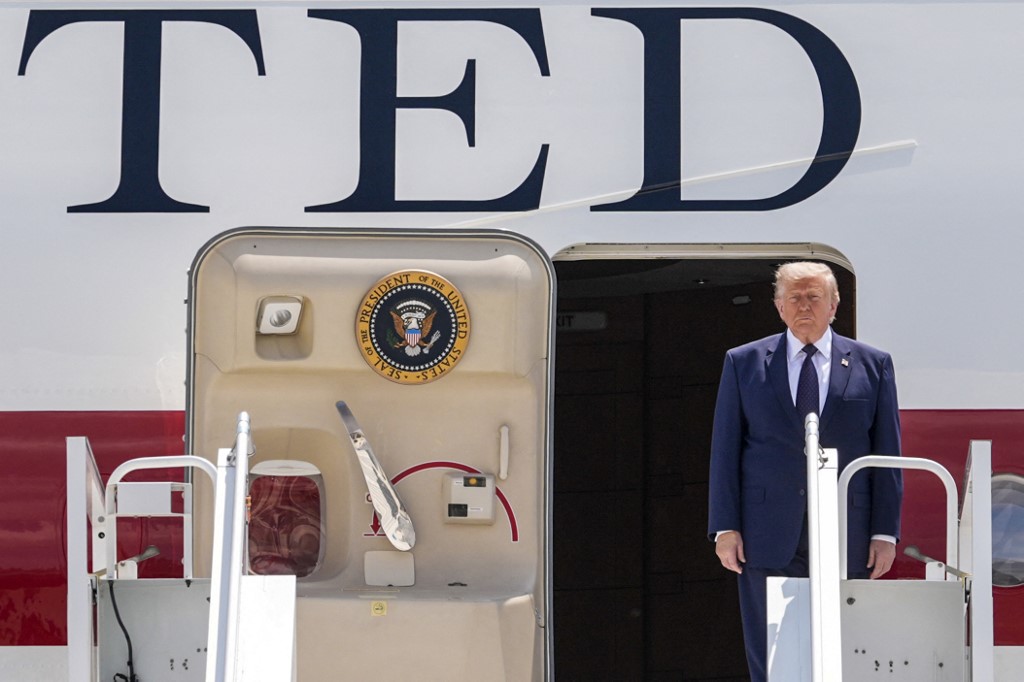
For his part, President Trump has moved to defend the ongoing negotiations in a post on his Truth Social platform. “If I make a deal with Iran, it will be a good and proper one, not like the one made by Obama,” he wrote, referencing the 2015 Joint Comprehensive Plan of Action nuclear agreement signed during the administration of former Democratic President Barack Obama. “I don’t make bad deals,” he added.
These public reassurances from both leaders have done little to ease concerns among Israeli journalists and military analysts, many of whom frame the emerging deal as a major political failure and strategic retreat for both the U.S. and Israeli governments.
Amos Harel, veteran military affairs commentator for leading Israeli left-leaning outlet Haaretz, argued Monday that any such deal would amount to a clear American capitulation to Iran, while also highlighting Israel’s eroding leverage within the Trump administration. Harel emphasized that the proposed framework falls drastically short of the explicit goals Netanyahu set when the conflict launched in late February, which included the full collapse of Iran’s ruling government and the complete dismantlement of the country’s nuclear and ballistic missile programs.
Danny Citrinowicz, an Iran-focused researcher at Israel’s independent Institute for National Security Studies (INSS), echoed Harel’s critical assessment, noting that the architects of the joint military campaign “did not truly understand Iran”. “The enormous gap between the declarations made at the beginning of the campaign and the agreement that will likely bring it to an end illustrates its failure,” Citrinowicz said Monday. “This war proved that Benjamin Netanyahu’s strategy has collapsed.”
Fellow INSS researcher Raz Zimmt described the tentative agreement as “very problematic” for Israeli national interests, arguing that Iran has effectively succeeded in reshaping a new regional power order in its favor. “The one who blinked first was President Trump, not the Iranians,” Zimmt told Israeli public radio outlet 103FM.
Nahum Barnea, veteran prominent political columnist for leading Israeli tabloid Yedioth Ahronoth, wrote Monday that the emerging deal would mark a clear strategic defeat for both Israel and the United States. He noted that neither Netanyahu nor Trump “never imagined” that after nearly three months of conflict, Iran would emerge in a stronger regional position than it held before the war began. Barnea added that Israel is now “subject to the absolute authority of a capricious, hollow, desperate American president” and argued that while confronting Iran remains an existential challenge for Israel, “Netanyahu is the last person” capable of leading that effort.
This wave of domestic criticism comes alongside growing concern across Israel that the country’s political influence in Washington has diminished significantly in recent months. On Saturday, *The New York Times* reported that the Trump administration had largely sidelined Israeli officials from the direct negotiation process, despite Israel’s role as a core coalition partner in the military campaign against Iran.
A Sunday report from Haaretz added that senior Israeli security officials are deeply alarmed by the direction of the U.S.-Iran talks, and have privately warned that “Israeli interests were not taken into account throughout the negotiations”. According to the report, officials have expressed significant frustration that despite Israel’s direct participation in joint military action against Iran, the White House has refused to prioritize Israeli core security concerns in the negotiation text. Senior officials now fear that a final U.S.-Iran agreement could impose binding restrictions on Israel’s ability to conduct independent future military operations in both Lebanon and Gaza.
Leading Israeli news outlet Ynet also reported that senior Israel Defense Forces (IDF) officials view the proposed framework as “a bad agreement for Israel” and have expressed deep disappointment with the reported terms. The outlet noted that the IDF had already begun preparations for a renewed military campaign against Iran, and senior commanders believe the agreement will fall far short of meeting core strategic goals, potentially leaving Iran well positioned to advance to full nuclear weapons capability as a “nuclear threshold state”.
Even within Netanyahu’s own ruling Likud party, some lawmakers have acknowledged the gap between opening war aims and the emerging deal. David Bitan, a Likud member of the Knesset, acknowledged Monday that Israeli expectations at the start of the conflict had been unrealistically high. Even so, Bitan insisted that Israel had secured significant military gains during the 40-day active conflict phase. When asked about Iran’s remaining ballistic missile capabilities, Bitan said Israel would “have to deal with it again and again”, adding that he expects further rounds of military conflict with Iran to occur every two to three years going forward.
-

Orange County residents react to evacuation after threat chemical tank explosion
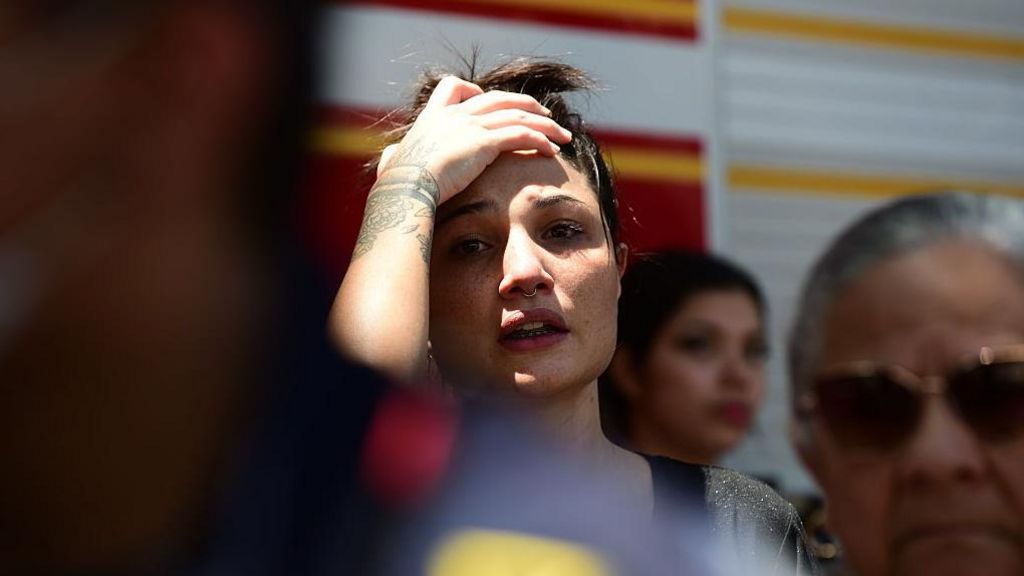
A looming public safety crisis has forced thousands of Orange County residents to leave their homes abruptly, after officials issued an urgent evacuation order over the imminent risk of explosion from a structurally failing chemical storage tank. The sudden threat has upended daily life across the affected region, leaving local communities grappling with uncertainty and disruption as emergency crews work to mitigate the hazard.
Interviews with displaced residents paint a picture of chaotic, last-minute departures, with many saying they received only hours’ notice to pack essential belongings, arrange temporary shelter, and secure their properties before the evacuation window closed. Some families reported having to make hard choices about which possessions to bring, while others with limited mobility or dependent family members described scrambling to find accessible emergency accommodation outside the evacuation zone.
Local emergency management agencies have not yet released full details about the tank’s condition, the specific chemicals stored at the facility, or a timeline for when residents might be allowed to return to their homes. Officials have confirmed that hazard assessment teams are on-site conducting continuous structural inspections and monitoring air quality in surrounding areas to prevent avoidable risk to the public.
For many Orange County residents, the unplanned evacuation has disrupted work schedules, children’s schooling, and routine family activities, with many staying with friends, relatives, or in emergency shelters set up by local government and non-profit organizations. Community groups have stepped in to provide food, clothing, and other essentials to displaced families, highlighting the region’s collective response to the unfolding emergency.
-

In German first, Leipzig students vote for academic boycott of Israel
On May 19, a landmark vote unfolded at Germany’s University of Leipzig that marks a seismic shift in the national debate over academic collaboration with Israel. Nearly 700 gathered students voted almost unanimously to cut all formal institutional ties between their university and Israeli academic entities, citing allegations of Israeli genocide and systematic educational destruction in Gaza. This outcome carries unique weight given Leipzig’s long-standing reputation as the heart of Germany’s Antideutsche movement, a radical left tradition defined by militant anti-German nationalism and unwavering, vocal support for Israel rooted in anti-antisemitism commitments, where Antideutsche activists have regularly clashed with pro-Palestinian organizers for decades.
The resolution approved by students lays out three core demands: first, that the university officially recognize and condemn what students frame as the genocidal character of Israel’s military campaign in Gaza, including the deliberate destruction of the Palestinian education system — a phenomenon widely termed scholasticide. Second, the university must terminate all existing cooperative agreements with Israeli higher education and research institutions. Finally, students insist the university refuse to participate in, promote, or publicize any joint activities or programs hosted or organized by Israeli academic bodies.
A collaborative report compiled by Leipzig students and staff alleges that the university’s existing partnerships directly enable what they call Israel’s genocide and repeated violations of international law. Current collaborations include extensive student exchange programs, active joint research initiatives, and formal partnerships with multiple Israeli institutions that have been linked to the expansion of illegal Israeli settlements in occupied Palestinian territory.
“Leipzig University is completely open about its work with institutions that break international law,” one student who contributed to the report told Middle East Eye. The student laid out three justifications for cutting ties: moral, noting the universal justice of opposing genocide; ethical, arguing universities must uphold the values of life and education while rejecting human rights abuses and scholasticide; and legal, referencing the International Court of Justice’s advisory opinion that confirms the illegality of aiding or abetting violations of universally binding erga omnes international law, including violations committed by Israeli educational institutions.
University administration moved preemptively to block the student assembly, rejecting the vote’s legitimacy. Ahead of the planned gathering, the institution withdrew its permission for students to use university-owned space for the assembly, and the university’s rector Professor Eva Ines Obergfell argued that the event was no longer a legitimate academic debate, but rather a partisan push that aimed to restrict academic freedom. The administration also claimed the assembly was improperly convened, noting it was not organized through the official student council leadership per institutional statutes, and that only around 1 percent of the university’s total student body attended.
These accusations were immediately rejected as baseless by the Leipzig Student Council. Per the student body’s own governing rules, a general assembly can be called via a public petition signed by at least 3 percent of the total student population. Organizers collected roughly 1,300 signatures, easily surpassing the required threshold to convene the assembly. Ultimately, students held the gathering in an outdoor university courtyard after being denied indoor space. “The signatures we collected make it clear that we as a student body want and need to participate in this critical discourse,” explained Alaska Krakor, a Student Council representative. “The general assembly as a direct democratic outlet for our position must be respected by university leadership.”
Leipzig is far from an outlier in Germany: almost every major higher education institution in the country maintains formal academic ties to Israel. In June 2025, the German Rectors’ Conference, the national umbrella group for all public and officially recognized German universities, issued a formal statement calling for the expansion and strengthening of academic and research partnerships with Israel. The statement was released in direct response to growing European calls to suspend the EU Association Agreement with Israel, the primary legal framework governing political and economic relations between the bloc and Israel. The conference asserted that Israeli universities and the broader Israeli academic community have long been a core liberal, democratic force in the Middle East, and a central pillar of balanced ethical and academic reflection on the regional conflict.
Student organizers emphasize that this vote breaks new ground even as past student council resolutions have backed academic boycotts of Israel. Unlike previous measures that were introduced as part of broader general assemblies, this vote came out of a general assembly specifically convened to address the question of institutional academic complicity in Gaza. Organizers with Students for Palestine Leipzig told Middle East Eye that the groundwork for the overwhelming vote was laid months earlier at the start of the academic year, when the group released the complicity report detailing the university’s Israeli partnerships. In the lead-up to the assembly, organizers held educational sessions to walk students through the report’s findings and explain the rationale for an academic boycott, building broad support across the student body.
“We as students wanted to think globally and act locally,” the SFP Leipzig statement read. “Our university is complicit through its direct ties and cooperation with Israeli institutions that help develop weapons, manufacture bombs, and build knowledge that enables the oppression of Palestinians. We want no part in this complicity. We call on the university to respect the will of the student body.”
-

Watch: Only world record broken at Enhanced Games won’t be recognised
A groundbreaking moment at the controversial Enhanced Games has turned into a dispute over sporting legitimacy, after officials confirmed a new world mark set by Greek swimmer Kristian Gkolomeev will not receive formal recognition from any mainstream global sports governing bodies.
The Enhanced Games, an event that has sparked fierce debate across the international athletic community, permits competitors to use performance-enhancing substances that are strictly banned under traditional anti-doping regulations. This core stance puts the competition in direct conflict with the long-standing rules and ethical frameworks established by leading international sports organizations.
BBC correspondent Shaimaa Khalil has detailed the structural conflict that led to the automatic rejection of Gkolomeev’s record. Even though the Greek athlete delivered an impressive performance that surpassed existing global standards, the unauthorised status of the Enhanced Games means official bodies cannot acknowledge the result as a valid world record under their by-laws.
The decision has reignited long-running conversations about the future of clean sport, the line between innovation and fairness in elite competition, and how governing bodies should respond to emerging alternative sporting events that challenge established anti-doping norms. While supporters of the Enhanced Games frame it as a progressive reimagining of elite athletics, traditional governing bodies have remained firm in protecting the integrity of drug-free competition, leaving records set at the alternative event outside the bounds of official recognition.
-

Leftist icon, millionaire lawyer, conservative senator: Who will be Colombia’s next leader?
As Colombians prepare to head to the polls this Sunday to elect their next head of state, three candidates from wildly different political backgrounds have emerged as the clear frontrunners, each offering a sharply contrasting vision for the country’s future. At the top of pre-election polling is Ivan Cepeda, a veteran leftist senator, human rights advocate and close ally of outgoing President Gustavo Petro, Colombia’s first ever left-wing head of state. Trailing closely behind him are right-wing political newcomer Abelardo “The Tiger” de la Espriella and conservative opposition senator Paloma Valencia, a protégé of hardline former president Alvaro Uribe.
Cepeda’s political journey has been defined by tragedy and resilience, shaped by decades of conflict in Colombia. He first stepped into the national spotlight in 1994, when at just 32 years old, he stood beside the bullet-riddled corpse of his father, a communist senator assassinated by far-right paramilitaries during a wave of political violence that killed more than 5,700 leftist leaders across the country. Speaking to reporters on that day, he demanded accountability, saying “Let this crime not go unpunished” — a moment broadcast live to millions of Colombians.
Now 63, Cepeda spent years in exile across Czechoslovakia, Bulgaria, Cuba and France before returning to his home country to advocate for victims of the decades-long internal armed conflict. He played a pivotal role in crafting the 2016 historic peace accord that brought about the full disarmament of the FARC, Colombia’s once-largest rebel guerrilla group, and later was the architect of Petro’s controversial “total peace” initiative, an effort to end all remaining insurgent and criminal violence that ultimately failed to meet its core goals.
A defining moment in his political rivalry with the right came when Cepeda led the investigation into Uribe’s alleged paramilitary ties, a case that led to Uribe becoming the first former Colombian president to be convicted of a criminal offense in 2024. Though the conviction was later overturned by a judge, the confrontation cemented Cepeda’s status as the left’s most prominent icon and Uribe’s greatest political foe. Known for rejecting neckties — which he calls a symbol of oligarchy — and often wearing a traditional Caribbean collared shirt, Cepeda has brushed off decades of attacks from opponents, noting during this campaign: “I have survived genocide, stigmatization and relentless persecution. And here I am, still standing.” His critics still attack him over his past, however, repeating accusations of hidden ties to the FARC and blaming him for the failures of Petro’s total peace plan.
In second place in the polls is 47-year-old de la Espriella, a millionaire lawyer and businessman who has branded himself “The Tiger” and is making his first run for public office after years living a lavish lifestyle abroad. A self-identified right-wing outsider, de la Espriella left Colombia to live in Florence, Italy, where he enjoyed opera, traveled via private jet and built his businesses in rum and wine. He returned to run for president, he says, to stop the left from “destroying” Colombia, and counts among his political idols former U.S. President Donald Trump, Argentina’s libertarian leader Javier Milei and El Salvador’s hardline president Nayib Bukele.
Over his decades-long legal career, de la Espriella has defended a wide range of high-profile Colombian figures, from top soccer stars to notorious drug traffickers. Now campaigning, he often wears a tailored suit and has recently taken to wearing a bulletproof vest to public events, a nod to his tough-on-crime platform. As the candidate of the hardline law-and-order movement, de la Espriella has proposed sweeping measures to tackle Colombia’s status as the world’s largest cocaine producer: he wants to create a military alliance with the United States and Israel to crack down on drug cartels, build a network of large mega-prisons, and expand legal access to firearms for civilians. “Any criminal who does not surrender will be taken down as the law allows,” he told AFP in a February interview.
The candidate has drawn widespread controversy for his inflammatory rhetoric: he once called for the Colombian left to be “gutted” before later softening his language, has made remarks widely condemned as homophobic and sexist, and often uses aggressive, vulgar language in campaign events. His hot temper and unapologetic style have become defining parts of his political brand, attracting a base of angry, anti-establishment right-wing voters.
Third in pre-election surveys is 50-year-old Paloma Valencia, a conservative senator from one of Colombia’s most politically powerful elite families. She is the granddaughter of Guillermo León Valencia, who served as Colombia’s president from 1962 to 1966, a conservative leader who took a hard line against early guerrilla groups and aligned Colombia closely with U.S. anti-communist policy in Latin America. If elected, she would become Colombia’s first female president.
Valencia has long positioned herself as one of the most vocal critics of the Colombian left and guerrilla groups, and considers former president Uribe her political “father” and mentor, campaigning side-by-side with him across the country. Like Uribe, she opposed the 2016 FARC peace accord and supports the hardline militarized security strategy that defined his presidency. In a March campaign speech, she laid out her core policy contrast to Petro’s agenda: “We are going to put an end to ‘total peace’ in order to impose total security.”
On social issues, Valencia holds staunch conservative positions on LGBTQ rights, and she supports expanding fracking — a controversial method of oil and gas extraction widely criticized for its severe environmental harms. As the most established right-wing candidate in the race, she draws support from traditional conservative voters who align with Uribe’s long-standing political movement.
With just days to go before voting begins, polls show a tight three-way race that remains too close to call, leaving Colombians poised to choose between continuing the country’s left-wing shift or turning back to a hardline conservative security agenda.
-

California chemical tank explosion threat ‘eliminated,’ official says
A days-long public safety crisis in Orange County, California, has reached a critical turning point, with fire officials confirming Monday that the imminent threat of a catastrophic explosion from a leaking chemical storage tank has been fully neutralized. Even with the major risk removed, tens of thousands of displaced local residents are still required to remain outside their designated evacuation zones as emergency teams continue to monitor lingering safety hazards, official announcements confirm.
Interim Fire Chief TJ McGovern of the Orange County Fire Authority announced the update in a video posted to social platform X Monday morning, stating, “We are happy to report that the threat… has been eliminated.” Despite the positive development, McGovern emphasized that evacuation orders remain in full effect, urging residents to “abide by those evacuation zones.” In a separate post on X, the authority added that “there is still an ongoing threat to public safety” that requires continued precautions.
The emergency was triggered late last week, when crews first detected a leak, and later a structural crack, in a 7,000-gallon storage tank holding methyl methacrylate — a volatile, flammable liquid chemical used in plastic manufacturing. Located in Garden Grove, roughly five miles from the world-famous Disneyland Resort and in a heavily populated region southeast of Los Angeles, the tank’s compromised condition sparked urgent fears that a buildup of heat and pressure could trigger an explosion, prompting authorities to order evacuations for roughly 50,000 local residents starting Friday.
By Sunday evening, emergency responders confirmed there was no longer an active leak, and continuous atmospheric monitoring detected no unauthorized chemical release into the surrounding air. On Monday, Incident Commander Craig Covey reported that pressure inside the damaged tank had continued to drop, and internal temperature had fallen to 93 degrees Fahrenheit (34 degrees Celsius), down from a hazardous high of 100 degrees Fahrenheit (38 degrees Celsius). “The crack is there. We have verified that it’s there, and the tank has released its pressure,” Covey said. “That is incredibly positive news as we turn the corner on this incident.”
Federal regulators stepped in rapidly to support the response, with a team of experts from the U.S. Environmental Protection Agency (EPA) dispatched to advise on response strategies. EPA Administrator Lee Zeldin told CNN Sunday that the “most catastrophic scenario” would have involved a chain reaction where one tank explosion triggered blasts at adjacent storage units, but the agency assessed from the start that the “most likely scenario” was a controlled low-volume release that would allow crews to contain and neutralize the risk — an outcome that aligns with the latest on-the-ground updates.
The damaged tank is owned by GKN Aerospace, a global aerospace technology manufacturer headquartered in Birmingham, UK, that operates 32 production facilities across 12 countries. In a statement released Sunday, the company confirmed it was “working around the clock to mitigate the risk of a leak.” Nearby Disneyland Resort officials also released a statement early in the crisis noting that the popular tourist destination “remains open to guests,” and that resort leadership was keeping close track of developments.
Public health experts warn that methyl methacrylate, the chemical stored in the tank, causes irritation to human skin, eyes, and mucous membranes. Acute or extended exposure can also trigger serious respiratory and neurological adverse reactions, making continued monitoring critical to protect both response crews and returning residents.
-

Russia threatens more Kyiv strikes and tells foreign nationals to leave
Just days after one of the largest aerial assaults on Ukraine’s capital since the full-scale invasion began, Russia has issued a explicit threat of a new wave of coordinated, systematic attacks targeting Kyiv. In an official statement released by the Russian foreign ministry, Moscow confirmed that upcoming strikes will focus on what it labels “decision-making centres and command posts” in the capital, alongside facilities Ukraine uses to manufacture unmanned aerial vehicles. The statement also urged all foreign nationals and diplomatic staff to evacuate Kyiv “as soon as possible”, and warned local Ukrainian residents to avoid moving near administrative and military infrastructure across the city.
The large-scale barrage carried out by Russian forces on Saturday night left four people dead and approximately 100 others injured across Kyiv and surrounding regions, Ukrainian President Volodymyr Zelensky confirmed. Moscow has framed both this weekend’s attack and the coming new strikes as retaliation for what it claims was a deliberate Ukrainian strike on a student dormitory in the Russian-occupied eastern Ukrainian town of Starobilsk last Friday. Russian officials allege that 21 people were killed in that incident. Ukraine’s military has pushed back against this narrative, confirming it targeted an elite Russian military drone unit operating in the area and maintains no civilian facilities were intentionally targeted in the strike.
This latest round of violence comes after a series of escalating attacks on Kyiv that began earlier this May, when a temporary ceasefire timed to coincide with Moscow’s annual Victory Day military parade expired. Within days of the ceasefire ending, Russian strikes on a Kyiv residential apartment block killed 24 people, including three children. The assault carried out overnight Saturday marked one of the most intense large-scale aerial attacks on the capital since the start of the full-scale invasion.
Footage shared by Kyiv residents on social media platforms captured sustained explosions lighting up the night sky across the capital, with multiple blasts reported that shook buildings across wide areas of the city. Dozens of ballistic and cruise missiles, alongside hundreds of attack drones, were launched against Kyiv in the assault. Russian forces also fired a nuclear-capable Oreshnik hypersonic missile targeting the area of Bila Tserkva, a city located roughly 90 kilometers south of the Ukrainian capital.
The attack left a trail of destruction across both cultural and civilian sites in Kyiv. The Chernobyl Museum, located in the city’s historic central district, and the National Art Museum of Ukraine both suffered significant damage. Multiple residential buildings, a public market and a large commercial shopping centre in Kyiv’s Lukanivka neighborhood were completely destroyed.
Analysts and political observers broadly view Russia’s public call for foreign nationals to evacuate Kyiv as a deliberate tactic of psychological warfare designed to sow panic and instability among the capital’s population. Large-scale strikes on Kyiv have been a consistent feature of Russian military strategy since Moscow launched its full-scale invasion of Ukraine in February 2022.
After four and a half years of continuous full-scale war, Ukraine has built out a sophisticated, multi-layered air defense network that now intercepts the vast majority of Russian drones and missiles. However, Russia often launches attacks with such large volumes of projectiles that Ukrainian defenses are periodically overwhelmed, allowing a significant number of weapons to reach their targets. Ukraine’s air defense capabilities also remain heavily reliant on military support from Western allies, a vulnerability that Ukrainian leadership has repeatedly highlighted. Back in March, Zelensky warned that Ukraine faced a critical deficit of air defense weapons due to shifting defense resource priorities driven by conflicts involving the U.S. and Israel.
-

Threat of massive chemical tank explosion is ‘eliminated’, California officials say
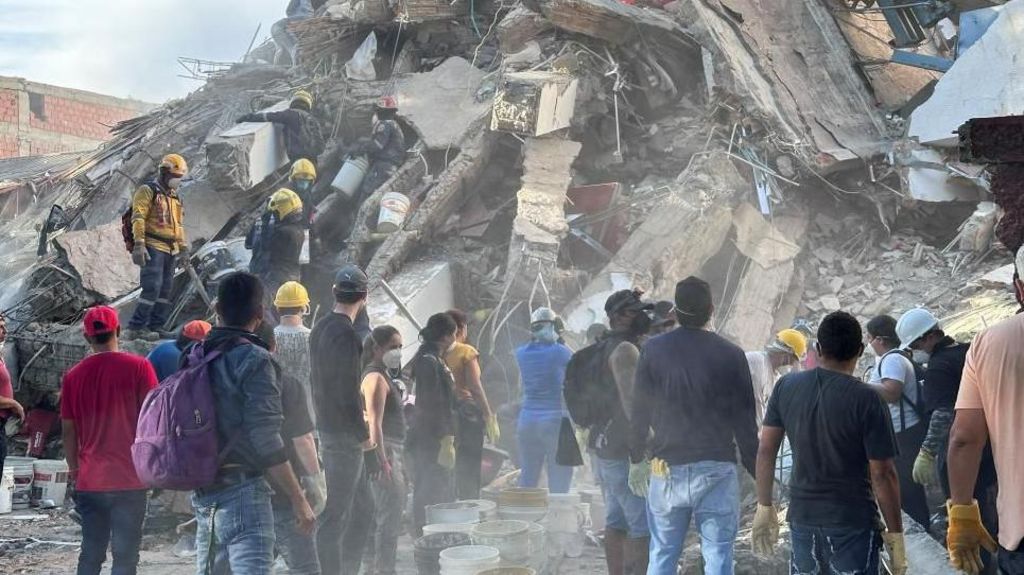
California fire officials have announced that the imminent threat of a catastrophic explosion from a damaged volatile chemical storage tank in Orange County has been successfully resolved following a hours-long overnight emergency operation. The breakthrough comes after days of tense uncertainty that displaced tens of thousands of Southern California residents and triggered a statewide state of emergency.
Interim Chief TJ McGovern of the Orange County Fire Authority confirmed Monday that the risk of a Boiling Liquid Expanding Vapor Explosion, more commonly known as a BLEVE — the most severe feared outcome of the incident — has been fully taken off the table. “We are happy to report that the threat of a BLEVE is now off the table. That threat has been eliminated,” McGovern stated in a joint public briefing with Division Chief Craig Covey.
The tank, located at the GKN Aerospace Transparency Systems facility in Garden Grove, roughly 35 miles southeast of downtown Los Angeles, holds thousands of gallons of methyl methacrylate, a highly flammable, volatile chemical compound used to produce industrial plastics and resins. The vessel developed a critical crack over the weekend, which sparked dangerous internal pressure buildup and rapid heating that put the entire structure at risk of catastrophic failure. Officials confirmed Monday that the crack itself has enabled controlled pressure release, and emergency cooling efforts have successfully brought internal temperatures down from a peak of 100°F (38°C) to a safer 93°F (34°C).
Covey, who shared initial on-site updates via a social media video, noted that safety constraints prevented frequent temperature monitoring over the weekend amid extreme heat conditions. “We were not doing tank temperature checks during the day while the sun was on it in the most extreme conditions for that tank to go the wrong direction,” Covey explained. “We were only doing tank temperatures at night.” He also confirmed that response crews had observed the tank starting to bulge under the rising internal pressure as the crisis unfolded.
Since Sunday, hundreds of emergency responders have worked around the clock to stabilize the tank. Following unexpected rapid temperature increases starting last Thursday, teams have continuously sprayed the vessel with water to keep internal temperatures in check and slow the exothermic chemical reactions driving pressure buildup. As of Monday, officials say there is still no active leak of the dangerous chemical, though they warn a spill remains a possible future outcome. Precautionary containment measures, including the rapid construction of dykes and earthen dams, have already been completed to stop any leaked chemical from reaching local storm drains or the Pacific Ocean, should a breach occur.
As a critical precaution, evacuation orders remain in effect for more than 50,000 residents across six Orange County cities: Garden Grove, Stanton, Anaheim, Cypress, Westminster, and Buena Park. California Governor Gavin Newsom has already issued a formal state of emergency for the region to unlock additional state resources for the response effort. GKN Aerospace, the private company that owns the facility and the tank, has issued a public apology to all local residents displaced by the incident.
Per U.S. Environmental Protection Agency guidelines, methyl methacrylate is classified as an irritant that can cause damage to human skin, eyes, and mucous membranes upon exposure. High levels of exposure can also trigger acute respiratory and neurological symptoms in affected people, making unplanned release a serious public health risk.
-

The rare Ebola outbreak is one danger. Attacks on healthcare workers are another
In the sun-scorched working-class neighborhoods of Bunia, the epicenter of a spiraling Ebola outbreak in eastern Democratic Republic of the Congo, Red Cross volunteer Vanny Birungi carries out her daily awareness work against two lethal enemies. The first is the rare Bundibugyo strain of Ebola, a pathogen for which no licensed vaccine or targeted treatment currently exists. The second is the open hostility of local residents, who have responded to outreach with stone-throwing, verbal harassment, and deep-rooted suspicion that has derailed containment efforts even as suspected cases creep toward the 1,000 mark.
This volatile northeast region of Congo has been fractured by years of armed insurgency, which has left thousands dead and hundreds of thousands displaced. For a population long traumatized by violence and distrustful of outside actors, even aid workers focused on stopping a spreading virus are viewed with skepticism. That distrust has been compounded by critical delays: experts confirm the outbreak was detected weeks after it first began spreading, and years of funding cuts to global health surveillance programs from the U.S. and other donors have gutted local capacity to monitor for emerging pathogens.
For many residents like 56-year-old Bunia local Pierre Basola, suspicion curdles into outright denial. “Ebola is a white man’s invention,” Basola said. “These people just want to get rich, and they should stop bothering us.” This widespread skepticism has turned violent in recent days, with three separate attacks on healthcare facilities in just one week. On Sunday, a mob of angry young men stormed a hospital treating Ebola patients, forcing all medical staff to evacuate as gunfire echoed through the building. A day earlier, local residents set fire to an Ebola screening and isolation tent run by Doctors Without Borders in the nearby town of Mongbwalu, leading more than a dozen suspected Ebola patients to flee into surrounding communities. Just days before that, an Ebola response center in Rwampara was burned to the ground after relatives were blocked from retrieving the body of a man who died from suspected infection.
Public anger is amplified by a core cultural conflict: standard Ebola infection control protocols bar traditional handlings of deceased bodies, which are a central part of local final rites. This restriction hits especially hard because the Bundibugyo strain causes sudden, dramatic illness marked by vomiting and external bleeding, leaving families reeling and unwilling to abide by rules they do not understand. Ebola spreads exclusively through close contact with bodily fluids of infected people or the deceased, meaning traditional funeral practices are among the highest-risk activities for new transmission. Yet without community buy-in, even the most evidence-based protocols cannot be enforced.
“Trust is almost as important as the health response, because if you get this massive distrust in the communities, they’re not going to go to the health centers,” explained Heather Kerr, country director for the International Rescue Committee in Congo. Beyond community distrust, aid groups face a second deadly obstacle: ongoing armed conflict across the region. The outbreak is centered in Ituri province, more than 620 miles from Congo’s capital Kinshasa, and travel between outbreak zones requires passing through territory regularly targeted by insurgent attacks. A key regional airport that serves as a humanitarian hub has been under rebel control for more than a year, and many local clinics rely on old generators for power, leaving barely any infrastructure to support outbreak response.
As of Monday, World Health Organization Director-General Tedros Adhanom Ghebreyesus confirmed the outbreak has reached more than 900 suspected cases and more than 220 suspected deaths. “We are now playing catch-up with a very fast-moving epidemic,” Tedros said.
For long-time residents like 70-year-old Mado Nditamba, the scale of the outbreak has left communities feeling helpless. “The last time Ebola came, it was not on the scale that we see today,” Nditamba said. “But this epidemic today is worse. We go to the doctors in the hospitals, but they also die. That’s what worries us. We don’t know what to do and we leave everything to God.”
Congo has faced 17 previous Ebola outbreaks, and the WHO says the country has the general infrastructure to mount a response, but critical missteps early on cost valuable time. Initial diagnostic tests only screened for the more common Zaire strain of Ebola, failing to identify the rare Bundibugyo variant and delaying formal recognition of the outbreak. Even now, there are few laboratories in the region capable of testing for this specific strain.
Frontline health workers report they are drastically underprepared and underprotected, and the virus has already begun to infect responders. A Congolese doctor working on the response was confirmed dead in Rwampara on Sunday, and at least three Ugandan health workers have been infected after the outbreak crossed the border into Uganda, where a small cluster of cases has emerged. Most concerningly, three Red Cross volunteers died in Mongbwalu in late March after handling bodies for a non-Ebola related task. If their deaths are confirmed to be from Ebola, that would push the start of the outbreak back weeks earlier than the first officially confirmed death in late April, meaning the virus has been spreading undetected far longer than initially thought.
Even as funeral homes in Bunia prepare for an increasing death toll, a large share of the local population remains convinced Ebola is a myth. A mid-May survey by Action Aid, one of the international humanitarian groups working on the response, found widespread skepticism and lack of basic understanding about the virus across Ituri province. Humanitarian leaders agree that sustained, trusted community engagement is the only path to getting the outbreak under control, but it remains unclear how that engagement can be scaled quickly enough to reverse the outbreak’s trajectory. Both the WHO and Africa Centers for Disease Control and Prevention warn that the actual number of cases is almost certainly far higher than the current confirmed count.