作者: admin

  • Pope Leo XIV remembers Gaza’s suffering in first Christmas homily and calls for peace

    Pope Leo XIV remembers Gaza’s suffering in first Christmas homily and calls for peace

    In his inaugural Christmas Day homily, Pope Leo XIV delivered a powerful message from St. Peter’s Basilica, drawing poignant parallels between the biblical narrative of Christ’s birth and contemporary global suffering. Addressing thousands of congregants beneath the basilica’s ornate balustrade, adorned with seasonal poinsettias and floral garlands, the pontiff specifically highlighted the plight of Gaza’s civilians enduring harsh winter conditions.

    The Pope’s address transformed the traditional Christmas message into a profound commentary on modern conflicts. ‘We cannot ignore the tents in Gaza, exposed for weeks to rain, wind and cold,’ Leo declared, extending his concern to refugees worldwide and urban homeless populations. His homily meticulously connected the Christian story of God assuming fragile human form in a Bethlehem manger with the vulnerability of displaced persons across continents.

    Leo XIV offered sharp criticism of military conflicts, referencing ‘defenseless populations tried by so many wars’ and young soldiers confronting the ‘senselessness of what is asked of them.’ He characterized military recruitment rhetoric as ‘falsehoods that fill the pompous speeches of those who send them to their deaths.’

    The pontiff presented dialogue as the singular solution to global strife, asserting that peace only emerges ‘when our monologues are interrupted and, enriched by listening, we fall to our knees before the humanity of the other.’ The Mass attracted thousands of faithful who gathered despite steady rainfall, many documenting the historic occasion with smartphones.

    This Christmas celebration concludes the Holy Year observances, scheduled to officially terminate on January 6th, the Epiphany holiday commemorating the biblical visit of the three wise men to the infant Jesus.


  • Turkey begins black box analysis of jet crash that killed Libyan military chief and 7 others

    Turkey begins black box analysis of jet crash that killed Libyan military chief and 7 others

    Turkish authorities have commenced technical examination of the flight recorders recovered from the catastrophic private jet accident that claimed eight lives, including Libya’s senior western military commander. The Turkish Defense Ministry confirmed Thursday that investigative procedures are advancing through collaborative efforts with Libyan officials.

    The ill-fated aircraft, carrying General Muhammad Ali Ahmad al-Haddad alongside four additional military representatives and three flight crew members, went down shortly after departure from Ankara on Tuesday. Initial assessments from Libyan authorities indicate potential technical failures as the probable cause of the tragedy.

    The high-ranking delegation was returning to Tripoli following strategic defense discussions in the Turkish capital focused on enhancing military coordination between the two nations. Turkish Interior Minister Ali Yerlikaya reported that debris from the crash site spanned approximately three square kilometers, significantly impeding recovery operations.

    A 22-member team from Libya, comprising five relatives of the victims, arrived early Wednesday to participate in the investigation process. The multinational cooperation underscores the significance of the incident within international military and diplomatic circles.

  • Turkey arrests 115 IS suspects ‘planning New Year’s attacks’

    Turkey arrests 115 IS suspects ‘planning New Year’s attacks’

    Turkish security forces have successfully dismantled an extensive Islamic State network that was actively planning coordinated attacks during Christmas and New Year’s celebrations. In a sweeping counterterrorism operation across Istanbul, authorities apprehended 115 suspected ISIS operatives while pursuing an additional 22 individuals still at large.

    The massive intelligence-driven operation targeted 124 separate locations throughout Turkey’s largest city, resulting in the seizure of significant weapon caches including firearms, ammunition, and critical organizational documents. According to Istanbul’s Chief Prosecutor, the detained suspects maintained active communication channels with ISIS leadership operating outside Turkish borders.

    Investigators revealed the terrorist cell specifically planned to target non-Muslim communities and religious gatherings during the holiday period. This security operation represents one of the most comprehensive counterterrorism efforts in recent years against ISIS infrastructure within Turkey.

    The crackdown occurs amidst heightened regional tensions following the recent killing of three American personnel—two soldiers and a civilian interpreter—in an ISIS-ambush earlier this month. In response, the United States conducted a series of airstrikes against ISIS positions across Syria last Friday.

    Turkey’s geographic position remains particularly vulnerable to terrorist infiltration due to its 900-kilometer (560-mile) border with Syria, where ISIS maintains active cells in certain regions. President Ahmed al-Sharaa of Syria, maintaining close ties with the Turkish government, has committed to collaborative efforts with Western nations to eliminate remaining ISIS elements in the region.

    Turkish security agencies continue regular operations against suspected ISIS affiliates, reflecting the ongoing threat posed by the organization despite its territorial defeats in previous years.

  • Algeria votes to declare French colonization a crime and demands restitution

    Algeria votes to declare French colonization a crime and demands restitution

    ALGIERS, Algeria — In a landmark legislative move with profound historical implications, Algeria’s National Assembly has formally declared France’s 130-year colonial occupation a criminal act. The newly enacted law establishes a comprehensive framework seeking redress for colonial-era injustices, including demands for restitution of appropriated property and cultural artifacts.

    The legislative body, with an overwhelming majority of 340 out of 407 members, endorsed the measure during a ceremonious session marked by nationalistic symbolism. The timing coincides with broader African continental initiatives advocating for recognition and reparations concerning colonial crimes.

    This groundbreaking legislation encompasses the entire colonial period from France’s initial invasion in 1830 through Algeria’s hard-won independence in 1962. Key provisions mandate the return of Algerian archives and cultural property displaced during colonial rule, alongside detailed documentation regarding French nuclear testing conducted on Algerian territory between 1960-1966. The law further demands repatriation of remains belonging to Algerian resistance fighters currently held in France.

    Notably, the statute imposes criminal penalties—including imprisonment—for any Algerian citizen found celebrating French colonialism or disparaging symbols of national resistance.

    France has vehemently condemned the legislation as a “hostile act” that jeopardizes ongoing bilateral reconciliation efforts. The French Foreign Ministry emphasized President Emmanuel Macron’s previous initiatives addressing colonial grievances while reaffirming commitment to continued dialogue on security and migration matters.

    The historical context reveals particularly brutal aspects of French colonial administration in Algeria. Despite legal incorporation into France, systemic inequality prevailed with nearly one million European settlers enjoying superior political, economic, and social privileges. Algeria’s revolutionary struggle witnessed extreme violence, including widespread torture, forced disappearances, and village devastations as part of French counterinsurgency operations.

    Parliamentary proceedings were emotionally charged, featuring displays of massive national flags and spontaneous renditions of patriotic anthems. Assembly Speaker Mohamed Boughali characterized the occasion as “a historic day to be written in letters of gold in the national narrative.”

    The legislation’s principal architect, former lawmaker Mohamed Arezki Ferrad, described the adoption as “the culmination of a long struggle initiated in 2001 for the memory and honor of all resistance fighters.” The comprehensive statute comprises five chapters and 27 articles, explicitly establishing that colonial-era crimes are not subject to statutes of limitation.

  • Why the IMF thinks China has a zombie problem

    Why the IMF thinks China has a zombie problem

    International Monetary Fund Managing Director Kristalina Georgieva has issued a stark warning to Chinese leadership during her Beijing visit, drawing direct parallels between China’s current economic challenges and Japan’s prolonged period of economic stagnation. Georgieva emphasized the urgent need for President Xi Jinping’s administration to make “brave choices” in accelerating structural reforms to transition China toward a consumption-driven economic model.

    The IMF chief highlighted two critical challenges: addressing the ongoing property crisis that fuels deflationary pressures and eliminating so-called “zombie firms” – unviable property developers that continue to operate through bank loan rollovers. “China is simply too big to generate much more growth from exports, and continuing to depend on export-led growth risks furthering global trade tensions,” Georgieva stated regarding the world’s second-largest economy.

    While acknowledging differences between China’s situation and Japan’s decades-long deflation battle, Georgieva noted concerning similarities in the accumulation of bad loans and policy responses. China’s deflationary period is now entering its fourth year, with November credit expansion remaining subdued at just 392 billion yuan ($55.7 billion), well below expectations.

    The core problem lies in China’s household behavior, where approximately 70% of household wealth is tied to real estate. With property values declining and household loans contracting for two consecutive months – the first such occurrence since records began in 2005 – consumers are hesitant to spend their $22 trillion in savings.

    Economists from the Federal Reserve Bank of Dallas have identified mounting evidence of “zombie lending” in China, where banks continue extending credit to unprofitable firms rather than recognizing losses. This practice mirrors Japan’s experience in the 1980s and 1990s, which led to inefficient capital allocation and decreased productivity.

    The solution, according to IMF China economist Sonali Jain-Chandra, requires rebalancing demand toward consumption and further opening the service sector, which represents an “underexploited driver of growth.” However, as Rhodium Group economist Camille Boullenois notes, Beijing’s main policy tools – directed use of the financial system and large-scale fiscal support – are becoming less effective and “close to exhausted.”

    Without comprehensive structural reforms that alter incentives, increase competitiveness, and level playing fields, monetary easing alone cannot reverse China’s deflationary trajectory or address the growing zombie firm problem as 2025 concludes.

  • Plant scientist has life’s work honored

    Plant scientist has life’s work honored

    Professor Li Chuanyou, a distinguished plant molecular biologist from Shandong Agricultural University, has been honored with the prestigious Humboldt Research Award in recognition of his lifetime contributions to understanding plant defense and regeneration mechanisms. The award celebrates his four decades of pioneering research that has fundamentally changed our understanding of how plants communicate, defend against threats, and repair damage.

    Growing up in China’s agricultural heartland of Shandong province, Li developed an early fascination with plant growth that would shape his entire career. After obtaining his master’s degree in crop genetics and breeding from Shandong Agricultural University in 1994, he began his academic journey as both teacher and researcher at the same institution.

    Li’s most significant breakthrough came during his postdoctoral research at Michigan State University (1999-2003), where he challenged existing scientific consensus about plant defense signaling. While scientists had believed since the 1970s that a substance called systemin served as the primary alarm signal when plants were injured, Li demonstrated that jasmonic acid actually functioned as the long-distance mobile alarm signal, with systemin acting merely as an ‘alarm amplifier’ at the injury site.

    This discovery, hailed by the journal Science in 2002 as a major breakthrough in plant and microbe signal transduction, represented just the beginning of Li’s contributions. He subsequently led a decade-long investigation into how plants achieve tissue regeneration without the ability to escape harm. Through meticulous examination of tens of thousands of mutant tomato variants, his team identified a key gene capable of activating stem cells to facilitate damaged tissue regrowth—findings published in the journal Cell last year.

    Beyond his fundamental research, Li has spearheaded international collaborative efforts, working with over 300 scientists from 14 countries to sequence the complete genome of both cultivated tomatoes and their wild ancestors. This genomic mapping has provided crucial insights controlling plant growth, ripening, flavor, and firmness while enabling the development of disease-resistant varieties.

    As dean of the College of Life Sciences, Li has translated his research into practical applications, developing more than 30 high-end tomato varieties that offer domestic alternatives to imported seeds. Through the Taishan Academy of Tomato Innovation—established in 2023 through a partnership between Shandong Agricultural University and Tai’an city—Li’s team continues to bridge fundamental research with molecular breeding and variety promotion.

    Throughout his career, Li has maintained that research must ultimately ‘return to the land,’ serving farmers and bringing better food to people—a philosophy that has guided his work from laboratory discoveries to tangible agricultural improvements.

  • No spinner for Australia on ‘grassy’ MCG pitch

    No spinner for Australia on ‘grassy’ MCG pitch

    Australia has unveiled a bold tactical approach for the pivotal Boxing Day Test at the Melbourne Cricket Ground, opting to field an exclusive pace attack on a surface described by stand-in captain Steve Smith as “quite furry, quite green.” The selection strategy sees the omission of specialist spinner Todd Murphy from the 12-man squad, signaling a clear response to the pitch’s pronounced grassy covering, measured at 10mm.

    The hosts will deploy four specialist seamers alongside all-rounder Cameron Green, with Michael Neser, Brendon Doggett, and Jhye Richardson competing for the two remaining bowling slots. This decision comes amid significant bowling injuries, with captain Pat Cummins (back) and Josh Hazlewood both absent from the entire series, and primary spinner Nathan Lyon ruled out with a hamstring injury sustained in Adelaide.

    Smith returns to leadership duties after missing the previous Test due to illness, while Usman Khawaja retains his place following impressive performances of 82 and 40 in Adelaide, batting at number five with Green shifting to seventh position. The selection reflects Australia’s dominance in the series, having already secured the Ashes with a 3-0 lead while pursuing a historic 5-0 whitewash.

    Meanwhile, England faces their own challenges, having named their XI with Jacob Bethell replacing Ollie Pope at number three and pace spearhead Jofra Archer officially ruled out of the series with a side strain. The absence of Archer potentially concludes one of Test cricket’s most compelling rivalries, given the history between him and Smith that included a concussion incident at Lord’s in 2019 and recent heated exchanges in Brisbane.

    The match preparations included a unique Christmas Day atmosphere with players from both sides training simultaneously in nets, many England personnel wearing festive Santa hats as families gathered on the MCG outfield. However, England’s tour has been marred by controversy following reports of excessive drinking during their break in Noosa, with director of cricket Rob Key confirming an investigation into player behavior.

    Smith expressed sympathy for England’s situation, noting that “when you’re losing, the spotlight is always on you” based on his own experience with intense public scrutiny following the 2018 ball-tampering scandal. Meteorological conditions appear favorable for Australia’s pace-heavy strategy, with Smith anticipating “quite a bit of movement” given forecasted cold and overcast conditions matching the pitch’s green complexion.

  • ‘I’m not retiring’ – Kipchoge’s marathon world tour

    ‘I’m not retiring’ – Kipchoge’s marathon world tour

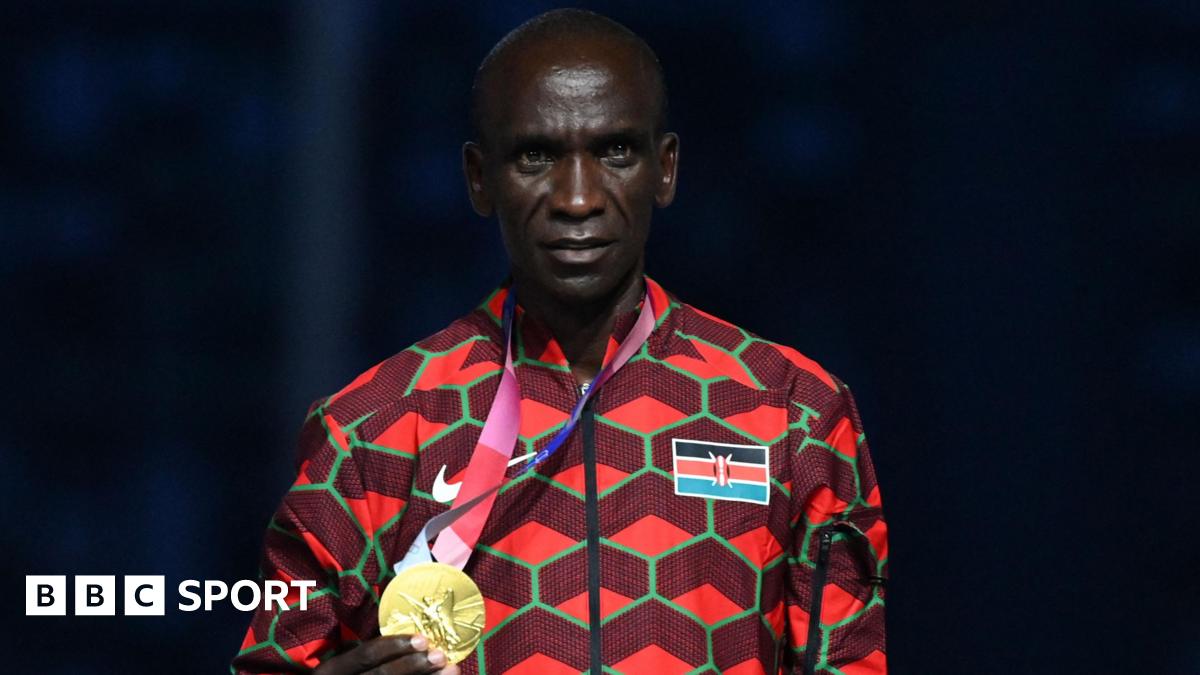
    After dominating competitive marathon running for over two decades, 41-year-old Kenyan athlete Eliud Kipchoge has announced a transformative new chapter in his legendary career. The two-time Olympic champion, widely regarded as the greatest marathoner in history, revealed he is transitioning from elite competition to a global running initiative designed to inspire communities worldwide.

    Kipchoge emphasized this shift represents not retirement but evolution, stating: ‘What I am doing is not retiring. I am evolving. I am running for purpose.’ His ambitious Eliud Kipchoge World Tour will span two and a half years and feature marathon events across all seven continents, including the challenging conditions of Antarctica.

    The initiative operates under ‘Eliud’s Running World,’ a platform promoting global running participation while supporting humanitarian causes. Each marathon will raise approximately $1 million for the Eliud Kipchoge Foundation, focusing on education, environmental sustainability, and health initiatives. In Kenya, Kipchoge plans to build libraries across all 47 counties, believing that ‘there is knowledge in books’ essential for global connectivity.

    Kipchoge’s perspective has been shaped by his unprecedented achievements—including 11 World Marathon Major victories, two Olympic gold medals, and becoming the first person to break the two-hour marathon barrier in 2019—but also by concerns about athlete welfare systems. He has become increasingly vocal about the inadequate protection and compensation for athletes who don’t reach elite status, citing the case of Evans Kibet, a Kenyan runner now imprisoned as a prisoner of war in Ukraine after being lured by false promises.

    ‘Talent does not look like talent if you do not nurture it,’ Kipchoge observed, comparing undeveloped athletes to uncut diamonds. He criticizes sports federations and governing bodies for failing to provide proper education, mentorship, and safeguarding, particularly for those who don’t immediately succeed.

    The running icon has long advocated for clean sport, warning that pressure for quick success contributes to doping and ethical shortcuts. He believes sport should be treated as a profession with long-term perspective rather than a gamble, and has extended his mentoring to athletes in boxing, judo, and rugby.

    Kipchoge’s philosophy values discipline over glamour, process over outcome, and purpose over applause. While his competitive fire remains, its meaning has transformed: ‘I have nothing more to prove to the world. What I want now is to sell the spirit of running to the next generation.’

  • Lifesaving surgery for girl, 5, gives 2nd chance

    Lifesaving surgery for girl, 5, gives 2nd chance

    In a groundbreaking medical achievement, a five-year-old Chinese girl has been given a second chance at life following an unprecedented series of cardiac procedures. Xiaoni, weighing merely 12.2 kilograms and diagnosed with restrictive cardiomyopathy—an exceptionally rare heart condition representing just 2% of cardiomyopathy cases—has successfully recovered after 110 days of intensive treatment involving two high-risk surgeries.

    The medical breakthrough occurred when a collaborative team led by Professor Liu Xiaocheng from TEDA International Cardiovascular Hospital in Tianjin and Professor Mo Xuming from Nanjing Children’s Hospital determined that conventional treatment options were exhausted. Facing end-stage heart failure without available donor hearts, the medical professionals pioneered a dual artificial heart implantation strategy—a procedure never before attempted on a patient of such low body weight.

    Xiaoni’s condition presented extraordinary challenges: her cardiac chambers were significantly undersized even for her age, and she suffered from simultaneous biventricular heart failure requiring biventricular assist device (BiVAD) support. Within a remarkable 13-day timeframe, engineers from Rocor Medical Technology Co collaborated with the medical team to modify their second-generation ‘Rocket Heart’ technology, creating fully magnetically levitated ventricular assist devices specifically tailored to Xiaoni’s anatomical requirements. Each pump weighed a mere 69 grams, with the sewing ring’s outer diameter reduced from 29 millimeters to 22.4 millimeters and its weight dramatically decreased from 6.4 grams to just 1.17 grams.

    Professor Liu highlighted the significance of this achievement, noting that pediatric heart failure devices in developed countries typically rely on bulky extracorporeal pneumatic systems that severely restrict mobility and carry elevated risks of infection and thrombosis. The successful implantation of these miniaturized devices marks China’s entry into the forefront of pediatric artificial heart research and development.

    Following forty days of BiVAD support, Xiaoni received a matching donor heart, enabling a successful transplant that completed her extraordinary medical journey. The achievement has attracted international attention, with several top cardiac centers in the United States, Canada, and Germany expressing interest in clinical collaboration for the innovative technology.

    This medical milestone not only saved a young life but has potentially created new therapeutic avenues for children worldwide suffering from end-stage heart failure, demonstrating how targeted innovation can overcome seemingly insurmountable medical challenges.

  • Turkiye, Hamas discuss 2nd phase of Gaza truce deal

    Turkiye, Hamas discuss 2nd phase of Gaza truce deal

    Turkish Foreign Minister Hakan Fidan convened with senior Hamas political bureau representatives in Ankara on Wednesday to advance discussions regarding the implementation of the second phase of the Gaza ceasefire agreement. According to a source within Turkey’s Foreign Ministry, the dialogue focused on overcoming obstacles preventing the transition to subsequent stages of the truce.

    The Hamas delegation asserted to Minister Fidan that they had fully complied with their obligations under the current ceasefire framework. They contended that Israel’s persistent military operations in Gaza represent a deliberate strategy to obstruct progress toward the agreement’s next phase. The officials further emphasized the critical insufficiency of humanitarian assistance reaching Gaza, highlighting urgent needs for medical supplies, construction materials for shelter, and fuel.

    Simultaneously, Israeli Defense Minister Israel Katz sparked international controversy with statements concerning Gaza’s future. During an address in the West Bank, Katz declared that Israeli military forces would maintain a permanent presence in Gaza, specifically referencing the deployment of Nahal units—military formations historically involved in establishing Israeli communities. Following immediate backlash and interpretation as advocating resettlement, Katz issued a clarifying statement: “The government has no intention of establishing settlements in the Gaza Strip.”

    Hamas spokesman Hazem Qassem condemned Katz’s initial remarks as a “clear violation of the ceasefire agreement” and fundamentally contradictory to the US-supported peace proposal. The Palestinian Foreign Ministry separately denounced Israel’s approval of 19 new settlements in the occupied West Bank as a “dangerous step” intensifying control over Palestinian territories. The ministry characterized this expansion as extending “apartheid policies,” eroding Palestinian rights, and systematically destroying prospects for stability and Palestinian statehood.