作者: admin

  • Trump hires new architect for White House ballroom

    Trump hires new architect for White House ballroom

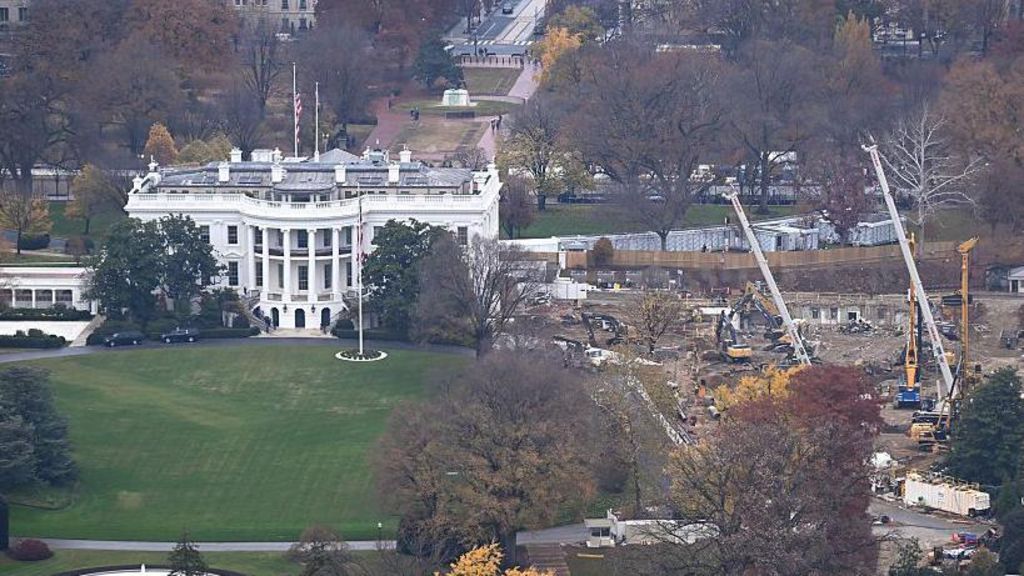
    The White House has confirmed a significant leadership change in its ambitious ballroom construction project, with President Donald Trump appointing Shalom Baranes Associates to replace original architect James McCrery. This architectural transition follows reported disagreements regarding the scale and design vision for the multi-million dollar addition to the presidential residence.

    The project, which necessitated the October demolition of the historic East Wing, has undergone substantial expansion since its initial conception. Originally planned as a 500-person capacity space, the blueprint has now evolved into a sprawling 90,000 square foot (8,360 square meter) entertainment venue capable of accommodating 1,350 guests. This dimensions notably surpass the White House’s residential quarters (55,000 sq ft) and the West Wing offices (40,000 sq ft), raising concerns about architectural proportionality.

    While McCrery will maintain an advisory role as consultant, sources indicate his departure from lead architect position stemmed from concerns about the project’s overwhelming scale potentially diminishing the historical integrity of the presidential mansion. The Washington Post reported McCrery’s apprehension that alternative architectural leadership might produce inferior design quality.

    White House spokesman Davis Ingle praised the appointment, stating: “Shalom is an accomplished architect whose work has shaped the architectural identity of our nation’s capital for decades. His experience will be a great asset to the completion of this project.” Ingle further characterized the ballroom as “the greatest addition to the White House since the Oval Office.”

    The project faces regulatory hurdles requiring approval from the National Capital Planning Commission (NCPC) before construction commences. Concurrently, political opposition has emerged with Senator Richard Blumenthal introducing the “No Palaces Act” legislation. This bill would mandate NCPC approval before any future presidential administration could demolish historic federal structures, directly responding to the East Wing’s removal.

    President Trump has asserted that the project is entirely funded through private donations and personal contributions, though conservation groups and political critics continue questioning both its oversight mechanisms and architectural appropriateness within the historic compound.

  • US Supreme Court allows Texas to use redrawn voting maps in midterms

    US Supreme Court allows Texas to use redrawn voting maps in midterms

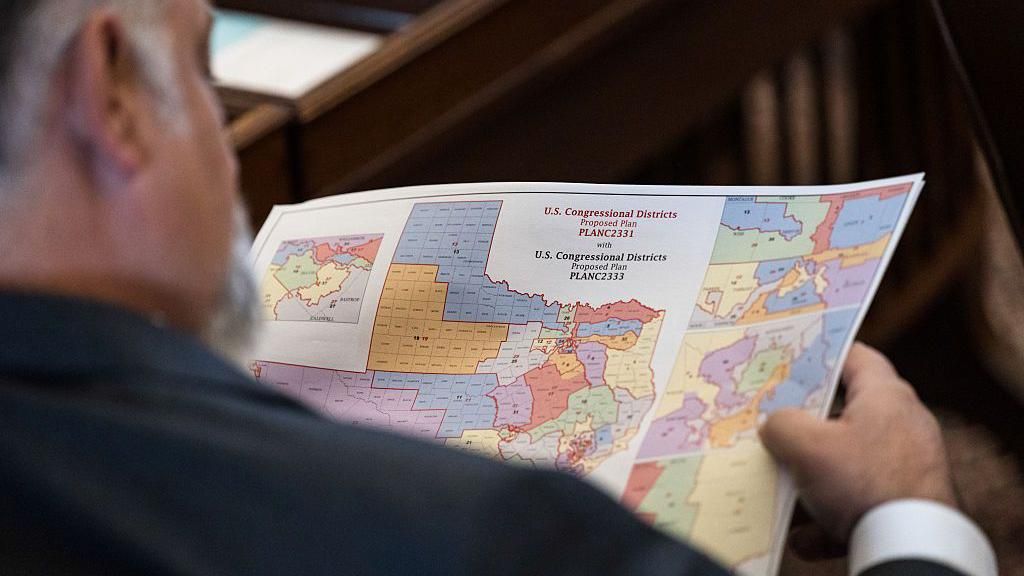
    The U.S. Supreme Court has authorized Texas to implement a controversial congressional redistricting map that could significantly bolster Republican representation in the 2026 midterm elections. The unsigned ruling, issued Thursday, grants the state’s emergency request to suspend a lower court decision that had blocked the map over allegations of racial gerrymandering.

    In what appears to be a 6-3 decision along ideological lines, the Court’s conservative majority concluded that Texas met the requirements for emergency judicial relief. The majority opinion stated that the lower court had “committed at least two serious errors” in its preliminary assessment of the case. The three liberal justices filed dissenting opinions opposing the decision.

    The legal battle stems from redistricting legislation passed by Texas’s Republican-controlled legislature and signed by Governor Greg Abbott in August. In November, a federal district court found substantial evidence that the new voting districts constituted unconstitutional racial gerrymandering and ordered the state to revert to previous congressional boundaries.

    The redistricting conflict escalated dramatically when Democratic state lawmakers staged a walkout during the summer to prevent voting on the proposed map. This political maneuver sparked similar redistricting efforts in other states, including California, where voters approved new congressional maps in a November special election specifically designed to counterbalance Texas’s potential gains.

    The Supreme Court’s intervention represents a significant development in the ongoing national battle over electoral maps, with potentially far-reaching consequences for partisan control of Congress.

  • UAE e-Invoicing should move from back office to boardroom

    UAE e-Invoicing should move from back office to boardroom

    The United Arab Emirates is fundamentally reshaping corporate financial operations through its forthcoming national e-invoicing framework, compelling businesses to elevate this initiative from back-office technical teams to boardroom priority. Unlike conventional system upgrades, this transformative mandate introduces real-time validation that directly impacts revenue recognition and cash flow.

    Under the new model, every invoice and credit note must be generated in structured digital format—replacing traditional PDFs—and processed through Ministry of Finance-accredited service providers. These providers validate content, apply VAT regulations, and report data to the Federal Tax Authority simultaneously. Crucially, invoices failing validation may be deemed non-compliant for VAT purposes, potentially rendering delivered goods or services effectively unrecognized in the tax system.

    The framework introduces significant localization requirements, mandating that invoice data reside on UAE-based infrastructure and transit through nationally approved channels aligned with Peppol standards. This data residency requirement, coupled with stringent cybersecurity protocols, effectively prohibits offshore invoicing hubs that multinational corporations previously relied upon.

    Implementation timelines are already established: a pilot program commences July 2026 for selected taxpayers, with voluntary participation available for technically prepared businesses. Mandatory compliance begins January 2027 for enterprises exceeding AED 50 million in UAE revenue, followed by smaller businesses in July 2027 and government entities by October 2027.

    This regional shift extends beyond UAE borders, with Saudi Arabia’s FATOORAH program already implementing real-time reporting, Egypt expanding e-invoicing across consumer transactions, and Oman developing Peppol-aligned systems. The Gulf region is collectively moving toward continuous transaction monitoring rather than periodic declarations, making UAE compliance strategies potentially applicable across Middle Eastern operations.

    Corporate leadership must immediately address three critical areas: integrating e-invoicing into board governance structures, mapping entire invoice lifecycle vulnerabilities, and rigorously vetting accredited providers for data localization capabilities and rejection resolution efficiency. Businesses should conduct comprehensive drills before the 2026 voluntary period to avoid revenue disruption during actual implementation.

  • Green Party’s Mothin Ali calls on Lammy to help Palestine Action hunger strikers

    Green Party’s Mothin Ali calls on Lammy to help Palestine Action hunger strikers

    The Green Party has issued an urgent appeal to the UK government to intervene immediately in what they describe as a deteriorating humanitarian crisis involving detained Palestine Action activists. Party deputy leader Mothin Ali became the first political figure to visit hunger-striking activists at HMP Bronsfield in West London, where he witnessed what he called “inhumane” conditions that represent “an affront to human decency.”

    According to Ali’s account to Middle East Eye, activists Amu Gib and Jon Cink are among 24 Palestine Action members incarcerated while awaiting trial for protests targeting weapons facilities connected to Israel. The deputy leader reported both prisoners are on their “last legs,” exhibiting severe physical deterioration including protruding cheekbones and sunken eyes, yet maintaining surprisingly high spirits despite their failing health.

    This hunger strike, which Ali compared to the historic 1980s Irish prisoner strikes led by Bobby Sands, involves six activists who have refused food for over a month while being held without trial. The Green Party delegation’s visit revealed multiple health crises among the strikers, including two hospitalizations confirmed by the campaign group Prisoners for Palestine.

    The political dimension intensified as Ali urged Green Party MPs to support an Early Day Motion proposed by Labour’s John McDonnell, demanding Justice Secretary David Lammy ensure humane treatment and human rights protection for the detainees. Meanwhile, family members of the hunger strikers met with parliamentarians on Wednesday, delivering grim assessments of their loved ones’ conditions.

    Ella Mousdale, friend of 20-year-old detainee Qesser Zuhrah, described how the young activist “shivers constantly” and suffers from debilitating headaches and dangerously dropping blood pressure after 32 days without sustenance. Similarly, Shamina Alam recounted the terror of her brother Kamran Ahmed’s hospitalization during which family communication was completely severed.

    The Ministry of Justice has remained silent on the matter, not responding to requests for comment as the health crisis among detainees continues to escalate.

  • Global commerce trends drive VTEX’s strategic expansion into Dubai

    Global commerce trends drive VTEX’s strategic expansion into Dubai

    The digital commerce sector is experiencing radical evolution, characterized by the integration of unified platforms, omnichannel approaches, and artificial intelligence-driven automation. Modern enterprise solutions now extend beyond simple online storefronts to encompass entire ecosystems that merge marketplaces, logistics, and financial operations.

    VTEX, a Nasdaq-listed software-as-a-service provider at the forefront of this transformation, supports 2,400 global brands and 3,400 digital storefronts across 43 nations. The company has received consecutive Gartner Customers’ Choice accolades and was recently positioned as a Challenger in the 2025 Magic Quadrant for Digital Commerce.

    The Middle East and North Africa region demonstrates particularly vigorous growth in adopting sophisticated commerce technologies. Success stories include Motorola, which achieved 300% regional growth following VTEX implementation, and Etihad Arena, which utilizes the platform for real-time mobile ordering during major events. These cases underscore the critical importance of localization features—including Arabic language interfaces, regional currency compatibility, and built-in tax compliance—for market success.

    A significant technological advancement comes through agentic AI integration within VTEX’s operations. The company’s AI agents autonomously resolve 92% of customer service inquiries, facilitate real-time storefront modifications through natural language commands or Figma files, and deliver immediate actionable insights without conventional dashboard interfaces.

    Santiago Naranjo, VTEX’s President for EMEA, articulated the vision: “Agentic commerce envisions an autonomous engine that contextually comprehends data and acts on the client’s behalf. Realizing this would represent an industry breakthrough.”

    In response to regional demand, VTEX has inaugurated a new operational center in Dubai Commerce City, marking a strategic expansion milestone. This development aligns with the UAE’s Digital Economy Strategy, which targets doubling the sector’s GDP contribution by 2030. Naranjo commended the UAE’s policy consistency, noting: “This planning caliber is unmatched elsewhere. The nation’s unified vision provides the confidence to intensify our investments. We aspire to participate in this transformation both commercially and personally.”

    Prakash Gurumoorthy, VTEX’s General Manager for EMEA, outlined the structured market approach: “Our framework progresses through discovery, validation, acceleration, and scaling phases. We’re currently validating with operational clients like Etihad Arena, which justifies establishing Dubai as our regional hub.”

    The new facility will host specialized teams for customer support, solution engineering, marketing, partnerships, and sales, serving both regional clients and European brands expanding into Gulf Cooperation Council markets. Gurumoorthy projected continued growth: “2025 delivered strong Middle Eastern performance with numerous new clients. We anticipate even greater 2026 outcomes as we expand operations and reinforce regional commitment.”

  • Six Asian nations on Trump administration’s immigration hold list

    Six Asian nations on Trump administration’s immigration hold list

    In a significant policy shift, the Trump administration has implemented an immediate suspension of all immigration application processing from 19 designated countries previously subject to travel restrictions. This decisive action, enacted late Tuesday, effectively halts green card and citizenship applications from affected nations including Afghanistan, Iran, Myanmar, Yemen, Laos, and Turkmenistan.

    The policy change follows a security incident in Washington D.C. where two West Virginia National Guard members were shot by Rahmanullah Lakanwal, an Afghan national granted asylum in the United States. The attack resulted in the death of 20-year-old US Army Specialist Sarah Beckstrom and left 24-year-old US Air Force Staff Sergeant Andrew Wolfe critically wounded. Lakanwal has pleaded not guilty to multiple charges.

    According to official memos, US Citizenship and Immigration Services (USCIS) will place all benefits requests from immigrants from these ‘high-risk’ countries on hold indefinitely. The agency will additionally re-review applications approved for immigrants who entered the United States after January 21, 2021, during the Biden administration. The suspension remains in effect until further notice from USCIS Director Joseph Edlow.

    The affected countries beyond Asia include Burundi, Chad, Cuba, Republic of the Congo, Equatorial Guinea, Eritrea, Haiti, Libya, Sierra Leone, Somalia, Sudan, Togo, and Venezuela. This action expands upon travel restrictions previously imposed by the president in June.

    The memorandum explicitly states that USCIS will delay action on all asylum applications and withholding of removal requests regardless of country of origin, pending a comprehensive review process. The administration justifies these measures as necessary to enhance vetting procedures and address national security concerns, acknowledging that processing delays may occur but deeming them ‘necessary and appropriate’ given security obligations.

    This policy reflects the administration’s ongoing criticism of immigrant vetting processes under previous leadership, particularly regarding programs created for Afghan allies following the 202 withdrawal and humanitarian parole initiatives for certain Latin American nationals.

  • Israeli media says anti-Hamas leader Abu Shabab dies of wounds

    Israeli media says anti-Hamas leader Abu Shabab dies of wounds

    Israeli media outlets reported Thursday the death of Yasser Abu Shabab, a significant Bedouin tribal leader who headed the most visible anti-Hamas faction in Gaza. Based in the Israeli-controlled sector of Rafah in southern Gaza, Abu Shabab had emerged as a central figure among several small Palestinian groups opposing Hamas throughout the more than two-year conflict.

    According to Israel’s public broadcaster Kan, which cited anonymous security sources, Abu Shabab succumbed to unspecified wounds. Israel’s Army Radio initially reported he died at Soroka Medical Center in southern Israel, but the hospital promptly denied his admission, creating confusion around the circumstances of his death. The exact timing and nature of his injuries remain undisclosed.

    Prime Minister Benjamin Netanyahu previously acknowledged in June that Israel had provided weapons to anti-Hamas clans, though few operational details have been officially confirmed since. Abu Shabab’s group, known as the Popular Forces, consistently denied receiving Israeli backing despite these claims.

    Hamas authorities had designated Abu Shabab as a collaborator and issued orders for his capture or elimination. The militant organization declined to comment on reports of his death when contacted by Reuters.

    The Popular Forces continued operations in Israeli-held territories even after the US-brokered ceasefire agreement in October. A November 18 video released by the group showed dozens of fighters receiving commands from Abu Shabab’s deputy to conduct security operations against Hamas elements in Rafah.

    Israeli government spokespersons declined to confirm the reports, while Abu Shabab’s organization had not issued any official statement regarding his status on their social media channels at the time of reporting.

  • A Hong Kong man asked for accountability after a deadly fire. So why was he arrested?

    A Hong Kong man asked for accountability after a deadly fire. So why was he arrested?

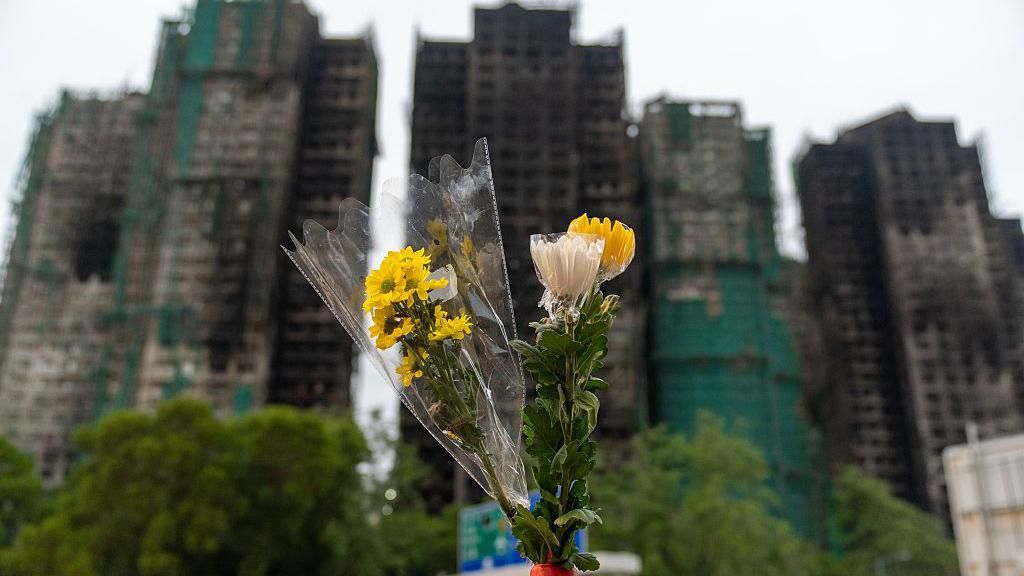
    A catastrophic fire that engulfed a densely populated housing estate in Hong Kong’s Tai Po district has become the catalyst for a complex political confrontation, pitting public demands for accountability against the government’s stringent national security measures. The inferno, which claimed at least 159 lives and displaced thousands, represents the most severe tragedy to strike the city since the 2019 pro-democracy protests.

    In the aftermath, undergraduate Miles Kwan initiated a petition echoing the 2019 protest slogans with ‘four demands’ for governmental transparency and investigation. Within hours, the petition gathered over 10,000 signatures before being removed, and Kwan was arrested under Hong Kong’s national security law on sedition charges. His detention reflects authorities’ determination to prevent what they describe as attempts to ‘exploit’ the tragedy to ‘endanger national security.’

    Government officials including Executive Council member Ronny Tong and lawmaker Regina Ip defended the arrests, emphasizing the need to differentiate between genuine opinion and petitions with ‘criminal intent.’ They cited concerns that public anger could lead to a recurrence of the 2019 unrest. Meanwhile, Chief Executive John Lee pledged comprehensive support for victims and announced an independent inquiry into the fire, building safety reviews, and financial assistance measures—actions notably similar to those demanded in Kwan’s petition.

    The national security apparatus has responded aggressively to the disaster. China’s Hong Kong security office issued warnings against instigating ‘black terror’—a term previously used to describe the 2019 protests—and vowed to punish ‘hostile foreign forces’ regardless of their location. Fifteen individuals have been arrested on suspicion of manslaughter, primarily construction firm executives and staff, while six fire equipment contractors face detention separately.

    Critics including pro-democracy activist Samuel Chu and arrested former district councillor Kenneth Cheung question the suppression of legitimate inquiry, arguing that seeking accountability constitutes a human response rather than a political campaign. Politics professor Kenneth Chan observes that authorities are applying ‘Beijing’s playbook’ focused on social control, replacing community-led relief efforts with government-backed initiatives.

    The controversy extends to the government’s decision to proceed with Legislative Council elections during the mourning period, permitting only pro-Beijing ‘patriots’ to contest. This move has drawn criticism from residents who believe priority should be given to victim support rather than political processes. As Hong Kong navigates this tragedy, the tension between public demands for accountability and national security enforcement continues to define the city’s political landscape.

  • Indigo flight cancellations: Minimal impact on UAE travellers, experts say

    Indigo flight cancellations: Minimal impact on UAE travellers, experts say

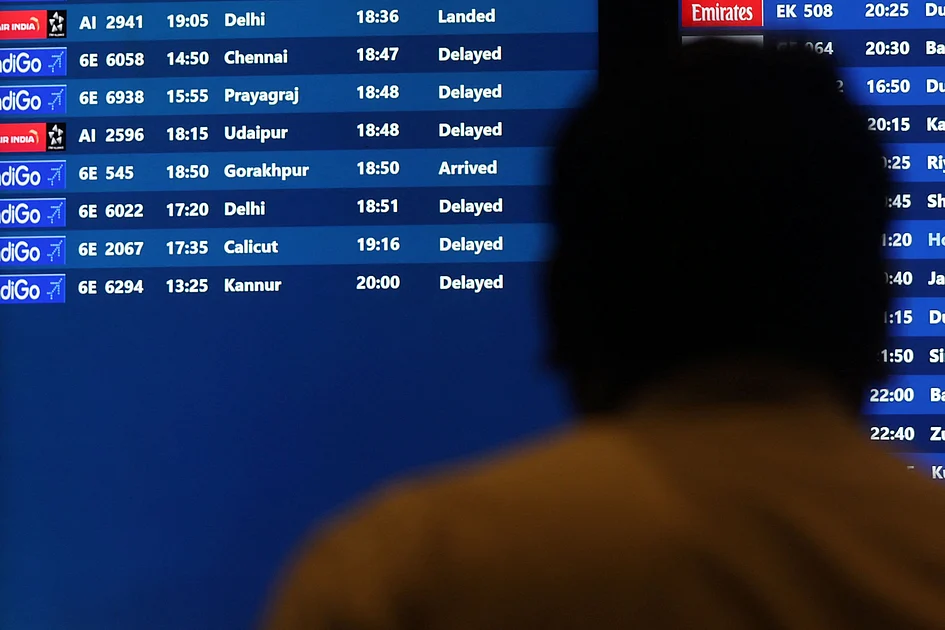
    Aviation experts confirm that UAE-based travelers are experiencing minimal disruption despite IndiGo’s massive domestic flight cancellations across India. The budget carrier’s international operations from the Emirates remain unaffected, providing stability for passengers traveling between the UAE and Indian destinations.

    Travel industry leaders have received direct assurances from IndiGo management regarding international route continuity. Mohammed Safeer, General Manager of Smart Travels, reported: ‘Our morning consultation with IndiGo confirmed all international flights will operate as scheduled. No UAE-originating routes have been impacted thus far.’

    Raheesh Babu, COO of Musafir.com, corroborated this assessment, noting: ‘Our passenger tracking shows international flights maintaining punctuality, with only one exception—a Dubai-Calicut delay caused by pilot illness on Wednesday.’

    The cancellations primarily stem from India’s aviation regulatory changes implemented by the Directorate General of Civil Aviation. New Flight Duty Time Limitations now mandate 48-hour weekly rest periods for pilots and restrict night landings to two per week, down from six previously. These measures address growing pilot fatigue concerns within the industry.

    IndiGo attributed the operational challenges to a combination of factors including technological issues, adverse weather conditions, and increased air traffic congestion. The airline has committed to schedule recalibration within 48 hours to stabilize operations.

    While international travelers remain secure, the domestic situation has prompted strategic reconsideration among some UAE passengers. Annu Joseph, planning a multi-city wedding trip to Kerala, stated: ‘With limited time off, I’m evaluating direct flights versus train connections from Bangalore. The uncertainty demands contingency planning.’

    Travel agencies are advising clients to opt for direct international routes rather than risk domestic connections during the stabilization period. Despite current challenges, industry confidence remains high regarding IndiGo’s crisis management capabilities. Praveen Chowdhury of Saffron Travels and Tourism noted: ‘Their handling demonstrates superior operational responsiveness compared to peers. We anticipate resolution before week’s end.’

    The airline’s historical effectiveness during previous operational challenges, including pilot migration events, suggests this disruption will be temporary despite its unfortunate timing during peak travel season.

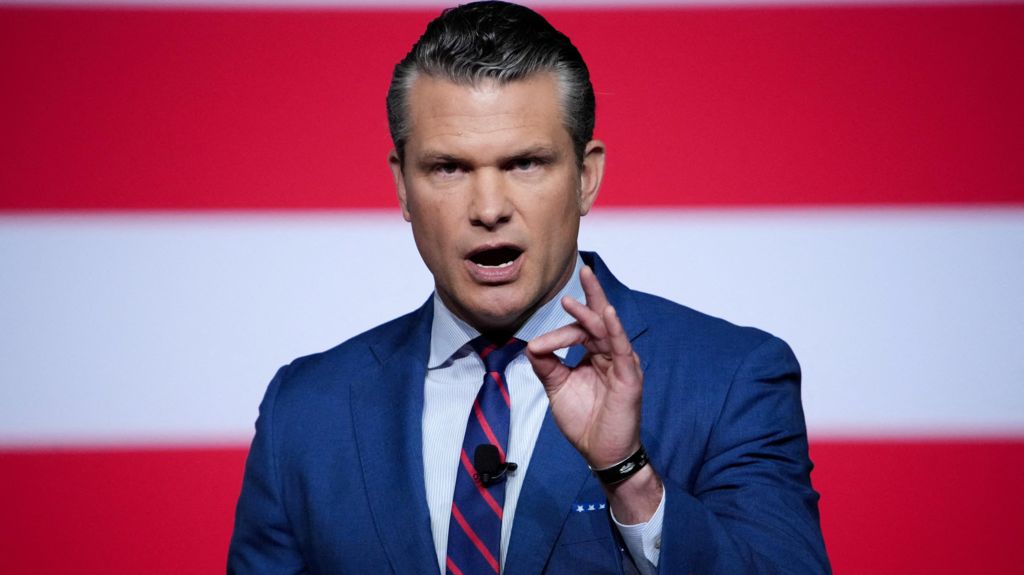
  • Boat strike briefings help Hegseth – but shipwreck video release may hurt

    Boat strike briefings help Hegseth – but shipwreck video release may hurt

    A Washington Post investigation into a September U.S. military strike on a suspected drug trafficking vessel in the Caribbean has triggered a fierce congressional debate, exposing deep partisan fractures over the legality and morality of the Trump administration’s anti-narcotics campaign. The report, which questioned the circumstances of the operation, initially sparked rare bipartisan concern and placed Defense Secretary Pete Hegseth’s position under scrutiny.

    Lawmakers received classified briefings from General Dan Caine, Chairman of the Joint Chiefs of Staff, and Admiral Frank Bradley, who commanded the operation. While congressional reviews found no evidence to support the Post’s claim that Hegseth issued an explicit ‘kill them all’ order, consensus ended there. Democratic representatives emerged from viewing operation footage describing the content as ‘deeply troubling,’ particularly the second strike that killed two survivors clinging to wreckage. Republicans uniformly defended the action as ‘entirely lawful and needful’ in combating drug trafficking.

    The fundamental disagreement centers on the administration’s designation of narcotics traffickers as terrorist organizations and its authorization of lethal force against civilian targets without external legal oversight. Since the initial September incident, the U.S. has conducted 21 similar strikes resulting in over 80 fatalities.

    Secretary Hegseth’s position appears stabilized following an inspector general report that largely cleared him of wrongdoing in the separate ‘Signalgate’ controversy involving discussions of classified information on unsecured platforms. The report concluded that while he created security risks, he did not transmit classified material as he claims to have declassified it beforehand.

    With former President Trump supporting the release of operation footage, public opinion may shift as visual evidence becomes available. For now, the American public must reconcile conflicting narratives from partisan lawmakers and investigative journalism regarding this controversial chapter of military engagement.