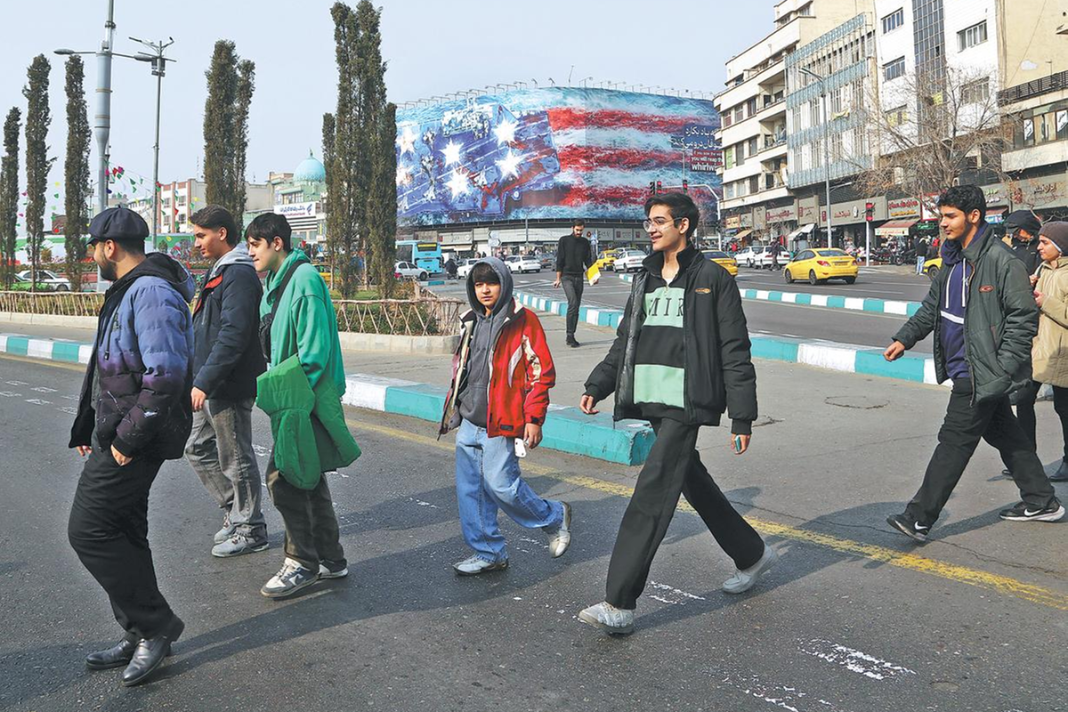
A formidable US naval contingent spearheaded by the USS Abraham Lincoln aircraft carrier has entered Middle Eastern waters, significantly escalating military tensions with Iran amid stalled diplomatic efforts. The deployment marks the region’s first carrier presence since October, dramatically enhancing American offensive capabilities with F-35 fighter squadrons and destroyers armed with hundreds of missiles, including Tomahawk cruise missiles.\n\nRegional powers have responded with unequivocal declarations against hosting offensive operations. The United Arab Emirates, which maintains a US airbase within its territory, formally declared through its Foreign Ministry that it would not permit its airspace, territory, or territorial waters to be utilized for hostile actions against Iran. Emphasizing neutrality and regional stability, the UAE committed to withholding any logistical support for such operations and advocated for dialogue and de-escalation as the primary solution to the crisis.\n\nSaudi Arabia issued a parallel statement, similarly refusing access to its territory and airspace for attacks targeting Iran. These declarations from key Gulf nations present substantial operational complications for potential US military action, which would typically require regional basing rights.\n\nIran responded with defiant rhetoric and symbolic demonstrations. Foreign Ministry spokesman Esmaeil Baghaei warned of a \”comprehensive and regret-inducing response to any aggression,\\” asserting Iran’s confidence in its military capabilities. Tehran displayed public resolve through a newly erected billboard in the city center depicting a destroyed US aircraft carrier, accompanied by the prophetic caption: \”If you sow the wind, you will reap the whirlwind.\”\n\nFurther amplifying regional tensions, Iranian Navy Commander Shahram Irani characterized Iran’s naval power as \”an anchor of stability,\” while Yemen’s Houthi group threatened new attacks in the Red Sea through a menacing video. Hezbollah leader Naim Qassem warned from Lebanon that \”a war on Iran this time will ignite the region.\”\n\nThe escalating geopolitical situation has already impacted civilian aviation, with several airlines including India’s IndiGo canceling flights to multiple Middle Eastern destinations as a precautionary measure.
作者: admin
-
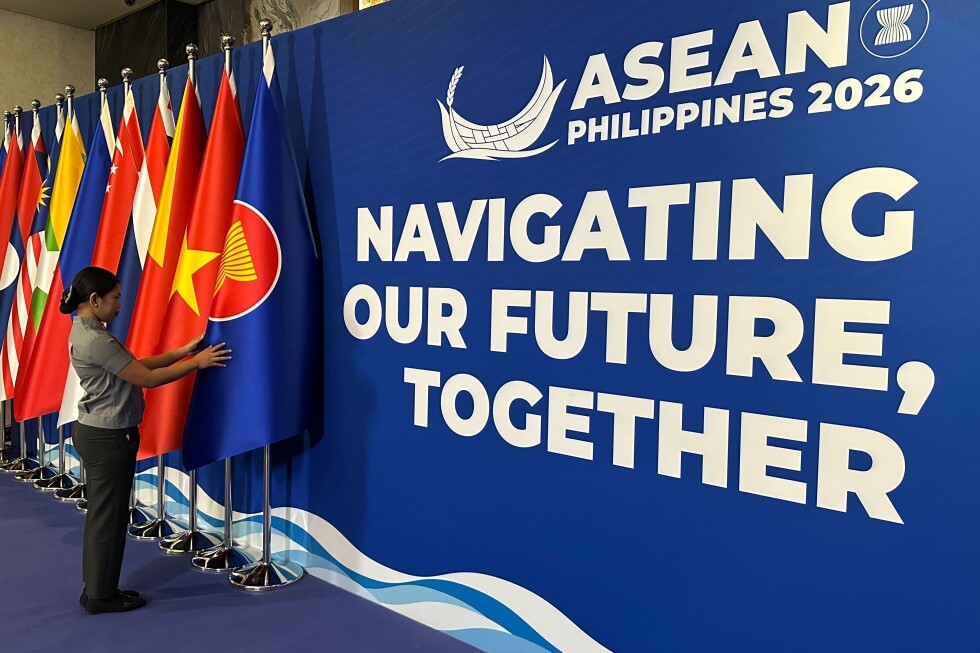
ASEAN top diplomats under pressure to end Myanmar war and finalize South China Sea pact
Foreign ministers from the Association of Southeast Asian Nations convened in Cebu, Philippines, on Wednesday facing mounting challenges to regional stability. The two-day gathering confronted the bloc’s persistent difficulties in mediating Myanmar’s protracted civil conflict while racing against time to finalize a maritime conduct agreement with China.
The 11-member regional organization, long criticized for its consensus-based approach, finds its unity tested by multiple crises. Myanmar remains suspended from leadership roles following the 2021 military coup that ousted Aung San Suu Kyi’s government, with ASEAN continuing to bar junta leaders from high-level meetings while permitting lower-level diplomatic participation.
Philippine Foreign Secretary Theresa Lazaro, serving as ASEAN’s special envoy to Myanmar, presented findings from her recent mission to the conflict-ridden nation. Her report included observations from meetings with military leadership and outcomes from a Philippines-hosted conference of anti-junta political and ethnic factions. Participants examined implementation mechanisms for ASEAN’s five-point peace framework, originally adopted in 2021, which has thus far failed to curb violence that has claimed tens of thousands of lives and displaced millions.
Parallel negotiations demand attention as ASEAN works toward a self-imposed December deadline for concluding a South China Sea code of conduct with China. The proposed agreement aims to manage territorial disputes involving four ASEAN members whose maritime claims overlap with Beijing’s expansive assertions. While Washington maintains no territorial claims, it has reaffirmed its defense commitment to treaty ally Philippines should confrontations escalate.
Analysts remain skeptical about both initiatives. Australia-based researcher Lupita Wijaya noted fundamental disagreements persist regarding the code’s legal binding nature and interpretations of international law, suggesting conclusion remains ‘an uphill climb’ despite political declarations.
-
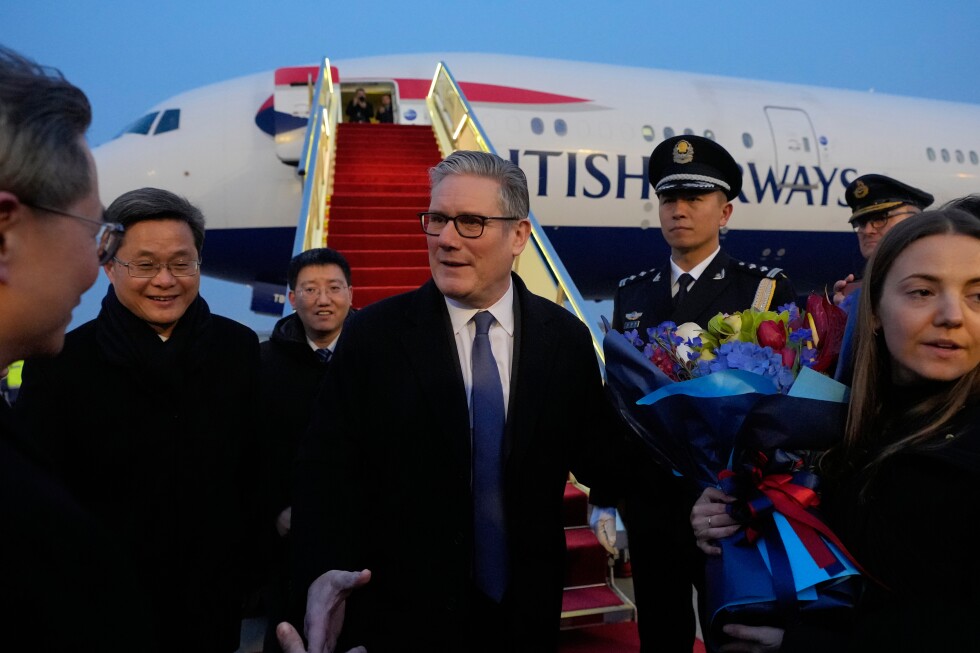
British leader’s trip to China is a balancing act between trade, national security and Trump
British Prime Minister Keir Starmer commenced a pivotal four-day diplomatic mission to China on Wednesday, marking the first visit by a UK leader since Theresa May’s 2018 trip. Arriving in Beijing with a delegation exceeding 50 business executives from prominent firms including British Airways, HSBC, and Jaguar Land Rover, Starmer articulated a pragmatic approach to Sino-British relations.
The Prime Minister emphasized that Britain would not face a binary choice between its transatlantic partnership with the United States and its economic relationship with China. “I’m a pragmatist, a British pragmatist applying common sense,” Starmer stated en route to Beijing, underscoring his intention to balance engagement with national security considerations.
This diplomatic overture occurs against a backdrop of significantly strained relations following concerns over Chinese espionage activities, Beijing’s support for Russia in the Ukraine conflict, and the crackdown on civil liberties in Hong Kong. Both nations now appear focused on finding common ground while managing differences, as recently advocated by China’s Ambassador to the UK Zheng Zeguang in a Times of London commentary.
The trade dynamics reveal substantial opportunities: China maintained an $85.1 billion goods trade surplus with Britain in 2025, while the UK held a services surplus. With China’s new policy directives encouraging domestic consumption and further opening its services sector, the China-Britain Business Council identifies significant growth potential for British companies in areas including finance, consulting, healthcare, and elderly care services.
Global trade uncertainties under the Trump administration have added urgency to diversifying economic partnerships. Both China and Britain have been affected by U.S. tariff policies, prompting similar moves by other nations including Canada’s recent trade mission to Beijing. However, such approaches carry risks, as demonstrated by Trump’s threat of 100% tariffs on Canada should it pursue a trade deal with China.
National security concerns remain paramount, with the UK having previously barred Chinese investment in sensitive telecommunications infrastructure and nuclear power projects. Notably, the British government recently approved plans for an expanded Chinese Embassy in London, despite concerns about potential espionage capabilities.
The human rights situation in Hong Kong presents particular complications for UK-China relations given historical ties. The recent conviction of British citizen Jimmy Lai under Hong Kong’s national security law adds diplomatic complexity to Starmer’s visit, with former Hong Kong governor Chris Patten urging firmness on human rights issues during the Prime Minister’s engagements with Chinese leadership.
-
US withdraws from Paris Agreement; UN vows unwavering global climate action
In a significant geopolitical development, the United States formally executed its withdrawal from the Paris Climate Agreement on Tuesday, January 28, 2026. This move marks a pivotal moment in global environmental diplomacy, removing the world’s second-largest greenhouse gas emitter from the international accord designed to combat climate change.
The United Nations has responded with resolute determination to maintain climate action momentum. During a press briefing, a UN spokesperson addressed inquiries from China Daily, emphasizing that the organization’s climate initiatives would proceed without interruption despite the American departure.
“The UN’s comprehensive efforts to address climate change, facilitate equitable transitions, and implement critical mitigation and adaptation measures for vulnerable nations will continue undeterred,” the spokesperson affirmed. This declaration underscores the international body’s commitment to preserving the agreement’s integrity and advancing its objectives regardless of individual national decisions.
The Paris Agreement, adopted in 2015, represents a landmark global framework wherein signatory nations commit to substantially reducing carbon emissions to limit global temperature rise. The U.S. withdrawal process commenced in 2019 under the previous administration and has now reached formal completion, potentially altering the dynamics of international climate negotiations and implementation strategies.
UN officials indicated that climate diplomacy would remain a top priority, with continued focus on supporting developing countries particularly susceptible to climate impacts. The organization’s steadfast position signals confidence that other signatory nations will maintain their commitments to the accord’s ambitious environmental targets.
-

South Korea’s ex-first lady jailed 20 months for bribery
In an unprecedented judicial ruling that marks a historic moment for South Korea’s political landscape, Kim Keon Hee, wife of imprisoned former President Yoon Suk Yeol, has been convicted on corruption charges and sentenced to 20 months imprisonment. The Seoul Central District Court delivered the landmark verdict on Wednesday, finding the former first lady guilty of accepting substantial bribes from the controversial Unification Church during her husband’s presidency.
Presiding Judge Woo In-sung declared that Kim had systematically “misused her position as a means of pursuing personal gain,” emphasizing that “the higher one’s position, the more consciously one must guard against such conduct.” The court determined that the defendant had become “preoccupied with self-adornment” and failed to reject improper solicitations during her tenure as first lady.
The prosecution’s investigation revealed that between April and July 2022, Kim accepted gifts valued at approximately 80 million won ($56,000), including an exquisite Graff diamond necklace and multiple Chanel handbags, from the Unification Church in exchange for political and business favors. While special prosecutors had sought a 15-year prison term and a 2 billion won fine across three charges, the court convicted her on one count, noting she had not actively solicited the bribes and lacked significant prior criminal history.
In addition to the prison sentence, the court ordered confiscation of the diamond necklace and restitution of 12.85 million won in illicit gains. The verdict creates the extraordinary circumstance where both a former president and first lady are simultaneously serving prison sentences—a first in South Korea’s constitutional history.
The court however acquitted Kim on separate charges related to stock price manipulation and receiving unauthorized opinion polling services during the 2022 presidential campaign that brought her husband to power. Additional pending cases allege her involvement in recruiting Unification Church members for the conservative People Power Party and trading government appointments for gifts.
Kim maintained her innocence throughout the proceedings, describing the charges as “deeply unjust,” though she acknowledged receiving—and later returning—Chanel handbags. During August 2023 questioning, she offered a public apology, stating, “I am truly sorry that a nobody like me has caused concern to the people.”
The investigation has produced wider repercussions, leading to the arrest of Unification Church leader Han Hak-ja. Separately, Kim faces academic integrity allegations after Sookmyung Women’s University revoked her 1999 graduate degree due to thesis plagiarism findings.
This case represents the latest chapter in South Korea’s ongoing battle against corruption within its highest political circles, demonstrating the judiciary’s continued willingness to hold powerful figures accountable regardless of their status or connections.
-

Expert: As China’s tech rises, US chips could become ‘new soybeans’
At the recent World Economic Forum in Davos, Switzerland, a prominent legal scholar presented a compelling vision of evolving US-China trade relations that could redefine global technology markets. Professor Angela Zhang Huyue from the University of Southern California Law School suggested during a January 21 panel discussion that American semiconductor exports might eventually follow the same trade pattern as agricultural commodities like soybeans.
The analogy draws attention to the potential future where advanced US chip manufacturers could become increasingly dependent on Chinese markets for revenue stability, mirroring the current agricultural trade dynamic where China serves as a crucial export destination for American soybeans. This perspective emerges amid ongoing technological competition and shifting global supply chain dynamics.
Professor Zhang’s analysis indicates that as China continues to advance its domestic semiconductor capabilities, the nature of US-China technology trade may undergo significant transformation. The commentary suggests that current export restrictions and trade tensions might eventually give way to more interdependent market relationships, where US technological products seek market access similar to commodity exports.
This observation comes at a critical juncture in global technology governance, where nations are reassessing strategic dependencies and economic security concerns. The semiconductor industry, fundamental to everything from consumer electronics to national security systems, represents a key battleground in this evolving economic landscape.
The analogy extends beyond mere trade volumes to encompass the potential for mutual economic dependency, where both nations would have vested interests in maintaining stable technology trade flows, despite current geopolitical friction and competition for technological supremacy.
-

India says it has contained Nipah virus outbreak as some Asian countries ramp up health screenings
Indian health authorities have successfully contained a Nipah virus outbreak in West Bengal state after confirming two cases detected since December, while multiple Asian nations implemented enhanced health screenings for travelers arriving from India.
The Indian Health Ministry reported Tuesday that all 196 identified contacts linked to the two confirmed cases have been quarantined and tested negative for the virus. While patient details remain undisclosed, officials emphasized that the situation remains under constant surveillance with comprehensive public health measures actively maintained.
Nipah virus, a zoonotic pathogen first identified during 1990s outbreaks in Malaysia, transmits through fruit bats, pigs, and direct human-to-human contact. The World Health Organization estimates the virus’s fatality rate between 40-75%, significantly higher than coronavirus, with no available vaccine or specific treatment beyond supportive care to manage symptoms including severe fevers, convulsions, and vomiting.
Despite no reported cases outside India, several Asian countries have implemented precautionary measures. Thailand installed thermal scanners at Bangkok’s Suvarnabhumi Airport specifically for direct flights from West Bengal, while Indonesia enhanced health declarations, temperature checks, and visual monitoring at major airports.
Myanmar’s Health Ministry advised against nonessential travel to West Bengal and intensified fever surveillance systems originally established during COVID-19. Vietnam directed local authorities to strengthen border monitoring and food safety practices, while China initiated risk assessments and enhanced medical staff training in border regions.
West Bengal experienced previous Nipah outbreaks in 2001 and 2007, though recent cases have primarily emerged in Kerala state, where a 2018 outbreak resulted in at least 17 fatalities.
-
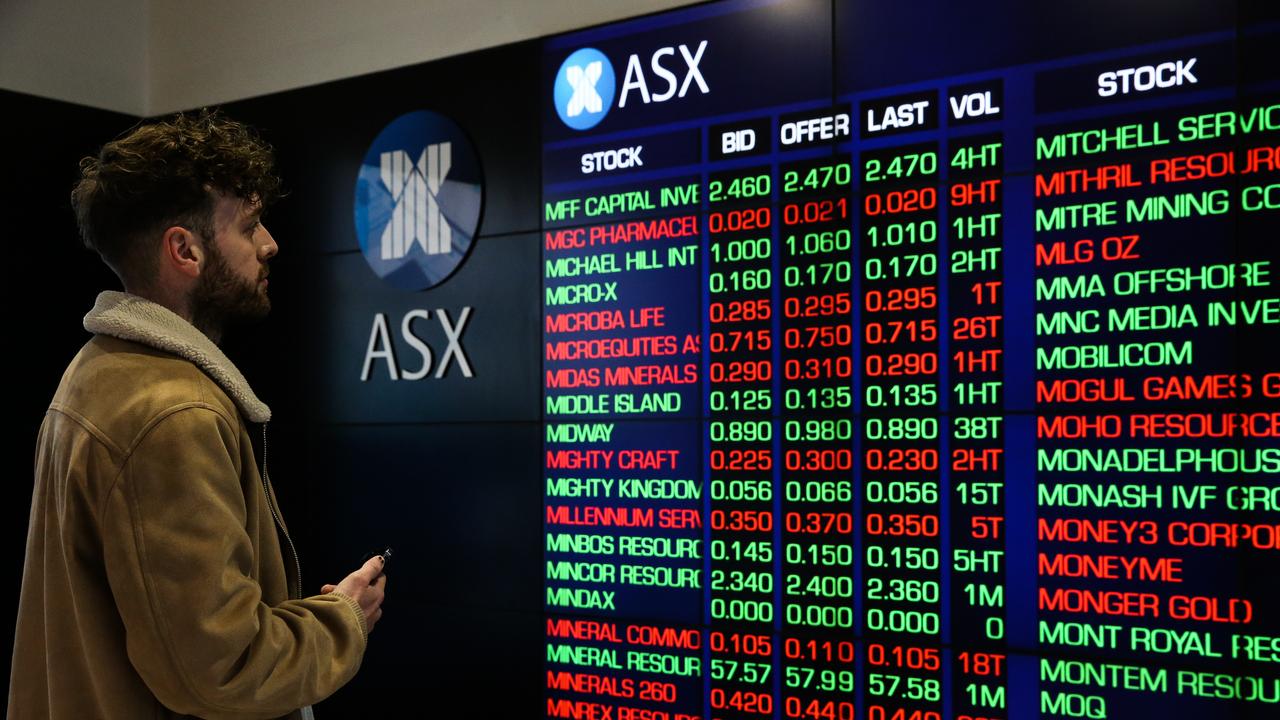
Hotter than expected inflation data fuels fears of February interest rate rise
The Australian equities market experienced a broad downturn on Wednesday, defying robust performances in the energy and mining sectors, as an unexpectedly high inflation reading intensified fears of an imminent interest rate hike.
The benchmark S&P/ASX 200 retreated by 7.70 points (0.09%) to settle at 8933.90, while the broader All Ordinaries index declined 17.90 points (0.19%) to close at 9250.60. This downward trajectory occurred despite the Australian dollar briefly touching a two-year peak of 70.16 US cents before moderating to 70.03 US cents.
Market dynamics revealed a stark sectoral divide. Energy stocks emerged as clear outperformers, propelled by West Texas Intermediate crude reaching a four-month high of $62.32 per barrel. Woodside Petroleum advanced 2.71% to $24.98, while Santos climbed 3.02% to $6.82.
The resources sector similarly demonstrated strength amid rising commodity prices. BHP Group appreciated 1.71% to $50.60, with Rio Tinto surging 2.39% to $154.82. Precious metals producers also joined the rally, with Northern Star Resources gaining 3.25%, Evolution Mining leaping 4%, and Newmont Corporation closing 1.58% higher.
This commodity-driven optimism was overwhelmingly offset by substantial declines across interest-rate-sensitive sectors. The catalyst was Australia’s trimmed mean inflation rate, which registered at 0.9% for the December quarter (3.3% annually), exceeding economist forecasts.
Technology stocks bore the brunt of the selloff. WiseTech Global plummeted 3.76%, Xero declined 1.92%, and Dicker Data slipped 0.88%. Consumer discretionary shares also retreated significantly.
Market analysts interpreted the inflation data as compelling evidence for monetary policy tightening. Betashares Chief Economist David Bassanese stated, ‘All up, it appears to be game, set, match for a rate rise at the February policy meeting.’ He further cautioned that additional rate increases might follow in May, though suggesting two hikes could sufficiently moderate economic growth and inflation pressures.
Individual stock movements included Boss Energy soaring 10% after revising cost guidance downward, while Life360 and Catapult Group experienced sharp declines amid company-specific developments.
-

Backlash as Australia kills dingoes after backpacker death
Australian wildlife authorities face mounting criticism following their decision to euthanize multiple dingoes connected to the tragic death of Canadian backpacker Piper James on K’gari (Fraser Island). The 19-year-old’s body was discovered on January 19th at a beach on the World Heritage-listed island, prompting Queensland officials to authorize the elimination of ten dingoes identified as displaying aggressive behavior.
Forensic examination revealed the victim sustained injuries consistent with dingo bites alongside evidence suggesting drowning as a potential cause of death. According to the Coroners Court of Queensland, ‘Pre-mortem dingo bite marks are not likely to have caused immediate death,’ with the full investigation expected to continue for several weeks.
The conservation measure has ignited intense debate among scientists, traditional landowners, and wildlife experts. University of Sydney conservation biologist Professor Mathew Crowther warned that removing ten animals from a population estimated at just 70-200 individuals could severely impact genetic diversity. ‘There’s no moral from the dingoes’ point of view. They’re just being wild animals, doing wild things,’ Crowther emphasized.
The Butchulla Aboriginal Corporation, representing the island’s traditional owners, expressed profound disappointment at not being consulted before the culling operation. Their statement highlighted concerns that ‘economic priorities are being placed above the voices of the people and traditional owners.’
Wildlife experts attribute increasing human-dingo conflicts to tourist behavior, particularly the dangerous practice of feeding wild animals. Associate Professor Bill Bateman from Curtin University noted that dingoes losing their natural fear of humans creates potentially dangerous situations, especially when people run or turn their backs. He advocated for collaborative management between wildlife managers, rangers, Indigenous communities, and tourism operators to ensure safe coexistence.
The victim’s father, Todd James, described the family’s heartbreak while acknowledging the difficult decision facing authorities, noting the euthanization news was ‘heart-wrenching’ but potentially necessary for public safety.
-

South Korea’s ex-first lady jailed for 20 months for taking bribes
In a landmark ruling that has captured national attention, South Korea’s former first lady Kim Keon Hee received a 20-month prison sentence Wednesday for accepting extravagant bribes from a religious organization. The Seoul Central District Court convicted the 53-year-old wife of impeached president Yoon Suk Yeol on corruption charges while acquitting her of separate allegations involving stock manipulation and campaign finance violations.
Presiding Judge Woo In-sung delivered the verdict, emphasizing that Kim had exploited her privileged position as presidential spouse for personal enrichment. “One’s position must never become a means of pursuing private gain,” Judge Woo declared during the sentencing hearing, noting her “significant influence” derived from proximity to power.
The prosecution’s case centered on Kim’s acceptance of luxury items from the Unification Church, including a Chanel handbag and Graff necklace, which prosecutors argued undermined constitutional separations between religion and state. Despite requesting a 15-year sentence, prosecutors saw the court impose a considerably shorter term.
Kim maintained her innocence throughout the proceedings, characterizing the allegations as “deeply unjust” during her final testimony last month. Nevertheless, she offered a partial apology for “causing trouble despite being a person of no importance” and acknowledged making “many mistakes” regarding her responsibilities.
The sentencing occurs within a broader political context that has seen both former presidential figures incarcerated. Yoon Suk Yeol currently faces detention related to his controversial imposition of martial law in December 2024 and its turbulent aftermath. This verdict follows recent sentencing of former prime minister Han Duck-soo to 23 years for supporting Yoon’s suspension of civilian rule.
Kim’s legal troubles have consistently overshadowed her public image as an animal welfare advocate who campaigned against dog meat consumption. The 2023 “Dior bag scandal,” involving hidden camera footage of her accepting a $2,200 luxury handbag, significantly damaged the administration’s popularity and contributed to electoral setbacks for Yoon’s party in April 2024.
The investigation has extended beyond political figures, resulting in the arrest of Unification Church leader Han Hak-ja and pending sentencing of lawmaker Kweon Seong-dong for similar bribery allegations involving the religious sect.