作者: admin

  • Ireland launches world first scheme to provide basic income for artists

    Ireland launches world first scheme to provide basic income for artists

    Ireland has established itself as an international pioneer in cultural policy by launching the world’s first permanent basic income program specifically designed for artists. The groundbreaking Basic Income for the Arts (BIA) initiative will provide selected artists with a weekly payment of €325 (£283) over a three-year period to support their creative endeavors.

    The permanent program follows a highly successful pilot scheme initiated in 2022 to assist the arts and culture sector’s recovery from the devastating impact of the COVID-19 pandemic. According to Ireland’s Culture Minister Patrick O’Donovan, the country now stands as a “global leader in the area of artist support” through this innovative approach.

    Economic impact assessments have demonstrated the program’s remarkable effectiveness. Minister O’Donovan revealed that every €1 invested in the pilot generated an impressive €1.39 in economic return, while simultaneously enabling artists to dedicate more time to their creative practices and significantly improving their overall quality of life.

    The selection process will identify 2,000 eligible artists through an “anonymous randomised selection process” to ensure equitable opportunities for all applicants. The Department of Culture has established specific eligibility criteria requiring applicants to be Irish residents, professional artists with established creative practices, and maintaining primary creative operations within Ireland.

    Application guidelines will be published in April, with the selection process opening in May 2026. The department anticipates receiving a “high volume” of applications and acknowledges that funding cannot be extended to all eligible candidates. Those not selected in the current cycle will have another opportunity to apply when the program reopens in 2029.

    Minister O’Donovan emphasized that this permanent initiative represents a “major milestone” that will fundamentally “sustain the careers” of participating artists and help “retain their talent in the arts sector.” The program directly addresses the income instability that has historically made artistic careers particularly challenging in Ireland, as demonstrated by comprehensive research from the pilot phase.

  • Pakistan: Punjab CM Maryam appoints Ali Dar as adviser on AI and Special Initiatives

    Pakistan: Punjab CM Maryam appoints Ali Dar as adviser on AI and Special Initiatives

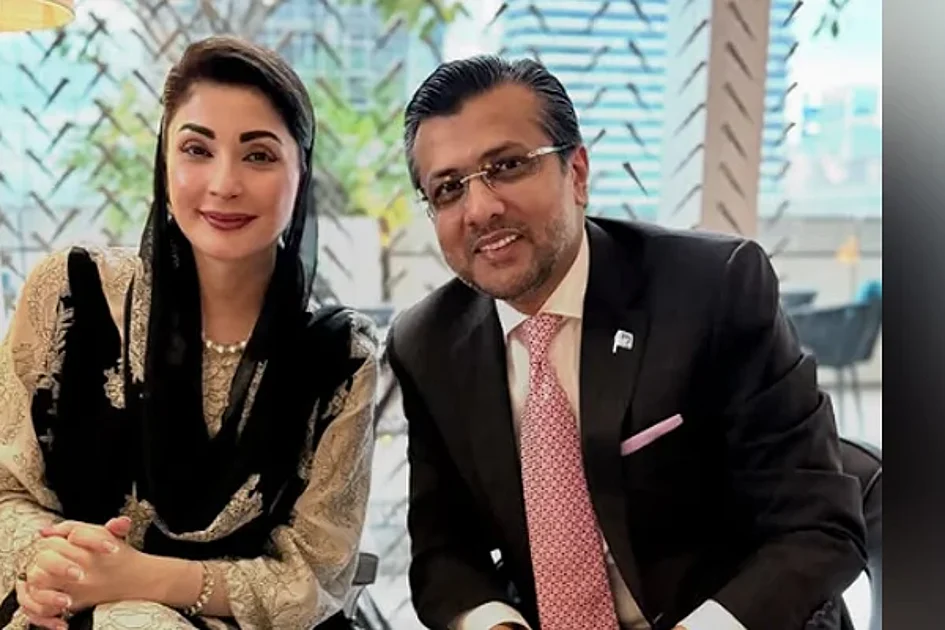
    In a significant move toward technological governance reform, Punjab Chief Minister Maryam Nawaz has appointed Ali Mustafa Dar as her official adviser on Artificial Intelligence and Special Initiatives. The appointment, effective immediately, positions Dar to lead the development of forward-looking projects aimed at transforming provincial governance through emerging technologies.

    The notification, issued under constitutional authority Article 130(11), confirms Dar will serve on a pro bono basis with a mandate focusing on three core areas: improving governance efficiency, creating employment opportunities, and enhancing public service delivery through AI-enabled solutions. The role carries the full status and powers of a provincial cabinet minister, including participation in Punjab Assembly sessions.

    Dar brings substantial international expertise to the position, having studied Software Engineering at University College London and the University of Manchester Institute of Science and Technology. Prior to his return to Pakistan three years ago, he founded and led HDS Group of Companies, a prominent UAE-based real estate development conglomerate now managed by his younger brother.

    Beyond his professional credentials, Dar maintains significant political connections as the son of Deputy Prime Minister and Foreign Minister Ishaq Dar and son-in-law of PML-N president Nawaz Sharif. Since the party’s 2024 election victory, he has reportedly facilitated numerous high-level international engagements, convincing global business leaders from technology and real estate sectors to invest in Pakistan.

    Notably, Dar has also emerged as a prominent advocate for autism awareness in Pakistan, drawing from personal experience as father to an 18-year-old son with autism. His advocacy work has focused on supporting children with autism and raising public awareness about neurodiversity.

    The appointment signals the provincial government’s commitment to integrating cutting-edge technology into public administration while leveraging diaspora expertise for national development.

  • Prototypes of Long March 10 rocket and Mengzhou spaceship conduct flight test

    Prototypes of Long March 10 rocket and Mengzhou spaceship conduct flight test

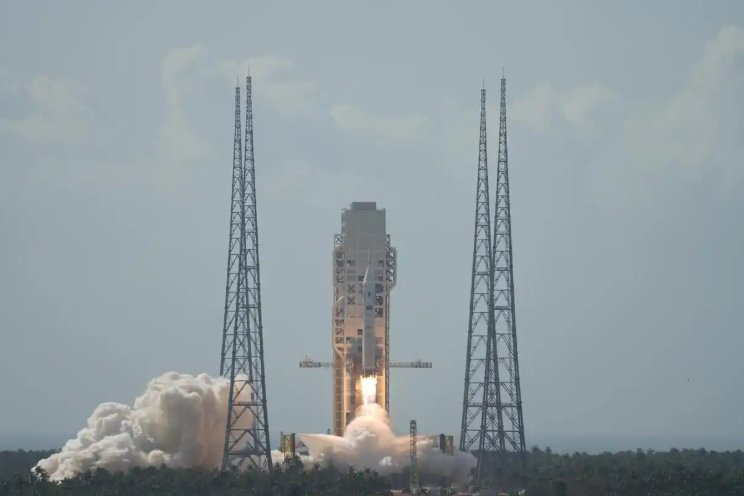
    China’s ambitious space program achieved a significant milestone with the successful flight testing of prototype models for its next-generation launch vehicle and crew spacecraft. The Long March 10 rocket and Mengzhou spacecraft prototypes underwent comprehensive testing that marks a crucial step forward in China’s manned lunar exploration ambitions.

    The flight test, conducted on February 11, 2026, represents a strategic advancement in China’s aerospace capabilities as the nation positions itself as a major spacefaring power. The Long March 10 rocket is specifically designed to support China’s lunar exploration objectives, featuring enhanced payload capacity and reliability compared to previous iterations in the Long March series.

    Simultaneously, the Mengzhou spacecraft prototype demonstrates China’s progress in developing advanced crew transportation systems capable of supporting extended missions beyond low Earth orbit. The spacecraft incorporates technological innovations for deep space travel, including improved life support systems, radiation protection, and reentry capabilities necessary for lunar return missions.

    This successful test provides critical data for engineers and scientists to validate design concepts, performance parameters, and operational procedures. The results will inform further refinements before the systems proceed to full-scale production and operational deployment.

    The development aligns with China’s broader space strategy that includes establishing a permanent lunar research station and potentially sending Chinese astronauts to the lunar surface within the coming decade. These advancements contribute to the growing international interest in lunar exploration and position China as a key participant in the new era of space exploration.

  • Netanyahu to meet Trump as Iran nuclear talks reach critical stage

    Netanyahu to meet Trump as Iran nuclear talks reach critical stage

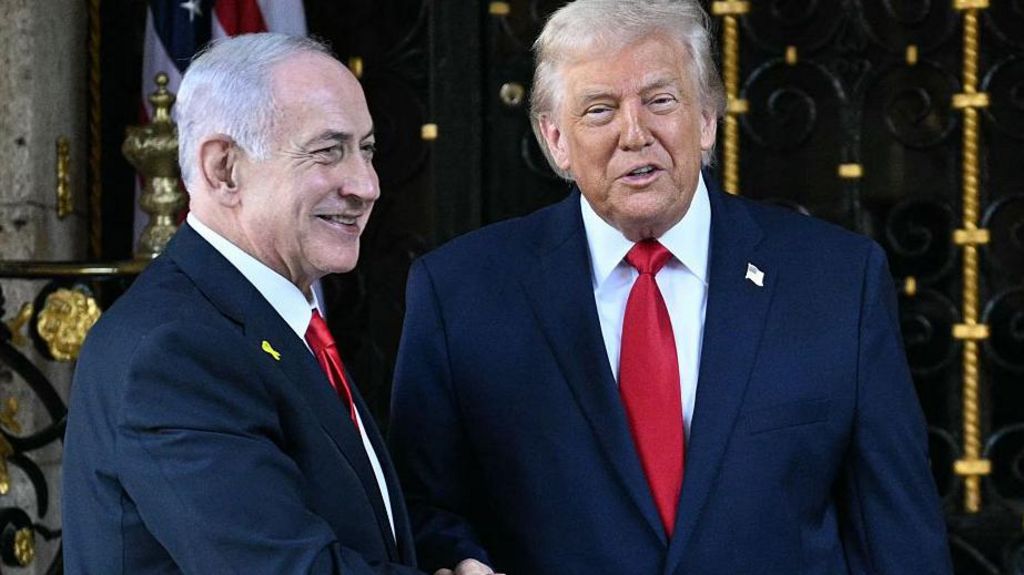
    Israeli Prime Minister Benjamin Netanyahu convened with President Donald Trump at the White House on Wednesday amid heightened Middle Eastern tensions and critical negotiations concerning Iran’s nuclear capabilities. This sixth diplomatic engagement since Trump’s return to office underscores the special relationship between the two leaders.

    Netanyahu articulated Israel’s position that any nuclear agreement must extend beyond uranium enrichment limitations to include restrictions on Iran’s ballistic missile development and cessation of support for proxy organizations including Hamas and Hezbollah. “I will present to the president our outlook regarding the principles of these negotiations,” Netanyahu stated prior to his departure.

    Iranian President Masoud Pezeshkian responded with defiance during celebrations marking the 47th anniversary of Iran’s Islamic Revolution, asserting Tehran’s willingness to discuss nuclear verification while rejecting what he termed “excessive demands.” The Iranian leader emphasized: “Our Iran will not yield in the face of aggression, but we are continuing dialogue with all our strength.”

    The diplomatic exchanges occur against a backdrop of military posturing, with Trump acknowledging consideration of deploying a second aircraft carrier strike group to the region. This follows the previous month’s deployment of the USS Abraham Lincoln after Trump threatened strikes against Iran in response to governmental crackdowns on protests.

    Analysts note both sides operate under significant constraints. Netanyahu faces pressure from right-wing coalition partners to secure comprehensive concessions, while Iranian leadership contends with economic strain from reinstated sanctions and internal unrest. Georgetown University’s Daniel Byman observed: “Israel is concerned that in the haste to get a deal, the president might embrace a deal that doesn’t address Iran’s missile programme or support for proxy groups.”

    The negotiations simultaneously intersect with fragile Gaza ceasefire implementation efforts between Israel and Hamas. A White House spokesperson reaffirmed the administration’s commitment to “strengthen regional security in the Middle East” while implementing Trump’s “historic Gaza peace agreement.”

  • ‘Absolute’ robbery: Indian Supreme Court slams banks over Rs520-billion digital fraud

    ‘Absolute’ robbery: Indian Supreme Court slams banks over Rs520-billion digital fraud

    India’s Supreme Court has delivered a scathing indictment of the nation’s banking sector, condemning systemic failures and alleged collusion in a massive ₹520 billion (approximately $6.3 billion) digital fraud scheme targeting citizens. The landmark ruling came during proceedings initiated by the court itself (suo motu) regarding sophisticated ‘digital arrest’ scams that have victimized thousands nationwide.

    Justice Surya Kant, presiding over the case, declared the unprecedented financial hemorrhage between April 2021 and November 2025 constituted ‘absolute robbery,’ noting evidence that bank officials appeared ‘completely hand in glove with the accused.’ The court characterized financial institutions as becoming ‘a liability’ despite their fiduciary responsibility as trustees of public funds.

    The sophisticated fraud operation involved criminals impersonating senior police and security officials to falsely inform victims—predominantly elderly citizens—of their implication in fictitious drug smuggling cases. Through psychological manipulation and fabricated legal threats, perpetrators gained remote access to bank accounts, systematically draining life savings under the guise of ‘digital arrests.’

    The judicial intervention followed a petition from an elderly couple defrauded of ₹15 million after scammers impersonated judicial authorities. In response, the court has mandated urgent reforms: directing the Central Bureau of Investigation to lead investigations, ordering the Home Ministry to formally implement the Reserve Bank of India’s January 2026 Standard Operating Procedure within two weeks, and establishing nationwide protocols for temporary debit freezes during suspected fraud incidents.

    The ruling emphasizes enhanced inter-agency coordination and represents one of India’s most significant judicial responses to cyber-enabled financial crime, highlighting institutional accountability in protecting vulnerable citizens from technologically sophisticated predation.

  • Australia’s Marsh out with ‘testicular bleeding’

    Australia’s Marsh out with ‘testicular bleeding’

    Australian cricket team captain Mitchell Marsh has been sidelined from his team’s inaugural T20 World Cup match against Ireland due to a severe groin injury sustained during training. The 34-year-old all-rounder suffered testicular bleeding after being struck in the pelvic region while taking throwdowns during a practice session in Colombo this past Sunday.

    Cricket Australia’s medical team confirmed through comprehensive scans that Marsh has developed internal testicular bleeding, resulting in persistent pain and mobility restrictions. The national cricket body issued an official statement indicating the player will undergo a structured rehabilitation program with his return contingent upon symptom resolution and medical clearance.

    In response to this unexpected development, veteran batsman Steve Smith has been summoned as emergency cover. The 36-year-old, despite being omitted from the original World Cup roster despite strong Big Bash League performances, will join the squad in preparation for potential tournament involvement should Marsh’s recovery extend beyond initial projections.

    Travis Head assumed interim captaincy duties for Australia’s Group B encounter against Ireland in Marsh’s absence. The Australian team, now navigating early tournament challenges without their designated leader, faces Zimbabwe next at Colombo’s R. Premadasa Stadium this Friday.

    Marsh, who assumed T20 captaincy responsibilities in April 2024, brings substantial experience with 2,102 runs and 17 wickets across 78 international appearances in the format. His absence presents significant tactical adjustments for the Australian side as they commence their World Cup campaign.

  • Senegalese university students say death of protester dashes hope for change

    Senegalese university students say death of protester dashes hope for change

    DAKAR, Senegal — Senegal’s premier higher education institution descended into chaos this week as violent protests over delayed student stipends culminated in a tragic death and mass campus evacuations. The incident has exposed deep-seated systemic failures in the country’s education funding system and sparked nationwide outrage.

    Authorities confirmed the death of Abdoulaye Ba, a second-year medical student, following severe head injuries sustained during demonstrations at Cheikh Anta Diop University. While official reports remain vague, student representatives assert Ba was not participating in protests but was brutally assaulted by police within his residence. Social media footage captured terrifying scenes of students fleeing burning dormitories, some leaping from windows to escape the inferno.

    The unrest stems from a protracted stipend crisis affecting approximately 80,000 students at West Africa’s largest university. Many have endured months without receiving their 40,000 CFA franc ($73) monthly allowances—a critical financial lifeline for the majority who rely solely on this support. The situation deteriorated when university administrators shut down cafeterias after students refused to pay for meals typically covered by food stamps.

    This tragedy occurs against a backdrop of recurring academic disruptions that have plagued Senegalese universities for years. Extended closures—sometimes exceeding nine months—have created overlapping academic years and bureaucratic delays in stipend distributions. The current government inherited substantial debt from previous administrations, complicating resolution efforts despite campaign promises to address corruption and improve resource management.

    Interior Minister Mouhamadou Bamba Cissé acknowledged “acts of violence observed on both sides” during a press conference where unverified footage of Molotov cocktails played nearby. Amnesty International Senegal joined rights groups in condemning the “disproportionate use of force by police” at the university.

    The political dimension adds complexity to the crisis. Many students previously supported Prime Minister Ousmane Sonko and President Bassirou Diomaye Faye, who gained popularity through anti-corruption platforms. However, their administration’s response to the stipend crisis has generated widespread disillusionment among former supporters.

    Khadija Ndiaye, a history student without stipends for three months, expressed betrayal: “We were fighting for him during his campaign. It’s contradictory for him to now say students can survive without stipends.” Literature student Ibrahima Diatta echoed this sentiment, noting that stipends function as “de facto salaries” for many students supporting rural families.

    Education experts warn that the government’s decision to close campus housing—forcing thousands to return to countryside homes—may exacerbate academic calendar disruptions and further delay stipend payments. As David Célestin Faye, secretary-general of Senegal’s professors’ union, emphasized: “Students are not a burden, they are an investment that must be supported.”

  • Tumbler Ridge mass shooting: What we know so far

    Tumbler Ridge mass shooting: What we know so far

    The remote Canadian community of Tumbler Ridge, British Columbia, is reeling from one of the nation’s deadliest mass shootings, which claimed nine lives and left 25 others injured on Tuesday. The tragedy unfolded at Tumbler Ridge Secondary School and a nearby residence, sending shockwaves through the close-knit town of approximately 2,400 residents.

    According to the Royal Canadian Mounted Police (RCMP), authorities received an active shooter report at 13:20 local time (20:20 GMT). Police response was immediate, with officers arriving at the school within two minutes of the emergency call—a rapid intervention that officials believe prevented further casualties. The RCMP implemented an urgent shelter-in-place order for the entire community while initiating lockdown procedures at both the secondary school and nearby elementary school.

    The investigation revealed six victims deceased inside the educational facility, with two additional fatalities discovered at a connected residence. A ninth victim succumbed to injuries during transport to medical facilities. Approximately 25 individuals sustained non-life-threatening injuries and are receiving treatment at the local medical center. The suspected perpetrator was found deceased at the scene from an apparent self-inflicted wound.

    British Columbia’s Minister of Public Safety Nina Krieger characterized the event as a ‘devastating day’ for the province. Eyewitness accounts from students described barricading classroom doors for over two hours before police evacuation. Darian Quist, a Grade 12 student, recounted receiving disturbing images on his phone during the lockdown before being escorted to safety.

    Community leaders expressed profound grief, with Mayor Darryl Krakowka noting the personal connections within the small town: ‘I don’t call them residents. I call them family.’ Town Councillor Chris Norbury emphasized the unprecedented nature of the violence in a community where residents traditionally don’t lock their doors.

    The incident prompted national responses, with Canadian Prime Minister Mark Carney canceling a scheduled trip to Germany. British Columbia Premier David Eby described the shootings as ‘unimaginable tragedy’ that would cause parents across the province to ‘hug our kids a little tighter tonight.’

    Authorities continue investigating potential motives and connections between the suspect and the school, though the individual’s identity remains undisclosed. The RCMP is conducting additional searches of nearby properties to identify any further victims or connections to the attack.

  • Australia’s first female Liberal leader under pressure after front bench resignation

    Australia’s first female Liberal leader under pressure after front bench resignation

    Australia’s political landscape has been thrown into turmoil following the dramatic resignation of Shadow Defence Minister Angus Taylor from the opposition Liberal Party’s leadership team. This move signals an impending challenge to current leader Sussan Ley, who made history as the first woman to lead the conservative party.

    The resignation comes amid growing internal dissatisfaction with Ley’s leadership, which has been characterized by persistently poor polling numbers and deepening factional divisions within the Liberal-National coalition. Taylor, representing the party’s conservative wing, openly criticized Ley’s ability to effectively lead the opposition against the ruling Labor government.

    ‘We have failed to hold a bad Labor government to account,’ Taylor stated during his resignation announcement, emphasizing the need to ‘protect Australians’ way of life’ and restore living standards. His departure follows months of internal strife that saw the coalition temporarily split over contentious policy issues including hate speech legislation and climate commitments.

    The political instability has created an opening for the populist One Nation party, which recent polls show has overtaken the coalition to become the primary opposition force behind Labor. This development marks a significant shift in Australia’s political dynamics, particularly as the Liberals struggle to maintain relevance in urban centers while their coalition partners, the Nationals, pivot further right to counter rising populist sentiment.

    Political analysts note that the coalition’s failure to reconcile internal differences on key policy matters, combined with Ley’s declining personal approval ratings, has created ideal conditions for a leadership challenge. Taylor’s supporters are expected to call for a special party meeting to initiate a leadership spill motion, potentially ending Ley’s tumultuous tenure.

  • Proteas edge Afghanistan after two super overs

    Proteas edge Afghanistan after two super overs

    In an unprecedented display of cricketing tension, South Africa and Afghanistan delivered what will be remembered as one of the most dramatic contests in T20 World Cup history, ultimately decided through two nerve-shredding super overs in Ahmedabad.

    The monumental Group D clash saw both teams finish locked at 187 runs after their allotted 20 overs, triggering the extraordinary tie-breaker procedure. The first super over ended in another deadlock with both teams scoring 17 runs, marking only the third instance in men’s T20 international history requiring multiple super overs to determine a winner.

    South Africa established their competitive total of 187-6 through commanding half-centuries from Quinton de Kock (59 from 41 balls) and Ryan Rickelton (61 from 28 deliveries), who combined for a formidable 114-run second-wicket partnership. Afghanistan’s response was spearheaded by Rahmanullah Gurbaz’s explosive 84 from just 42 balls, supported by valuable contributions from Azmatullah Omarzai (22) and captain Rashid Khan (20).

    The match reached its zenith in the final over of regulation play. With Afghanistan requiring 13 runs from the final six deliveries and only one wicket remaining, Kagiso Rabada’s two no-balls provided dramatic reprieves. The tension peaked when Fazalhaq Farooqi was run out attempting a second run with three balls remaining, forcing the match into its first super over.

    After both teams matched each other’s 17-run effort in the initial super over, the contest progressed to an unprecedented second tie-breaker. David Miller’s crucial 16 runs from four deliveries propelled South Africa to 23-0, setting a challenging target. Despite Rahmanullah’s blistering 18 from four balls in response, spinner Keshav Maharaj claimed two vital wickets, restricting Afghanistan to 19-2 and securing South Africa’s victory by the narrowest of margins.

    This thrilling encounter served as a rematch of the 2024 T20 World Cup semi-final, though Afghanistan demonstrated significant improvement from their previous 56-all-out performance in Trinidad. The result solidifies South Africa’s position in the tournament following their opening victory over Canada, while Afghanistan faces elimination after consecutive defeats.

    The Proteas now prepare to face New Zealand at the same venue on Saturday, while Afghanistan will meet the United Arab Emirates in Delhi on Monday, with both teams contemplating very different tournament trajectories after this historic contest.