The UEFA Champions League this week became a stage for young prodigies to showcase their burgeoning talent, with six teenagers making their mark on the scoresheet—a record-equaling feat for a single round of the competition. While established names like Barcelona’s Lamine Yamal and Arsenal’s Myles Lewis-Skelly continued to impress, the spotlight turned to emerging stars who announced their arrival on the European stage. Chelsea’s youthful squad stole the show with a dominant 5-1 victory over Ajax, fielding 10 players aged 21 or younger and becoming the first team in Champions League history to have three teenage scorers in a single match. Marc Guiu, 19, opened the scoring, only for his record as Chelsea’s youngest Champions League goalscorer to be broken 33 minutes later by Estevao Willian, 17, who netted a penalty. Tyrique George, 19, added to the tally, while Reggie Walsh, 17, became Chelsea’s youngest-ever player in the competition. Meanwhile, Bayern Munich’s Lennart Karl, 17, dazzled with a stunning goal in a 4-0 win over Club Brugge, and Copenhagen’s Viktor Dadason, 17, became the third-youngest scorer in Champions League history with a late consolation goal. Barcelona’s Dro Fernandez, 17, also impressed with a visionary assist in a 6-1 thrashing of Olympiacos, drawing comparisons to club legends. These performances underscore the rise of a new generation of footballing talent, poised to shape the future of the sport.
作者: admin
-

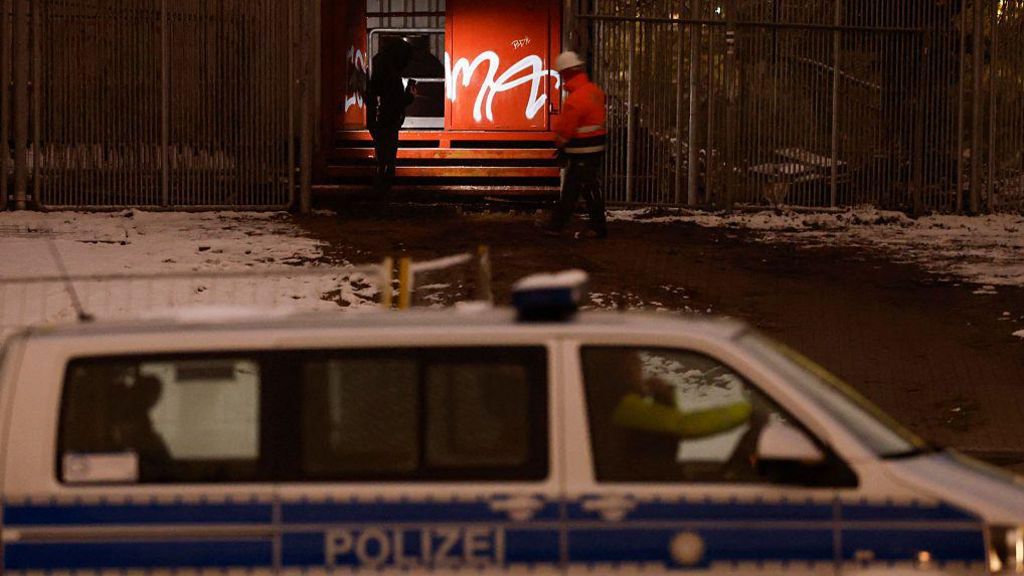
UK police arrest 3 men in London on suspicion of spying for Russia
In a significant development, British counterterrorism authorities apprehended three individuals in London on Thursday, suspecting them of espionage activities on behalf of Russia. The Metropolitan Police confirmed that the men, aged 44, 45, and 48, were taken into custody under the National Security Act, accused of aiding a foreign intelligence service, specifically Russia. Simultaneously, law enforcement officers conducted searches at multiple properties across the city as part of the ongoing investigation.
-

‘I eat 6000 calories a day’ â The South African ‘Rhino’ who became World’s Strongest Man
Rayno Nel, a 30-year-old South African, has etched his name in history by becoming the first African to win the World’s Strongest Man title in 2025. His victory, achieved on his debut in the competition, was a remarkable feat that surprised even himself. ‘I didn’t expect to stand on top of that podium this year,’ Nel shared in an interview with BBC World Service. ‘It still feels unreal.’
Nel’s journey to the title is nothing short of extraordinary. After abandoning his dream of playing professional rugby, he transitioned to strongman competitions in 2023. Growing up in Upington, a remote town in Northern Cape province, Nel had limited exposure to the sport. However, his passion for competitive sports and adrenaline-fueled challenges led him to strongman training. Balancing a full-time job as an electrical engineer, Nel dedicated every spare moment to his rigorous training regimen, consuming up to 6,000 calories daily to fuel his 148kg, 191cm frame.
Nicknamed ‘The Rhino from South Africa,’ Nel’s physical prowess and mental fortitude were on full display during the competition. In the final held in Sacramento, California, he narrowly edged out three-time champion Tom Stoltman of Great Britain by half a point. Nel’s performance included a staggering 490kg deadlift and a strong showing in the Flintstone Press, despite a nerve-wracking moment where his lead was nearly erased. The final event, the Atlas Stones, saw Nel secure third place, clinching the overall victory by the slimmest of margins.
Nel’s triumph has not only brought pride to his homeland but also highlighted the potential for strongman competitions in Africa. He hopes to bring the World’s Strongest Man event back to the continent, emphasizing its rich heritage in southern Africa. As he looks to the future, Nel aims to defend his title and continue inspiring others with his story of perseverance and dedication.
-

Another French museum robbery sees 2,000 gold and silver coins stolen
A series of audacious thefts at prominent French museums has highlighted significant security vulnerabilities in the country’s cultural institutions. The latest incident occurred at the Maison des Lumières in Langres, where thieves made off with approximately 2,000 gold and silver coins valued at €90,000. The heist took place just hours after the brazen theft of French crown jewels from the Louvre in Paris. The stolen coins, part of a private collection, were meticulously selected, indicating the perpetrators’ expertise. This theft follows a string of recent robberies, including the theft of six gold nuggets worth €1.5 million from Paris’s Natural History Museum and the disappearance of Chinese porcelain artifacts valued at €6.55 million from Limoges. The Louvre heist, involving €88 million worth of historic jewelry, has drawn global attention. Thieves, disguised as workers, used power tools and a mechanical ladder to access the Gallery of Apollo. The stolen items included a diamond and emerald necklace gifted by Napoleon to his wife and a tiara worn by Empress Eugenie. French authorities have acknowledged security failures, with the Louvre’s director, Laurence des Cars, admitting that CCTV coverage was inadequate and the alarm system failed to activate. Justice Minister Gérald Darmanin described the breaches as a ‘terrible image’ for France, emphasizing the need for enhanced security measures.
-

Thousands march in Budapest to support Orbán amid election challenges
Thousands of Hungarians took to the streets of Budapest on Thursday, October 23, to rally in support of Prime Minister Viktor Orbán, as the country braces for what could be the most competitive parliamentary elections in his 15-year tenure. The event, organized as a “peace march,” coincided with Hungary’s national holiday commemorating the 1956 anti-Soviet uprising, which was brutally suppressed by the Red Army. Participants voiced their backing for Orbán’s stance that Hungary risks being drawn into Russia’s war in Ukraine, with banners declaring, “We don’t want to die for Ukraine.” The march, which began at the Margaret Bridge with a backdrop of Hungary’s neo-Gothic parliament, saw attendees waving flags representing towns and villages across the nation.
-

EU leaders seek role in Gaza at summit focused on Ukraine and Russia
In a bid to assert its influence in the ongoing Israeli-Palestinian conflict, European Union leaders are pushing for a more active role in Gaza and the occupied West Bank. This move comes after the EU was largely excluded from the U.S.-mediated ceasefire between Israel and Hamas. During a summit in Brussels, primarily focused on the Ukraine crisis, EU heads of state also turned their attention to the fragile truce in Gaza, discussing potential measures to support stability in the war-torn region. The EU, being the largest aid provider to Palestinians and Israel’s top trading partner, aims to leverage its position to foster lasting peace. Luxembourg Prime Minister Luc Frieden emphasized the importance of European involvement, stating, ‘Gaza is not over; peace is not yet permanent.’ The conflict has deeply divided the 27-nation bloc and strained EU-Israel relations to historic lows. European Commission President Ursula von der Leyen had previously proposed sanctions and a partial trade suspension against Israel to pressure a peace deal, though momentum waned following the U.S.-brokered ceasefire. However, EU officials argue these measures remain relevant as violence persists in Gaza and the West Bank. Israeli Prime Minister Benjamin Netanyahu recently dismissed Europe’s relevance, calling it ‘essentially irrelevant and displaying enormous weakness.’ Despite this, the EU is working to integrate itself into the post-ceasefire diplomatic efforts. EU foreign policy chief Kaja Kallas stressed the bloc should not only fund stability but also actively participate in reconstruction. The EU has supported the Palestinian Authority, pledged humanitarian aid, and proposed extending a West Bank police support program to Gaza to bolster a stabilization force outlined in the ceasefire plan. Additionally, the EU is seeking membership in the ceasefire’s ‘Board of Peace’ oversight body. The European Border Assistance Mission in Rafah, operational since 2005, has also played a role, aiding thousands of individuals during the ceasefire before pausing operations when hostilities resumed.
-

South Africa beat Pakistan to earn series draw
In a thrilling display of resilience, South Africa clinched an eight-wicket victory over Pakistan in the second Test at Rawalpindi, leveling the series 1-1. This triumph marks South Africa’s first win in Pakistan since October 2007, ending an 18-year drought in the country. The Proteas, reigning world champions, showcased their mettle after a 93-run defeat in the first Test, which had halted their impressive 10-Test winning streak. Pakistan, resuming their second innings at 94-4 with a slender 23-run lead, faltered dramatically on the fourth morning, collapsing to 138 all out. Simon Harmer, the Essex off-spinner, was instrumental in the collapse, claiming 6-50, including his 1,000th first-class wicket. South Africa chased down the modest target of 68 in just 12 overs, despite losing Aiden Markram for 42 and Tristan Stubbs for a duck. The foundation for South Africa’s victory was laid in the first innings, where they posted 404, thanks to a crucial 71-run partnership for the last two wickets. Senuran Muthusamy’s unbeaten 89 and Kagiso Rabada’s career-best 71 were pivotal in securing a 71-run lead. Captain Aiden Markram praised his team’s character and resilience, emphasizing the significance of the win in testing conditions. Pakistan’s captain, Shan Masood, defended his team’s strategy of preparing turning pitches, citing four wins out of six Tests since adopting this approach. Despite the loss, Masood remained optimistic, highlighting the team’s potential to dominate if they capitalize on winning positions.
-

UN says delivering aid to northern Gaza remains challenging
The United Nations has highlighted the persistent difficulties in delivering humanitarian aid to northern Gaza, even after a ceasefire has been in effect for over ten days. According to the UN Office for the Coordination of Humanitarian Affairs (OCHA), while progress has been made in scaling up response efforts in central and southern Gaza, the continued closure of key border crossings—Zikim and Erez—has severely hindered access to the northern region. These crossings are crucial for direct aid delivery, and their closure has exacerbated the humanitarian crisis in the area. Meanwhile, OCHA reported that more than 425,000 people have moved from southern to northern Gaza since the ceasefire began on October 10. Andrew Saberton, Deputy Executive Director of the UN Population Fund, recently returned from Gaza and noted that some aid, including medical supplies and equipment, has been distributed through the Kerem Shalom/Karem Abu Salem crossing. However, he emphasized that the amount of aid entering Gaza remains insufficient to meet the overwhelming needs. On Tuesday, out of ten coordinated humanitarian missions, six were facilitated, allowing the collection of essential items like water tanks, hygiene kits, and fuel. The UN continues to call for greater access and support to address the dire situation in Gaza.
-

UAE: Some retailers say facing shortage of iPhone 17 as demand outpaces supply
Retailers in the UAE are grappling with a shortage of Apple’s latest iPhone 17 series, as consumer demand significantly outpaces supply. Launched last month, the iPhone 17 has seen particularly strong interest in its higher-end models, such as the Pro and Pro Max variants. Rajat Asthana, CEO of Eros Group, noted that pre-orders for these premium models sold out within minutes, with foot traffic in stores increasing by 50% compared to last year’s launch. The surge in demand is attributed to Apple’s innovative features and new color options, including Cosmic Orange, which have captivated consumers. Additionally, the Indian festival of Diwali has further fueled demand, as iPhones are popular gifts during the festive season. While some e-commerce platforms and Apple’s UAE online store show limited availability, retailers anticipate supply constraints to persist through October, with improvements expected in November. A spokesperson from Jumbo Electronics confirmed that replenishments are underway to meet the ongoing demand. The situation highlights the challenges of balancing high consumer interest with logistical and supply chain limitations in the region.
-

Revised policies boost Guangdong women’s rights in digital era
Guangdong province has emerged as a trailblazer in advancing gender equality within the digital landscape through the adoption of revised measures for women’s rights protection. The Standing Committee of the 14th Guangdong Provincial People’s Congress approved these measures on October 11, 2025, with implementation set for January 1, 2026. The updated legislation, expanded from nine chapters and 46 articles to nine chapters and 59 articles, addresses critical challenges in safeguarding women’s rights, institutionalizes effective practices, and introduces groundbreaking provisions for the digital era. Article 30 of the measures emphasizes enhancing women’s digital literacy, empowering them to critically evaluate and utilize media information effectively. It also mandates state departments, enterprises, and organizations to promote gender equality in digital domains such as data processing, automated decision-making, and algorithmic services. This marks China’s first systematic legal framework for gender equality in the digital sphere. The measures also require internet platforms to eliminate gender bias in algorithms, particularly in areas like order distribution and compensation calculations, and to provide digital skills training to bridge the ‘digital divide’. Additionally, the legislation prohibits the use of the internet to infringe upon women’s rights and grants women the authority to demand cessation of such acts. Guangdong, a hub for the internet industry, aims to address emerging challenges posed by algorithmic technology through proactive legal provisions. A notable case cited involved a female programmer in Hangzhou who sued a tech company for algorithmic discrimination, leading to a court ruling that mandated the removal of gender-biased parameters and a public apology. Experts, including Wang Tianyu of the Chinese Academy of Social Sciences, emphasize the need for platforms to recognize women as a distinct group with specific protection needs and to invest in areas like childcare and welfare. The measures also foster institutional innovation in the Guangdong-Hong Kong-Macao Greater Bay Area, promoting cross-regional cooperation and integrated development in women’s affairs.