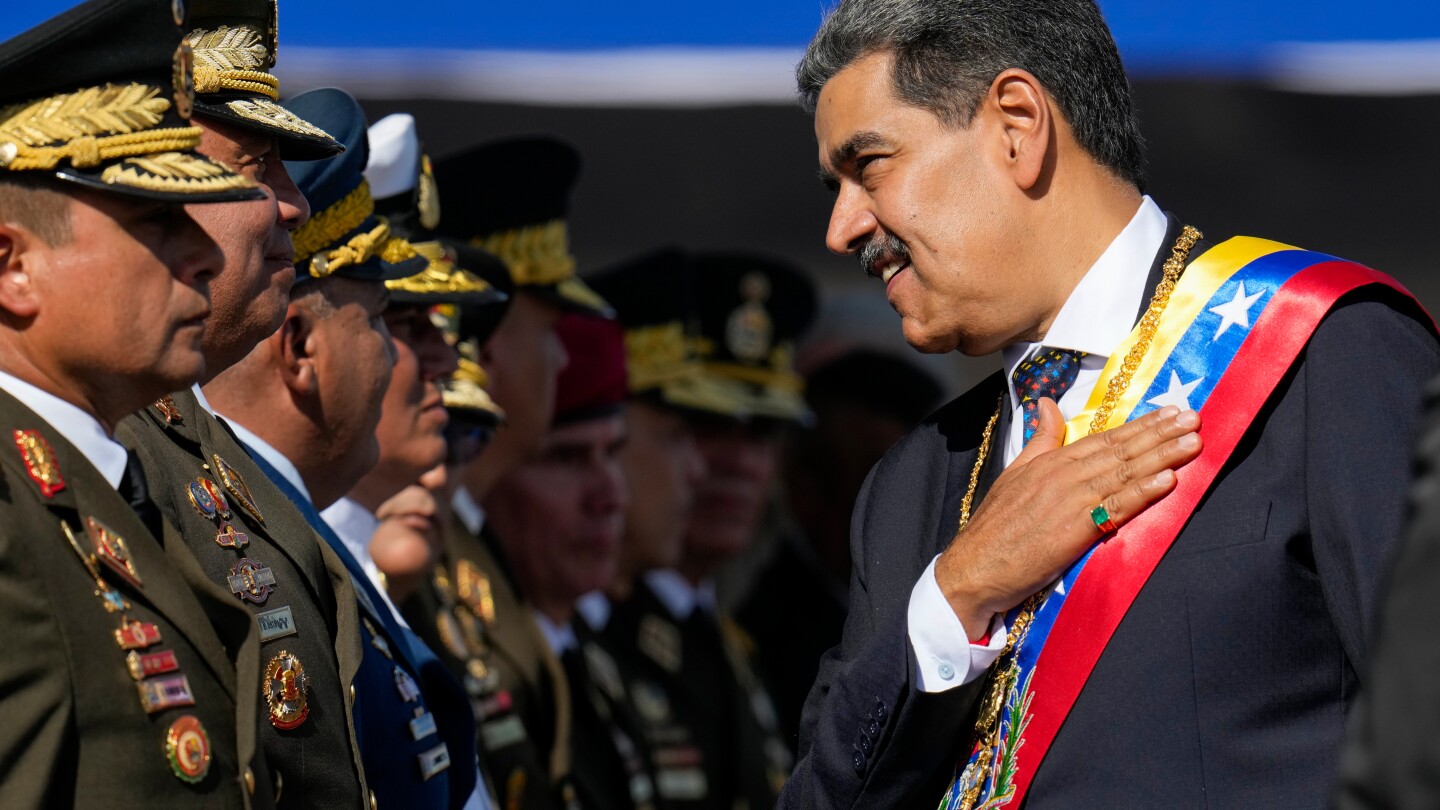
Deposed Venezuelan leader Nicolás Maduro is poised to appear in a New York courtroom Monday, facing U.S. drug trafficking charges in a legal proceeding that echoes the historic prosecution of Panama’s Manuel Noriega 36 years earlier. Maduro’s capture on Saturday—coinciding with the anniversary of Noriega’s removal by U.S. forces—sets the stage for a complex legal battle over sovereign immunity protections.
作者: admin
-

UAE golf at a pivotal turning point: Blending innovation and entertainment for the future
In a significant move set to reshape construction efficiency benchmarks, BNW Developments has announced a comprehensive strategic partnership with the global infrastructure giant China Railway No. 4 Engineering Group (CREC4). This alliance represents a major strategic pivot, leveraging CREC4’s extensive engineering prowess and rapid deployment capabilities to dramatically accelerate BNW’s development pipeline.
The collaboration is founded on a synergistic model: BNW Developments brings its prime real estate projects and market expertise to the table, while CREC4 contributes its monumental experience in large-scale, high-speed construction projects, honed on massive infrastructure endeavors worldwide. The partnership extends beyond mere contracting, envisioning a deep integration of project management methodologies, supply chain logistics, and cutting-edge construction technologies.
Industry analysts highlight that this move is a direct response to persistent project delays and supply chain bottlenecks that have plagued the construction sector. By aligning with a state-owned enterprise renowned for its ability to execute complex projects on an accelerated schedule, BNW positions itself to gain a formidable competitive advantage, potentially reducing time-to-market for its developments by a significant margin.
The implications for the real estate market are substantial. This acceleration strategy could enable BNW to capitalize more effectively on market demand cycles and improve overall capital efficiency. The partnership also signals a growing trend of Western real estate firms seeking strategic alliances with Eastern engineering powerhouses to overcome contemporary construction challenges and implement industrialized building techniques on a broader scale.
-
Israeli police kill Palestinian citizen in Negev raid amid Ben Givr ‘incitement’
A lethal confrontation during an Israeli police operation in the Negev has resulted in the death of a Palestinian citizen, intensifying tensions over the government’s law enforcement tactics. Mohammed Hussein al-Tarabin, a 35-year-old father of seven, was fatally shot by officers during an arrest raid in the village of Tirabin al-Sana late Saturday.
According to official police statements, Tarabin was targeted after allegedly endangering officers’ lives during the operation and was suspected of involvement in vehicle arsons in nearby Jewish communities. However, these claims are vehemently disputed by Tarabin’s family and community representatives, who describe the shooting as an execution-style killing without justification.
The incident’s sole child witness, Tarabin’s 11-year-old son, provided a harrowing account: “They knocked on the door. My father opened it, and immediately they shot him in the chest.” The child further described how officers dragged his mortally wounded father to the balcony, removed his trousers, and conducted searches while he lay bleeding on the floor.
National Security Minister Itamar Ben Gvir, who oversees police operations, publicly endorsed the officers’ actions, declaring the killing “right” and expressing full support for the involved personnel through his social media channels. This endorsement comes amid Ben Gvir’s personally led “sovereignty restoration” campaign in Tirabin al-Sana, featuring increased raids, arrests, and home demolition orders targeting Palestinian citizens of Israel.
The shooting officer has been interrogated on suspicion of unlawful firearm use and released to house arrest pending internal investigation. Palestinian leadership organizations have condemned both the specific killing and the broader police campaign, characterizing it as systematic intimidation and collective punishment against Arab citizens.
The High Follow-Up Committee, representing Palestinian citizens of Israel, accused police of “committing deliberate killing” and implementing “an unprecedented campaign of intimidation, terror and revenge.” Committee head Jamal Zahalka specifically denounced Ben Gvir’s support for the killing as reflecting “fascist” tendencies and rejected police allegations against Tarabin as fabricated.
This incident highlights ongoing tensions between Israel’s Palestinian minority—descendants of those not expelled during the 1948 Nakba—and state authorities, with advocacy groups citing persistent discrimination and repressive practices despite formal citizenship status.
-
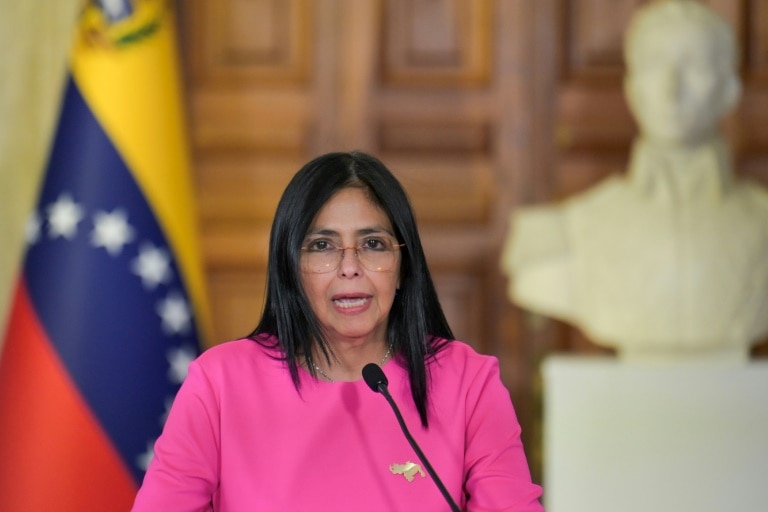
Delcy Rodriguez: From Maduro’s ‘tigress’ to acting Venezuelan president
Following the dramatic capture of Nicolás Maduro by US forces, Delcy Rodríguez has ascended to the role of Acting President of Venezuela, marking an unprecedented moment as the first woman to hold executive power in the nation. The Venezuelan Supreme Court formally authorized her assumption of presidential duties in an acting capacity, a move subsequently endorsed by the country’s military establishment.
Rodríguez, a 56-year-old lawyer by training, has been a central figure in successive administrations led by both Maduro and his predecessor, Hugo Chávez. Her political trajectory includes significant roles as Foreign Minister, Vice President since 2018, and most recently, Minister of Hydrocarbons—a position of critical importance in an economy fundamentally reliant on oil exports.
Known for her staunch anti-imperialist stance and once dubbed ‘the tigress’ by Maduro himself, Rodríguez now faces the complex task of navigating Venezuela’s political transition while maintaining cohesion within the Chavista movement. Her immediate response to Maduro’s capture was to assert that he remains the ‘only president’ and to demand his unconditional release, simultaneously positioning herself as a stabilizing force.
Her political lineage is deeply intertwined with Venezuela’s socialist movement. Her brother, Jorge Rodríguez, currently leads the National Assembly, and their family history is marked by political activism—their father, a Marxist activist, died in government custody in 1976. Analysts suggest this personal history has profoundly influenced her political motivations and leadership style.
In recent years, Rodríguez demonstrated pragmatic governance by moderating her rhetoric and engaging with Venezuela’s business community—a sector historically criticized by socialist leadership. As Economy Minister from 2020 to 2024, she implemented eased trade controls and accommodated dollarization, earning cautious approval from economic stakeholders despite facing international sanctions herself for alleged democratic undermining and human rights violations.
The international response remains cautiously observant. Former US President Donald Trump indicated that Rodríguez had expressed willingness to collaborate with Washington, though he issued stern warnings should she fail to meet US demands regarding policy reforms and oil access. Secretary of State Marco Rubio stated that the US would evaluate potential cooperation based on actions rather than declarations, explicitly downplaying the prospects of opposition leader María Corina Machado.
Political analysts note that while Rodríguez requires formal swearing-in, she effectively operates as de facto president. Her challenge lies in balancing internal party expectations, international pressures, and the management of the world’s largest proven oil reserves amidst profound national and geopolitical uncertainty.
-
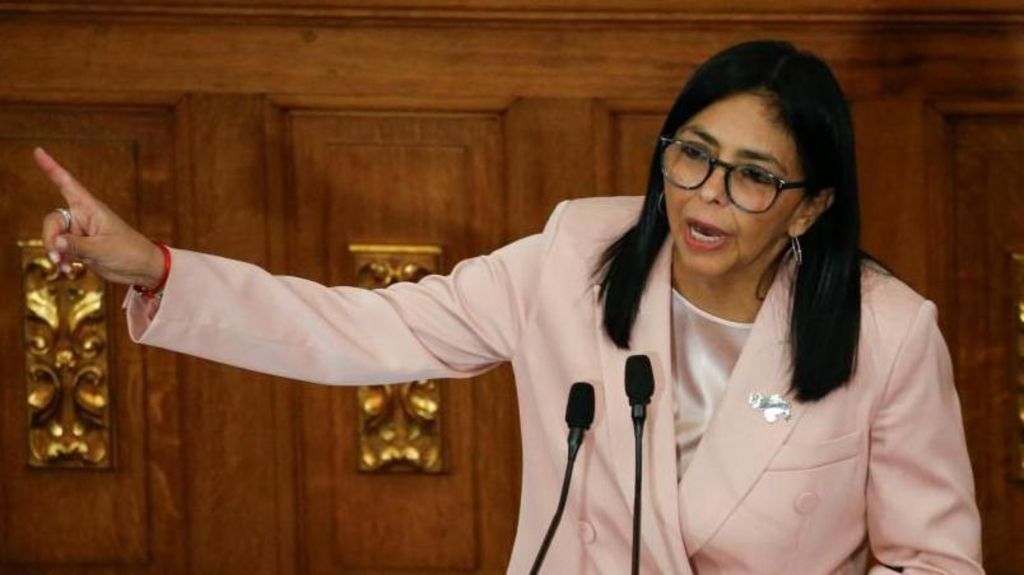
Can Maduro’s trusted lieutenant now work for Trump?
Venezuela plunged into a constitutional crisis following the dramatic capture of President Nicolás Maduro by U.S. forces, with conflicting power claims creating international uncertainty. While the Venezuelan Supreme Court declared Vice President Delcy Rodríguez acting president per constitutional protocol, the situation took unexpected turns when U.S. President Donald Trump announced America would “run” Venezuela during transition proceedings.
The complexity deepened as Trump revealed Secretary of State Marco Rubio had been negotiating with Rodríguez, whom he described as “essentially willing to do what we think is necessary.” This apparent cooperation contrasted sharply with Rodríguez’s subsequent public statements where she denounced Maduro’s capture as “a kidnapping” and vowed Venezuela would “never again be a colony of any empire.
The political vacuum follows years of disputed leadership. Maduro’s 2024 election victory was widely condemned as rigged, with the Carter Center’s analysis of opposition-obtained voting tallies suggesting opposition candidate Edmundo González had actually won by a landslide. The United States and numerous other nations consequently recognized González as legitimate president-elect, though he and prominent opposition leader María Corina Machado—who won the Nobel Peace Prize for her democratic efforts—were forced into exile and hiding respectively.
Trump’s dismissal of Machado as lacking “support or respect” to lead surprised observers, as did his administration’s alignment with Maduro’s inner circle. Rodríguez appeared alongside powerful regime figures including her brother Jorge Rodríguez (National Assembly president), Defense Minister Vladimir Padrino, and armed forces commander Domingo Hernández Lárez, suggesting their continued influence.
Secretary Rubio indicated the U.S. would assess Rodríguez based on actions rather than words, emphasizing retained leverage including oil quarantines. He called for “realism” in expecting delayed elections given Venezuela’s institutional challenges, acknowledging that organizing credible elections would require significant time amid entrenched Maduro loyalists in key institutions.
The emerging arrangement potentially disappoints opposition supporters who expected immediate power transfer to González and Machado. Rodríguez now faces the formidable challenge of balancing U.S. demands against the expectations of Maduro’s power base, finding herself in an increasingly precarious political position.
-
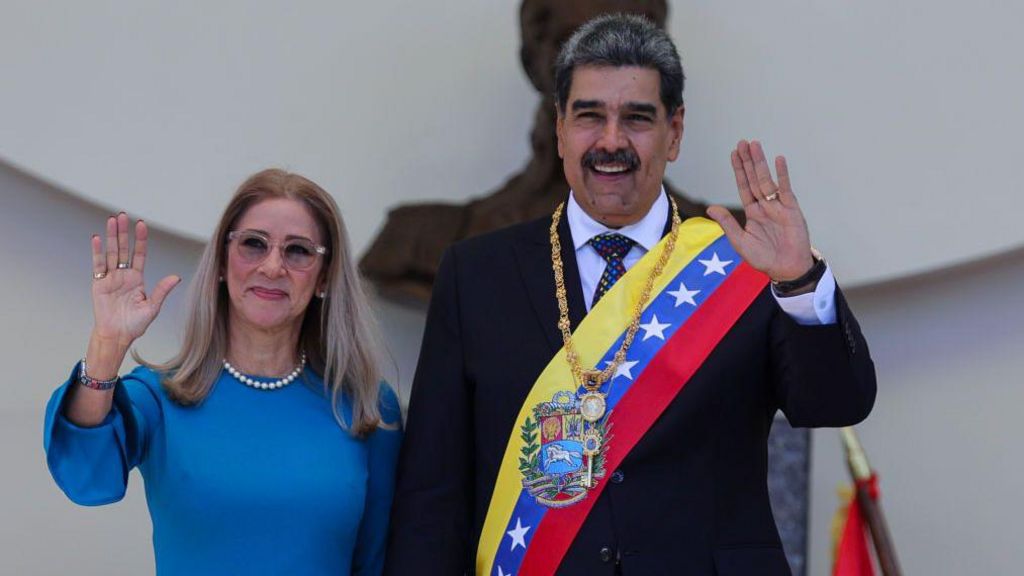
Who is Cilia Flores, Venezuela’s once-powerful first lady?
In an unprecedented military operation, United States forces have captured Venezuelan President Nicolás Maduro and First Lady Cilia Flores, transporting them to New York to face serious criminal charges. The nighttime raid in Caracas resulted in the detention of both political figures, who now confront allegations spanning drug trafficking and weapons offenses in American courts.
Cilia Flores, 69, has operated as a central architect of Venezuela’s political landscape for decades. Initially gaining prominence as a defense attorney for Hugo Chávez following his failed 1992 coup attempt, Flores transitioned from legal advocacy to becoming one of Venezuela’s most influential power brokers. Her political trajectory saw her ascend to leadership of Venezuela’s National Assembly in 2006, where she presided over a virtually unilateral parliament for six years as opposition parties boycotted elections they deemed illegitimate.
Though publicly presenting a family-oriented image through her television program “Con Cilia en Familia” and occasional salsa dancing appearances with her husband, Flores operated as Maduro’s crucial behind-the-scenes adviser. Her strategic guidance proved instrumental in consolidating Maduro’s presidency after Chávez’s death in 2013 and sustaining his politically embattled regime.
The First Lady’s career has been shadowed by persistent corruption allegations. In 2012, unions accused her of nepotism for influencing the appointment of approximately 40 relatives to government positions. More seriously, her nephews were convicted in US courts in 2015 for attempting to smuggle 800kg of cocaine into the United States—a case that implicated Flores directly in international narcotics operations.
Recently unsealed court documents allege Flores accepted substantial bribes in 2007 to facilitate meetings between drug traffickers and Venezuelan anti-drug officials. These charges emerge amidst escalating tensions between Washington and Caracas, with the Trump administration implementing fresh sanctions against Flores’ family members last month.
Flores’ journey from Chávez’s lawyer to Venezuela’s “First Warrior” represents a remarkable political evolution that now reaches its dramatic culmination in a New York courtroom, marking one of the most significant confrontations between the US and Venezuelan leadership in modern history.
-

Massive snow palace sculpture rises in Jilin province
An architectural marvel carved from snow has emerged in Northeast China’s Jilin province, where artisans have completed a breathtaking large-scale sculpture depicting a palace seemingly suspended in mid-air. The monumental artwork, constructed within the renowned Changbai Mountain scenic area, required an astonishing 100,000 cubic meters of meticulously compacted snow to achieve its final form.
Soaring to an impressive height of 30 meters and spanning 70 meters in width, the frozen palace represents one of the most ambitious winter art installations created in recent years. The design draws direct inspiration from the popular novel series ‘The Grave Robbers’ Chronicles,’ bringing fictional architecture from the pages of literature into tangible reality through the transient medium of ice and snow.
Since its recent completion, the sculpture has generated substantial excitement among literary enthusiasts and winter tourism advocates alike. The installation forms part of a broader initiative to promote winter tourism and cultural activities in China’s northern regions, where extreme cold weather becomes a canvas for artistic expression rather than a limitation.
The Changbai Mountain area, known for its pristine winter landscapes and abundant snowfall, provides an ideal backdrop for such ambitious frozen architecture. Local tourism authorities anticipate the sculpture will attract visitors from across China and beyond, offering a unique combination of natural beauty, literary homage, and artistic achievement.
This project continues the region’s tradition of snow and ice artistry while pushing the boundaries of scale and thematic complexity, demonstrating how winter conditions can be transformed into opportunities for cultural celebration and tourist attraction.
-

France, UK conduct joint strikes against IS in Syria
In a significant display of multinational military cooperation, British and French armed forces executed coordinated airstrikes against Islamic State positions in northeastern Syria on Saturday night. The joint operation targeted a subterranean weapons storage facility utilized by the terrorist organization in the sparsely populated desert region north of Palmyra.
The UK Ministry of Defence released video documentation showing Royal Air Force Typhoon aircraft conducting aerial refueling maneuvers during the mission. Military authorities from both nations confirmed the operation was conducted under the umbrella of Operation Inherent Resolve, the United States-led international coalition against Islamic State forces across Iraq and Syria.
According to official statements, the targeted complex was situated in an area devoid of civilian population, with no indications of collateral damage or civilian casualties reported. The strategic strikes aimed to disrupt ISIS’s logistical capabilities and prevent the terrorist organization from regrouping and reestablishing operational strength in the region.
The operation comes amid heightened security concerns following last month’s attack in Palmyra, where an ISIS gunman killed two American soldiers and a civilian contractor. This incident prompted retaliatory strikes by US forces against dozens of ISIS targets throughout Syria.
The historic city of Palmyra, home to UNESCO World Heritage archaeological sites, previously served as a stronghold for jihadist fighters before being liberated from ISIS control. The recent military action underscores ongoing international efforts to maintain security stability under the administration of President Ahmed al-Sharaa, who assumed power following the ouster of former leader Bashar al-Assad approximately one year ago.
-
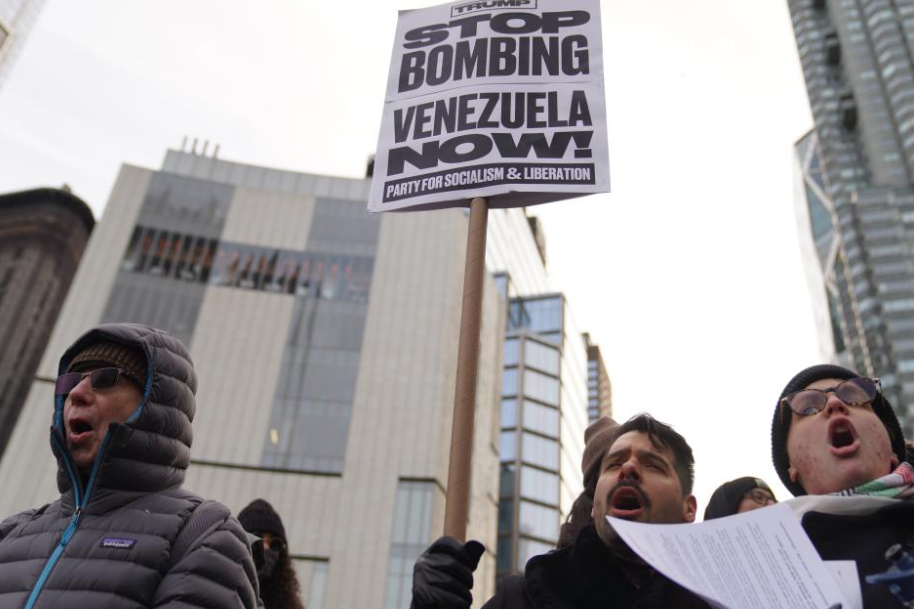
Over 100 US cities protest against US strikes on Venezuela
A significant wave of dissent swept across the United States as coordinated demonstrations unfolded in over 100 cities, including New York, Washington D.C., and Los Angeles. The protests, organized under the banner “No War on Venezuela,” were a direct response to the recent U.S. military operation that resulted in the capture of Venezuelan President Nicolas Maduro.
In the heart of Manhattan’s Times Square, hundreds of activists gathered on Saturday, brandishing placards with messages such as “Hands Off Venezuela,” “US Out of Caribbean,” and “No War for Venezuelan Oil.” The crowd’s chants of “Defend Venezuela, Free Maduro” reverberated through the iconic urban landscape, creating a powerful visual and auditory statement against American foreign policy.
Protest participants expressed strong condemnation of what they characterized as imperialist aggression. Karen, a middle-aged New Yorker among the demonstrators, articulated a common sentiment: “This war is not about drugs—it is about Venezuela’s oil. How do you have the right to step in Venezuela, to attack Venezuela? It feels like we act as criminals.”
International perspectives joined the chorus of criticism. Hassan, a college student from Pakistan, observed that while U.S.-led regime change efforts were not novel, the current operation represented a departure from previous justification narratives. “At least it wore a mask, like in the name of restoring democracy in the Middle East,” Hassan noted. “However, today it takes the mask off. This is quite nakedly about oil and natural resources.”
The protest movement gained organizational support from the Answer Coalition (Act Now to Stop War and End Racism), which issued a statement condemning the bombing of Caracas and Maduro’s capture. The anti-war group emphasized the human and economic costs of military intervention, stating: “A US war would cause death and destruction to the people of Venezuela. The war machine consumes an unimaginable amount of our tax dollars while working families struggle to make ends meet.”
Speakers at the rallies directly challenged President Trump’s announcement that the United States would “run” Venezuela until a “safe, proper and judicious transition” could be implemented. One Times Square speaker denounced this approach as arrogance, referencing Trump’s statement about claiming Venezuelan resources: “The Venezuelan people will not accept the United States running their country or stealing their oil, gas, gold, or any resources. There will be strong resistance. No, that age is over.”
-
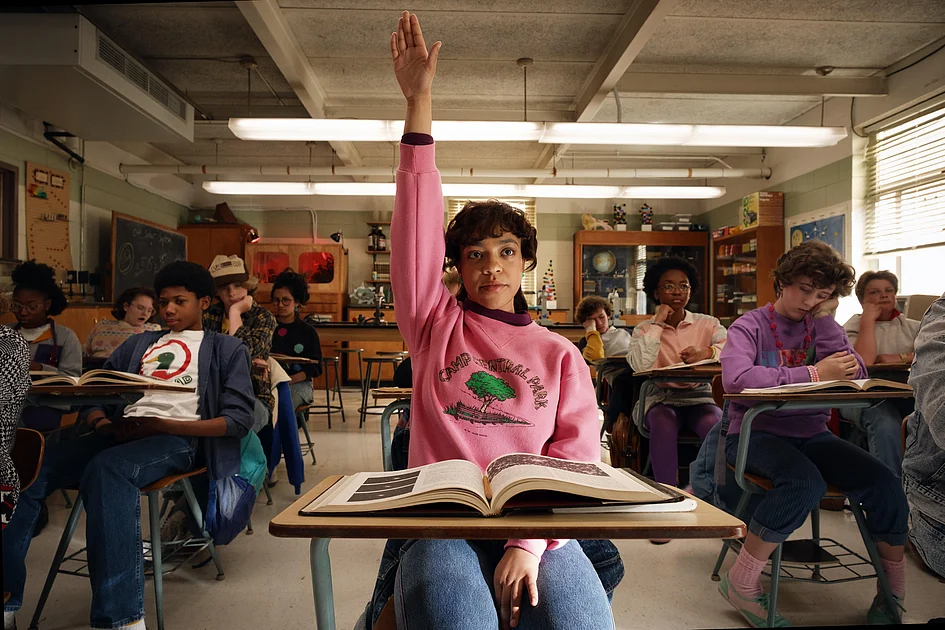
A ‘Stranger Things’ spin-off? Makers confirm new characters, new world
The cultural phenomenon that defined a generation of streaming television has reached its conclusion. Netflix’s Stranger Things, which premiered as a nostalgic supernatural mystery set in Hawkins, Indiana, has officially concluded with its two-hour series finale—the longest episode in the show’s history. The finale, released on December 31st following a three-part season rollout, brought closure to nearly a decade of storytelling that transformed from cult favorite to global sensation.
Yet the gates to the Upside Down haven’t closed permanently. In an exclusive interview with Variety, creators Matt and Ross Duffer confirmed active development on a spin-off project that will expand the Stranger Things universe in unexpected directions. Contrary to fan speculation, the new series will not serve as a direct exploration of existing mythology like the Mind Flayer’s origins, but will instead establish what Matt Duffer described as ‘a completely different mythology.’
The brothers clarified that while the spin-off will address lingering narrative threads from the original series, it will primarily introduce audiences to entirely new characters, settings, and supernatural frameworks. ‘It’s very fresh and very new,’ Matt emphasized, noting that the project would provide explanations for certain unresolved elements while building something fundamentally distinct.
Production is moving forward rapidly, with the Duffers confirming they would resume work on the spin-off immediately following a brief hiatus. Ross Duffer expressed enthusiasm about the creative freedom afforded by this expansion: ‘We’re actually really excited, and it’s very exciting to work with a clean slate: completely new characters, new town, new world, new mythology.’
The original Stranger Things, which debuted in 2016, revolutionized streaming television through its blend of 1980s nostalgia, supernatural horror, and character-driven storytelling. Its conclusion marks the end of an era for Netflix, where it became one of the platform’s most commercially and critically successful original productions.