作者: admin

  • UAE aviation sector stands as key pillar of national economy with growing global presence

    UAE aviation sector stands as key pillar of national economy with growing global presence

    The United Arab Emirates’ aviation industry has firmly established itself as a cornerstone of the nation’s economic framework, demonstrating remarkable growth and international influence throughout 2025. Recent developments confirm the sector’s strategic importance, contributing approximately 18% to the country’s gross domestic product through both direct and indirect channels while supporting critical industries including tourism, commerce, and logistics networks.

    In a series of groundbreaking initiatives, the General Civil Aviation Authority (GCAA) launched the unified national platform for unmanned aerial vehicles in January 2025. This innovative digital ecosystem streamlines drone operations through comprehensive registration protocols, regulatory clarity, and enhanced safety measures, simultaneously improving operational efficiency and investment opportunities.

    The aviation landscape witnessed further transformation in April with GCAA’s design approval for the nation’s premier hybrid Heliport at Abu Dhabi Cruise Terminal. This pioneering infrastructure represents a significant advancement in the visionary Abu Dhabi Air Taxi project, marking substantial progress toward integrated, sustainable air transportation throughout the emirate.

    Environmental stewardship emerged as a priority with the GCAA submitting the UAE’s third State Action Plan for reducing aviation emissions to the International Civil Aviation Organisation. This comprehensive strategy, developed through collaborative efforts across the aviation sector, incorporates 42 operational and technological projects alongside 13 initiatives focused on sustainable aviation fuel and low-carbon alternatives.

    The UAE’s global aviation standing reached new heights with its seventh consecutive term on the ICAO Council. The international community also reaffirmed its confidence in UAE leadership by re-electing Hamad Salem Al Muhairi as Chairperson of the ICAO Aviation Security Panel for a third term. Simultaneously, Engineer Maryam AlBalooshi achieved historic recognition as the first Middle Eastern representative elected to chair ICAO’s Committee on Aviation Environmental Protection.

    The nation solidified its position as a global aviation dialogue hub by hosting prestigious international events including the ICAO Global Implementation Support Symposium and the inaugural Global Sustainable Aviation Market in Abu Dhabi. The latter initiative gained extraordinary recognition when ICAO formally adopted it as an annual event within its official calendar—a rare honor for a state-initiated concept.

    Operational excellence continued as UAE airports reported unprecedented passenger traffic, with Abu Dhabi, Dubai, and Sharjah international facilities collectively processing approximately 108.59 million passengers within the first three quarters of 2025.

  • Nicolas Maduro put in New York jail; Venezuela’s VP demands his release

    Nicolas Maduro put in New York jail; Venezuela’s VP demands his release

    In an unprecedented military operation, Venezuelan President Nicolás Maduro has been apprehended by U.S. forces and transported to New York City to face federal charges. The dramatic capture occurred following early Saturday airstrikes on Caracas that targeted key military installations, marking a significant escalation in Washington’s efforts to dismantle Maduro’s administration.

    White House-released footage depicts the 63-year-old leftist leader handcuffed and wearing sandals while being escorted through a Manhattan DEA facility. Maduro, who has governed Venezuela for over a decade amid widespread allegations of electoral manipulation, was heard offering a subdued greeting in English: ‘Good night, happy new year.’

    The operation involved approximately 150 aircraft providing support for commandos who extracted Maduro and his wife based on extensive intelligence regarding his personal routines. General Dan Caine confirmed the capture occurred without resistance and with no American casualties, though President Trump subsequently indicated ‘many’ Cuban security personnel had been killed during the intervention.

    Venezuela’s political future remains uncertain as Vice President Delcy Rodriguez assumed acting presidential powers following a Supreme Court directive. Rodriguez has vehemently demanded Maduro’s immediate release while vowing to defend national sovereignty, despite Trump’s suggestion of potential cooperation with her administration.

    The U.S. President openly acknowledged strategic economic interests behind the operation, stating American oil companies would invest billions to rehabilitate Venezuela’s crippled petroleum infrastructure. The country possesses approximately 17% of global oil reserves but currently produces under one million barrels daily due to systemic mismanagement.

    International reactions reflect deep divisions. While exiled Venezuelans celebrated from Madrid to Miami, traditional U.S. allies including France and the EU joined China, Russia, and Iran in condemning the operation. United Nations Secretary-General António Guterres expressed profound concern regarding potential violations of international law, with the Security Council scheduled to convene urgently to address the crisis.

  • Europe’s auto industry future may be electric even after EU climbdown

    Europe’s auto industry future may be electric even after EU climbdown

    In a significant policy recalibration, the European Commission has formally abandoned its rigid 2035 deadline for a complete transition to fully electric vehicles, offering legacy automakers extended flexibility to market hybrid and conventional engine technologies. This strategic climbdown, enacted following intensive industry lobbying, enables European manufacturers to better position themselves against rapidly advancing Chinese competitors in the global automotive arena.

    The revised regulatory framework permits the continued legality of plug-in hybrids, range-extended electric vehicles utilizing compact combustion engines for battery recharge, and traditional internal combustion engines beyond the original 2035 cutoff. Brussels further introduced a subsidized category for small-scale European-manufactured EVs, providing substantial concessions that industry analysts recognize as addressing core automaker demands.

    This policy shift creates divergent transitional pathways across market segments. Premium manufacturers including Mercedes-Benz and BMW secure extended timelines for hybrid sales before mandated full electrification. Mass-market producers like Stellantis and Renault stand to benefit significantly from subsidized small EV categories tailored for urban European consumers, leveraging existing models such as the Fiat 500 and Clio.

    The European approach now starkly contrasts with United States policy, where the Trump administration has withdrawn federal support for electric vehicle adoption. Meanwhile, Chinese manufacturers including BYD continue expanding their European footprint through tariff-exempt plug-in hybrids and combustion engine models in markets with slower EV adoption rates like Poland.

    Industry forecasts from consultancies including AlixPartners project fully electric vehicles will constitute approximately 62% of European sales by 2035, reflecting skepticism regarding enforcement capabilities for complete combustion engine prohibitions. The moderated transition timeline potentially allows critical infrastructure development, addressing one of the primary impediments to broader EV adoption through enhanced charging network deployment.

    Current industry metrics reveal fully electric vehicles accounted for 16.4% of total European sales through October, representing a 25.7% year-over-year increase, though penetration remains minimal across southern and eastern European markets.

    This policy revision presents substantial challenges for manufacturers and suppliers who have allocated tens of billions toward EV development and production capacity expansion based on previous regulatory certainty. However, the technological flexibility may catalyze increased collaboration on affordable electric platforms, exemplified by the recently announced Ford-Renault partnership for small EV development in Europe.

    Industry leadership, including Ford CEO Jim Farley, has emphasized the necessity for regulatory consistency, criticizing frequent policy adjustments that complicate long-term capital investment planning. This sentiment echoes across an industry navigating complex technological transformation amid evolving regulatory landscapes.

  • iOS 26.2 update: New iPhone lock screen customisation features explained

    iOS 26.2 update: New iPhone lock screen customisation features explained

    Apple continues to refine its mobile operating system with the latest iOS 26.2 update, introducing sophisticated customization enhancements specifically targeting the Lock Screen interface. This incremental update builds upon the Liquid Glass design language introduced in iOS 26, offering users unprecedented control over visual aesthetics without fundamentally altering the operating system’s core functionality.

    The most significant improvement arrives in the form of an expanded opacity slider for the Lock Screen clock. Previously, users could apply a translucent, frosted-glass effect to their clock display, but customization options remained relatively constrained. iOS 26.2 dramatically enhances this capability by providing a broader spectrum of transparency adjustments, enabling either near-invisible minimalism or bold, high-contrast readability depending on user preference.

    This enhanced customization works seamlessly across all available clock fonts, allowing consistent transparency adjustments regardless of typographic choice. The functionality enables perfect harmony between clock displays and background wallpapers, whether users prefer intricate photographic backgrounds or clean gradient designs.

    Accessing these new features requires a simple process: users must long-press their Lock Screen, select ‘Customize,’ choose the clock element, ensure the Glass style (rather than Solid) is activated, and then manipulate the enhanced opacity slider to achieve their desired visual effect.

    Despite these advancements, one notable limitation persists from previous versions. The ability to resize the Lock Screen clock remains exclusively available with the default system font. Users who opt for alternative typfaces can adjust transparency but cannot modify clock dimensions, maintaining a consistency in Apple’s design approach while leaving room for future enhancements.

    The iOS 26.2 update represents Apple’s continued commitment to incremental refinement rather than revolutionary change, focusing on quality-of-life improvements that enhance the user experience through subtle but meaningful interface adjustments.

  • Auschwitz survivor Eva Schloss dies aged 96 as King leads tributes

    Auschwitz survivor Eva Schloss dies aged 96 as King leads tributes

    Eva Schloss, the stepsister of Anne Frank and renowned Holocaust survivor who dedicated her life to combating prejudice through education, has passed away in London at age 96. The Anne Frank Trust UK, which she co-founded, confirmed her death on January 3rd.

    King Charles III and Queen Camilla led global tributes, expressing profound sadness at her passing. In an official statement, the monarch reflected: “The horrors that she endured as a young woman are impossible to comprehend and yet she devoted the rest of her life to overcoming hatred and prejudice, promoting kindness, courage, understanding and resilience through her tireless work.”

    Schloss’s harrowing journey began when her family fled Nazi-occupied Austria for the Netherlands, only to be captured after two years in hiding. Like the Frank family, they were deported to concentration camps. While Schloss and her mother survived Auschwitz, her father and brother perished in captivity.

    Following liberation by Soviet forces in 1945, Schloss returned to Amsterdam where her mother married Otto Frank, Anne’s father, making Eva the posthumous stepsister of the iconic diarist. This connection shaped her life’s mission: ensuring the world would never forget the Holocaust’s atrocities.

    Over four decades, Schloss became a powerful voice for tolerance education, addressing countless young audiences across Europe. Her message was consistently clear: “Each person you convince not to be racist is a positive.” She co-founded the Anne Frank Trust UK, where Queen Camilla serves as Patron, and worked extensively with Holocaust memorial organizations globally.

    Schloss’s legacy intertwines with that of Anne Frank, whose diary has sold over 30 million copies in 70 languages. Together, their stories form a dual testimony to both the unimaginable cruelty of the Holocaust and the resilience of the human spirit.

    After studying photography in London, she married fellow Holocaust survivor Zvi Schloss in 1951. The couple established their life in Britain, becoming citizens and raising a family. Schloss is survived by her daughters, sons-in-law, and grandchildren.

  • Dire year for dollar has little light at end of tunnel this year

    Dire year for dollar has little light at end of tunnel this year

    The US dollar concludes one of its most challenging years in nearly a decade with mounting evidence suggesting its decline will extend throughout 2026. Financial analysts project continued pressure on the currency as global growth dynamics shift and Federal Reserve policy maintains its accommodative stance.

    Currency strategists note the dollar index plummeted over 9% in 2025, representing its most significant annual decline in eight years. This substantial depreciation stems from multiple factors: anticipated Federal Reserve rate reductions, narrowing interest rate differentials with other major economies, and growing concerns regarding US fiscal deficits and political uncertainty.

    Market experts emphasize that dollar weakness primarily reflects changing global growth expectations. Germany’s fiscal stimulus initiatives, China’s comprehensive policy support measures, and improving economic trajectories across the eurozone are collectively diminishing the US growth premium that previously supported dollar strength. This convergence in global economic performance reduces the dollar’s relative attractiveness to international investors.

    The Federal Reserve’s monetary policy direction remains crucial to dollar valuation. With Chair Jerome Powell preparing to transition out of his position and President Trump expected to appoint a successor advocating for lower interest rates, markets are pricing in continued accommodative policies. Several potential candidates, including White House economic adviser Kevin Hassett and former Fed Governor Kevin Warsh, have historically supported more dovish monetary approaches.

    Despite these bearish fundamentals, analysts caution that dollar weakness may not follow a linear path. Temporary factors including sustained investor enthusiasm for artificial intelligence technologies, potential US equity market inflows, and stimulus effects from recent tax cuts and government reopening could provide near-term support. However, most strategists view these as temporary factors unlikely to alter the broader downward trajectory.

    International asset managers are positioning portfolios for continued dollar weakness, noting that currency depreciation typically benefits US multinational corporations through enhanced overseas revenue conversion while improving relative returns in international markets. Current valuation metrics from the Bank for International Settlements indicate the dollar remains overvalued despite recent declines, suggesting further adjustment potential throughout 2026.

  • Why haven’t Trump’s tariffs had a bigger impact on prices?

    Why haven’t Trump’s tariffs had a bigger impact on prices?

    A groundbreaking economic study from Harvard University and the University of Chicago has uncovered a substantial discrepancy between the tariff rates publicly announced by the Trump administration and what importers actually paid throughout 2025. The research demonstrates that while official figures suggested trade-weighted tariffs reaching 32.8% in April, the effective rate paid by companies stood at just 14.1% by September.

    The comprehensive analysis identifies multiple factors contributing to this significant gap. Critical exemptions for products in transit during tariff announcements created implementation delays, while special considerations for semiconductor imports substantially reduced rates for technology products. Additionally, preferential treatment under the US-Mexico-Canada Agreement and widespread compliance declarations from North American trading partners further diminished the effective tariff burden.

    The research further reveals that tariff evasion strategies, including misdeclaration of product content, value, and country of origin, contributed to the reduced effective rates. Contrary to administration claims that foreign exporters would absorb costs, the study found that 94% of tariff expenses were passed through to American importers in 2025, significantly higher than the 80% rate observed during the 2018-2019 China tariff implementation.

    Despite the lower-than-expected effective rates, the tariffs have substantially reshaped global trade patterns. China’s share of US imports plummeted from 22% in 2017 to just 8% by late 2025. The policies have particularly affected manufacturers relying on imported components, with heavy machinery, automotive, and agricultural equipment sectors experiencing the most significant cost increases.

    The administration has recently shown flexibility, delaying scheduled tariff increases on furniture and reconsidering pasta tariffs amid affordability concerns. Economists caution that with only limited data available since full implementation, the long-term economic consequences remain to be fully understood.

  • At least 30 killed in attack on Nigeria village

    At least 30 killed in attack on Nigeria village

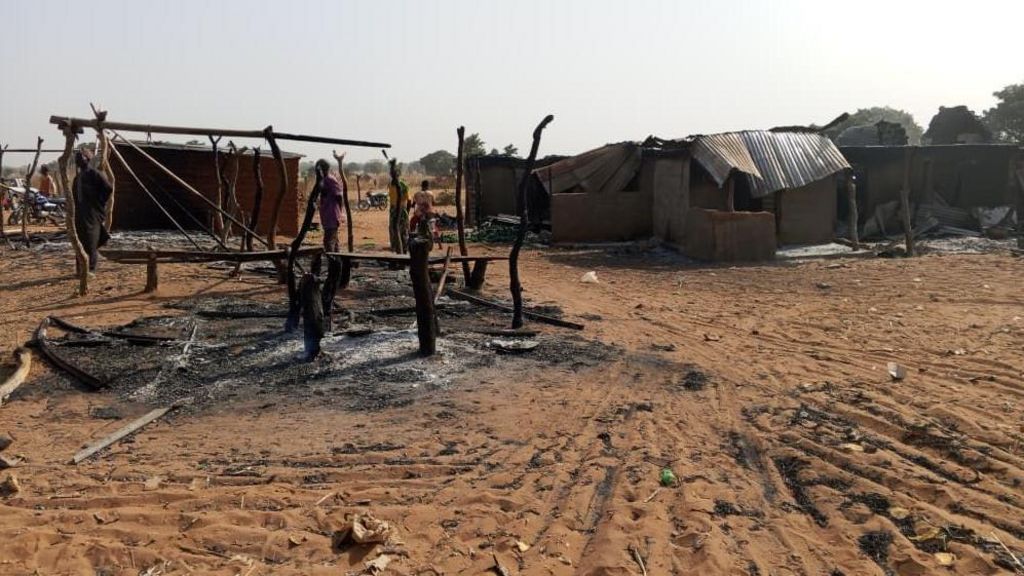
    In a brutal assault that underscores Nigeria’s escalating security crisis, armed militants slaughtered at least 30 civilians during a coordinated attack on Kasuwan-Daji village in Niger State. The assailants, emerging from nearby forests on motorcycles, unleashed terror upon the rural community this past Saturday.

    The attack followed a familiar pattern of violence plaguing northwestern Nigeria. Witnesses reported that gunmen systematically rounded up villagers before executing them, with some victims slaughtered while others were shot at close range. The assailants simultaneously torched the community’s central marketplace and looted commercial establishments before abducting an unspecified number of residents.

    Local authorities confirmed the grim details through multiple channels. Abdullahi Rofia of the Niger State Emergency Management Agency described a population paralyzed by fear, noting that survivors remain too terrified to speak publicly about the atrocities. ‘They are hiding, they are too afraid to talk to anybody,’ Rofia explained. ‘They are scared that if you talk, they will turn and do the same to you.’

    This violence occurs against a backdrop of worsening security conditions throughout Nigeria’s central and western regions. Despite government classifications designating these criminal groups as terrorist organizations, attacks have intensified in both frequency and brutality. Niger State police spokesperson Wasiu Abiodun confirmed that emergency response teams have been deployed to assist the wounded while security forces pursue hostage recovery operations.

    The timing of this massacre proves particularly alarming to security analysts, occurring merely one day after state authorities announced phased school reopenings following November’s mass abduction of 250 students and staff from St. Mary’s Catholic School in Papiri. While those hostages were eventually rescued before Christmas, the latest violence suggests security measures remain critically inadequate.

    Villagers expressed desperation through interviews with BBC Hausa service, with one witness lamenting the absence of security forces during the attack. ‘We are dying like chickens, and does the government care about us?’ the survivor questioned. ‘The government hears and sees what is happening, but it is not doing anything about it.’

    This incident represents the latest in a devastating pattern of village attacks throughout Niger State, driving internal displacement as lifelong residents flee territories their families have inhabited for generations. The federal prohibition on ransom payments appears routinely ignored in practice, creating a complex crisis that continues to evolve without clear resolution.

  • Italy: Thousands stranded overnight as Bergamo airport halts flights

    Italy: Thousands stranded overnight as Bergamo airport halts flights

    A significant operational disruption at Italy’s Bergamo Orio al Serio Airport (BGY) left thousands of passengers stranded overnight Saturday into Sunday. The airport, a major hub for Ryanair serving the Milan region, was forced to suspend all flight operations due to a critical confluence of adverse weather and a technical malfunction.

    The primary cause of the halt was identified as a failure within the instrument landing system (ILS), a crucial navigational aid that guides aircraft during low-visibility approaches. This technical issue was severely compounded by poor weather conditions, including dense fog, which rendered visual landings unsafe. SACBO, the airport’s operating company, confirmed the technical fault was rectified by approximately midnight. However, the airport’s official website continued to issue advisories warning travelers of potential ongoing delays and cancellations throughout Sunday.

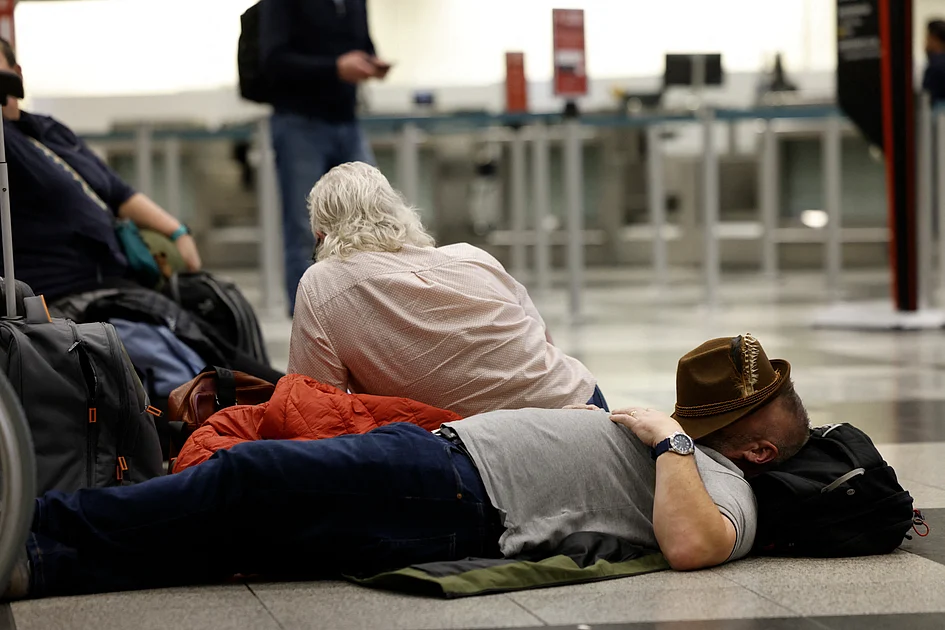
    According to reports from Italian media, the cascading effects of the shutdown were substantial. A total of 26 departing flights were canceled outright. Furthermore, six inbound flights were diverted to alternative airports, while an additional seven flights were officially rescheduled for the following day. With all movement suspended, travelers had no choice but to bed down inside the terminal. Circulated images depicted a scene of widespread inconvenience, with passengers sleeping on floors and even atop airport baggage carousels in an attempt to rest.

    The Corriere della Sera daily reported that the initial flight suspensions began around 6:00 PM local time (1700 GMT) on Saturday. By Sunday morning, the airport’s real-time flight status board displayed a lengthy catalog of disruptions, predominantly affecting Ryanair’s schedule. While some flights, including a delayed service to Cagliari and a Neos airline flight to Sharm-el-Sheikh, managed to depart later in the morning, the backlog of passengers and aircraft indicated that full operational normality would take time to restore.

  • How sports and cultural events are reshaping India’ success story

    How sports and cultural events are reshaping India’ success story

    India’s landscape is undergoing a profound metamorphosis as sports and cultural events emerge as powerful engines of economic growth and national identity. The transformation extends far beyond cricket, though the sport continues to demonstrate staggering commercial dominance. The Board of Control for Cricket in India reported record revenues of Rs97.41 billion in FY 2023–24, with the Indian Premier League contributing approximately Rs57.61 billion while reaching 446 million unique television viewers during its 2024 season.

    The sporting revolution now encompasses multiple disciplines experiencing remarkable growth. Hockey is witnessing a renaissance following Olympic successes, with the revived Hockey India League attracting international talent and capacity crowds in Bhubaneswar and Rourkela. Kabaddi has achieved extraordinary penetration into tier-2 and tier-3 markets through the Pro Kabaddi League, which reaches approximately 200 million viewers annually. Football’s Indian Super League has matured into a premier property with attendance rivaling established Asian leagues, while tennis tournaments like the Chennai Open and Bengaluru Open have reestablished India’s position on the international circuit.

    This expansion is paralleled by an explosive live entertainment sector. Coldplay’s Ahmedabad concerts generated an estimated ₹641 crore economic impact, drawing over 220,000 attendees and significantly boosting local hospitality and service industries. Crucially, this boom extends beyond metropolitan centers, with major events occurring from Kochi to Guwahati.

    Economists highlight the multiplier effect: each major event generates cascading benefits across hotels, transportation, retail, and temporary employment. For India’s youth, these developments represent more than economic opportunity—they signify participation in global spectacles within their own cities, fostering aspiration and belief in national progress.

    Backed by governmental support, India’s ambitions now include hosting the 2030 Commonwealth Games, which would catalyze infrastructure development and tourism reminiscent of the 2010 Delhi Games. The nation is transitioning from event host to strategic shaper of the global sports and entertainment landscape, with industry projections indicating 12–14% CAGR growth potentially reaching $40 billion by 2030.