作者: admin

  • Brazil monitors two patients for possible Ebola infection

    Brazil monitors two patients for possible Ebola infection

    Brazilian health authorities have launched active monitoring protocols for two suspected Ebola cases located in the nation’s two largest urban centers, São Paulo and Rio de Janeiro, as a growing outbreak of the rare virus continues to spread across Central Africa.

    According to officials from São Paulo’s state government, a 37-year-old male traveler from the Democratic Republic of Congo (DR Congo) has developed Ebola-compatible symptoms, most notably a persistent fever. Across the country in Rio de Janeiro, state health officials activated full safety protocols after a Belgian traveler arriving from Uganda presented with common viral Ebola symptoms including cough, body chills, and diarrhea.

    Preliminary diagnostic results for both patients are scheduled to be released next week. If either tests positive for the virus, they will mark the first confirmed Ebola infections detected outside of Africa since the current outbreak began in DR Congo.

    As of this update, the outbreak has already caused severe public health damage across Central Africa: DR Congo has recorded more than 1,000 suspected Ebola cases, with at least 246 confirmed deaths linked to the virus. Neighboring Uganda has confirmed nine cases and one fatality connected to the outbreak.

    This outbreak is driven by the rare Bundibugyo strain of Ebola, a pathogen that currently has no widely approved or proven vaccine. The strain kills roughly one-third of all people it infects.

    While both patients are being monitored for Ebola, existing testing has already identified alternative diagnoses: the DR Congolese traveler in São Paulo tested positive for meningitis and remains in serious condition, while the Belgian traveler in Rio de Janeiro received a positive malaria diagnosis. Brazilian public health officials emphasize that these existing diagnoses do not rule out concurrent Ebola infection.

    Ebola is a zoonotic virus that typically circulates in wild animal populations, most commonly fruit bats. Human outbreaks most often begin when people handle or consume meat from infected animals. Once a human is infected, the virus spreads to other people through direct contact with an infected person’s bodily fluids, including sweat, saliva, blood, semen, feces, urine, and vomit.

    Over the weekend, the international medical charity Médecins Sans Frontières (MSF) issued an urgent warning about the outbreak’s trajectory, saying the virus’s fast spread has created an “alarming situation.” The organization noted that the current outbreak has already seen an unprecedented number of cases recorded just a short time after it was first detected.

    World Health Organization (WHO) Director-General Dr. Tedros Adhanom Ghebreyesus is currently on a visit to Ituri province in DR Congo, the region hardest hit by the outbreak, where he is meeting with response teams and overseeing local containment efforts. Even with the suspected cases now being monitored outside of Africa, the WHO has repeatedly emphasized that large-scale global spread of the virus remains highly unlikely.

  • Dead whale towed ashore in Denmark ahead of autopsy

    Dead whale towed ashore in Denmark ahead of autopsy

    For months, the story of a stranded humpback whale held the attention of communities across Germany and eventually Denmark, turning a routine marine stranding into a widely followed public saga. Now, weeks after the ailing mammal finally died, its decomposing carcass has been successfully pulled onto a Danish beach, paving the way for examination and disposal.

  • Syria says missing chess champion’s six children likely killed under Assad

    Syria says missing chess champion’s six children likely killed under Assad

    More than 12 years after a prominent Syrian dissident and her entire family vanished during a regime raid in Damascus, Syria’s official National Commission for Missing Persons has confirmed that her six children were killed by armed factions loyal to former President Bashar al-Assad shortly after their 2013 abduction.

    Rania al-Abbasi, a dual Syrian and Arab national chess champion and practicing dentist, was a well-known public critic of the Assad government before her detention. In March 2013, forces loyal to the then-ruling Assad regime stormed her Damascus family home, taking Abbasi, her husband Abdul-Rahman Yasin, and their six children — ranging in age from 2 to 10 years old at the time — into custody. The entire family disappeared without a trace in the years that followed, becoming one of the most high-profile symbols of the widespread forced disappearances that marked Assad’s 50-year rule over Syria.

    In an official statement posted to the social platform X on Saturday, Syria’s new interior ministry confirmed that evidence gathered from multiple detained former regime operatives confirms the six children were killed by militias tied to the former Assad government. The ministry added that supporting video evidence and case files provided by the National Commission for Missing Persons have further corroborated these findings, and that search operations to recover the children’s remains are still active. Per official protocol, the surviving extended family was notified of the investigative results before any public announcement to honor their right to information and protect their privacy and dignity.

    Investigators have also named Amjad Youssef, a former Assad regime intelligence officer infamously linked to the 2013 Tadamon massacre in southern Damascus, as a directly implicated perpetrator in the children’s killings. The Tadamon massacre gained global attention in 2022 when leaked footage shot by the perpetrators themselves showed blindfolded, bound civilians — including 15 children and seven women — being led to a mass grave pit and executed one by one. The footage became irrefutable documentary proof of systemic war crimes committed under Assad’s leadership.

    Youssef was captured by current Syrian government forces during a security sweep in the Ghab Plain of rural Hama in April 2025. A recorded confession released by the interior ministry after his capture saw Youssef admit to participating in the killing of roughly 40 detainees, claiming he acted on his own direction. Hassan al-Abbasi, Rania’s brother, told media the family was able to confirm the children’s identities from footage of Youssef’s interrogation, in which the former officer falsely labeled the young children as “major financiers of terrorism”. In an interview with Al Arabiya, Hassan al-Abbasi added that the children were killed the same day they were detained, most by strangulation with plastic cables.

    The fate of Rania al-Abbasi and her husband Abdul-Rahman Yasin remains unconfirmed as of Saturday’s announcement. Human rights organizations say it is likely the couple were also killed shortly after detention, though their remains have yet to be located.

    The al-Abbasi family’s case is far from an isolated tragedy. Between the start of the 2011 Syrian uprising and the collapse of the Assad regime in December 2024, tens of thousands of Syrians were detained or forcibly disappeared by regime forces. Data from the Syrian Network for Human Rights shows that between March 2011 and August 2025, more than 177,000 Syrians were forcibly disappeared, including over 4,500 children and nearly 9,000 women.

  • ‘Cancel it’, Trump says after artists drop out of US Freedom 250 festival

    ‘Cancel it’, Trump says after artists drop out of US Freedom 250 festival

    A planned celebration of the United States’ 250th anniversary of independence has been thrown into disarray after a wave of artist cancellations tied to the event’s affiliation with the Trump administration, prompting former (current) President Donald Trump to call for the entire concert series to be scrapped and replaced with one of his signature political rallies.

    The controversy centers on the Great American State Fair, a 16-day event series scheduled to run from June 25 to July 10 on Washington DC’s National Mall. Organized by Freedom 250, a group launched last year by the Trump administration to mark the historic milestone, the event has become a flashpoint for partisan tension just weeks ahead of its planned launch. When the full lineup of nine featured performers was announced Wednesday, less than a week later only three acts remained confirmed, after four high-profile artists pulled out citing undisclosed political ties they say were hidden from them when they signed on.

    Among the dropouts are country music star Martina McBride, who was set to open the series, 1980s hip-hop icon Young MC, legendary funk group The Commodores, and Poison frontman Bret Michaels, who was scheduled to perform on July 3, the eve of Independence Day. Young MC shared in a social media post that artists were never informed of the event’s political links to the White House, noting he would gladly perform in DC in the future at an event unconnected to partisan politics. McBride echoed that sentiment in a statement on X, writing that she was initially led to believe the event was nonpartisan, a description that ultimately proved misleading.

    Not all performers have pulled out, however. Rapper Vanilla Ice, who is scheduled to perform on June 26, pushed back against claims of partisan polarization around the event, telling his Instagram followers “This is not a political platform. This is celebrating America’s birthday.” Fab Morvan, one half of the duo Milli Vanilli, also confirmed he will keep his June 26 performance slot, though the original vocalists behind the group’s iconic work have confirmed they will not appear. Rapper Flo Rida also remains committed to his July 2 performance.

    The fallout from the mass cancellations came quickly, with Trump announcing in a Truth Social post over the weekend that the event should be called off entirely. Trump slammed the remaining and departing performers as “overpriced” and “boring”, quipping that the artists had gotten “the yips” — a golf term describing sudden, involuntary performance anxiety — ahead of the event.

    Not content to let the planned National Mall dates go unused, Trump said he is actively exploring replacing the concert series with a “Make America Great Again” political rally, to be held at the same location and on the same opening date of June 24. “I am ordering my Representatives to look at the feasibility of doing an AMERICA IS BACK Rally on Wednesday, Washington, DC, same time, same location. Only Great Patriots invited,” he wrote, adding that he is the “Number One Attraction anywhere in the World” and draws far larger crowds than Elvis Presley at the height of his career. He later doubled down on the proposal, arguing that a massive partisan rally would be a far better fit for the anniversary than the struggling concert series.

    Freedom 250, which was created through an executive order signed by Trump last year to deliver what the White House called “a grand celebration worthy of the momentous occasion”, has maintained that the event is nonpartisan. The organization’s CEO is directly appointed by Trump, and the group confirmed just one day before the wave of cancellations that Trump would headline the fair’s opening ceremony, calling him the “visionary behind the Great American State Fair” in a statement from spokeswoman Danielle Alvarez.

    The Trump administration’s parallel anniversary effort is not the only official commemoration of the US semiquincentennial. A decade ago, Congress established an independent, bipartisan organization called America250 to oversee national celebrations. That group, which includes appointees from both the Democratic and Republican parties, is hosting its own events across the country, including large July 4th celebrations in New York City, Philadelphia and California, alongside community block parties in every region of the country.

    In addition to the troubled Great American State Fair, the Trump administration’s Freedom 250 has planned a slate of other high-profile anniversary events, including a UFC fight hosted on the White House South Lawn and a Grand Prix motor race in Washington DC scheduled for August. The administration also confirmed this year that it will issue a limited run of commemorative anniversary passports that feature an official portrait of Trump.

  • Paris Saint-Germain players celebrate amid riot recriminations

    Paris Saint-Germain players celebrate amid riot recriminations

    Paris welcomed Paris Saint-Germain’s football squad with a jubilant hero’s parade on Sunday, as the team marked its second consecutive UEFA Champions League title. The celebration, however, unfolded against a backdrop of bitter political finger-pointing, coming 24 hours after widespread rioting across France left one person dead, hundreds injured, and hundreds more arrested in post-victory unrest.

    The victory was sealed in Budapest on Saturday night, where PSG defeated English Premier League side Arsenal 4-3 in a tense penalty shootout. On their return to the French capital, the squad traveled in an open-top parade from Charles de Gaulle Airport to the Champ de Mars, the sprawling public plaza situated at the foot of the Eiffel Tower. Tens of thousands of flag-waving, chanting supporters lined the route to catch a glimpse of their champions. Before the public parade, the team was received in an official audience by President Emmanuel Macron, and later made a stop at their home ground, Parc des Princes, to greet fans before the main event.

    The night of celebration turned violent, however, as clashes erupted between young rioters and police officers across Paris and multiple other French cities. The unrest left a trail of destruction: cars set ablaze, storefronts looted, and public infrastructure damaged across 15 cities nationwide. A 57-year-old motorcyclist died in a celebratory crash on Paris’ peripheral ring road, while authorities also recorded multiple stabbings and violent assaults. Official injury counts put the total at 57 police officers and 219 rioters or participants hurt, with eight people remaining in critical condition Sunday morning.

    By Sunday morning, municipal crews worked frantically to clear shattered glass, destroyed bus shelters, discarded trash and burned-out vehicles from Paris’ central streets ahead of the planned parade. Interior Minister Laurent Nunez reported that a total of 780 people had been arrested across France by Sunday morning — nearly 30 percent more arrests than followed PSG’s 2024 Champions League win over Inter Milan, which also sparked widespread post-victory disorder.

    President Macron called the outbreak of violence “unspeakable”, but political leaders have clashed sharply over who bears responsibility for the unrest, and how it was handled. Paris Mayor Emmanuel Gregoire pushed back against claims of widespread chaos, noting that the vast majority of supporters celebrated peacefully, and that isolated incidents on the margins of major national celebrations are not a new phenomenon. Speaking to BFM TV, Gregoire argued that excessive media coverage and social media-fueled attention-seeking by troublemakers had amplified the unrest, creating a chain reaction of incitement that escalated tensions. “In the vast majority of cases, people celebrated with family and friends. And it was an extraordinary celebration. And incidents on the fringes of major events have been going on for centuries,” he said.

    The local town hall overseeing the Champs-Élysées — where tens of thousands of fans gathered after the final whistle on Saturday — issued a scathing statement calling for future bans on large post-victory gatherings, claiming the iconic avenue “ceased to be a place of celebration and became an arena of urban guerrilla warfare” overnight.

    Politicians from across the French political spectrum condemned the violence and questioned security planning. Far-right leader Marine Le Pen wrote on social media platform X that “only in France does a football club’s victory spark riots”. Valerie Pecresse, head of the greater Paris regional council from the conservative Republicans party, slammed the “brainless thugs who allow themselves to destroy everything, tarnishing the image of Paris and France”, and demanded “exemplary sanctions” for those arrested. Meanwhile, a spokesperson for the hard-left France Unbowed party criticized the national government’s planning and security management of the event, saying “We cannot be satisfied with the way last night’s event was managed and organised by the government.”

    Despite the recriminations and the previous night’s violence, the official parade went ahead as planned, with Nunez deploying 6,000 police officers across central Paris to maintain order for the tens of thousands of supporters who turned out to celebrate. Fans packed into the Champ de Mars hours before the team arrived, with crowds so large that the squad’s arrival was delayed by more than an hour. When the players finally took to the stage, they paraded along a red, white and blue tricolor carpet as giant screens replayed the decisive penalty shootout that secured their historic back-to-back title.

    For many fans, the joy of victory could not be dampened by the previous night’s chaos. “We’re still riding yesterday’s high, so we want to keep the party going,” said 25-year-old Abou, a PSG fan since childhood, as supporters chanted “Paris, Paris” while filtering through security checkpoints. Mirna Makima, a 39-year-old physiotherapist who traveled from Belgium to attend the celebrations, said: “It was great, there was the stress of the penalty shootout but it was good stress in the end.”

  • Iran says does not trust US as Trump toughens terms

    Iran says does not trust US as Trump toughens terms

    Diplomatic efforts to resolve a months-long conflict between the United States and Iran have hit a new impasse, with Tehran’s top negotiator rejecting Washington’s toughened new peace framework and warning that the US cannot be trusted to honor its commitments.

    The standoff comes after weeks of fraught, on-again off-again negotiations that have unfolded against a backdrop of military strikes, broken temporary ceasefires and escalating regional tensions that have disrupted global energy supplies. The core points of dispute remain Iran’s nuclear program, control over the strategically critical Strait of Hormuz, and the spreading conflict on the Lebanese border between Israel and Iran-backed Hezbollah.

    On Sunday, Iran’s chief negotiator Mohammad Bagher Ghalibaf said in a televised address that Tehran would not sign off on any final deal until the full rights of the Iranian people are formally secured and upheld. His comments came shortly after multiple US outlets, including The New York Times and Axios, reported that former President Donald Trump had sent a revised, harder-line negotiating framework back to Iranian officials for review, leaving key details of the proposal still undisclosed.

    Trump has publicly laid out two non-negotiable priorities for any final agreement: a permanent halt to all Iranian nuclear weapons development and the full reopening of the Strait of Hormuz, a critical global oil shipping chokepoint that Iran blockaded after the outbreak of the war earlier this year. In an interview with his daughter-in-law Lara Trump on Fox News, Trump claimed Iran had already agreed to the zero-nuclear-weapons stipulation, though Tehran has repeatedly pushed back on that assertion. “The one guarantee that I have to have is that there will be no nuclear weapons. They’ve agreed to that, and it was very interesting,” Trump told the program.

    The current diplomatic push grew out of indirect talks that were already underway in February, when the United States and Israel launched a coordinated air and missile campaign that killed most of Iran’s top senior leadership. The US and its Western allies have long suspected Iran’s civilian nuclear program is a front for developing nuclear weapons, a charge Tehran has consistently denied.

    Iran’s core demands remain unchanged: the release of an estimated $12 billion in Iranian assets that have been frozen by international sanctions, a concession Trump has not publicly committed to. Tehran has also dismissed Trump’s claims that Iran has agreed to destroy its stockpile of enriched uranium as completely baseless, according to state-run Iranian media. As of Sunday, Iranian state news agency Tasnim confirmed that negotiations on the draft text are still ongoing, with both sides submitting regular amendments, but no final agreement has been reached, and a total collapse of talks remains on the table.
    “No agreement has yet been finalised, and it is possible that any agreement will be rejected,” the agency reported.

    Military developments have further complicated the diplomatic process. The US stated one of its core war aims was the complete destruction of Iran’s ballistic missile program, with top US General Dan Caine claiming in April that more than 80 percent of Iran’s missile facilities had been destroyed in coalition strikes. But new CNN analysis of satellite imagery released Sunday found that Iran has already repaired and reopened 50 of the 69 tunnel entrances hit at 18 separate underground missile sites, undermining US claims of major progress on the objective.

    While a temporary ceasefire between the US and Iran that took hold in April halted large-scale daily air strikes across Iran and the Persian Gulf, sporadic violence has continued. Iran’s state broadcaster IRIB reported last week that the Iranian Revolutionary Guard Corps shot down an American military drone that was approaching Iranian territorial waters, a claim US officials have not yet confirmed.

    Negotiations over the Strait of Hormuz have also hit a snag. After Trump claimed any final deal would require Iran to charge no tolls or fees for commercial ships passing through the strait, Iranian officials quickly pushed back. State-run Fars News Agency reported no such clause exists in the current draft, and Iranian parliamentary news agency ISNA reported Saturday that a new bill formalizing Iranian sovereignty over the strait, including the right to charge administrative fees for shipping, is set to be introduced to parliament imminently.

    The conflict has also spilled over into Lebanon, where Israeli forces have escalated their offensive against Iran-backed Hezbollah in recent days. Tehran has insisted that any final peace deal with the US must include a resolution to the Lebanese front, where a fragile truce that went into effect April 17 has been violated repeatedly by both sides. Over the weekend, Israeli forces captured the strategic Beaufort Castle, a medieval fortress that served as an Israeli military base during the country’s 22-year occupation of southern Lebanon. AFP photographers captured footage of an Israeli military flag raised above the castle, with heavy smoke billowing from the surrounding area.

    Israeli Prime Minister Benjamin Netanyahu called the capture of the castle a major turning point in Israel’s campaign against Hezbollah. “The capture of Beaufort is a dramatic stage and a dramatic shift in the policy we are leading,” Netanyahu said. But Hezbollah lawmaker Hassan Fadlallah pushed back on the Israeli narrative, noting that the castle was not used as a military outpost by the group, and calling the flag raising a deliberate provocation. “The raising of the Israeli flag there should provoke the feelings of every loyal patriot,” Fadlallah said.

    Lebanese officials have accused Israel of carrying out a scorched-earth policy as it expands its ground offensive, and have called for an immediate permanent ceasefire. The United Nations Security Council has scheduled an emergency meeting for Monday to address the escalating violence, diplomatic sources confirmed to AFP.

  • Flight 1978 and Messi’s No 10: Argentina’s arrival in US doubles as tribute to its World Cup success

    Flight 1978 and Messi’s No 10: Argentina’s arrival in US doubles as tribute to its World Cup success

    Reigning men’s World Cup champions Argentina have landed in Kansas City, Missouri, kicking off their United States-based preparation for the 2026 tournament, where they will launch their title defense against Algeria in an opening match at Arrowhead Stadium — the iconic home of the NFL’s Kansas City Chiefs. The opening clash is scheduled for June 16.

    The Argentine national squad’s 11-hour transcontinental journey, covering more than 5,500 miles from Buenos Aires’ Ezeiza International Airport, concluded just after 11 a.m. local time on Sunday. In a subtle, meaningful nod to the nation’s first World Cup triumph, the charter flight operated by Aerolineas Argentinas carried the flight number 1978 — the year Argentina claimed their first World Cup title as host nation, defeating the Netherlands in front of more than 71,000 passionate fans at Buenos Aires’ River Plate Stadium.

    Even the aircraft itself was customized to honor the 2026 squad: the Airbus A330 features special tournament-themed livery, with Lionel Messi’s legendary No. 10 emblazoned on the tail fin between the national team’s iconic sky blue and white stripes. Three gold stars marking Argentina’s three historic World Cup titles (1978, 1986, 2022) are also prominently displayed on the plane’s exterior.

    Argentina marks the first of four World Cup-bound national teams that will set up pre-tournament training bases in the Kansas City metro area. The Netherlands, England and Algeria — which will base its operations at the University of Kansas in nearby Lawrence — are scheduled to arrive in the region later this week.

    Nearly the entire 26-man Argentine roster traveled on the official charter, though a small number of players are joining the squad directly from their club commitments across Europe and other global leagues. After disembarking, players and coaching staff walked across the tarmac to waiting private charter buses that transported them to their team hotel, the Origin Hotel located near downtown Kansas City.

    Local organizers have put enhanced security measures in place to protect the squad, with temporary fencing erected around the hotel property and additional security personnel deployed. The recently built venue has also been fully decked out to welcome La Albiceleste, with custom signage, branded posters and larger-than-life murals of the team’s star players decorating both the interior and exterior of the building.

    Following their arrival, the team conducted low-intensity recovery training in the hotel gym on Sunday as they wait for the remaining players to join the camp. The first full-field team training session is scheduled for Monday at the Compass Minerals National Performance Center, the state-of-the-art training facility that serves as the home base of Major League Soccer’s Sporting Kansas City.

    Before heading to their opening World Cup match in Kansas City, Argentina will play two warm-up friendlies in the southern United States. The first tune-up clash is scheduled for this Saturday at Kyle Field in College Station, Texas, the home of Texas A&M University’s SEC football program, against Honduras. Three days later, the squad will face Iceland at Jordan-Hare Stadium, the home of Auburn University’s SEC football team in Alabama, for their final pre-tournament friendly.

    Argentina head coach Lionel Scaloni officially confirmed his 26-man 2026 World Cup roster last Thursday, headlined by 38-year-old Lionel Messi — who will turn 39 ahead of the tournament opening — who is set to make his sixth World Cup appearance, having competed in every tournament dating back to the 2006 edition in Germany. 17 members of the 2026 roster were part of the 2022 Qatar World Cup-winning squad that defeated France in one of the most dramatic final matches in tournament history.

    Ahead of FIFA’s June 1 deadline to finalize official tournament rosters, several Argentine players were considered injury doubts due to issues of varying severity. Most notably, Messi has been managing muscle fatigue and a mild strain in his left hamstring, with the team’s medical staff confirming that his recovery timeline will be adjusted based on his ongoing clinical and functional progress as he prepares to lead the team’s title defense.

  • Israel seizes strategic castle as it expands invasion of south Lebanon

    Israel seizes strategic castle as it expands invasion of south Lebanon

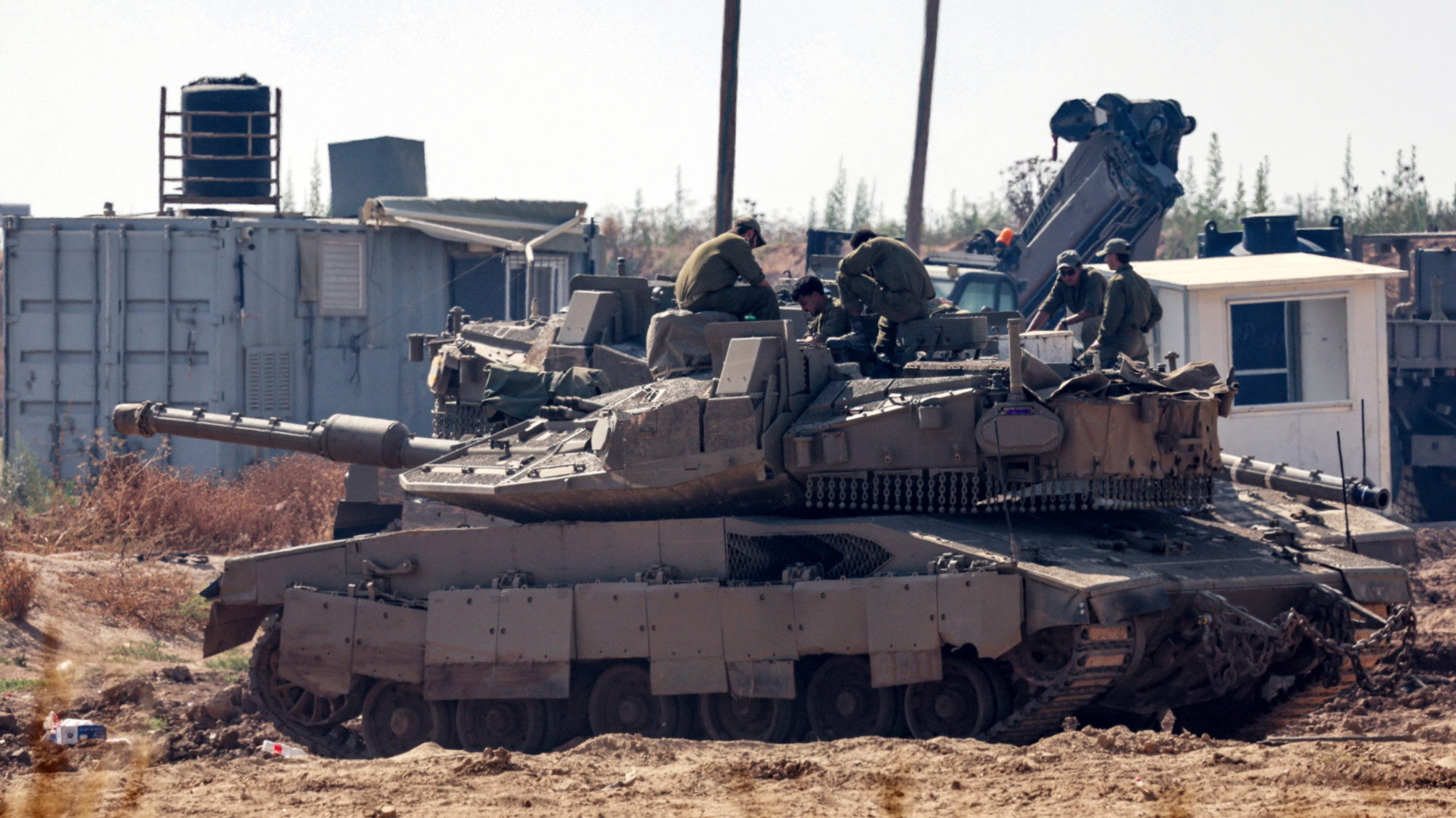
    In a significant escalation of its ground campaign in southern Lebanon that defies an existing nominal ceasefire, the Israeli military announced Sunday it has seized control of the 900-year-old Beaufort Castle and the strategic high ground surrounding the historic site. The takeover pushes Israeli military presence deeper into Lebanese territory, extending well beyond the “Yellow Line” demarcation zone established under a ceasefire agreement in April.

    The capture of the castle, which bears the Arabic name Qalaat al-Shaqif, comes after days of brutal close-quarters combat and heavy Israeli airstrikes on nearby villages, where infantry forces have battled Hezbollah militants across the region’s rugged terrain. Sitting just five kilometers from Nabatieh, southern Lebanon’s major population center, the medieval fortress occupies a critical vantage point that overlooks vast swathes of both southern Lebanon and northern Israel. This is not the first time Israeli forces have held the site: troops first captured Beaufort Castle during the 1982 invasion of Lebanon, retaining control until Israel’s full withdrawal from the country in 2000.

    Israeli Defence Minister Israel Katz confirmed he had explicitly ordered the military to widen the scope of its operations in Lebanon, cross the Litani River — which had previously served as a de facto boundary for Israeli forces — and seize control of the Beaufort Ridge. Following the castle’s capture, Katz announced Israeli troops would remain positioned at the site as part of a newly expanded Israeli “security zone” inside Lebanese territory.

    The latest territorial advance coincided with a new mass evacuation order issued by the Israeli military covering areas between the Zahrani River to the south and the Litani River to the north, a stretch of land extending roughly 40 kilometers from the Israel-Lebanon border. In a social media statement, Israeli military spokesperson Avichay Adraee warned: “Anyone present near Hezbollah elements, facilities, or combat means endangers their life. Any building used by Hezbollah for military purposes may become subject to targeting.” The Israeli military added in an official briefing: “A significant number of ground soldiers commenced offensive operations aimed at expanding the Forward Defense Line… The operation is currently expanding to additional areas.”

    Casualties continue to mount on both sides amid the escalating fighting. Lebanon’s health ministry reported Saturday’s Israeli strikes killed at least 16 people and injured 34 more, bringing the total death toll in Lebanon since the outbreak of hostilities in early March to 3,371, with an additional 10,129 people wounded. On the Lebanese side, Hezbollah continued to resist the advance Saturday, launching a series of attacks against targets in northern Israel and engaging Israeli troops in southern Lebanon. The militant group confirmed it was confronting Israeli forces on the outskirts of the towns Zawtar al-Sharqiyah, Yohmor al-Shaqif and Dibbine, noting Israeli troops “had not yet succeeded in taking control of the towns.”

    The Israeli military documented more than 25 projectiles fired from Lebanese territory into Israel on Saturday. Israel’s Home Front Command confirmed air raid sirens activated in the northern Israeli cities of Karmiel and Safad, marking the first time alerts have sounded in those urban centers since the April ceasefire took effect. On Sunday, the Israeli military also announced one of its soldiers had been killed a day earlier in a Hezbollah explosive drone attack, pushing the total number of Israeli troops killed in Lebanon operations since early March to 25. Hardline Israeli Finance Minister Bezalel Smotrich doubled down on calls for escalated retaliation this week, demanding Israel “destroy one hundred buildings” in Lebanon for every drone strike that kills an Israeli soldier. A recent report from Israeli public broadcaster Kan found Hezbollah’s advanced drone capabilities are currently limiting 80 percent of Israeli ground assaults across southern Lebanon.

    Diplomatic efforts to de-escalate the conflict remain ongoing. Military delegations from both Israel and Lebanon held US-brokered security talks in Washington on Friday, with a new round of negotiations scheduled for next week. Lebanese Prime Minister Nawaf Salam acknowledged the outcome of the diplomatic process remains uncertain, but framed negotiations as the best available path forward. “It is not guaranteed, but it is the least costly path for our country and our people,” Salam said.

  • Blast kills dozens in rebel-held village in Myanmar

    Blast kills dozens in rebel-held village in Myanmar

    A devastating accidental explosion has left at least 55 people dead and dozens injured in a small village in insurgent-controlled northern Myanmar, local sources have confirmed to the BBC. The blast struck Kaung Tat village, located in Namkham Township of Shan State just a short distance from the border with China. Among the confirmed fatalities are 25 women and 30 men, including multiple children, though some independent reports cite small variations in casualty counts.

    The area where the explosion occurred is currently administered by the Ta’ang National Liberation Army (TNLA), an ethnic insurgent group that has been locked in prolonged, intense armed conflict with Myanmar’s ruling military junta. According to a TNLA statement, the explosion originated from stockpiled explosives stored and used for local mining and quarrying operations.

    In the wake of the blast, emergency rescue teams have been working around the clock to pull survivors from collapsed building rubble and locate missing people. Local residents described chaotic, apocalyptic scenes after the blast tore through a large residential neighborhood. Many in the village initially feared the explosion was the result of an airstrike by the ruling junta, a common threat in conflict zones across Myanmar.

    One injured resident, who shared her account on social media, escaped death by chance. She explained she had been eating noodles in her bedroom while checking her phone when the explosion hit; had she been dining in her kitchen, she would almost certainly have been killed. The woman only sustained a minor leg injury, but her home was completely destroyed in the blast.

    “People were crying, calling out for their parents,” she wrote of the immediate aftermath. “It felt as if the world had come to an end.”

    The explosion damaged hundreds of residential structures, leaving nearly an entire neighborhood uninhabitable. The survivor has raised questions about why the explosive storage facility was permitted to operate so close to a populated residential area. She said families of the victims will not accept anything less than a full, transparent explanation from local authorities for the deadly incident.

  • Zidane and Mahrez in Algeria World Cup squad

    Zidane and Mahrez in Algeria World Cup squad

    As the 2026 FIFA World Cup approaches, Algeria has officially announced its 26-man squad for the tournament, bringing a major story of legacy and comeback to the global football stage. The most high-profile inclusion is 28-year-old goalkeeper Luca Zidane, son of French football icon Zinedine Zidane, who earns his first ever World Cup call-up after recovering from a serious facial injury.

    Luca Zidane’s journey to Algeria’s World Cup squad has been defined by choice and resilience. A former youth prospect for France who represented Les Bleus up to the under-20 level, he made the decision to switch allegiances to Algeria, the country where his paternal grandparents were born. He was the Desert Foxes’ starting goalkeeper at the 2025 Africa Cup of Nations, but his season was derailed in April when he suffered broken jaw and chin injuries while playing for Spanish La Liga side Granada. He has since recovered to reclaim his place in the national side, having previously made two senior appearances for Real Madrid before moving to Granada.

    Alongside the younger Zidane, 35-year-old veteran forward Riyad Mahrez, the former Manchester City and Leicester City star who currently plies his trade at Saudi Arabian club Al-Ahli, has also been selected for the squad, bringing decades of top-flight experience to Algeria’s attacking line.

    Coach Vladimir Petkovic’s squad also features a number of notable returnees and injury comebacks. Midfielder Nabil Bentaleb, 31, who currently plays for French Ligue 1 side Lille, has earned a recall to the national side seven months after being left out of the squad. Petkovic defended the selection, noting that “We know Bentaleb well; he has all the qualities as a person for the group too. He has shown he’s in form these last few months.” Bentaleb already has World Cup experience, having featured for Algeria at the 2014 tournament in Brazil, the North African nation’s most recent appearance at the World Cup finals.

    Two other key players, midfielder Houssem Aouar and forward Amine Gouiri, have also earned spots after missing the 2025 Africa Cup of Nations finals in Morocco earlier this year due to injury. Aouar now plays for Saudi side Al-Ittihad, while Gouir is at French side Olympique de Marseille.

    Luca Zidane’s famous father Zinedine Zidane remains one of the most iconic figures in World Cup history. The legendary French midfielder won the 1998 World Cup on home soil, scoring two goals in the final against Brazil, and reached a second final in 2006, where he scored but was sent off in France’s defeat to Italy.

    Algeria is set to compete in Group J of the 2026 World Cup, where it will face defending champions Argentina, European side Austria, and Asian representative Jordan. The full squad announced by Petkovic includes three goalkeepers, nine defenders, seven midfielders, and seven forwards, with a mix of youth talent from top European clubs and experienced domestic-based players.