In a landmark announcement made at its annual GTC conference in Taipei on Monday, industry-leading chipmaker Nvidia introduced a game-changing new line of high-performance chips designed to bring cutting-edge artificial intelligence capabilities directly to consumer laptops and desktops. New AI-powered PC models from major global brands including Microsoft and Dell are scheduled to hit the market by the end of 2024.
Already the world’s most valuable publicly traded company — surpassing tech giants Apple, Alphabet and Microsoft — Nvidia has built its massive recent success on meeting exploding global demand for high-end data center chips that power large-scale AI infrastructure. With this new launch, the firm is pursuing an aggressive expansion strategy to embed its AI technology across the entire spectrum of consumer AI systems and products.
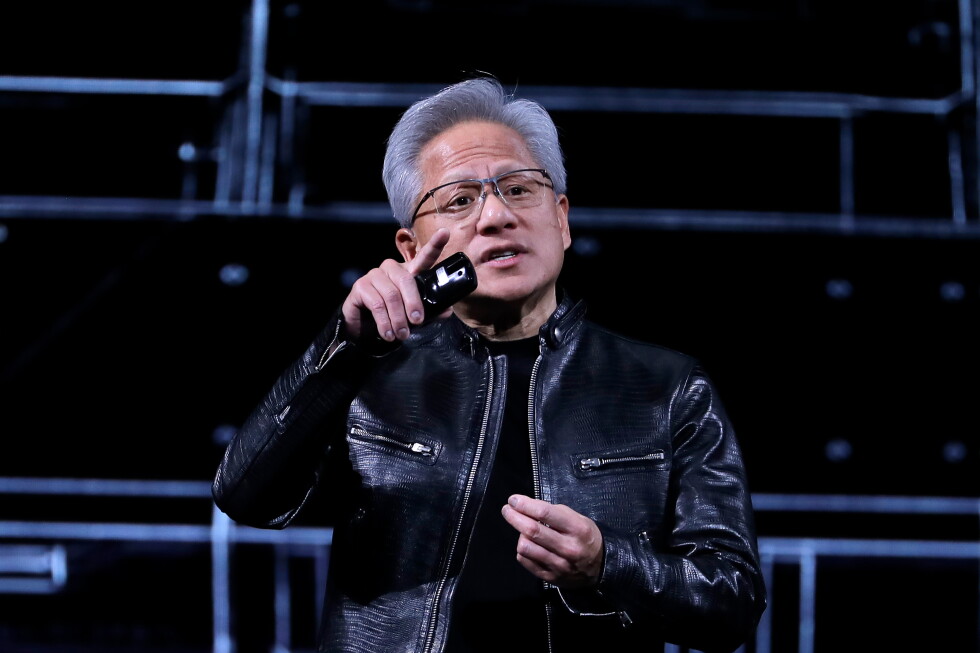
Jensen Huang, Nvidia’s Taiwanese-American founder and chief executive officer, used his keynote address to frame the launch as a fundamental reset for the personal computing industry. “Microsoft and Nvidia are going to reinvent the PC,” Huang told the audience, calling the new generation of devices “the new PC.”
At the core of the new offering is the Nvidia RTX Spark superchip, an integrated processor that combines the core computing power of a central processing unit (CPU) with the parallel processing strength of a graphics processing unit (GPU). This combined chip will power a new category of devices the company has branded “AI personal computers,” which are set to debut commercially this fall in the form of new Windows laptops and desktops. Huang emphasized that the new chips will transform PC use cases for both creative work and gaming, enabling on-device AI assistants that can interact with users via voice and vision, read large files, conduct independent research, and handle a wide range of complex personalized tasks. A key innovation of the new platform is that AI agents can run fully locally on consumer devices, eliminating the need for constant cloud connectivity to access advanced AI functions.
In a separate statement, Microsoft confirmed that the new Nvidia-powered devices will support fully functional large AI models and handle high-demand workloads that previously required cloud-based processing.
Huang called the launch the first complete overhaul of personal computing architecture in four decades, a shift that analysts say carries profound implications for the global tech industry. Lian Jye Su, chief analyst at technology research firm Omdia, noted that Nvidia’s expansion into consumer AI PCs comes as global consumer demand for personal on-device AI agents grows rapidly. “For consumers, it means more choices, which is always a good thing,” Su explained.
Neil Shah, co-founder of Counterpoint Research, described the announcement as a transformative shift that will redefine the PC over the coming decade. “This new generation of laptops and desktops will drive agentic AI applications in every home,” Shah said, adding that the initiative aims to put an AI supercomputer in every household.
The launch immediately rippled through global financial markets: in early U.S. trading, Nvidia’s share price rose nearly 4%, while its primary manufacturing rivals Intel and AMD both saw share prices drop more than 3%, reflecting investor expectations of increased competition in the consumer chip market.
In addition to the RTX Spark superchip, Huang shared several other major updates during his keynote. He confirmed that the company’s new Vera CPUs, designed for AI data centers, are already in full mass production, and positioned the new chips as the firm’s next major core growth driver amid the booming demand for AI agent infrastructure. Early customers for the Vera CPUs already include leading AI research firms Anthropic and OpenAI, as well as SpaceX’s AI division SpaceXAI.
Huang also revealed a new open-source humanoid robot reference design called Isaac GR00T, created to serve as a foundational blueprint for future humanoid robot research, particularly for academic and higher education institutions. Standing close to six feet tall, the GR00T chassis is built around Chinese robotics firm Unitree’s H2 humanoid platform, and is fitted with dexterous five-fingered hands developed by Singapore-based robotics startup Sharpa, which are capable of precise, fine motor control movements.