作者: admin

  • New Jersey alleges ‘unsanitary’ conditions in migrant facility rocked by protests

    New Jersey alleges ‘unsanitary’ conditions in migrant facility rocked by protests

    A growing public and legal conflict over alleged inhumane conditions at the Delaney Hall immigration detention center in Newark, New Jersey, has thrown the facility into the national spotlight, sparking violent street clashes, an overnight curfew, and dueling legal actions between state and local officials and federal authorities. The facility, operated by private prison contractor GEO Group under a multi-billion dollar federal contract, is at the center of a lawsuit filed by the state of New Jersey, which accuses the company of blocking full access for state public health inspectors probing claims of unsanitary conditions and risky infection control.

    According to the state’s legal filing, inspectors were turned away from the facility on May 27, with GEO Group citing a high volume of congressional visitor tours. When access was granted the following day, state officials claim entry was severely restricted, and inspectors were specifically barred from entering the center’s on-site medical unit. The lawsuit outlines multiple serious allegations, including improper food and drink preparation and storage that creates unsanitary conditions for detainees, as well as reports of inadequate protocols to control the spread of tuberculosis, a contagious respiratory infection that poses major risks in crowded closed facilities.

    In a public statement supporting the legal action, New Jersey Democratic Governor Mikie Sherrill pushed back against claims from GEO Group and federal officials that conditions at the center are safe and sanitary. “If the GEO Group – with a $1 billion government contract – has nothing to hide, then there is no legitimate reason why my health inspectors are being kept from full access throughout the building,” Sherrill said.

    Federal officials have rejected the state’s claims outright, labeling the lawsuit “frivolous” and asserting that full transparency has already been provided. The U.S. Department of Homeland Security (DHS) confirmed that four New Jersey health department representatives were allowed to enter the facility on May 28 to inspect the food service department, adding that U.S. Immigration and Customs Enforcement (ICE) remains committed to following all state and local laws. GEO Group has not issued any public response to the lawsuit as of press time.

    The legal fight comes after weeks of growing unrest tied to conditions at Delaney Hall. Immigration advocacy groups claim that detainees launched a hunger strike at the facility starting May 22 to protest poor treatment. DHS has disputed the existence of a coordinated hunger strike, with DHS Secretary Markwayne Mullin addressing the claims during a recent cabinet meeting with President Donald Trump. Mullin downplayed the protest, saying only a small number of detainees refused meals to demand culturally specific food, adding, “This isn’t Holiday Inn.”

    Tensions boiled over outside the facility over the past week, with repeated protests against the Trump administration’s hardline immigration policies that at times turned violent. On May 30, clashes broke out between demonstrators and law enforcement outside the center. New Jersey Democratic Senator Andy Kim confirmed he was hit with pepper spray during a protest he attended during a visit to the facility on May 25. Governor Sherrill has publicly condemned violence from both sides, specifically rebuking “masked individuals” for aggressive and dangerous actions against local police officers.

    In response to the ongoing unrest, the city of Newark implemented an overnight curfew in the area surrounding Delaney Hall. On the first night of the curfew, protesters held a rally in a designated zone before the curfew went into effect, and law enforcement peacefully escorted demonstrators out of the area with no arrests reported.

    Newark’s Democratic Mayor Ras Baraka, who was arrested last year on trespassing charges after attempting to force entry into the facility to inspect conditions, is now pushing for permanent closure of Delaney Hall. Baraka announced Tuesday that the city is developing its own legal strategy to shut down the center, telling reporters, “This is a dispute about human lives, about people and the way they are being treated.” He added that the city will maintain a consistent police presence around the facility to maintain public order.

    Delaney Hall is not the only immigration detention facility to face widespread public backlash in recent weeks. The unrest in Newark follows similar mass protests at the Dilley Detention Center in Texas and at the 26 Federal Plaza court building in New York City, as debates over immigration policy and detention conditions continue to roil national politics ahead of upcoming elections.

  • Fear shadows Peru’s runoff vote as extortion and killings surge nationwide

    Fear shadows Peru’s runoff vote as extortion and killings surge nationwide

    On the sun-baked desert stretches of northwestern Peru’s Pacific coast, Gladys Saavedra greets unfamiliar faces at her small Trujillo market stall with quiet wariness. Saavedra is one of dozens of female vendors who, even with meager daily sales, are forced to pool $300 every month to pay off criminal extortionists. Refusal comes with a devastating price: when the group stood their ground against demands last June, their entire market was burned to the ground.

    Days after the attack, the women marched through city streets demanding state protection. For Saavedra, however, the lack of meaningful action from authorities came as no surprise. Already in August 2024, her own home had been targeted with explosives in a separate extortion attempt, and police failed to hold anyone accountable. This pervasive climate of gang violence is the defining issue hanging over Peru’s presidential runoff election, scheduled for Sunday, with many voters planning to travel to polling stations gripped by fear of falling victim to attack along the way. “You can’t even stick your head out for fear of being shot,” the 49-year-old vendor said.

    The root of Peru’s worsening public safety crisis traces directly to the multi-billion-dollar illegal gold mining industry that has fueled the rapid expansion of organized crime across the country. While extortion first emerged in Trujillo more than two decades ago, official data shows the crime has exploded nationwide over the past five years: reported extortion claims have risen fivefold to hit 28,948 in 2025, while national homicides have doubled to 2,226 over the same period.

    Police and security analysts explain that Trujillo-based gangs first built their power base by offering armed protection to illegal gold mining operations in nearby rural areas. The massive profits from this racket allowed them to expand into the city, hiring professional hitmen, acquiring military-grade weapons, and cementing control over urban extortion rings. Official estimates peg annual revenue from illegal mining at roughly $7 billion — nearly six times the $1.2 billion Peru’s criminal networks earn annually from drug trafficking. In 2025, the country exported 100 tons of illegally mined gold, almost matching the 109 tons of legally extracted gold shipped to global markets.

    Early targets of extortion were public transportation operators, with drivers executed en masse when they refused to pay up. Last year alone, the independent Observatory of Crime and Violence recorded at least 239 transportation worker killings nationwide, more than half of which were motorcycle taxi drivers — a common form of transit in underdeveloped outer-city neighborhoods with unpaved roads. The murders of bus drivers have sparked widespread citywide transportation strikes and mass protests against government inaction.

    Today, no sector of the local economy is spared from criminal extortion. In one Trujillo neighborhood that produces a quarter of Peru’s domestic footwear, union leader Máximo Varas estimates that roughly 1,500 small shoemaking business owners pay regular protection money to operate. “Everyone pays — even I get extorted. No one is safe,” Varas said. Across the city, marked stickers featuring symbols like a puma, a cross, or the Batman logo are plastered on the facades of buses, restaurants, corner stores, nightclubs, and even schools. Law enforcement has confirmed these stickers serve as public signals that a business has paid its required fee, and police regularly conduct removal operations to replace criminal markers with official law enforcement decals.

    For 58-year-old local businessman Iván Díaz, the escalation of violence in Trujillo has been nothing short of exponential. In 2023, he was kidnapped from his office by attackers posing as police officers, who held him captive for 11 days. To force his family to pay a $250,000 ransom, the kidnappers cut off portions of two fingers on his right hand and sent torture videos to his relatives to pressure for quick payment. “I had to adapt to reality and keep a cool head,” Díaz recalled. In May, four members of the notorious Los Pulpos gang — a criminal network that formed in Trujillo in the 1990s and later expanded into neighboring Chile — were sentenced to life imprisonment for their roles in the kidnapping.

    The economic toll of endemic crime on Peru is staggering: the Ministry of Economy estimated in July that criminal activity costs the country roughly $5 billion annually, a sum that includes both public spending on police operations and private costs for businesses and families that invest in surveillance cameras and private security guards. While wealthy municipalities in the capital, such as San Borja where both presidential candidates — conservative Keiko Fujimori and progressive Roberto Sánchez — reside, benefit from heavy uniformed police presence and additional private security patrols, working-class outlying neighborhoods across the country lack basic infrastructure like paved roads, potable water, and electricity — and above all, consistent police presence.

    Security experts agree that turning the tide against organized crime requires two major overhauls: a widespread anti-corruption purge of Peru’s 130,000-strong national police force, and a massive injection of funding for criminal investigations. One active organized crime investigator, who spoke to the Associated Press on condition of anonymity due to restrictions on speaking to media, confirmed that outdated technology leaves police unable to track mobile accounts linked to the digital wallets criminals use to collect extortion payments.

    Harvey Colchado, a congressman-elect and retired police officer, explained that budget cuts have gutted investigative capacity: five years ago, each of the country’s 70 police investigative units received a monthly budget of $29,000, but today the units have no allocated funding at all, as the state redirected resources elsewhere. Compounding this underfunding, Colchado said, are recent laws passed with bipartisan support from both Fujimori’s and Sánchez’s political parties that have made it far harder to prosecute and penalize organized crime members. The reforms eliminated preliminary detention for certain offenses and raised the legal threshold for seizing criminal assets and conducting search warrants.

    For Saavedra and the thousands of Peruvians living under daily criminal control, this systemic failure has left communities completely unprotected. “This is a cancer,” she said. “(Police) don’t have the resources to trace the calls, to know where the messages are coming from. That’s the only way to stop it.”

  • Oxford Union president vows to platform Hasan Piker and Cenk Uygur in defiance of UK ban

    Oxford Union president vows to platform Hasan Piker and Cenk Uygur in defiance of UK ban

    For nearly 200 years, the Oxford Union has stood as one of the world’s most iconic platforms for provocative and unfiltered debate, with former British Prime Minister Harold Macmillan once hailing it as “the last bastion of free speech in the western world.” Today, that famous line is emblazoned outside the society’s campus bar, a constant reminder of the core principle the institution was built to defend – and this term, its president Arwa Elrayess is putting that principle to the test in a high-profile standoff with the British government.

    Elrayess, a Palestinian student, has issued a firm vow to push forward with a planned speaking event featuring American political commentators Cenk Uygur and Hasan Piker, after UK authorities barred the two men from entering the country. Originally scheduled to appear in person at the union and at London’s SXSW festival, the pair will now address Oxford students via livestream on Saturday 6 June, with the society refusing to scrap the event entirely.

    The clash began when UK Home Secretary Shabana Mahmood revoked Uygur’s electronic travel authorisation, ruling that his presence in the United Kingdom would not be “conducive to the public good.” Uygur, for his part, says the ban stems from his public criticism of Israel. In a post on X, he explained that the UK government labeled his widely shared claim that Israel influences the U.S. Congress via campaign donations as antisemitic, even as it acknowledged his statement was factually grounded. “Don’t know if facts will soon be banned in Britain,” he wrote. “I didn’t get banned for criticizing the UK, but for criticizing Israel. They broke the irony record by saying it was because I said Israel might control other governments. I wonder if they’re going to ban themselves.”

    Piker, who spoke at the Oxford Union last year, noted his 2024 address focused on “the dangers of conflating Judaism and Zionism & how this foments antisemitism.”

    In an exclusive interview with Middle East Eye published Monday, Elrayess issued a sharp rebuke of the government’s decision, doubling down on the union’s commitment to holding the event. “The Oxford Union was founded on one principle: that ideas are challenged through debate, not silenced by decree,” she said. “We have never turned a speaker away because of their political beliefs nor have we sought a permission slip from the state. We will not start now.” Reaffirming that the event would not be canceled, she added, “Free speech does not require a visa.”

    Elrayess, who has personal experience with the censorship of pro-Palestinian speech, framed the standoff as a defense of the institution’s 201-year legacy. Founded in 1823 by students rebelling against official campus censorship, the Oxford Union has a long history of defending controversial speech that draws political backlash. In 1933, the union passed an anti-war motion that earned a blistering condemnation from Winston Churchill, who called the body “abject, squalid, shameless” and “nauseating.” In 1964, civil rights leader Malcolm X delivered a legendary address defending the principle that “extremism in the defence of liberty is no vice; moderation in the pursuit of justice is no virtue.” More recently, the union made headlines when O.J. Simpson spoke just after his acquittal on murder charges, and the UK government blocked broadcasts of a speech by Sinn Fein politician Gerry Adams. Just this year, the society drew widespread condemnation from right-wing British media after its members voted overwhelmingly to declare Israel “an apartheid state responsible for genocide.” It also faced criticism earlier this year for extending an invitation to far-right activist Tommy Robinson for an Islam-related debate, a decision that tested the society’s commitment to hearing opposing views.

    The government’s entry ban has already drawn sharp criticism from across the British political left. Green Party leader Zack Polanski has accused the new Labour government of “doing everything possible to silence criticism of the Israeli government.” Former Labour leader Jeremy Corbyn echoed that criticism, denouncing the ban as “an attack on the freedom to criticise Israel, as well as the UK government’s own complicity in genocide.”

    For Elrayess and the Oxford Union, the livestream event this weekend will be a tangible demonstration of whether Macmillan’s decades-old description of the society as a bastion of free speech still holds true today.

  • Mysteriously missing New Jersey congressman receives Trump endorsement

    Mysteriously missing New Jersey congressman receives Trump endorsement

    For nearly four months, Republican U.S. Representative Tom Kean Jr. has not been spotted publicly in either Washington D.C. or his home district in New Jersey. Despite this unprecedented public absence that has sparked national curiosity across the United States, political analysts and party insiders widely expect him to secure the Republican Party’s nomination for re-election in Tuesday’s primary contest, boosted by a full endorsement from former President Donald Trump.

    In a social media post shared to his Truth Social platform on Monday, Trump threw his full weight behind Kean’s re-election bid. “Tom Kean has my Complete and Total Endorsement for Re-Election,” the former president wrote, adding, “HE WILL NEVER LET YOU DOWN!” Trump framed Kean as a committed champion of his right-wing America First policy agenda, falsely claiming the congressman is “working tirelessly” for his constituents even as Kean has not cast a congressional vote in months.

    Kean is running unopposed in the Republican primary, meaning he has faced no pressure to hit the campaign trail or engage with voters to lock in the nomination. But public records confirm that he has missed more than 100 roll call votes on Capitol Hill since he was last seen publicly on March 5. Shortly after his final recorded vote in early March, congressional colleagues, state Republican Party officials, and national news outlets began raising questions about his whereabouts. Attempts to reach Kean via text message have gone unanswered, and formal requests for interviews with the congressman have also been ignored. One senior aide told The New York Times in a cryptic comment: “There’s no cameras where Tom is.”

    In April, Kean’s office released a public statement acknowledging that the congressman was recovering from an unspecified medical issue. In the statement posted to the social platform X, Kean said his medical team had confirmed his recovery would be full, and that he expected to return to his congressional duties imminently. “My doctors continue to assure me that my recovery will be complete and that I will be back to the job I love very soon,” Kean said, adding “I expect to return to a full schedule and be at 100 percent.”

    Nearly one month after that initial update, Kean participated in a remote telephone interview with the New Jersey Globe, a state-focused political news outlet. During that conversation, he reaffirmed that he planned to see his re-election bid through and return to public life once his recovery was complete. “I understand the need for public transparency, and I appreciate the support of my constituents,” he said, telling the outlet he anticipated returning to congressional voting and in-person campaign events “in the next couple of weeks.” That timeline passed weeks ago, however, and as primary voters began casting ballots across his district on Tuesday, there were still no confirmed public sightings of Kean. The BBC has reached out to Kean’s congressional office for an updated comment on his status and whereabouts, but has not yet received a response.

    Kean’s district is widely classified as a competitive swing seat, meaning it regularly alternates control between Republican and Democratic candidates following election cycles. The race for this district is considered a top priority for both national parties ahead of November’s general election: Republicans are desperate to hold the seat to maintain their narrow majority in the U.S. House of Representatives, while Democrats have targeted it as a key pickup opportunity that could help them flip control of the chamber – and hand a high-profile defeat to Trump, who has staked political capital on supporting Kean.

    Political observers note Trump’s decision to endorse Kean despite the ongoing mystery around his absence is entirely in line with the former president’s past endorsement strategy. Trump has regularly endorsed candidates facing controversy or questions about their conduct, prioritizing partisan loyalty over public accountability. If Kean secures the expected primary win on Tuesday, he will go on to face the Democratic Party’s general election nominee in November, in what is guaranteed to be one of the most closely watched House races of the 2026 cycle.

  • ‘Everybody hates you’: Trump yells at Netanyahu over Lebanon escalation

    ‘Everybody hates you’: Trump yells at Netanyahu over Lebanon escalation

    A sharp diplomatic rift between former U.S. President Donald Trump and Israeli Prime Minister Benjamin Netanyahu has been exposed by multiple U.S. officials, who have detailed a profanity-filled phone call where Trump lashed out at Netanyahu over Israel’s planned new offensive on Beirut, Lebanon. The confrontation came on the heels of Iran’s decision to pause ongoing indirect peace talks mediated by international actors, a move Tehran made directly in response to Netanyahu’s public announcement of plans to renew strikes on the southern Beirut suburb of Dahieh, a stronghold of the Lebanese militant group Hezbollah.

    Citing two anonymous senior U.S. administration officials, news outlet Axios first reported that Trump unleashed a torrent of harsh criticism against Netanyahu during the conversation, steamrolling the Israeli leader and warning that any further military escalation in Lebanon would push Israel into complete international isolation. According to the officials’ accounts, Trump went so far as to call Netanyahu “fucking crazy” and bluntly stated that “everybody hates Israel” over the planned offensive. He repeatedly emphasized that his interventions were shielding Israel from global backlash, telling Netanyahu “I’m saving your ass. Everybody hates you now. Everybody hates Israel because of this.” At one point in the heated exchange, sources say Trump yelled the question “What the fuck are you doing?” in frustration at Netanyahu’s refusal to back down from the attack plans.

    The officials added that Trump also publicly accused Netanyahu of ingratitude, a remark widely interpreted as a reference to Netanyahu’s ongoing ongoing corruption trial in Israel and Trump’s previous public calls for the Israeli leader to receive a full pardon. Immediately after the call, Trump moved quickly to de-escalate the situation, posting an announcement on his social media platform clarifying that no U.S. troops would be deployed to Beirut, and any U.S. military assets already en route had already been ordered to turn back. He also claimed he had held a productive discussion with Hezbollah representatives to work out the terms of a full ceasefire, writing “They agreed that all shooting will stop – That Israel will not attack them, and they will not attack Israel.”

    Initial responses to the ceasefire proposal from regional stakeholders have revealed mixed positions. Hassan Fadlallah, a Hezbollah member of the Lebanese parliament, released a public statement Monday confirming the group supports a comprehensive ceasefire across all of Lebanese territory, noting that such an agreement should be followed by a full withdrawal of Israeli military forces from all occupied Lebanese territory. Fadlallah also made clear that Hezbollah rejects any partial truce deal that would spare Beirut from Israeli strikes in exchange for Hezbollah halting attacks on northern Israel. Shortly after Fadlallah’s statement, the Lebanese presidency officially confirmed that Hezbollah had agreed to the U.S.-brokered proposal for a mutual halt to all hostilities across the entire country.

    Netanyahu, however, has refused to back down from his original stance. In a post on the social platform X, the Israeli prime minister confirmed he had spoken with Trump, and reiterated that “if Hezbollah does not cease attacking our cities and citizens – Israel will attack terror targets in Beirut. This stance of ours remains unchanged.”

    Regarding Iran’s decision to suspend indirect peace talks, Trump initially offered a dismissive response, telling reporters “I don’t care if they’re over, honestly…I really don’t care. I couldn’t care less.” Later, speaking to NBC News, Trump added that he had not received any direct communication from Iran since the suspension, and suggested that a period of diplomatic silence could be beneficial. “I think we’ve been talking too much if you want to know the truth. I think going silent would be very good, and that could be for a long time,” he said, adding “It doesn’t mean we’re going to go and start dropping bombs all over there. We’ll just go silent. We’ll keep the blockade. Blockade is a piece of steel.” He subsequently walked back the suggestion that talks were permanently halted, posting on social media that negotiations with Iran were continuing “at a rapid pace.”
    This report was originally published by Middle East Eye, an outlet that provides independent, in-depth coverage of the Middle East and North Africa region.

  • Former US Open finalist Kei Nishikori to conclude his career at the Japan Open

    Former US Open finalist Kei Nishikori to conclude his career at the Japan Open

    Japanese tennis trailblazer Kei Nishikori, the former U.S. Open finalist and world No. 4, will bring his legendary 17-year professional career to a close on home soil this fall, competing in the 2024 Japan Open in Tokyo. Tournament organizers have granted the 36-year-old a wild card entry for the event, which is scheduled to run from September 30 to October 6, the ATP Tour officially confirmed on Tuesday.

    Nishikori made his pro debut in 2007, and over the course of his career he redefined what Japanese men’s tennis could achieve on the global stage. He made history in 2014 when he became the first Japanese man to reach a Grand Slam singles final at the U.S. Open, where he ultimately fell in straight sets to Croatian star Marin Cilic. He peaked at a career-high ranking of world No. 4, making him the highest-ranked Japanese male player in ATP history. Another standout highlight of his career came at the 2016 Rio Olympics, where he defeated the legendary Rafael Nadal to claim a bronze medal.

    In recent years, consistent injury struggles have sidelined Nishikori, limiting him exclusively to the lower-tier ATP Challenger Tour in 2024 and dropping his current ranking to No. 703 in the world.

    Michael Chang, the 1989 French Open champion who served as Nishikori’s long-time coach, emphasized that Nishikori’s achievements carry even greater weight when considering the era he competed in. Nishikori built his career alongside the so-called Big Three and Big Four of men’s tennis: Nadal, Roger Federer, Novak Djokovic, and Andy Murray, widely regarded as the most dominant group of players in the history of the sport.

    “For him to get to No. 4 in the world on two different occasions is not easy,” Chang told the Associated Press during this year’s French Open. “I tell him he’s got nothing but to feel great about what he’s accomplished in tennis.” Chang added that while retirement marks the start of a new life chapter for Nishikori, he believes the next phase spent with his young family will bring new joy and opportunity. “He’s had a great career and hopefully he finishes out well and Tokyo gives him a good send-off because I think he deserves it,” Chang said.

    Fellow Japanese tennis star Naomi Osaka, a four-time Grand Slam singles champion and former world No. 1, shared how Nishikori’s trailblazing career inspired her own path to the top of the sport. Speaking in Paris, Osaka noted that before Nishikori’s breakthrough, Japanese tennis had never produced a male player who reached such heights on the global tour.

    “Being Japanese, being able to look up to him, seeing everything he’s achieved, in a world where Japanese tennis hadn’t been able to go as far as he did in that moment in time, it was just so inspiring,” Osaka said. “I wanted to stand next to him as the female representative. So I’m really glad that I was able to do that. I’m grateful for everything that he’s done and I want to see him play tennis one more time.”

  • White House press gala rescheduled after shooting

    White House press gala rescheduled after shooting

    Nearly three months after a violent assassination attempt disrupted its annual dinner, the White House Correspondents Association (WHCA) has announced the event will return to Washington D.C. next month, with upgraded security protocols in place to prevent a repeat of the incident. The annual gathering of journalists, government officials and political figures was thrown into chaos on April 25, when 31-year-old California resident Cole Allen opened fire at an exterior security checkpoint outside the Washington Hilton ballroom where U.S. President Donald Trump was speaking. Trump was immediately evacuated from the venue as law enforcement responded to the threat, and no attendees or staff were harmed in the incident. Allen has since entered a plea of not guilty to federal charges that include attempted assassination of the sitting president.

    In an official email circulated to WHCA members Tuesday, association president Weijia Jiang confirmed the rescheduled dinner will take place in the nation’s capital on Friday, July 24. In a defiant statement rejecting the impact of the violent act, Jiang emphasized that the association would not let intimidation cancel a longstanding tradition of press engagement with the White House. “We will not allow an act of violence to have the last word, especially during a year when we are reflecting on the 250th anniversary of America and everything we stand for,” Jiang wrote.

    The WHCA leader confirmed the event will implement substantially enhanced safety measures and revised entry procedures, and will be structured as a smaller, more intimate gathering than the original glitzy, well-attended April event. Jiang did not share further details about the new venue (the original was the Washington Hilton), ticketing arrangements, or event programming, noting that additional information would be released to members in the coming weeks. She also declined to confirm whether President Trump would attend the rescheduled dinner. The annual gala typically draws thousands of attendees from across journalism and the federal government, and traditionally includes remarks from the sitting U.S. president.

    Following the April incident, Trump publicly called for the dinner to be rescheduled, and has also cited the attempted attack to justify his controversial plan to construct a new ballroom at the White House complex—a proposal that has drawn criticism from historical preservation groups and political opponents.

  • Two killed in Kenya protests over US Ebola centre: rights group

    Two killed in Kenya protests over US Ebola centre: rights group

    Tensions over a proposed U.S.-built Ebola quarantine facility for American citizens in Kenya boiled over into deadly violence this week, leaving at least two people dead amid widespread public anger over the project, a regional human rights group has confirmed. The unrest has thrown the future of the planned site into question, after Kenya’s High Court ordered an immediate pause to construction and implementation amid mounting legal and public pushback.

    The facility, constructed on Laikipia Air Base in central Kenya roughly 200 kilometers from the capital Nairobi, was scheduled to open last week. Developed with U.S. backing, the site was designed to hold up to 50 people for quarantine, with all operations to be managed by U.S. medical personnel. Its stated purpose was to isolate American travelers arriving from the Democratic Republic of the Congo (DRC), which is currently grappling with a large, ongoing Ebola outbreak that has been declared a major public health emergency. In addition to building the facility, the U.S. State Department announced last week it would allocate $13.5 million to support Kenya’s broader national Ebola preparedness and response initiatives.

    Despite the public health framing of the project, it sparked immediate public outrage across Kenya. Many Kenyans argued that allowing the U.S. to operate a quarantine center for potentially Ebola-exposed patients on Kenyan soil posed an unacceptable public health risk to local communities, particularly since Kenya has not recorded any confirmed Ebola cases to date despite rigorous screening of incoming travelers. Neighboring Uganda has recorded 15 confirmed cases and one death from the current outbreak, stoking regional anxiety about the virus’s spread.

    Violent protests erupted near the Laikipia facility on Monday, with local media footage showing clashes between demonstrators and security forces. Police deployed tear gas to disperse the crowd of protesters, who had gathered to oppose the center. Hussein Khalid, a leader with Kenyan human rights organization VOCAL Africa, announced via a post on X Tuesday that a 27-year-old man had been shot and killed during the clashes, dying instantly at the protest site. Khalid told Agence France-Presse (AFP) that a second fatality had also been confirmed, though the identity of the second victim was still being finalized as of Tuesday. Kenyan police have so far declined to confirm the two deaths when contacted by AFP.

    As unrest grew, Kenyan President William Ruto issued a public defense of the project this week, seeking to calm public fears. In a post on X Tuesday, Ruto argued that the U.S. facility was “neither unique nor exceptional” and instead framed it as one component of Kenya’s broader national Ebola preparedness infrastructure. Ruto added that the facility would “serve the people of Kenya and our friends, including the Americans,” and told the public, “We are a responsible government. We know what we are doing. So people should relax.”

    The legal challenge to the facility, filed by Kenyan human rights organization Katiba Institute, resulted in a major win for opponents this week. The Kenyan High Court extended an existing temporary halt to the project on Tuesday, and ordered the Kenyan government to disclose all formal agreements related to the facility within seven days, increasing transparency around the controversial deal.

    On Tuesday, a new wave of peaceful demonstrations unfolded in central Nairobi. Protesters wore white protective medical gear, carried a mock coffin marked with the word “Ebola,” and held signs reading “Reject Ebola in Kenya” to demand the project be scrapped entirely.

    The current Ebola outbreak in the DRC has grown significantly since it was first declared in mid-May. The World Health Organization (WHO) updated its case count Tuesday, confirming 321 total confirmed cases and 48 deaths linked to the outbreak. So far, one U.S. citizen – a medical missionary working in the DRC – has contracted Ebola during the outbreak; he was evacuated from the region and is currently receiving treatment in Germany.

    The controversial quarantine plan has also drawn criticism from U.S. political leaders. Democrats on the House Foreign Affairs Committee criticized the initiative in a post on X, arguing that the U.S. government should take responsibility for repatriating and treating American citizens exposed to Ebola rather than outsourcing that responsibility to a foreign government.

  • General Mills agrees to sell Häagen-Dazs shops in China to investor group

    General Mills agrees to sell Häagen-Dazs shops in China to investor group

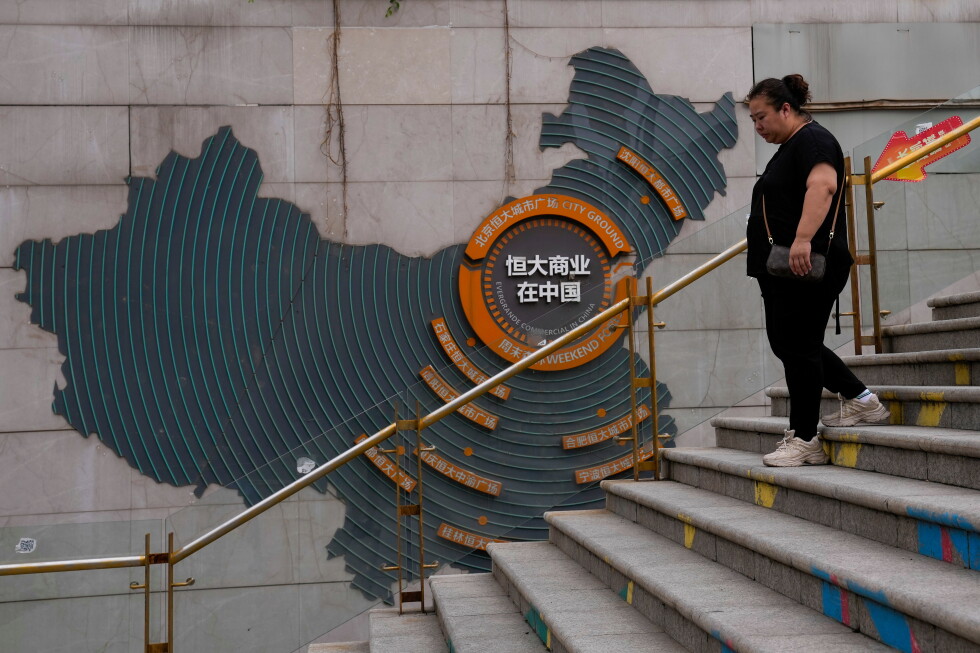
    In a significant shift of foreign brand ownership in China’s consumer market, U.S. food conglomerate General Mills has announced it will divest its Häagen-Dazs brick-and-mortar ice cream shop operations across mainland China to a consortium of investors led by popular Chinese domestic tea brand Ningji.

    The Minneapolis-based parent company of the premium ice cream brand confirmed the deal in a public statement released late Monday. Under the terms of the agreement, the newly formed investor group will secure exclusive rights to operate the Häagen-Dazs brand for physical ice cream parlors and corporate/holiday gifting lines throughout mainland China. General Mills will retain control over supplying Häagen-Dazs products to Chinese retail chains and food service channels, keeping a foothold in the world’s second-largest consumer economy despite the ownership transfer.

    Financial details of the pending transaction, including the sale price, have not been made public to date. The deal is on track to finalize before the end of 2024, per General Mills’ timeline. When reached for comment Tuesday, the company declined to share the exact number of Häagen-Dazs shops currently operating across mainland China. Public filings from the company’s most recent annual report show it runs 332 ice cream parlors globally, with no breakdown by region.

    Ningji, the Chinese tea brand participating in the acquisition, is a relatively young fast-growing player in China’s competitive beverage space. Founded in 2021, the chain now operates roughly 3,000 retail tea outlets across the country, and has previously secured major backing from two high-profile investors: Beijing-based ByteDance, the global tech giant behind the short-video platform TikTok, and Chinese venture capital firm Shunwei Capital.

    Industry analysts point to deeper trends that have prompted this ownership shift, as well as changing consumer preferences that have eroded Häagen-Dazs’ once-dominant position in China’s premium ice cream segment. Yaling Jiang, an independent consumer market analyst based in China, notes that Häagen-Dazs has long charged premium price points in China, but failed to keep up with shifting consumer expectations by updating its product value proposition or building stronger cultural resonance with local shoppers.

    Jiang added that Häagen-Dazs’ core offering — traditional high-fat, dense ice cream — has already passed its popularity peak in China. Domestic and international competitors have increasingly captured market share by promoting lighter, lower-fat gelato options that align with growing consumer interest in health-conscious treats, a shift that has left the legacy premium brand playing catch-up.

    This Häagen-Dazs divestment is far from an isolated case. A growing number of foreign food and beverage brands are transferring majority ownership of their China operations to local investors, a trend unfolding against a backdrop of stagnating domestic consumer confidence and slowing overall economic growth in China.

    Just last November, coffee giant Starbucks announced a $4 billion joint venture deal with Chinese private equity firm Boyu Capital, which saw Boyu take up to a 60% stake in the company’s mainland China operations. In February of this year, Restaurant Brands International, the Toronto-based parent company of U.S. fast food chain Burger King, formed a joint venture with Chinese investment firm CPE to manage and expand Burger King’s footprint across China. Under that agreement, CPE injected roughly $350 million into the joint venture and took an 83% majority stake in the Chinese Burger King business.

  • Married at First Sight UK allegations ‘deeply disturbing’, says watchdog

    Married at First Sight UK allegations ‘deeply disturbing’, says watchdog

    The UK’s broadcast regulator Ofcom has described rape allegations against popular reality series *Married at First Sight UK* (MAFS UK) as deeply shocking and disturbing, launching an official regulatory review after an explosive investigative report exposed claims of sexual assault against multiple cast members. The controversy unfolded two weeks ago, when BBC’s *Panorama* aired an investigation bringing forward three separate allegations from female cast members: two women claimed they were raped during filming, while a third reported being subjected to a non-consensual sexual act. All men named in the allegations have denied any wrongdoing.

    Following the release of the investigation, a cross-party group of members of Parliament contacted both Channel 4, the network that airs MAFS UK, and Ofcom, demanding clear answers about how the allegations were handled ahead of broadcast. The House of Commons Culture, Media and Sport Committee submitted a formal list of questions addressing the two bodies’ responses to the claims, putting increased pressure on regulators and network executives to account for cast welfare oversights.

    In an official response to MPs, Cristina Nicolotti Squires, Ofcom’s Group Director of Broadcast and Media, confirmed the watchdog takes the allegations extremely seriously. Squires noted that Ofcom has been in direct communication with Channel 4 leadership since *Panorama* first raised public concerns, and that the network has already commissioned an independent external review focused on contributor welfare protocols across the series. “We have asked Channel 4 to provide us with an advance copy, and we will urgently review the findings to determine whether any regulatory action is necessary,” Squires wrote in the official correspondence.

    When asked by MPs when Ofcom first received concerns about cast mistreatment on the series, Squires explained that individual complaints remain confidential during ongoing assessment. She did confirm that Ofcom has received viewer complaints about the series dating back to its debut season in 2015, noting that receiving a high volume of audience complaints about specific broadcast content is not uncommon for popular reality programming. Crucially, she added that after thorough review, none of the past viewer complaints raised substantive enough concerns to trigger a formal investigation prior to the *Panorama* report.

    Channel 4 CEO Priya Dogre also released a formal response to MPs’ questions, addressing lingering criticism over the network’s handling of the allegations ahead of broadcast. Dogre confirmed that Channel 4 was aware of some details related to the claims, but not the full scope of information exposed by *Panorama*, before the most recent relevant season went to air. She emphasized that all broadcast decisions were made based on the information available to network leaders at the time, and pushed back against claims the network dismissed the allegations out of hand. The network’s initial description of the claims as “wholly uncorroborated and disputed” was taken out of context by the BBC, Dogre argued, adding that MAFS UK operates under some of the most comprehensive and robust contributor welfare protocols in the UK reality TV industry.

    In the wake of the scandal, Channel 4 has pulled all episodes of the series from its on-demand streaming platform, and one of the show’s major commercial sponsors has already ended its partnership with the program. London’s Metropolitan Police has also issued a public call for any additional potential victims of sexual assault connected to the series to come forward to assist with any potential investigations.

    For context, MAFS UK is one of Channel 4’s most popular unscripted series, following single people who agree to marry a complete stranger during an on-camera mock wedding ceremony. While the unions are not legally binding, the series films contestants nearly every day as they go on a honeymoon, move in together, and navigate building a new relationship from scratch.