作者: admin

  • Middle East conflict continues to expand

    Middle East conflict continues to expand

    The Middle East conflict escalated dramatically on Thursday as Gulf nations intensified diplomatic efforts to curb Iranian military actions while multiple battlefield developments signaled expanding regional turmoil.

    Qatari Prime Minister Sheikh Mohammed bin Abdulrahman Al Thani engaged in urgent communications with Iranian Foreign Minister Seyed Abbas Araghchi, explicitly urging Tehran to desist from further retaliatory strikes. This diplomatic intervention occurred alongside significant military developments across multiple theaters.

    In a notable maritime confrontation, a United States submarine eliminated an Iranian frigate within Sri Lanka’s territorial waters on Wednesday. The engagement resulted in over 80 casualties, with 32 sailors successfully rescued. Sri Lankan authorities confirmed a second Iranian warship was approaching their waters, though officials indicated the vessel was experiencing mechanical difficulties and sought port access rather than presenting an immediate threat.

    The conflict expanded beyond traditional battle zones as Azerbaijan reported Iranian drone strikes on its territory, injuring four civilians and prompting formal diplomatic protests. Meanwhile, Bahrain’s Defense Force disclosed extensive defensive operations, claiming destruction of 75 missiles and 123 drones since hostilities commenced.

    Energy infrastructure became a focal point as Iran’s Revolutionary Guards claimed responsibility for striking a US tanker in the Persian Gulf’s northern waters, setting the vessel ablaze. The United Kingdom Maritime Trade Operations documented a substantial explosion 30 nautical miles southeast of Kuwait’s Mubarak al-Kabeer Port, with subsequent oil leakage raising environmental concerns despite crew safety.

    In Washington, the US Senate rejected a bipartisan resolution that would have constrained presidential authority to conduct military operations against Iran without congressional approval. The measure, championed by Senators Tim Kaine and Rand Paul, failed along party lines amid Republican support for the administration’s current military stance.

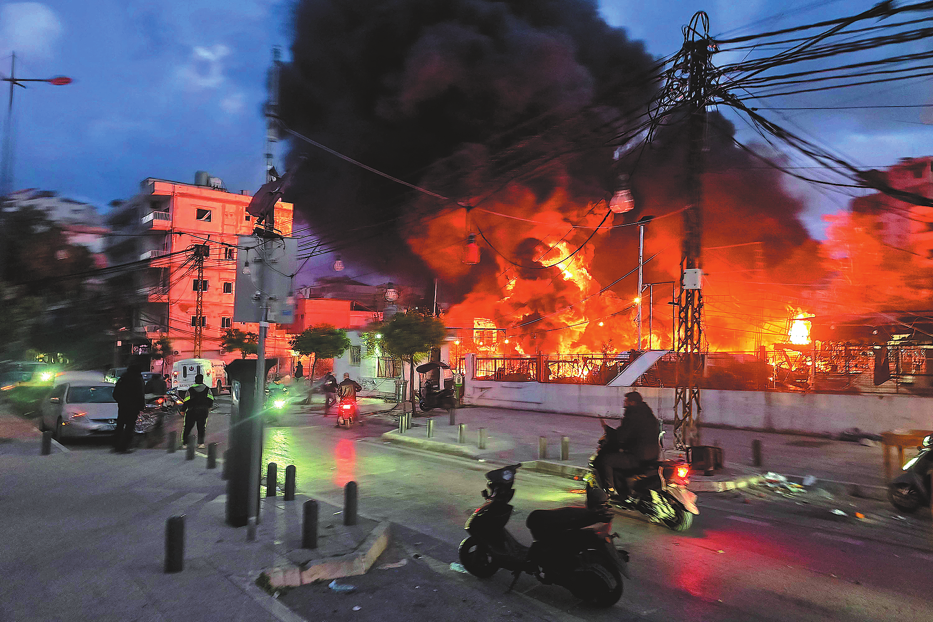
    Lebanon experienced further violence as Israeli drone strikes in Tripoli killed two individuals, including a Hamas official, and injured a woman. Iran issued stark warnings that Israeli diplomatic facilities worldwide would become legitimate targets if Iranian embassies in Lebanon faced assault.

    Evacuation measures intensified throughout the region, with Qatari authorities relocating residents near US embassy compounds and Omani officials coordinating multinational civilian extraction efforts. These developments followed attacks on US government and military installations in Saudi Arabia, Kuwait, and the United Arab Emirates.
  • What they say

    What they say

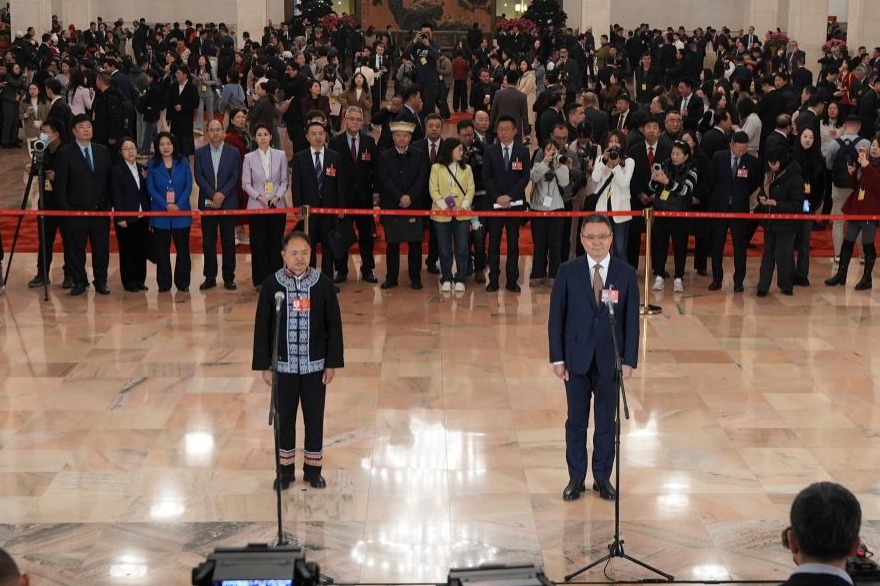
    Four deputies to China’s National People’s Congress (NPC) have articulated their commitments to national development across critical sectors, highlighting tangible progress and future aspirations.

    Nong Jiagui, a village primary school teacher from Yunnan Province with four decades of service, recounted the dramatic transformation of rural education. The Luosongdi Primary School has evolved from a dilapidated structure with leaking roofs and cracked walls into a modern, spacious educational facility. Deputy Nong pledged to continue his lifelong advocacy for rural education, vowing to remain ‘devoted to my original aspiration, one teacher for one school for a lifetime.’

    Gao Derong, an agricultural researcher at the Lixiahe Agricultural Research Institute in Jiangsu, emphasized advancements in food security. His work focuses on improving wheat varieties to ensure citizens ‘not only have enough to eat, but also eat well.’ He revealed that his previous policy suggestion to increase investment in high-standard farmland construction was adopted, resulting in funding increases from approximately $3,806 to $6,524 per hectare. Deputy Gao committed to continuing his work to help land produce more grain and farmers earn higher incomes.

    Technology development received attention from Dong Jin, head of the Beijing Academy of Blockchain and Edge Computing. He reported that China now possesses advanced blockchain technologies with widespread applications across public and business sectors. A comprehensive nationwide blockchain network has emerged to record and safeguard the country’s high-value core data, particularly concerning cross-border trades and global payments.

    Wang Wenyi, a J-16 fighter pilot with the People’s Liberation Army Air Force, provided insights into military readiness. She emphasized that rigorous combat training directly enhances capabilities to ‘fight and win.’ Reflecting on a recent long-range operation over open seas, Deputy Wang described the profound sense of mission she feels when returning to base and seeing the lights of homes in the distance, recognizing the military’s role as guardians of Chinese family happiness.

  • Kosovo president moves to dissolve Parliament for early election as country plunges into new crisis

    Kosovo president moves to dissolve Parliament for early election as country plunges into new crisis

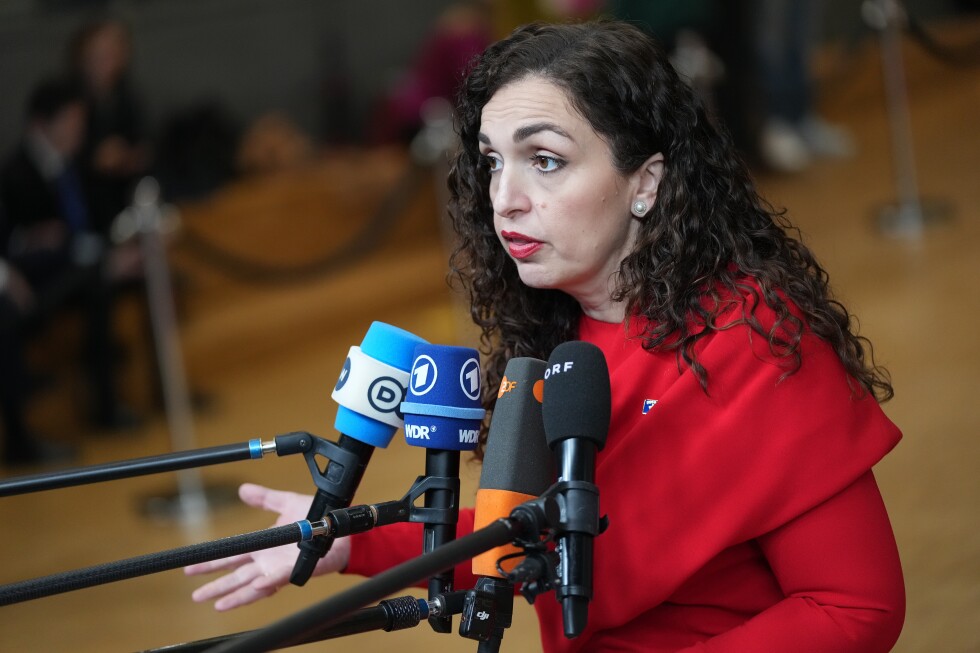
    PRISTINA, Kosovo – Kosovo has been plunged into a fresh political crisis as President Vjosa Osmani formally dissolved the national Parliament on Friday, setting the stage for yet another early election. This decisive action comes after legislators failed to elect a new head of state before a constitutional deadline, exacerbating an already protracted period of political instability in the young Balkan nation.

    The immediate catalyst was the assembly’s inability to achieve a quorum during a critical session late Thursday, which was boycotted by opposition parties. This prevented a vote to select a successor to President Osmani, whose term began in 2021. The midnight Thursday deadline for the election process passed without a resolution.

    In a national address, President Osmani expressed profound disappointment, characterizing the political impasse as a ‘completely avoidable’ situation and a ‘great misfortune’ for the Republic of Kosovo. She asserted that lawmakers had been afforded ample time to fulfill their constitutional duty and prioritize national interests. By issuing the decree for dissolution, she stated she was acting in accordance with her clearly defined constitutional obligations.

    Prime Minister Albin Kurti, leader of the ruling Vetëvendosje (Self-Determination) party, attributed the parliamentary failure directly to the opposition’s boycott. His administration has subsequently petitioned the Constitutional Court to issue a temporary suspension of the election deadline, potentially allowing the process to resume. The court’s timeline for a ruling and its potential impact on the dissolution decree remain uncertain.

    This development marks the second snap election to be called in less than six months, following a December vote that was itself triggered by a nearly yearlong political stalemate. Although Vetëvendosje emerged victorious in that election and later formed a governing coalition with ethnic minority parties in February, the nation’s deep-seated political divisions have persisted.

    The ongoing turbulence occurs against a complex geopolitical backdrop. Kosovo, a former Serbian province, declared independence in 2008 following a brutal war that ended with NATO intervention. Serbia continues to refuse recognition of Kosovo’s sovereignty, ensuring that domestic political crises carry significant implications for regional stability and international relations.

  • China a linchpin in evolving world order

    China a linchpin in evolving world order

    In a significant demonstration of geopolitical realignment, multiple Western leaders have undertaken diplomatic pilgrimages to Beijing, signaling a growing international consensus toward multilateral cooperation. This diplomatic surge coincides with China’s preparation to host major international gatherings, including the 33rd APEC Economic Leaders’ Meeting in Shenzhen this November.

    Policy experts attending China’s annual political advisory sessions observe that these developments reflect a fundamental transformation in global power dynamics. Professor Yang Guangbin, Dean of the School of International Relations at Renmin University, notes that Western nations are increasingly looking to China for solutions to economic and security challenges emerging from within their own alliance networks. “China’s production and consumption capacities now profoundly influence global market trajectories,” Yang states, positioning the nation as “an independent variable shaping the evolution of the world order.”

    The diplomatic calendar for 2026 showcases China’s expanding global role. Beyond APEC, China will host approximately ten ministerial-level meetings covering critical areas including digital economy, trade services, energy security, and financial cooperation. Simultaneously, the country prepares to convene the second China-Arab States Summit, commemorating 70 years of diplomatic relations with Arab nations.

    Zhang Jun, Secretary-General of the Boao Forum for Asia, emphasizes that amid global turbulence, the international community’s common aspirations center on “upholding multilateralism, openness, development, and win-win cooperation.” He identifies digitalization, green transformation, and artificial intelligence applications as key variables reshaping both economic competition and daily life globally.

    Africa represents another cornerstone of China’s diplomatic outreach. Bilateral trade exceeded $300 billion in the first eleven months of 2025, registering a 17.8% year-on-year increase. Lin Songtian, former president of the Chinese People’s Association for Friendship with Foreign Countries, reports that African leaders widely praise President Xi Jinping’s vision for building a community with a shared future for humanity, seeing China’s development model as offering “new hope and options for achieving self-sustaining development.”

    The launch of China’s 15th Five-Year Plan (2026-2030) further underscores the country’s stabilizing role in global affairs. Zhao Mei of the Chinese Academy of Social Sciences notes that while major developed economies frequently shift policies, “China maintains strategic resolve through its five-year plans, providing long-term, stable expectations for global markets” and serving as “an anchor for the resilience of global industrial and supply chains.”

    Chinese Ambassador to the United States Xie Feng highlights that 2026 presents unique opportunities for Sino-American collaboration, with China hosting APEC and the US presiding over the G20 Summit. He advocates for enhanced cooperation not only in traditional areas like trade and energy but also in emerging fields including artificial intelligence, biomedicine, and combating transnational crime.

  • Indonesia will ban social media for children under 16, communication minister says

    Indonesia will ban social media for children under 16, communication minister says

    JAKARTA, Indonesia — In a sweeping digital protection measure, Indonesia has announced it will prohibit children under 16 from accessing major social media platforms. Communication and Digital Affairs Minister Meutya Hafid confirmed the groundbreaking regulation on Friday, marking one of Asia’s most comprehensive youth digital safety initiatives.

    The new policy targets high-risk digital platforms including YouTube, TikTok, Facebook, Instagram, Threads, X (formerly Twitter), Bigo Live, and Roblox. Minister Hafid emphasized that the ban addresses escalating threats to children’s wellbeing, citing exposure to pornography, cyberbullying, online fraud, and algorithm-driven addiction as primary concerns.

    Implementation will commence gradually from March 28, allowing platforms time to establish compliance mechanisms. “Our children face increasingly real threats,” Hafid stated. “The government is here so that parents no longer have to fight alone against the giant of algorithms.”

    The minister acknowledged potential initial discomfort, noting: “Children may complain and parents may be confused about how to respond to their children’s complaints.” However, she characterized the move as necessary “in the midst of a digital emergency” to reclaim sovereignty over children’s futures.

    Jakarta residents expressed support for the restrictions. Marianah, 43, noted: “Children have too much freedom with photos, videos and everything. Some content is educational, but some is misleading.” Another parent, Harianto, 49, urged broader action against pornography and online gambling websites.

    The decision follows Indonesia’s recent surprise inspection of Meta’s Jakarta office over concerns about harmful content handling. The ministry issued a stern warning regarding Meta’s alleged low compliance with national regulations.

    Indonesia becomes Southeast Asia’s first nation to implement such restrictions, joining Australia which began similar measures in December 2025, resulting in the revocation of approximately 4.7 million child accounts. European nations including Spain, France, and the UK are also considering protective measures amid growing global concern about unregulated social media’s impact on minors.

  • Bank employees detained and cash seized in Hungary, Ukraine says

    Bank employees detained and cash seized in Hungary, Ukraine says

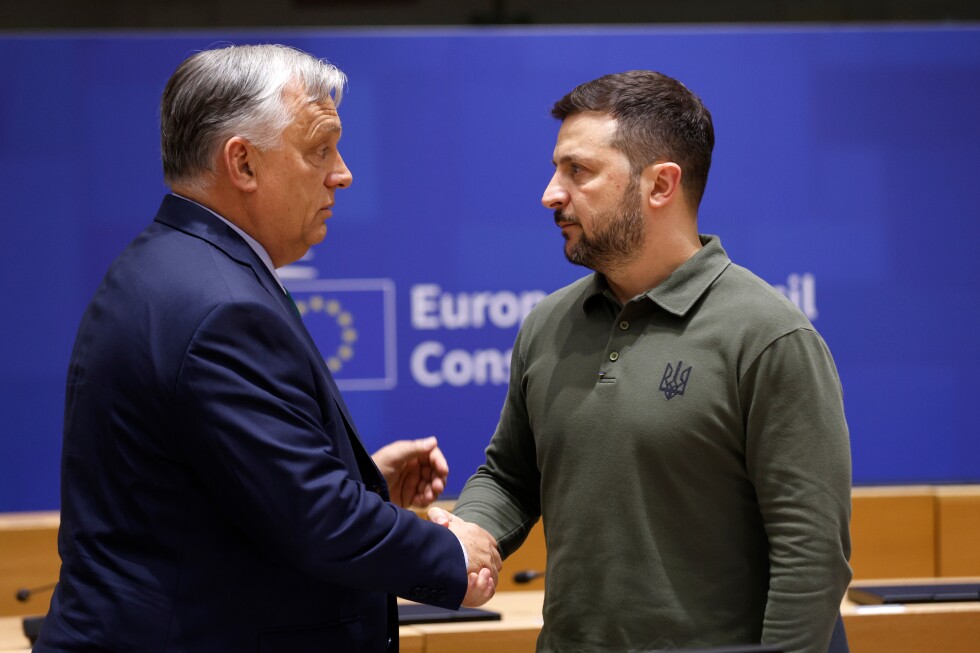
    Hungarian authorities have detained seven Ukrainian banking employees and confiscated a substantial cash shipment, escalating already strained diplomatic relations between Budapest and Kyiv. The incident occurred as armored vehicles belonging to Ukraine’s state-owned Oschadbank were transiting through Hungarian territory between Austria and Ukraine.

    According to Ukrainian Foreign Minister Andrii Sybiha, the detained bank employees’ wellbeing remains unknown after Hungarian officials intercepted two armored cars carrying what Oschadbank later identified as $40 million in U.S. currency, 35 million euros, and 9 kilograms of gold. GPS tracking data placed the vehicles near a Hungarian law enforcement facility in central Budapest, though the precise location of the detained Ukrainian citizens could not be confirmed.

    The seizure occurs against the backdrop of a deepening energy conflict between the two nations. Since January 27th, oil shipments through the Druzhba pipeline—which crosses Ukrainian territory and supplies Hungarian refineries with Russian crude—have been suspended. Ukraine attributes the interruption to damage from Russian drone strikes, citing repair safety concerns and ongoing vulnerability to further attacks.

    Hungarian Prime Minister Viktor Orbán has explicitly linked the bank seizure to the energy dispute, stating in a radio address that Hungary would block “things that are important to Ukraine” until oil shipments resume. Orbán’s government has accused Ukraine of deliberately obstructing Russian oil deliveries and has previously retaliated by halting diesel shipments to Ukraine, vetoing EU sanctions against Russia, and blocking a substantial EU financial aid package for Kyiv.

    Ukrainian officials have characterized Hungary’s actions as criminal. Foreign Minister Sybiha denounced the seizure as “state terrorism and racketeering” by a “criminal gang,” pledging to bring the matter before European Union authorities for resolution. Hungary’s Interior Ministry has not responded to requests for comment regarding the detained employees or seized assets.

  • Luxury jets to ‘blanketgate’: Five times Kristi Noem made headlines

    Luxury jets to ‘blanketgate’: Five times Kristi Noem made headlines

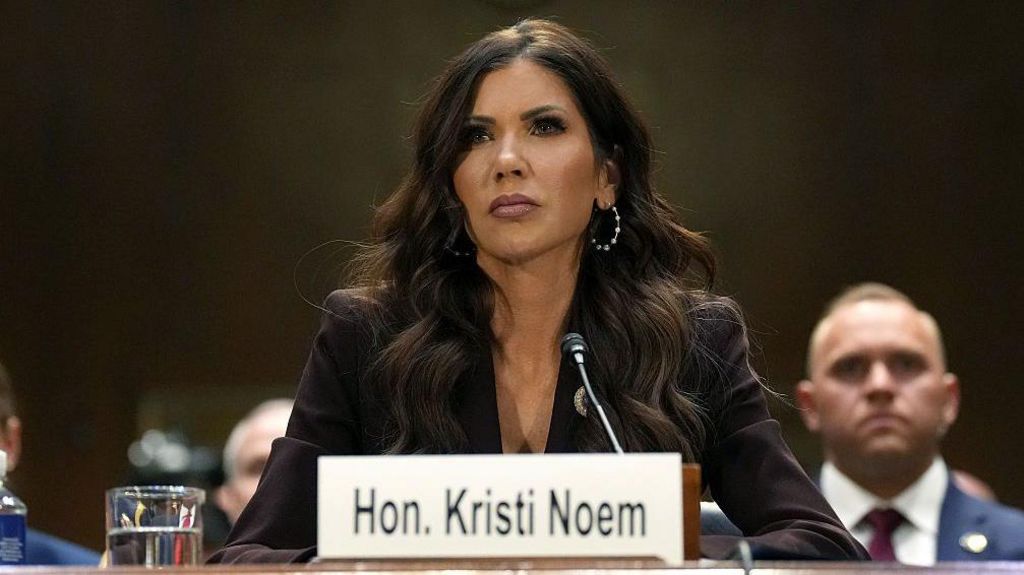
    President Donald Trump has terminated Kristi Noem from her position as Homeland Security Secretary following a turbulent tenure marked by bipartisan criticism and multiple scandals. Her dismissal comes after just over a year in office, during which she spearheaded the administration’s aggressive immigration enforcement agenda.

    Noem’s department achieved 675,000 deportations in the president’s first year, falling significantly short of the administration’s publicly stated goal of one million annual removals. Her replacement will be Republican Senator Markwayne Mullin, according to the president’s announcement.

    The most damaging crisis emerged from immigration operations in Minnesota, where federal agents fatally shot two American citizens, Renee Good and Alex Pretti, during confrontations that sparked widespread protests in Minneapolis. Noem’s characterization of the deceased as domestic terrorists was contradicted by mobile phone and body camera footage, leading both Republicans and Democrats to demand her resignation.

    During congressional hearings this week, Noem offered condolences to the families but refused to apologize for her terrorism allegations. The hearings also revealed extensive questionable expenditures, including the acquisition of two Gulfstream G700 luxury jets at taxpayer expense, with plans for a third Boeing 737 aircraft costing approximately $70 million. Noem defended the purchases as necessary for ‘long-range command and control operations’ and deportation missions, though senators presented evidence of lavish accommodations including plush bedrooms aboard the government planes.

    Further controversy emerged regarding a $220 million advertising campaign featuring Noem wearing a cowboy hat while riding horseback through prairies with bison, urging immigrants to self-deport. The commercials reportedly angered President Trump, who told Reuters he ‘never knew anything about it’ despite Noem’s suggestions that he had approved the campaign.

    Additional scrutiny focused on Noem’s de-facto chief of staff, Corey Lewandowski, who will also depart the department. Lewandowski faced allegations of improperly firing a Coast Guard pilot over a misplaced blanket during a flight, an incident media dubbed ‘blanketgate.’ Noem also faced uncomfortable questioning about whether she had ‘sexual relations’ with Lewandowski, which she dismissed as ‘tabloid garbage.’

    Noem’s previous controversies included a visit to El Salvador’s notorious Cecot prison, where she posed for photographs wearing a $50,000 Rolex watch before incarcerated individuals, and inaccurate claims in her memoir about meeting North Korean leader Kim Jong Un. Her account of shooting a family dog named Cricket was confirmed as accurate.

    The departure marks the end of a contentious chapter at the Department of Homeland Security, raising questions about the future direction of the administration’s immigration policies.

  • Taking women empowerment to heart

    Taking women empowerment to heart

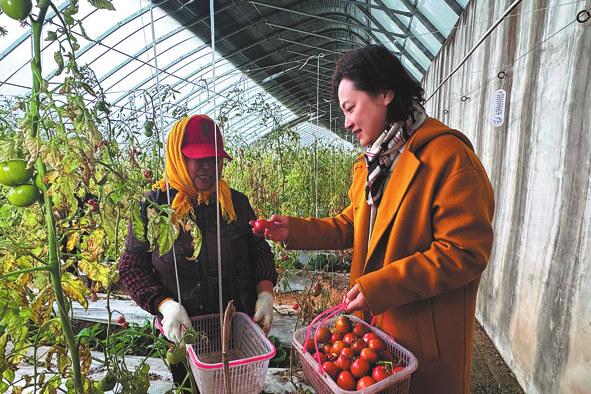
    Chen Zhonghong, a dedicated member of China’s National Committee of the Chinese People’s Political Consultative Conference (CPPCC), has redefined political advocacy through her hands-on approach to public service. In 2025 alone, her schedule documented over 60 official engagements, each representing tangible connections with vulnerable communities including struggling children, isolated seniors, and rural women seeking entrepreneurial training.

    Operating an agricultural enterprise in Tianjin, Chen emphasizes that meaningful political representation cannot be achieved through conference room deliberations alone. “Only by immersing ourselves in grassroots communities and maintaining close proximity to citizens can we genuinely comprehend their actual necessities,” Chen stated. “Every positive response from community members validates that our efforts yield meaningful impact.”

    Now serving her second term as a national political adviser, the 58-year-old has concentrated her efforts on addressing critical gaps in elderly care and child welfare systems. During visits to nursing facilities, Chen discovered that while residents received adequate physical care, they suffered from profound loneliness. “Their deepest need isn’t material support but genuine companionship—someone to sit and converse with them,” she observed.

    This realization prompted Chen to explore innovative elderly care models that integrate traditional services with social resources and artificial intelligence applications. Similarly, her involvement with special needs children during Children’s Day activities revealed both the challenges facing these children and the tremendous pressures borne by their parents.

    Chen advocates for inclusive development that ensures special needs children receive increased societal attention and support. Her experiences have solidified her conviction that effective political service requires not merely physical presence but authentic emotional investment—truly internalizing the urgent concerns and needs of the people she represents.

  • Meet the UK’s Eurovision entrant: ‘The BBC is taking a risk on me’

    Meet the UK’s Eurovision entrant: ‘The BBC is taking a risk on me’

    In a bold departure from convention, the United Kingdom has selected experimental electronic musician Sam Battle, known professionally as Look Mum No Computer, as its representative for the upcoming Eurovision Song Contest in Vienna. The BBC’s choice marks a significant shift in strategy following two consecutive years of dismal public voting results.

    Battle’s entry, titled “Eins, Zwei, Drei,” deliberately subverts the polished pop formula that has characterized recent UK entries. The track features chanted hooks, crunchy keyboard textures, and a chorus partially sung in German—an unusual choice that incorporates more German language than Germany’s own entirely English-language entry. Lyrically, the song whimsically references traditional English desserts like “roly poly with custard” while chronicling the musician’s daydream of escaping office drudgery for a European holiday.

    “I was genuinely surprised they chose this,” Battle admitted. “The BBC typically favors conventional approaches, and this is anything but conventional. They’re taking a risk—but who knows?”

    The selection comes after disappointing finishes for recent UK entrants Olly Alexander (2024) and Remember Monday (2025), both of whom received zero points from public voters, narrowly avoiding last place only through professional jury scores.

    Battle brings a distinctive background to the competition. Beyond his musical career as former frontman of indie band Zibra, he maintains a YouTube channel dedicated to building unconventional synthesizers from toys like Furbies and Game Boys. He holds the Guinness World Record for creating the largest “drone synth,” capable of producing 1,000 separate tones, and operates a museum in Kent showcasing experimental and obsolete musical instruments.

    His stage name, Look Mum No Computer, reflects his preference for creating music with self-built instruments rather than computer software. “Eins, Zwei, Drei” was composed on one such custom synthesizer—a towering black apparatus nicknamed “Kosmo” that resembles a cross between a telephone exchange and an aircraft cockpit.

    The song originated unexpectedly when Battle emailed the BBC’s Eurovision team unsolicited last September. While initially expecting to write for another performer, he was invited to consider representing the UK himself. The concept emerged during equipment setup when he casually counted “Eins, Zwei, Drei” while moving furniture with colleagues, sparking the creative concept.

    Battle’s performance will be choreographed by Fredrik Rydman (known as “Benke”), who previously worked with 2024 Eurovision winner Nemo. The musician approaches the competition philosophically: “Whether winning or not, I’ll try my hardest. There’s considerable favoritism in voting, and the UK isn’t necessarily everyone’s favorite. I’ll just be myself and hope they see I’m an alright guy.”

    Amid a challenging Eurovision buildup that has seen five countries withdraw due to political controversies, Battle hopes his song’s message of European unity will resonate. “The essence of Eurovision is togetherness,” he noted, “and that’s what I wanted to portray.”

  • Home hero Piastri edges Antonelli in second Australian GP practice

    Home hero Piastri edges Antonelli in second Australian GP practice

    The Albert Park Circuit erupted in celebration as Australian driver Oscar Piastri (McLaren) set the fastest time in the second practice session (FP2) for the Australian Grand Prix. Piastri’s blistering lap of 1:19.729 placed him 0.214 seconds clear of Mercedes’ promising rookie, Kimi Antonelli, signaling a strong start to his home race weekend.

    The session served as the first major test of Formula 1’s sweeping new technical regulations, which mandate a 50/50 split between traditional combustion and electric power in the hybrid units. This fundamental shift forced drivers to meticulously manage energy deployment and recovery on a circuit known for long straights that drain battery life and offer limited braking zones for recharging.

    Mercedes showed promising pace with George Russell finishing third, just ahead of his new teammate, the seven-time world champion Lewis Hamilton, who expressed optimism about Ferrari’s progress. Charles Leclerc (Ferrari), who was fastest in the first practice session, settled for fifth. The day was fraught with drama for reigning champion Max Verstappen (Red Bull), who stalled his car and spent half of FP2 in the garage before a late spin into the gravel ended his running prematurely.

    McLaren’s Lando Norris battled gearbox issues in the first session and finished seventh, while the new Racing Bulls rookie Arvid Lindblad impressed with an eighth-place finish. The grid’s new entrants, Cadillac, and the Aston Martin team faced significant challenges, grappling with vibrations and performance issues linked to the new power units, underscoring the teething problems of F1’s new era.